

AC Frozen Coil: Why It Happens & How to Fix It | Michigan
You walk past your furnace in the basement and notice something strange: there's ice forming on the copper refrigerant lines running from your air conditioner. Or maybe your AC has been running nonstop for hours, but the house is still warm. When you check the air handler, you find a block of ice where your evaporator coil should be.
A frozen AC coil is one of the most common cooling problems we see during Michigan summers—and it's more than just an inconvenience. When that coil freezes, your system can't absorb heat from your home. You're paying to run equipment that isn't cooling anything. Left unchecked, a frozen coil can lead to compressor failure, which turns a $200 service call into a $2,500 repair.
The good news: most frozen coil problems have straightforward causes, and many can be prevented with basic maintenance. After 35 years of furnace and AC installation services across Southeast Michigan, we've diagnosed thousands of frozen coils in homes from Troy to Sterling Heights to Lake Orion. Here's what actually causes them—and what you need to do about it.
What Actually Freezes (And Why It Matters)
Let's start with what's happening inside your system. Your air conditioner doesn't "create" cold air—it removes heat from the air inside your home and dumps it outside. The evaporator coil is where that heat absorption happens.
The evaporator coil sits inside your air handler (usually in the basement or attic). It's a series of thin aluminum fins wrapped around copper tubing. Inside that tubing is refrigerant—R-410A in most modern systems, R-22 in older units installed before 2010.
When your AC runs, the compressor pushes refrigerant through the system. By the time it reaches the evaporator coil, that refrigerant is very cold—around 40°F at the coil surface. Your blower fan pulls warm air from your house across those cold coil fins. The refrigerant absorbs the heat, the air cools down, and the now-cooler air gets pushed back into your home through the ductwork.
This process works perfectly when everything is balanced: adequate airflow across the coil, the correct refrigerant charge, and a blower motor running at the right speed. But when something disrupts that balance, the coil temperature can drop below 32°F. Moisture in the air freezes on contact with the coil surface. Within an hour or two, you've got a solid block of ice covering the entire coil assembly.
Why ice is a problem: Ice acts as insulation. Once the coil is covered, air can't make contact with the cold refrigerant. Heat transfer stops. Your AC keeps running, but it's not cooling your home—it's just wasting electricity and stressing the compressor.
The Five Main Causes of Frozen AC Coils in Michigan
We've been running service calls across Macomb, Oakland, and St. Clair counties long enough to know that frozen coils almost always come down to one of five issues. Here's what we find most often.
1. Restricted Airflow (The Most Common Culprit)
If air can't move freely across the evaporator coil, the refrigerant inside gets too cold. The coil temperature drops below freezing, and ice starts forming.
The usual suspects:
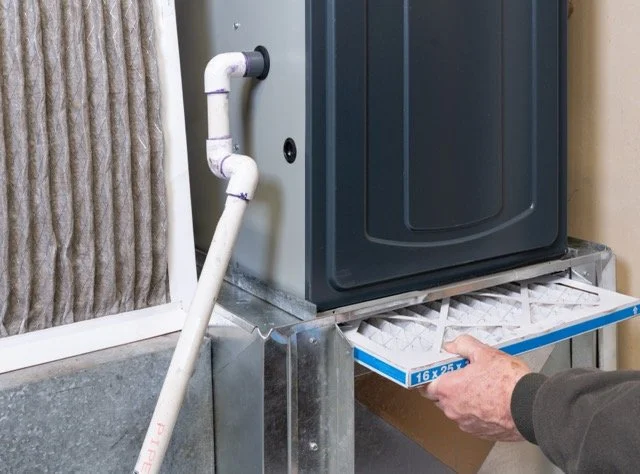
- Dirty air filter: A clogged 1-inch filter can cut airflow by 50% or more. If you haven't changed your filter in three months, this is probably your problem.
- Closed or blocked supply vents: Homeowners sometimes close vents in unused rooms to "save energy." This reduces total airflow through the system and can cause freezing.
- Dirty evaporator coil: Dust, pet hair, and dirt build up on the coil fins over time. This acts like a blanket, preventing air from reaching the refrigerant.
- Undersized or damaged ductwork: Common in older Michigan homes—especially 1960s ranches with original ductwork. If the ducts are too small or crushed, airflow suffers.
We see this constantly in homes around Rochester Hills and Bloomfield Hills where homeowners use high-MERV filters (MERV 11 or higher) without upgrading to a 4-inch or 5-inch media filter cabinet. Those dense filters trap more particles, but they also restrict airflow if your system wasn't designed for them.
2. Low Refrigerant from a Leak
Your air conditioner is a sealed system. The refrigerant charge should never drop unless there's a leak. When refrigerant leaks out, the remaining refrigerant has to work harder to absorb the same amount of heat. The coil gets colder than it should, and ice forms.
Signs of a refrigerant leak:
- Ice on the refrigerant lines (the copper tubing running between the outdoor condenser and indoor air handler)
- Hissing or bubbling sounds near the coil or line set
- The AC runs constantly but barely cools the house
- Your energy bills spike without explanation
Refrigerant leaks require a licensed HVAC technician. It's illegal to add refrigerant without finding and repairing the leak first—EPA regulations under Section 608 of the Clean Air Act. If a contractor offers to "top off" your system without leak detection, walk away. That's not how reliable HVAC contractors in Metro Detroit operate.
3. Blower Motor Failure or Weak Fan Speed
Your blower motor is responsible for moving air across the evaporator coil. If the motor fails, slows down, or if the fan speed setting is too low, airflow drops and the coil freezes.
This is more common in systems that are 12+ years old. Blower motors wear out. Capacitors fail. The fan keeps spinning, but at 60% of its original speed—not enough to prevent freezing.
If you hear the blower running but feel weak airflow from your vents, this could be the issue. A NATE-certified technician can test the motor's amp draw and airflow volume to confirm.
4. Dirty Evaporator Coils
Even with a clean air filter, the evaporator coil itself can accumulate dust, mold, and debris over years of operation. This buildup reduces the coil's ability to transfer heat. The refrigerant stays colder longer, and ice forms.
We see this frequently in homes without regular maintenance. The Next Care Plan includes evaporator coil cleaning during our spring AC tune-up—it's one of the most effective ways to prevent frozen coils before cooling season starts.
5. Running the AC When It's Too Cold Outside
Most residential air conditioners aren't designed to run when outdoor temperatures drop below 60°F. When it's cooler outside, the refrigerant pressure in the system changes. The evaporator coil gets colder than normal, and freezing can occur even with perfect airflow and a full refrigerant charge.
This happens more often than you'd think in Michigan. We get cool nights in May and September—50°F at 2 a.m.—but homeowners leave the AC running because it was 75°F during the day. By morning, the coil is frozen solid.
If you need cooling on a cool night, open the windows. Don't run the AC when outdoor temps are below 60°F.
Signs Your AC Coil Is Frozen
Sometimes the ice is obvious—you open the air handler cabinet and see a solid block of frost. Other times, the symptoms are more subtle. Here's what to look for:
- Ice on the refrigerant lines: The copper tubing running from your outdoor unit to the air handler should be cool to the touch, but not covered in frost or ice. If you see ice, the coil is frozen.
- Reduced or no cooling: The AC runs, but the house stays warm. Airflow from the vents feels weak or not as cold as it should be.
- Water pooling near the furnace or air handler: As the ice melts, it can overflow the drain pan and leak onto the floor. If you find water around your furnace, check for a frozen coil.
- Hissing or bubbling sounds: This can indicate refrigerant boiling inside the coil or a leak in the line set.
- The AC runs constantly: If your system can't reach the thermostat setpoint and runs 24/7, a frozen coil is a likely cause.
Don't ignore these signs. A frozen coil puts stress on the compressor—the most expensive component in your system. Compressor replacement on a Carrier or Lennox system can cost $1,800 to $2,500. Catching a frozen coil early can save you thousands.
What to Do When You Find a Frozen Coil
If you discover ice on your evaporator coil or refrigerant lines, here's what to do immediately:
Step 1: Turn Off the AC at the Thermostat
Switch your thermostat from COOL to OFF. Do not just raise the temperature—you need to stop the compressor from running. Continuing to run the AC with a frozen coil can damage the compressor.
Step 2: Turn the Fan to ON
Switch the fan setting from AUTO to ON. This circulates warm air over the frozen coil, which speeds up the thawing process. Leave the fan running for 4 to 8 hours.
Step 3: Check the Drain Pan
As the ice melts, it's going to produce water—sometimes several gallons. Place towels around the air handler or furnace to catch overflow. If your drain pan is cracked or your condensate drain line is clogged, you could end up with water damage.
Step 4: Wait for Complete Thawing
Do not try to chip or scrape the ice off the coil. You will bend the aluminum fins and reduce the coil's efficiency permanently. Just let it melt naturally. Depending on how much ice has built up, this can take 4 to 8 hours.
Step 5: Change the Air Filter
Before you restart the system, install a fresh air filter. If a dirty filter caused the freeze, this solves the problem. Use a standard 1-inch pleated filter (MERV 8 or MERV 11) unless your system is designed for higher-MERV media filters.
Step 6: Restart and Monitor
Once the ice is completely melted and you've replaced the filter, turn the AC back on. Monitor it for the next 24 hours. If the coil freezes again, shut it down and call a licensed HVAC contractor. You likely have a refrigerant leak, blower motor issue, or dirty coil that needs professional attention.
When to call a technician immediately: If you see ice but also notice weak airflow, hissing sounds, or the AC has been struggling for days, don't wait. The problem is mechanical, not just a dirty filter. Contact a Metro Detroit HVAC contractor for diagnosis and repair.
Cost Reality: Repair vs. Replacement
The cost to fix a frozen coil depends entirely on the underlying cause. Here's what Michigan homeowners can expect in 2026:
Simple Fixes (Under $200)
- Dirty air filter: $0 to $30 if you replace it yourself. If you call for service and that's all we find, you're looking at a $150 service call fee.
- Closed vents or blocked return grilles: Free—just open the vents and clear obstructions.
Moderate Repairs ($300 to $800)
- Evaporator coil cleaning: $250 to $400 for a professional chemical cleaning. This is included in the $5/month HVAC maintenance plan we offer—two visits per year, priority scheduling, and 10% off repairs.
- Blower motor capacitor replacement: $200 to $350, depending on the capacitor size and system accessibility.
Major Repairs ($800 to $2,000+)
- Refrigerant leak repair: $500 to $1,500, depending on where the leak is located. If it's in the evaporator coil itself, you're often looking at coil replacement rather than repair.
- Blower motor replacement: $600 to $1,200 for a new motor and installation.
- Evaporator coil replacement: $1,200 to $2,000. If your system is 12+ years old and needs a new coil, it's worth getting a quote on full system replacement—you may be close to the cost of a new AC anyway.
When Replacement Makes More Sense
If your air conditioner is 15+ years old and you're facing a $1,500+ repair, replacement is usually the smarter financial move. A new Carrier or Lennox system will be more efficient (16 SEER minimum vs. 10-12 SEER on older units), quieter, and covered by a 10-year parts warranty.
We've written a detailed breakdown of central air conditioner costs in Michigan if you're trying to decide between repair and replacement. For most homes in Macomb and Oakland counties, a full system replacement runs $4,500 to $7,500 installed, depending on size and efficiency.

How to Prevent Frozen Coils
Most frozen coil problems are preventable. Here's what actually works, based on 35 years of keeping Michigan homes comfortable:
Change Your Air Filter Every 30 to 90 Days
This is the single most important thing you can do. A standard 1-inch pleated filter should be replaced every 30 to 60 days during cooling season. If you have pets, change it every 30 days. If you're using a 4-inch or 5-inch media filter, you can go 6 to 12 months between changes.
Set a reminder on your phone. Buy a 6-pack of filters so you always have one on hand. This alone prevents 60% of the frozen coil calls we get.
Schedule Professional Maintenance Every Spring
A spring AC tune-up catches problems before they cause breakdowns. Our technicians clean the evaporator coil, check refrigerant levels, test the blower motor, inspect electrical connections, and verify airflow. We find small issues—a failing capacitor, a slow refrigerant leak—before they turn into expensive repairs.
The Next Care Plan covers this. For $5 per month, you get two visits per year (spring AC tune-up, fall furnace tune-up), priority scheduling when you need emergency service, and 10% off any repairs. Over the 35+ years we've been serving Southeast Michigan under Premier Builder Inc., we've seen maintenance plans save homeowners thousands in avoided repairs.
Keep Vents and Returns Clear
Don't close more than 20% of your supply vents, even in unused rooms. Don't block return grilles with furniture, curtains, or storage boxes. Your system needs unrestricted airflow to function properly.
Don't Run the AC When It's Cold Outside
If outdoor temperatures drop below 60°F, turn off the AC. Open windows if you need fresh air. This is especially important during Michigan's unpredictable spring and fall weather.
Upgrade to a Smart Thermostat
Thermostats like the Honeywell T6 or Ecobee can alert you when airflow is restricted or when the system is running inefficiently. Some models will even remind you when it's time to change the filter.
Check the Outdoor Unit
Keep the area around your outdoor condenser clear. Trim back bushes and vegetation to at least 2 feet of clearance on all sides. Remove leaves, grass clippings, and debris from the top of the unit. A dirty condenser coil can cause high refrigerant pressure, which contributes to freezing on the evaporator coil indoors.
Need Help with a Frozen AC Coil?
NEXT Heating & Cooling has been diagnosing and repairing frozen coils across Southeast Michigan for over 35 years. Our NATE-certified technicians show up on time, explain the problem clearly, and give you honest options—no pressure, no upselling. Same-day service available in Macomb, Oakland, and St. Clair counties.
Schedule Your ServiceFrequently Asked Questions
Typically 4 to 8 hours with the fan running on the ON setting and the compressor turned off. The exact time depends on how much ice has built up. A light frost might thaw in 2 to 3 hours. A completely frozen coil with ice covering the entire assembly can take 8 hours or more. Never try to speed up the process by scraping or chipping the ice—you'll damage the aluminum fins.
No. Running the AC with a frozen coil won't cool your home, and it puts dangerous stress on the compressor. The compressor is designed to compress refrigerant vapor, not liquid. When the coil is frozen, liquid refrigerant can flood back to the compressor—a condition called "liquid slugging"—which can destroy the compressor in minutes. Compressor replacement costs $1,800 to $2,500. Always shut the system down immediately if you find ice.
It can, especially if you keep running the system. The immediate risk is compressor failure from liquid refrigerant flooding back. The secondary risk is water damage—melting ice can overflow the drain pan and leak into your home, damaging ceilings, floors, and walls. If you catch it early and shut the system down, you can usually thaw the coil and fix the underlying cause without permanent damage.
If a new filter doesn't solve the problem, you likely have a refrigerant leak, a failing blower motor, a dirty evaporator coil, or undersized ductwork. These issues require professional diagnosis. A NATE-certified technician can measure airflow, test refrigerant pressures, and inspect the coil to pinpoint the cause. Don't keep restarting the system if it freezes repeatedly—you risk compressor damage.
It depends on the cause. If it's just a dirty filter, the fix is $30 or less. If it's a refrigerant leak, expect $500 to $1,500 for leak repair and recharge. Blower motor replacement runs $600 to $1,200. Evaporator coil replacement is $1,200 to $2,000. The average frozen coil service call in Southeast Michigan—including diagnosis, thawing, and minor repairs—runs $250 to $600. If your system is 15+ years old and needs major repairs, replacement may be more cost-effective.
Yes. Change your air filter every 30 to 60 days during cooling season. Schedule professional maintenance every spring—the Next Care Plan includes this for $5/month. Keep supply vents and return grilles clear. Don't close more than 20% of your vents. Don't run the AC when outdoor temps drop below 60°F. Keep the outdoor condenser unit clean and clear of debris. These simple steps prevent most frozen coil problems.
It depends on the cause and your warranty terms. If the coil itself is defective, it may be covered under the manufacturer's parts warranty (typically 10 years on Carrier, Lennox, Trane, and Bryant systems). But if the freeze was caused by lack of maintenance—dirty filter, clogged coil, neglected service—the warranty won't cover it. Labor is rarely covered after the first year unless you purchased an extended labor warranty. This is why the Next Care Plan matters—regular maintenance keeps your warranty valid and prevents most freezing issues.