

AC Tune-Up Warren MI: What Your Tech Checks (2026)

NEXT Heating & Cooling
•
March 2, 2026
•
9 min read
Every spring, Warren homeowners face the same question: is an AC tune-up actually worth it, or is it just something HVAC companies push to make money?
After 35 years servicing air conditioners across Southeast Michigan, we can tell you exactly what happens during a professional tune-up — and why the homes that skip this step are the ones calling us in July when it's 92 degrees and their system just quit.
This isn't about selling you something you don't need. It's about showing you what NATE-certified HVAC technicians actually check, test, and fix during an AC tune-up in Warren MI — and why that 18-point inspection matters when Michigan humidity hits in June.
What Actually Happens During an AC Tune-Up
A legitimate AC tune-up isn't a 15-minute filter change. When a licensed HVAC contractor shows up at your Warren home, here's the actual checklist they're working through:
The 18-Point Inspection Process
Outdoor condenser unit:
Check refrigerant levels using manifold gauges — not just a visual inspection
Test compressor amp draw to detect early bearing wear
Inspect contactor points for pitting or carbon buildup
Measure capacitor microfarads (they degrade over time, even if the system runs)
Clean condenser coils with professional coil cleaner and water pressure
Check fan motor bearings and blade balance
Verify proper voltage at disconnect box
Inspect refrigerant line insulation for UV damage
Indoor air handler:
Pull and inspect evaporator coil for biological growth or dirt buildup
Test blower motor amp draw
Check blower wheel for dust accumulation (reduces airflow by 30% or more)
Clear condensate drain line with shop vacuum and algae treatment
Verify condensate pump operation (if installed)
Test float switch to prevent water damage
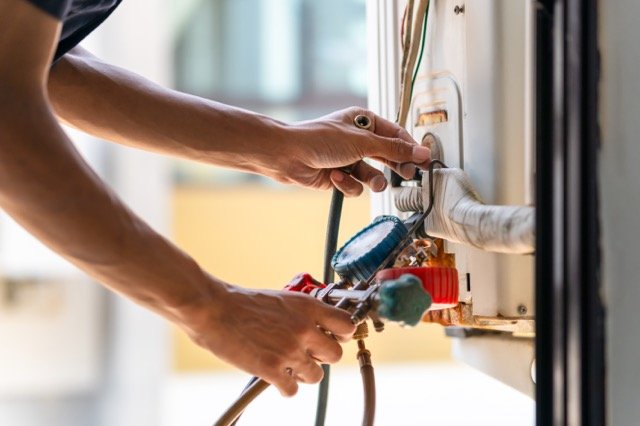
System performance:
Measure supply and return air temperature split (should be 15-20°F)
Check thermostat calibration and programming
Test system startup sequence and safety controls
Verify proper airflow at registers throughout the house
That's not a sales pitch. That's the actual work a technician performs during a comprehensive tune-up. If your "tune-up" takes 20 minutes, you're not getting half this list checked.
Warren-specific issue: Homes near the GM Tech Center and along Mound Road deal with higher airborne particulate from industrial activity. This accelerates condenser coil fouling. If your AC sits downwind of commercial areas, coil cleaning during your tune-up isn't optional — it's necessary to maintain efficiency.
Why Warren MI Homes Need Spring AC Maintenance
Warren's housing stock tells the story. Drive through the neighborhoods between 8 Mile and 13 Mile — you'll see thousands of ranch homes built in the 1950s and 60s. Many still have their original ductwork, and a good number are running AC systems that were installed 15 to 20 years ago.
Here's what that means for your cooling system:
Michigan Humidity Accelerates Wear
Southeast Michigan doesn't just get hot in summer — it gets humid. When outdoor dew points hit 70°F in July (which happens most years), your AC isn't just cooling air. It's removing moisture. A lot of it.
That condensate has to drain somewhere. In Warren homes with basement air handlers, we routinely find clogged drain lines during spring tune-ups. The algae and biological growth that forms in those lines over winter doesn't care that you haven't run the AC in eight months. It's still there, waiting to back up into your drain pan the first time you turn the system on.
A tune-up clears that line before it becomes a problem. Skip it, and you're one hot weekend away from water damage in your finished basement.
The Cost of Skipping Preventive Maintenance
We track this data because homeowners ask us about it constantly. Here's what we see in Warren and across Macomb County:
Compressor failure: $1,800-$3,500 to replace (often makes more sense to replace the whole outdoor unit)
Blower motor replacement: $450-$850 installed
Capacitor failure: $150-$300 (takes 30 minutes to replace, but requires an emergency service call if it fails on a Saturday)
Refrigerant leak repair: $300-$1,200 depending on location, plus refrigerant recharge
An AC tune-up costs $89-$150 in Southeast Michigan. The Next Care Plan covers two annual visits (spring AC tune-up and fall furnace maintenance) for $60 per year — $5 per month.
The math isn't complicated. One avoided capacitor failure pays for six years of preventive maintenance.
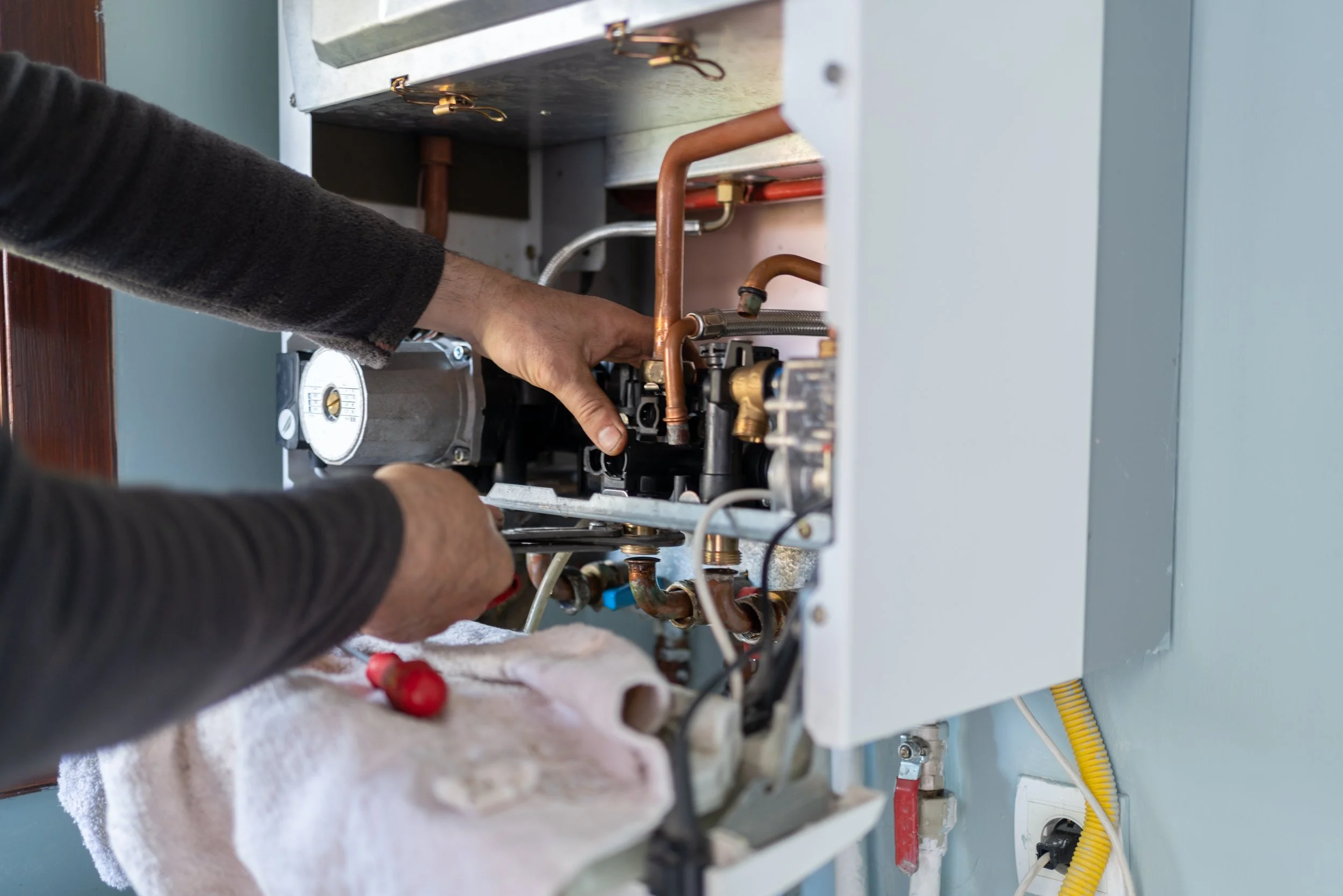
The Real Cost of AC Tune-Ups in Southeast Michigan
Pricing varies across Metro Detroit, but here's what you should expect for a legitimate tune-up in Warren, Sterling Heights, and surrounding Macomb County communities:
Standard One-Time Tune-Up
$89-$150 for a single AC tune-up visit
Includes the full 18-point inspection listed above
Coil cleaning, refrigerant check, electrical testing
Usually takes 60-90 minutes for a thorough job
Maintenance Plan Pricing
This is where the value equation changes. Our $5/month HVAC maintenance plan includes:
Spring AC tune-up (typically scheduled April-May)
Fall furnace tune-up (typically scheduled September-October)
Priority scheduling (you get on the calendar before one-time customers)
10% discount on any repairs needed
No service call fees for plan members
Total annual cost: $60. That's less than what most contractors charge for a single visit.
ROI reality check: The average AC repair in Southeast Michigan costs $350-$650. A maintenance plan that catches a failing capacitor or dirty coil before it damages the compressor pays for itself the first time it prevents a breakdown. We've seen it happen hundreds of times in Warren alone.
What You're Actually Paying For
When you hire a reliable HVAC contractor in Metro Detroit, you're not just paying for someone to show up. You're paying for:
A Michigan-licensed mechanical contractor (required by state law for HVAC work)
NATE-certified technicians who passed industry-standard competency exams
Liability insurance and workers comp coverage
Professional-grade tools (manifold gauges, megohm meters, micron gauges for refrigerant work)
Ongoing training on new equipment and refrigerants
The guy on Craigslist offering $50 tune-ups doesn't carry those credentials or that overhead. And when something goes wrong — a refrigerant leak, electrical damage, or water damage from improper work — you're on your own.
Signs Your AC Needs More Than a Tune-Up
Sometimes a tune-up reveals that your system is past the point where maintenance makes financial sense. Here's what we look for when assessing whether repair or replacement is the smarter move:
Age and Refrigerant Type
If your outdoor condenser has an R-22 label on the data plate, you're running a system that's at least 15 years old. R-22 (Freon) production ended in 2020. It's still available as reclaimed refrigerant, but prices have tripled.
When an R-22 system develops a refrigerant leak, you're looking at $150-$200 per pound to recharge it, plus the cost to find and fix the leak. If the system needs 3-4 pounds, you've just spent $600-$800 on refrigerant for a 15-year-old unit that might have a compressor failure next year.
That's not a repair. That's throwing money at a depreciating asset.
Compressor Amp Draw Out of Spec
During a tune-up, we measure the compressor's electrical draw and compare it to the manufacturer nameplate rating. If the compressor is pulling 20% over spec, the bearings are wearing out. It might run another season, or it might fail next month.
Compressor replacement costs $1,800-$3,500 installed. At that point, most Warren homeowners choose to replace the entire outdoor unit (or both the indoor and outdoor units if the system is 15+ years old).
Evaporator Coil Leaks
The evaporator coil sits inside your air handler, where it gets wet every time the AC runs. In Michigan's humid climate, those coils can develop pinhole leaks from formicary corrosion — a chemical reaction between moisture, copper, and certain contaminants.
If we find refrigerant leaking from the evaporator coil during your tune-up, you're looking at $1,200-$2,000 to replace it. And since the indoor coil has to match the outdoor condenser for proper efficiency, that often triggers a full system replacement discussion.
Honest diagnostic policy: We don't make money pushing new equipment. Our techs aren't on commission. If your 12-year-old Carrier or Lennox system needs a $400 repair and has 3-5 years of life left, we'll tell you that. But if you're facing $1,500 in repairs on a 17-year-old system with R-22 refrigerant, we'll also tell you that replacement makes more financial sense. You decide.
What NATE-Certified Techs Look For
NATE certification (North American Technician Excellence) is the HVAC industry's competency standard. It's not automatic — technicians have to pass exams on system diagnostics, refrigerant handling, electrical troubleshooting, and building science.
Here's what separates a NATE-certified tune-up from a basic "check and clean" service:
Refrigerant Charge Verification
Proper refrigerant charge isn't something you eyeball. A trained tech connects manifold gauges to the service ports, measures suction and discharge pressures, and compares those readings to the manufacturer's charging chart based on outdoor temperature and indoor humidity.
If the charge is low, that means there's a leak somewhere. Refrigerant doesn't just "use up" over time. A system that's losing charge needs leak detection and repair — not just a top-off that masks the problem for another season.
Electrical Component Testing
Contactors, capacitors, and relays wear out gradually. A contactor might look fine but have pitted contact points that create resistance and heat. A capacitor might test at 30 microfarads when it's rated for 45 — still enough to start the compressor, but working harder than it should.
NATE-certified techs test these components with meters, not visual inspection. We catch failures before they strand you without AC on the hottest weekend of the year.
Ductwork Assessment
This is where older Warren homes show their age. If your ductwork was installed in the 1960s, there's a good chance it's undersized for modern high-efficiency equipment. We measure airflow at the registers and compare it to what the system should be delivering.
Restricted airflow causes the evaporator coil to freeze, reduces efficiency, and shortens compressor life. Sometimes the fix is as simple as opening dampers or replacing a crushed flex duct run. Other times, it's a ductwork redesign conversation.
Either way, you need to know. A tune-up that doesn't assess airflow is missing half the picture.

Thermostat Calibration
If your thermostat is reading 2-3 degrees off, your AC runs longer than it needs to — or doesn't run long enough to dehumidify properly. We test calibration with a separate thermometer and adjust or recommend replacement if it's out of spec.
Programmable and smart thermostats also get checked for proper wiring and settings. A common issue: the thermostat is set to "on" instead of "auto" for the fan, which runs the blower continuously and wastes energy.
When to Schedule Your AC Tune-Up in Warren
Timing matters in Southeast Michigan. Here's the reality of HVAC service demand across Macomb County:
Best Window: April Through May
This is the sweet spot. The weather is mild, so you're not desperate for cooling yet. HVAC contractors aren't slammed with emergency calls. You can schedule at your convenience, and techs have time to do thorough work without rushing to the next breakdown call.
If your tune-up reveals a problem — a failing capacitor, low refrigerant, or a blower motor on its way out — you have time to get it fixed before the heat arrives.
What Happens If You Wait Until June
By early June, when temperatures hit the mid-80s and humidity climbs, every HVAC company in Metro Detroit is fielding emergency calls from systems that failed on the first hot weekend. Service calls get prioritized by urgency — and a tune-up appointment isn't urgent compared to someone with no cooling and a house at 85°F.
You might wait two weeks for an available slot. And if your tune-up finds a problem that requires parts, you're waiting even longer.
Next Care Plan Priority Scheduling
This is one of the underrated benefits of a maintenance plan. Plan members get scheduled first, before one-time customers. When we start booking spring tune-ups in March, Next Care Plan members fill the April and early May slots.
If you're not on a plan and call in May, you might get scheduled for late May or early June — right when demand spikes.
Pro tip for Warren homeowners: If you have a Next Care Plan, we reach out to you in March to schedule your spring AC tune-up. You don't have to remember to call — we handle it. That's one less thing on your list during the busy spring season.
Emergency Service Is Available
If your AC quits in July and you need immediate help, we offer 24-hour emergency HVAC service across Southeast Michigan. But emergency calls come with higher rates (because we're pulling techs off scheduled work or calling them in after hours).
A spring tune-up prevents most of those emergency situations. It's the difference between a $100 maintenance visit in April and a $400 emergency repair on a Saturday in July.
Ready to Schedule Your AC Tune-Up?
NEXT Heating & Cooling has been keeping Warren and Southeast Michigan homes comfortable for over 35 years. Our NATE-certified technicians show up on time, explain what they find, and give you honest recommendations — no pressure, no upselling. Get your AC ready for summer before the heat arrives.
Frequently Asked Questions About AC Tune-Ups in Warren MI
How long does an AC tune-up take?
+
A thorough AC tune-up takes 60-90 minutes for a single-zone system. If your home has a larger system, multiple zones, or if we find issues that need attention (dirty coils, clogged drain lines, worn electrical components), it can take up to two hours. Quick 15-20 minute "tune-ups" aren't comprehensive — they're usually just a filter change and visual inspection, which misses most of the critical testing and maintenance work your system actually needs.
What's included in the Next Care Plan for $5 per month?
+
The Next Care Plan costs $60 per year ($5/month) and includes two complete tune-up visits: one for your AC in spring and one for your furnace in fall. You also get priority scheduling (you're booked before non-plan customers), 10% off any repairs, and no service call fees if you need us between tune-ups. For Warren homeowners with both heating and cooling systems, this plan covers your year-round maintenance needs for less than the cost of a single one-time tune-up visit.
Can I do AC maintenance myself instead of hiring a tech?
+
You can handle some basic tasks: changing the air filter monthly, keeping debris away from the outdoor unit, and making sure supply vents aren't blocked. But the critical maintenance work — checking refrigerant charge, testing electrical components, measuring compressor amp draw, cleaning the evaporator coil, and clearing the condensate drain — requires specialized tools and training. Refrigerant work legally requires EPA 608 certification. Electrical testing requires meters and knowledge of proper readings. Attempting this work without proper equipment and experience often creates bigger problems than it solves.
How often should I get an AC tune-up in Michigan?
+
Once per year, scheduled in spring before cooling season. Michigan's climate puts seasonal stress on AC systems — they sit idle for 7-8 months, then get worked hard through humid summers. An annual spring tune-up catches issues that developed over winter (capacitor degradation, refrigerant leaks, biological growth in drain lines) before they cause breakdowns during peak cooling season. Systems older than 10 years, or homes with indoor air quality concerns, sometimes benefit from twice-annual inspections, but annual maintenance is the standard recommendation for most Warren homeowners.
What happens if the tune-up finds a problem with my AC?
+
The technician will explain what they found, why it matters, and give you options with upfront pricing. If it's something minor — a worn capacitor, a clogged drain line, or a loose wire — we can often fix it during the same visit with your approval. For larger issues (refrigerant leaks, failing compressor, ductwork problems), we'll provide a detailed estimate and let you decide how to proceed. Our techs aren't on commission, so there's no pressure to approve work you don't need. You get honest diagnostics and clear options, then you choose what makes sense for your home and budget.
Does a tune-up improve AC efficiency and lower energy bills?
+
Yes, but the impact depends on the system's current condition. A dirty condenser coil can reduce efficiency by 20-30%, so cleaning it during a tune-up restores that lost performance. A blower wheel caked with dust restricts airflow, making the system work harder and run longer. Refrigerant charge that's 10% low reduces capacity and efficiency. Fixing these issues during maintenance brings the system back to design performance. You won't see dramatic bill reductions if your system was already well-maintained, but if it's been neglected for several years, a tune-up can cut cooling costs by 15-25% by restoring proper operation.
Do you service all AC brands in Warren MI?
+
Yes. Our technicians are trained on all major residential AC brands including Carrier, Lennox, Trane, Rheem, Bryant, Goodman, Amana, York, and RUUD. We service systems regardless of who installed them — you don't need to be an existing customer or have purchased your equipment from us. Whether your AC is 2 years old or 20 years old, we have the diagnostic tools, refrigerant handling equipment, and manufacturer technical documentation to service it properly. The only exception: if your system is so old that replacement parts are no longer available, we'll let you know upfront and discuss replacement options.