

Furnace Not Blowing Hot Air? 7 Causes Michigan Techs See

It's 22 degrees outside. You hear your furnace running. The blower fan is moving air through your vents. But the air coming out feels cold—or at best, lukewarm. You crank the thermostat up to 75. Still nothing.
This is one of the most common service calls we get at NEXT Heating & Cooling every November and December. A furnace that runs but doesn't produce heat is frustrating because it seems like everything is working. The system sounds normal. The fan is on. But your house keeps getting colder.
After 35 years of furnace installation and repair across Southeast Michigan, we've diagnosed this problem hundreds of times. Sometimes it's a simple fix you can handle yourself in two minutes. Other times it's a serious safety issue that requires immediate professional attention.
In this guide, we'll walk through the seven most common causes of a furnace not blowing hot air—based on what our NATE-certified technicians actually see in homes across Sterling Heights, Royal Oak, Troy, and Clinton Township. We'll explain what each problem is, why it happens, and when you need to call for help.
1. Thermostat Set to "Fan On" Instead of "Auto"
This is the simplest explanation—and the one we hope for when we arrive at a service call. If your thermostat's fan setting is switched to "ON" instead of "AUTO," the blower will run continuously, even when the furnace isn't producing heat. You'll feel air movement, but it will be room-temperature or cool air.
Here's what's happening: When the fan is set to ON, the blower motor runs 24/7 regardless of whether the burners are firing. Between heating cycles, it's just circulating whatever air is in your ducts—which quickly cools down to room temperature or below.
How to fix it: Walk to your thermostat and look for the fan setting. It should say AUTO, not ON. If it's set to ON, switch it to AUTO. The fan will now only run when the furnace is actively heating. Within a few minutes, you should feel warm air coming from the vents.
If you've confirmed the fan is on AUTO and you're still not getting heat, move to the next possibility.
2. Dirty Air Filter Restricting Airflow
A clogged air filter is the most common mechanical cause of a furnace not blowing hot air. When a filter gets packed with dust, pet hair, and debris, it chokes off airflow to the furnace. The system can't pull in enough air to properly heat and distribute.
When airflow drops too low, the furnace's internal temperature spikes. The limit switch—a safety device designed to prevent overheating—detects this and shuts down the burners. The blower keeps running (to cool things down), but no heat is being produced. You feel cold air blowing through the vents.
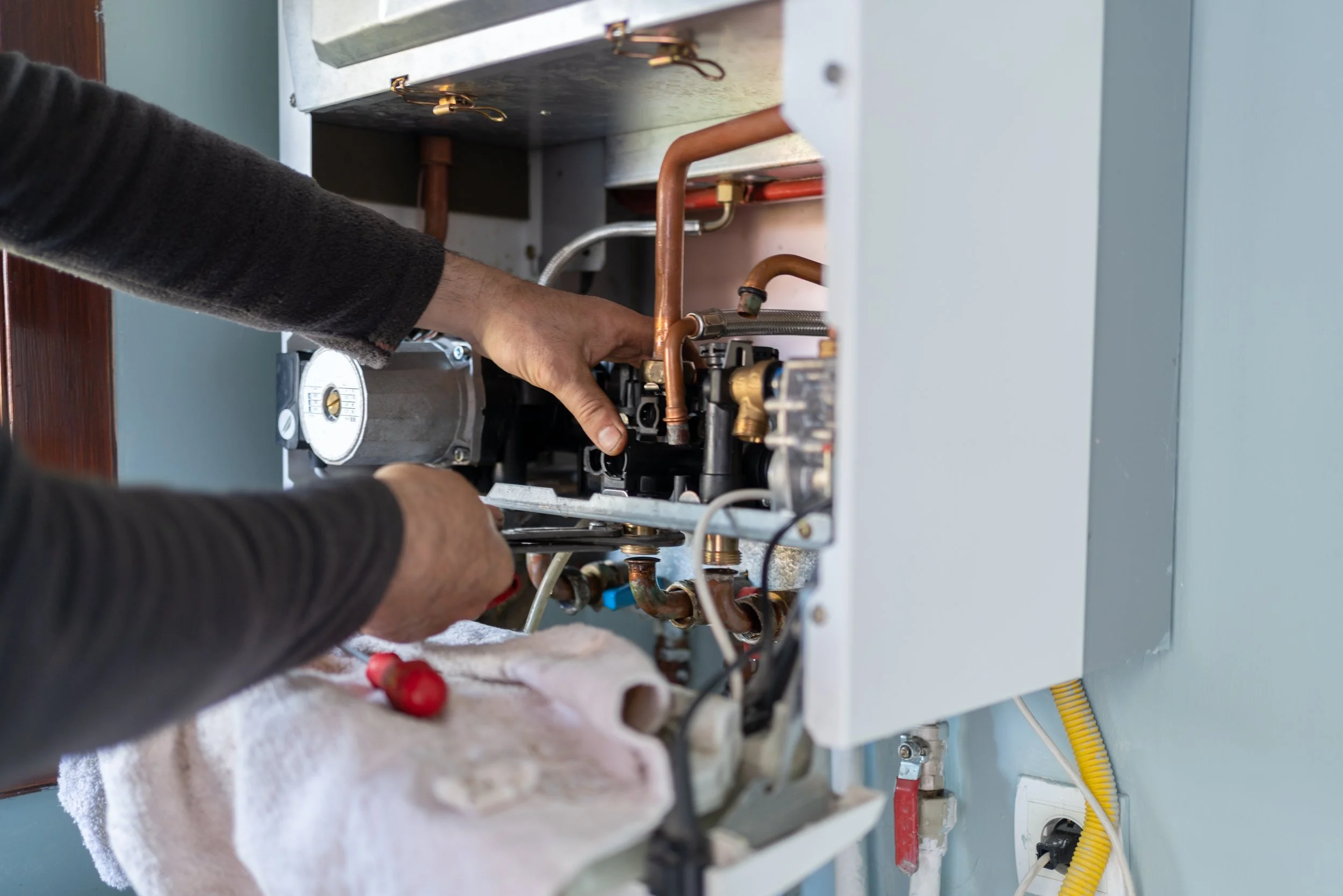
This problem gets worse during Michigan winters. When outdoor temperatures drop below 20 degrees—especially during polar vortex events—your furnace runs longer and harder. A filter that might last two months in mild weather can clog in three weeks when the system is running 18 hours a day.
How to check: Locate your furnace filter (usually in a slot near the blower or in a return air grille). Pull it out and hold it up to a light. If you can't see light passing through, it's too dirty. Replace it immediately.
How often to replace: During heating season (November through March in Southeast Michigan), check your filter monthly. Standard 1-inch pleated filters should be replaced every 30 days when the furnace is running regularly. If you have pets or high dust levels, check every two weeks.
Pro Tip: Keep three spare filters on hand at the start of winter. When you replace one, write the date on the filter frame with a marker. Set a phone reminder for 30 days later.
3. Pilot Light or Ignition System Failure
If the furnace's ignition system isn't working, the burners won't light—which means no heat. The blower will still run (because the thermostat is calling for heat), but cold air is all you'll get.
Older furnaces (pre-2000) typically have a standing pilot light—a small flame that burns continuously. If this pilot goes out due to a draft, dirt buildup, or a faulty thermocouple, the furnace can't ignite the main burners.
Newer furnaces use electronic ignition systems—either a hot surface ignitor (a ceramic element that glows red-hot) or an intermittent pilot (a spark that lights the pilot only when heat is needed). These systems are more efficient but can fail due to:
Cracked or worn-out hot surface ignitor (common after 5-7 years)
Dirty or misaligned flame sensor preventing ignition
Failed ignition control module
Power supply issues to the ignitor
What you might notice: You may hear clicking sounds as the ignitor tries to light, but the burners never catch. Or you might see the ignitor glow for a few seconds, then shut off without the burners firing.
When to call a technician: Unless you have experience with gas appliances, ignition system diagnosis and repair should be left to professionals. If you suspect an ignition problem, contact a licensed HVAC contractor for diagnosis. Ignitor replacement typically costs $150-$300 in Southeast Michigan.
4. Flame Sensor Covered in Carbon Buildup
This is the number one cause of short-cycling furnaces—and a common reason for no heat. The flame sensor is a safety device: a thin metal rod positioned near the burners. When the burners ignite, the flame sensor detects the heat and confirms that combustion is happening. This tells the gas valve it's safe to keep the burners lit.
Over time, the flame sensor gets coated with carbon deposits and oxidation. When the sensor can't detect the flame properly, it assumes the burners didn't ignite (even though they did). The gas valve shuts off within seconds as a safety precaution. The burners go out, but the blower keeps running—pushing cold air through your vents.
This cycle repeats: the furnace tries to start, the burners light for 3-10 seconds, then everything shuts down except the fan. Homeowners often describe this as the furnace "trying but failing" to heat.
Why it happens in Michigan: Furnaces in Southeast Michigan run hard from November through March. More runtime means more combustion cycles, which accelerates carbon buildup on the flame sensor. Furnaces that aren't maintained annually are especially prone to this.
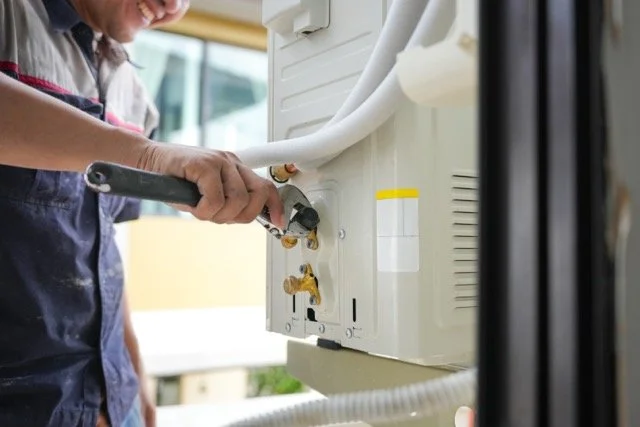
How techs fix it: Cleaning a flame sensor takes about 10 minutes. The technician shuts off power and gas to the furnace, removes the sensor rod, and gently polishes it with fine steel wool or an emery cloth. Once reinstalled, the furnace should run normally. This is a standard part of every fall furnace tune-up we perform through the Next Care Plan.
5. Gas Supply Issues
If your furnace isn't getting gas, it can't produce heat—even if everything else is working perfectly. Gas supply problems fall into two categories: issues with the gas company's service to your home, and problems with the furnace's internal gas valve.
External gas supply issues:
Gas service shut off due to non-payment or utility work in your area
Gas meter valve accidentally turned off
Gas line damage or leak (usually accompanied by a sulfur/rotten egg smell)
How to check: Try lighting a burner on your gas stove or checking your gas water heater. If other gas appliances aren't working either, the problem is with your gas supply—call your gas company immediately. If other appliances work fine but the furnace doesn't heat, the issue is with the furnace itself.
Internal gas valve issues: The furnace has its own gas valve that opens when the thermostat calls for heat. This valve can fail due to:
Electrical problems preventing the valve from opening
Mechanical failure of the valve itself (common in furnaces 15+ years old)
Tripped safety switches that prevent the valve from opening
Gas valve diagnosis requires specialized tools and training. If you suspect a gas valve problem, schedule service with a qualified technician. Gas valve replacement typically costs $300-$600 including labor.
Safety Note: If you smell gas (a sulfur or rotten egg odor), leave your home immediately and call your gas company's emergency line from outside. Do not try to diagnose or fix the problem yourself. Do not turn on lights or create any sparks.
6. Limit Switch Tripping Due to Overheating
The limit switch is a safety device mounted on the furnace's plenum (the main duct box above the heat exchanger). It monitors the temperature inside the furnace. If the temperature gets too high—usually above 180-200°F—the limit switch opens, shutting down the burners to prevent damage or fire.
When the limit switch trips, the burners shut off, but the blower keeps running to cool down the system. You feel air blowing, but it's not hot. Once the furnace cools down, the limit switch resets and the cycle starts over. This creates an on-again, off-again pattern where the furnace runs for a few minutes, shuts down, cools off, then tries again.
What causes the limit switch to trip:
Restricted airflow: Dirty filter, blocked return vents, closed registers in too many rooms, undersized ductwork
Blower motor problems: Failing blower motor, broken blower wheel, loose fan belt (in older furnaces)
Ductwork issues: Crushed or disconnected ducts, especially common in older Michigan homes with basement furnaces and crawlspace ductwork
We see this problem frequently in 1960s-1970s ranch homes across Macomb and Oakland counties. These homes often have undersized return air ducts—just one or two small grilles trying to feed a modern high-efficiency furnace. The furnace can't pull in enough air, overheats, and the limit switch shuts it down.
How to address it: Start with the basics—replace the filter and make sure all return vents are unblocked. Open registers in at least 75% of the rooms (closing too many restricts airflow). If the problem persists, you likely need a technician to inspect the blower motor and ductwork. Ductwork modifications to improve airflow typically cost $800-$2,500 depending on the scope of work.
7. Cracked Heat Exchanger (Serious Safety Issue)
This is the most serious cause of a furnace not blowing hot air—and the one that often means you need a new furnace. The heat exchanger is the metal chamber where combustion happens. Hot exhaust gases flow through the heat exchanger, warming the metal. The blower pushes air over the outside of the heat exchanger, transferring heat to the air that flows into your home.
Over years of heating and cooling cycles, the metal can develop cracks. When the heat exchanger is cracked:
The furnace may fail to produce adequate heat because combustion efficiency drops
Carbon monoxide and other combustion gases can leak into your home's air supply
Safety sensors may detect the problem and shut down the burners
Signs of a cracked heat exchanger:
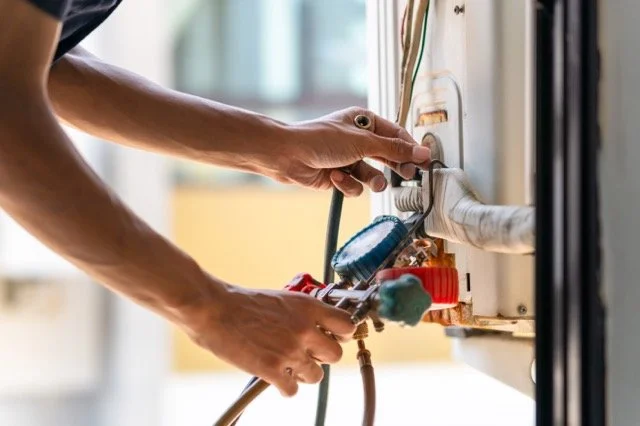
Visible cracks or rust holes when inspecting the heat exchanger with a flashlight
Soot buildup inside the furnace cabinet
Water pooling around the base of the furnace
Unusual odors when the furnace runs (often described as formaldehyde-like)
Yellow or flickering burner flames instead of steady blue flames
Carbon monoxide detector alarming
Why heat exchangers crack: Normal wear and tear over 15-20 years, repeated overheating due to airflow restrictions, corrosion from condensation (especially in high-efficiency furnaces), and manufacturing defects.
What to do: If a technician diagnoses a cracked heat exchanger, do not run the furnace. The risk of carbon monoxide exposure is real. Most heat exchanger failures happen in furnaces that are 15+ years old. At that age, replacement is usually more cost-effective than repair—a new heat exchanger can cost $1,200-$2,000 installed, and the labor is extensive. For comparison, a new high-efficiency furnace installed in Southeast Michigan typically costs $3,500-$6,000 depending on the size and features.
Many manufacturers offer warranties on heat exchangers (often 20 years or lifetime on premium models like Carrier Infinity or Lennox Signature series). If your furnace is still under warranty, the part may be covered—though you'll still pay for labor.
What to Check Before Calling a Technician
Before you schedule a service call, run through this quick diagnostic checklist. You might save yourself a service fee—and you'll definitely save time if you can fix the problem yourself.
1. Check your thermostat settings:
Is it set to HEAT mode (not COOL or OFF)?
Is the fan setting on AUTO (not ON)?
Is the temperature set at least 5 degrees higher than the current room temperature?
Are the batteries fresh? (Replace them if the display is dim or blank.)
2. Check the circuit breaker: Go to your electrical panel and locate the breaker labeled "Furnace" or "HVAC." Make sure it's in the ON position. If it has tripped, reset it once. If it trips again immediately, do not keep resetting it—you have an electrical problem that needs professional diagnosis.
3. Replace the air filter: Even if you "just changed it," pull it out and inspect it. A clogged filter is the most common cause of heating problems. If it's dirty, replace it before calling for service.
4. Check the furnace power switch: Many furnaces have a power switch mounted on or near the unit—it looks like a regular light switch, often in a red or gray electrical box. Make sure it's in the ON position. (It's surprisingly common for this to get accidentally switched off.)
5. Verify gas supply: If you have other gas appliances, check if they're working. Try lighting a burner on your gas stove. If the stove works but the furnace doesn't, the problem is isolated to the furnace. If nothing works, call your gas company.
If you've checked all of these and the furnace still isn't blowing hot air, it's time to call a professional.
When to Call NEXT Heating & Cooling
Some furnace problems are DIY-friendly. Others require specialized tools, training, and licensing. Here's when you should schedule HVAC service:
The furnace won't stay running: Burners light for a few seconds then shut off (likely a flame sensor or limit switch issue)
You smell gas: Leave immediately and call your gas company's emergency line
You see visible flames, smoke, or sparks: Shut off the furnace and call for emergency service
The carbon monoxide detector is alarming: Evacuate and call 911, then call an HVAC technician once the home is cleared
The furnace makes loud banging, screeching, or grinding noises: Mechanical failure is likely
You've replaced the filter and reset the breaker, but still no heat: The problem is beyond basic troubleshooting
What to expect during a service call: When you call NEXT Heating & Cooling, we'll ask about the symptoms you're experiencing and schedule a technician visit. Our techs arrive in clearly marked vehicles with all diagnostic equipment on board. We'll inspect the thermostat, test the ignition system, check the flame sensor, measure airflow, inspect the heat exchanger, and test all safety controls.
Most furnace repairs in Southeast Michigan cost between $150-$600 depending on the issue. Common repair costs:
Flame sensor cleaning: $100-$150
Ignitor replacement: $150-$300
Limit switch replacement: $150-$250
Gas valve replacement: $300-$600
Blower motor replacement: $400-$800
If the repair cost exceeds 50% of the furnace's current value, or if the furnace is more than 15 years old, we'll have an honest conversation about whether repair or replacement makes more sense. We don't work on commission, so you'll get straight advice—not a sales pitch. Read more about our approach in what breaks most often on furnaces in Sterling Heights.
How the Next Care Plan Prevents These Problems
Most of the issues we've covered—dirty filters, flame sensor buildup, ignition problems, limit switch failures—are preventable with regular maintenance. That's why we created the Next Care Plan: a $5/month maintenance subscription designed to catch problems before they leave you without heat on the coldest night of the year.
What's included:
Two annual home visits: Fall furnace tune-up (September-November) and spring AC tune-up (April-June)
Comprehensive inspection: We clean the flame sensor, test the ignition system, check the heat exchanger, measure airflow, inspect the blower motor, test safety controls, and replace your filter
Priority scheduling: Next Care Plan members get first-priority service during polar vortex events and summer heat waves
10% discount on repairs: If we find something that needs fixing, you save 10% on parts and labor
No service call fees: The $85-$125 diagnostic fee is waived for members
Why it matters in Michigan: Our furnaces work harder than almost anywhere else in the country. A furnace in Sterling Heights might run 1,500-2,000 hours per year during a typical winter. During polar vortex weeks, it can run 20+ hours per day. That's serious wear and tear. Regular maintenance extends equipment life by 5-10 years and prevents 80% of emergency breakdowns.
For $60 per year, you're protecting a $4,000-$6,000 investment and avoiding emergency repair bills that average $1,500-$4,000 when major components fail. The plan pays for itself the first time we catch a failing ignitor or clean a carbon-coated flame sensor before it leaves you without heat.
Ready to Get Started?
NEXT Heating & Cooling has been keeping Michigan homes comfortable for over 35 years. Get honest diagnostics and fair pricing from NATE-certified technicians who show up on time.
Frequently Asked Questions
Why is my furnace blowing cold air when the heat is on?
+
The most common causes are: thermostat fan setting on ON instead of AUTO (blower runs continuously even when not heating), a dirty air filter restricting airflow and triggering the limit switch, a flame sensor covered in carbon buildup causing short-cycling, or ignition system failure preventing the burners from lighting. Check your thermostat settings and air filter first. If those aren't the issue, you likely need professional diagnosis.
How much does it cost to fix a furnace that's not heating in Southeast Michigan?
+
Most furnace repairs cost between $150-$600 depending on the problem. Flame sensor cleaning runs $100-$150. Ignitor replacement costs $150-$300. Gas valve replacement is $300-$600. Blower motor replacement can be $400-$800. If the heat exchanger is cracked, you're usually looking at furnace replacement ($3,500-$6,000) rather than repair, since heat exchanger replacement labor is extensive and the furnace is likely near the end of its lifespan anyway.
Can I fix a furnace not blowing hot air myself?
+
You can handle basic troubleshooting: check thermostat settings (set to HEAT, fan on AUTO), replace the air filter, verify the furnace power switch is on, and check the circuit breaker. These fixes solve about 30% of "no heat" calls. However, anything involving the ignition system, flame sensor, gas valve, blower motor, or heat exchanger requires professional tools and training. Gas appliance work also requires proper licensing in Michigan. If basic checks don't solve it, call a licensed HVAC contractor.
How long should a furnace last in Michigan?
+
A well-maintained furnace in Southeast Michigan typically lasts 15-20 years. Michigan furnaces work harder than those in milder climates—we run 1,500-2,000 hours per year compared to 800-1,000 in southern states. Regular annual maintenance can extend lifespan to 20-25 years. Furnaces that aren't maintained often fail at 10-12 years. High-efficiency models (95%+ AFUE) from quality manufacturers like Carrier, Lennox, and Trane tend to last longer than builder-grade units. If your furnace is 15+ years old and needs a major repair, replacement usually makes more financial sense.
What's the difference between a furnace not starting and not heating?
+
"Not starting" means nothing happens—no fan, no burner sounds, complete silence. This usually indicates an electrical problem (tripped breaker, blown fuse, thermostat failure, transformer failure). "Not heating" means the furnace runs and the blower moves air, but the air isn't hot. This typically points to ignition problems, flame sensor issues, gas supply problems, or airflow restrictions. Both require different diagnostic approaches. If you're not sure which you're experiencing, note what sounds you hear and whether air is blowing from the vents when you tell your technician about the problem.
Should I replace my furnace if the heat exchanger is cracked?
+
In most cases, yes. Heat exchanger replacement costs $1,200-$2,000 in labor alone (it requires disassembling most of the furnace). If your furnace is 15+ years old—which is when most heat exchangers crack—you're investing major money into an aging system that will likely need other expensive repairs soon. A new high-efficiency furnace costs $3,500-$6,000 installed and comes with a full warranty, better efficiency (lower gas bills), and 15-20 years of reliable service. The exception: if your furnace is under 10 years old and the heat exchanger is still under warranty, replacement may make sense since the part is covered.
How often should I change my furnace filter in Michigan winter?
+
During heating season (November-March), check your filter monthly and replace it when you can't see light through it. Standard 1-inch pleated filters typically need replacement every 30 days when the furnace runs heavily. If you have pets, high dust levels, or run the furnace constantly during cold snaps, check every 2-3 weeks. Thicker filters (4-5 inches) last 3-6 months. A clogged filter is the leading cause of furnace overheating, limit switch trips, and blower motor failure. Set a recurring reminder on your phone—it's the single most important maintenance task you can do yourself.