

HVAC Maintenance Clinton Township MI: What Actually Matters
By NEXT Heating & Cooling
|
March 2, 2026
|
8 min read
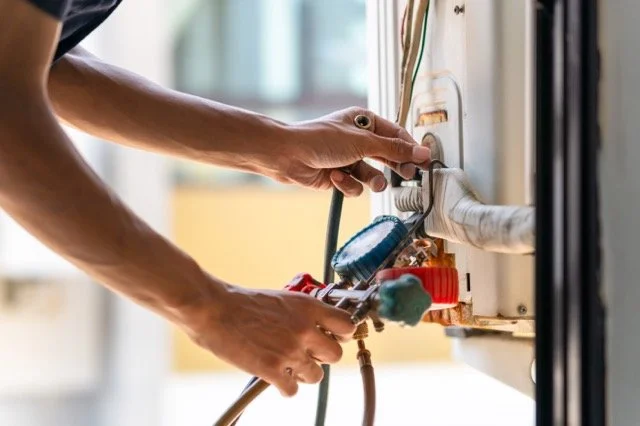
Here's what nobody tells you about HVAC maintenance in Clinton Township: most of what gets sold as "essential" is theater. The 47-point inspection checklist. The UV light upsell. The duct cleaning pitch before the tech even looks at your furnace.
After 35 years keeping Michigan homes comfortable through polar vortex events and hundred-degree summers, we've seen what actually breaks and what maintenance actually prevents. The gap between those two things is where homeowners waste money.
This is the straight answer on HVAC maintenance in Clinton Township, MI—what matters for your Carrier furnace in a 1970s ranch, what you're paying for that does nothing, and the two maintenance tasks that prevent 80% of the service calls we run in Macomb County.
If you're comparing heating and cooling services in Metro Detroit, you deserve to know what you're actually buying.
What HVAC Maintenance Actually Prevents in Michigan Homes
Michigan's climate destroys HVAC equipment in specific, predictable ways. The thermal cycling between -10°F January nights and 95°F July afternoons creates metal fatigue. Lake-effect humidity rusts electrical connections. Power surges during ice storms fry control boards.
Proper maintenance doesn't prevent all of this—equipment still ages—but it catches the failures before they cascade into expensive damage.
Heat Exchanger Cracks From Thermal Stress
This is the big one. Your furnace heat exchanger expands and contracts hundreds of times each heating season. A 16-year-old Lennox or Trane furnace running in a Clinton Township basement has cycled through roughly 50,000 heating cycles.
Dirty filters restrict airflow, which causes the heat exchanger to run hotter than designed. Hotter metal expands more. More expansion accelerates crack formation. Once a heat exchanger cracks, you're looking at $1,200 to $2,800 for replacement—or a new furnace if the unit is over 15 years old.
Annual combustion analysis catches this early. A tech measures flue gas temperature and CO levels. Rising CO or abnormal flame patterns indicate a crack forming. Catching it early means you plan the replacement instead of scrambling when the furnace shuts down at 2 AM in February.
Condensate Drain Freezing and Water Damage
High-efficiency furnaces (90%+ AFUE) produce condensate—water that drains out of your system. In Michigan basements, those drain lines freeze if the trap isn't properly maintained or if algae clogs the line.
When the drain backs up, water floods your furnace cabinet, destroys the control board ($400-$800), and potentially damages your basement. We've seen this ruin finished basements in Shelby Township and Warren.
Maintenance includes flushing the condensate line and checking the trap. Takes five minutes. Prevents thousands in water damage.
Blower Motor Failures From Dust Accumulation
Your blower motor moves 1,200 to 2,000 cubic feet of air per minute through your ductwork. Every particle of dust that gets past your filter accumulates on the blower wheel and motor windings.
Dust buildup increases friction, which makes the motor work harder, which generates heat, which eventually burns out the motor. A blower motor replacement costs $450 to $900 depending on whether you have a standard PSC motor or a variable-speed ECM motor.
Regular filter changes prevent most of this. But annual cleaning of the blower assembly during maintenance extends motor life significantly—especially in homes with pets or older ductwork that leaks dust.
Refrigerant Leaks From Vibration Stress
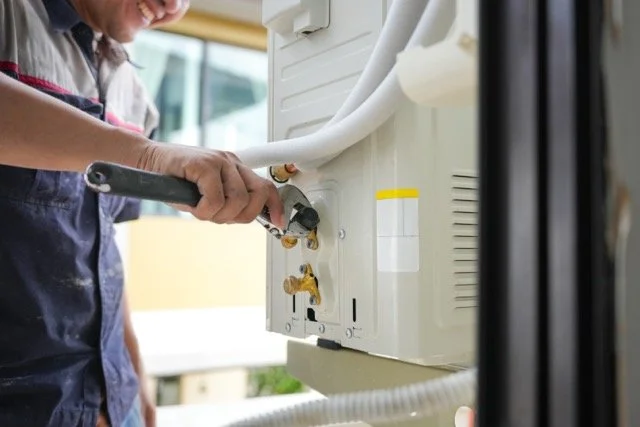
Your AC condenser sits outside, vibrating through thousands of hours of operation each summer. Refrigerant lines connect the outdoor unit to your indoor coil. Those connections loosen over time from vibration.
A slow refrigerant leak drops your system efficiency by 20% for every 10% loss of charge. More critically, low refrigerant causes your compressor to overheat and fail. Compressor replacement costs $1,500 to $3,500—often more than half the cost of a new AC unit.
Annual refrigerant pressure testing catches leaks early when they're cheap to fix. Ignoring them destroys your compressor.
The Two Maintenance Tasks That Matter Most
If you do nothing else, do these two things. They prevent more failures than everything else combined.
Filter Changes Every 30-60 Days
This is not optional. Your furnace filter protects your blower motor and heat exchanger from dust. When it clogs, static pressure increases, airflow drops, and your equipment overheats.
In Clinton Township homes with pets, change your filter every 30 days. Homes without pets can stretch to 60 days with a high-quality pleated filter. If you have a 1-inch filter slot, use a MERV 8 or MERV 11 pleated filter—not the cheap fiberglass ones that do nothing.
If your system has a 4-inch or 5-inch media filter, you can go 6-12 months between changes depending on dust levels. Check it every 60 days by holding it up to light. If you can't see light through it, replace it.
Michigan-specific filter note: Homes heated with wood stoves or fireplaces need more frequent filter changes. Ash particles are smaller than normal dust and clog filters faster.
Annual Ignitor Inspection Before Heating Season
Modern gas furnaces use hot surface ignitors—ceramic elements that glow red-hot to light the gas. These ignitors crack from thermal stress and typically last 5-8 years.
The problem: they often fail in the first cold snap of the season when you need heat most. A failed ignitor means no heat until a tech arrives. In November and December, that can mean a 24-48 hour wait during a polar vortex.
A tech can visually inspect the ignitor during fall maintenance and replace it if cracks are forming. The part costs $80-$150 installed. Doing it proactively means you avoid the emergency service call when it's 15°F outside.
This is exactly what our $5/month HVAC maintenance plan covers—fall furnace inspection that catches ignitor failures before they leave you without heat.
What Clinton Township Homeowners Waste Money On
The HVAC industry sells a lot of services that sound important but deliver minimal value for most homes. Here's what you can skip unless you have a specific, diagnosed problem.
Duct Cleaning (Unless You Have a Specific Issue)
Duct cleaning costs $400-$800 in Southeast Michigan. For most homes, it's unnecessary.
The EPA states that duct cleaning has never been shown to prevent health problems. Unless you have visible mold growth in ducts, a rodent infestation, or you're renovating after a fire, duct cleaning doesn't improve air quality or system efficiency.
What does work: sealing duct leaks. If your ducts leak (and most do), you're losing 20-30% of your conditioned air into your attic or crawlspace. Duct sealing costs about the same as cleaning but actually saves energy.

Annual Refrigerant "Top-Offs"
If your AC needs refrigerant added every year, you have a leak. Refrigerant doesn't get "used up"—it's a closed-loop system. Adding refrigerant without fixing the leak is like adding air to a tire with a nail in it.
A proper repair means finding the leak (using nitrogen pressure testing and electronic leak detectors), fixing it, evacuating the system, and recharging to manufacturer specifications. This costs $400-$900 depending on leak location.
Just adding refrigerant costs $150-$300 and lasts until the leak empties the system again—usually within a year. You're paying repeatedly for a temporary fix instead of solving the problem.
UV Lights (For Most Applications)
UV lights installed in your ductwork kill mold and bacteria on surfaces the light reaches. They cost $400-$800 installed and require annual bulb replacement at $100-$150.
The problem: they only work on surfaces directly exposed to UV light. They don't clean the air moving through your ducts—that requires a different technology (HEPA filtration or electronic air cleaners).
UV lights make sense if you have documented mold growth on your evaporator coil and you've fixed the underlying moisture problem causing it. For general air quality improvement, you'll get better results from a higher-MERV filter or an electronic air cleaner.
The Real Cost of Skipping Maintenance
Let's put actual numbers to this. These are real replacement costs we quote to homeowners in Clinton Township, Sterling Heights, and Shelby Township.
Heat exchanger replacement: $1,200-$2,800 depending on furnace model. For furnaces over 15 years old, replacement often costs more than a new furnace, making the entire unit a loss.
Compressor failure: $1,500-$3,500 for the compressor itself, plus $400-$800 in labor. For AC units over 10 years old, this typically means replacing the entire outdoor unit because the compressor cost approaches 70% of a new system.
Blower motor replacement: $450-$900 depending on motor type. Variable-speed ECM motors cost more but are necessary for high-efficiency systems.
Control board replacement: $400-$800 for the board plus $150-$250 labor. Water damage from condensate backups often destroys multiple boards in sequence.
Energy waste from dirty equipment: A furnace running with a clogged filter uses 15-20% more gas to deliver the same heat. For a Clinton Township home spending $1,200/year on heating, that's $180-$240 wasted annually. Over five years without maintenance, you've burned $900-$1,200 in excess fuel.
Compare that to maintenance costs: professional HVAC maintenance runs $150-$200 per visit if you're paying retail. Our NEXT Care Plan costs $60/year and includes both fall furnace and spring AC tune-ups.
The math is straightforward. One prevented compressor failure pays for 25 years of maintenance.
When to Call a Tech vs. What You Can Handle
Some maintenance tasks are genuinely DIY-friendly. Others require tools, training, and licensing you don't have. Here's the breakdown.
What You Can Safely Do Yourself
Filter changes: This is the most important maintenance task and the easiest. Turn off your furnace, slide out the old filter, slide in the new one with the airflow arrow pointing toward the furnace. Do this every 30-60 days.
Thermostat battery replacement: If your thermostat uses batteries (most programmable ones do), replace them annually. Low batteries cause erratic behavior and can prevent your system from running.
Outdoor unit clearing: Before cooling season, remove leaves, grass clippings, and debris from around your condenser. Maintain 18 inches of clearance on all sides. Don't use a pressure washer on the fins—you'll bend them.
Condensate drain flushing: If you have a high-efficiency furnace, you can flush the condensate drain with a 50/50 mix of vinegar and water every few months. Pour it into the drain opening (usually a PVC pipe near the furnace). This prevents algae buildup.
What Requires a Licensed Technician
Combustion analysis: This requires a calibrated flue gas analyzer that measures oxygen, carbon monoxide, and flue temperature. The readings determine whether your heat exchanger is cracked or your burners need adjustment. You can't do this with a hardware store CO detector.
Refrigerant pressure testing: Checking AC refrigerant requires gauges, knowledge of superheat and subcooling calculations, and EPA 608 certification (it's federal law). If your pressures are wrong, you need to know whether the problem is refrigerant charge, airflow, or a failing compressor. Guessing costs you money.
Electrical connection inspection: Loose electrical connections cause equipment failures and house fires. Tightening them requires shutting off power, using a torque screwdriver to proper specifications, and verifying amp draw. This isn't a YouTube project.
Gas pressure adjustment: Your furnace burners operate at specific gas pressure (typically 3.5 inches water column for natural gas). Too high and you get flame rollout. Too low and you get incomplete combustion and CO production. This requires a manometer and training.
If you want professional service from NATE-certified HVAC technicians who won't upsell you on services you don't need, that's exactly what we built NEXT Heating & Cooling to provide.
How the NEXT Care Plan Works
We built the NEXT Care Plan to solve a specific problem: homeowners in Clinton Township and across Macomb County were either skipping maintenance entirely (and paying for it in breakdowns) or getting sold unnecessary services by companies running commission-based sales.
Here's what you get for $5 per month ($60/year):
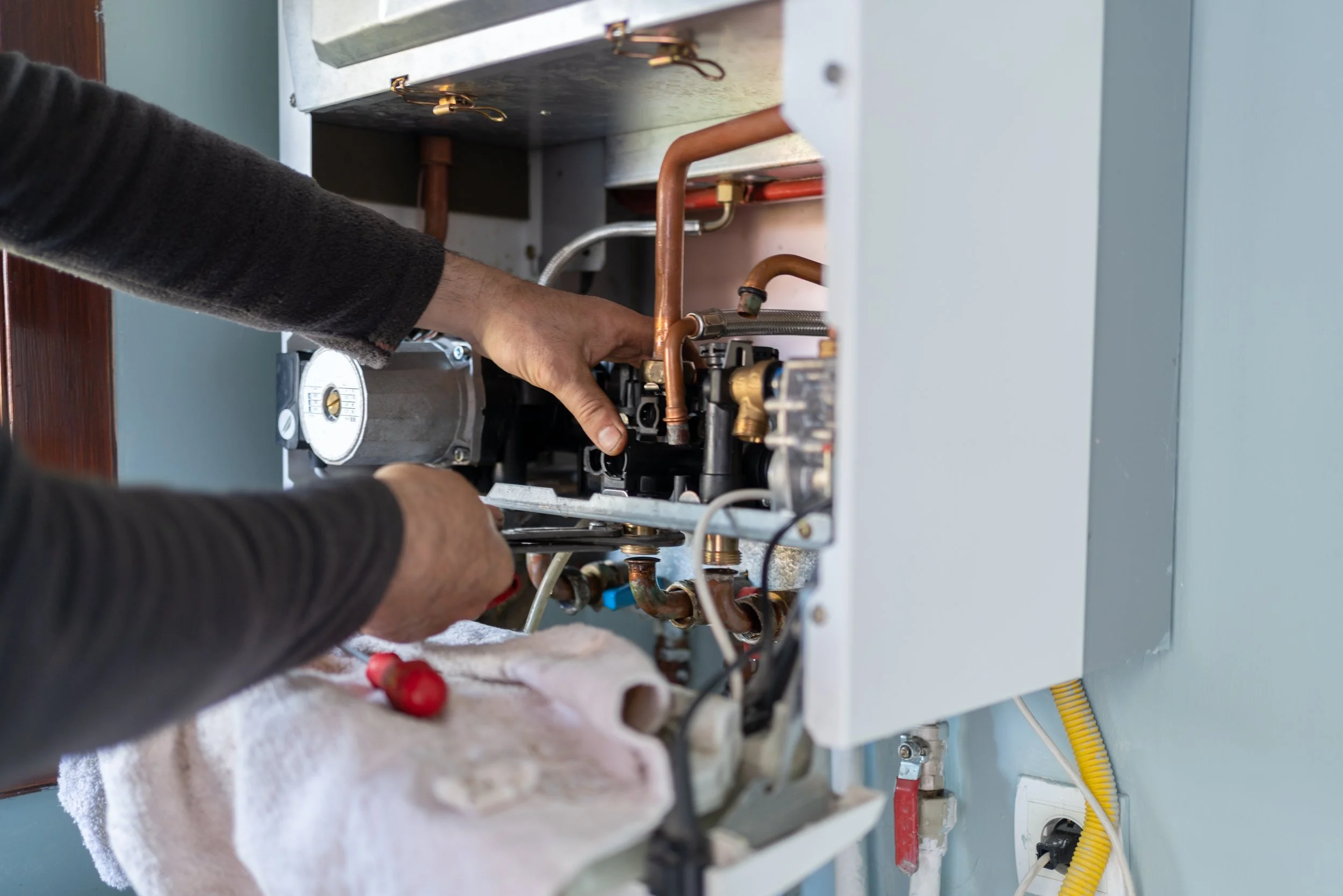
Fall furnace tune-up (September-November): Combustion analysis, ignitor inspection, blower cleaning, filter check, thermostat calibration, safety control testing. We're looking for the failures that leave you without heat in January.
Spring AC tune-up (April-June): Refrigerant pressure testing, condenser coil cleaning, electrical connection inspection, condensate drain flushing, capacitor testing. We're preventing the compressor failures that happen in July heat waves.
Priority scheduling: When a polar vortex hits and everyone's furnace is breaking, Care Plan members get priority. You're not waiting three days for heat.
10% discount on repairs: If we find something that needs fixing during maintenance, you get 10% off parts and labor.
No service call fees: If you need service between maintenance visits, there's no trip charge. You pay for the actual repair, not the truck roll.
The plan pays for itself if it prevents one service call or catches one failing component before it destroys something expensive. Given that we see heat exchanger cracks, compressor failures, and blower motor burnouts every season in homes that skip maintenance, the math is straightforward.
You can learn more about the Next Care Plan details and sign up here.
Ready to Get Started?
NEXT Heating & Cooling has been keeping Michigan homes comfortable for over 35 years. Get honest diagnostics and fair pricing from NATE-certified technicians who show up on time.
Frequently Asked Questions
How often should I schedule HVAC maintenance in Clinton Township?
+
Schedule professional maintenance twice per year—once before heating season (September-November) and once before cooling season (April-June). Michigan's extreme temperature swings stress HVAC equipment more than moderate climates, making seasonal tune-ups essential for preventing mid-winter and mid-summer failures. Between professional visits, change your filter every 30-60 days depending on dust levels and pet hair.
What's included in a furnace tune-up?
+
A proper furnace tune-up includes combustion analysis (measuring CO and flue gas temperature), heat exchanger inspection, ignitor examination, blower motor cleaning, filter replacement or check, thermostat calibration, safety control testing (limit switches and rollout sensors), gas pressure verification, and condensate drain flushing for high-efficiency furnaces. The goal is catching failures before they leave you without heat during a Michigan winter.
Can I perform HVAC maintenance myself?
+
You can handle filter changes, thermostat battery replacement, outdoor unit debris clearing, and basic condensate drain flushing. However, combustion analysis, refrigerant pressure testing, electrical connection inspection, and gas pressure adjustment require specialized tools, training, and licensing. Attempting these tasks without proper equipment risks equipment damage, voiding warranties, and creating safety hazards including carbon monoxide leaks and refrigerant exposure.
How much does HVAC maintenance cost in Clinton Township?
+
Individual maintenance visits typically cost $150-$200 for either furnace or AC service. Annual maintenance plans offering both fall and spring tune-ups range from $200-$400 per year depending on the provider and what's included. The NEXT Care Plan costs $60/year ($5/month) and includes both seasonal tune-ups plus priority scheduling, 10% repair discounts, and no service call fees. One prevented compressor failure or heat exchanger replacement pays for decades of maintenance.
What happens if I skip annual HVAC maintenance?
+
Skipping maintenance accelerates equipment wear and increases failure risk. Dirty filters cause heat exchangers to overheat and crack ($1,200-$2,800 to replace). Neglected AC systems develop refrigerant leaks that destroy compressors ($1,500-$3,500 to replace). Blower motors accumulate dust and burn out ($450-$900 to replace). You'll also waste 15-20% more energy due to reduced efficiency. Most critically, you won't catch safety issues like cracked heat exchangers that produce carbon monoxide until they fail completely.
Is duct cleaning necessary with regular HVAC maintenance?
+
Duct cleaning is not necessary for most homes. The EPA states that duct cleaning has not been proven to prevent health problems or improve efficiency unless you have visible mold growth, rodent infestation, or substantial dust from renovation. What does matter: sealing duct leaks, which most Clinton Township homes have. Leaky ducts waste 20-30% of your conditioned air. Duct sealing costs about the same as cleaning but actually reduces energy bills.
When is the best time to schedule HVAC maintenance in Michigan?
+
Schedule furnace maintenance in September or October, before the first freeze when HVAC companies get slammed with emergency calls. Schedule AC maintenance in April or May, before the summer heat creates a rush for service. Booking during shoulder seasons gets you better availability, lower wait times, and ensures your equipment is ready before you need it most. Waiting until November for furnace service or June for AC service means competing with emergency breakdowns for appointment slots.