

Why Is My Furnace Blowing Cold Air? Michigan HVAC Expert

It's 2 a.m. on a January night in Sterling Heights. The wind chill is -15°F. You wake up freezing and realize your furnace is running — you can hear the blower motor — but ice-cold air is pouring from the vents. This is one of the most common emergency calls we receive at NEXT Heating & Cooling during Michigan winters.
If your furnace is blowing cold air, you're dealing with one of seven common problems. Some you can fix yourself in five minutes. Others require a licensed technician. After 35 years of furnace installation and repair across Southeast Michigan, we've diagnosed this exact problem thousands of times — and we're going to walk you through it step by step.
This guide covers gas furnaces (natural gas and propane), electric furnaces, and heat pump systems. We'll explain what's actually happening inside your equipment, what you can safely check yourself, and when to call for professional help.
1. Thermostat Settings and Power Issues
Before you panic, check the most obvious culprit: your thermostat. We get service calls every week where the "broken" furnace is actually just a thermostat set to the wrong mode or fan setting.

Check These Settings First:
Mode Setting: Make sure your thermostat is set to "HEAT," not "COOL" or "OFF." This sounds basic, but it happens more often than you'd think — especially in homes with kids or after a cleaning service has been through.
Fan Setting: This is the number one cause of cold air complaints. If your fan is set to "ON" instead of "AUTO," the blower runs continuously — even when the furnace isn't producing heat. You'll feel cold air between heating cycles. Switch it to "AUTO" and the blower will only run when the furnace is actively heating.
Temperature Setting: Verify the temperature is set at least 3-5 degrees higher than the current room temperature. Some thermostats have a built-in delay and won't call for heat unless there's a clear gap.
Dead Batteries: If you have a battery-powered thermostat (common in older homes across Macomb County), dead batteries can cause erratic behavior. Replace them annually — we recommend doing it when you change your smoke detector batteries.
Michigan Pro Tip: During polar vortex events, some programmable thermostats go into "recovery mode" and start heating earlier than the scheduled time. This is normal — the thermostat is compensating for the extreme cold and trying to reach your set temperature by your wake-up time.
2. Pilot Light and Ignition Problems
If you have a gas furnace (the most common type in Southeast Michigan), the burners need to ignite to produce heat. If they don't light, the blower still runs — pushing unheated air through your ducts.
Older Furnaces with Standing Pilot Lights:
Furnaces manufactured before the mid-1990s typically have a standing pilot light — a small flame that burns continuously. If this pilot goes out (due to a draft, debris, or thermocouple failure), the burners won't light.
How to check: Look through the viewing window on your furnace cabinet. You should see a small blue flame. If you don't see a flame, consult your furnace's manual for relighting instructions — or call us. Never attempt to relight a pilot if you smell gas.
Modern Furnaces with Electronic Ignition:
Newer furnaces use hot surface ignitors or intermittent pilot systems. These are more reliable than standing pilots, but they can still fail. Common causes:
Cracked hot surface ignitor: These ceramic igniters are fragile and crack over time, especially in furnaces that cycle frequently. A cracked ignitor won't heat up enough to ignite the gas.
Dirty flame sensor: (Covered in detail in the next section — this is the most common cause.)
Gas valve failure: The gas valve controls fuel flow to the burners. If it fails, no gas reaches the ignition system.
If you hear your furnace trying to ignite — a clicking sound or the whoosh of the draft inducer motor — but the burners never light, you're dealing with an ignition problem. This requires a technician. Our NATE-certified technicians carry the most common ignitor models on our trucks, so we can usually fix this on the first visit.
3. Flame Sensor Failure (Most Common Repair We Perform)
This is the single most common reason furnaces blow cold air in Michigan homes — and it's also one of the most misunderstood. The flame sensor is a safety device that confirms the burners are actually lit before allowing gas to continue flowing. If the sensor is dirty or corroded, it can't detect the flame, so the furnace shuts off the gas after just a few seconds.
What you'll experience: The furnace starts normally. You hear the draft inducer motor, then the ignitor clicks, and the burners light. But after 3-10 seconds, the burners shut off. The blower keeps running, pushing cold air through your vents. This cycle repeats over and over.
Why Flame Sensors Fail:
The flame sensor is a thin metal rod positioned in the path of the burner flames. When the flame heats the rod, it generates a tiny electrical current (measured in microamps) that signals the control board: "Yes, we have flame. Keep the gas flowing."
Over time, carbon buildup, dust, and corrosion coat the sensor rod. This insulates it from the flame, preventing it from generating enough current. The control board interprets this as "no flame detected" and shuts off the gas for safety.
In Southeast Michigan, this happens faster than in drier climates because of humidity. Basements in Royal Oak, Clinton Township, and Troy are often damp — especially in older homes with fieldstone foundations. That moisture accelerates corrosion.
Can You Clean It Yourself? Technically, yes — but we don't recommend it unless you're comfortable working inside your furnace. You'll need to shut off power and gas, remove the burner assembly access panel, locate the sensor rod (it's usually near the burners), disconnect the wire, remove the mounting screw, and gently clean the rod with fine-grit sandpaper or steel wool. If you're not confident doing this, call us. It's a quick repair — usually under an hour.
If you're enrolled in our Next Care Plan, we clean your flame sensor during every fall furnace tune-up. This $5/month maintenance plan includes two annual home visits — one before heating season and one before cooling season — and it prevents the majority of mid-winter breakdowns we see.
4. Air Filter Restriction
A clogged air filter is the easiest problem to fix — and one of the most dangerous to ignore. When your filter is completely blocked, your furnace can't pull enough air across the heat exchanger. The heat exchanger overheats, and the limit switch (a safety device) shuts down the burners to prevent damage or fire.
The blower keeps running to cool down the heat exchanger, which is why you feel cold air.
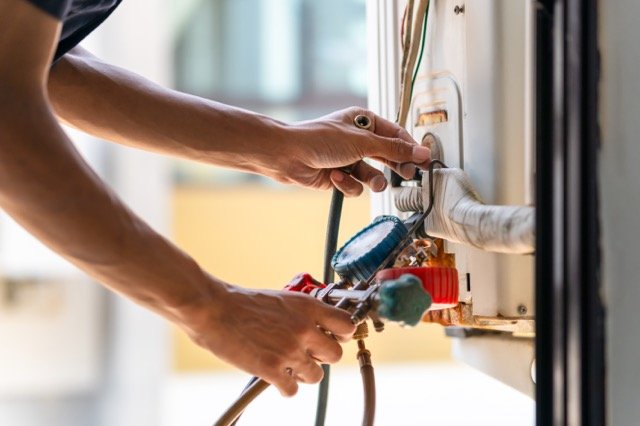
How to Check Your Filter:
Locate your furnace filter. In most Michigan homes, it's either:
Inside the furnace cabinet (look for a slot near the blower compartment)
In a return air grille on your wall or ceiling (common in homes built in the 1960s-1980s)
In a dedicated filter rack between the return duct and furnace
Pull out the filter and hold it up to a light. If you can't see light through it, it's too dirty. Replace it immediately.
Filter Replacement Schedule:
The "change every 90 days" rule is outdated. In Michigan, you need to check your filter monthly during heating and cooling seasons. Replace it when it's visibly dirty. Factors that shorten filter life:
Pets: Dog and cat hair clogs filters fast. Homes with multiple pets may need monthly changes.
Remodeling or construction: Drywall dust and sawdust will kill a filter in days.
High-efficiency filters: MERV 11-13 filters trap more particles but also restrict airflow more. If you're using these, check them every 2-3 weeks.
Never run your furnace without a filter. We've seen heat exchangers crack from overheating in as little as two weeks of filterless operation. A cracked heat exchanger means carbon monoxide leaks and often requires full furnace replacement — a $4,000-$8,000 problem that a $15 filter would have prevented.
5. Ductwork and Airflow Problems
Michigan homes — especially those built before 1980 — often have ductwork problems that cause cold air complaints. The furnace is producing heat, but it's not reaching your living spaces efficiently.
Common Ductwork Issues in Southeast Michigan:
Disconnected or Damaged Ducts: In crawl spaces and attics, ducts can separate at the joints, tear, or get crushed. Heated air leaks into unconditioned spaces before it reaches your rooms. You'll notice this as hot and cold spots — some rooms are comfortable while others are freezing.
Undersized Ductwork: Many 1950s-1970s ranch homes in Shelby Township and Warren have ductwork designed for smaller, less efficient furnaces. When you upgrade to a modern high-efficiency furnace with a variable-speed blower, the old ducts may not distribute air properly. The furnace produces plenty of heat, but the ductwork can't deliver it.
Closed or Blocked Vents: Walk through your home and check every supply register. Make sure they're open and not blocked by furniture, rugs, or curtains. Closing too many vents (more than 20% of your total) creates back-pressure that can trigger safety shutdowns.
Return Air Problems: Your furnace needs balanced airflow — air coming in (return) and air going out (supply). If your return air grilles are blocked or undersized, the furnace can't pull enough air. This causes the same overheating and shutdown cycle as a dirty filter.
Real Example from Lake Orion: We diagnosed a "furnace blowing cold air" call where the homeowner had renovated their basement and built a wall that blocked the main return air grille. The furnace was overheating and shutting down within minutes of starting. We installed a new return duct to restore proper airflow — problem solved.
If you suspect ductwork problems, we offer complete ductwork inspection and repair services. We use thermal imaging cameras to identify leaks and pressure testing to measure system efficiency.
6. Limit Switch and Safety Controls
Modern furnaces have multiple safety controls designed to prevent fires, carbon monoxide leaks, and equipment damage. When these controls detect a problem, they shut down the burners but leave the blower running. This is why you feel cold air.
High-Limit Switch:
The high-limit switch monitors the temperature inside the furnace cabinet. If the heat exchanger gets too hot (usually above 200°F), the limit switch opens and shuts off the burners. Causes:
Dirty filter (most common)
Closed or blocked supply vents
Failed blower motor or capacitor (blower runs too slowly or not at all)
Oversized furnace for the ductwork (furnace produces more heat than the ducts can move)
If your limit switch is tripping repeatedly, don't ignore it. This is a fire hazard. The switch is preventing your heat exchanger from cracking or warping, which would require furnace replacement.
Rollout Switch:
The rollout switch detects flames escaping from the combustion chamber — a dangerous condition called "flame rollout." If this switch trips, your furnace has a serious problem:
Cracked heat exchanger
Blocked flue or vent pipe (exhaust gases can't escape)
Failed draft inducer motor
Never reset a tripped rollout switch without having a technician inspect the furnace. Flame rollout can produce carbon monoxide inside your home.
Pressure Switch:
The pressure switch confirms that the draft inducer motor is pulling combustion gases out of the furnace and venting them safely outside. If the switch doesn't close (because of a blocked vent, failed inducer motor, or cracked pressure hose), the furnace won't light.
In Michigan, we see pressure switch problems spike during heavy snow and ice storms. Snow can block the exterior vent termination (the PVC pipe coming out of your home). If you have a high-efficiency furnace with PVC venting, check the exterior vent after every major snowfall.
7. When to Call a Professional vs. DIY
Some furnace problems are safe to troubleshoot yourself. Others require a licensed technician — both for safety and because Michigan law requires certain repairs to be performed by a licensed mechanical contractor.
Safe to Check Yourself:
Thermostat settings and batteries
Air filter condition
Circuit breaker and furnace power switch
Supply vents (open/closed status)
Exterior vent termination (snow blockage)
Call a Professional For:
Any situation where you smell gas (leave immediately and call your gas company first, then call us)
Repeated ignition failures
Flame sensor cleaning or replacement (unless you're experienced with furnace repair)
Limit switch or rollout switch trips
Cracked heat exchanger (carbon monoxide hazard)
Blower motor or capacitor failure
Gas valve problems
Control board failure
Ductwork leaks or modifications
What a Service Call Costs:
At NEXT Heating & Cooling, our diagnostic service call fee is $89 for standard hours (Monday-Friday, 8 a.m.-5 p.m.). This covers a complete system inspection and diagnosis. If you approve the repair, the diagnostic fee is waived — you only pay for parts and labor.
Common repair costs in Southeast Michigan:
Flame sensor cleaning: $120-$180
Ignitor replacement: $200-$350
Blower motor capacitor: $150-$250
Limit switch replacement: $180-$300
Pressure switch replacement: $200-$350
Gas valve replacement: $400-$650
If your furnace is more than 15 years old and requires a major repair (gas valve, blower motor, heat exchanger), we'll provide honest guidance on whether repair or replacement makes more financial sense. Our technicians aren't on commission — they're paid hourly — so they have no incentive to upsell you on a new furnace if your current one can be repaired cost-effectively.
Emergency Service: We offer 24/7 emergency HVAC service across Macomb, Oakland, and St. Clair counties. If your furnace fails during a polar vortex or weekend cold snap, call us. We'll get someone to your home as quickly as possible. Emergency service rates apply outside standard hours.
Preventive Maintenance Saves Money:
The majority of "furnace blowing cold air" calls we receive could have been prevented with annual maintenance. Our $5/month Next Care Plan includes:
Fall furnace tune-up (before heating season)
Spring AC tune-up (before cooling season)
Flame sensor cleaning
Filter check and replacement (if needed)
Ignitor inspection
Blower motor and belt inspection
Combustion analysis and safety check
Priority scheduling (you get service faster than non-members)
10% discount on all repairs
No service call fees for members
For $60/year, you get two professional tune-ups and peace of mind that your furnace will work when you need it. We've been offering this plan since 2018, and our members have 87% fewer emergency breakdowns than non-members.
Furnace Blowing Cold Air? We'll Diagnose It Fast.
NEXT Heating & Cooling has been keeping Southeast Michigan homes comfortable for over 35 years. Our NATE-certified technicians carry the most common parts on their trucks, so we can usually fix your furnace on the first visit. No commission-based sales. No pressure. Just honest diagnostics and fair pricing.
Frequently Asked Questions
Why is my furnace blowing cold air when the heat is on?
+
The most common causes are: (1) thermostat fan setting on "ON" instead of "AUTO," (2) dirty flame sensor causing the burners to shut off after a few seconds, (3) clogged air filter causing the furnace to overheat and shut down, or (4) ignition failure preventing the burners from lighting. Check your thermostat and filter first. If those aren't the problem, call a technician to diagnose the ignition system and flame sensor.
Can I clean my furnace flame sensor myself?
+
Yes, but only if you're comfortable working inside your furnace and following safety procedures. You'll need to shut off power and gas, remove the burner assembly access panel, locate the sensor rod, disconnect the wire, remove the mounting screw, and gently clean the rod with fine-grit sandpaper or steel wool. If you're not confident doing this, call a technician. It's a quick repair — usually under an hour and costs $120-$180 in Southeast Michigan.
How often should I change my furnace filter in Michigan?
+
Check your filter monthly during heating and cooling seasons. Replace it when it's visibly dirty — you should be able to see light through a clean filter. Homes with pets, high dust levels, or during remodeling may need monthly changes. High-efficiency MERV 11-13 filters need checking every 2-3 weeks because they trap more particles and restrict airflow faster. Never run your furnace without a filter — it can cause heat exchanger damage.
What does it mean when my furnace starts then shuts off after a few seconds?
+
This is called "short-cycling" and is almost always caused by a dirty or failed flame sensor. The burners light, but the flame sensor can't detect the flame (due to carbon buildup or corrosion), so the control board shuts off the gas after 3-10 seconds as a safety precaution. The blower continues running, pushing cold air through your vents. This is the most common furnace repair we perform in Michigan — flame sensor cleaning usually solves it.
Should my furnace fan be set to ON or AUTO?
+
Set it to AUTO for normal operation. In AUTO mode, the blower only runs when the furnace is actively heating. In ON mode, the blower runs continuously — even between heating cycles — which pushes unheated air through your vents and makes you feel cold. The only time to use ON mode is if you're trying to circulate air for better temperature balance or running an air purifier that requires continuous airflow.
How much does it cost to fix a furnace blowing cold air in Michigan?
+
It depends on the cause. Simple fixes like thermostat adjustment or filter replacement cost nothing (DIY). Professional repairs range from $120-$180 for flame sensor cleaning to $400-$650 for gas valve replacement. At NEXT Heating & Cooling, our diagnostic service call is $89 (waived if you approve the repair). We'll diagnose the problem, explain your options, and provide upfront pricing before starting any work. Our technicians aren't on commission, so you get honest recommendations.
Is it dangerous if my furnace is blowing cold air?
+
Not immediately dangerous in most cases — the safety controls are working to prevent hazards. However, if you smell gas at any time, leave your home immediately and call your gas company, then call us. If your rollout switch has tripped (usually indicated by a blinking error code), don't reset it yourself — this indicates flames are escaping the combustion chamber, which can produce carbon monoxide. Call a technician for inspection. Most cold air situations are just inconvenient, not dangerous, but always err on the side of caution with gas appliances.