

Air Conditioning Repair Mount Clemens MI: Common Issues
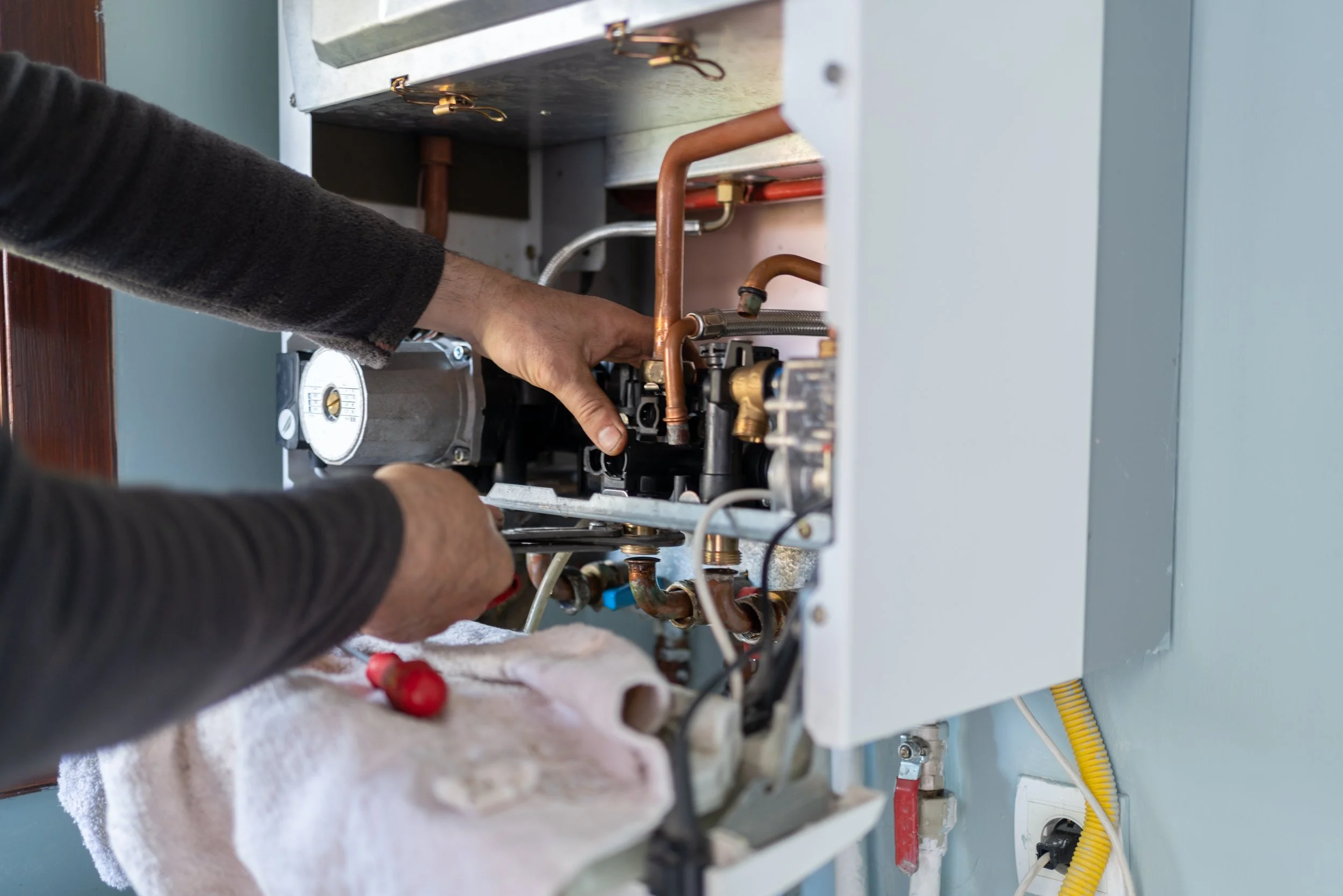
After three decades of heating and cooling services in Metro Detroit, we've seen the same AC problems show up in Mount Clemens homes every summer. The proximity to Lake St. Clair creates humidity levels that stress air conditioning systems harder than most homeowners realize. Add in the aging housing stock throughout Macomb County—homes built in the 1960s through 1980s with original ductwork and undersized equipment—and you get predictable failure patterns.
Most AC breakdowns don't happen randomly. Specific components fail first, and they fail for specific reasons tied to how Mount Clemens homes are built and how Michigan weather operates. This guide walks through what actually breaks, why it breaks, what it costs to fix, and when repair stops making financial sense. No sales pitch—just the mechanical reality we see in basements and attic units across Sterling Heights, Clinton Township, and St. Clair Shores every cooling season.
The Five Most Common AC Repairs We See in Mount Clemens
Walk into any HVAC service truck in Southeast Michigan during June and July, and you'll find the same replacement parts stocked in bulk. These five components account for roughly 80% of the air conditioning repair calls we run in Macomb County.
Capacitor Failures
The capacitor is a small cylindrical component that stores electrical charge and provides the jolt needed to start your compressor and blower motor. It's the most common single point of failure in residential AC systems—accounting for 35-40% of service calls in our experience. Capacitors fail because they're heat-sensitive, and they sit in metal cabinets that bake in Michigan sun all summer.
Symptoms are straightforward: your thermostat calls for cooling, you hear a humming sound from the outdoor unit, but the compressor never kicks on. Or the system starts but shuts down after a few minutes. Capacitors are rated in microfarads (µF), and when they drop below their rated capacity, motors can't start reliably. A typical residential AC uses a dual-run capacitor (one component serving both compressor and fan motor) rated between 35-80 µF depending on system size.
Replacement is simple for a trained technician—15 to 30 minutes—but it requires proper discharge procedures and exact capacitance matching. Using the wrong rating damages motors. Cost ranges from $150-$400 depending on the part and whether it's a standard service call or emergency after-hours work.
Refrigerant Leaks
Air conditioners don't "use up" refrigerant the way a car burns gas. The refrigerant circulates in a closed loop. If your system is low on refrigerant, it has a leak. Period. Most leaks develop at brazed joints (where copper lines connect), at the service valves on the outdoor unit, or in the evaporator coil inside your furnace cabinet.

Symptoms include weak cooling, ice buildup on the copper lines outside, or the system running constantly without reaching the thermostat setpoint. Older systems use R-22 refrigerant (Freon), which is being phased out and now costs $80-$150 per pound. Newer systems use R-410A (Puron), which runs $50-$100 per pound. A typical residential system holds 6-15 pounds depending on tonnage.
Here's the critical part most homeowners miss: just adding refrigerant without finding and fixing the leak is a temporary patch. The refrigerant will leak out again—sometimes in weeks, sometimes over a season. Proper repair requires leak detection (using electronic sniffers or UV dye), accessing the leak point, brazing or replacing the component, pressure testing, evacuating moisture from the system, and then recharging to manufacturer specifications. This isn't a DIY job.
Leak repair costs vary wildly based on location. An accessible service valve leak might cost $200-$400 to fix plus refrigerant. An evaporator coil leak often means replacing the entire coil, which can run $1,200-$2,500 including labor and refrigerant recharge.
Compressor Problems
The compressor is the heart of your AC system—a sealed unit that pressurizes refrigerant and pumps it through the cooling cycle. When compressors fail, it's usually catastrophic. They don't gradually decline; they seize up, short out electrically, or lose compression capacity suddenly.
Common causes include electrical issues (bad capacitor or contactor causing hard starts), refrigerant problems (running low or overcharged damages the compressor), or contamination from a previous failure that wasn't properly cleaned out. Compressors in Carrier, Lennox, and Trane systems typically last 12-15 years in Michigan climate. Goodman and Rheem units in the builder-grade category sometimes fail earlier, especially if maintenance was neglected.
Symptoms are often obvious: loud clanking or grinding from the outdoor unit, the breaker tripping repeatedly, or the unit humming but not starting. Compressor replacement runs $1,200-$3,500 depending on system size and refrigerant type. Here's where the age calculation matters: if your system is over 10 years old and the compressor fails, replacement often makes more financial sense than repair. You're paying for most of the cost of a new system but keeping old components that will fail next.
Blower Motor and Fan Issues
The indoor blower motor (in your furnace or air handler) circulates air across the evaporator coil and through your ductwork. It runs constantly during cooling season, and in older systems, these motors wear out. Bearings dry up, windings short out, or the motor simply burns up from running against restricted airflow (usually caused by dirty filters or blocked return vents).
Symptoms include weak airflow from vents, strange squealing or grinding noises, or no air movement at all even though the outdoor unit is running. Blower motor replacement typically costs $400-$800 depending on motor type. Variable-speed ECM (electronically commutated motor) units cost more than standard PSC (permanent split capacitor) motors but run more efficiently.
Outdoor fan motor failures are less common but follow similar patterns—bearings fail, capacitors go bad, or debris damages the fan blade. Outdoor fan motor replacement runs $300-$600.
Frozen Evaporator Coils
Walk into a Mount Clemens basement in July and see ice covering the copper lines or the entire indoor coil, and you're looking at restricted airflow or low refrigerant. The coil freezes because refrigerant temperature drops too low when it can't absorb enough heat from the air passing over it.
Three main causes: dirty air filters (the most common—homeowners go months without changing them), blocked return vents or registers (furniture, closed doors), or low refrigerant from a leak. Less commonly, a failing blower motor or collapsed ductwork restricts airflow enough to cause freezing.
The fix isn't complicated once you identify the cause. If it's a dirty filter, replace it and let the ice melt (this takes hours—don't run the system until it's fully thawed). If it's low refrigerant, you're back to leak detection and repair. Service call costs range from $150 for a simple filter issue to $800+ if refrigerant work is needed.
Why Mount Clemens AC Systems Fail Earlier Than Expected
Geography and housing construction patterns create specific challenges for air conditioning systems in Macomb County. Understanding these factors explains why a system rated for 15 years might fail at 10, or why your neighbor's AC died while yours keeps running.
Lake St. Clair Humidity Impact
Mount Clemens sits close enough to Lake St. Clair that humidity levels run consistently higher than inland Michigan locations. Your AC doesn't just cool air—it removes moisture. High humidity means your system runs longer cycles to achieve the same comfort level, which accelerates wear on compressors, contactors, and capacitors. The outdoor unit also deals with more corrosion from moisture in the air, especially on aluminum fins and copper coils.
Systems near the lake often show rust and corrosion damage 2-3 years earlier than identical units installed 20 miles inland. If your outdoor unit sits in a shaded, damp area (north side of the house, under trees), this problem compounds. We see this pattern repeatedly in homes along the Clinton River corridor and near the lakefront.
Undersized Systems in Older Homes
Many homes built in Mount Clemens during the 1960s and 1970s had central air added as an afterthought—sometimes decades after construction. Contractors often undersized these systems, either to save money or because they didn't properly calculate cooling load. An undersized AC runs constantly on hot days, never cycles off, and wears out components faster.
Proper sizing requires a Manual J load calculation that accounts for square footage, insulation levels, window area and orientation, air infiltration, and occupancy. A 1,600-square-foot ranch doesn't automatically need a 3-ton unit. It might need 2.5 tons or 3.5 tons depending on these variables. Undersized systems fail early because they never rest. Oversized systems fail early because they short-cycle (run in frequent, brief cycles that never fully dehumidify the home and stress electrical components).
Poor Maintenance History
The single biggest predictor of early AC failure is maintenance history—or lack of it. Systems that receive annual professional tune-ups last 3-5 years longer on average than neglected systems. The Next Care Plan exists specifically to prevent this: two annual visits (spring AC tune-up, fall furnace check) for $5/month catch problems before they become failures.
What happens during neglect: air filters clog and restrict airflow, coils accumulate dirt and lose efficiency, refrigerant levels drift out of spec, electrical connections loosen and create resistance heating, condensate drains clog and cause water damage, and small problems (a weak capacitor, a dirty coil) cascade into major failures (burned-out compressor, frozen coil).
We see this pattern constantly in homes purchased from previous owners who didn't maintain the HVAC system. The new homeowner calls us in year two or three with a major failure, and when we open the unit, it's obvious it hasn't been serviced in five or more years.
Ductwork Issues in 1960s-1980s Construction
Many Mount Clemens homes from this era have undersized, poorly sealed, or damaged ductwork that forces the AC to work harder than designed. Common problems include:
Flex duct that has collapsed or been crushed in crawl spaces or attics
Disconnected joints leaking conditioned air into unconditioned spaces
Undersized return air pathways that starve the system
Uninsulated ducts in attics losing 20-30% of cooling capacity to heat gain
Supply registers blocked or closed in unused rooms (this doesn't save energy—it damages your system)
Ductwork problems often go undiagnosed because homeowners focus on the equipment, not the distribution system. But if your ductwork loses 25% of your cooling capacity, you're essentially running an undersized system even if the unit itself is properly sized. This accelerates wear and increases energy costs.
What AC Repair Actually Costs in Southeast Michigan
Repair costs in Mount Clemens and surrounding Macomb County cities follow predictable ranges based on parts, labor complexity, and whether it's standard business hours or emergency service. These numbers reflect what reliable HVAC contractors in Metro Detroit charge for quality work—not the lowest bid from unlicensed operators, and not the inflated prices from commission-based sales companies.
Common Repair Cost Ranges
Capacitor replacement: $150-$400. Simple job, but requires proper diagnosis to confirm the capacitor is actually the problem and not a symptom of a deeper issue (failing compressor, bad contactor).
Contactor replacement: $150-$350. The contactor is the electrical relay that switches power to your compressor and fan. They wear out from repeated cycling and develop pitted contacts that create resistance heating.
Refrigerant recharge (no leak): $200-$500. This assumes the system is slightly low from normal permeation over many years—not a leak. If there's a leak, add leak detection ($100-$200) and repair costs.
Refrigerant leak repair: $200-$2,500 depending on location. Accessible outdoor leaks are cheap to fix. Evaporator coil leaks inside the air handler often require coil replacement, which gets expensive.
Blower motor replacement: $400-$800 for standard PSC motors, $600-$1,200 for variable-speed ECM motors. Includes motor, labor, and testing.
Compressor replacement: $1,200-$3,500. This is a major repair that includes recovering refrigerant, replacing the compressor, replacing the filter drier, evacuating the system, pressure testing, and recharging. Labor-intensive and parts-expensive.
Evaporator coil replacement: $1,000-$2,500. Requires accessing the coil (often means cutting into the furnace cabinet), replacing it, brazing connections, and following the same refrigerant procedures as compressor replacement.
Condenser coil replacement: $800-$2,000. The outdoor coil, less labor-intensive than evaporator work but still requires refrigerant handling.
Full system replacement: $3,500-$8,000 for a complete matched system (outdoor condensing unit, indoor evaporator coil, and often a new furnace or air handler). Price varies with system size (tonnage), efficiency rating (SEER), brand (Carrier and Lennox run higher than Goodman or Rheem), and installation complexity (ductwork modifications, electrical upgrades, permit fees).
When Repair Doesn't Make Financial Sense
Use this calculation: multiply the age of your system by the repair cost. If the result exceeds $5,000, replacement usually makes more sense than repair. Example: your 12-year-old AC needs a $1,800 compressor replacement. 12 × $1,800 = $21,600. That's well over $5,000, so replacement wins.
Why this matters: you're paying major money to fix an old system that will likely have another expensive failure within 2-3 years. You get no warranty improvement, no efficiency gain, and no new equipment lifespan. You're throwing good money after bad.
Other replacement triggers: refrigerant type (R-22 systems are obsolete and refrigerant costs make repairs increasingly expensive), major component failure in systems over 10 years old, repeated repairs over consecutive seasons, or SEER ratings below 13 (modern systems run 14-20+ SEER and save 20-40% on cooling costs).
Real-world example: We serviced a 14-year-old Goodman unit in Sterling Heights last summer with a failed compressor. Repair quote: $2,200. Replacement quote: $4,800 for a new 16 SEER Rheem system with 10-year parts warranty. The homeowner chose replacement. Two months later, the old outdoor unit's fan motor would have failed (we could see the bearing wear during diagnosis). They avoided a second repair bill and now have lower energy costs and reliable cooling for the next 12-15 years.
Signs Your AC Needs Professional Repair Right Now
Some AC problems announce themselves loudly. Others develop gradually until the system fails completely on the hottest day of summer. Here's what to watch for, and what each symptom typically indicates.
Warm Air From Vents
Thermostat set to 72°F, system running, but vents blow 78°F air or warmer. Possible causes: refrigerant leak (most common), failed compressor, refrigerant overcharge, dirty outdoor coil restricting heat rejection, or a stuck reversing valve (heat pumps only). This requires professional diagnosis—don't just add refrigerant without finding the root cause.
Weak Airflow
System runs but barely any air comes from vents. Check your filter first—a clogged filter is the usual culprit and you can fix it yourself in 60 seconds. If the filter is clean, likely causes include: failing blower motor, collapsed flex duct, blocked return vents, frozen evaporator coil, or a blower wheel caked with dirt (common in homes with pets or poor filtration).
Strange Noises
Grinding, squealing, or clanking from the outdoor unit usually means bearing failure in the compressor or fan motor. These don't get better—they get worse until the component seizes. Buzzing or humming without the unit starting points to electrical problems: bad capacitor, failed contactor, or compressor trying to start but can't.
Rattling often indicates loose panels, debris in the unit, or mounting hardware that's worked loose. Not immediately dangerous but should be addressed before something breaks.
Water Leaks
Water pooling around the indoor unit means a clogged condensate drain. Your AC removes moisture from the air, and that water has to drain away. If the drain line clogs (algae growth, dirt, or the line wasn't properly pitched), water backs up and overflows. Left unchecked, this causes water damage to ceilings, walls, and floors. The fix is usually simple—clearing the drain line—but needs to be done correctly to prevent recurrence.
High Indoor Humidity
AC running but the house feels muggy and uncomfortable. Your system might be cooling (temperature drops) but not dehumidifying properly. Causes include: oversized system that short-cycles (doesn't run long enough to remove moisture), refrigerant charge issues, dirty evaporator coil, or ductwork problems that prevent proper air circulation.
Michigan summers are humid enough without your AC making it worse. This problem affects comfort and indoor air quality—mold and mildew thrive in high humidity.
Electrical Issues
Breaker trips when the AC tries to start, or the system causes lights to dim. This indicates electrical problems: compressor drawing too much current (bad capacitor, failing compressor, or electrical short), undersized circuit breaker, loose wiring creating resistance, or a failing contactor arcing and creating high current draw.
Electrical issues can damage other components or create fire hazards. Don't keep resetting the breaker—call a licensed technician. Our NATE-certified technicians carry the diagnostic tools to identify electrical problems safely and fix them correctly.
What Happens During a Professional AC Repair Call
Understanding the diagnostic and repair process helps you know what to expect and why quality service takes time. Rushing through diagnosis leads to misdiagnosis, unnecessary part replacements, and callbacks. Here's how we approach every air conditioning repair in Mount Clemens and throughout Macomb County.
Initial Assessment and Symptom Discussion
The technician asks detailed questions about what you've observed: when the problem started, what symptoms you've noticed, any unusual sounds or smells, how long the system has been installed, and maintenance history. This information guides the diagnostic process and often points toward specific failure modes.
Visual Inspection
Before pulling out diagnostic tools, a trained technician inspects the system visually: checking the air filter, looking for obvious damage or corrosion, checking electrical connections, inspecting the condensate drain, looking for refrigerant oil stains (indicates leaks), checking the condition of wiring and contactors, and noting the overall maintenance condition.
Many problems reveal themselves during visual inspection—a capacitor with a bulged top (failed), a contactor with pitted and burned contacts, a compressor with scorch marks (electrical failure), or ice covering the refrigerant lines (airflow or refrigerant issue).
Electrical Testing
Using a multimeter, the technician tests voltage supply to the unit, capacitor microfarad ratings, compressor and fan motor amp draw, contactor operation, and thermostat signal integrity. These measurements tell us whether components are operating within manufacturer specifications or failing.
Example: a compressor rated for 20 amps drawing 28 amps indicates a problem—either the compressor is failing or something is causing it to work harder than designed (low refrigerant, dirty coil, bad capacitor).
Refrigerant System Diagnostics
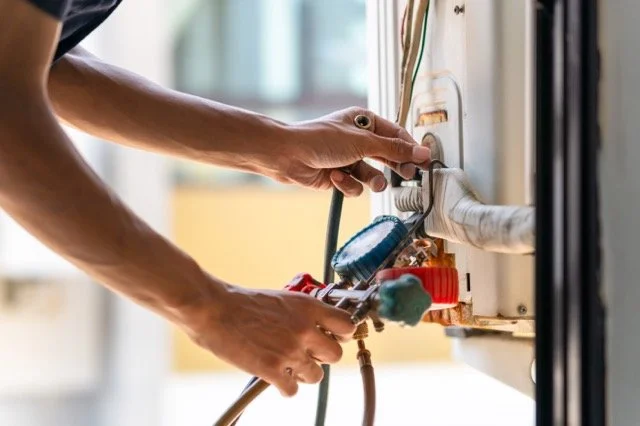
If refrigerant issues are suspected, the technician connects manifold gauges to measure suction and discharge pressures, checks superheat and subcooling (calculations that reveal whether refrigerant charge is correct), and compares readings to manufacturer specifications for the outdoor temperature and humidity conditions.
This process identifies whether the system is low on refrigerant (leak), overcharged (improper service), or has airflow problems affecting refrigerant operation. It's precise work that requires understanding of thermodynamics and refrigerant behavior.
Repair Options Presentation
Once diagnosis is complete, the technician explains what's wrong, why it failed, what's required to fix it, and what it costs. For major repairs on older systems, we present both repair and replacement options with honest guidance about which makes more financial sense.
No pressure. No commission-based upselling. Just the mechanical reality and the numbers. This is the "changing contractor culture" approach that defines NEXT Heating & Cooling—the same values that built NEXT Exteriors applied to HVAC service.
Repair Execution and Testing
If you approve the repair, the technician completes the work, tests the system under operating conditions, verifies proper operation of all components, and confirms the original symptom is resolved. For refrigerant work, this includes leak testing, evacuation, and recharge procedures that take time to do correctly.
Before leaving, the technician explains what was done, provides maintenance recommendations, and answers any questions about operation or future service needs.
How to Avoid Emergency AC Repairs
Most AC failures are preventable through regular maintenance and homeowner attention to basic system care. You can't prevent every failure—components eventually wear out—but you can dramatically reduce the risk of mid-summer breakdowns and extend system lifespan by 3-5 years.
Change Your Air Filter Religiously
This is the single most important thing you can do. A clogged filter restricts airflow, which causes frozen coils, overheated motors, and compressor damage. Check your filter monthly during cooling season. Replace it when it looks dirty—typically every 1-3 months depending on filter type, pets, and occupancy.
Use the filter type specified for your system. Don't upgrade to high-MERV filters without checking that your system can handle the increased airflow resistance. Many residential systems aren't designed for MERV 13+ filters without blower modifications.
Keep the Outdoor Unit Clear
The outdoor condensing unit needs airflow to reject heat. Keep vegetation trimmed back at least 2 feet on all sides. Don't let grass clippings, leaves, or cottonwood seeds accumulate on the fins. Don't stack storage items against the unit or cover it during operation (winter covers are fine when the system isn't running).
Once a year, gently spray the outdoor coil fins with a garden hose from the inside out to remove dirt and debris. Don't use a pressure washer—it bends the delicate aluminum fins.
Schedule Professional Maintenance Annually
A professional tune-up catches problems before they cause failures. During a spring AC maintenance visit, the technician: cleans the outdoor coil, checks refrigerant charge and pressures, tests electrical components and connections, lubricates motors if applicable, checks condensate drain operation, measures airflow and temperature split, inspects ductwork connections, and tests system controls and safety devices.
The $5/month Next Care Plan includes two annual visits (spring AC, fall furnace), priority scheduling when you need repairs, 10% discount on repair costs, and no service call fees. The cost is less than one emergency repair call, and the preventive value is substantial.
Consider the math: furnace repairs average $1,500-$4,000 when major components fail. AC compressor replacement costs $1,200-$3,500. Energy waste from a poorly maintained system runs $300-$600 per year. An annual tune-up costing $60 prevents these expenses and extends equipment life by catching problems early.
Don't Ignore Small Problems
Strange noises, weak airflow, short cycling, or any change in system operation is your AC telling you something's wrong. Small problems become big failures. A $150 capacitor replacement becomes a $2,500 compressor replacement if you ignore the warning signs and keep running the system.
Call for service when you notice problems—don't wait until the system fails completely. Early intervention is always cheaper than emergency repair.
Upgrade Your Thermostat
Modern programmable or smart thermostats prevent problems by avoiding temperature setback extremes (don't set the thermostat to 85°F when you're gone and then drop it to 68°F when you return—this overworks the system), maintaining consistent humidity control, and providing maintenance reminders and system alerts.
A good thermostat costs $150-$300 installed and pays for itself in efficiency gains and reduced wear on your equipment.
Ready to Get Started?
NEXT Heating & Cooling has been keeping Michigan homes comfortable for over 35 years. Get honest diagnostics and fair pricing from NATE-certified technicians who show up on time.
Frequently Asked Questions About Air Conditioning Repair in Mount Clemens MI
How long does a typical AC repair take?
+
Simple repairs like capacitor or contactor replacement take 30-60 minutes including diagnosis. Refrigerant leak detection and repair can take 2-4 hours depending on leak location. Major component replacement (compressor, evaporator coil) typically requires 4-8 hours. Emergency service calls during peak season might require scheduling a follow-up appointment for complex repairs that need parts ordering.
Should I repair or replace my AC if it's 12 years old?
+
Use the age-times-cost calculation: multiply system age by repair cost. If the result exceeds $5,000, replacement usually makes more financial sense. A 12-year-old system needing a $1,500+ repair is approaching the end of its useful life. You'll likely face additional failures within 2-3 years. Replacement gives you a new warranty, better efficiency (14-20 SEER vs. older 10-13 SEER), and 12-15 years of reliable operation. For minor repairs under $500, repair makes sense regardless of age.
Why is my AC freezing up in the summer?
+
Frozen evaporator coils result from restricted airflow or low refrigerant. Check your air filter first—a clogged filter is the most common cause and you can fix it yourself. Other causes include blocked return vents, closed registers in unused rooms, dirty evaporator coil, failing blower motor, or refrigerant leaks. If changing the filter doesn't solve it, call for professional diagnosis. Never run the system while ice is present—let it thaw completely (takes 4-8 hours) before attempting operation.
How much does it cost to fix an AC refrigerant leak?
+
Refrigerant leak repair costs $200-$2,500 depending on leak location and refrigerant type. Accessible outdoor leaks (service valves, condensing coil) cost $200-$600 to repair including leak detection, brazing, and refrigerant recharge. Evaporator coil leaks inside the air handler often require coil replacement, running $1,200-$2,500. R-22 refrigerant (older systems) costs $80-$150 per pound. R-410A (newer systems) costs $50-$100 per pound. A typical system holds 6-15 pounds. Just adding refrigerant without fixing the leak is a temporary patch that wastes money.
Can I recharge my AC myself?
+
No. Federal EPA regulations require certification to handle refrigerants. DIY recharge kits sold at auto parts stores are for automotive AC systems, not residential central air. Residential AC requires proper leak detection, evacuation, and precise refrigerant charging based on superheat/subcooling calculations. Incorrect charging damages the compressor. If your system is low on refrigerant, it has a leak that needs professional repair. Adding refrigerant without fixing the leak is temporary and often makes the problem worse by masking symptoms until major damage occurs.
What brands of AC equipment does NEXT Heating & Cooling install?
+
We install and service all major residential AC brands including Carrier, Lennox, Trane, Rheem, Bryant, Goodman, Amana, York, and RUUD. Brand choice depends on your budget, efficiency goals, and specific home requirements. We provide honest guidance on which brands offer the best value for your situation—no commission-based sales pressure. All our installations include proper load calculations, ductwork evaluation, and manufacturer warranty registration.
Do you offer emergency AC repair service in Mount Clemens?
+
Yes. NEXT Heating & Cooling provides 24/7 emergency HVAC service throughout Mount Clemens, Sterling Heights, Clinton Township, and all of Macomb County. Emergency service rates apply for after-hours, weekend, and holiday calls. Next Care Plan members receive priority scheduling and no service call fees. During peak summer season (June-August), we recommend calling early in the day for same-day service. Emergency calls after business hours are dispatched based on urgency—health and safety situations (no cooling with elderly or medical conditions) receive priority response.