

AC Installation Shelby Township Michigan | NEXT Heating
By NEXT Heating & Cooling
•
March 2, 2026
•
12 min read

We've been installing air conditioning systems in Shelby Township and across Macomb County for over 35 years, and we've seen what happens when installations get rushed or corners get cut. A properly installed AC system should run quietly, cool evenly, and last 15-20 years. An improperly installed one—even with premium equipment—starts having problems within the first few seasons.
This guide walks through what professional AC installation in Shelby Township, Michigan actually involves, what it costs in 2026, and how to make sure you're getting it done right. No sales pitch—just the technical details Michigan homeowners need to know before signing a contract.
What Proper AC Installation Actually Looks Like
The difference between a good AC installation and a mediocre one comes down to details most homeowners never see. Here's what happens when our HVAC services Southeast Michigan families count on include proper installation protocols:
Manual J Load Calculation (Non-Negotiable)
Before we recommend any equipment, we run a Manual J load calculation—a room-by-room analysis that accounts for your home's square footage, insulation levels, window types, orientation, and even how many people typically occupy the space. This calculation determines the exact cooling capacity your home needs, measured in BTUs (British Thermal Units).
In Shelby Township, we see a lot of 1,800-2,400 square foot homes built in the 1980s and 1990s. These typically need 2.5 to 4-ton systems, but that's a rough estimate. A proper load calculation might reveal that a 1,900 square foot ranch with minimal insulation and west-facing windows needs a 3.5-ton unit, while a similar-sized colonial with good insulation and mature tree coverage only needs a 3-ton system.
Oversized systems short-cycle—they cool the air quickly but shut off before removing humidity. You end up with a cold, clammy house. Undersized systems run constantly and never quite catch up during July heat waves. The load calculation gets the sizing right.
Refrigerant Line Installation
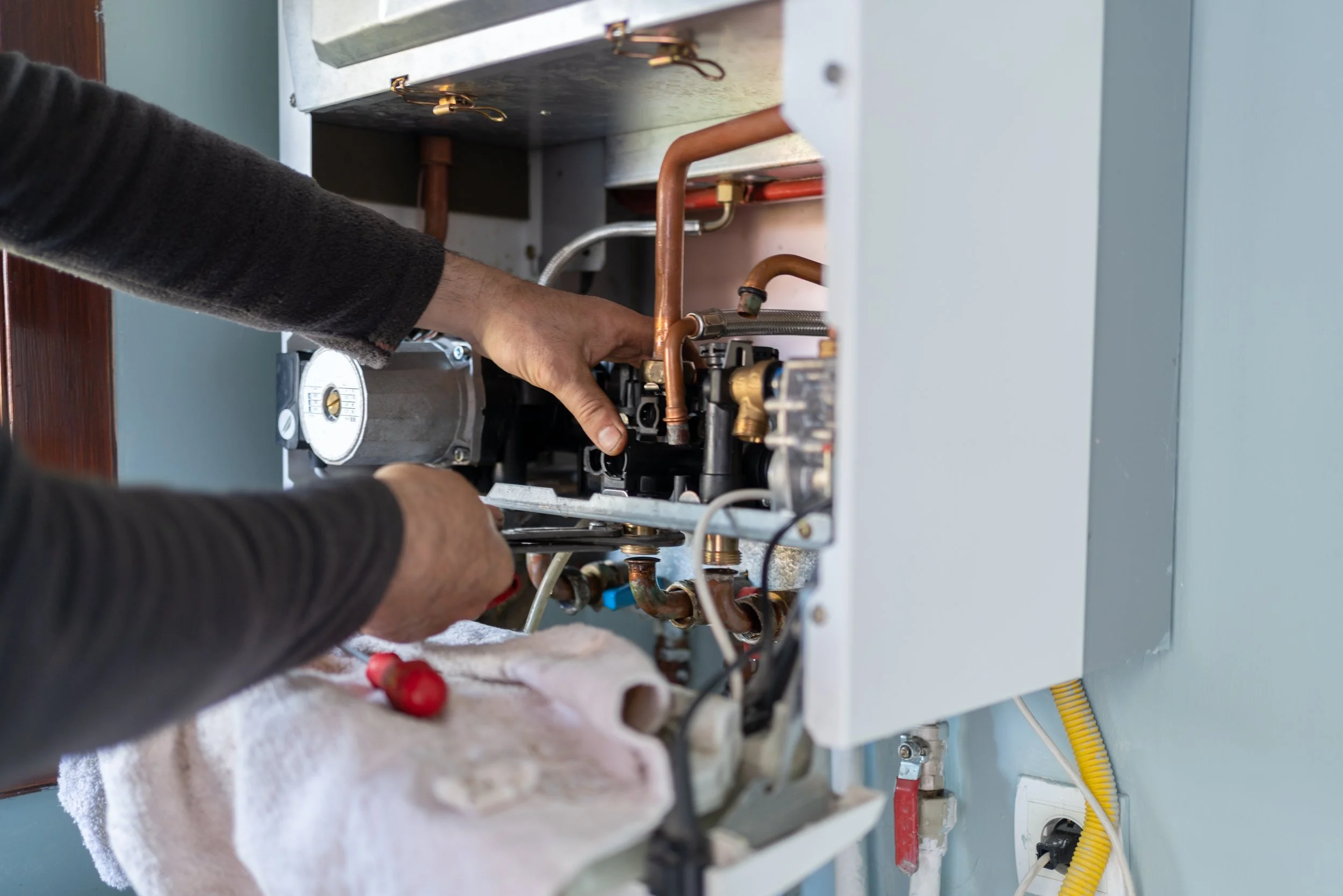
The copper refrigerant lines connecting your outdoor condenser to the indoor evaporator coil need to be sized correctly, properly insulated, and installed without kinks or restrictions. We use nitrogen purging when brazing connections—this prevents oxidation inside the copper that can contaminate the refrigerant and damage the compressor.
Line set length matters too. Manufacturers specify maximum line lengths (usually 50-75 feet for residential systems). Longer runs require additional refrigerant and can reduce efficiency. In Shelby Township's typical subdivisions, we rarely encounter issues, but homes with detached garages or unusual layouts need careful planning.
Condensate Drainage
Your AC removes moisture from the air—lots of it. A 3-ton system running on a humid Michigan July day can pull 30-40 gallons of water out of your house. That condensate needs to drain properly.
We install primary and secondary drain lines with proper slope (minimum 1/4 inch per foot), use PVC or CPVC piping (never flexible vinyl tubing that sags and clogs), and install cleanout access points. The drain terminates outside, away from the foundation. We also install a safety float switch that shuts down the system if the primary drain clogs—this prevents water damage to ceilings and walls.
Electrical Connections
AC systems draw significant amperage. A typical 3-ton condenser needs a dedicated 30-amp circuit with proper disconnect switch mounted within sight of the unit. The indoor air handler needs its own circuit. We verify wire gauge matches the load, connections are tight, and everything meets Michigan electrical code.
Undersized wiring causes voltage drop, which makes the compressor work harder and shortens its lifespan. We've replaced plenty of 8-10 year old compressors that should have lasted 15+ years because the original installer used 10-gauge wire on a circuit that needed 8-gauge.
How Michigan's Climate Affects AC Installation
Shelby Township sits in USDA Hardiness Zone 6a, with cold winters (average January low around 18°F) and warm, humid summers (average July high around 84°F, but we see plenty of 90°+ days). This climate creates specific installation requirements.
Humidity Control
Michigan summers are humid—dewpoints regularly hit 65-70°F in July and August. Your AC needs to remove moisture as effectively as it cools air. This is where proper sizing and two-stage or variable-speed equipment make a huge difference.
Single-stage systems run at full capacity or off. They cool quickly but don't run long enough to dehumidify effectively on mild days. Two-stage systems run at 60-70% capacity most of the time, which means longer run cycles and better moisture removal. Variable-speed systems adjust output continuously, providing even better humidity control.
For Shelby Township homes, we typically recommend at least a two-stage compressor or a variable-speed air handler. The upfront cost is $800-1,500 more than single-stage, but the comfort improvement is substantial, especially in finished basements where humidity tends to accumulate.
Freeze Protection
Michigan's temperature swings mean your AC might run in May when it's 75°F during the day but drops to 45°F at night. Running an AC when outdoor temperatures fall below 60°F can freeze the evaporator coil and damage the compressor.
Quality systems include low-ambient controls that prevent operation below safe temperatures. If you're considering a heat pump (which runs year-round), it needs proper low-temperature controls and possibly a crankcase heater to protect the compressor during cold weather operation.
Snow and Ice Considerations
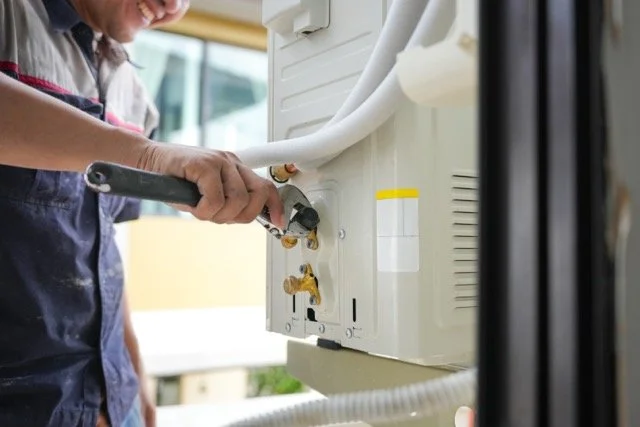
Your outdoor condenser needs proper mounting and clearance. We install units on composite pads (not concrete, which cracks) elevated 3-4 inches above grade. This keeps the unit above snow accumulation and allows proper drainage.
The unit needs 24 inches of clearance on all sides for airflow, and we position it where snow sliding off the roof won't damage the fins or fan. In Shelby Township, we also consider prevailing winds—positioning the unit to minimize direct exposure to winter northwest winds reduces wear on the fan motor and defrost controls if you're installing a heat pump.
System Types and Brands That Work in Shelby Township
We install multiple brands depending on budget, performance needs, and warranty preferences. Here's what works well in Southeast Michigan homes:
Carrier
Carrier's Infinity series offers excellent variable-speed performance and integrates well with smart thermostats. Their mid-tier Comfort series provides solid two-stage performance at a reasonable price point. We install a lot of Carrier systems in Shelby Township—parts availability is good, and the warranties are straightforward.
The Infinity 26 (26 SEER2) is overkill for most Michigan homes, but the Infinity 18 or 20 (18-20 SEER2) provides excellent efficiency without excessive upfront cost. For budget-conscious homeowners, the Comfort 16 (16 SEER2) is a reliable single-stage option.
Lennox
Lennox's Dave Lennox Signature Collection includes some of the quietest systems we install—down to 59 decibels, which is conversational level. Their variable-capacity systems provide precise temperature and humidity control.
The XC25 (26 SEER2) is their premium option, while the EL16XC1 (16 SEER2) offers solid performance for budget installations. Lennox equipment tends to run $500-800 more than comparable Carrier systems, but the noise reduction is worth it for homes with outdoor living spaces adjacent to the condenser location.
Trane
Trane builds durable equipment with heavier-gauge materials than most competitors. Their XV20i variable-speed system (20 SEER2) performs well in Michigan's humidity, and the XR16 (16 SEER2) is a workhorse single-stage unit.
Trane's compressor warranty is among the best in the industry—10 years on the compressor even on base models. We see Trane systems lasting 18-20 years with proper maintenance, which is 2-3 years longer than industry average.
Rheem and RUUD
Rheem and RUUD (same manufacturer, different branding) offer excellent value. Their Prestige Series variable-speed systems compete with Carrier and Lennox on performance at 10-15% lower cost. The Classic Series provides reliable single-stage cooling for budget-conscious installations.
These brands don't have the name recognition of Carrier or Trane, but the equipment quality is comparable. Parts availability in Southeast Michigan is good through multiple distributors.
Bryant, Goodman, and Amana
Bryant is Carrier's sister brand—same equipment with different branding, typically priced $300-500 less. Goodman and Amana (both owned by Daikin) offer budget-friendly options with shorter warranties but adequate performance for cost-conscious homeowners.
We install these brands when budget is the primary constraint, but we're upfront about the tradeoffs—lighter-gauge materials, shorter warranties, and potentially shorter lifespan. A Goodman system might last 12-14 years versus 15-18 for Carrier or Trane, but it costs $1,500-2,500 less upfront.
SEER2 vs. SEER: As of January 2023, the industry switched from SEER to SEER2 ratings, which use updated testing procedures that better reflect real-world conditions. A 16 SEER2 system is roughly equivalent to 17 SEER under the old rating system. When comparing older systems to new ones, account for this difference.
What AC Installation Actually Costs in Southeast Michigan
Pricing transparency matters. Here's what AC installation in Shelby Township, Michigan costs in 2026, based on our actual project data from Macomb County installations. These are all-in prices including equipment, labor, permits, and startup:
Standard Replacement (Existing Ductwork, No Modifications)
Budget Systems (14-15 SEER2, single-stage): $4,500-6,500 for a 2-3 ton system. Includes Goodman, Amana, or base-model Carrier/Rheem. Adequate performance, shorter warranty (5-10 years parts).
Mid-Tier Systems (16-17 SEER2, two-stage): $6,500-9,000 for a 2-4 ton system. Includes Carrier Comfort, Lennox Merit, Trane XR, or Rheem Classic Plus. Better humidity control, 10-year parts warranty.
Premium Systems (18-21 SEER2, variable-speed): $8,500-12,500 for a 2-4 ton system. Includes Carrier Infinity, Lennox Signature, Trane XV, or Rheem Prestige. Excellent efficiency and comfort, quieter operation, 10-12 year warranties.
Installation With Ductwork Modifications
If your existing ductwork is undersized, leaky, or poorly designed, we'll identify that during the load calculation. Ductwork modifications add cost but significantly improve system performance:
Minor duct sealing and insulation: Add $600-1,200
Adding return air ducts: Add $800-2,000 (many older homes have inadequate return air)
Replacing trunk lines or major redesign: Add $2,500-5,000+
We don't upsell ductwork repairs—we show you the existing system with a camera inspection and explain how leaks or restrictions affect performance. You decide whether to address it now or later. But understand that installing a new 16 SEER2 system on ductwork that's 30% leaky means you're only getting 11-12 SEER2 actual performance.
Additional Costs to Consider
Electrical upgrades: $400-1,200 if your panel needs a new circuit or upgrade
Thermostat: $150-500 for programmable; $200-400 for WiFi smart thermostats (Honeywell, Ecobee, Carrier Cor)
Permit fees: $75-150 (we pull permits for all installations—it's required by Michigan code)
Crane or special access: $500-1,500 if your equipment is in a tight location requiring special equipment
Our Metro Detroit HVAC contractor pricing includes transparent line-item estimates. You see exactly what you're paying for—equipment model and serial number, labor hours, materials, permits. No hidden fees or surprise charges.
Signs Your Current AC Needs Replacement
Not every AC problem requires replacement. Here's how we determine whether repair or replacement makes sense:
Age and Efficiency
AC systems last 15-20 years with proper maintenance. If your system is under 10 years old and the repair costs less than $1,500, repair usually makes sense. Between 10-15 years, it depends on the specific problem and the system's efficiency.
Systems older than 15 years—especially those rated below 13 SEER—are worth replacing even for moderate repairs. A 20-year-old 10 SEER system costs $300-500 more per year to operate than a new 16 SEER2 system in Michigan's climate. Over 10 years, that's $3,000-5,000 in energy savings.
The 50% Rule
If repair costs exceed 50% of replacement cost and the system is over 10 years old, replacement makes more financial sense. Example: Your 12-year-old system needs a $2,200 compressor replacement. A new system costs $6,500. That repair is 34% of replacement cost, but the system is 12 years old—you're putting $2,200 into equipment that might last another 3-5 years. Replacement is the better long-term investment.
Specific Problems That Indicate Replacement
Compressor failure: The compressor is the heart of the system. Replacement costs $1,500-3,000 including labor. On systems over 10 years old, this usually triggers full replacement.
Refrigerant leaks in the coil: Coil replacement costs $1,200-2,500. Leak detection and repair might cost $600-1,200 but often fails again within 1-2 years. On older systems, this is a replacement indicator.
Multiple repairs in one season: If you've spent $800+ on repairs this year and the system is over 12 years old, you're throwing money at dying equipment.
Uneven cooling or constant cycling: This often indicates undersizing or ductwork problems. If the system was improperly sized originally, repair won't fix it—you need proper load calculation and correct equipment.
R-22 Refrigerant Phase-Out: If your system uses R-22 refrigerant (common in systems installed before 2010), repair costs are higher because R-22 is no longer manufactured. Prices have increased from $50/lb in 2015 to $150-200/lb in 2026. A system needing 8 lbs of R-22 costs $1,200-1,600 just for refrigerant. This alone often justifies replacement with a modern R-410A or R-32 system.
What to Expect During Professional Installation
When you schedule AC installation in Shelby Township, Michigan with NEXT Heating & Cooling, here's the timeline and process:
Pre-Installation (1-2 Weeks Before)
We schedule a site visit to verify measurements, confirm equipment placement, identify any access issues, and pull permits. You'll receive a detailed written estimate with equipment specifications, warranty information, and timeline.
If you're financing, we handle that paperwork now. If you're replacing an old system, we'll coordinate removal and disposal (included in our pricing—we don't charge extra for old equipment removal).
Installation Day 1 (Full System Replacement)
Most residential AC installations take 6-10 hours for a two-person crew. Here's what happens:
Hours 1-2: Remove old equipment, disconnect electrical and refrigerant lines, remove old condenser and evaporator coil. We protect your floors with drop cloths and runners, and we clean up as we go.
Hours 3-5: Install new evaporator coil on the furnace plenum, run new refrigerant lines (or verify existing lines are acceptable), install new condenser pad and position outdoor unit, run new electrical circuits if needed.
Hours 6-8: Make all electrical connections, braze refrigerant line connections using nitrogen purge, pressure test the system to verify no leaks, evacuate the lines to remove moisture and air, charge the system with the correct amount of refrigerant per manufacturer specs.
Hours 9-10: Install new thermostat and program it, start up the system and verify operation, check airflow at all registers, measure temperature drop across the evaporator coil (should be 18-22°F), verify proper condensate drainage, review operation with homeowner.
Final Inspection and Documentation
We leave you with all equipment manuals, warranty registration information, and a startup report showing refrigerant charge, airflow measurements, and electrical readings. This documentation is important for warranty claims and future service.
Most municipalities require a final inspection by the building department. We coordinate this and provide you with the signed-off permit—keep this with your home records.
Post-Installation Maintenance for Michigan Summers
A properly installed AC system still needs regular maintenance to hit its expected 15-20 year lifespan. Here's what that looks like in Southeast Michigan:
Annual Professional Maintenance
Schedule professional maintenance every spring before cooling season starts. Our NEXT Care Plan for HVAC maintenance in Metro Detroit includes:
Clean condenser coil and check refrigerant charge
Inspect and clean evaporator coil
Check electrical connections and measure voltage/amperage
Verify proper airflow and temperature drop
Clean or replace air filter
Inspect and clean condensate drain line
Lubricate motors if applicable
Check thermostat calibration
This service costs $129-179 as a standalone visit, or it's included with our Care Plan membership ($199/year for one system, covers both heating and cooling maintenance).
Homeowner Maintenance Tasks
Between professional visits, you can extend system life with simple maintenance:
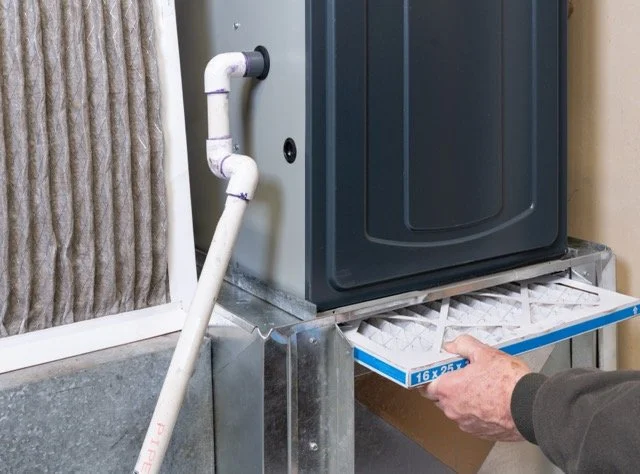
Change air filters monthly during cooling season: Use quality pleated filters (MERV 8-11). Cheap fiberglass filters don't protect your equipment. Dirty filters reduce airflow, which can freeze the evaporator coil and damage the compressor.
Keep the outdoor unit clear: Trim vegetation to maintain 24 inches of clearance. Remove leaves, grass clippings, and debris from the unit. Hose off the condenser coil (gently, from inside out) if it's visibly dirty.
Check condensate drain monthly: Pour a cup of water into the drain pan and verify it drains properly. If it's slow, flush the line with a wet/dry vacuum or call for service before it backs up.
Monitor performance: If you notice reduced cooling, ice on refrigerant lines, water leaks, or unusual noises, call for service immediately. Small problems become expensive repairs if ignored.
Seasonal Shutdown and Startup
In Michigan, you'll shut down your AC sometime in September or October and restart it in May or June. Here's the proper procedure:
Fall Shutdown: Turn off the system at the thermostat. If you have a heat pump, switch it to heat mode—don't turn off the outdoor unit. For AC-only systems, some homeowners turn off the dedicated circuit breaker to the condenser for winter. This prevents accidental operation during mild winter days, but it's not required.
Spring Startup: If you turned off the breaker, turn it back on 24 hours before first use—this allows the compressor's crankcase heater to warm the oil. Change the air filter. Set the thermostat to cool mode, set temperature 3-5 degrees below room temperature, and let the system run. Check that cold air is coming from registers and the outdoor unit is running.
Ready to Schedule AC Installation in Shelby Township?
NEXT Heating & Cooling has been serving Macomb County homeowners for over 35 years with honest diagnostics and fair pricing. Our NATE-certified technicians install systems right the first time—proper load calculations, quality materials, and attention to details that matter. No commission-based sales, no pressure, just straightforward information so you can make the right decision for your home.
Frequently Asked Questions About AC Installation in Shelby Township
How long does AC installation take in a typical Shelby Township home?
+
A straightforward replacement on existing ductwork typically takes 6-10 hours with a two-person crew—usually completed in one day. If we're modifying ductwork, adding return air, or addressing electrical upgrades, installation might extend to 1.5-2 days. We'll give you an accurate timeline during the estimate based on your specific situation. We don't rush installations—proper refrigerant charging, leak testing, and airflow verification take time to do correctly.
What size AC system does my Shelby Township home need?
+
System sizing requires a Manual J load calculation based on your home's specific characteristics—square footage, insulation levels, window types, orientation, and occupancy. Most 1,800-2,400 square foot homes in Shelby Township need 2.5-4 ton systems, but that's a rough estimate. We've seen 2,000 square foot homes need anywhere from 2.5 to 4 tons depending on insulation and sun exposure. Proper sizing is critical—oversized systems don't dehumidify properly, and undersized systems can't keep up on hot days. We include load calculations with every installation estimate.
Is higher SEER2 worth the extra cost in Michigan?
+
It depends on your budget and how long you plan to stay in the home. In Southeast Michigan's climate, upgrading from 14 SEER2 to 16 SEER2 saves approximately $100-150 per year in cooling costs. That upgrade typically costs $800-1,200 extra, so payback is 6-10 years. Going from 16 to 20 SEER2 saves another $80-120 annually but costs $2,000-3,000 more—payback extends to 15-20 years. For most Shelby Township homeowners, we recommend 16-17 SEER2 as the sweet spot—meaningful efficiency gains without excessive upfront cost. If you're planning to stay 15+ years and want maximum comfort, 18-20 SEER2 variable-speed systems are worth considering for the humidity control alone.
Can I install a new AC on my old furnace?
+
Yes, if the furnace is in good condition and the blower motor can handle the airflow requirements of the new AC. We verify blower capacity during the estimate—older furnaces sometimes have undersized blowers that restrict airflow for modern high-efficiency AC systems. The evaporator coil mounts on the furnace plenum, so we need adequate clearance and proper plenum design. If your furnace is 15+ years old, we'll discuss the pros and cons of replacing both systems together—you save on labor by doing them simultaneously, and you avoid compatibility issues. But if the furnace is 8-10 years old and running well, there's no reason to replace it just because you're installing new AC.
Do I need a permit for AC installation in Shelby Township?
+
Yes. Michigan mechanical code requires permits for HVAC system installation and replacement. We pull permits for all installations—it's included in our pricing. The permit process ensures installations meet code requirements for refrigerant handling, electrical connections, and condensate drainage. Some homeowners ask about skipping permits to save money, but this creates problems—unpermitted work can complicate home sales, void manufacturer warranties, and create liability issues if something goes wrong. We're a licensed Michigan mechanical contractor, and we do things by the book. Permit fees in Macomb County typically run $75-150 depending on the municipality.
What brands does NEXT Heating & Cooling install in Shelby Township?
+
We install Carrier, Lennox, Trane, Rheem, Bryant, Goodman, Amana, York, and RUUD. We don't push one brand over another—we recommend systems based on your budget, performance needs, and warranty preferences. Carrier and Trane are our most popular installs for homeowners wanting proven reliability. Lennox offers the quietest operation. Rheem and RUUD provide excellent value. Goodman and Amana work well for budget-conscious installations. We explain the differences honestly—equipment quality, warranty coverage, expected lifespan—so you can make an informed decision. All brands we install are backed by our workmanship warranty and our service commitment.
How often should I schedule maintenance after AC installation?
+
Annual professional maintenance every spring before cooling season starts. This service includes cleaning coils, checking refrigerant charge, inspecting electrical connections, verifying airflow, and cleaning the condensate drain. Between professional visits, change your air filter monthly during cooling season and keep the outdoor unit clear of debris. Our NEXT Care Plan covers annual maintenance for both heating and cooling at $199/year for one system—it includes priority scheduling, 15% discount on repairs, and no overtime charges for emergency service. Proper maintenance extends system life from 15 to 18-20 years and prevents most breakdowns during peak summer heat.
NEXT Heating & Cooling serves Shelby Township, Sterling Heights, Clinton Township, Macomb Township, Rochester Hills, Troy, Warren, and surrounding Macomb and Oakland County communities with professional HVAC installation, repair, and maintenance. Learn more about NEXT Heating & Cooling and our 35+ years serving Southeast Michigan families.