

Furnace Repair Sterling Heights MI: What Breaks Most Often
NEXT Heating & Cooling
| Published March 2, 2026 | 12 min read
We've been doing heating and cooling services in Metro Detroit for over 35 years, and if there's one thing you learn fast in this business, it's that Michigan winters don't forgive weak furnaces. When the polar vortex drops temperatures into the single digits and your furnace quits at 2 a.m., you need answers—not a sales pitch.
This guide breaks down the seven most common furnace problems we see in Sterling Heights, Clinton Township, and throughout Macomb County. We'll explain what fails, why it fails, and what you should expect when you call a reliable HVAC contractor in Metro Detroit. No fluff. Just what our NATE-certified technicians see in furnace rooms every single day.
Most furnace repairs in Southeast Michigan fall into predictable patterns. Understanding these common failures helps you recognize warning signs early—and sometimes prevent a complete breakdown when you need heat most.
Ignitor Failures (The Most Common Call)
If we had to pick the single most common reason for a furnace repair call in Sterling Heights, it's a failed ignitor. Modern gas furnaces use hot surface ignitors instead of standing pilot lights, and these ceramic or silicon carbide components have a limited lifespan—typically between three and seven years.
Hot surface ignitors work by heating up to around 2,500°F to ignite the gas when your thermostat calls for heat. Every heating cycle puts thermal stress on the ignitor. Over time, the material becomes brittle and cracks. When it fails, your furnace won't light—but the blower might still run, pushing cold air through your house.

Signs Your Ignitor Is Failing
Furnace tries to start but shuts down after 3-5 seconds
You hear the gas valve click, but no flame ignites
Blower runs but no warm air comes out
Furnace works intermittently—sometimes starts, sometimes doesn't
The good news: ignitor replacement is straightforward. Most repairs take 30-60 minutes once we're on site. The part itself typically costs between $50 and $150 depending on your furnace brand (Carrier, Lennox, Trane, Rheem, Bryant, Goodman, Amana, York, or RUUD). With labor, expect a total repair cost between $200 and $400.
Michigan-Specific Issue: Power surges during ice storms and high winds can damage ignitors prematurely. If you've had recent electrical issues in your Sterling Heights home, mention it to your technician—it might explain an early ignitor failure.
Blower Motor and Capacitor Issues
The blower motor is the workhorse of your furnace. It runs hundreds of hours every heating season, pushing warm air through your ductwork. When blower motors fail, it's usually not the motor itself that dies first—it's the capacitor.
The capacitor is a small cylindrical component that stores electrical energy and provides the initial jolt needed to start the motor. Capacitors are the most common electrical failure point in furnaces. They're rated for a specific voltage and microfarad capacity, and when they fail, the motor either won't start at all or runs weakly.
Symptoms of Blower Motor and Capacitor Problems
Furnace starts, but you hear a humming sound with no airflow
Weak airflow from vents—furnace runs but barely moves air
Burning smell from the furnace (motor overheating due to failed capacitor)
Furnace shuts down on high-limit switch repeatedly
Capacitor replacement is inexpensive—usually $150-$300 including labor. If the motor itself has failed (less common but happens in furnaces 15+ years old), expect $400-$800 for motor replacement depending on motor type and horsepower.
In older homes throughout Clinton Township and Shelby Township, we often find undersized ductwork that forces blower motors to work harder than they should. This shortens motor lifespan. If you're replacing a blower motor for the second time in 10 years, the real problem might be your ductwork—not the motor.
Cracked Heat Exchangers
This is the repair nobody wants to hear about, because a cracked heat exchanger usually means you need a new furnace. The heat exchanger is the metal chamber where combustion happens. Hot exhaust gases pass through the exchanger, warming the metal, and your blower pushes air across the outside of the exchanger to heat your home.
Over years of heating and cooling cycles, metal fatigue can cause cracks. When the heat exchanger cracks, combustion gases—including carbon monoxide—can mix with the air circulating through your house. This is a serious safety hazard.
What Causes Heat Exchanger Cracks
Age: Most heat exchangers last 15-20 years with proper maintenance
Poor maintenance: Dirty filters restrict airflow, causing overheating
Oversized furnace: Short-cycling from an oversized unit stresses the exchanger
Corrosion: High humidity or improper venting accelerates rust
Technicians check heat exchangers during annual maintenance using visual inspection, camera scopes, and sometimes combustion analysis. If we find a crack, Michigan code requires the furnace be shut down immediately.
Safety First: Carbon monoxide is odorless and deadly. Every home with a gas furnace should have working CO detectors on every floor. If your CO detector goes off, leave the house immediately and call 911—then call us for emergency furnace service.
Heat exchanger replacement is technically possible but rarely cost-effective. The part is expensive, labor is intensive, and if your heat exchanger is cracked, other components are likely near end-of-life too. Most homeowners choose furnace replacement at this point, especially if the furnace is over 15 years old.
Thermostat and Control Board Problems
Not all furnace problems originate in the furnace itself. Sometimes the issue is the thermostat—or in newer furnaces, the electronic control board that acts as the furnace's brain.
Thermostat Issues
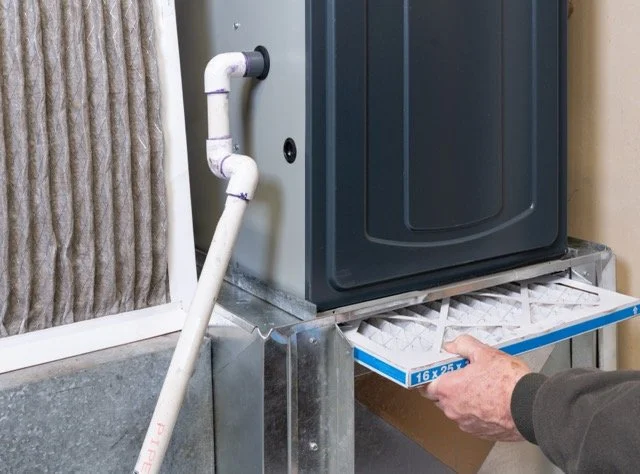
Old mechanical thermostats can lose calibration, causing temperature swings. Dirty contacts inside the thermostat can prevent proper signaling. Low batteries in digital thermostats cause erratic behavior. Sometimes the problem is as simple as a thermostat installed on an exterior wall or near a window—it reads the wrong temperature and cycles the furnace incorrectly.
Modern programmable and smart thermostats (like Nest, Ecobee, or Honeywell Wi-Fi models) add complexity. Incorrect wiring during DIY installation is common. Some furnaces require a C-wire (common wire) for continuous power, and if your system doesn't have one, the thermostat might work intermittently or not at all.
Control Board Failures
High-efficiency furnaces (90+ AFUE) use electronic control boards with integrated circuits that manage ignition sequence, blower speed, and safety lockouts. These boards are reliable but not indestructible. Power surges, moisture intrusion, and age can cause board failures.
Symptoms of control board problems include:
Furnace won't respond to thermostat calls
Blinking diagnostic LED codes on the furnace
Furnace starts then immediately shuts down
Erratic behavior—works sometimes, fails other times
Control board replacement typically costs $300-$800 depending on the furnace brand and board complexity. Carrier and Lennox boards tend to be more expensive than Goodman or Amana boards. Our technicians carry common boards on the truck for same-day repair when possible.
For homeowners in Rochester Hills and Troy upgrading to smart thermostats, we recommend professional installation. Incorrect wiring can damage both the thermostat and the furnace control board—turning a $200 thermostat upgrade into a $1,000 repair.
Flame Sensor Issues
The flame sensor is a small, inexpensive safety device that prevents your furnace from pumping unburned gas into your home. It's a thin metal rod positioned in the flame path. When the burner ignites, the flame conducts a small electrical current through the sensor. If the control board doesn't detect this current, it shuts down the gas valve immediately.
Flame sensors fail for one main reason: carbon buildup. Incomplete combustion (often caused by dirty burners or improper air-fuel mixture) leaves carbon deposits on the sensor rod. Even a thin layer of carbon acts as an insulator, preventing the sensor from detecting the flame.
Symptoms of a Dirty or Failed Flame Sensor
Furnace lights, runs for 3-5 seconds, then shuts down
This cycle repeats—furnace tries to start, fails, tries again
No error codes or just a generic "ignition failure" code
Cleaning a flame sensor takes about 15 minutes. We remove the sensor, gently clean it with fine steel wool or emery cloth, and reinstall it. This is part of every annual maintenance visit on our NEXT Care Plan for HVAC in Metro Detroit. If you're not on a maintenance plan and your furnace exhibits this symptom, expect a service call fee plus minimal labor—usually $150-$250 total.
If the flame sensor is physically damaged or corroded beyond cleaning, replacement costs $100-$200 including labor. It's one of the least expensive furnace repairs, but it causes the same symptom as a failed ignitor or control board—so proper diagnosis matters.
Preventive Maintenance Matters: Annual furnace tune-ups include flame sensor cleaning, burner inspection, and combustion analysis. This simple maintenance prevents most flame sensor failures and catches other issues before they cause breakdowns.
Ductwork and Airflow Problems
Technically, ductwork isn't part of the furnace—but ductwork problems cause the same symptoms as furnace failures, and we diagnose them constantly in Sterling Heights and Warren homes built in the 1960s and 70s.
Common Ductwork Issues in Southeast Michigan
Undersized Ducts: Many older homes have ductwork sized for smaller, less efficient furnaces. When homeowners upgrade to a high-efficiency furnace with a variable-speed blower, the undersized ducts can't handle the airflow. This causes high static pressure, reduced efficiency, and premature blower motor failure.
Leaky Ductwork: Basement ductwork in Michigan homes often has gaps, disconnected joints, and failed tape seals. We routinely find 20-30% of heated air escaping into the basement before it reaches living spaces. You're heating your basement (which doesn't need it) and starving your upstairs (which does).
Blocked or Closed Vents: Homeowners close vents in unused rooms thinking they'll save energy. In reality, this increases static pressure and can cause furnace overheating. Modern furnaces are designed to heat the entire house—closing more than 20% of vents disrupts proper operation.
Load Calculation and Proper Sizing
When we install a new furnace or diagnose chronic comfort problems, we perform a Manual J load calculation. This engineering calculation accounts for your home's square footage, insulation levels, window types, air leakage, and Michigan's climate to determine the correct furnace size.
An oversized furnace short-cycles—runs for a few minutes, shuts off, runs again. This wastes energy, creates temperature swings, and stresses components. An undersized furnace runs constantly on the coldest days and never reaches the thermostat setpoint.
Proper load calculation and ductwork design are where old-school HVAC knowledge matters. We've been doing this work in Macomb and Oakland counties for 35 years—long enough to know that shortcuts in ductwork design create comfort problems that last decades.
When to Repair vs. Replace Your Furnace
This is the question every homeowner asks when facing a furnace repair: Should I fix this or replace the whole system?
Here's how we approach this decision with Sterling Heights homeowners—no sales pressure, just honest assessment based on what makes financial sense.
Age of Your Furnace
Furnaces typically last 15-20 years with proper maintenance. If your furnace is under 10 years old, repair usually makes sense unless the repair cost exceeds 50% of replacement cost. If your furnace is 15+ years old, replacement often makes more financial sense—especially if you're facing a major repair like a heat exchanger or blower motor.
Cost of Repair vs. Replacement
A simple formula: Multiply the furnace's age by the repair cost. If that number exceeds the cost of a new furnace, replace it.
Example: Your 14-year-old furnace needs a $600 repair. 14 × $600 = $8,400. A new high-efficiency furnace costs $4,000-$6,000 installed. Replacement makes more sense.
But if your 6-year-old furnace needs a $400 blower motor, that's 6 × $400 = $2,400. Repair is the clear choice.
Efficiency Gains with New Equipment
Furnaces installed before 2010 typically have AFUE ratings of 80% or lower. Modern high-efficiency furnaces achieve 95-98% AFUE. That efficiency difference translates to real savings on your gas bill—typically $300-$600 per year for an average Sterling Heights home.
If you're heating a 2,000 square foot home with an old 80% AFUE furnace and your annual gas bill is $1,200, upgrading to a 96% AFUE furnace could save you $400-$500 per year. Over the 15-20 year lifespan of the new furnace, that's $6,000-$10,000 in savings.
Michigan Rebates and Incentives
DTE Energy and Consumers Energy offer rebates for high-efficiency furnace installations—typically $100-$300 depending on AFUE rating. Federal tax credits may also apply for qualifying high-efficiency equipment. These incentives reduce the net cost of replacement and improve the repair-vs-replace calculation.
Honest Assessment: We don't work on commission. Our technicians get paid the same whether you repair or replace. When we recommend replacement, it's because the numbers genuinely support it—not because we're trying to sell you something you don't need. That's part of what it means to be changing contractor culture in Metro Detroit.
Signs It's Time to Replace
Furnace is 15+ years old
You've had multiple repairs in the past 2-3 years
Heating bills keep increasing despite stable usage
Uneven heating—some rooms too hot, others too cold
Furnace runs constantly but house never reaches setpoint
Visible rust or corrosion on the heat exchanger
Yellow or flickering burner flame (should be steady blue)
When replacement makes sense, we provide detailed proposals with multiple equipment options. We work with all major brands—Carrier, Lennox, Trane, Rheem, Bryant, Goodman, Amana, York, and RUUD—and we'll explain the differences in efficiency, warranty, and price without pushing you toward the most expensive option.
Need Furnace Repair in Sterling Heights?
NEXT Heating & Cooling has been keeping Michigan homes comfortable for over 35 years. Our NATE-certified technicians provide honest diagnostics, fair pricing, and same-day service when possible. No commission-based sales. No upselling. Just reliable furnace repair from a Metro Detroit HVAC contractor you can trust.
Frequently Asked Questions About Furnace Repair in Sterling Heights
How much does furnace repair cost in Sterling Heights, Michigan?
+
Most furnace repairs in Sterling Heights range from $150 to $800 depending on the issue. Simple fixes like flame sensor cleaning or thermostat replacement typically cost $150-$300. Ignitor replacement runs $200-$400. Blower motor or control board replacement costs $400-$800. These prices include labor and parts. We provide upfront pricing before starting any work—no surprises on the bill.
How do I know if my furnace needs repair or replacement?
+
Consider furnace age, repair cost, and efficiency. If your furnace is under 10 years old and the repair costs less than $500, repair usually makes sense. If your furnace is 15+ years old, facing a major repair (over $600), or you've had multiple repairs in recent years, replacement is often more cost-effective. We provide honest recommendations based on your specific situation—never pressure you into unnecessary replacement.
What are the signs my furnace is about to fail?
+
Warning signs include: furnace cycling on and off frequently, yellow or flickering burner flame instead of steady blue, unusual noises (banging, screeching, or rumbling), increasing heating bills despite consistent usage, uneven heating throughout your home, and furnace age over 15 years. If you notice any of these symptoms in your Sterling Heights home, schedule a diagnostic visit before complete failure happens during a polar vortex.
Do you offer emergency furnace repair in Sterling Heights?
+
Yes. NEXT Heating & Cooling provides 24/7 emergency furnace repair throughout Sterling Heights, Clinton Township, Shelby Township, and all of Macomb County. When your furnace quits in the middle of a Michigan winter, we respond fast. Our technicians carry common parts on the truck for same-day repair when possible. Call us anytime—we understand that furnace failures don't wait for business hours.
How often should I have my furnace serviced?
+
Annual furnace maintenance is essential in Michigan. We recommend scheduling service in September or October—before the heating season starts. Annual maintenance includes cleaning the flame sensor, checking the ignitor, testing the blower motor and capacitor, inspecting the heat exchanger, cleaning burners, checking gas pressure, and verifying proper combustion. This prevents most emergency breakdowns and extends furnace lifespan. Our NEXT Care Plan includes annual furnace and AC maintenance with priority scheduling.
Why does my furnace keep shutting off after a few seconds?
+
This symptom typically indicates a failed flame sensor or ignitor. The furnace starts the ignition sequence, but if the flame sensor doesn't detect flame (due to carbon buildup) or the ignitor can't light the gas (due to cracks or age), the control board shuts down the gas valve for safety. Dirty air filters can also cause this by restricting airflow and triggering the high-limit switch. A diagnostic visit identifies the exact cause—usually a quick, inexpensive repair.
What brands of furnaces do you repair?
+
We repair all major furnace brands including Carrier, Lennox, Trane, Rheem, Bryant, Goodman, Amana, York, and RUUD. Our NATE-certified technicians have 35+ years of combined experience with residential and light commercial HVAC systems. We carry common parts for most brands on our service trucks for faster repair. If your furnace brand isn't listed, call us anyway—we've likely worked on it in Sterling Heights or surrounding Macomb County communities.