

Thermostat Not Reaching Set Temperature? Here's Why
You set the thermostat to 72 degrees. An hour later, it's still sitting at 68. The furnace is running, the AC is humming, but your house just won't reach the temperature you want. Sound familiar?
In over 35 years serving Southeast Michigan families, we've diagnosed this problem hundreds of times. Sometimes it's a quick fix you can handle yourself. Other times, it's a sign your HVAC system is struggling — and ignoring it will cost you more in the long run.
Here's the truth: a thermostat that won't reach set temperature is rarely just about the thermostat itself. It's usually your heating or cooling system trying to tell you something. This guide walks you through the seven most common causes we see in Macomb, Oakland, and St. Clair County homes, what you can check yourself, and when it's time to call Metro Detroit's reliable HVAC contractor.
How Your Thermostat and HVAC System Actually Communicate
Before we dive into what goes wrong, let's talk about how this system is supposed to work. Your thermostat is essentially a temperature-sensitive switch. When the room temperature drops below your set point, it closes a circuit that signals your furnace to fire up. When the room reaches that temperature, it opens the circuit and the furnace shuts down. Same principle for air conditioning, just in reverse.
Modern digital thermostats are more sophisticated — they use sensors and microprocessors — but the basic job is the same: measure temperature, compare it to your setting, and tell your HVAC equipment to turn on or off.
Here's what most homeowners don't realize: the thermostat itself is rarely the problem when your house won't reach temperature. The thermostat is sending the signal. Your furnace or AC is responding. But something in the system — airflow, capacity, ductwork, refrigerant — isn't delivering enough heating or cooling to actually change the temperature in your home.
That's why when you call us at NEXT Heating and Cooling, our NATE-certified technicians don't just look at the thermostat. We diagnose the entire system to find where the breakdown is happening.

Seven Common Reasons Your Thermostat Won't Reach Set Temperature
Let's walk through the most common culprits we find in Southeast Michigan homes. These are listed roughly in order from simplest to most serious.
1. Dead or Low Batteries (Digital Thermostats)
If you have a battery-powered digital thermostat, weak batteries can cause erratic behavior. The display might look fine, but the internal circuits aren't getting enough power to accurately read temperature or send signals. This is especially common after a Michigan winter when batteries drain faster in cold conditions.
Quick fix: Replace the batteries with fresh ones. Most thermostats use AA or AAA batteries. If your thermostat is hardwired (connected directly to your HVAC system's low-voltage wiring), skip this step — you don't have batteries.
2. Dirty or Clogged Air Filter
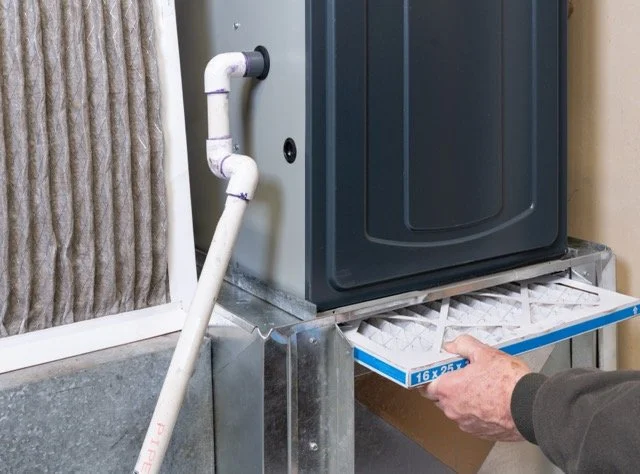
This is the number one cause of heating and cooling problems we see. A clogged filter restricts airflow through your furnace or air handler. Without proper airflow, your system can't move enough heated or cooled air into your home to reach the set temperature.
In winter, a dirty filter causes your furnace to overheat and cycle off prematurely (called short-cycling). In summer, it causes your AC's evaporator coil to freeze up, which kills cooling capacity.
We recommend checking your filter monthly and replacing it every 1-3 months depending on usage, pets, and indoor air quality. Homes with dogs, cats, or high dust levels need more frequent changes.
3. Thermostat Location and Heat Sources
Your thermostat measures the temperature of the air immediately around it. If it's installed in a bad location, it's getting false readings. Common problems:
Direct sunlight: A thermostat on a west-facing wall gets hit by afternoon sun, making it think the house is warmer than it actually is. Your AC runs constantly but the rest of the house stays warm.
Near heat sources: Thermostats installed above a lamp, next to a fireplace, or near a kitchen can read artificially high temperatures.
In drafty areas: Thermostats near exterior doors or poorly insulated walls read colder than the rest of the house.
Inside closets or alcoves: Poor air circulation means the thermostat isn't reading the actual room temperature.
If your thermostat is in a bad spot, it needs to be relocated. This is a job for a licensed HVAC contractor — it involves running low-voltage wiring and ensuring proper placement according to Michigan mechanical codes.
4. Undersized HVAC Equipment
This is a big one, especially in older Michigan homes. If your furnace or air conditioner is too small for your home's heating or cooling load, it will run constantly but never quite reach the set temperature — especially during extreme weather.
Proper equipment sizing requires a Manual J load calculation, which accounts for your home's square footage, insulation levels, window area, air sealing, and Michigan's climate zone. Many older homes have furnaces or AC units that were sized by rule of thumb (like "one ton of cooling per 500 square feet"), which often results in undersized equipment.
Signs your system is undersized:
It runs continuously during cold snaps or heat waves but never reaches set temperature
Some rooms are comfortable while others are always too hot or too cold
Your energy bills are high because the system never shuts off
If this is the issue, you're looking at equipment replacement. Our team at NEXT Heating & Cooling performs proper load calculations before recommending any furnace or AC installation to ensure you get the right size the first time.
5. Refrigerant Leaks (Air Conditioning)
If your thermostat won't reach set temperature during cooling season, a refrigerant leak is a common cause. Air conditioners don't "use up" refrigerant — it's a closed-loop system. If your refrigerant level is low, you have a leak.
Low refrigerant means your AC can't absorb enough heat from your indoor air. The system runs and runs, but your house stays warm. You might also notice:
Ice buildup on the outdoor unit or indoor evaporator coil
Hissing or bubbling sounds near the refrigerant lines
Higher-than-normal energy bills
Refrigerant work requires EPA 608 certification. Our technicians will locate the leak, repair it, and recharge your system to the manufacturer's specifications. Just adding refrigerant without fixing the leak is a waste of money — it'll leak out again.
6. Ductwork Leaks and Poor Insulation
If your ducts are leaking, you're losing heated or cooled air before it ever reaches your living spaces. This is especially common in older Michigan homes with ductwork running through uninsulated attics, crawl spaces, or basement furnace rooms.
According to Energy Star, homes with poorly sealed ductwork can lose 20-30% of the air moving through the system. That's like paying to heat or cool your attic instead of your home.
Signs of duct problems:
Hot and cold spots throughout the house
Excessive dust (leaky return ducts pull in attic or crawl space dust)
High energy bills despite a newer furnace or AC
Rooms far from the furnace that never get comfortable
Duct sealing and insulation is part of our comprehensive heating and cooling services in Metro Detroit. We use mastic sealant (not just duct tape, which fails quickly) and proper insulation to ensure your conditioned air reaches where it's supposed to go.
7. Aging Furnace or AC Struggling to Keep Up
Furnaces and air conditioners lose efficiency as they age. A 20-year-old furnace might have started at 80% AFUE (Annual Fuel Utilization Efficiency) but now operates closer to 60-65% due to worn heat exchangers, burner deposits, and blower motor degradation.
Similarly, an aging AC unit loses capacity as the compressor wears, refrigerant lines develop micro-leaks, and the condenser coil accumulates years of dirt and oxidation.
If your system is 15+ years old and struggling to reach set temperature, repair costs often exceed the value of the equipment. At that point, replacement with a modern high-efficiency system makes more financial sense. Today's furnaces reach 96-98% AFUE, and AC units hit 16-20 SEER (Seasonal Energy Efficiency Ratio) — significantly better than equipment from the 1990s and early 2000s.
We work with all major brands — Carrier, Lennox, Trane, Rheem, Bryant, Goodman, Amana, York, and RUUD — and provide honest recommendations based on your home's needs and your budget. No commission-based sales. No pressure. Just straight talk about what makes sense for your situation.
The Michigan Factor: Climate-Specific Issues
Southeast Michigan's climate puts unique stress on HVAC systems that homeowners in milder regions don't deal with. Understanding these factors helps explain why your thermostat might struggle during certain times of the year.
Polar Vortex Events and Extreme Cold
When temperatures drop below zero — which happens several times most Michigan winters — even properly sized furnaces work overtime. If your system is borderline undersized or has any of the issues mentioned above (dirty filter, duct leaks, aging equipment), extreme cold exposes the weakness immediately.
During the polar vortex events we saw in 2014, 2019, and 2021, we received hundreds of calls from homeowners whose systems couldn't keep up. In many cases, the equipment was fine — it was just overwhelmed by sustained temperatures 20-30 degrees below the design temperature it was sized for.
Humidity's Impact on Cooling Performance
Michigan summers are humid, especially near the Great Lakes. High humidity makes your home feel warmer than the actual temperature. Your thermostat reads 72 degrees, but with 70% humidity, it feels like 78.
Standard single-stage air conditioners don't dehumidify well because they cycle on and off quickly. Two-stage or variable-speed systems run longer at lower capacity, which removes more moisture from the air. If your AC won't reach set temperature and your home feels clammy, humidity is likely part of the problem.
Old Ductwork in 1960s Ranches
Many Southeast Michigan homes were built in the 1950s-70s with minimal ductwork design standards. We regularly see undersized ducts, sharp 90-degree bends that restrict airflow, and uninsulated ductwork running through vented crawl spaces.
These homes often have one or two rooms that never get comfortable no matter what you do with the thermostat. The solution usually involves duct modifications or additions — work that pays for itself in comfort and energy savings.
Basement Furnace Room Conditions
Most Michigan furnaces live in basements. If your basement is damp, dusty, or poorly ventilated, it affects your system's performance. Furnaces need combustion air, and if they're pulling in humid basement air, efficiency drops. Dirty basement air also clogs filters faster and coats blower motors and heat exchangers.
Part of our seasonal maintenance includes checking the furnace room environment and making recommendations to improve ventilation and air quality.
DIY Troubleshooting Steps Before Calling a Tech
Before you call us, there are a few things you can check yourself. These steps take about 15 minutes and solve the problem about 30% of the time.
Step 1: Check Thermostat Batteries and Settings
If you have a battery-powered thermostat, replace the batteries first. Even if the display looks fine, weak batteries cause problems. While you're at it, verify:
The thermostat is set to HEAT (winter) or COOL (summer), not just FAN
The fan setting is on AUTO, not ON (running the fan constantly without heating or cooling won't change temperature)
The set temperature is actually higher (heating) or lower (cooling) than the current temperature
Any schedule or program settings aren't overriding your manual adjustments
Step 2: Inspect and Replace the Air Filter
Find your furnace or air handler (usually in the basement, utility closet, or attic). The filter is typically located where the return duct connects to the unit. Pull it out and hold it up to a light. If you can't see light through it, it's clogged. Replace it with a new filter of the same size.
Don't use filters with MERV ratings above 11 unless your system is designed for it. High-efficiency filters restrict airflow in standard residential systems, causing the same problems as a dirty filter.
Step 3: Verify Circuit Breakers
Check your electrical panel. Furnaces typically have a dedicated 15 or 20-amp breaker. Air conditioners usually have a 30-60 amp breaker depending on size. If a breaker is tripped, reset it. If it trips again immediately, don't keep resetting it — you have an electrical problem that needs professional diagnosis.
Step 4: Check for Blocked Vents and Registers
Walk through your home and make sure all supply vents (where air blows out) and return vents (where air gets pulled back to the system) are open and unobstructed. Furniture, curtains, and area rugs are common culprits. Closing vents in unused rooms doesn't save energy — it unbalances the system and causes problems elsewhere.
Step 5: Listen and Observe
Stand near your furnace or outdoor AC unit while the system is running. Listen for unusual sounds:
Loud banging or booming: Delayed ignition in a gas furnace (potentially dangerous)
Squealing or screeching: Blower motor bearings failing
Clicking without ignition: Ignition system failure
Hissing or bubbling: Refrigerant leak (AC)
If you hear any of these sounds, shut the system off and call a licensed HVAC contractor before running it again.
When It's Time to Call NEXT Heating & Cooling
If you've done the basic troubleshooting above and your thermostat still won't reach set temperature, it's time for professional diagnosis. Here's what separates a service call from a wasted Saturday afternoon: NATE-certified technicians with the right diagnostic tools.
What NATE Certification Actually Means
NATE (North American Technician Excellence) is the leading certification for HVAC technicians. It's not just a participation trophy — technicians have to pass rigorous exams covering refrigeration theory, electrical troubleshooting, combustion analysis, and system design.
When a NATE-certified tech from NEXT Heating & Cooling shows up, they bring:
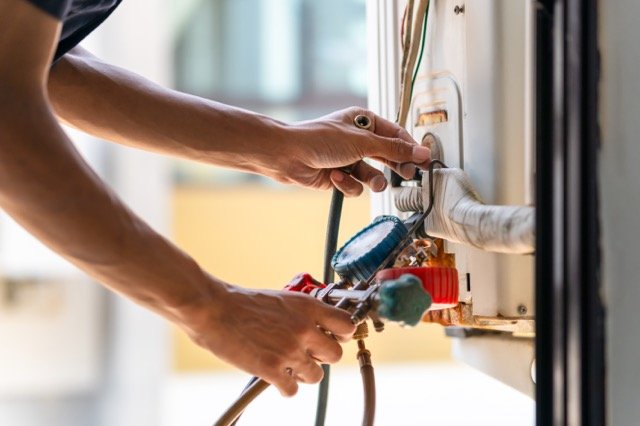
Digital manifold gauges to measure refrigerant pressures and temperatures
Combustion analyzers to check furnace efficiency and safety
Airflow meters to measure CFM (cubic feet per minute) through your ductwork
Electrical meters to test voltage, amperage, and capacitance
Infrared thermometers to check temperature splits and duct performance
These tools let us diagnose the actual problem instead of guessing and throwing parts at it.
What to Expect During a Service Call
Our techs show up on time (we text you when we're on the way). We wear shoe covers, introduce ourselves, and ask you to describe the problem in detail. Then we:
Verify the complaint: We check the thermostat and observe system operation to confirm what you're experiencing.
Perform diagnostic tests: We measure temperatures, pressures, airflow, and electrical values to pinpoint the cause.
Explain what we found: We show you the problem (when possible) and explain it in plain language, not HVAC jargon.
Give you options: We present repair options with upfront pricing. If replacement makes more sense than repair, we'll tell you why and give you equipment choices at different price points.
Let you decide: No pressure. No commission-based sales. You choose what makes sense for your home and budget.
The Cost Reality for Common Repairs in Southeast Michigan
Homeowners always want to know: what's this going to cost? Here are typical ranges for the most common repairs related to thermostat issues:
Thermostat replacement: $150-$400 depending on model (basic digital to smart WiFi)
Blower motor replacement: $450-$800
Capacitor replacement: $150-$300
Refrigerant leak repair and recharge: $500-$1,500 depending on leak location
Gas valve replacement (furnace): $400-$700
Igniter replacement (furnace): $200-$400
Duct sealing (whole home): $800-$2,000
Major repairs like heat exchangers or compressors run $1,500-$4,000. At that point, we have an honest conversation about whether repair makes sense or if replacement is the smarter investment, especially if your equipment is 15+ years old.

How Preventive Maintenance Stops Thermostat Problems
Most of the issues that cause thermostats not to reach set temperature are preventable. That's why we created the Next Care Plan — a $5/month maintenance subscription that catches problems before they become breakdowns.
What's Included in the Next Care Plan
For $60 per year ($5/month), you get:
Two annual home visits: One in fall to prepare your furnace for winter, one in spring to prepare your AC for summer
Complete system inspection: We check all components, test safety controls, measure performance, and identify potential issues
Priority scheduling: When you need service, you get bumped to the front of the line
10% discount on repairs: If we find something that needs fixing, you save 10% on parts and labor
No service call fees: If you need us between tune-ups, we waive the trip charge
The Real Cost of Skipping Maintenance
We've seen the numbers over 35 years. Homeowners who skip maintenance face:
Furnace repairs averaging $1,500-$4,000: Heat exchanger cracks, blower motor failures, and control board issues that could have been caught early
AC compressor replacements at $1,200-$3,500: Often caused by dirty coils, low refrigerant, or electrical issues that develop slowly
Energy waste of $300-$600 per year: Dirty filters, worn belts, and degraded components make your system work harder and use more gas or electricity
Shortened equipment life: Furnaces and AC units that should last 15-20 years die at 10-12 years without maintenance
The $5/month HVAC maintenance plan pays for itself if it prevents just one emergency repair or extends your equipment life by even two years.
Ready to Get Started?
NEXT Heating & Cooling has been keeping Michigan homes comfortable for over 35 years. Get honest diagnostics and fair pricing from NATE-certified technicians who show up on time. No pressure. No upselling. Just straight answers about what your system needs.
Frequently Asked Questions
Why won't my thermostat reach the set temperature in winter?
+
The most common winter causes are a dirty air filter restricting airflow, an undersized furnace for Michigan's cold climate, ductwork leaks losing heated air, or an aging furnace losing efficiency. During polar vortex events, even properly sized systems can struggle to keep up with sustained sub-zero temperatures. Check your filter first, then call a NATE-certified technician if the problem persists.
How long should it take for my house to reach the thermostat setting?
+
A properly sized and functioning HVAC system should bring your home to within 2-3 degrees of the set temperature within 15-30 minutes under normal conditions. If it's taking an hour or more, or never reaching the set point at all, you have an issue that needs diagnosis. Extreme weather (below zero or above 95°F) will slow the process, but the system should still eventually reach the setting.
Can a bad thermostat cause my AC not to cool properly?
+
Yes, but it's less common than other causes. A faulty thermostat can give false temperature readings or fail to signal your AC properly. However, most cooling problems stem from dirty filters, refrigerant leaks, dirty coils, or undersized equipment. A technician can test the thermostat's calibration and wiring to rule it out, but don't assume the thermostat is the problem without checking the AC system itself.
Should I upgrade to a smart thermostat if my house won't reach temperature?
+
Not until you fix the underlying problem. A smart thermostat won't solve issues with undersized equipment, duct leaks, or dirty filters. However, once your system is functioning properly, a smart thermostat like the Ecobee or Honeywell WiFi models can improve comfort through better scheduling and remote sensors that detect hot or cold spots. We install and configure smart thermostats as part of our heating and cooling services in Metro Detroit.
Why does my thermostat work fine in spring and fall but not in summer and winter?
+
This is a classic sign of undersized HVAC equipment. During mild weather, your furnace or AC doesn't have to work hard to maintain temperature. But when Michigan temperatures hit extremes — below 10°F in winter or above 90°F in summer — an undersized system runs constantly without catching up. This often happens in homes where equipment was sized incorrectly during installation or when additions were built without upgrading the HVAC system.
How much does it cost to fix a thermostat that won't reach set temperature?
+
It depends entirely on the cause. Simple fixes like replacing batteries or a thermostat cost $150-$400. Replacing a blower motor or capacitor runs $450-$800. Refrigerant leak repair costs $500-$1,500. Major issues like undersized equipment or extensive duct work can run several thousand dollars. The best approach is to get an honest diagnostic from a licensed HVAC contractor who can give you accurate pricing for your specific situation. NEXT Heating & Cooling provides upfront pricing with no hidden fees.
Will the Next Care Plan prevent thermostat issues?
+
Yes, in most cases. Our seasonal tune-ups catch the issues that cause temperature problems before they become breakdowns — dirty filters, failing capacitors, refrigerant leaks, dirty coils, and worn components. We also test thermostat calibration and wiring during every visit. For $5/month, the Next Care Plan includes two annual visits, priority scheduling, 10% repair discounts, and no service call fees. It's the most cost-effective way to keep your system running reliably year-round.