

Furnace Smells Like Burning When Turned On? Here's Why
By NEXT Heating & Cooling | March 2, 2026 | 8 min read

You flip the thermostat to heat for the first time this season, and within minutes, you smell it — something burning. Your stomach drops. Is the house about to catch fire? Should you call 911? Shut everything down?
We get this call every October and November in Southeast Michigan. The temperature drops into the 40s overnight, homeowners fire up furnaces that have been sitting idle since April, and that burning smell fills the house. Most of the time, it's completely normal. Sometimes, it's a sign of a problem that needs immediate attention.
After 35 years providing heating and cooling services in Metro Detroit, we've diagnosed thousands of furnace odor complaints in Sterling Heights, Royal Oak, Troy, and across Macomb and Oakland counties. Here's what you need to know when your furnace smells like burning when turned on — which odors are harmless, which require service, and when to shut down your system immediately.
Normal vs. Concerning Burning Smells
Not all burning smells from your furnace indicate danger. The key is understanding what you're smelling, when it occurs, and how long it lasts.
Normal Burning Smells (Usually Harmless)
Dusty or musty burning smell: This is the most common odor homeowners notice when a furnace first starts after months of inactivity. It smells like burning dust, old paper, or a slightly acrid mustiness. If it appears only during the first few heating cycles of the season and dissipates within 20-30 minutes, it's typically just accumulated dust burning off the heat exchanger and burner assembly.
Slight metallic smell: Brand new furnaces or recently replaced components sometimes emit a faint metallic or paint-like odor during the first few uses. Manufacturers apply protective coatings to metal surfaces that can produce odors when heated for the first time. This should disappear after a few hours of operation.
Concerning Burning Smells (Require Investigation)
Electrical burning smell: If your furnace smells like burning plastic, rubber, or electrical wiring — similar to what you'd smell from an overheating appliance or electrical short — this indicates a potential electrical component failure. This odor often accompanies blower motor issues, capacitor failures, or wiring problems.
Oil or grease burning smell: A heavy, petroleum-based burning odor suggests mechanical components are overheating or lubricants are burning off due to friction. This can indicate a failing blower motor bearing, seized inducer motor, or other mechanical breakdown.
Sulfur or rotten egg smell: This is the odorant added to natural gas to help detect leaks. If you smell sulfur or rotten eggs near your furnace, this is a gas leak emergency. Evacuate immediately, do not operate any electrical switches or create sparks, and call your gas utility and a licensed HVAC contractor from outside your home.
Chemical or formaldehyde smell: A sharp chemical odor can indicate cracked heat exchanger components or improper combustion, potentially allowing combustion byproducts into your home's air supply.

Why New Heating Season Brings Dust Burn-Off
The most common reason your furnace smells like burning when turned on is accumulated dust combustion. Here's the technical explanation.
During Michigan's cooling season — typically May through September — your furnace sits completely idle. The blower may run for air conditioning if you have central AC, but the burners, heat exchanger, and combustion chamber remain cold and unused for months. During this time, household dust settles on every surface inside the furnace cabinet.
Dust accumulates heavily on the heat exchanger — the metal chamber where combustion gases heat the air that circulates through your home. When you fire up the furnace in October or November, the heat exchanger rapidly heats to temperatures between 140°F and 180°F (depending on furnace type and efficiency rating). The dust coating these surfaces immediately burns off, creating that distinctive dusty burning smell.
Why This Happens More in Some Homes
Homes with poor filtration, pets, or significant construction dust accumulate more debris inside HVAC systems. If you're running a standard 1-inch fiberglass filter or haven't changed your filter in months, more dust reaches the furnace internals. Homes with cats or dogs shed dander and hair that infiltrates ductwork and settles inside the furnace cabinet.
Older homes in Sterling Heights, Royal Oak, and Warren — many built in the 1950s through 1970s — often have leaky ductwork in basements or crawlspaces. These leaks pull in additional dust from unconditioned spaces, depositing more debris on furnace components during the off-season.
How Long Should Dust Burn-Off Last?
Normal dust burn-off should dissipate within 20-30 minutes of furnace operation. If the burning smell persists for hours or returns every time the furnace cycles, you're dealing with something beyond seasonal dust accumulation. At that point, schedule a service call to identify the underlying issue.
Opening windows during the first few heating cycles helps ventilate the odor faster. Run bathroom and kitchen exhaust fans to create negative pressure that pulls the smell outdoors rather than letting it linger in living spaces.
Electrical Burning Smells: Wiring and Motor Issues
If your furnace smells like burning plastic, rubber, or electrical insulation, you're likely dealing with an electrical component failure. These odors indicate overheating wiring, failing motors, or capacitor issues that require immediate professional diagnosis.
Blower Motor Failures
The blower motor circulates heated air through your ductwork. These motors run hundreds of hours each heating season, and older units — particularly those 15+ years old — eventually develop bearing wear, winding insulation breakdown, or capacitor failures.
When blower motor bearings wear out, the motor shaft binds and creates friction. This friction generates heat that burns off residual lubricants and insulation, producing a distinct electrical burning odor. You'll often hear unusual noises accompanying this smell — squealing, grinding, or loud humming that wasn't present before.
Blower motor capacitors store electrical charge to help start and run the motor. When capacitors fail, they can bulge, leak, or short circuit, creating burning plastic smells and preventing the blower from operating correctly. A failed capacitor might cause the blower to run slowly, not start at all, or cycle on and off erratically.
Control Board and Wiring Issues
Modern furnaces use electronic control boards to manage ignition sequences, safety shutoffs, and blower operation. These circuit boards contain numerous electrical components — relays, transformers, capacitors, and integrated circuits. When these components fail, they can produce sharp electrical burning odors.
Loose or corroded electrical connections create resistance, generating heat at connection points. Over time, this heat damages wire insulation, producing burning plastic smells. We frequently find this issue in older furnaces where vibration has loosened terminal connections or where moisture infiltration has corroded wiring.
If you notice the burning electrical smell accompanied by the furnace not heating properly, short cycling (turning on and off rapidly), or error codes flashing on the control board, shut down the system and call for service. Continuing to operate a furnace with electrical failures risks more extensive damage or potential fire hazards.
Michigan Homeowner Tip: Furnaces in basement installations are particularly vulnerable to moisture-related electrical issues. Michigan basements experience humidity fluctuations, occasional flooding, and condensation that can corrode electrical connections over time. If your furnace is located in a damp basement in Troy or Warren, annual maintenance should include inspection of all electrical connections for corrosion.
Inducer Motor Problems
High-efficiency furnaces (90+ AFUE models from Carrier, Lennox, Trane, and other manufacturers) use an inducer motor to exhaust combustion gases through PVC vent pipes. These motors run before and during every heating cycle, and they're exposed to hot combustion byproducts.
Inducer motors can fail due to bearing wear, winding insulation breakdown, or debris accumulation. When they fail, they produce burning electrical odors similar to blower motor failures. You might also notice the furnace attempting to start but shutting down after 10-15 seconds — the control board detects the inducer motor isn't creating proper draft and triggers a safety lockout.
Oil or Plastic Burning Odors
Heavy petroleum-based burning smells or melting plastic odors indicate mechanical failures or foreign objects inside your furnace.
Overheating Mechanical Components
Blower motors, inducer motors, and other mechanical components use bearings and bushings that require lubrication. When these bearings wear out or run dry, metal-on-metal friction generates extreme heat. This heat burns off any remaining lubricant, producing an oily burning smell.
In severe cases, the heat can melt plastic components near the failing motor — fan blades, motor mounts, or nearby wiring insulation. If you smell burning plastic accompanied by loud mechanical noises, shut down the furnace immediately. Continuing to run the system risks motor seizure, which can damage the motor beyond repair and potentially create fire hazards.
Foreign Objects in the Furnace
Occasionally, objects fall into furnace cabinets through return air ducts or during filter changes. We've found plastic toys, pens, cleaning supplies, and other household items that fell near the blower assembly. When the furnace operates, these items contact hot surfaces or spinning blower wheels, melting and producing strong plastic burning odors.
If you recently had work done on your furnace or changed the filter, and you now smell burning plastic, check inside the furnace cabinet (with power off) for foreign objects. This is particularly common in homes with young children or pets who might drop items near floor-level return grilles.
Dirty or Clogged Filters Causing Overheating
Severely restricted airflow from dirty filters can cause furnace components to overheat. When airflow drops too low, heat builds up inside the cabinet, potentially reaching temperatures that damage plastic components, melt wire insulation, or overheat the blower motor.
High-efficiency furnaces are particularly sensitive to airflow restrictions. A clogged filter on a 95% AFUE furnace can trigger limit switch shutdowns, cause heat exchanger stress, and overheat the blower motor. If you haven't changed your filter in months and notice burning plastic smells, replace the filter immediately and monitor whether the odor disappears.
Homeowners enrolled in the Next Care Plan receive filter reminders and seasonal tune-ups that catch these issues before they escalate. For $5 per month, you get fall and spring maintenance visits where technicians inspect all mechanical components, test electrical connections, and ensure proper airflow — preventing most odor-related problems before they start.
When to Call a Technician Immediately
Some burning smells require immediate professional attention. Here's when to shut down your furnace and call for emergency service.
Shut Down Immediately If You Notice:
Sulfur or rotten egg smell: This indicates a natural gas leak. Evacuate the home, do not operate electrical switches or create any sparks, and call your gas utility (DTE Energy or Consumers Energy) and a licensed HVAC contractor from outside your home.
Visible smoke from vents or furnace cabinet: Any visible smoke indicates combustion problems, electrical shorts, or component fires. Turn off the furnace at the thermostat and the emergency shutoff switch (usually located on or near the furnace), and call for service.
Carbon monoxide detector activation: If your CO detector alarms while the furnace is running, evacuate immediately and call 911. Carbon monoxide is an odorless, colorless gas produced by incomplete combustion, and it's deadly at high concentrations.
Strong burning smell that doesn't dissipate: If the burning odor persists for more than 30 minutes or intensifies over time, shut down the system and call for diagnosis. This indicates an ongoing problem, not just dust burn-off.
Burning smell accompanied by furnace not heating: If you smell burning and the furnace isn't producing heat, cycling erratically, or shutting down repeatedly, the system is malfunctioning and requires professional service.
Schedule Service Soon If You Notice:
Burning smell that returns every heating cycle: If the odor comes back each time the furnace runs, even after the first day of operation, something beyond seasonal dust is burning.
Unusual noises accompanying the smell: Grinding, squealing, or loud humming combined with burning odors indicates mechanical component failures that will worsen without repair.
Reduced heating performance: If your furnace smells like burning and isn't heating your home as effectively as previous years, the underlying issue is affecting system performance.
Visible corrosion or damage around the furnace: If you inspect the furnace cabinet and notice rust, water stains, or visible damage to components, schedule a comprehensive inspection.
For homeowners in Sterling Heights, Troy, Warren, and across Southeast Michigan, NEXT Heating & Cooling offers 24/7 emergency HVAC service. If you're experiencing any of the immediate-attention scenarios above, don't wait until morning — call for emergency diagnosis to protect your home and family.
Preventing Furnace Odors Through Maintenance
Most furnace odor problems are preventable through regular maintenance and proper system care. Here's how to minimize burning smells and extend your furnace's lifespan.
Annual Pre-Season Furnace Tune-Ups
The single most effective prevention strategy is scheduling a professional furnace tune-up every fall before heating season begins. During a comprehensive tune-up, NATE-certified technicians perform dozens of inspection and maintenance tasks that prevent odor-causing failures:
Vacuum and clean the heat exchanger, burner assembly, and blower compartment, removing accumulated dust before it burns off during operation
Inspect and test all electrical connections, tightening loose terminals and replacing corroded wiring
Lubricate blower motor and inducer motor bearings (on models with serviceable bearings)
Test capacitors and replace any showing signs of failure before they cause motor problems
Inspect the heat exchanger for cracks or corrosion that could produce chemical odors or carbon monoxide
Test combustion efficiency and adjust gas pressure if needed to ensure proper burning
Replace or clean the air filter and check for ductwork leaks affecting airflow
Test all safety controls — limit switches, flame sensors, pressure switches — that prevent dangerous operating conditions
Homes with pets, significant dust, or older furnaces (15+ years) benefit especially from annual tune-ups. These systems accumulate more debris and experience more wear, making preventive maintenance critical.
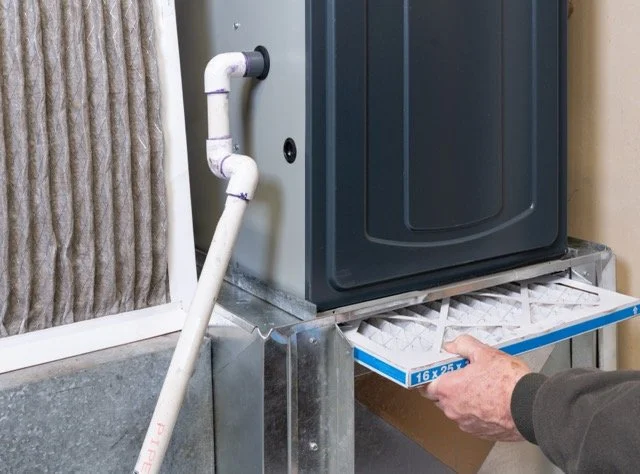
Filter Changes Every 1-3 Months
Regular filter changes prevent dust accumulation inside the furnace and maintain proper airflow. Standard 1-inch filters should be changed monthly during heating season. Higher-quality pleated filters (MERV 8-11) can last 2-3 months depending on household conditions.
Homes with pets need more frequent changes — sometimes every 2-3 weeks during heavy shedding seasons. If you're running a thicker 4-inch or 5-inch media filter, change it every 6-12 months depending on the manufacturer's specifications.
Dirty filters are the leading cause of airflow-related furnace problems. They reduce heating efficiency, increase energy costs, cause overheating, and allow more dust to bypass the filter and accumulate inside the furnace. Set a calendar reminder or sign up for a maintenance plan that includes filter reminders.
Keep the Area Around Your Furnace Clear
Furnaces need clearance for proper airflow and safety. Don't store cardboard boxes, cleaning supplies, paint cans, or other combustibles near the furnace. These items can obstruct airflow, create fire hazards, or fall into the furnace cabinet.
Many Michigan homes use basement furnace rooms for storage. If you're storing items in the same room as your furnace, maintain at least 30 inches of clearance around the unit and never block the combustion air intake or exhaust vent terminations.
Address Ductwork Leaks and Airflow Issues
Leaky ductwork in basements or crawlspaces pulls in additional dust and debris that settles inside your furnace. Sealing duct leaks improves efficiency, reduces dust infiltration, and minimizes seasonal burn-off odors.
Professional duct sealing typically costs $500-$1,500 depending on system size and accessibility, but it pays for itself through reduced energy waste and improved indoor air quality. If you notice excessive dust in your home, uneven heating between rooms, or persistent furnace odors despite regular maintenance, ductwork assessment should be part of your solution.
The Next Care Plan: Comprehensive Protection
For homeowners who want year-round peace of mind, the Next Care Plan provides comprehensive preventive maintenance for just $5 per month. Members receive:
Two annual home visits — fall furnace tune-up and spring AC tune-up
Priority scheduling for service calls
10% discount on all repairs
No service call fees
Filter change reminders
Members rarely experience odor-related emergencies because technicians catch potential problems during routine visits — cleaning components before dust accumulates, replacing worn parts before they fail, and identifying issues while they're still minor and inexpensive to fix.
Over 35 years serving Southeast Michigan, we've seen the cost difference between preventive maintenance and emergency repairs. A $60 annual tune-up prevents $1,500-$4,000 furnace repairs and extends equipment lifespan by 5-10 years. The Next Care Plan makes this protection automatic and affordable.
Ready to Get Started?
NEXT Heating & Cooling has been keeping Michigan homes comfortable for over 35 years. Get honest diagnostics and fair pricing from NATE-certified technicians who show up on time.
Frequently Asked Questions
Is it normal for a furnace to smell like burning when first turned on?
+
Yes, a dusty burning smell during the first few heating cycles of the season is completely normal. This odor comes from accumulated dust burning off the heat exchanger and burner assembly after months of inactivity. The smell should dissipate within 20-30 minutes and not return during subsequent heating cycles. If the odor persists for hours or returns every time the furnace runs, schedule a service call to identify the underlying issue.
When should I be worried about a burning smell from my furnace?
+
Shut down your furnace immediately if you smell sulfur or rotten eggs (indicating a gas leak), notice visible smoke, or if your carbon monoxide detector activates. Also be concerned if you smell burning electrical components (plastic or rubber odor), burning oil, or if the smell persists beyond the first 30 minutes of operation. These odors indicate potential electrical failures, mechanical problems, or combustion issues requiring professional diagnosis.
How long should the burning smell last when I turn on my furnace?
+
Normal dust burn-off should dissipate within 20-30 minutes of furnace operation. Opening windows and running exhaust fans helps ventilate the odor faster. If the burning smell lasts for several hours or returns during every heating cycle, you're dealing with something beyond seasonal dust accumulation and should schedule a service call.
Can a dirty filter cause my furnace to smell like burning?
+
Yes. Severely restricted airflow from a clogged filter can cause furnace components to overheat, potentially producing burning odors from overheated motors, melted plastic components, or damaged wire insulation. High-efficiency furnaces are particularly sensitive to airflow restrictions. If you haven't changed your filter in months and notice burning smells, replace the filter immediately and monitor whether the odor disappears. Regular filter changes every 1-3 months prevent most airflow-related problems.
What does an electrical burning smell from a furnace mean?
+
An electrical burning smell — like burning plastic, rubber, or wire insulation — typically indicates a failing blower motor, capacitor failure, or wiring problem. This odor often accompanies unusual noises (squealing, grinding, or loud humming) and may cause the furnace to operate erratically or not heat properly. Shut down the system and call for professional diagnosis to prevent more extensive damage or potential fire hazards.
How can I prevent burning smells from my furnace?
+
Schedule annual pre-season furnace tune-ups every fall before heating season begins. During tune-ups, technicians clean accumulated dust from the heat exchanger and burner assembly, inspect electrical connections, lubricate motors, test capacitors, and identify potential failures before they occur. Also change your air filter every 1-3 months, keep the area around your furnace clear, and address any ductwork leaks that pull in excess dust. Preventive maintenance eliminates most odor-causing problems and extends furnace lifespan.
Does NEXT Heating & Cooling offer emergency furnace service in Southeast Michigan?
+
Yes. NEXT Heating & Cooling provides 24/7 emergency HVAC service throughout Macomb, Oakland, and St. Clair counties. If you're experiencing concerning burning smells, visible smoke, gas odors, or your furnace has stopped working during cold weather, call for emergency diagnosis. Our NATE-certified technicians respond quickly to protect your home and restore comfort. We serve Sterling Heights, Royal Oak, Troy, Warren, Mount Clemens, and surrounding communities across Southeast Michigan.