

AC Making Loud Noise: What It Means & When to Call for Help

You're sitting in your living room on a humid June afternoon in Sterling Heights when you hear it: a loud banging sound coming from your outdoor AC unit. Or maybe it's a high-pitched screech that makes you wince every time the system cycles on. Whatever the noise, you know it's not normal — and you're right to be concerned.
After 35 years of providing heating and cooling services in Metro Detroit, we've diagnosed thousands of loud AC units across Macomb, Oakland, and St. Clair counties. The truth is, your air conditioner is trying to tell you something, and the type of noise it's making tells us exactly what's failing inside.
This guide breaks down the six most common loud AC noises we hear during service calls, what each sound actually means from a mechanical standpoint, and when you need to shut the system down immediately to prevent expensive damage. We'll also cover what our NATE-certified technicians check during a diagnostic call and the real costs you're looking at for repairs versus replacement.
The 6 Loud AC Noises We Diagnose Every Summer in Metro Detroit
Not all AC noises are created equal. Some indicate minor issues you can address during your next maintenance visit. Others mean you should shut down the system immediately and call for emergency service. Here are the six sounds we hear most often during service calls across Southeast Michigan:
1. Banging or Clanging
A loud banging sound — especially at startup — typically points to loose or broken internal components. In the outdoor condenser unit, this often means the compressor itself has loose mounting hardware, or internal components like the piston or connecting rod have failed. Inside the air handler, banging can indicate a loose blower wheel that's hitting the housing.
We see this frequently in older Carrier and Trane units where vibration over 15+ years has loosened bolts, or in systems that weren't properly secured during the original installation.
2. Screeching or Squealing
High-pitched screeching usually means metal-on-metal contact somewhere in the system. The most common culprits are worn motor bearings in the blower fan or condenser fan motor. Older belt-driven systems (less common now, but still present in many Michigan homes built before 2000) can screech when the belt is worn, misaligned, or too tight.
This sound is particularly noticeable during Michigan's humid summers when components expand slightly from heat, making tolerances even tighter.
3. Grinding
Grinding is one of the most serious noises you can hear. It almost always indicates severe bearing failure in a motor — either the blower motor inside your furnace/air handler or the condenser fan motor outside. When bearings fail completely, the motor shaft drags directly against the housing, creating a grinding sound that gets progressively worse.
If you hear grinding, shut the system down immediately. Continued operation will destroy the motor completely and potentially damage other components.
4. Buzzing or Humming
A loud electrical buzzing can point to several issues: a failing contactor relay, a capacitor that's going bad, loose electrical connections, or — in the worst case — a compressor that's locked up and drawing excessive amperage while trying to start.
We also see buzzing from refrigerant leaks in the reversing valve on heat pump systems, which are increasingly popular in Oakland County homes looking to reduce natural gas dependence.
5. Hissing
Hissing typically indicates a refrigerant leak, especially if accompanied by reduced cooling performance and ice buildup on the indoor coil. The hissing sound is refrigerant escaping under high pressure through a crack or pinhole leak in the coil, line set, or compressor.
A softer hissing at the indoor unit during operation can also be normal — that's the sound of refrigerant flowing through the expansion valve or metering device. But loud, continuous hissing is not normal.
6. Clicking
Some clicking is normal — you'll hear the relay click when the thermostat calls for cooling and the contactor engages. But rapid, repeated clicking that doesn't stop usually means a failing capacitor, a bad relay, or a thermostat issue. In outdoor units, clicking can also indicate debris caught in the fan blade.
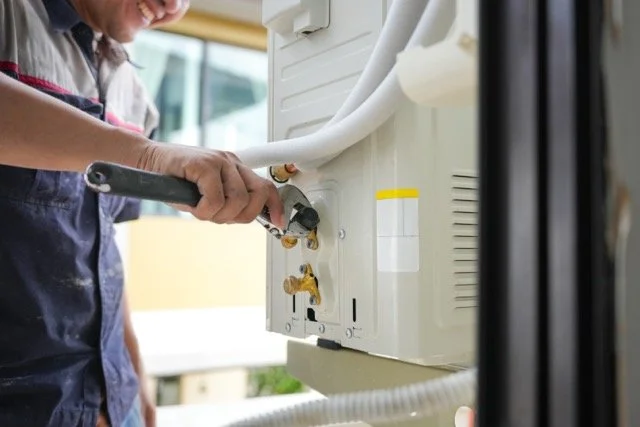
What Each Sound Actually Means (Technician Breakdown)
Let's dig deeper into the mechanical failures behind each noise type. Understanding what's actually happening inside your AC helps you make informed decisions about repair versus replacement.
Banging: Loose Components or Compressor Failure
When we diagnose a banging AC in Troy or Rochester Hills, we start by checking the compressor mounting bolts and isolation springs. Over time, vibration can loosen hardware, allowing the compressor to shift inside the condenser cabinet. This creates a loud bang every time the compressor cycles on.
Internal compressor failure — where the piston, connecting rod, or crankshaft breaks — produces a different kind of banging: loud, metallic, and continuous during operation. This is terminal. The compressor needs replacement, which on a system older than 12 years usually means replacing the entire outdoor unit.
Inside the air handler, a loose blower wheel creates a rhythmic banging as it rotates and strikes the housing. This happens when the set screw loosens or the wheel cracks. It's a relatively affordable repair if caught early — $200 to $400 for the part and labor.
Screeching: Bearing Failure or Belt Issues
Motor bearings are designed to last 15-20 years under normal conditions, but Michigan's temperature swings and high humidity can accelerate wear. When the lubricant inside a sealed bearing breaks down, metal-on-metal contact creates that unmistakable screech.
Blower motor replacement typically runs $400-$800 depending on the model. Condenser fan motors are similar. In older Lennox, Rheem, and Goodman systems, we sometimes see proprietary motors that cost more and take longer to source.
Belt-driven blowers (common in furnaces installed before 2000) use a rubber belt to connect the motor to the blower wheel. When the belt wears, cracks, or gets misaligned, it screeches during operation. Belt replacement is inexpensive — usually $150-$250 including the service call — but it's a sign the system is aging and other components may be near failure.
Grinding: Immediate Shutdown Required
Grinding means bearing failure has progressed beyond the screeching stage. The bearing cage has disintegrated, and the motor shaft is now dragging directly on metal. Continued operation will weld the shaft to the housing, destroying the motor completely and potentially damaging the capacitor and wiring.
If you hear grinding, turn off the system at the thermostat and flip the breaker. Call for emergency HVAC service — this is not a "wait until next week" situation.
Buzzing: Electrical Issues or Compressor Problems
Electrical buzzing often comes from the contactor — the relay that energizes the compressor and condenser fan. When contactor points pit and corrode (common after 8-10 years), they create poor electrical contact, leading to arcing and buzzing. Contactor replacement is straightforward: $150-$300.
Capacitors — which provide the starting torque for motors — can also buzz when failing. A capacitor stores electrical charge and releases it to kick-start the compressor or fan motor. When the dielectric inside breaks down, you'll hear buzzing and the motor may struggle to start or fail to start entirely. Capacitor replacement: $150-$250.
The most serious buzzing comes from a locked compressor. If the compressor's internal components seize, the motor tries to start but can't turn. It draws locked-rotor amperage (LRA) — often 5-6 times normal running amps — creating a loud electrical hum. The breaker should trip, but if it doesn't, the compressor will overheat and fail catastrophically.
Hissing: Refrigerant Leaks and System Pressure
Refrigerant leaks are common in Michigan due to our freeze-thaw cycles. Outdoor coils especially develop pinhole leaks where road salt and moisture cause corrosion. The evaporator coil inside the air handler can also leak, often due to formicade corrosion — a chemical reaction between copper tubing and formic acid from household products.
A refrigerant leak isn't just about topping off the system. EPA regulations require technicians to locate and repair leaks before adding refrigerant. Depending on where the leak is, repair costs vary widely: $300-$600 for accessible line set repairs, $1,200-$2,500 for evaporator coil replacement, $1,500-$3,000 for condenser coil replacement.
If your system uses R-22 refrigerant (phased out in 2020), refrigerant alone costs $100-$150 per pound. Many homeowners choose to replace the entire system rather than invest in R-22 repairs.
Michigan-Specific Consideration: Road salt is brutal on outdoor AC units in Southeast Michigan. If your condenser sits near a driveway or street where salt spray reaches it during winter, corrosion happens faster. We recommend rinsing the coil with a garden hose each spring to remove salt residue — a simple step that extends equipment life.
When a Loud AC Is a Safety Issue (Not Just Annoying)
Some AC noises are merely annoying. Others indicate hazards that require immediate shutdown. Here's when to hit the emergency stop:
Electrical Arcing and Fire Risk
If you hear buzzing accompanied by a burning smell, see sparks, or notice the breaker tripping repeatedly, you have an electrical hazard. Arcing contactors, damaged wiring, or short circuits can ignite insulation and cause fires. Shut down the system and call an emergency technician immediately.
Refrigerant Leaks and Health Concerns
While modern refrigerants like R-410A (used in systems installed after 2010) are less toxic than older R-22, large leaks in enclosed spaces can displace oxygen and cause dizziness, headaches, or nausea. If you hear loud hissing and notice a chemical odor or feel lightheaded near the indoor unit, turn off the system, open windows, and leave the area.
Compressor Failure and Refrigerant Explosion
In rare cases, a severely overheated compressor can rupture, releasing refrigerant and oil under high pressure. This sounds like a gunshot and can damage surrounding components. If you hear a loud bang followed by complete system shutdown and see oil stains around the outdoor unit, do not attempt to restart the system.
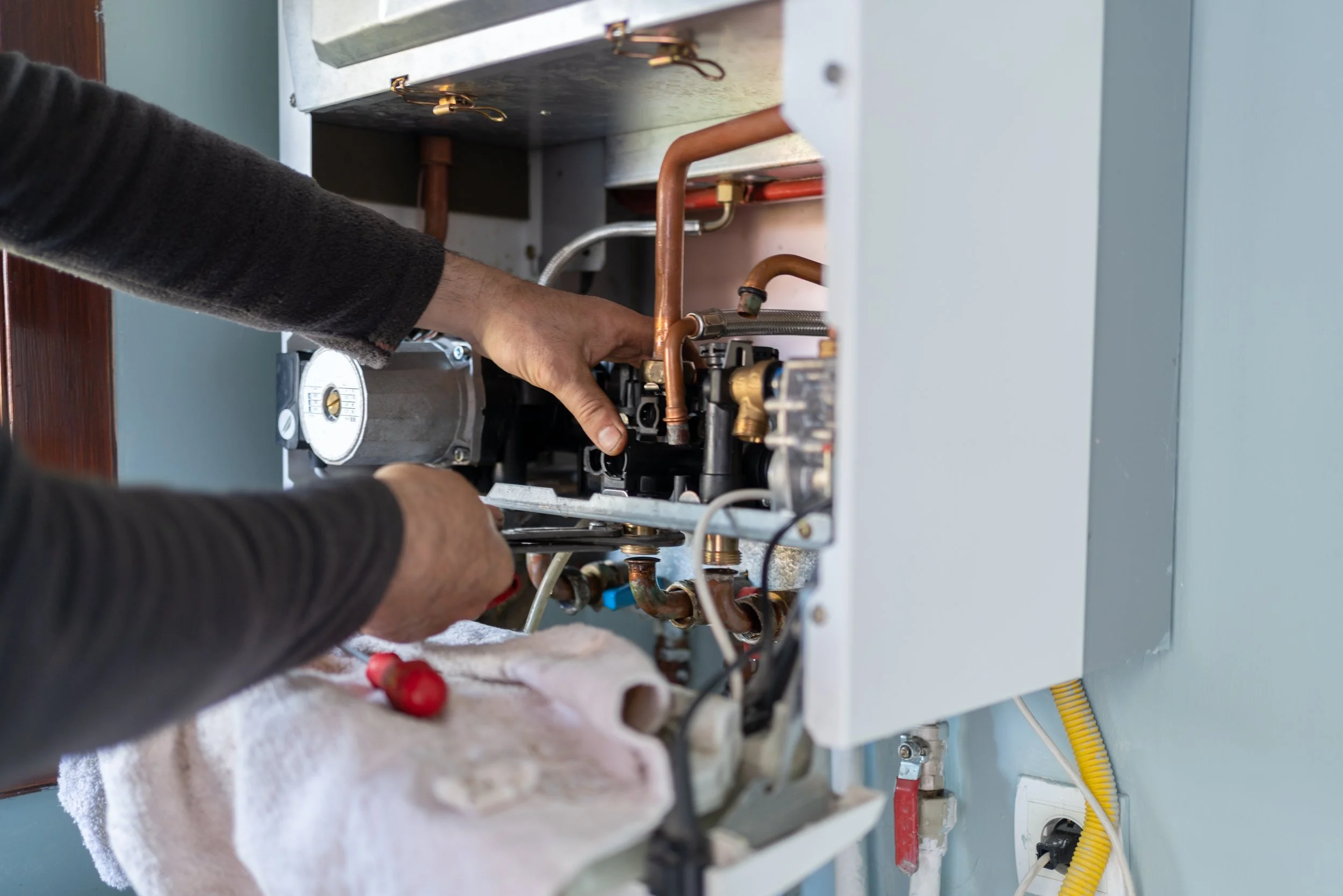
What We Check During a Noise Diagnosis Call
When you call us about a loud AC, here's exactly what our technicians do during the diagnostic visit. This process applies whether you're in Clinton Township, Warren, or Bloomfield Hills — the fundamentals of HVAC diagnosis don't change.
Step 1: Listen and Locate
We start by running the system and listening carefully to identify the noise type and source. Is it coming from the outdoor condenser, the indoor air handler, or the ductwork? Does it happen at startup, during operation, or at shutdown? Timing tells us a lot about the failing component.
Step 2: Visual Inspection
We inspect the outdoor unit for obvious issues: loose panels, debris in the fan, damaged coil fins, corroded wiring, or oil stains indicating refrigerant leaks. Inside, we check the blower assembly, motor mounts, and electrical connections.
Step 3: Electrical Testing
Using a multimeter, we test voltage and amperage at the contactor, capacitor, and motors. High amperage draw indicates a motor struggling to turn, often due to bearing failure or a locked compressor. Low voltage can point to weak contactors or undersized wiring.
We also test capacitance using a capacitor tester. Capacitors are rated in microfarads (µF), and they should test within 5-10% of the rated value. A capacitor reading 30 µF when it should be 45 µF is failing and needs replacement.
Step 4: Mechanical Inspection
We manually rotate fan blades to check for resistance or grinding. Smooth rotation means bearings are okay; resistance or rough spots indicate bearing wear. We check blower wheel balance and set screw tightness. We inspect compressor mounting bolts and isolation springs.
Step 5: Refrigerant System Check
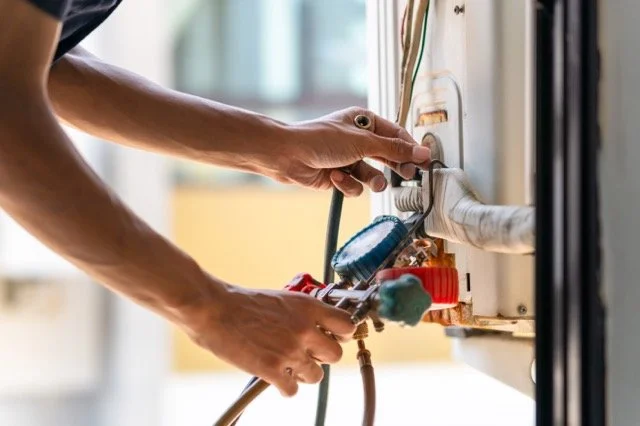
If we suspect a refrigerant leak, we use electronic leak detectors and ultraviolet dye to locate the source. We also check system pressures using manifold gauges. Low suction pressure combined with ice buildup on the indoor coil confirms a leak or restriction.
Step 6: Diagnosis and Options
After testing, we explain exactly what's wrong, why it's making that noise, and what it will take to fix it. We give you repair cost estimates and — if the system is older or has multiple failing components — we discuss replacement options with honest cost-benefit analysis. No pressure, no upselling. Just the facts.
This is the diagnostic approach that's kept our customers across Macomb County trusting us for over three decades. You can learn more about our no-pressure philosophy on our contractor page.
Cost Reality: Repair vs. Replacement When Your AC Is Loud
Let's talk money. When your AC is making loud noises, you're facing a decision: repair the failing component or replace the entire system. Here's how we help homeowners in Southeast Michigan think through that choice.
Common Repair Costs for Noise Issues
- Contactor replacement: $150-$300
- Capacitor replacement: $150-$250
- Blower motor replacement: $400-$800
- Condenser fan motor replacement: $350-$700
- Compressor replacement: $1,500-$3,000 (labor-intensive, requires refrigerant recovery and recharge)
- Evaporator coil replacement: $1,200-$2,500
- Condenser coil replacement: $1,500-$3,000
- Blower wheel replacement: $200-$400
- Belt replacement (older systems): $150-$250
The Age and Efficiency Factor
If your AC is less than 8 years old and the repair costs under $800, repair usually makes sense. But if the system is 12+ years old and you're looking at a $1,500+ repair, replacement often delivers better long-term value.
Here's why: A 15-year-old AC likely has a SEER rating of 10-13. Modern systems range from 14.5 SEER (minimum efficiency) to 20+ SEER for high-efficiency models. A 16 SEER Carrier or Lennox system can cut cooling costs by 25-35% compared to an old 10 SEER unit.
We walk through this calculation with homeowners all the time. If you spend $2,000 repairing a 14-year-old system, you're still running inefficient equipment that will likely need more repairs within 2-3 years. For $4,500-$6,500, you can install a new 16 SEER system with a 10-year parts warranty and dramatically lower operating costs.
The "5,000 Rule" We Use
Multiply the repair cost by the system's age. If the result exceeds $5,000, replacement usually makes more financial sense than repair.
Example: Your 13-year-old AC needs a $1,800 compressor replacement. 13 × $1,800 = $23,400. That's well over $5,000, so replacement is the smarter investment.
Example 2: Your 6-year-old system needs a $600 blower motor. 6 × $600 = $3,600. Under $5,000, so repair makes sense.
This isn't a hard rule, but it's a useful framework for decision-making.
Real Cost Example from Warren, MI: Last summer, we diagnosed a 16-year-old Goodman AC in Warren with a failed compressor. Repair estimate: $2,400. The homeowner was spending $180/month on summer cooling bills. We installed a 16 SEER Lennox system for $5,200. Their first summer cooling bills dropped to $115/month — a $65/month savings. At that rate, the efficiency gain alone pays back the upgrade cost in about 6 years, and they have a new system with a 10-year warranty.
How to Prevent Loud AC Noises (Maintenance Matters)
Most loud AC noises don't happen suddenly — they develop over time as components wear out. Regular maintenance catches these issues early, before a squealing bearing becomes a seized motor or a slow refrigerant leak becomes a complete system failure.
What a Professional Tune-Up Includes
During a spring AC tune-up, our technicians perform 20+ inspection and maintenance tasks designed to keep your system running quietly and efficiently:
- Clean condenser coil to maintain airflow and heat transfer
- Inspect and tighten electrical connections to prevent arcing
- Test capacitors and contactors for wear
- Lubricate motor bearings (on models with serviceable bearings)
- Check refrigerant charge and adjust if needed
- Inspect blower wheel and motor mounts for looseness
- Test system pressures and temperatures
- Check condensate drain for clogs
- Measure amp draw on compressor and fan motors
- Inspect ductwork connections for air leaks
This preventive work identifies failing components before they fail catastrophically. A capacitor testing at 32 µF when it should be 45 µF gets replaced during the tune-up for $200, not during an emergency service call in July when it fails completely and leaves you without AC for two days.
The Next Care Plan: $5/Month Maintenance
We offer the Next Care Plan — a $5/month maintenance subscription that includes two annual tune-ups (spring AC, fall furnace), priority scheduling, 10% repair discounts, and no service call fees.
For $60/year, you get the preventive maintenance that extends equipment life by 5-7 years on average and prevents the majority of loud noise issues we diagnose. It's the most cost-effective way to protect your HVAC investment.
Customers on the Next Care Plan rarely call us with emergency noise issues, because we catch problems during scheduled tune-ups when repairs are cheaper and less disruptive.
Homeowner Maintenance You Can Do
Between professional tune-ups, there are a few simple tasks that help prevent AC noise issues:
- Change the air filter every 30-60 days. A clogged filter restricts airflow, making the blower motor work harder and wear out faster.
- Keep the outdoor unit clear. Trim vegetation back 2 feet on all sides. Remove leaves, grass clippings, and debris from the top of the unit.
- Rinse the condenser coil each spring. Use a garden hose to gently spray the coil fins from inside-out, removing dirt, pollen, and salt residue.
- Listen for changes. You know what your AC normally sounds like. If you hear a new noise — even a minor one — mention it during your next tune-up so we can investigate.
Loud AC? Get a Straight Answer from NATE-Certified Techs
NEXT Heating & Cooling has been diagnosing and repairing loud AC units across Southeast Michigan for over 35 years. Our technicians show up on time, explain exactly what's wrong, and give you honest repair-or-replace advice without pressure. No commissions. No upselling. Just the truth about your equipment.
Schedule Your Diagnostic ServiceFrequently Asked Questions About Loud AC Noises
If you hear grinding, loud banging, or smell burning, shut down the system immediately at the thermostat and breaker. These sounds indicate severe mechanical or electrical failure that can cause further damage if the system keeps running. For other noises like screeching or buzzing, you can typically keep the system running until a technician arrives, but schedule service as soon as possible to prevent the issue from worsening.
Your AC isn't actually louder at night — ambient noise is lower, so you notice the sound more. However, if the noise genuinely increases at night, it could be related to temperature changes. As outdoor temperatures drop in the evening, refrigerant pressures change, and components that have expanded during the day contract slightly. This can make loose components rattle more noticeably. It's still worth having a technician inspect for loose mounting hardware or failing components.
Repair costs vary widely depending on the cause. Simple fixes like contactor or capacitor replacement typically run $150-$300. Motor replacements (blower or condenser fan) cost $350-$800. Major repairs like compressor or coil replacement range from $1,200-$3,000. After diagnosing the issue, we provide a detailed estimate before starting any work. If the system is older and repair costs are high, we'll also discuss replacement options and help you make the most cost-effective decision.
Yes, certain loud noises indicate safety hazards. Electrical buzzing with burning smells can signal arcing and fire risk. Loud hissing may indicate a refrigerant leak, which in enclosed spaces can displace oxygen. Grinding sounds from a seized compressor drawing excessive amperage can overheat wiring and trip breakers. If you notice any of these symptoms along with the noise, turn off the system immediately and call for emergency service.
Startup noise is often caused by the compressor engaging under load. A loud clunk or bang at startup typically indicates loose compressor mounting bolts, worn isolation springs, or a failing compressor. Screeching at startup points to motor bearing issues or a tight blower belt. While some startup noise is normal (the contactor clicking, for example), loud banging or screeching requires professional diagnosis to prevent complete component failure.
Yes, in most cases. Annual tune-ups catch failing components before they fail completely. We test capacitors, inspect motor bearings, tighten electrical connections, check refrigerant charge, and lubricate serviceable parts. This preventive work identifies issues like a weakening capacitor or early bearing wear when repairs are simple and inexpensive. Systems on our Next Care Plan experience far fewer emergency breakdowns because we catch problems during scheduled visits.
Yes, all AC systems make some operational noise. You'll hear the contactor click when the system starts, a whooshing sound from refrigerant flowing through the expansion valve, and a steady hum from the compressor and fan motors. What's not normal is loud banging, grinding, screeching, or buzzing that wasn't there before. If the noise level has increased noticeably or you hear new sounds, it's time for a diagnostic inspection.