

AC Warranty Fine Print: What West Bloomfield Homeowners Miss

Your air conditioner breaks down on the hottest week of July. You bought a premium Carrier unit three years ago with what the sales guy called a "10-year warranty," so you're covered, right?
Then the service call happens. The technician confirms your compressor failed — a $2,400 part. The warranty covers the compressor itself, but not the $850 in labor to replace it. Oh, and you need to provide proof of annual maintenance, which you don't have. Suddenly, that "10-year warranty" doesn't feel so comprehensive.
I've run this exact conversation dozens of times in West Bloomfield homes over the past 35 years. The warranty confusion isn't your fault — manufacturers write these documents in language designed to protect them, not help you understand what you're actually getting.
Here's what most West Bloomfield homeowners miss when they sign off on a new AC installation, and what you need to know before your system breaks down.
Why AC Warranties Are So Confusing
When you buy a new air conditioning system from a reliable HVAC contractor in Metro Detroit, you're not getting one warranty — you're getting three or four different coverage types that overlap in confusing ways.
Here's what you actually receive:
- Parts Warranty: Covers manufacturing defects in components (typically 5-10 years depending on the brand and model)
- Compressor Warranty: Separate extended coverage for the compressor specifically (often 10 years on mid-range units, up to lifetime on premium models)
- Labor Warranty: Covers the technician's time to diagnose and repair (usually 1-2 years, sometimes only 90 days)
- Workmanship Warranty: Guarantees the installation itself was done correctly (provided by the installing contractor, not the manufacturer)
Most homeowners hear "10-year warranty" and assume everything is covered for a decade. What they don't realize is that only applies to specific parts — and even then, only if you meet a list of conditions buried in the fine print.
Real Example from West Bloomfield: A homeowner called us last summer with a failed condenser fan motor on a 4-year-old Lennox unit. The part was covered under the 5-year parts warranty. The motor itself cost $180. Labor to diagnose the problem, recover refrigerant, replace the motor, and recharge the system? $420. The warranty saved them less than half the total repair cost.
The confusion gets worse because different manufacturers structure warranties differently. Carrier, Trane, Lennox, Rheem, Bryant, Goodman — every brand has slightly different terms. Some require online registration within 90 days to activate extended coverage. Others automatically provide limited coverage but require registration for the "full" warranty.
And here's the part that catches most people: the warranty clock starts the day the unit is installed, not the day you discover a problem. If your AC was installed in May 2023 and the compressor fails in June 2026, you're three years into that 10-year compressor warranty — even if you only used the system for three cooling seasons.

What Your AC Warranty Actually Covers (And What It Doesn't)
Let's break down what "warranty coverage" actually means in real-world repair scenarios. I'll use examples from actual service calls we've run through our heating and cooling services in Metro Detroit.
Parts Coverage: The Foundation (But Not the Whole Story)
When a manufacturer says "5-year parts warranty," they mean they'll replace defective components at no charge for the part itself. This includes:
- Compressor (often covered separately for 10 years)
- Condenser coil
- Evaporator coil
- Fan motors (condenser and blower)
- Circuit boards and control modules
- Reversing valves (on heat pumps)
- Capacitors and contactors
What the parts warranty does not cover:
- Labor to diagnose the problem
- Labor to remove and replace the failed part
- Refrigerant needed to recharge the system
- Any secondary damage caused by the failed part
- Trip charges or diagnostic fees
- Shipping costs for replacement parts
On a typical warranty repair in West Bloomfield, the part might be free, but you're still paying $400-$900 in labor and materials depending on what failed and how long it takes to fix.
Labor Coverage: The Expensive Surprise
Here's where most homeowners get blindsided. Labor warranties are almost always shorter than parts warranties — sometimes dramatically shorter.
Standard labor warranty terms by brand:
- Carrier: 1 year labor coverage (can be extended to 10 years with registration and dealer participation)
- Lennox: 1 year labor (extended options available)
- Trane: 1 year labor standard, up to 10 years with registered extended warranty
- Rheem: 90 days to 1 year depending on model
- Goodman: No manufacturer labor warranty (dealer may offer separate coverage)
After that labor coverage expires, you're paying full price for the technician's time — even if the part itself is still under warranty. On a compressor replacement, labor typically runs $600-$1,200 depending on system accessibility and refrigerant type.
Why This Matters in Southeast Michigan: Our humid summers and temperature swings put stress on AC components. Compressors often fail in years 5-8, right when labor coverage has expired but parts coverage is still active. You get a "free" $1,800 compressor but pay $900 in labor to install it.
Refrigerant: Almost Never Covered
When we replace a compressor, condenser coil, or evaporator coil under warranty, we have to recover the existing refrigerant, install the new part, vacuum the system, and recharge it with fresh refrigerant.
That refrigerant isn't covered by warranty. On an R-410A system (the current standard), expect to pay $300-$600 for refrigerant depending on how much the system holds. On older R-22 systems, refrigerant costs can hit $1,000+ because R-22 is no longer manufactured and existing supplies are expensive.
We covered the R-410A refrigerant phase-out in detail in another post, but the short version: refrigerant is a consumable material in the eyes of warranty departments, so you're paying for it out of pocket.
The Maintenance Proof Requirement Nobody Mentions
Here's the warranty clause that voids more coverage claims than anything else: proof of annual maintenance.
Buried in the fine print of virtually every major AC manufacturer's warranty, you'll find language requiring "regular maintenance by a qualified technician" or "annual service as outlined in the owner's manual."
What does that actually mean? You need documented proof — invoices, service reports, maintenance records — showing that a licensed HVAC technician inspected and serviced your air conditioner every single year it's been in service.
What counts as acceptable maintenance documentation:
- Dated invoices from licensed HVAC contractors
- Service reports detailing work performed (not just "tune-up completed")
- Maintenance agreements or subscription plans with visit records
- Receipts showing filter changes, coil cleaning, refrigerant level checks
What doesn't count:
- "I change the filter regularly" (no documentation)
- DIY maintenance without professional verification
- Maintenance performed by unlicensed handymen
- Gaps in service records (skipping a year voids coverage for some manufacturers)
When you file a warranty claim for a failed compressor, the manufacturer often requests maintenance records for the past 2-3 years. If you can't provide them, they deny the claim — even if the failure was clearly a manufacturing defect.
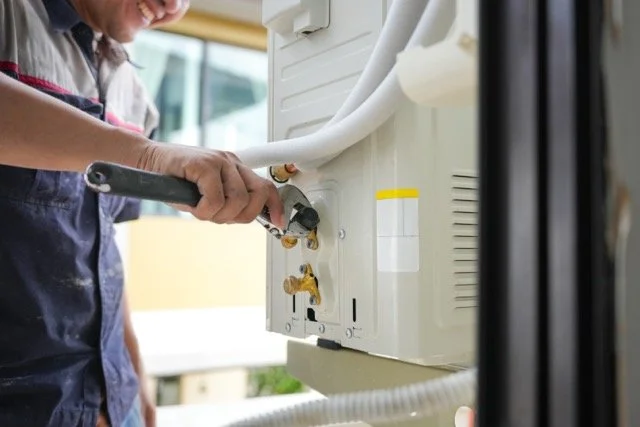
This is exactly why we built the Next Care Plan — a $5/month HVAC maintenance subscription that solves this problem. You get two annual visits (spring AC tune-up, fall furnace tune-up), and we automatically document every service call. If you ever need to file a warranty claim, you have a complete maintenance history with dated invoices and detailed service reports.
The cost of one warranty-denied compressor replacement ($2,400-$3,200) pays for 40 years of Next Care Plan coverage. It's not just about saving money on tune-ups — it's about protecting the warranty you already paid for when you bought the system.
Common Warranty Voids West Bloomfield Homeowners Face
Manufacturers include specific exclusions that automatically void warranty coverage. These aren't negotiable, and they're enforced strictly when you file a claim.
1. Improper Installation
If your AC wasn't installed by a properly licensed HVAC contractor following manufacturer specifications, the warranty is void from day one. This includes:
- Installation by unlicensed handymen or "cash contractors"
- Incorrect refrigerant charge (overcharged or undercharged systems)
- Improper line set sizing or routing
- Inadequate condensate drainage
- Electrical work not performed to code
- Undersized or oversized equipment for the home's cooling load
In Michigan, HVAC installation requires a mechanical contractor license. We hold ours through Premier Builder Inc., and every installation we complete includes proper permitting and inspection. If someone offers to "save you money" by skipping permits or doing a cash deal, you're gambling with your warranty coverage.
2. Lack of Maintenance Records
We covered this above, but it's worth repeating: if you can't prove annual maintenance, most manufacturers will deny warranty claims on major components. This is the most common warranty void we see in West Bloomfield.
3. Wrong Refrigerant or Improper Charging
If someone adds the wrong refrigerant type to your system (mixing R-22 and R-410A, for example) or charges it incorrectly, any resulting damage voids the warranty. This happens more often than you'd think, especially with cut-rate repair companies or DIY attempts.
Refrigerant charge has to be precise — measured by subcooling and superheat, not just "add a pound and see if it cools better." Overcharging can destroy a compressor. Undercharging makes the system run inefficiently and can damage the compressor through liquid slugging.
4. Modifications or DIY Repairs
Any modification to the system by someone other than a licensed technician voids coverage. This includes:
- Replacing parts yourself (even simple components like capacitors)
- Bypassing safety controls or pressure switches
- Altering wiring or control circuits
- Adding aftermarket components not approved by the manufacturer
I get it — a $30 capacitor seems like an easy DIY fix compared to a $150 service call. But if that capacitor replacement leads to a failed compressor six months later, the manufacturer will investigate, find evidence of unauthorized work, and deny your claim on a $2,400 compressor.
5. Environmental Damage
Warranties don't cover damage from external factors, even when those factors are common in Southeast Michigan:
- Flooding (basement condensate pump failures, sump pump backups)
- Hail damage to condenser units
- Power surges from lightning strikes or grid fluctuations
- Freezing damage from inadequate winterization
- Corrosion from road salt spray (units near driveways in Bloomfield Hills and Rochester Hills)
- Rodent damage to wiring or insulation
Homeowners insurance may cover some of these scenarios, but the manufacturer warranty won't. This is why we recommend surge protectors on HVAC systems and proper condensate pump maintenance — both prevent warranty-voiding damage.
The Registration Deadline You Probably Missed
Most manufacturers offer two warranty tiers: a limited warranty that activates automatically when the unit is installed, and an extended warranty that requires online registration within 60-90 days of installation.
The difference between the two can be substantial:
Carrier Example:
- Unregistered (Limited Warranty): 5-year parts, 1-year labor
- Registered (Extended Warranty): 10-year parts, 10-year compressor, option for extended labor coverage
Lennox Example:
- Unregistered: 5-year parts
- Registered: 10-year parts, 10-year compressor (some models include lifetime compressor warranty)
If you miss the registration window, you're stuck with the limited warranty for the life of the equipment. There's no retroactive registration, no exceptions, no appeals.
Here's what you need to register your AC unit:
- Model number (on the data plate attached to the outdoor condenser unit)
- Serial number (also on the data plate)
- Installation date (from your invoice)
- Installing contractor information
- Homeowner contact information
The registration process takes about 5 minutes on the manufacturer's website. Carrier, Lennox, Trane, Rheem, Bryant, Goodman — they all have online registration portals. Some manufacturers email you a confirmation with your extended warranty details. Others just update their internal database.
Pro Tip: If you're not sure whether your AC is registered, contact the manufacturer's customer service line with your serial number. They can tell you what warranty is currently active on your unit. If you're outside the registration window, at least you'll know what coverage you actually have.
When NEXT Heating & Cooling installs a new AC system, we walk homeowners through the registration process before we leave the job site. It's part of our installation checklist because we've seen too many people lose thousands in warranty coverage over a missed 90-day deadline.
What To Do If Your AC Breaks Under Warranty
Your AC stops working. You think it might be covered under warranty. Here's the step-by-step process for actually getting a warranty claim approved and processed.
Step 1: Confirm What's Actually Covered
Before calling for service, dig out your installation paperwork and check:
- Installation date (when does coverage start?)
- Model and serial number
- Warranty registration status (registered or unregistered)
- What's still under parts coverage (5 years? 10 years?)
- What's still under labor coverage (probably expired if it's been more than 1-2 years)
If you can't find your paperwork, the model and serial number are on a metal data plate attached to the outdoor condenser unit. Take a photo of it — you'll need those numbers for the warranty claim.
Step 2: Call a Licensed HVAC Contractor (Not the Manufacturer)
Manufacturers don't send their own technicians to your house. You need to hire a licensed contractor to diagnose the problem, identify the failed part, and submit the warranty claim on your behalf.
When you call Metro Detroit's reliable HVAC contractor, here's what happens:
- We schedule a diagnostic service call
- Our NATE-certified technician inspects your system and identifies the problem
- If the failed part appears to be under warranty, we document the failure mode and check manufacturer warranty status
- We submit a warranty claim to the manufacturer with photos, serial numbers, and diagnostic details
- The manufacturer approves or denies the claim (usually within 24-48 hours)
- If approved, we order the replacement part and schedule the repair
You'll pay for the diagnostic service call upfront (typically $99-$150). If the part is covered under warranty, you'll only pay for labor and materials (refrigerant, supplies, etc.). If the part isn't covered, you'll pay for the part plus labor.
Step 3: Provide Maintenance Documentation
When we submit the warranty claim, the manufacturer often requests proof of annual maintenance. This is where homeowners without records hit a wall.
If you have maintenance records, provide them immediately. If you don't, the manufacturer may deny the claim — even for a clearly defective part.
Homeowners enrolled in our affordable HVAC maintenance plan never have this problem. We maintain digital service records for every visit, and we submit them directly to the manufacturer as part of the claim process.
Step 4: Understand What You're Paying For
Even on a "warranty repair," expect to pay for:
- Diagnostic fee: $99-$150 (some contractors waive this if you proceed with the repair)
- Labor: $400-$1,200 depending on the repair complexity (not covered after the labor warranty expires)
- Refrigerant: $300-$600 for R-410A systems, more for R-22
- Trip charges: Some contractors charge separately for travel time
- Supplies: Nitrogen for pressure testing, leak detection dye, vacuum pump rental, etc.
On a typical compressor replacement under warranty, the compressor itself (valued at $1,800-$2,400) is free, but you're still paying $900-$1,500 in labor and materials.
Step 5: Plan for Downtime
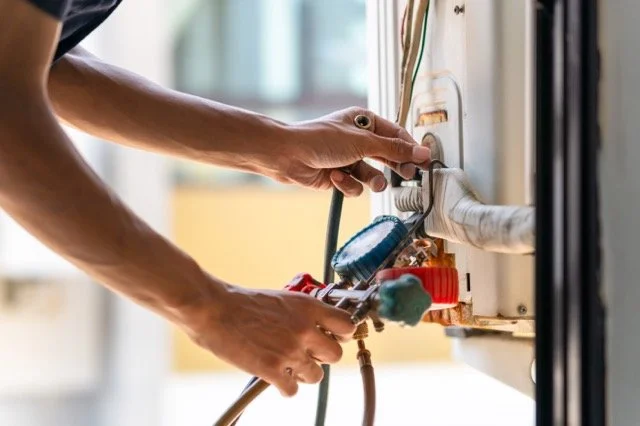
Warranty parts aren't stocked locally. Once the manufacturer approves the claim, we order the part from a regional distributor. Shipping typically takes 3-7 business days, sometimes longer for specialized components or during peak season.
In the middle of a July heat wave, that's a long time to go without AC. We prioritize warranty repairs and offer temporary cooling solutions when possible, but there's no way around the parts shipping timeline.
How to Protect Your Warranty Investment
You paid good money for that AC system and its warranty coverage. Here's how to make sure you actually get the protection you paid for.
1. Register Your Equipment Immediately
Within 90 days of installation, go to the manufacturer's website and complete the warranty registration. Set a calendar reminder if you need to — this is not something to put off.
If you're reading this and your AC is already installed, check the installation date on your invoice. If you're still inside the 60-90 day window, register today. If you're outside the window, at least confirm what warranty coverage you have so you're not surprised later.
2. Schedule Annual Maintenance Every Spring
This isn't optional if you want warranty coverage. Book a professional AC tune-up every spring before cooling season starts. The technician should:
- Clean condenser coils
- Check refrigerant charge (subcooling and superheat measurements)
- Inspect electrical connections and tighten terminals
- Test capacitors and contactors
- Verify proper airflow across the evaporator coil
- Clean or replace air filters
- Check condensate drain and pump operation
- Test safety controls and pressure switches
The technician should provide a detailed service report documenting what was checked and any issues found. Keep that report with your home maintenance records — you'll need it for warranty claims.
Our $5/month HVAC maintenance plan includes two annual visits (spring AC tune-up, fall furnace check) and automatic documentation. It's the most cost-effective way to maintain warranty compliance and prevent expensive breakdowns.
3. Keep All Service Records in One Place
Create a dedicated folder — physical or digital — for HVAC documentation:
- Original installation invoice
- Warranty registration confirmation
- Annual maintenance invoices and service reports
- Any repair invoices and parts receipts
- Owner's manual and installation manual
When you need to file a warranty claim, you'll have everything in one place. This also helps when you sell the house — transferable warranties add value, and buyers want to see maintenance records.
4. Use Only Licensed HVAC Contractors
Every single service call, repair, or modification should be performed by a properly licensed HVAC contractor. In Michigan, that means a mechanical contractor license issued by the state.
Don't hire unlicensed handymen, don't attempt DIY repairs (even simple ones), and don't let your brother-in-law "take a look at it" unless he holds an active HVAC license. One unauthorized repair can void your entire warranty.
5. Address Problems Immediately
Small issues become big problems when ignored. If your AC is making strange noises, not cooling as well as it used to, or cycling on and off frequently, call for service immediately.
Ignoring a failing capacitor can destroy a compressor. Ignoring a refrigerant leak can damage the entire system. And if that damage happens because you delayed necessary repairs, the warranty won't cover the secondary damage — only the original failed part (if it's still under coverage).
We offer 24/7 emergency HVAC service across Macomb County, Oakland County, and St. Clair County. If something breaks, we can diagnose it quickly and determine whether it's a warranty-covered repair or something you'll pay for out of pocket.
6. Understand What's Normal Wear vs. Defect
Warranties cover manufacturing defects and premature component failure. They don't cover normal wear and tear.
After 8-10 years, components like capacitors, contactors, and fan motors naturally wear out. That's not a warranty issue — that's the expected lifespan of those parts. Similarly, if your evaporator coil develops a leak after 12 years, that's not a defect — coils corrode over time, especially in humid Michigan basements.
A good HVAC contractor will be honest about whether a repair should be covered under warranty or whether it's just normal aging. We've been serving Southeast Michigan for 35+ years under Premier Builder Inc., and our reputation is built on straight answers, not gaming the warranty system.
Ready to Get Started?
NEXT Heating & Cooling has been keeping Michigan homes comfortable for over 35 years. Get honest diagnostics and fair pricing from NATE-certified technicians who show up on time. We'll help you understand your warranty coverage and make sure you're protected.
Schedule Your ServiceFrequently Asked Questions
Most AC warranties only cover labor for 1-2 years after installation. After that, you pay full price for the technician's time even if the part itself is covered under warranty. Some manufacturers offer extended labor warranties if you register within 90 days of installation. On a typical warranty repair after the labor coverage expires, you'll pay $400-$900 in labor costs even though the part is free.
You're stuck with the limited warranty for the life of the equipment. Most manufacturers offer a basic 5-year parts warranty that activates automatically, but the extended warranty (often 10 years on parts and compressor) requires registration within 60-90 days of installation. There are no exceptions or retroactive registrations. If you missed the deadline, contact the manufacturer to confirm what coverage you actually have so you're not surprised when something breaks.
Yes. Virtually every major AC manufacturer requires "regular maintenance by a qualified technician" as a condition of warranty coverage. When you file a warranty claim for a failed compressor or other major component, they'll request maintenance records for the past 2-3 years. If you can't provide dated invoices and service reports from a licensed HVAC contractor, they can deny the claim — even for obvious manufacturing defects. This is the most common reason warranty claims get rejected in West Bloomfield.
No. Refrigerant is considered a consumable material and is almost never covered by manufacturer warranties. When we replace a compressor or coil under warranty, you'll pay for the refrigerant needed to recharge the system — typically $300-$600 for R-410A systems, more for older R-22 systems. This cost is separate from labor charges and applies even when the part itself is covered.
Common warranty voids include: improper installation by unlicensed contractors, lack of annual maintenance documentation, DIY repairs or modifications, wrong refrigerant type or improper charging, environmental damage (flooding, hail, power surges), and using non-approved replacement parts. In Michigan, HVAC work requires a mechanical contractor license. If someone offers to "save you money" by skipping permits or doing cash deals, you're risking your warranty coverage.
Plan for 5-10 days from diagnosis to completion. The diagnostic visit happens within 1-2 days of your call. The manufacturer typically approves or denies the claim within 24-48 hours. Once approved, we order the replacement part from a regional distributor — shipping takes 3-7 business days, sometimes longer during peak season or for specialized components. The actual repair work takes 2-6 hours depending on what failed. In the middle of summer, that downtime can be uncomfortable, but there's no way around the parts shipping timeline.
Absolutely. At $5/month ($60/year), the Next Care Plan pays for itself in warranty protection alone. One denied warranty claim on a compressor replacement costs $2,400-$3,200 out of pocket. The plan includes two annual visits with full documentation, which satisfies manufacturer maintenance requirements and gives you the paper trail you need for warranty claims. You also get priority scheduling, 10% repair discounts, and no service call fees. It's the most cost-effective way to protect the warranty you already paid for when you bought the system.