

Ductless Mini Split Cost Michigan: Real Pricing Guide 2026

You've probably seen them — the sleek white units mounted high on the wall in homes without ductwork, or in room additions where running ducts would cost a fortune. Ductless mini splits have gone from "that weird Japanese thing" to one of the most requested heating and cooling services in Metro Detroit we install.
The question we hear most: "What's this actually going to cost me?"
Fair question. The pricing on ductless mini splits varies more than traditional central air because every installation is different. A single-zone unit for a garage workshop costs a lot less than a four-zone system heating and cooling an entire ranch house in Sterling Heights.
We've been installing mini splits across Southeast Michigan for over a decade — from older homes in Grosse Pointe Farms with no existing ductwork to new sunroom additions in Rochester Hills where extending ducts would mean tearing up finished ceilings. After thousands of installations, we know exactly what these systems cost and what drives the price up or down.
This guide breaks down real ductless mini split costs in Michigan — not national averages that don't account for our climate or local labor rates. You'll see what equipment costs, what installation runs, and what factors push the price higher. No sales pitch. Just the numbers and the reasoning behind them.
Real Ductless Mini Split Costs in Michigan (2026)
Let's start with the actual numbers. These are installed prices — equipment, labor, electrical work, and warranty registration — for professionally installed systems in Southeast Michigan. This is what we're quoting homeowners in Macomb, Oakland, and St. Clair counties right now.
Single-Zone System (One Indoor Unit)
A single-zone ductless mini split includes one outdoor compressor unit and one indoor air handler. This is what you'd install in a room addition, a converted garage, a home office, or a basement space where you need heating and cooling but don't have ductwork.
Equipment cost: $1,800 – $3,500 depending on brand and BTU capacity
Installation cost: $1,200 – $2,500 depending on complexity
Total installed price: $3,000 – $6,000
Most single-zone installations we do in Metro Detroit fall in the $3,500 – $4,500 range. That's for a quality mid-tier system from manufacturers like Mitsubishi, Daikin, or Fujitsu — brands that actually work in Michigan winters, not the cheap units that quit heating when it drops below 20°F.
Real Example: We installed a 12,000 BTU Mitsubishi single-zone system in a detached garage workshop in Clinton Township last month. The homeowner wanted heat and AC for year-round use. Total installed cost: $4,200. That included the outdoor unit, wall-mounted indoor unit, line set installation, electrical hookup, and three years of manufacturer warranty.
Multi-Zone System (Two to Five Indoor Units)
A multi-zone system uses one larger outdoor unit connected to multiple indoor air handlers. Each indoor unit operates independently with its own thermostat. This is what you'd use to heat and cool multiple rooms or an entire home without ductwork.
Two-zone system: $5,500 – $8,500 installed
Three-zone system: $7,500 – $11,000 installed
Four-zone system: $9,500 – $14,000 installed
Five-zone system: $11,500 – $17,000 installed
The price jump from zone to zone isn't linear. The outdoor unit for a four-zone system costs significantly more than a single-zone compressor because it needs higher capacity and more sophisticated control systems to manage multiple indoor units independently.
Brand Comparison: What You're Actually Paying For
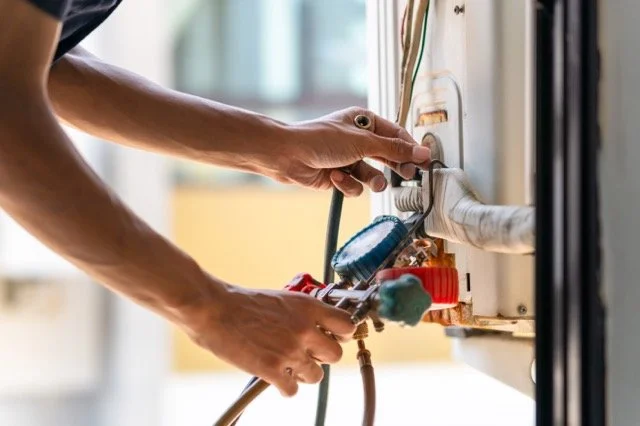
Not all mini splits are created equal, especially in Michigan's climate. Here's what different brands cost and why:
Premium Tier (Mitsubishi, Daikin, Fujitsu): $3,500 – $6,000 per zone installed
These are the brands we recommend for Michigan. They're designed to operate efficiently down to -13°F and maintain heating capacity in cold weather. Better warranties (7-12 years on compressor), quieter operation, and more precise temperature control. If you're using this as your primary heating source, spend the money here.
Mid-Tier (LG, Carrier, Lennox): $3,000 – $5,000 per zone installed
Solid performers with good cold-weather capability. These work well for supplemental heating or in spaces that don't need to stay comfortable at 2 AM during a polar vortex. Good value if you're heating a garage, workshop, or seasonal space.
Budget Tier (Pioneer, MRCOOL, generic brands): $2,000 – $3,500 per zone installed
These are the DIY-friendly units you see online. They'll cool fine in summer, but heating performance drops off fast below 30°F. We don't install these for primary heating in Michigan homes. If you're just cooling a garage in summer, they'll do the job. If you need reliable heat in January, skip them.
We're a NATE-certified HVAC contractor authorized to install equipment from all the major manufacturers. We're not tied to one brand, so we can recommend what actually makes sense for your home and budget.
What Affects Mini Split Cost in Southeast Michigan
Two identical homes on the same street can have different mini split installation costs. Here's what drives the price up or down:
1. Home Size and Heating/Cooling Load
Bigger spaces need more BTUs. A 400-square-foot home office might need a 9,000 BTU unit. A 1,500-square-foot ranch house might need 36,000 BTUs across three or four zones. More capacity means higher equipment cost.
But it's not just square footage. A poorly insulated 1970s ranch in Warren needs more heating capacity than a well-insulated 2015 build in Lake Orion, even if they're the same size. We do a proper load calculation before quoting any system — that's how you avoid undersized equipment that runs constantly or oversized equipment that short-cycles and wastes energy.
2. Number of Zones
Each indoor unit adds cost — both for the equipment itself and the installation labor. Running line sets (the refrigerant lines connecting indoor and outdoor units) through walls, attics, or crawl spaces takes time. The more zones you add, the more complex the installation becomes.
That said, multi-zone systems are almost always cheaper than installing multiple single-zone systems. One four-zone system costs less than four separate single-zone systems because you're only installing one outdoor unit and one electrical connection.
3. Installation Complexity
This is where identical systems can have wildly different installation costs:
- Easy install: Outdoor unit on ground-level concrete pad, indoor units on exterior walls, short line set runs, existing 240V electrical nearby. Installation might run $1,200 – $1,800.
- Complex install: Outdoor unit on second-story deck, indoor units on interior walls requiring long line set runs through finished spaces, new electrical panel upgrade needed, old knob-and-tube wiring. Installation might run $3,000 – $4,500.
Older homes in Detroit and Mount Clemens often fall into the "complex" category. We're running line sets through plaster walls, dealing with limited electrical capacity, and working around century-old construction quirks. It takes longer, which means higher labor costs.
4. Electrical Work Required
Mini splits need dedicated 240V circuits. If your electrical panel has space and capacity, that's straightforward. If we need to upgrade your panel or run new circuits through finished spaces, that adds $500 – $2,000 to the project depending on what's involved.
Homes built before 1980 often need electrical upgrades. It's not optional — it's code. We're licensed electrical contractors in addition to HVAC, so we handle this in-house rather than subcontracting it out.
5. Indoor Unit Type and Placement
Most installations use wall-mounted units — they're the most cost-effective and easiest to install. But you have options:
- Wall-mounted: Standard option, included in base pricing
- Ceiling-recessed cassette: Flush-mount unit that looks like a ceiling vent. Adds $800 – $1,500 per unit. Popular in finished basements and commercial spaces.
- Floor-mounted: Sits at baseboard level. Adds $400 – $800 per unit. Good for rooms where wall space is limited.
- Ducted air handler: Hidden in attic or crawl space with short duct runs. Adds $1,200 – $2,000 per unit. Used when you want the benefits of ductless efficiency but don't want visible wall units.
We walk through these options during the estimate. Most homeowners stick with wall-mounted units because they offer the best value and performance, but we install all types depending on what makes sense for the space.
Single-Zone vs. Multi-Zone Systems
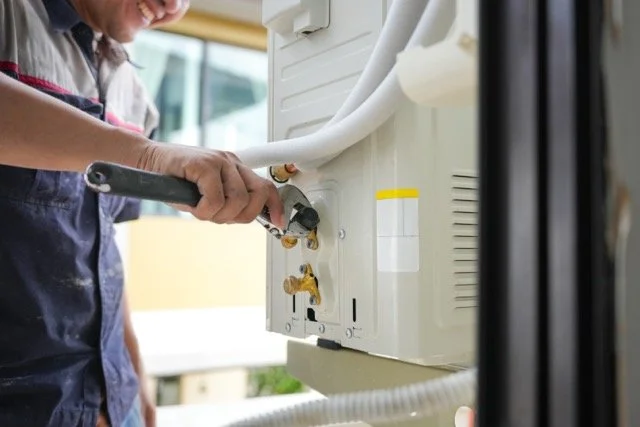
This is one of the most common questions we get: Should I install multiple single-zone systems or one multi-zone system?
The answer depends on what you're trying to accomplish and how your home is laid out.
When Single-Zone Makes Sense
Single-zone systems work best when you're conditioning one specific space that's separate from the rest of your home:
- Detached garage or workshop
- Home addition that's not connected to existing ductwork
- Finished basement or attic space
- Master bedroom suite where you want independent temperature control
- Sunroom or three-season room you want to use year-round
Single-zone systems are simpler. If one unit fails, it doesn't affect the others. And if you're only conditioning one space, you're not paying for capacity you don't need.
When Multi-Zone Makes Sense
Multi-zone systems are the better choice when you're conditioning multiple connected spaces or replacing your entire home's heating and cooling system:
- Older home with no existing ductwork (common in Detroit and older Metro Detroit neighborhoods)
- Home where adding ductwork would be prohibitively expensive or impossible
- Multiple rooms that need heating and cooling
- Whole-home comfort system where you want independent zone control
Multi-zone systems cost less than installing multiple single-zone systems. One outdoor unit, one electrical connection, one installation. And you get better efficiency because the outdoor unit can modulate its output based on how many indoor units are calling for heating or cooling.
Cost Comparison Example: Let's say you need to heat and cool three bedrooms in a home with no ductwork. Three separate single-zone systems would cost $10,500 – $13,500 installed. One three-zone system would cost $7,500 – $11,000 installed. You're saving $2,000 – $3,000 with the multi-zone approach, and you're getting better efficiency.
Hybrid Approach: Mini Split + Central HVAC
Many Southeast Michigan homeowners use mini splits to supplement their existing central HVAC rather than replace it entirely. This is common in:
- Homes with finished basements that stay too cold in winter
- Second-floor master suites that overheat in summer
- Home offices or bonus rooms far from the main HVAC system
- Homes where one person wants it warmer or cooler than everyone else
A single-zone mini split in a problem area can solve comfort issues without replacing your entire system. It's often the most cost-effective solution when your central HVAC works fine but one or two spaces are always uncomfortable.
We install both approaches regularly. If you're not sure which makes sense for your home, we'll do a walkthrough and show you the options with real pricing for each. No pressure, no commission-based upselling — just honest recommendations based on what we'd do in our own homes.
Operating Costs: What You'll Actually Pay to Run a Mini Split in Michigan
Installation cost is one thing. What you pay every month to operate the system is another. Let's talk about real operating costs in Michigan's climate.
Efficiency Ratings That Actually Matter
Ductless mini splits are rated using SEER2 for cooling efficiency and HSPF2 for heating efficiency. Higher numbers mean lower operating costs.
Cooling (SEER2):
- Budget systems: 14-16 SEER2
- Mid-tier systems: 18-22 SEER2
- Premium systems: 23-30+ SEER2
Heating (HSPF2):
- Budget systems: 8-9 HSPF2
- Mid-tier systems: 9.5-11 HSPF2
- Premium systems: 12-13+ HSPF2
For comparison, a standard central air conditioner is typically 14-16 SEER2, and a gas furnace is 80-96% AFUE. High-efficiency mini splits blow these numbers out of the water for cooling, and they're competitive with gas furnaces for heating — especially when natural gas prices spike.
Real-World Operating Costs in Southeast Michigan
Here's what it actually costs to run a mini split in Metro Detroit, based on current DTE Energy rates (approximately $0.17 per kWh).
Cooling a 400 sq ft room (12,000 BTU single-zone):
June-September: $30-$50/month if running 8-10 hours per day
Heating the same 400 sq ft room:
November-March: $60-$90/month if running 12-16 hours per day
Whole-home multi-zone system (1,500 sq ft, three zones):
Cooling season: $90-$150/month
Heating season: $180-$280/month
These numbers assume you're running the system as your primary heating and cooling. If you're using it to supplement an existing furnace or central AC, your costs will be lower because you're not conditioning the entire home with the mini split.
Mini Split vs. Gas Furnace: Operating Cost Reality
This is the question we get constantly: "Is it cheaper to heat with a mini split or my gas furnace?"
The honest answer: It depends on natural gas prices and how cold it gets.
At current Michigan natural gas rates (roughly $1.20-$1.50 per therm), gas heat is usually cheaper for whole-home heating during the coldest months (December through February). But mini splits are more efficient when temperatures are above 25°F, which is most of the heating season in Southeast Michigan.
Where mini splits really shine: Supplemental heating in specific zones. If you're heating one bedroom or a home office, running a mini split is almost always cheaper than heating your entire 1,800-square-foot home with the furnace just to keep one room comfortable.
Many of our clients in Rochester Hills and Bloomfield Hills use a hybrid approach: gas furnace for whole-home heating during the coldest stretches, mini splits for shoulder season heating (October, November, March, April) and for cooling in summer. That's often the most cost-effective strategy.
We cover this in more detail in our guide on dual fuel heat pump systems in Michigan, which breaks down the economics of using heat pumps (including mini splits) alongside gas furnaces.
What About Cold-Weather Performance?
Older mini splits lost heating capacity fast once temperatures dropped below freezing. Modern cold-climate mini splits from Mitsubishi, Daikin, and Fujitsu maintain 100% heating capacity down to around 5°F and continue operating (at reduced capacity) down to -13°F or lower.
We've installed hundreds of mini splits across Southeast Michigan, and they work fine through typical winters. During extreme cold snaps — the kind where it's -5°F for three days straight — they'll struggle to keep up if they're your only heat source. That's when having a backup heat source (gas furnace, electric baseboard, wood stove) makes sense.
But those extreme cold events are maybe 5-10 days per year in Metro Detroit. The other 355 days, modern mini splits heat efficiently and effectively.
When Ductless Mini Splits Make Sense (And When They Don't)
Mini splits aren't the right solution for every home or every situation. Here's when they make sense and when you should look at other options.
Ductless Mini Splits Are a Great Fit When:
1. You have no existing ductwork
This is the most common scenario in older Detroit-area homes. If your house was built before central air conditioning became standard (pre-1970s), you might have radiators or baseboard heat and no duct system. Installing ductwork would cost $8,000-$15,000+ and require tearing up walls and ceilings. A multi-zone mini split system gives you whole-home heating and cooling for less money and less disruption.
2. You're adding space where ductwork doesn't reach
Room additions, finished basements, converted garages, enclosed porches — these are perfect applications for mini splits. Extending your existing ductwork might be impossible or prohibitively expensive. A single-zone mini split solves the problem for $3,000-$5,000.
3. You have hot and cold spots your current system can't fix
If your second-floor master bedroom is always 10 degrees warmer than the rest of the house in summer, or your finished basement stays cold even with the heat cranked up, a mini split gives you independent zone control without re-engineering your entire HVAC system. We wrote a detailed guide on fixing uneven heating and hot and cold spots that covers this scenario.
4. You want maximum energy efficiency
High-efficiency mini splits (20+ SEER2, 10+ HSPF2) are among the most efficient heating and cooling systems available. If you're trying to minimize energy costs or reduce your carbon footprint, mini splits deliver. They're especially efficient for cooling compared to traditional central AC.
5. You need independent temperature control in different areas
Multi-zone systems let you set different temperatures in different rooms. One person likes it 68°F, another likes it 72°F? No problem. You want to keep bedrooms cooler at night while keeping living spaces warmer? Easy. This level of control isn't possible with traditional single-zone central HVAC.
Ductless Mini Splits Are NOT the Best Choice When:
1. You already have good ductwork and a working central HVAC system
If your home has properly sized, well-sealed ductwork and your furnace and AC are doing their job, there's no reason to rip it all out and install mini splits. Stick with what works. When your equipment eventually needs replacement, we'll install new central HVAC equipment that works with your existing ducts. That's almost always cheaper and simpler than switching to ductless.
2. You're on a tight budget and need whole-home heating and cooling
A multi-zone mini split system for a 1,500 sq ft home might cost $8,000-$12,000 installed. A new furnace and central AC using existing ductwork might cost $6,000-$9,000 installed. If budget is your primary concern and you already have ductwork, central HVAC is usually the more economical choice.
3. You don't like the look of wall-mounted units
Mini split indoor units are visible. They're sleek and modern-looking, but they're there on your wall. If you can't stand the aesthetic, you have options (ceiling cassettes, ducted air handlers), but those add cost. Some people just prefer the invisible comfort of central HVAC with registers in the floor or ceiling. That's a valid preference.
4. Your home needs extensive electrical upgrades
If your electrical panel is maxed out and needs a full upgrade, or if your home has outdated wiring that needs replacement, the electrical work required for mini splits might push the total cost higher than a traditional furnace and AC. We'll tell you this upfront during the estimate — we're not going to sell you a system that doesn't make financial sense.
The Hybrid Approach: Best of Both Worlds
Many Southeast Michigan homeowners end up with a combination: central HVAC for the main living areas, mini splits for problem zones or additions. This gives you:
- Whole-home comfort from your central system
- Independent zone control where you need it
- Efficient supplemental heating and cooling
- Flexibility to condition spaces your central system can't reach
We install hybrid systems regularly in Troy, Warren, and Sterling Heights. It's often the most practical and cost-effective solution for homes with good existing ductwork but one or two spaces that need special attention.
During your consultation, we'll walk through all the options — mini split only, central HVAC only, or a hybrid approach — with real pricing for each. You'll know exactly what you're getting and why we're recommending it. That's part of our commitment to changing contractor culture in Metro Detroit.
Signs You're Ready for a Mini Split Installation
Here are the situations where homeowners in Southeast Michigan typically decide it's time to install a ductless mini split system:
1. You're Finishing a Basement or Attic
You're converting unfinished space into living space, but your existing HVAC system doesn't have the capacity to condition the additional square footage — or extending ductwork would be extremely expensive. A single-zone or two-zone mini split gives you heating and cooling in the new space without overloading your existing system.
2. You're Building an Addition
Room additions, sunrooms, enclosed porches — these often can't be easily connected to your existing ductwork. Rather than trying to force your current furnace and AC to handle more load than they're designed for, a dedicated mini split for the addition keeps that space comfortable without compromising comfort in the rest of your home.
3. One Room Is Always Uncomfortable
Your master bedroom is always too hot in summer. Your home office is always too cold in winter. You've tried closing vents, adjusting dampers, and calling HVAC companies, but nothing fixes it. A mini split gives you independent control in that problem space without re-engineering your entire system.
4. You're Tired of Heating or Cooling Your Entire Home for One Room
You work from home in a second-floor office. It's 85°F up there on summer afternoons. To make that room comfortable, you have to run the AC cold enough that everyone else in the house needs a sweater. A single-zone mini split in your office solves the problem and probably saves you money on energy costs.
5. Your Home Has No Ductwork
You bought an older home with radiator heat and window AC units. You're tired of the noise, the inefficiency, and the lack of control. You've gotten quotes for installing ductwork and they're all over $12,000. A multi-zone mini split system gives you whole-home heating and cooling for less money, less disruption, and better efficiency.
6. You're Converting a Garage or Outbuilding
You're turning your detached garage into a workshop, gym, or studio space. Running ductwork from your house isn't practical. A single-zone mini split gives you year-round comfort in that space for $3,500-$5,000 installed — far less than trying to extend your existing HVAC system.
7. You Want to Reduce Your Energy Bills
Your current heating and cooling costs are higher than you'd like. You've done the insulation upgrades and sealed the air leaks, but your old furnace and AC are just inefficient. High-efficiency mini splits (especially for cooling) can cut your energy costs significantly compared to older equipment. If your current system is 15+ years old, the efficiency gains alone might justify the investment.
If any of these scenarios describe your situation, it's worth getting an estimate. We'll come out, look at your home, talk through what you're trying to accomplish, and give you real pricing for the options that make sense. No obligation, no pressure. Just honest information from NATE-certified technicians who have been doing this work in Southeast Michigan for over 35 years.
Ready to Get Started?
NEXT Heating & Cooling has been keeping Michigan homes comfortable for over 35 years. We install ductless mini split systems from all the major manufacturers — Mitsubishi, Daikin, Fujitsu, LG, Carrier, and more. Get honest diagnostics, fair pricing, and quality installation from technicians who show up on time and explain everything clearly.
Schedule Your Free ConsultationFrequently Asked Questions
Quality mini split systems from manufacturers like Mitsubishi, Daikin, and Fujitsu typically last 15-20 years with proper maintenance. That's comparable to or slightly longer than traditional central HVAC systems. The key is annual maintenance — cleaning filters monthly, professional tune-ups once a year, and keeping the outdoor unit clear of debris and snow.
Budget-tier systems might only last 10-12 years, especially in Michigan's climate where they work hard during both summer cooling and winter heating seasons. That's one reason we typically recommend mid-tier or premium systems for primary heating and cooling applications.
Our Next Care Plan includes seasonal maintenance for mini split systems — we'll check refrigerant levels, clean coils, inspect electrical connections, and catch small problems before they become expensive repairs. At $5/month, it's the best insurance policy you can buy for any HVAC equipment.
Yes, but with some caveats. Modern cold-climate mini splits from premium manufacturers can absolutely heat an entire home through most of a Michigan winter. We've installed whole-home mini split systems in Macomb County, Oakland County, and St. Clair County that work as the primary heat source.
The key factors: proper sizing (we do a Manual J load calculation), quality equipment rated for cold-climate performance, and adequate insulation in your home. A well-insulated 1,500 sq ft ranch can be heated comfortably with a three- or four-zone mini split system rated for cold weather operation.
During extreme cold snaps (below -5°F), even the best mini splits lose some heating capacity. Most homeowners keep a backup heat source (existing furnace, electric baseboard, or even a wood stove) for those handful of brutally cold days each winter. But 95% of the heating season, a properly sized mini split system handles Michigan winters just fine.
Mini splits need regular but simple maintenance. Here's what you need to do:
Monthly: Clean or replace the air filters in each indoor unit. This takes about 2 minutes per unit — pop the front cover off, pull out the filter, wash it or vacuum it, let it dry, put it back. Dirty filters kill efficiency and can cause the system to freeze up.
Seasonally: Keep the outdoor unit clear of leaves, grass clippings, snow, and debris. Make sure there's at least 2 feet of clearance around all sides for proper airflow. In winter, gently brush heavy snow off the unit (don't kick it or hit it with a shovel).
Annually: Professional maintenance by a licensed HVAC technician. We check refrigerant levels, clean the coils (indoor and outdoor), inspect electrical connections, test system performance, and catch developing problems before they cause breakdowns. This is what our Next Care Plan covers — two visits per year (spring and fall) for $60/year total.
Mini splits are simpler than traditional HVAC systems (no ductwork to clean, no combustion to worry about), but they still need attention. The homeowners who get 20 years out of their systems are the ones who stay on top of basic maintenance.
In most cases, mini splits are significantly cheaper than installing ductwork in a home that doesn't have it. Here's the reality:
Installing ductwork in an existing home — especially an older home with plaster walls and limited attic/basement space — typically costs $8,000-$15,000 just for the ductwork itself. That doesn't include the furnace and AC equipment. You're tearing up walls and ceilings, running ducts through finished spaces, and dealing with structural challenges. Total project cost: $12,000-$25,000 depending on home size and complexity.
A multi-zone mini split system for the same home typically costs $7,500-$14,000 installed — complete system, ready to heat and cool. No demolition, no drywall repair, no painting. Installation takes 1-2 days instead of 1-2 weeks.
The only scenario where ductwork might make more sense: if you're already doing a major renovation where walls and ceilings are open anyway. Then the incremental cost of adding ducts is lower because you're not paying for demolition and repair. But for most older homes in Metro Detroit where you're not gutting the place, mini splits are the more practical and economical choice.
Generally, yes — especially in homes that previously had no air conditioning or inefficient heating systems. A whole-home mini split system is a selling point because it provides modern, efficient, zone-controlled comfort.
In older Detroit-area homes with no existing ductwork, a mini split system can make the home significantly more marketable. Buyers don't want to deal with window AC units and old radiators. A modern mini split system shows that the home has been updated and cared for.
That said, mini splits don't add as much value as some other home improvements (kitchen and bathroom renovations typically give better ROI). But they do make your home more attractive to buyers, potentially helping it sell faster and for a better price than comparable homes without modern HVAC.
From a purely financial perspective, the value you get from mini splits is mostly in the comfort and lower energy bills you enjoy while living in the home. Any increase in resale value is a bonus.
Technically, some mini split manufacturers sell "DIY-friendly" kits with pre-charged line sets that don't require refrigerant handling. But we strongly recommend against DIY installation for several reasons:
1. Code compliance: HVAC work in Michigan requires permits and inspections. Improper installation can fail inspection, and unpermitted work can create problems when you sell your home.
2. Warranty protection: Most manufacturers void the warranty if the system isn't installed by a licensed HVAC contractor. If your compressor fails in year two and you did a DIY install, you're paying for a $2,000 replacement out of pocket instead of getting warranty coverage.
3. Performance and efficiency: Improper installation — incorrect refrigerant charge, kinked line sets, undersized electrical circuits, poor condensate drainage — kills efficiency and shortens equipment life. You might save $1,200 on installation labor but lose $2,000 in higher energy bills and premature equipment failure.
4. Safety: Electrical work for 240V circuits requires knowledge and experience. Mistakes can cause fires or electrocution.
If you're mechanically inclined and want to save money, there are things you can do: prepare the installation site, run the electrical circuit to the outdoor unit location (have an electrician inspect it), clear the area where equipment will be mounted. But let a licensed contractor handle the actual system installation, refrigerant work, and final connections. The money you save on DIY isn't worth the risks.
This depends on whether your outdoor unit has the capacity to support an additional zone. Most multi-zone outdoor units are sized with some extra capacity, but there's a limit.
If your outdoor unit can handle another zone, adding one typically costs $1,800-$3,000 installed. That includes the new indoor unit, line set installation, electrical work, and connecting it to your existing outdoor unit.
If your outdoor unit is already maxed out, you'd need to either install a separate single-zone system for the new space ($3,000-$5,000) or replace your outdoor unit with a higher-capacity model that can support the additional zones. The latter option is expensive ($4,000-$7,000+) and usually only makes sense if your existing outdoor unit is near the end of its life anyway.
This is something we evaluate during the initial installation. If you think you might want to add zones later, we'll size the outdoor unit accordingly and install the infrastructure (electrical, mounting location) to make future expansion easier and less expensive.