

Frozen AC Unit What to Do: Michigan Homeowner Guide
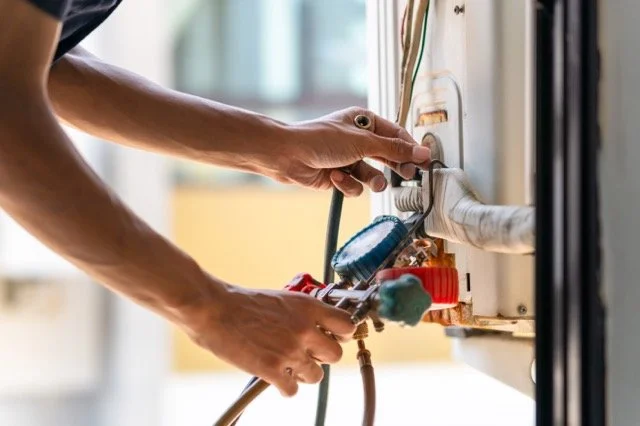
You walk to your thermostat on a humid July afternoon in Sterling Heights, notice the house feels warm despite the AC running nonstop, and head down to the basement. That's when you see it: your evaporator coil looks like it belongs in a freezer—solid ice coating the copper lines, frost creeping across the metal cabinet, condensation dripping onto the floor.
It's 85 degrees outside and your air conditioner is frozen solid. It doesn't make sense—until you understand the refrigerant physics happening inside that coil.
Over 35 years of heating and cooling services in Metro Detroit, we've diagnosed thousands of frozen AC units across Macomb, Oakland, and St. Clair counties. Most homeowners think it's a refrigerant problem. Sometimes it is. But more often, it's something simpler—and fixable without replacing equipment.
This guide walks you through exactly what to do when your AC unit freezes, why it happens even in Michigan summers, and how to tell whether you're looking at a $20 filter replacement or a $1,200 refrigerant leak repair.
Why Your AC Unit Freezes (Even in Michigan Summers)
Air conditioning works by absorbing heat from your indoor air and moving it outside. The evaporator coil—the cold component inside your home—does this job by circulating refrigerant at roughly 40°F through a series of copper tubes wrapped in aluminum fins.
When warm air from your house blows across those cold fins, heat transfers from the air into the refrigerant. The air cools down, the refrigerant heats up, and the cycle continues. Your home gets comfortable.
But here's the critical part: that evaporator coil needs a constant supply of warm air moving across it. If airflow drops below a certain threshold—usually around 400 cubic feet per minute (CFM) per ton of cooling capacity—the coil temperature plummets below freezing. Moisture in the air condenses on the coil and immediately freezes. Within hours, you've got a block of ice where your AC used to be.
In Michigan, we see this most often during the first real heat wave in June, when homeowners crank the thermostat down to 68°F after months of not running the system. The AC has been sitting idle since September. The filter is clogged. Half the supply vents are closed from winter. The blower motor is struggling. And suddenly, the coil can't get enough airflow to stay above freezing.
Michigan-Specific Factor: Our humidity levels make freeze-ups worse. On a typical July day in Royal Oak, outdoor humidity sits between 60% and 80%. That moisture-laden air creates more condensation on the evaporator coil. If airflow is already restricted, ice forms faster than it would in a dry climate.
The other scenario we see: homeowners running their AC when outdoor temperatures drop into the 50s or low 60s at night. Most residential air conditioners aren't designed to operate efficiently below 60°F outdoor temperature. The refrigerant pressure drops, the evaporator coil gets too cold, and ice forms even with normal airflow.
This happens more than you'd think in Michigan—cool nights in May and September when people still want AC during the day.
What to Do Right Now If Your AC Is Frozen
If you're reading this with a frozen AC unit in front of you, here's the immediate action plan:
Step 1: Turn Off the AC at the Thermostat
Switch your thermostat to OFF mode immediately. Do not set it to heat or fan-only yet—just turn the system completely off to stop refrigerant flow.
Step 2: Turn Off Power at the Breaker
Locate your electrical panel and flip the breaker labeled for your air conditioner to the OFF position. This prevents the compressor from cycling on during the thaw process, which can cause additional damage or trip the breaker.
Step 3: Let the Ice Thaw Completely
This is the hard part: you have to wait. Depending on how much ice has formed, complete thawing takes anywhere from 6 to 24 hours. Do not attempt to chip away the ice, scrape it off with tools, or use a hair dryer or heat gun to speed up the process. The evaporator coil fins are delicate aluminum—easily bent or damaged. Let it thaw naturally at room temperature.
Place towels or a shallow pan under the unit to catch meltwater. If you have a floor drain nearby, position the towels to direct water toward it.
Step 4: Check and Replace the Air Filter
While the system thaws, inspect your air filter. If it's clogged with dust, pet hair, or debris, replace it with a new filter. Restricted airflow from a dirty filter is the most common cause of freeze-ups we diagnose in Southeast Michigan homes.
Standard 1-inch pleated filters should be replaced every 30 to 60 days during cooling season. If you have pets or run the system continuously, replace them monthly.
Step 5: Inspect Supply Vents and Return Grilles
Walk through your home and make sure all supply vents (the ones blowing cold air) are open and unblocked by furniture, rugs, or curtains. Check that return air grilles (usually larger vents on walls or ceilings) are not obstructed by furniture or closed doors.
Closing too many vents—a common mistake homeowners make to "save energy" in unused rooms—actually restricts airflow across the evaporator coil and causes freeze-ups.
Step 6: Restart the System Cautiously
Once all ice has melted and you've replaced the filter and opened vents, turn the breaker back on. Set your thermostat to cool and choose a moderate temperature—around 72°F to 74°F. Let the system run for 30 to 60 minutes while you monitor it.
Check the evaporator coil every 15 minutes. If you see frost or ice beginning to form again, shut the system down immediately and call a reliable HVAC contractor in Metro Detroit. Repeated freeze-ups indicate a deeper problem—usually low refrigerant, a failing blower motor, or ductwork issues.

The Five Root Causes We See Most Often
When we show up to diagnose a frozen AC in Clinton Township or Lake Orion, we're looking for one of five problems. Here's what causes the vast majority of freeze-ups—and what the fix looks like.
1. Restricted Airflow (70% of Cases)
This is the big one. Anything that reduces airflow across the evaporator coil will cause it to freeze. The most common culprits:
- Dirty air filter: A clogged filter blocks return air from reaching the coil. We've pulled filters so packed with dust they looked like felt fabric. Replace it and the problem disappears.
- Closed or blocked supply vents: Homeowners close vents in spare bedrooms thinking it saves energy. It doesn't—it just starves the evaporator coil of airflow. Open all vents during cooling season.
- Blocked return grilles: Furniture pushed against a return air grille, or a door closed to a room with the only return, cuts off airflow. Make sure return air has a clear path back to the system.
- Dirty evaporator coil: Over years of use, dust and debris accumulate on the coil itself, insulating it and reducing heat transfer. This requires professional cleaning—it's part of what we do during a seasonal AC tune-up.
- Ductwork problems: Undersized ducts, crushed flex duct in the attic or crawlspace, or disconnected duct sections all reduce airflow. We see this often in older homes in Grosse Pointe Farms and Bloomfield Hills where ductwork was sized for smaller, less efficient systems decades ago.
The Fix: Replace the filter, open vents, clear obstructions. If the problem persists, you need a technician to inspect the ductwork and clean the evaporator coil.
2. Low Refrigerant (Refrigerant Leak)
Refrigerant doesn't get "used up" like gasoline. It circulates in a closed loop. If your system is low on refrigerant, it means you have a leak somewhere in the copper lines, coil, or fittings.
Low refrigerant causes the evaporator coil pressure to drop, which lowers its temperature below the designed operating range. Even with normal airflow, the coil gets cold enough to freeze.
You'll often see ice forming on the larger copper line (the suction line) running from the indoor coil to the outdoor condenser. If that line is frosted or iced over, you almost certainly have a refrigerant leak.
The Fix: A licensed technician needs to locate the leak, repair it, vacuum the system to remove moisture and air, and recharge it to the manufacturer's specified refrigerant weight. This isn't a DIY job. Refrigerant handling requires EPA 608 certification. Expect to pay $400 to $1,500 depending on leak location and refrigerant type (R-410A is still widely available; older R-22 systems cost more due to refrigerant scarcity).
3. Blower Motor or Fan Problems
The blower motor is what pushes air across the evaporator coil. If it's failing, running at reduced speed, or has a bad capacitor, airflow drops and the coil freezes.
Signs of blower motor trouble:
- Weak airflow from supply vents even with a new filter
- Unusual noises—squealing, grinding, or rattling—coming from the indoor unit
- The blower starts and stops intermittently
- The system runs but produces very little cooling
We see blower motor failures most often in systems 12 to 15 years old, especially if they haven't had regular maintenance. Dust buildup on the motor and blower wheel reduces efficiency and causes overheating.
The Fix: Blower motor replacement typically costs $450 to $800 including labor. In some cases, replacing the capacitor (the component that helps the motor start) solves the problem for $150 to $250. A technician can test motor amperage and capacitance to determine which part has failed.
4. Thermostat Issues
Less common, but worth checking: a malfunctioning thermostat can cause the AC to run continuously without cycling off, or it can fail to signal the blower motor to run while the compressor operates.
If the compressor runs but the blower doesn't, refrigerant circulates through the evaporator coil with no air moving across it. The coil temperature plummets and ice forms rapidly.
Older mechanical thermostats and poorly calibrated programmable thermostats are the usual culprits. We also see this with "smart" thermostats that homeowners install themselves without following the wiring diagram correctly.
The Fix: Test the thermostat by manually switching between heating, cooling, and fan-only modes. If the blower doesn't respond consistently, the thermostat may need recalibration or replacement. Thermostat replacement costs $150 to $400 depending on the model.
5. Running the AC in Cold Weather
Most residential air conditioners are designed to operate efficiently when outdoor temperatures are above 60°F. Below that threshold, refrigerant pressure drops too low and the evaporator coil can freeze even with perfect airflow.
We get calls about this in May and September when Michigan nights dip into the 50s but days are still warm. Homeowners run the AC overnight, wake up to a frozen coil, and can't figure out why.
The Fix: Don't run your AC when outdoor temperatures are below 60°F. Open windows for cooling instead. If you need year-round cooling (for a server room, for example), consider a heat pump or ductless mini-split designed for low-temperature operation.
How to Tell If It's a Simple Fix or Major Problem
Here's the homeowner diagnostic checklist we walk customers through over the phone when they call about a frozen AC unit:
Check #1: When did you last replace the air filter?
If it's been more than 60 days, replace it and see if the freeze-up stops. This solves the problem in about half the cases we see.
Check #2: Are all your supply vents open?
Walk through the house. Open every vent. Make sure none are blocked by furniture, rugs, or drapes. Try running the system again.
Check #3: Is the outdoor temperature below 60°F?
If yes, turn off the AC and wait for warmer weather. This isn't a system failure—it's just operating outside its design range.
Check #4: Is ice forming on the large copper line outside?
If the suction line (the larger of the two copper lines running to the outdoor unit) is frosted or iced, you almost certainly have a refrigerant leak. Call a technician. This isn't something you can fix yourself.
Check #5: Does the system freeze up again after thawing and restarting?
If you've replaced the filter, opened all vents, and the coil still freezes within a few hours of operation, you're looking at a refrigerant leak, blower motor problem, or ductwork issue. Time to bring in a professional.
Cost Reality: Simple fixes (filter replacement, opening vents) cost $0 to $30. Blower motor or capacitor replacement runs $150 to $800. Refrigerant leak repair and recharge costs $400 to $1,500. If your system is over 15 years old and needs major refrigerant work, replacement may be more cost-effective than repair—especially if you're still running R-22 refrigerant, which is expensive and being phased out.
Our NATE-certified HVAC technicians give you the honest diagnosis and cost comparison. We don't upsell replacements when a repair makes sense. That's part of changing contractor culture.
Preventing Future Freeze-Ups
Once you've thawed your AC and identified the cause, here's how to prevent it from happening again:
Replace Filters on Schedule
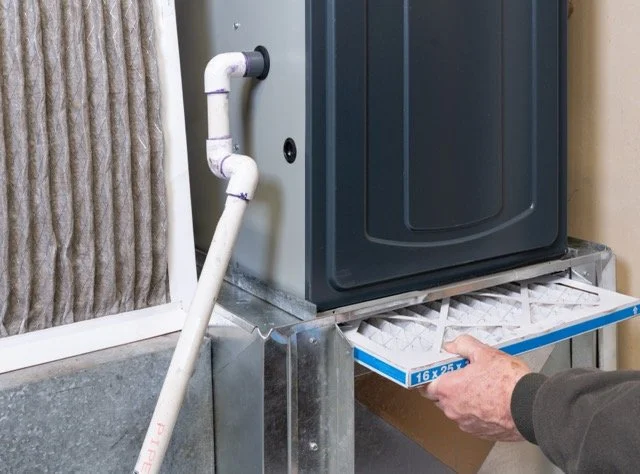
Set a recurring reminder on your phone or calendar. Replace 1-inch pleated filters every 30 to 60 days during cooling season (May through September in Michigan). If you have pets, run the fan continuously, or have allergies, replace them monthly.
Upgrade to a 4-inch or 5-inch media filter if your system supports it. These last 6 to 12 months and provide better filtration with less airflow restriction. We install them as part of our furnace and AC installation services when we replace systems.
Keep All Vents Open During Cooling Season
Don't close vents in unused rooms. It doesn't save energy—it just reduces airflow across the evaporator coil and causes freeze-ups. Your AC system is designed to cool the entire house. Closing vents creates pressure imbalances that strain the blower motor and reduce efficiency.
If you have rooms you genuinely don't use and want to avoid cooling, consider a zoned system or ductless mini-split for those areas.
Schedule Seasonal Maintenance
A spring AC tune-up catches problems before they cause freeze-ups. During a maintenance visit, we:
- Clean the evaporator coil to remove dust and debris
- Check refrigerant charge and test for leaks
- Inspect and lubricate the blower motor
- Test the capacitor and electrical connections
- Verify airflow and measure temperature drop across the coil
- Clean the outdoor condenser coil
Our $5/month HVAC maintenance plan includes two annual visits—one in spring for your AC, one in fall for your furnace. Members get priority scheduling, 10% off repairs, and no service call fees. It's the most cost-effective way to prevent breakdowns and extend equipment life.
Don't Run the AC Below 60°F Outdoor Temperature
If you need cooling on a cool night, open windows instead. Save the AC for when outdoor temperatures are consistently above 60°F. This protects the compressor and prevents freeze-ups caused by low refrigerant pressure.
Address Ductwork Problems
If you've replaced filters and opened vents but still get weak airflow or hot and cold spots in your home, you may have ductwork issues. Common problems in Michigan homes:
- Undersized ducts from when the home was built in the 1960s or 1970s
- Crushed or disconnected flex duct in the attic or crawlspace
- Leaky duct joints losing 20% to 30% of conditioned air before it reaches the rooms
- Uninsulated ducts in unconditioned spaces (attics, crawlspaces) causing temperature loss
A proper duct inspection and sealing job improves comfort, prevents freeze-ups, and cuts energy bills. We use a duct blaster test to measure leakage and target repairs where they'll have the biggest impact.
Signs Your AC Needs Professional Help
Call a technician if you see any of these warning signs:
- Ice on the large copper line outside: This indicates a refrigerant leak. Don't keep running the system—you're causing additional damage to the compressor.
- Repeated freeze-ups after filter replacement and vent opening: You have a deeper problem—refrigerant leak, blower motor failure, or ductwork restriction.
- Weak airflow from supply vents even with a new filter: Blower motor, ductwork, or evaporator coil problem.
- Unusual noises from the indoor unit: Grinding, squealing, or rattling sounds indicate blower motor or fan problems.
- The system runs constantly but doesn't cool the house: Low refrigerant, oversized system, or thermostat malfunction.
- Water pooling around the indoor unit: Blocked condensate drain or excessive ice melt. This can cause water damage if not addressed.
- Your AC is over 15 years old and needs major repairs: At this age, replacement is often more cost-effective than repair, especially if you're facing refrigerant work on an R-22 system.
We've been diagnosing frozen AC units in Macomb County, Oakland County, and St. Clair County for over three decades. We show up on time, explain what's actually wrong in plain language, and give you the repair-versus-replace cost comparison without pressure. That's how we've built a reputation as a reliable HVAC contractor in Metro Detroit.
If your AC keeps freezing and you can't figure out why, we'll find the root cause—whether it's a $20 filter or a $1,200 refrigerant leak—and give you honest options for fixing it.
Ready to Get Started?
NEXT Heating & Cooling has been keeping Michigan homes comfortable for over 35 years. Get honest diagnostics and fair pricing from NATE-certified technicians who show up on time.
Schedule Your ServiceFrequently Asked Questions
No. Running your AC while the evaporator coil is frozen can damage the compressor—the most expensive component in the system. The compressor is designed to compress refrigerant vapor, not liquid. When the coil is frozen, liquid refrigerant can flow back to the compressor (a condition called "slugging") and cause internal damage. Always shut the system down immediately when you discover ice, let it thaw completely, and address the root cause before restarting.
Thawing takes 6 to 24 hours depending on how much ice has formed. A light frost on the coil may thaw in 6 to 8 hours. A heavy ice buildup covering the entire coil and copper lines can take a full day. Never try to speed up the process with heat guns, hair dryers, or scraping tools—you'll damage the delicate aluminum fins on the evaporator coil. Let it thaw naturally at room temperature and place towels underneath to catch meltwater.
The ice will thaw on its own if you shut the system off, but the underlying problem won't fix itself. If the freeze-up was caused by a dirty air filter, replacing the filter solves it. If it's caused by a refrigerant leak, blower motor failure, or ductwork restriction, the system will freeze again the next time you run it. You need to identify and address the root cause—whether that's a simple filter replacement or a professional repair.
Yes. Low refrigerant is one of the most common causes of frozen AC units. When refrigerant levels drop due to a leak, the pressure in the evaporator coil decreases. This causes the coil temperature to fall below freezing even with normal airflow. You'll often see ice forming on the larger copper line (suction line) running from the indoor coil to the outdoor condenser. If you see this, you have a refrigerant leak that needs professional repair. Don't just add refrigerant—find and fix the leak first.
This usually happens when outdoor temperatures drop below 60°F at night. Most residential air conditioners aren't designed to operate efficiently in cool weather. When outdoor temperature falls, refrigerant pressure drops and the evaporator coil gets too cold, causing ice to form. This is common in Michigan during May and September when nights are cool but days are warm. The solution: don't run your AC when outdoor temperatures are below 60°F. Open windows for cooling instead.
It depends on the cause. If it's a dirty air filter or closed vents, the fix costs $0 to $30 (the price of a new filter). If it's a bad capacitor, expect $150 to $250. Blower motor replacement costs $450 to $800. Refrigerant leak repair and recharge runs $400 to $1,500 depending on leak location and refrigerant type. Systems using older R-22 refrigerant cost more because the refrigerant is scarce and expensive. If your system is over 15 years old and needs major refrigerant work, replacement may be more cost-effective than repair.
Not necessarily. If the freeze-up is caused by a dirty filter, closed vents, or a bad capacitor, repair is straightforward and affordable. If you have a refrigerant leak and your system is under 10 years old, repair usually makes sense. But if your AC is over 15 years old, uses R-22 refrigerant (being phased out), and needs major refrigerant work or compressor replacement, you're better off replacing the entire system. A new high-efficiency AC will cost less to operate, come with a 10-year parts warranty, and won't need refrigerant that costs $100+ per pound.