

Furnace Installation in Troy MI: What's Included & Timeline

If your furnace is over 15 years old, making strange noises, or driving up your heating bills every winter, you're probably researching what it actually takes to replace it. Troy homeowners searching for furnace installation information want straight answers — not sales pitches.
After 35+ years installing furnaces across Southeast Michigan, we've seen every scenario: 1960s ranch homes with undersized ductwork, newer construction with modern HVAC systems, and everything in between. This guide walks you through exactly what happens during a furnace installation in Metro Detroit, how long it takes, what permits you need in Troy, and what it actually costs in 2026.
No guesswork. No vague timelines. Just the real process from a licensed Michigan HVAC contractor who does this work every day.
What's Actually Included in a Furnace Installation
When you hire a professional HVAC contractor for furnace installation, you're paying for a complete system replacement — not just swapping out the metal box in your basement. Here's what's included when we install a furnace in Troy:
Old Furnace Removal and Disposal
The existing furnace gets disconnected from the gas line, electrical supply, and ductwork. We safely remove it from your home and dispose of it according to Michigan environmental regulations. Most old furnaces contain materials that can't just go in a dumpster — proper disposal matters.
New Furnace Unit and Components
The new furnace includes the main cabinet, heat exchanger, blower motor, ignition system, and all internal controls. Depending on the model you choose — whether it's a Carrier, Lennox, Trane, or Rheem — you'll get manufacturer-specific components designed for Michigan's climate.
High-efficiency models (95%+ AFUE) also include PVC venting pipes that exhaust through an exterior wall instead of a traditional chimney. These condensing furnaces extract so much heat that exhaust gases cool enough to vent through plastic pipes.
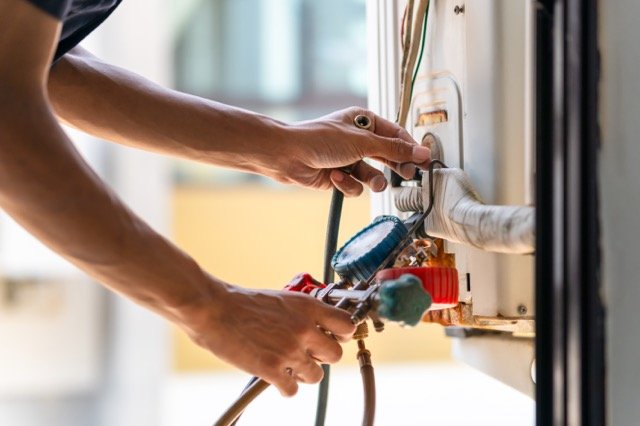
Ductwork Modifications (If Needed)
Not every installation requires ductwork changes, but many older Troy homes have undersized or deteriorating ducts. If your current ductwork can't handle the new furnace's airflow — or if there are leaks, disconnected sections, or asbestos-wrapped ducts from the 1960s — we'll address it.
Common ductwork modifications include:
- Resizing supply or return plenums to match the new furnace
- Sealing leaks with mastic (not duct tape, which fails)
- Adding return air grilles for better airflow balance
- Installing dampers for zone control
If you've dealt with uneven heating and hot and cold spots, ductwork modifications during installation often solve the problem permanently.
Electrical and Gas Line Work
Modern furnaces require dedicated 120V electrical circuits. If your home's electrical panel doesn't have a properly sized breaker for the new furnace, we'll install one. Gas line connections must meet Michigan mechanical code — that means properly sized black iron pipe, approved fittings, and leak testing before startup.
Some older Troy homes still have undersized gas lines (½" instead of �") that can't deliver enough BTUs to a high-capacity furnace. We catch that during the pre-installation assessment and coordinate with licensed gas fitters if an upgrade is needed.
Thermostat Upgrades
If you're upgrading from a basic mechanical thermostat to a programmable or smart thermostat (Honeywell, Ecobee, Nest), installation includes wiring, mounting, and setup. Two-stage and modulating furnaces perform best with compatible thermostats that can communicate with the equipment — not just simple on/off models.
Permits and Inspections
Every furnace installation in Troy requires a mechanical permit from the City of Troy Building Department. The permit cost (typically $75-$150 depending on equipment value) is usually included in your installation quote. After installation, a city inspector verifies the work meets Michigan mechanical code before signing off.
We'll cover permits in detail below, but the key point: if a contractor offers to skip the permit to "save you money," walk away. Unpermitted work voids manufacturer warranties, creates liability issues, and causes problems when you sell the house.
The Troy Furnace Installation Timeline: Day by Day
Most furnace installations in Troy take one full day — sometimes stretching into a second day depending on complexity. Here's the realistic timeline:
Pre-Installation: Load Calculation and Sizing (Done Before Install Day)
Before we order equipment, a NATE-certified technician performs a Manual J load calculation. This industry-standard process determines the correct furnace size based on your home's square footage, insulation levels, window types, air infiltration, and Michigan's climate zone.
Undersized furnaces can't keep up during polar vortex events. Oversized furnaces short-cycle, waste energy, and wear out faster. We've seen both problems countless times in Troy — usually because someone guessed at sizing instead of doing the math. If you've experienced furnace short-cycling issues, improper sizing is often the root cause.
Day 1, Morning: Old Furnace Removal (2-3 Hours)
The installation crew arrives (usually between 8-9 AM). They'll set up drop cloths to protect your floors, then disconnect and remove the old furnace. Gas line disconnection requires careful attention — we purge lines and cap them properly before removing equipment.
If your old furnace is in a tight basement utility room (common in Troy's older neighborhoods), removal can take longer. Some units need to be disassembled to fit through doorways.
Day 1, Midday: New Furnace Installation (3-4 Hours)
The new furnace gets positioned, leveled, and secured. Gas lines are connected and leak-tested. Electrical wiring is run and connected to the furnace control board. Ductwork is attached to the supply and return plenums.
High-efficiency furnaces require PVC venting installation — drilling through the foundation or exterior wall, running intake and exhaust pipes, and sealing penetrations. This adds 1-2 hours compared to standard-efficiency models that vent through existing chimneys.
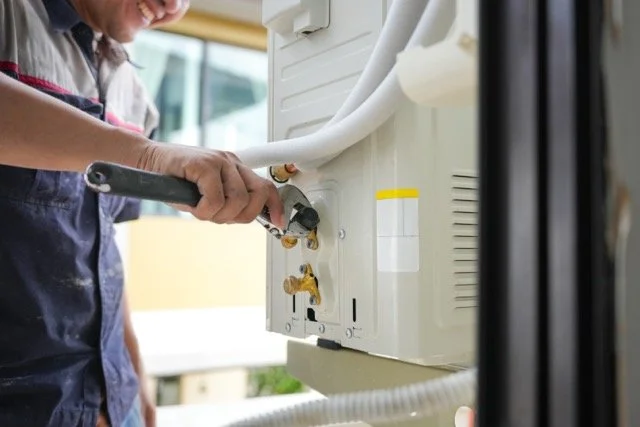
Day 1, Afternoon: Thermostat, Startup, and Testing (1-2 Hours)
The thermostat gets installed and wired. The technician fires up the furnace, checks ignition sequence, verifies gas pressure, measures temperature rise across the heat exchanger, and tests all safety controls.
Airflow measurements ensure the blower is delivering the right CFM (cubic feet per minute) through the ductwork. If airflow is off, adjustments get made on the spot — usually by tweaking blower speed settings or opening dampers.
Day 2 (If Needed): Inspection and Final Adjustments
The City of Troy inspector schedules a visit (usually within 24-48 hours of permit filing). They verify gas line connections, electrical work, venting, and combustion safety. Once approved, the permit gets closed out.
Some installations wrap up in one day with the inspection happening later. Others require the inspector's sign-off before we consider the job complete — especially if there were code-related modifications.
What Extends the Timeline?
Several factors can push installation into a second day:
- Ductwork modifications: Extensive duct repairs or replacements add 4-6 hours
- Electrical panel upgrades: If your panel needs a new breaker or sub-panel, add half a day
- Gas line upgrades: Replacing undersized gas lines requires coordination with a licensed gas fitter
- Chimney liner installation: Standard-efficiency furnaces venting through chimneys may need new stainless steel liners
- Accessibility issues: Tight crawl spaces, basement ceiling obstructions, or furnaces in attics slow everything down
During the estimate, we identify these potential delays so there are no surprises on install day.
Michigan Permit Requirements for Furnace Installation
Every furnace installation in Troy requires a mechanical permit. This isn't optional — it's Michigan law and local building code. Here's what you need to know:
Troy Building Permit Process
The licensed contractor (not the homeowner) files the permit application with the City of Troy Building Department. The application includes equipment specifications, installation plans, and proof of the contractor's Michigan mechanical license.
Permit fees in Troy typically range from $75 to $150 depending on the equipment value. The city issues the permit within 1-3 business days, and installation can begin once it's approved.
Michigan Mechanical Code Compliance
The installation must meet Michigan's adopted version of the International Mechanical Code (IMC). Key requirements include:
- Proper combustion air supply (makeup air for gas-burning appliances)
- Correct venting materials and termination locations
- Gas line sizing based on BTU input and pipe length
- Electrical disconnects within sight of the furnace
- Carbon monoxide detectors installed per Michigan law
These aren't arbitrary rules — they exist because improper installations kill people. Carbon monoxide poisoning from backdrafting furnaces, gas explosions from leaking connections, and house fires from faulty electrical work all happen when code gets ignored.
Why Permits Matter for Homeowners
Beyond safety, permits protect you legally and financially:
- Manufacturer warranties: Most furnace warranties require proof of permitted installation by a licensed contractor. Skip the permit, void the warranty.
- Homeowner's insurance: Insurance companies can deny claims for damage caused by unpermitted work.
- Home sales: When you sell your house, buyers' home inspectors and lenders often require permit records for major systems. Missing permits delay closings or kill deals.
- Liability: If unpermitted work causes injury or property damage, you're personally liable — not the contractor who disappeared after cashing your check.
We've seen Troy homeowners discover unpermitted furnaces during home sales, forcing them to hire engineers to certify the work retroactively — costing thousands of dollars and weeks of delays. Just get the permit.
What Happens During Inspection?
The Troy building inspector checks:
- Gas line connections and leak testing documentation
- Electrical wiring and disconnect switch placement
- Venting materials, slope, and termination clearances
- Combustion air supply (especially in tight mechanical rooms)
- Condensate drain installation (for high-efficiency furnaces)
- Manufacturer's installation manual compliance
If everything passes, the inspector signs off and the permit closes. If there are issues, they issue a correction notice and schedule a re-inspection after fixes are made. Reputable contractors know the code and pass inspection on the first visit.
Real Furnace Installation Costs in Troy (2026)
Furnace installation costs in Troy range from $3,500 to $8,000+ depending on equipment efficiency, home size, and installation complexity. Here's the breakdown:
Equipment Cost by Efficiency Level
| Furnace Type | AFUE Rating | Equipment Cost | Best For |
|---|---|---|---|
| Standard Single-Stage | 80% | $1,200-$2,000 | Budget-conscious, mild winters |
| High-Efficiency Single-Stage | 95% | $2,000-$3,200 | Lower bills, standard comfort |
| Two-Stage | 95-96% | $2,500-$3,800 | Better comfort, quieter operation |
| Modulating | 96-98% | $3,500-$5,000 | Best comfort, lowest bills |
These are equipment-only prices for quality brands like Carrier, Lennox, Trane, and Rheem. Bargain-brand furnaces (Goodman, Amana, York) run $300-$800 less but often have shorter lifespans and higher repair rates.
Labor and Installation Fees
Professional installation labor in Troy typically runs $1,800-$3,000 depending on job complexity. This includes:
- Old furnace removal and disposal
- New furnace installation and connections
- Gas line and electrical work
- Venting installation (PVC or chimney liner)
- Thermostat installation
- Startup, testing, and airflow balancing
- Permit filing and inspection coordination
Jobs requiring extensive ductwork modifications, electrical panel upgrades, or gas line replacements cost more — sometimes adding $1,000-$2,500 to the total.
Permit Costs
Troy mechanical permits run $75-$150 depending on equipment value. Most contractors include this in the installation quote, but always verify before signing.
Optional Upgrades That Add Value
Several add-ons improve comfort and efficiency:
- Whole-home humidifier ($400-$800): Michigan winters are brutally dry — indoor humidity often drops below 20%. Humidifiers prevent static shocks, dry skin, and respiratory irritation.
- Electronic air cleaner ($800-$1,500): Removes particles down to 0.3 microns — far better than standard 1" filters.
- UV air purifier ($600-$1,200): Kills mold, bacteria, and viruses circulating through ductwork.
- Smart thermostat ($200-$400 installed): Ecobee and Honeywell models learn your schedule and optimize runtime for efficiency.
If you're already opening up the furnace and ductwork, adding these upgrades during installation saves labor costs versus installing them separately later.
Financing Options
Most HVAC contractors offer financing through third-party lenders — typically 0% APR for 12-24 months or longer-term loans at competitive rates. Monthly payments for a mid-range furnace installation ($5,000 total) run around $140-$210 depending on the term.
The Next Care Plan maintenance subscription at $5/month also helps protect your investment — two annual tune-ups, priority scheduling, and 10% repair discounts prevent expensive breakdowns.
For a detailed cost comparison, see our guide on furnace replacement costs in Michigan.
Choosing the Right Furnace for Troy's Climate
Troy sits in ASHRAE Climate Zone 5A — cold winters with significant heating loads. The right furnace depends on your home, budget, and comfort priorities.
AFUE Ratings Explained
AFUE (Annual Fuel Utilization Efficiency) measures how much of the gas you pay for actually heats your home. An 80% AFUE furnace wastes 20 cents of every dollar on heat that goes up the chimney. A 96% AFUE furnace wastes only 4 cents.
In Michigan, where furnaces run 6+ months per year, efficiency matters. A typical Troy home using 800 therms annually saves about $160/year upgrading from 80% to 95% AFUE (at $1.00/therm). Over a 15-year furnace lifespan, that's $2,400 in savings — often enough to offset the higher upfront cost.
Single-Stage vs Two-Stage vs Modulating
Single-stage furnaces run at full capacity every time they fire — like a light switch, either 100% on or off. They're the cheapest option but cycle frequently, create temperature swings, and waste energy during milder weather (October, April, early May).
Two-stage furnaces run at low capacity (usually 60-70%) most of the time, ramping to full capacity only during extreme cold. They cycle less, maintain steadier temperatures, and run quieter. Most Troy homeowners notice the comfort difference immediately.
Modulating furnaces adjust output in 1% increments from 40% to 100% capacity, matching heat output precisely to heat loss. They deliver the best comfort and lowest bills but cost $1,500-$2,000 more than two-stage models.
For Troy's climate, we typically recommend two-stage furnaces as the sweet spot — significant comfort improvement over single-stage without the premium cost of modulating equipment.
Sizing for Michigan Winters
Proper furnace sizing prevents both undersized and oversized problems. Manual J load calculations account for:
- Square footage and ceiling height
- Insulation levels in walls, attic, and basement
- Window types, sizes, and orientations
- Air infiltration rates (older homes leak more)
- Michigan's 99% winter design temperature (around 3°F for Troy)
A typical 1,800 sq ft Troy ranch with average insulation needs a 60,000-80,000 BTU furnace. A 2,500 sq ft two-story with good insulation needs 80,000-100,000 BTU. Contractors who size furnaces by square footage alone ("1,000 BTU per 100 sq ft") often get it wrong.
Oversized furnaces are surprisingly common — we find them in about 40% of Troy homes we service. They short-cycle, never reach full efficiency, and wear out faster. If your current furnace runs for 5-7 minutes then shuts off repeatedly, it's probably oversized.
Brand Recommendations
We install and service all major brands, but these consistently perform well in Michigan:
Carrier and Bryant (same parent company, different dealer networks): Reliable, widely available parts, excellent warranties. The Carrier Infinity and Bryant Evolution series offer modulating performance with smart thermostat integration.
Lennox: Premium brand with some of the highest AFUE ratings available (up to 98.7%). The SLP98V modulating furnace is exceptionally quiet and efficient.
Trane: Built like tanks — heavy-gauge steel cabinets and robust heat exchangers. Not the quietest, but incredibly durable. The XV95 two-stage model is a workhorse.
Rheem: Good value for the price. The R96V two-stage furnace offers 96% AFUE at a competitive price point. Parts availability is excellent.
Budget brands like Goodman and Amana work fine if installed correctly, but expect higher repair rates after year 10. They're good choices for rental properties or homes you plan to sell within 5-7 years.
Signs Your Troy Home Needs a New Furnace
Not every furnace problem requires replacement — sometimes a $200 repair buys you another 2-3 years. But certain signs indicate it's time to replace rather than repair:
Age Over 15 Years
Furnaces last 15-20 years on average in Michigan. After 15 years, efficiency drops, parts become harder to find, and repair costs escalate. If your furnace is 15+ years old and needs a major repair (heat exchanger, blower motor, control board), replacement usually makes more financial sense.
Frequent Repairs
The "$500 rule" applies: if repair costs exceed half the price of a new furnace, replace it. A $1,500 heat exchanger replacement on a 14-year-old furnace is throwing money away — that same furnace will need a blower motor next year, then an ignitor, then a gas valve.
We track repair history for our service customers. When we see 3+ service calls in 18 months, we recommend replacement even if the furnace isn't ancient.
Rising Energy Bills
Furnaces lose efficiency as they age — heat exchangers crack, blower motors slow down, and burners get clogged. If your gas bills have climbed 20-30% over the past few years despite similar usage, the furnace is working harder to deliver the same heat.
Compare your current bills to bills from 3-5 years ago (adjust for gas price changes). A significant increase with no change in thermostat settings indicates declining efficiency.
Uneven Heating and Comfort Issues
If some rooms are always cold while others overheat, the problem might be ductwork — but it's often an undersized or failing furnace that can't deliver consistent airflow. Replacing the furnace during ductwork modifications solves both problems simultaneously.
Yellow Burner Flame
Gas furnace flames should be crisp blue. A yellow, flickering, or orange flame indicates incomplete combustion — often caused by a cracked heat exchanger or clogged burners. This produces carbon monoxide and requires immediate attention.
If you see a yellow flame, shut down the furnace and call an HVAC technician immediately. Don't run it until it's inspected.
Loud or Unusual Noises
Banging, screeching, or rumbling sounds indicate mechanical problems — failed bearings, cracked heat exchangers, or loose blower wheels. While some noises can be repaired, loud banging during startup often means the heat exchanger is failing.
For more details on diagnosing furnace problems, see our guide on why furnaces stop blowing hot air.
Ready to Schedule Your Furnace Installation?
NEXT Heating & Cooling has been keeping Troy homes comfortable for over 35 years. Get honest diagnostics, fair pricing, and professional installation from NATE-certified technicians who show up on time. No pressure, no upselling — just straight answers and quality work.
Get Your Free Estimate