

Furnace Maintenance Plan vs One-Off Repairs: Macomb County
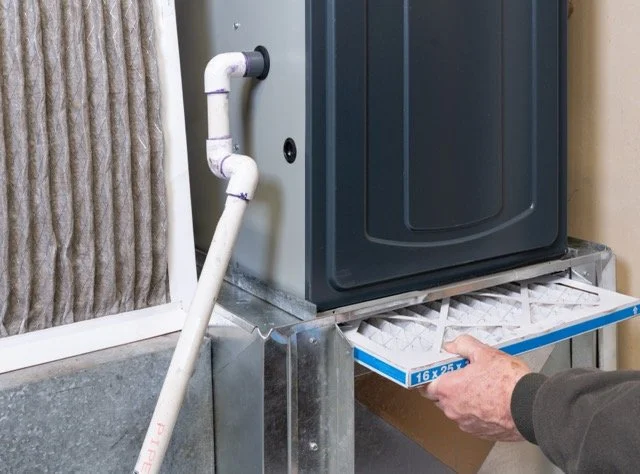
Here's the question we hear most often from homeowners in Sterling Heights, Clinton Township, and across Macomb County: "Is a furnace maintenance plan actually worth it, or am I better off just paying for repairs when something breaks?"
It's a fair question. You're weighing a predictable annual cost against the uncertainty of future repairs. After 35 years of keeping Michigan homes warm through polar vortex events and ice storms, we've run the numbers on thousands of furnaces. The math is clearer than most contractors want to admit.
This isn't a sales pitch for a maintenance plan — it's the actual cost breakdown based on real repair invoices, energy bills, and equipment lifespans we've documented in Macomb County. We'll show you what a $5/month HVAC maintenance plan prevents, what one-off repairs actually cost when your furnace quits on a January night, and how to decide which approach makes sense for your home and budget.
What a Furnace Maintenance Plan Actually Includes
A legitimate furnace maintenance plan isn't just an annual filter change with a fancy name. It's a systematic inspection and tune-up designed to catch problems before they become expensive emergencies. Here's what actually happens when a NATE-certified HVAC technician shows up for a scheduled maintenance visit.
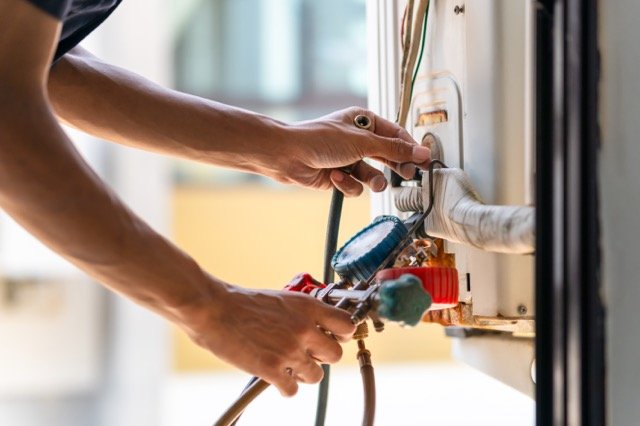
Fall Furnace Tune-Up Checklist
Most plans include a pre-heating season inspection in October or early November — before the first hard freeze hits Macomb County. During this visit, the technician will:
- Inspect the heat exchanger for cracks or corrosion. This is the single most critical safety check. A cracked heat exchanger can leak carbon monoxide into your home. On furnaces older than 15 years, we find hairline cracks in about 12% of units during routine inspections.
- Test the ignition system (hot surface igniter or pilot assembly). Igniters wear out over time — they're essentially a controlled failure point. Replacing one during a maintenance visit costs about $150. Replacing it at 11 PM on a Sunday in January? $450-$600 with emergency service fees.
- Clean and inspect the burners. Dirty burners reduce efficiency and create uneven heating. We've seen burners so clogged with dust and debris that the furnace was running 20% longer to heat the same space — wasting $200-$300 per winter in natural gas.
- Check the blower motor and capacitor. The blower motor moves heated air through your ductwork. Capacitors fail frequently in Michigan because of temperature extremes in basement furnace rooms. A failed capacitor means no heat, and replacement runs $150-$250.
- Inspect the flame sensor. This safety device shuts off gas flow if it doesn't detect a flame. Flame sensors get coated with carbon buildup and stop working. Cleaning takes 5 minutes during maintenance. Emergency cleaning during a no-heat call? $200-$300 service visit.
- Test the thermostat calibration. If your thermostat is reading 2-3 degrees off, your furnace runs longer than necessary. We recalibrate or recommend replacement if needed.
- Inspect and tighten electrical connections. Loose connections cause intermittent failures and are a fire hazard. This is basic safety work that prevents catastrophic problems.
- Measure temperature rise across the heat exchanger. This tells us if your furnace is operating within manufacturer specifications. Too high? Restricted airflow (often a clogged filter or undersized ductwork). Too low? Burner or gas pressure issue.
- Check gas pressure and combustion efficiency. Natural gas furnaces need specific pressure to burn cleanly. We use a combustion analyzer to measure CO2, O2, and CO levels. High CO means incomplete combustion — a safety issue and an efficiency killer.
- Inspect the venting system. PVC vent pipes (on 90%+ AFUE furnaces) can develop cracks or blockages. Metal B-vent can corrode. Blocked vents cause furnace shutdowns and carbon monoxide buildup.
- Replace or clean the air filter. This seems basic, but a $20 filter prevents $2,000 blower motor failures. Restricted airflow from a dirty filter is the #1 cause of premature heat exchanger cracks.
What the NEXT Care Plan Offers
Our Next Care Plan costs $5 per month ($60 per year) and includes two annual visits — a fall furnace tune-up and a spring AC tune-up. You also get:
- Priority scheduling (you jump the line when you call for service)
- 10% discount on all repairs
- No service call fees (normally $89-$125)
- Extended parts and labor warranties on covered equipment
That's the structure. Now let's compare it to what happens when you skip maintenance and pay for repairs as they come up.
The One-Off Repair Reality: What Michigan Homeowners Actually Pay
When you skip annual maintenance, you're betting that your furnace won't break down during the heating season. In Macomb County, where furnaces run 180-200 days per year and temperatures regularly drop below 10°F, that's a risky bet.
Here are the most common furnace repairs we perform in Sterling Heights, Shelby Township, and Clinton Township, with real 2026 pricing:
Common Furnace Repairs and Actual Costs
- Igniter replacement: $250-$400 (parts + labor + service call)
- Flame sensor cleaning/replacement: $200-$350
- Blower motor capacitor: $200-$300
- Blower motor replacement: $600-$1,200
- Inducer motor replacement: $500-$900
- Gas valve replacement: $400-$700
- Pressure switch replacement: $250-$450
- Control board replacement: $400-$800
- Heat exchanger replacement: $1,500-$3,500 (often not worth it — replacement furnace is usually the better option)
These are standard rates for a weekday service call. Add 50-100% if you're calling on a weekend, holiday, or after hours. Emergency service on Christmas Eve when your furnace quits? You're looking at double or triple the normal rate from most contractors.
The Compounding Failure Problem
Here's what most homeowners don't realize: furnace failures rarely happen in isolation. A dirty flame sensor causes short-cycling. Short-cycling overworks the blower motor. An overworked blower motor burns out the capacitor. A failed capacitor strains the control board. One $200 problem becomes a $1,200 problem because you waited.
We see this pattern constantly in Macomb County homes with furnaces that haven't been serviced in 3+ years. The first failure is often minor — an igniter or flame sensor. But by the time we diagnose it, we're also finding a cracked heat exchanger, a failing blower motor, and corroded electrical connections. At that point, you're looking at furnace replacement costs instead of a simple repair.
Energy Waste from Neglected Systems
Beyond repair costs, there's the hidden expense of running a dirty, inefficient furnace. We use combustion analyzers on every service call, and the data is consistent: a furnace that hasn't been cleaned and tuned in 2-3 years typically runs 10-15% less efficiently than it should.
For a typical 1,800-square-foot home in Clinton Township with a $1,200 annual heating bill, that's $120-$180 wasted every winter. Over five years, you've burned $600-$900 in unnecessary natural gas costs — more than the cost of a maintenance plan for that entire period.
The Math: Annual Plan vs. Pay-As-You-Go Over 5 Years
Let's run the actual numbers for a typical Macomb County homeowner with a 10-year-old furnace. We'll compare two scenarios over a five-year period.
Scenario 1: No Maintenance Plan (Pay-As-You-Go)
| Year | Repairs Needed | Cost |
|---|---|---|
| Year 1 | No issues | $0 |
| Year 2 | Igniter replacement | $325 |
| Year 3 | Blower motor capacitor | $250 |
| Year 4 | Flame sensor + pressure switch | $550 |
| Year 5 | Inducer motor replacement | $750 |
| Total Repair Costs | $1,875 | |
| Energy Waste (12% inefficiency) | $720 | |
| 5-Year Total | $2,595 |
Scenario 2: Annual Maintenance Plan
| Year | Maintenance + Repairs | Cost |
|---|---|---|
| Year 1 | Maintenance plan ($60) + igniter caught early ($0) | $60 |
| Year 2 | Maintenance plan ($60) | $60 |
| Year 3 | Maintenance plan ($60) + capacitor replacement (10% discount) = $225 | $285 |
| Year 4 | Maintenance plan ($60) | $60 |
| Year 5 | Maintenance plan ($60) | $60 |
| Total Maintenance + Repair Costs | $525 | |
| Energy Waste (3% inefficiency) | $180 | |
| 5-Year Total | $705 |
Net Savings with Maintenance Plan: $1,890 over five years
This is a conservative estimate based on actual service records from homes we maintain in Macomb County. We're assuming the maintenance plan catches and prevents most failures before they happen (igniter wear, flame sensor buildup, dirty burners) and reduces the severity of failures that do occur.
The math gets even more compelling if you factor in:
- Emergency service premiums (weekend/after-hours calls)
- Extended equipment lifespan (well-maintained furnaces last 18-22 years vs. 12-15 years for neglected units)
- Avoided system replacements from catastrophic failures
For homeowners concerned about upfront costs, our heating and cooling services in Metro Detroit include flexible payment options and transparent pricing — no surprises, no commission-based upselling.
What 35 Years in Macomb County Taught Us About Furnace Failures
Michigan winters are hard on furnaces. We're not talking about the occasional cold snap — we're talking about sustained sub-zero temperatures, polar vortex events that push wind chills to -30°F, and furnaces that run 18-20 hours per day for weeks at a time.

After servicing thousands of homes in Sterling Heights, Clinton Township, Shelby Township, and across Macomb County, we've identified clear patterns in how furnaces fail — and which failures are preventable with routine maintenance.
Preventable Failures (Caught During Maintenance)
Dirty flame sensors: This is the #1 cause of nuisance shutdowns we see in Macomb County. The flame sensor gets coated with carbon buildup and can't detect the burner flame, so the furnace shuts off after 3-5 seconds. Homeowners think their furnace is broken. We clean the sensor in 5 minutes and it runs perfectly. During a maintenance visit, we catch this before it becomes a problem. During an emergency service call, you've already gone without heat and paid for a service visit.
Clogged air filters: A $20 filter change prevents $2,000 in damage. Restricted airflow causes the heat exchanger to overheat and crack. Once the heat exchanger cracks, you're looking at replacement — either the heat exchanger ($1,500-$3,500) or the entire furnace. We've replaced heat exchangers on 8-year-old furnaces because the homeowner never changed the filter. That's a $4,000 mistake.
Igniter wear: Hot surface igniters have a finite lifespan — typically 5-7 years. During maintenance, we can see when an igniter is starting to fail (visible cracks, slow glow, inconsistent ignition). Replacing it during a scheduled visit costs $150. Replacing it during a no-heat emergency in January costs $350-$450.
Blower motor capacitors: Capacitors fail gradually. During maintenance, we test capacitance with a multimeter. If it's reading low, we replace it before it fails. Cost during maintenance: $100-$150. Cost during an emergency call when your blower motor won't start: $250-$350.
Inevitable Failures (Maintenance Delays, But Doesn't Prevent)
Some components wear out regardless of maintenance. But even here, maintenance helps by catching problems early and giving you time to budget for repairs instead of facing an emergency.
Blower motors: These motors run thousands of hours per year. They eventually wear out — typically after 15-20 years. Maintenance keeps them running longer by ensuring proper lubrication and airflow, but they will fail eventually. The difference: with maintenance, we can tell you "this motor is getting noisy and will probably need replacement in the next 1-2 years." Without maintenance, it fails suddenly on a Saturday night in February.
Heat exchangers: Even with perfect maintenance, heat exchangers eventually corrode and crack — especially on furnaces older than 15 years. But maintenance dramatically extends their lifespan. A well-maintained heat exchanger can last 20+ years. A neglected one (dirty filters, restricted airflow, poor combustion) might crack in 10-12 years.
Control boards: Electronic control boards fail due to power surges, humidity, and age. Maintenance doesn't prevent this, but regular inspections catch early warning signs (intermittent errors, delayed ignition, erratic cycling).
The Michigan-Specific Factor
Macomb County's climate creates unique failure patterns we don't see in milder regions:
- Condensate freeze-ups: High-efficiency furnaces (90%+ AFUE) produce condensate that drains through PVC pipes. In Michigan, these pipes can freeze if they're routed through unheated spaces or exterior walls. We've seen dozens of furnace shutdowns in Sterling Heights and Clinton Township caused by frozen condensate lines. During maintenance, we check routing and insulation.
- Vent pipe corrosion: Michigan's freeze-thaw cycles are brutal on metal B-vent pipes. We inspect for rust, holes, and loose connections during every maintenance visit. A $200 vent pipe replacement is a lot cheaper than a carbon monoxide incident.
- Basement humidity and rust: Many Macomb County homes have furnaces in damp basements. Moisture accelerates corrosion on electrical connections, gas valves, and burner assemblies. Regular inspections catch rust before it causes failures.
For more insights on common furnace issues Michigan homeowners face, see our article on why furnaces keep short-cycling.
Signs Your Furnace Needs Professional Attention Now
Whether you have a maintenance plan or not, there are warning signs that mean you should call a technician immediately — not next week, not next month. These are the red flags we tell every Macomb County homeowner to watch for:
Safety Issues (Call Immediately)
- Yellow or flickering burner flame: A healthy natural gas flame is blue with a small yellow tip. A large yellow flame or flickering indicates incomplete combustion and possible carbon monoxide production. Shut off the furnace and call for service.
- Soot buildup around the furnace: Black soot on the furnace cabinet or nearby walls means incomplete combustion. This is a carbon monoxide risk and an efficiency problem.
- Smell of gas: Natural gas has a distinctive sulfur/rotten egg smell. If you smell gas near your furnace, shut off the gas supply, evacuate the house, and call your gas company and a technician.
- Carbon monoxide detector alarming: If your CO detector goes off and you have a gas furnace, evacuate immediately. Don't assume it's a false alarm.
- Visible cracks in the heat exchanger: If you can see inside your furnace cabinet and notice cracks or holes in the metal heat exchanger, shut down the furnace and call for service. This is a carbon monoxide hazard.
Performance Issues (Schedule Service Soon)
- Short-cycling: The furnace runs for 2-3 minutes, shuts off, then starts again a few minutes later. This indicates a flame sensor issue, thermostat problem, or restricted airflow.
- Uneven heating: Some rooms are warm, others are cold. This usually points to ductwork problems or an undersized furnace, but it can also indicate a failing blower motor or control board.
- Rising energy bills: If your gas bill is climbing but your usage patterns haven't changed, your furnace is losing efficiency. Dirty burners, clogged filters, or failing components are the usual culprits.
- Strange noises: Banging, squealing, or grinding sounds aren't normal. Banging can indicate delayed ignition (gas buildup before ignition — a safety hazard). Squealing usually means a worn blower motor belt or bearing. Grinding means a motor is failing.
- Constant blower operation: If your blower fan runs continuously even when the furnace isn't heating, you likely have a thermostat or control board issue.
If you're experiencing any of these issues and need immediate help, our reliable HVAC contractor in Metro Detroit offers 24/7 emergency service for Macomb County homeowners.
How to Choose the Right Maintenance Plan for Your Home
Not all maintenance plans are created equal. Some are legitimate preventive maintenance programs. Others are thinly disguised sales tools designed to get a technician in your home to upsell you on equipment you don't need.
What to Look for in a Maintenance Plan
Clear scope of work: The plan should explicitly list what's included in each visit. If the description is vague ("comprehensive inspection" or "tune-up"), ask for specifics. You want to know exactly what gets inspected, tested, cleaned, and adjusted.
Transparent pricing: The annual cost should be clearly stated, with no hidden fees or auto-renewals that increase without notice. Our Next Care Plan is $5/month ($60/year) — that's it. No surprise charges.
Real benefits beyond the inspection: Priority scheduling, repair discounts, and waived service call fees add real value. If the plan doesn't include these, you're just prepaying for an inspection you could schedule on your own.
No commission-based sales pressure: This is critical. If the technician who performs your maintenance visit earns a commission on equipment sales, you're going to hear a replacement pitch whether you need one or not. Our technicians are salaried — they're not incentivized to sell you anything. They diagnose honestly and give you options without pressure.
NATE-certified technicians: The North American Technician Excellence (NATE) certification is the industry standard for HVAC competency. If the company doesn't employ NATE-certified techs, you're rolling the dice on who shows up.
Licensed and insured: In Michigan, HVAC contractors must hold a mechanical contractor license. Ask for the license number and verify it with the state. Insurance protects you if something goes wrong during service.
Red Flags in Maintenance Contracts
- Multi-year contracts with penalties for cancellation: Legitimate plans are annual agreements you can cancel anytime. If you're locked in for 3-5 years with a cancellation fee, walk away.
- Plans that require equipment purchase: Some manufacturers offer "free" maintenance if you buy their equipment. That's fine, but make sure the maintenance is actually performed by qualified techs, not just a filter change.
- Vague or incomplete inspections: If the technician shows up, changes your filter, and leaves in 15 minutes, that's not a maintenance visit — that's a filter change. Real maintenance takes 60-90 minutes and includes combustion testing, electrical measurements, and safety checks.
- Automatic upsells: If every maintenance visit ends with a recommendation to replace your furnace, you're dealing with a sales operation, not a service company.
When a Maintenance Plan Might Not Make Sense
There are situations where a maintenance plan isn't the best investment:
- Brand-new furnace with manufacturer warranty: If you just installed a new furnace, the manufacturer warranty likely covers parts for 5-10 years. You still need annual maintenance to keep the warranty valid, but you might not need the repair discounts and priority scheduling yet.
- Furnace older than 18-20 years: If your furnace is near the end of its lifespan, you're better off budgeting for replacement rather than investing in maintenance. At that age, major components (heat exchanger, blower motor, control board) are all at risk of failure, and repairs often cost more than the furnace is worth.
- You're planning to replace the furnace soon: If you're already shopping for a new furnace, skip the maintenance plan and put that money toward the replacement.
For homeowners in Macomb County considering a furnace replacement, our guide on what furnace replacement actually costs in Michigan provides real pricing data and helps you budget accurately.
Ready to Get Started?
NEXT Heating & Cooling has been keeping Michigan homes comfortable for over 35 years. Get honest diagnostics and fair pricing from NATE-certified technicians who show up on time. Our $5/month Next Care Plan includes two annual visits, priority scheduling, and 10% repair discounts — no commission-based sales, no pressure.
Schedule Your ServiceFrequently Asked Questions
Yes, for two reasons. First, most manufacturer warranties require annual professional maintenance to remain valid. Skip maintenance and you void the warranty. Second, even new furnaces need seasonal tune-ups to ensure proper combustion, airflow, and safety. The cost is minimal ($60/year for our Next Care Plan) and protects your warranty and investment.
A one-time furnace tune-up typically costs $125-$200 in Southeast Michigan, depending on the contractor and what's included. If you're paying for fall furnace service and spring AC service separately, you're looking at $250-$400 per year. Our Next Care Plan costs $60/year and includes both visits plus priority scheduling and repair discounts.
You're rolling the dice on expensive repairs and safety hazards. Dirty burners reduce efficiency (costing you $100-$200/year in wasted gas). Clogged filters cause heat exchanger cracks ($1,500-$3,500 to replace). Neglected flame sensors cause nuisance shutdowns. Carbon buildup creates carbon monoxide risks. Most furnace failures we see in Macomb County are on units that haven't been serviced in 3+ years.
You can handle basic tasks like changing filters and keeping the area around the furnace clear. But critical safety checks — heat exchanger inspection, combustion testing, gas pressure measurement, electrical connections — require specialized tools and training. A cracked heat exchanger or improper combustion can leak carbon monoxide into your home. That's not a DIY job. Hire a NATE-certified technician for annual inspections.
Schedule your fall furnace tune-up in October or early November — before the first hard freeze. This gives you time to address any issues before you need the furnace running 24/7. Avoid waiting until November or December when HVAC companies are slammed with emergency calls. Next Care Plan members get priority scheduling, so they can book service even during peak season.
Our Next Care Plan costs $5/month ($60/year) and includes two annual visits — a comprehensive fall furnace tune-up and a spring AC tune-up. You also get priority scheduling (jump the line when you call for service), 10% discount on all repairs, no service call fees, and extended parts and labor warranties. It's designed to catch problems early and save you money on repairs and energy costs.
A thorough furnace tune-up takes 60-90 minutes. This includes inspecting the heat exchanger, testing combustion efficiency, cleaning burners and flame sensor, checking electrical connections, measuring gas pressure, inspecting the venting system, testing the blower motor and capacitor, and replacing the air filter. If a technician is in and out in 15 minutes, they're not performing a real inspection — they're just changing your filter.