

Furnace Smells Like Gas? What to Do Right Now in Michigan

You walk past your furnace room and catch that unmistakable smell. Sulfur. Rotten eggs. Natural gas. Your stomach drops. Is this an emergency? Should you evacuate? Call 911? Or is it something minor?
If your furnace smells like gas, you are right to take it seriously. Natural gas leaks can lead to fire, explosion, or carbon monoxide poisoning. But not every gas odor means your home is in immediate danger. The key is knowing when to act fast and when to call a reliable HVAC contractor in Metro Detroit for a diagnostic inspection.
We have been servicing gas furnaces across Southeast Michigan for over 35 years. We have seen cracked heat exchangers in Sterling Heights ranch homes, failed gas valves in Troy colonials, and pilot light issues in Royal Oak bungalows. This guide walks you through exactly what to do when you smell gas, what causes the odor, and how to prevent it from happening again.
Immediate Safety Protocol: What to Do First
Natural gas is odorless in its pure form. Utility companies add a chemical called mercaptan to give it that distinctive rotten egg smell. You can detect mercaptan at concentrations as low as one part per million, which is well below dangerous levels. That is by design: the odor warns you long before gas reaches explosive concentrations.
Here is what to do the moment you smell gas near your furnace:
Do not light matches, candles, or lighters. Do not turn on light switches or use your phone near the furnace. Do not operate any electrical devices. A single spark can ignite accumulated gas.
First, turn off your furnace. Locate the emergency gas shutoff valve on the gas supply line leading to your furnace. It is usually a lever or knob on the black iron pipe. Turn it perpendicular to the pipe (90 degrees) to shut off gas flow. If you cannot find it or feel unsafe approaching the furnace, leave it and move to the next step.
Second, open windows and doors to ventilate your home. Fresh air dilutes any accumulated gas and reduces explosion risk. Do this quickly but calmly.
Third, assess the severity. If the gas smell is strong, overwhelming, or you feel lightheaded or nauseous, evacuate immediately. Do not take time to gather belongings. Leave the house and call 911 from outside. If the smell is faint and localized only to the furnace area, you can proceed more cautiously.
Fourth, call your gas utility emergency line. In Southeast Michigan, that is DTE Energy (800-947-5000) or Consumers Energy (800-477-5050). They will dispatch a technician to your home, usually within an hour, to test for gas leaks and ensure your home is safe. This service is free and available 24/7.
Once the gas company clears your home, call a licensed HVAC contractor. The gas utility will shut off your gas if they find a leak, but they will not repair your furnace. That is where companies like NEXT Heating & Cooling come in. Our NATE-certified technicians diagnose the root cause and get your heat back on safely.
Understanding Natural Gas Odor in Your Furnace
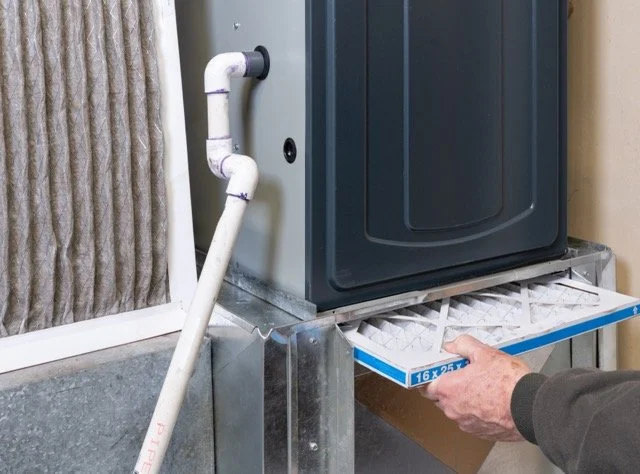
Not every gas smell means you have a leak. Some odors are normal, especially during furnace startup after months of inactivity. Others signal serious problems that need immediate attention.
Normal Gas Odors
When you first fire up your furnace in October or November after a Michigan summer, you might smell a brief whiff of gas. This happens because a small amount of gas remains in the supply line and burns off during ignition. The smell should disappear within a few seconds. If it lingers beyond 30 seconds, shut down the furnace and call for service.
You might also notice a faint gas odor near the furnace during normal operation. Modern gas valves are not perfectly airtight. A tiny amount of mercaptan can escape around valve seals, especially as components age. If the smell is barely detectable and does not get stronger over time, it is usually not an emergency. Still, mention it to your technician during your next annual furnace tune-up.
Abnormal Gas Odors
A strong, persistent gas smell is never normal. If you can smell gas from across the room, or if the odor gets stronger the closer you get to the furnace, you likely have a leak. Common sources include cracked gas supply lines, loose fittings at the gas valve, or a failed valve seal.
If you smell gas only when the furnace is running, the issue might be incomplete combustion. This happens when the burner assembly is dirty or the air-to-fuel ratio is off. Unburned gas escapes into the furnace cabinet and vents into your home. This is dangerous for two reasons: wasted gas creates explosion risk, and incomplete combustion produces carbon monoxide.
If you smell gas after the furnace shuts off, the gas valve might be failing to close completely. Gas continues flowing to the burners even though the igniter is off. This is an immediate repair situation. Do not run the furnace until a technician replaces the valve.
When to Evacuate vs. When to Investigate
Homeowners often ask us: how do I know if this is a call-the-fire-department emergency or a schedule-a-service-call situation? Here is the decision tree we use:
Evacuate immediately if:
- The gas smell is strong enough to detect from multiple rooms
- You hear a hissing sound near the gas line or furnace
- You feel dizzy, nauseous, or have a headache (potential carbon monoxide exposure)
- You see visible damage to gas lines, such as corrosion, cracks, or disconnected fittings
- The gas smell appeared suddenly and is getting stronger
In these cases, leave your home immediately and call 911. Do not try to diagnose the problem yourself. Let the fire department and gas utility handle it.
Call for same-day HVAC service if:
- The gas smell is faint and localized only to the furnace room
- The odor appeared gradually over days or weeks
- The smell is strongest during furnace startup or shutdown
- You have already shut off the gas supply and ventilated your home
These scenarios suggest a component failure rather than a major leak. You still need professional diagnosis, but you are not in immediate danger once the gas is shut off and your home is ventilated.
NEXT Heating & Cooling offers 24/7 emergency service for situations like this. If you smell gas and are not sure whether to evacuate, call us. We will walk you through safety steps over the phone and dispatch a technician if needed. Our team has handled hundreds of gas odor calls across Macomb, Oakland, and St. Clair counties.
Common Causes of Gas Smell from Your Furnace

Over 35 years of diagnosing gas furnaces in Michigan, we have seen the same issues repeat across thousands of service calls. Here are the most common causes of gas odor, listed from most to least frequent:
Cracked Heat Exchanger
The heat exchanger is the metal chamber where combustion happens. Hot exhaust gases flow through the exchanger, warming the air that circulates through your home. Over time, repeated heating and cooling cycles cause metal fatigue. Cracks develop, allowing combustion gases (including unburned natural gas) to leak into the air stream.
Heat exchanger cracks are most common in furnaces 15 years or older. Michigan winters are brutal on furnaces. A system in Sterling Heights might run 2,000 hours per heating season during a polar vortex winter. That is 30,000+ hours over 15 years. Metal does not last forever under those conditions.
Cracked heat exchangers are not repairable. The entire heat exchanger assembly must be replaced, which costs $1,200 to $2,500 depending on the furnace model. On a 15-year-old furnace, replacement usually makes more financial sense than repair. We walk homeowners through the math during our diagnostic visit. For more on this decision, read our guide on furnace short-cycling and when to replace.
Failed Gas Valve
The gas valve controls gas flow to the burners. When the thermostat calls for heat, the valve opens. When the thermostat is satisfied, the valve closes. A failing valve might stick partially open, allowing gas to leak even when the furnace is off.
Gas valve failure is more common in furnaces with standing pilot lights, which are rare in systems installed after 2000. Modern electronic ignition systems have fewer valve issues, but they still fail occasionally. Replacement costs $300 to $600 including labor.
Dirty or Misaligned Burners
Furnace burners mix gas and air for combustion. If burners get clogged with dust, rust, or debris, the air-to-fuel ratio shifts. Too much gas and not enough air means incomplete combustion. Unburned gas escapes into the furnace cabinet.
Burner issues are preventable with annual maintenance. A technician cleans the burner assembly, checks flame color and pattern, and adjusts gas pressure if needed. This is part of every NEXT Care Plan tune-up. Cleaning burners takes 20 minutes and can prevent a $500 emergency service call.
Pilot Light Problems (Older Furnaces)
If you have an older furnace with a standing pilot light, the pilot flame might blow out. Gas continues flowing to the pilot assembly, but there is no flame to burn it. You will smell raw gas near the furnace. Relighting the pilot usually solves the problem, but if the pilot keeps going out, you likely have a faulty thermocouple or draft issue. We cover this in detail in our article on pilot light troubleshooting.
Loose or Corroded Gas Line Fittings
The black iron pipe that carries gas to your furnace connects with threaded fittings. Over decades, these fittings can loosen slightly or corrode. Michigan basements are humid, especially in older homes without proper drainage. Moisture accelerates corrosion on gas piping.
A loose fitting is an easy fix. A technician tightens the connection and tests for leaks with soap solution or an electronic gas detector. Corroded pipe sections need replacement, which is more involved but still straightforward for a licensed contractor.
What NEXT Technicians Check During a Gas Odor Call
When you call NEXT Heating & Cooling for a gas smell issue, here is what happens. Our technician arrives with a full set of diagnostic tools: combustion analyzer, electronic gas leak detector, manometer for pressure testing, and inspection camera for heat exchanger examination.
First, we test for active leaks. The electronic detector measures gas concentrations around the furnace, gas valve, supply line, and all fittings. If we find a leak, we identify the exact source before proceeding.
Second, we inspect the heat exchanger. This is the most critical step. We remove the burner assembly to visually inspect the exchanger for cracks, rust-through, or holes. On some furnaces, we use a borescope camera to see areas that are not visible with the naked eye. We also perform a pressure test: seal the exhaust vent, pressurize the heat exchanger, and check for pressure drop. A failing exchanger will not hold pressure.
Third, we test combustion quality. We insert probes into the exhaust stream and measure oxygen, carbon monoxide, and carbon dioxide levels. Proper combustion produces minimal CO (under 50 parts per million air-free). High CO readings indicate incomplete combustion, which often correlates with gas odor complaints.
Fourth, we check gas pressure. Residential natural gas systems run at 3.5 inches of water column (about 0.125 psi) at the meter, stepping down to 3.5 inches at the furnace. If pressure is too high, the burners get too much gas. Too low, and you get incomplete combustion. We measure static pressure and manifold pressure to verify the gas valve is regulating correctly.
Fifth, we inspect the venting system. Blocked or damaged vent pipes can cause backdrafting, where exhaust gases spill into your home instead of venting outside. This smells like gas and produces carbon monoxide. We check for obstructions, proper slope, and secure connections.
After diagnostics, we explain exactly what we found, show you photos or readings if helpful, and give you options. If it is a minor repair like tightening a fitting or cleaning burners, we handle it on the spot. If it is a major issue like a cracked heat exchanger, we walk through repair versus replacement costs and help you make an informed decision. No pressure, no upselling. That is the NEXT difference.
Prevention Through Annual Maintenance
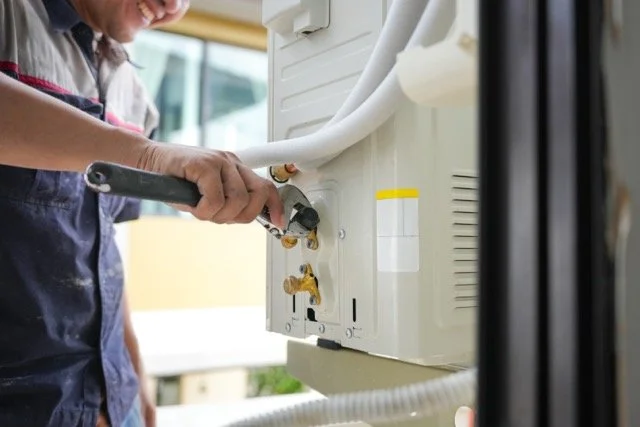
Most gas odor issues are preventable with regular maintenance. A furnace is not a set-it-and-forget-it appliance. It is a complex machine with moving parts, electrical components, and gas controls that need annual attention.
During a professional tune-up, a technician cleans the burner assembly, inspects the heat exchanger, tests the gas valve, measures combustion efficiency, and checks all safety controls. These steps catch small problems before they become expensive emergencies. A dirty burner caught in September is a $0 fix during a tune-up. That same dirty burner discovered in January when your furnace quits is a $300 emergency service call.
The NEXT Care Plan costs $5 per month ($60 per year) and includes two home visits: a fall furnace tune-up and a spring AC tune-up. You also get priority scheduling, 10% off repairs, and no service call fees. We have data showing that Care Plan members have 60% fewer emergency breakdowns than homeowners who skip maintenance. The plan pays for itself the first time it prevents a midnight furnace failure during a polar vortex.
Beyond professional maintenance, homeowners can take a few simple steps to keep their furnace running safely. Change your air filter every 60 to 90 days. A clogged filter restricts airflow, which causes the heat exchanger to overheat and crack prematurely. Keep the area around your furnace clear. Do not store paint cans, cleaning chemicals, or cardboard boxes near the furnace. These items can block airflow or create fire hazards.
Install carbon monoxide detectors on every level of your home, especially near bedrooms. Michigan building code requires CO detectors in all homes with fuel-burning appliances. Test them monthly and replace batteries twice a year. A $30 detector can save your life if your furnace develops a hidden heat exchanger crack.
Repair vs. Replacement: The Cost Reality for Michigan Homeowners
When a furnace develops a gas odor issue, the repair bill depends on the root cause. Here is what homeowners in Southeast Michigan can expect to pay:
- Gas valve replacement: $300 to $600
- Burner cleaning and adjustment: $150 to $300 (often included in tune-ups)
- Thermocouple replacement (pilot light furnaces): $150 to $250
- Gas line fitting repair: $100 to $300
- Heat exchanger replacement: $1,200 to $2,500
Heat exchanger replacement is where the repair-versus-replace decision gets complicated. If your furnace is 15 years old and needs a $2,000 heat exchanger, you are better off replacing the entire unit. A new high-efficiency furnace costs $3,500 to $6,000 installed, depending on size and brand. You get a 10-year parts warranty, 96% AFUE efficiency (versus 80% on your old furnace), and peace of mind for the next 15 to 20 years.
If your furnace is only 8 years old and the heat exchanger fails, replacement might make sense if it is still under warranty. Most manufacturers cover the heat exchanger for 10 to 20 years. You pay only labor, which brings the repair cost down to $500 to $800. That is worth it on a newer furnace.
We help homeowners run the numbers during every diagnostic visit. We look at furnace age, efficiency, repair cost, and expected remaining lifespan. We show you what a new furnace would cost and what your energy savings would be. Then you decide. We are not on commission, so we have no incentive to upsell you. Our job is to give you accurate information so you can make the best choice for your home and budget.
For homeowners considering a new furnace, we install Carrier, Lennox, Trane, Rheem, Bryant, Goodman, Amana, York, and RUUD systems. We size the furnace correctly using Manual J load calculations, not guesswork. Proper sizing ensures your furnace runs efficiently and lasts its full lifespan. You can learn more about the installation process in our article on furnace installation in Troy, MI.
Smell Gas? Get Help Now
NEXT Heating & Cooling offers 24/7 emergency service for gas odor issues across Southeast Michigan. Our NATE-certified technicians diagnose the problem, explain your options, and get your heat back on safely. No upselling, no pressure, just honest service from a company that has been keeping Michigan homes comfortable for over 35 years.
Request Emergency Service