

How to Choose a Furnace Installation Contractor in Troy MI
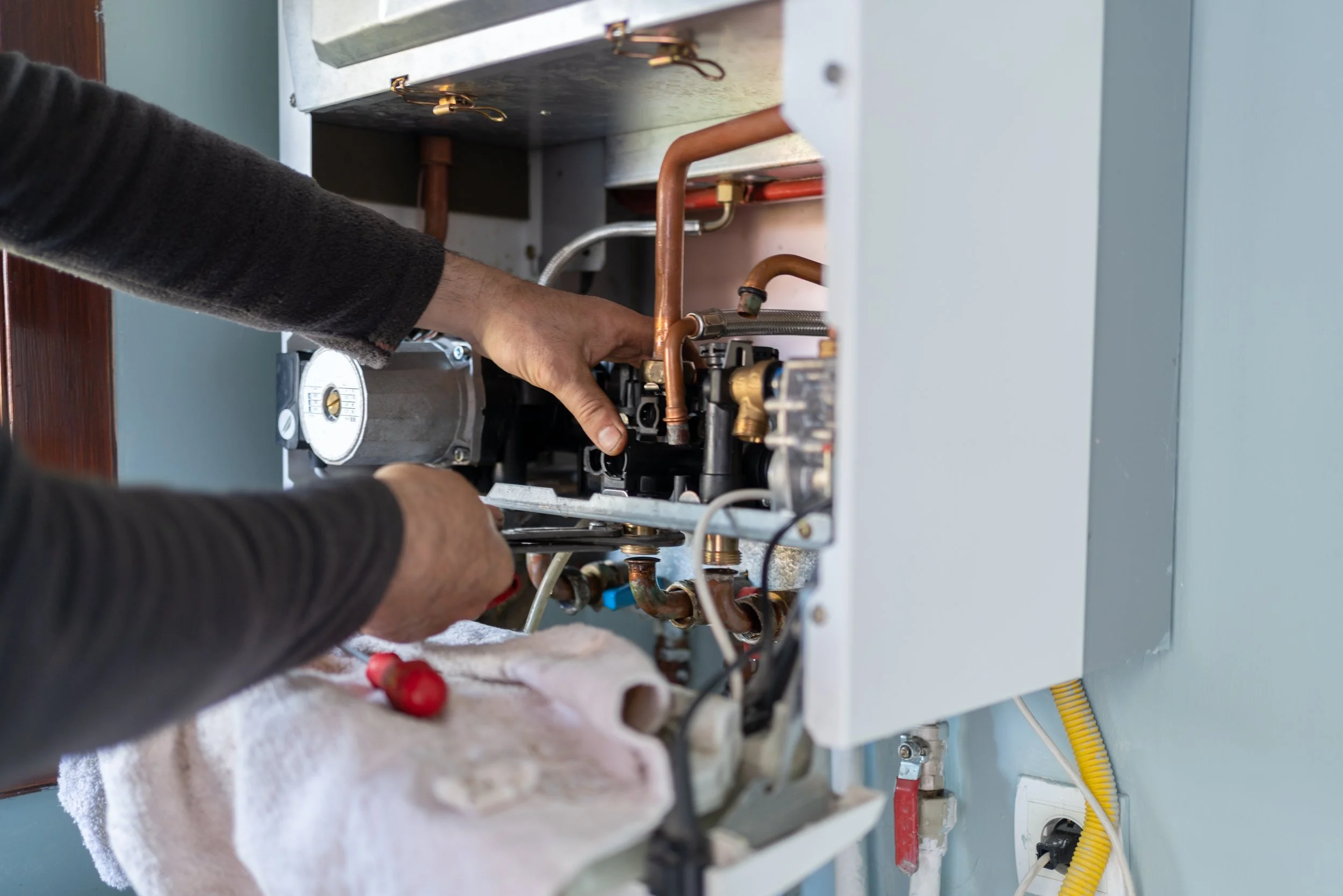
You're about to spend $4,000 to $8,000 on a furnace that needs to keep your Troy home comfortable through Michigan winters for the next 15 to 20 years. The contractor you choose matters more than the brand name on the equipment.
I've been installing furnaces in Southeast Michigan for over two decades, and I've seen what happens when homeowners pick a contractor based on the lowest bid or flashiest website. Oversized equipment that short-cycles and dies early. Ductwork modifications that create hot and cold spots. Installations that fail inspection because the contractor cut corners on venting or combustion air.
This guide walks through exactly what to look for when choosing a furnace installation contractor in Troy MI — from non-negotiable credentials to installation quality standards that separate professionals from parts-changers.
Michigan Mechanical Contractor License (Non-Negotiable)
Before you talk about equipment brands or pricing, verify the contractor holds a valid Michigan Mechanical Contractor License. This isn't optional — it's state law for anyone installing, replacing, or modifying heating equipment in Michigan.
The license confirms the contractor has passed competency exams covering mechanical codes, refrigeration, combustion safety, and ductwork design. It also requires proof of liability insurance and workers' compensation coverage, which protects you if something goes wrong during installation.
You can verify any contractor's license status through the Michigan Department of Licensing and Regulatory Affairs (LARA) website. Search by company name or license number. If a contractor hesitates when you ask for their license number, that's your signal to move on.
Red flag: "We're working under another company's license" or "We're getting our license soon." Both mean the person quoting your job isn't legally authorized to do the work. When something fails or needs warranty service, you'll have no recourse.
I've repaired installations done by unlicensed contractors in Troy and Rochester Hills where the furnace was vented incorrectly, creating carbon monoxide risks. The homeowner had no way to hold anyone accountable because the "contractor" had no license, no insurance, and often no permanent business address.
NEXT Heating & Cooling operates under Premier Builder Inc.'s Michigan Mechanical Contractor License, which we've held continuously since 1991. Every technician who works on your furnace carries credentials you can verify.
NATE Certification and Manufacturer Training
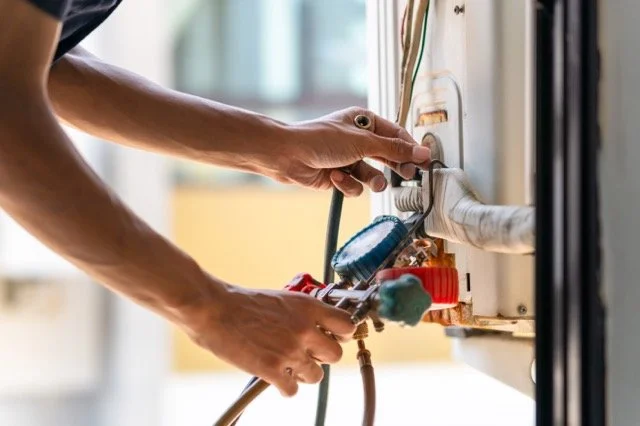
A state license proves someone passed the minimum legal standard. NATE certification (North American Technician Excellence) proves they know what they're doing at the equipment level.
NATE is the only industry-recognized certification for HVAC technicians. It requires passing proctored exams covering installation practices, system diagnostics, airflow measurement, refrigerant handling, and electrical troubleshooting. Technicians must recertify every two years to stay current with new equipment and refrigerants.
When you hire NATE-certified technicians, you're working with someone who has proven competency beyond just turning wrenches. They understand why ductwork sizing affects furnace efficiency, how to test combustion air requirements, and what happens when you skip the load calculation.
Beyond NATE, look for manufacturer-specific training. Brands like Carrier, Lennox, Trane, and Rheem offer certification programs for contractors who install their equipment. This training covers model-specific installation requirements, control board programming, warranty registration procedures, and troubleshooting protocols.
Manufacturer partnerships matter because they give contractors access to technical support, parts availability, and warranty claim processes. When you choose a contractor who's an authorized dealer for quality brands, you're not just buying equipment — you're buying a relationship that extends through the life of your furnace.
What to Ask
- Are your technicians NATE-certified? (Ask to see certification cards.)
- Which equipment brands are you an authorized dealer for?
- What manufacturer training have your installers completed?
- Do you have direct access to manufacturer technical support?
Load Calculation and Equipment Sizing
This is where most furnace installations in Troy fail before the equipment even arrives. A contractor who sizes your furnace by square footage alone or by "matching what you had before" is guessing — and guessing wrong costs you money for the next 15 years.
Proper furnace sizing requires a Manual J load calculation. This is an industry-standard method that accounts for your home's square footage, insulation levels, window types and placement, air infiltration rates, ductwork design, and orientation to the sun. The calculation determines exactly how much heating capacity your home needs on the coldest day of a Michigan winter.
Most contractors skip this step because it takes time and requires software or training they don't have. Instead, they look at your old furnace's BTU rating and install the same size — or worse, they go bigger "just to be safe."
Oversized furnaces are the most common installation mistake I see in Oakland County. When a furnace is too large for the home, it heats the space too quickly and shuts off before completing a full heating cycle. This is called short-cycling, and it creates multiple problems:
- Uneven heating: The furnace shuts off before warm air reaches distant rooms, creating hot and cold spots.
- Reduced efficiency: Furnaces are least efficient during startup. Short-cycling means more startups per hour, wasting fuel.
- Premature failure: Heat exchangers and ignitors wear out faster from constant cycling. A furnace rated for 20 years might fail in 10.
- Comfort issues: Temperature swings between cycles make the house feel drafty even when the thermostat says it's warm.
Undersized furnaces run constantly on cold days, struggle to maintain temperature, and rack up energy bills. But in Troy's climate, oversizing is the more common problem because contractors default to "bigger is better."
What proper sizing looks like: A 2,000-square-foot ranch in Troy with average insulation typically needs a furnace in the 60,000 to 80,000 BTU range. A contractor who quotes a 100,000 BTU furnace without doing a load calculation is oversizing your equipment.
When we quote furnace installation in Troy, we perform a Manual J calculation for every home. We measure ductwork, evaluate insulation, and account for how your home actually performs — not just what the square footage suggests. The right-sized furnace runs longer cycles, heats more evenly, and lasts longer.
Transparent Pricing and Written Estimates

A professional contractor gives you a written estimate that breaks down exactly what you're paying for. If someone quotes you a single number over the phone or scribbles a price on the back of a business card, you're dealing with someone who either doesn't know their costs or doesn't want you to know what you're buying.
A detailed estimate should include:
- Equipment specifications: Exact model number, AFUE rating, BTU capacity, and warranty terms for the furnace you're getting.
- Installation scope: What's included in the labor — equipment removal and disposal, ductwork modifications, venting upgrades, thermostat installation, permit fees, and final inspection.
- Material costs: Line items for any additional parts like transition fittings, gas line modifications, electrical work, or condensate drain installation.
- Timeline: When the work will be completed and how long it will take.
- Payment terms: Deposit requirements, payment schedule, and accepted methods.
- Warranty coverage: Separate details for manufacturer equipment warranty and contractor labor warranty.
In Southeast Michigan, furnace installation costs typically range from $3,500 to $8,000 depending on equipment efficiency, home size, and installation complexity. A basic 80% AFUE single-stage furnace for a straightforward installation might run $3,500 to $4,500. A high-efficiency 96% AFUE two-stage or modulating furnace with ductwork modifications and smart thermostat can reach $6,500 to $8,000.
Be suspicious of quotes that are significantly lower than others you've received. Contractors who lowball estimates often make up the difference by using lower-quality equipment, skipping necessary work like ductwork sealing, or adding surprise charges after the job starts.
Red flags in pricing: "Cash discount" (suggests they're not reporting income or paying taxes), pressure to sign the same day ("This price is only good today"), or vague line items like "installation" without specifying what that includes.
At NEXT Heating & Cooling, we don't pay our technicians on commission, so there's no incentive to upsell you into equipment you don't need. We quote what your home actually requires based on the load calculation, and we put everything in writing before we touch a wrench. That's part of changing contractor culture — no surprises, no pressure, just honest diagnostics and fair pricing.
Equipment Options and Brand Relationships
Not all furnaces are created equal, and not all contractors have access to the same equipment. The brands a contractor offers tell you a lot about their business relationships and quality standards.
Quality furnace brands fall into a few tiers:
Premium Tier
Brands like Carrier, Lennox, and Trane dominate this category. These manufacturers have been building HVAC equipment for decades, invest heavily in R&D, and maintain strict dealer networks. Their furnaces typically offer the highest AFUE ratings (up to 98%), the most advanced features (modulating burners, variable-speed blowers, smart home integration), and the longest warranties (often 10 years on parts, lifetime on heat exchangers).
Premium equipment costs more upfront — often $1,500 to $2,500 more than mid-tier options — but the efficiency gains pay back over time, especially in Michigan's long heating season. A 96% AFUE furnace extracts 96 cents of heat from every dollar of natural gas, compared to 80 cents from a standard-efficiency model.
Mid-Tier
Rheem, Bryant, and Goodman occupy this space. These brands offer solid reliability and good efficiency (typically 80% to 95% AFUE) at a lower price point than premium brands. They're often the right choice for homeowners who need dependable heating without premium features or who plan to move within 10 years.
Bryant is actually manufactured by Carrier, and Goodman is owned by Daikin, so you're getting equipment from major manufacturers with less expensive branding and fewer bells and whistles.
Budget Tier
Brands like Amana, York, and RUUD serve the budget market. These furnaces meet code requirements and will heat your home, but they typically offer fewer efficiency options, shorter warranties, and less advanced diagnostics. For rental properties or situations where upfront cost is the primary concern, they can make sense.
The brand matters less than the contractor's relationship with that brand. An authorized dealer has direct access to manufacturer technical support, warranty processing, and parts availability. They've completed training specific to that brand's equipment and installation requirements.
When a contractor tells you they can install "any brand you want," that often means they're buying equipment from supply houses rather than working as an authorized dealer. You might save a few hundred dollars, but you lose the manufacturer relationship that matters when something needs warranty service.
Single-Stage vs. Two-Stage vs. Modulating
Beyond brand, you need to understand burner technology:
Single-stage furnaces run at full capacity whenever they're on. They're the least expensive option and work fine for smaller homes or mild climates, but in Michigan they tend to create temperature swings and higher energy bills.
Two-stage furnaces run at low capacity (typically 60-70% of full output) most of the time and shift to high capacity only on very cold days. This provides more even heating, better efficiency, and longer equipment life. The price premium over single-stage is usually $600 to $1,000, and most Troy homeowners find it worthwhile.
Modulating furnaces adjust output in 1% increments from about 40% to 100% capacity, matching heat output precisely to your home's needs. They're the most efficient and comfortable option, but they cost $1,500 to $2,500 more than single-stage models. For larger homes or homeowners planning to stay long-term, the comfort and efficiency gains justify the cost.
We install Carrier, Lennox, Trane, Rheem, Bryant, Goodman, Amana, York, and RUUD equipment, and we're authorized dealers for all of them. That means you get manufacturer-backed warranties, direct technical support, and access to parts when you need them. We'll recommend the right equipment tier for your home and budget without pushing you toward the most expensive option.
Installation Quality Standards
The best furnace in the world performs poorly if it's installed incorrectly. Installation quality separates professionals from parts-changers.
Ductwork Inspection and Modification
A professional contractor inspects your existing ductwork before installing new equipment. They check for:
- Proper sizing for the new furnace's airflow requirements
- Leaks at joints and connections that waste conditioned air
- Restrictions or crushed sections that reduce efficiency
- Return air adequacy — many older homes are starved for return air
- Register placement and balance
In Troy's housing stock — lots of 1960s and 1970s ranches — we frequently find undersized return ducts or supply runs that were never properly sealed. Installing a high-efficiency furnace on leaky ductwork is like buying a sports car and driving it with the parking brake on.
Expect your contractor to seal duct joints with mastic (not duct tape, which fails quickly) and to modify ductwork as needed to match the new furnace's specifications. This might add $500 to $1,500 to the installation cost, but it's necessary for the system to perform as designed.
Combustion Safety Testing
Gas furnaces produce carbon monoxide during normal operation. Proper venting ensures those combustion gases exit your home safely. A professional contractor tests combustion safety after installation using calibrated instruments that measure:
- Draft pressure to confirm exhaust gases are venting properly
- Carbon monoxide levels in the flue and living space
- Gas pressure at the furnace to ensure proper burner operation
- Combustion air supply adequacy
High-efficiency furnaces (90% AFUE and above) use PVC venting that must be installed according to manufacturer specifications. The venting must slope correctly to drain condensate, terminate in an approved location away from windows and air intakes, and use proper fittings to prevent leaks.
I've responded to emergency calls in Sterling Heights and Clinton Township where furnaces installed by unlicensed contractors were venting into attics or had condensate drains that froze and backed up. Both situations create carbon monoxide risks and void manufacturer warranties.
Permit and Inspection Process
Furnace replacement requires a mechanical permit in most Michigan municipalities. The permit ensures the installation is inspected by a building official who verifies code compliance for venting, gas connections, electrical work, and combustion air.
A professional contractor pulls the permit, schedules the inspection, and handles any corrections the inspector requires. This protects you legally — unpermitted work can cause problems when you sell your home or file an insurance claim.
Contractors who suggest skipping the permit to "save money" are cutting corners that put you at risk. Permit fees in Southeast Michigan typically run $75 to $150 — a small price for the assurance that your installation meets code.
What proper installation looks like: The contractor arrives on time with all necessary equipment and materials. They protect your floors and work area. They remove the old furnace and inspect existing ductwork, gas lines, and electrical connections. They install the new furnace according to manufacturer specifications, modify ductwork as needed, test all safety systems, pull the permit, and schedule the final inspection. They clean up completely and walk you through the new system's operation.
Warranty Coverage and Maintenance Plans
Warranty terms matter more than most homeowners realize, and not all warranties are created equal.
Manufacturer Equipment Warranty
Most furnace manufacturers offer a 10-year parts warranty on registered equipment. This covers defects in materials or workmanship — heat exchangers, blower motors, control boards, gas valves, and other components.
The warranty is only valid if:
- The equipment was installed by a licensed, authorized dealer
- The installation meets manufacturer specifications
- The equipment is registered within a specified timeframe (usually 60 to 90 days)
- The equipment receives regular professional maintenance
Many homeowners don't realize their warranty can be voided by skipping annual maintenance. Manufacturers require proof of regular service to honor warranty claims on components like heat exchangers, which are expensive to replace.
Labor Warranty
The manufacturer warranty covers parts, but not the labor to diagnose problems and replace failed components. That's where the contractor's labor warranty matters.
A professional contractor stands behind their work with a labor warranty that covers installation-related issues for at least one year, often longer. This means if something fails because of how the equipment was installed — a loose connection, improper venting, incorrect gas pressure — the contractor fixes it at no charge.
Get the labor warranty terms in writing before you sign a contract. Be wary of contractors who offer only the manufacturer warranty with no labor coverage.
Maintenance Plans
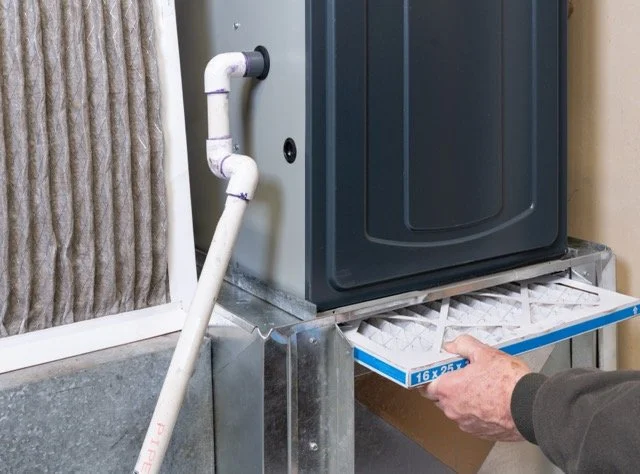
The best way to protect your furnace investment is preventive maintenance. Annual tune-ups catch small problems before they become expensive failures, keep efficiency high, and maintain warranty validity.
The Next Care Plan costs $5 per month ($60 per year) and includes two annual service visits — a fall furnace tune-up before heating season and a spring AC tune-up before cooling season. Members also get priority scheduling, 10% discounts on repairs, and no service call fees.
Consider what that prevents: Furnace repairs in Michigan typically run $1,500 to $4,000 when major components fail. AC compressor replacements cost $1,200 to $3,500. A clogged condensate drain or dirty flame sensor that gets caught during a tune-up might cost $150 to fix, but left unaddressed it can cause a $2,000 control board failure.
Annual maintenance also keeps your system running efficiently. A furnace with a dirty blower motor or restricted airflow can waste $300 to $600 per year in energy costs compared to a properly maintained system.
When you're comparing contractors, ask about their maintenance programs. A contractor who offers affordable preventive maintenance plans is thinking about the long-term relationship, not just the one-time installation sale.
Ready to Schedule Your Furnace Installation?
NEXT Heating & Cooling has been keeping Michigan homes comfortable for over 35 years. Our NATE-certified technicians perform Manual J load calculations, install equipment to manufacturer specifications, and stand behind every installation with comprehensive warranties. No pressure, no upselling — just honest diagnostics and fair pricing.
Get Your Free EstimateFrequently Asked Questions
Visit the Michigan Department of Licensing and Regulatory Affairs (LARA) website and search their license verification database. You can search by company name, individual name, or license number. The search results will show the license status (active, expired, or suspended), issue date, and any disciplinary actions. Any legitimate contractor will provide their license number without hesitation.
AFUE (Annual Fuel Utilization Efficiency) measures how much of your fuel converts to heat. An 80% AFUE furnace converts 80 cents of every dollar spent on natural gas into heat, venting the remaining 20% as exhaust. A 96% AFUE furnace converts 96 cents per dollar into heat. High-efficiency furnaces cost more upfront but save money over time through lower energy bills. In Michigan's long heating season, the efficiency difference can save $300 to $600 per year depending on home size and gas prices.
Yes, get at least three written estimates from licensed contractors. This helps you understand the market rate for your installation and compare what each contractor includes in their scope of work. But don't choose based solely on the lowest price — compare credentials, equipment specifications, warranty terms, and what's actually included in the installation. A quote that's significantly lower than others often means the contractor is cutting corners on equipment quality, installation practices, or necessary work like ductwork modifications.
A straightforward furnace replacement typically takes 6 to 10 hours for a professional crew. This includes removing the old furnace, installing the new equipment, modifying ductwork as needed, connecting gas and electrical lines, testing all safety systems, and cleaning up. More complex installations involving significant ductwork modifications, venting changes, or structural work can take 1 to 2 days. Your contractor should give you a specific timeline during the estimate process.
Not necessarily, but there are situations where it makes sense. If your AC is more than 10 years old or if you're upgrading to a high-efficiency furnace with a variable-speed blower, replacing both at the same time can improve overall system efficiency and performance. The blower motor in your furnace moves air for both heating and cooling, so mismatched equipment can reduce efficiency. Replacing both systems together also saves on labor costs since the contractor is already accessing the same equipment area. If your AC is relatively new and working well, you can usually keep it.
We're authorized dealers for Carrier, Lennox, Trane, Rheem, Bryant, Goodman, Amana, York, and RUUD. This gives you options across all quality and price tiers. We'll recommend the right equipment for your home based on the Manual J load calculation, your budget, and your long-term plans — not based on what earns us the highest margin. Our technicians receive manufacturer-specific training for all brands we install, which ensures proper installation and valid warranty coverage.
Yes, for three important reasons. First, manufacturer warranties often require proof of annual professional maintenance to remain valid. Second, annual tune-ups catch small problems before they become expensive failures — a $150 flame sensor replacement during maintenance prevents a $2,000 control board failure later. Third, proper maintenance keeps your furnace running efficiently, which can save $300 to $600 per year in energy costs. Our Next Care Plan provides annual furnace and AC maintenance for just $5 per month, plus priority scheduling and repair discounts.