

Single Stage vs Two Stage vs Modulating Furnace: Michigan Guide
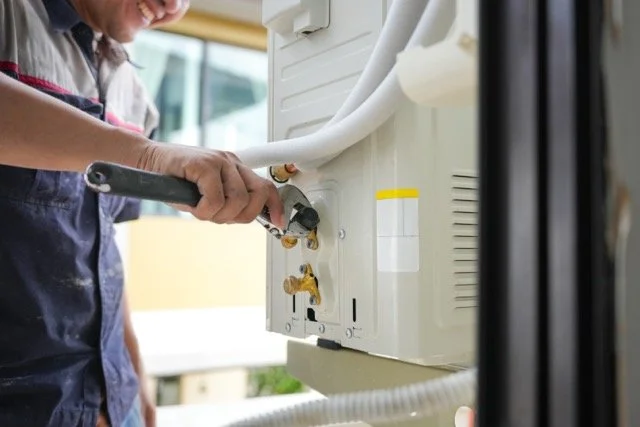
Walk into any basement furnace room in Sterling Heights or Troy, and you'll find one of three types of gas furnaces: single-stage, two-stage, or modulating. The difference between them isn't just technical jargon — it directly affects your comfort during polar vortex events, your monthly DTE Energy bills, and how often your furnace cycles on and off every winter.
After 35 years installing and servicing furnace and AC installation services across Southeast Michigan, we've seen how each furnace type performs in real Michigan homes — from 1960s ranches in Warren with original ductwork to newer construction in Rochester Hills with open floor plans. The right choice depends on your home's construction, your budget, and what you prioritize: lowest upfront cost, maximum efficiency, or the most consistent comfort.
This guide breaks down exactly how single-stage, two-stage, and modulating furnaces work, what they cost in Metro Detroit, and which one makes the most sense for your specific situation. No sales pitch — just the mechanical reality from techs who work on these systems every day.
Why Furnace Staging Matters in Michigan
Furnace staging refers to how many heat output levels your furnace can produce. Think of it like the gas pedal in your car: single-stage is either floor it or off, two-stage gives you highway cruising and full throttle, and modulating is like cruise control that constantly adjusts to maintain exactly the speed you want.
Michigan's heating season runs roughly 180-200 days per year, from October through April. During that time, outdoor temperatures swing from 45°F fall days to -10°F polar vortex nights. Your furnace needs to handle both extremes, but here's the critical part: most of the heating season — about 80% of it — happens when outdoor temperatures are between 20°F and 40°F, not during the coldest weeks.
A furnace sized correctly for your home is designed to keep up during the coldest design day (typically -5°F for Southeast Michigan). That means during the other 80% of winter, when it's 30°F outside, your furnace has way more capacity than needed. How it manages that excess capacity determines your comfort and efficiency.
Michigan Reality: A properly sized 80,000 BTU furnace in a typical 1,800 sq ft home might only need 40,000-50,000 BTU/hour on a 30°F day. Single-stage furnaces blast full heat regardless. Two-stage and modulating furnaces dial down to match the actual need.
How Single-Stage Furnaces Work
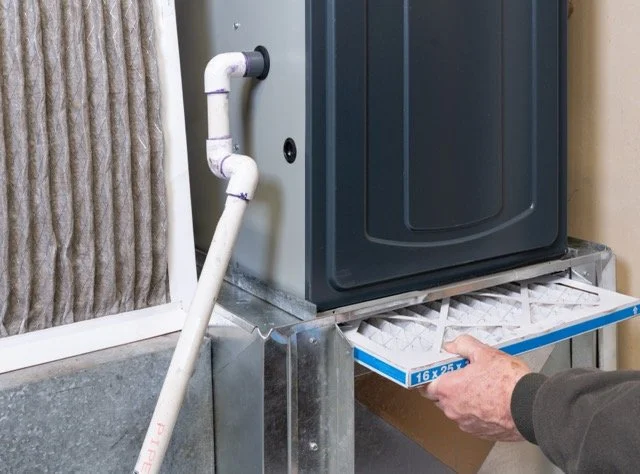
Single-stage furnaces operate at one speed: 100% capacity. When your thermostat calls for heat, the gas valve opens fully, the burners ignite at maximum output, and the blower runs at full speed. When the thermostat is satisfied, everything shuts off. It's binary — on or off, nothing in between.
How Single-Stage Operation Affects Your Home
During mild Michigan weather (35-45°F), your furnace might only need to run for 3-4 minutes to satisfy the thermostat. Then it shuts off. Fifteen minutes later, the temperature drops again, and the cycle repeats. This constant on-off cycling is called short-cycling, and it creates several issues:
- Temperature swings: Your home temperature might vary 3-5°F between cycles, creating hot and cold spots
- Uneven heating: Rooms farthest from the furnace get less heat because the blower shuts off before fully distributing warm air
- Reduced efficiency: Furnaces are least efficient during startup and shutdown — short cycles mean more startups per day
- Increased wear: The igniter, gas valve, and blower motor experience more stress from frequent cycling
- Noise: You hear the furnace fire up and shut down 15-20 times per day instead of 6-8 longer cycles
When Single-Stage Furnaces Make Sense
Single-stage furnaces aren't inherently bad — they're simple, reliable, and cost-effective for specific situations:
- Tight budgets: Single-stage furnaces cost $1,200-$1,800 less than two-stage models for the equipment alone
- Smaller homes: In homes under 1,200 sq ft, the furnace cycles less frequently because the space heats quickly
- Well-insulated newer construction: Homes with good insulation lose heat slowly, reducing cycle frequency
- Rental properties: Landlords prioritizing lowest upfront cost over tenant comfort
- Secondary/vacation homes: Properties occupied part-time where comfort consistency matters less
Common single-stage models we install in Southeast Michigan include the Goodman GMS80, Bryant 315AAV, and Rheem R801. These are workhorse furnaces with AFUE ratings between 80-92%, proven reliable in Michigan winters, and backed by solid manufacturer warranties.
How Two-Stage Furnaces Work
Two-stage furnaces operate at two capacities: low fire (typically 60-70% of max capacity) and high fire (100% capacity). The furnace starts on low fire for mild heating needs and only switches to high fire when outdoor temperatures drop or the thermostat can't be satisfied after a set time period (usually 10 minutes).
The gas valve in a two-stage furnace has two positions instead of one. On low fire, less gas flows to the burners, producing less heat. The blower also runs at a lower speed to match the reduced heat output. This creates longer, gentler heating cycles instead of short, intense blasts.
Two-Stage Performance in Real Michigan Conditions
During most of the heating season (when it's 20-40°F outside), a two-stage furnace runs almost exclusively on low fire. Instead of 4-minute blasts every 15 minutes, you get 15-20 minute cycles every 45-60 minutes. This fundamentally changes how your home feels:
- Temperature stability: Room temperatures stay within 1-2°F of setpoint instead of swinging 3-5°F
- Better air circulation: Longer blower run times mean more consistent air movement and fewer hot/cold spots
- Quieter operation: Low fire produces less combustion noise and lower blower speed means less air rush
- Improved filtration: More air passes through your filter, capturing more dust and allergens
- Higher efficiency: Longer cycles mean the heat exchanger stays warm, reducing startup/shutdown losses
When temperatures drop below 10°F — like during January polar vortex events — the furnace automatically switches to high fire to maintain temperature. You get the capacity you need when you need it, and the efficiency you want the rest of the time.
Two-Stage Efficiency Gains
Two-stage furnaces typically carry AFUE ratings between 95-98%, compared to 80-92% for most single-stage models. That efficiency difference isn't just from the staging — it's because two-stage furnaces almost always use condensing technology (sealed combustion with a secondary heat exchanger that extracts heat from exhaust gases).
For a typical 1,800 sq ft home in Macomb County using 800 therms per heating season, upgrading from an 80% AFUE single-stage to a 96% AFUE two-stage furnace saves roughly 133 therms annually. At current DTE Energy natural gas rates (around $1.10/therm including delivery charges), that's $145-$160 per year in savings.
Real Installation Data: We track energy usage for customers who upgrade from single-stage to two-stage furnaces. Average savings in Southeast Michigan range from $120-$180 per heating season, depending on home size, insulation quality, and thermostat settings.
Popular two-stage models for Michigan homes include the Carrier 59TP6, Lennox SLP98V, Trane S9V2, and Bryant 987M. These furnaces deliver proven performance in cold climates and typically carry 10-year parts warranties with optional extended coverage.
How Modulating Furnaces Work
Modulating furnaces represent the highest tier of residential heating technology. Instead of one or two fixed output levels, modulating furnaces adjust capacity in 1% increments from as low as 35-40% up to 100%. The gas valve and blower motor continuously modulate to match your home's exact heat loss at any given moment.
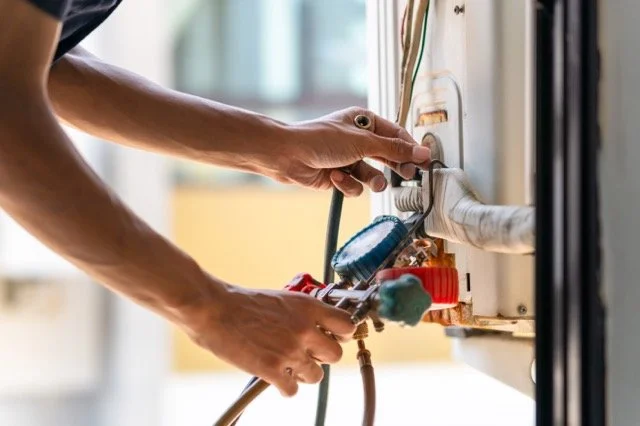
Think of it like a dimmer switch instead of an on-off switch. When your thermostat calls for heat, the furnace starts at minimum capacity and gradually increases output until it finds the exact level needed to maintain setpoint. Once it reaches that balance point, it runs continuously at that capacity rather than cycling on and off.
Modulating Technology Components
Modulating furnaces require more sophisticated components than single-stage or two-stage models:
- Modulating gas valve: Electronically controlled valve that adjusts gas flow in real-time based on heating demand
- Variable-speed ECM blower: Brushless motor that adjusts airflow from 25% to 100% capacity in tiny increments
- Advanced control board: Microprocessor that monitors multiple sensors and adjusts operation hundreds of times per heating cycle
- Outdoor temperature sensor: Measures outdoor temp to anticipate heating needs before indoor temperature drops
- Communicating thermostat: Two-way digital communication between thermostat and furnace (not just on/off signals)
This technology doesn't just improve comfort — it maximizes efficiency by running at the lowest capacity needed to maintain temperature, which is the most efficient operating point for any furnace.
Modulating Performance in Michigan Homes
In a properly configured system, a modulating furnace might run continuously for hours at 40-50% capacity on a 30°F day, rather than cycling on and off. This creates the most stable indoor environment possible:
- Temperature precision: Room temperatures stay within 0.5°F of setpoint — you won't feel temperature swings
- Elimination of cold spots: Continuous air circulation means no temperature stratification or hot/cold zones
- Near-silent operation: Low-speed blower operation is barely audible from most living spaces
- Superior humidity control: Longer run times remove more moisture in summer (with AC) and reduce dry air in winter
- Maximum efficiency: AFUE ratings up to 98-99%, with real-world efficiency often exceeding rated values
Modulating furnaces excel in homes with complex layouts, multiple stories, large square footage, or high-performance building envelopes. They're also ideal for homeowners with respiratory issues, allergies, or anyone who notices temperature inconsistencies in their current system.
When Modulating Furnaces Deliver the Best Value
The premium cost of modulating furnaces (typically $2,500-$3,500 more than single-stage models) makes the most sense in these scenarios:
- Larger homes: 2,500+ sq ft where temperature consistency is harder to maintain
- Open floor plans: Great rooms and vaulted ceilings benefit from continuous air circulation
- Multi-story homes: Modulating furnaces eliminate the "hot upstairs, cold downstairs" problem
- High-efficiency homes: Well-insulated homes with low heat loss run at very low capacities most of the time
- Long-term ownership: Homeowners planning to stay 10+ years recoup the investment through energy savings
- Indoor air quality priorities: Continuous operation provides superior filtration and humidity control
Top modulating furnaces for Michigan include the Carrier Infinity 98, Lennox SLP99V, Trane S9X2, and Bryant 988M. These systems integrate with smart thermostats and zoning systems for maximum control and efficiency.
Real-World Performance in Michigan Winters
Theory is one thing — real performance during Michigan's brutal winters is another. We've monitored furnace performance across hundreds of installations in Macomb, Oakland, and St. Clair counties through multiple polar vortex events, ice storms, and typical winter conditions. Here's what actually happens:
Polar Vortex Performance (-5°F to -15°F)
During extreme cold events, all three furnace types run at 100% capacity continuously. The staging advantage disappears because every BTU of heat output is needed just to maintain indoor temperature. In these conditions, proper sizing matters far more than staging technology.
However, modulating and two-stage furnaces with communicating thermostats often include "smart recovery" algorithms that pre-heat the home before extreme cold arrives, reducing the strain during peak demand hours.
Typical Winter Days (20°F to 35°F)
This is where staging technology shows its value. During typical Michigan winter weather, here's what we observe:
Single-stage furnaces: Cycle 15-25 times per day with 4-8 minute run times. Room temperatures swing 3-5°F. Homeowners report feeling "blasts" of heat followed by cool periods. Thermostats show frequent calls for heat.
Two-stage furnaces: Run on low fire 80-90% of the time with 15-25 minute cycles, switching to high fire only during morning warm-up or when outdoor temps drop. Cycle 6-10 times per day. Room temperatures stay within 2°F of setpoint. Noticeably quieter operation.
Modulating furnaces: Run continuously at 40-60% capacity for hours at a time. Cycle only 2-4 times per day (typically at thermostat setback/setup times). Room temperatures stay within 1°F of setpoint. Many homeowners report they can't tell when the furnace is running.
Shoulder Season Performance (35°F to 50°F)
Late fall and early spring create the biggest comfort challenges. Heat loss is minimal, but you still need heat overnight and on cloudy days. This is where single-stage furnaces struggle most with short-cycling, and where modulating furnaces shine by running at 35-45% capacity for extended periods.
Two-stage furnaces perform well during shoulder seasons by running almost exclusively on low fire, though they still cycle more frequently than modulating systems.
Tech Observation: We get the most "my house is too hot and cold" service calls from homeowners with single-stage furnaces during October, November, March, and April — the shoulder months when staging technology makes the biggest comfort difference.
Ductwork and Home Construction Impact
Furnace staging doesn't operate in a vacuum — your home's ductwork and construction quality dramatically affect performance. We've seen expensive modulating furnaces perform poorly in homes with undersized ducts or massive air leakage, while properly installed two-stage furnaces deliver excellent comfort in well-built homes.
Older Michigan homes (pre-1980) often have ductwork sized for single-stage furnaces and higher airflow. Upgrading to a two-stage or modulating furnace without addressing duct sizing can create airflow problems. Modern high-efficiency furnaces require different duct design than older 80% AFUE models.
If you're considering a furnace installation and repair upgrade, we always perform a Manual D duct calculation to verify your existing ductwork can support the new equipment. Sometimes ductwork modifications cost more than the furnace upgrade itself — but without proper airflow, you won't get the comfort or efficiency you're paying for.
Cost Comparison and Payback Analysis
Equipment costs vary based on brand, efficiency rating, and installation complexity, but here are typical installed prices for furnace replacements in Southeast Michigan as of 2026:
| Furnace Type | AFUE Range | Installed Cost | Annual Operating Cost* |
|---|---|---|---|
| Single-Stage | 80-92% | $3,500-$5,500 | $1,100-$1,300 |
| Two-Stage | 95-98% | $5,200-$7,500 | $900-$1,050 |
| Modulating | 97-99% | $6,500-$9,500 | $850-$1,000 |
*Based on 1,800 sq ft home, 800 therms/year usage, $1.10/therm natural gas rate
Payback Period Calculation
Let's compare the economics of each furnace type for a typical Southeast Michigan home:
Single-Stage (80% AFUE) vs. Two-Stage (96% AFUE):
- Equipment cost difference: $1,700-$2,000
- Annual energy savings: $145-$160
- Simple payback: 11-14 years
- Comfort improvement: Significant
Single-Stage (80% AFUE) vs. Modulating (98% AFUE):
- Equipment cost difference: $3,000-$4,000
- Annual energy savings: $165-$185
- Simple payback: 16-24 years
- Comfort improvement: Substantial
Two-Stage (96% AFUE) vs. Modulating (98% AFUE):
- Equipment cost difference: $1,300-$2,000
- Annual energy savings: $20-$35
- Simple payback: 37-100 years
- Comfort improvement: Moderate
These calculations tell an important story: the jump from single-stage to two-stage delivers meaningful energy savings and substantial comfort improvement. The jump from two-stage to modulating delivers marginal energy savings but maximum comfort — you're paying primarily for comfort, not efficiency.
Total Cost of Ownership Factors
Simple payback doesn't tell the whole story. Consider these factors:
Maintenance costs: Modulating furnaces have more complex components (modulating gas valve, variable-speed blower, advanced control boards) that cost more to repair. Our service data shows modulating furnaces average $50-$80 more per repair visit compared to single-stage models. However, the longer run times and gentler operation often result in fewer repairs over the furnace's lifespan.
Utility rate trends: Natural gas prices fluctuate. If rates increase 20-30% over the next decade (as they did from 2000-2010), high-efficiency furnaces pay back faster. If rates stay flat or decrease, payback periods extend.
Home value impact: High-efficiency HVAC systems add resale value, though the exact amount varies by market. In Oakland County's higher-end markets (Bloomfield Hills, Rochester Hills), buyers expect premium systems. In more budget-conscious areas, the premium may not translate to higher sale prices.
Comfort value: How much is consistent temperature worth to you? If you currently struggle with cold spots, temperature swings, or noisy operation, the comfort improvement from staging technology might justify the cost regardless of energy payback.
For most Michigan homeowners, two-stage furnaces hit the sweet spot: meaningful efficiency gains, substantial comfort improvement, and reasonable payback periods. Modulating furnaces make sense for larger homes, comfort-focused buyers, or those planning long-term ownership.
Which Furnace Type is Right for Your Home
After thousands of furnace installations across Southeast Michigan, we've developed a decision framework based on home characteristics, budget, and priorities. Here's how to choose:
Choose Single-Stage If:
- Your home is under 1,400 sq ft with good insulation
- Budget is the primary constraint and you need reliable heat at the lowest upfront cost
- You're in a rental property or plan to move within 3-5 years
- Your home has a simple floor plan without temperature consistency issues
- You're replacing a failed furnace in an emergency and can't afford premium equipment
Best single-stage options for Michigan: Goodman GMS80 (80% AFUE, budget-friendly), Bryant 315AAV (90% AFUE, mid-tier), Rheem R801 (80% AFUE, reliable workhorse)
Choose Two-Stage If:
- Your home is 1,400-3,000 sq ft with typical insulation levels
- You want the best balance of comfort, efficiency, and cost
- You notice temperature swings or hot/cold spots with your current furnace
- You plan to stay in your home 7+ years to recoup the investment
- You want quieter operation without paying for top-tier modulating technology
- Your ductwork is in decent shape and properly sized
Best two-stage options for Michigan: Carrier 59TP6 (96% AFUE, excellent reliability), Lennox SLP98V (98% AFUE, premium features), Trane S9V2 (97% AFUE, proven cold-climate performance)
Choose Modulating If:
- Your home is 2,500+ sq ft or has complex layout/multiple stories
- You prioritize comfort over cost and want the best possible performance
- You have respiratory issues, allergies, or sensitivity to temperature changes
- You're building a high-performance home with excellent insulation
- You want to integrate with zoning systems or advanced smart home controls
- You plan long-term ownership (10+ years) to justify the premium cost
Best modulating options for Michigan: Carrier Infinity 98 (98% AFUE, industry-leading controls), Lennox SLP99V (99% AFUE, top efficiency), Trane S9X2 (98% AFUE, exceptional reliability)

Special Considerations for Michigan Homes
Older homes with original ductwork: Many homes built before 1980 have ductwork sized for 80% AFUE furnaces with higher airflow requirements. Upgrading to a 96%+ two-stage or modulating furnace often requires duct modifications to handle the lower airflow rates. Budget an extra $800-$2,500 for ductwork upgrades if your home falls into this category.
Homes with poor insulation: If your home loses heat rapidly due to inadequate insulation or air leakage, even the best furnace will struggle. Consider an energy audit before investing in premium HVAC equipment. Sometimes $3,000 spent on attic insulation delivers better comfort and efficiency than $3,000 spent upgrading from two-stage to modulating.
Homes with existing zoning systems: If you already have a zoning system with multiple thermostats, modulating furnaces integrate beautifully and deliver superior zone-to-zone comfort. Two-stage furnaces work with zoning but don't provide the same level of control.
Homes with heat pumps: If you're considering a dual-fuel system (heat pump with gas furnace backup), the furnace staging becomes less critical because the heat pump handles most mild-weather heating. In this scenario, a single-stage backup furnace often makes economic sense.
The NEXT Heating & Cooling Approach
As a licensed and insured HVAC contractor serving Metro Detroit for over 35 years, we don't push the most expensive equipment on every customer. Our techs perform a detailed assessment of your home, ductwork, insulation, and heating needs before recommending equipment.
We provide three options at every estimate: a budget-friendly solution that meets code and delivers reliable heat, a mid-tier option that balances cost and performance, and a premium option for maximum comfort and efficiency. You choose based on your priorities and budget — no pressure, no commission-based sales.
Every furnace installation includes Manual J load calculation (proper sizing), Manual D duct analysis (airflow verification), and combustion safety testing. We also offer the Next Care Plan — our $5/month preventative maintenance subscription that includes annual furnace tune-ups to keep your new system running efficiently for years.
Need Help Choosing the Right Furnace?
NEXT Heating & Cooling has installed thousands of furnaces across Southeast Michigan. Our NATE-certified technicians will assess your home, explain your options, and provide honest recommendations based on your specific needs — not what earns us the highest commission.
Schedule Your Free EstimateFrequently Asked Questions
Single-stage furnaces operate at one speed — 100% capacity — and cycle on and off throughout the day. Two-stage furnaces have two output levels: low fire (60-70% capacity) for mild weather and high fire (100% capacity) for cold days. Two-stage furnaces run longer cycles at lower capacity, creating more consistent temperatures, quieter operation, and better efficiency. During most of Michigan's heating season, two-stage furnaces run on low fire 80-90% of the time.
Modulating furnaces cost $2,500-$3,500 more than single-stage models but deliver the most consistent comfort available. They adjust capacity in 1% increments from 35-100%, running continuously at the exact output needed to maintain temperature. The energy savings over two-stage furnaces are modest ($20-$35/year), so you're primarily paying for superior comfort, not efficiency. They make the most sense in larger homes (2,500+ sq ft), homes with complex layouts, or for homeowners who prioritize comfort and plan long-term ownership (10+ years).
Upgrading from an 80% AFUE single-stage furnace to a 96% AFUE two-stage furnace typically saves $145-$160 per year in a typical 1,800 sq ft Southeast Michigan home using 800 therms annually. The exact savings depend on your home's insulation, thermostat settings, and natural gas rates. With current DTE Energy rates around $1.10/therm, the energy savings alone provide a payback period of 11-14 years. Factor in the comfort improvement and reduced maintenance from fewer heating cycles, and the value proposition improves significantly.
Maybe. High-efficiency two-stage and modulating furnaces operate at lower airflow rates than older 80% AFUE single-stage furnaces. Homes built before 1980 often have ductwork sized for higher airflow, which can create problems with newer equipment. A proper Manual D duct calculation determines if your existing ductwork is compatible. In some cases, duct modifications cost $800-$2,500 to optimize airflow for high-efficiency equipment. We always evaluate ductwork before recommending a furnace upgrade to ensure you get the comfort and efficiency you're paying for.
Two-stage and modulating furnaces require the same annual maintenance as single-stage models — filter changes, burner inspection, heat exchanger examination, and combustion testing. However, they have more complex components (modulating gas valves, variable-speed blowers, advanced control boards) that can cost more to repair if they fail. The good news: longer run times and gentler operation often result in less wear on components. Our service data shows that properly maintained two-stage and modulating furnaces don't break down more frequently than single-stage models — repairs just cost more when they do occur. The $5/month Next Care Plan includes annual tune-ups that catch problems early and extend equipment life.
For Michigan's cold climate, we recommend brands with proven cold-weather performance and strong local service support. Top choices include Carrier (excellent reliability and advanced controls), Lennox (industry-leading efficiency ratings), Trane (exceptional build quality and longevity), Bryant (Carrier's sister brand with similar performance at lower cost), and Rheem (solid mid-tier option). We avoid brands with limited parts availability or weak warranty support. As a NATE-certified HVAC contractor with manufacturer partnerships, we stock parts for all major brands and can service any equipment we install. The best brand is the one properly sized and installed for your specific home — equipment quality matters less than installation quality.
With proper maintenance, two-stage and modulating furnaces typically last 15-20 years in Michigan — similar to single-stage models. The heat exchanger (the most critical component) usually lasts the longest and carries a 10-20 year warranty depending on the brand. Electronic components like control boards and gas valves may need replacement after 10-15 years. The key to longevity is annual professional maintenance, regular filter changes, and addressing minor issues before they become major failures. We've seen well-maintained Carrier and Trane furnaces run 20+ years in Southeast Michigan, while neglected equipment fails after 10-12 years regardless of quality.