

Smart Thermostat + AC: Real Energy Savings in Auburn Hills
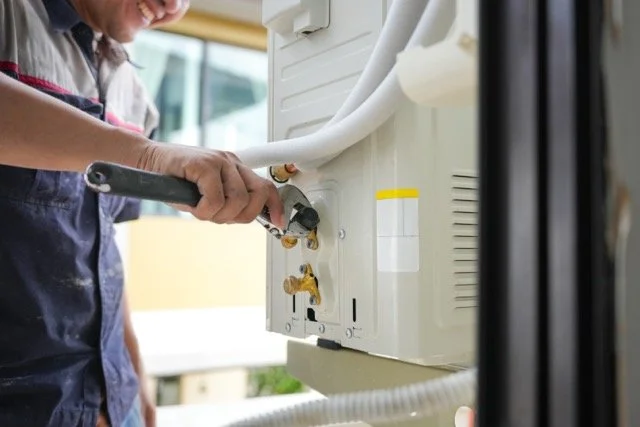
Auburn Hills homeowners ask us every cooling season: "Will a smart thermostat actually save me money, or is it just another gadget?" After 35 years installing and servicing HVAC systems across Southeast Michigan, we have the data. When paired with a properly functioning AC system, smart thermostats deliver measurable energy savings—typically 15-23% on cooling costs for Michigan homes.
That is not marketing hype. That is what we see on utility bills when homeowners upgrade from basic programmable thermostats to modern smart controls. But here is what the manufacturers do not tell you: a smart thermostat will not fix an undersized AC, leaking ductwork, or a compressor running low on refrigerant. The technology works, but only when your cooling system is mechanically sound.
This guide breaks down exactly how smart thermostats reduce energy waste in Michigan's humid summers, what Auburn Hills homeowners actually save, and when you need AC repair or installation services before upgrading your controls.
Why Smart Thermostats Actually Matter for Michigan AC Systems
Old programmable thermostats follow a rigid schedule. You set cooling times manually—say, 74°F from 6 PM to 10 PM—and the AC runs whether you are home or not. That worked fine in 1995, but it wastes energy every time your schedule changes.
Smart thermostats learn your patterns and adjust automatically. If you leave for work at 8:30 AM instead of 8:00 AM, the system adapts. If you come home early on a Friday, geofencing detects your phone location and starts cooling before you arrive. This dynamic scheduling matters in Michigan because our summer weather swings wildly. A 78°F day with 45% humidity feels comfortable. An 82°F day with 70% humidity feels miserable. Smart thermostats monitor both temperature and humidity, adjusting compressor runtime to maintain actual comfort rather than just hitting a temperature setpoint.
Here is the mechanical advantage: most modern AC systems—Carrier, Lennox, Trane, Bryant—use variable-speed or two-stage compressors that run more efficiently at lower speeds. Smart thermostats communicate directly with these systems through proprietary protocols, optimizing staging decisions based on real-time conditions. A basic programmable thermostat just tells the AC "turn on" or "turn off." A smart thermostat says "run at 60% capacity for 40 minutes, then drop to 40% for humidity control."
That granular control reduces energy waste. Compressors consume the most power during startup. By running longer at lower speeds instead of short-cycling at full blast, smart thermostats cut electricity use while improving dehumidification—critical for Michigan's humid summers.
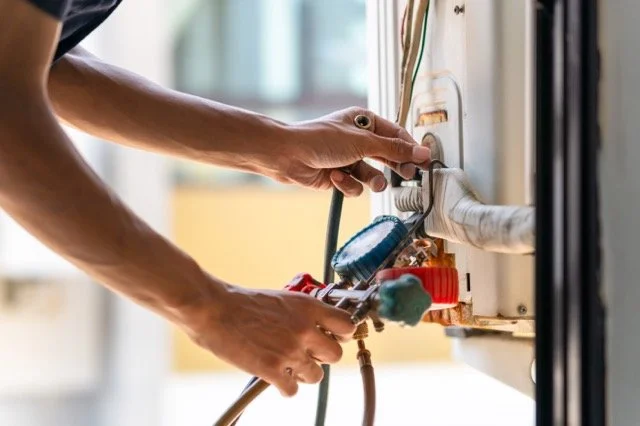
The Real Numbers: What Auburn Hills Homeowners Actually Save
Energy Star estimates smart thermostats save 15-23% on cooling costs when properly configured. For an average Auburn Hills home (1,800-2,200 square feet) with a $150-$200 monthly summer electric bill, that translates to $180-$320 in annual savings. Over a typical 10-year thermostat lifespan, you are looking at $1,800-$3,200 in avoided costs.
Those numbers assume a few things are true:
- Your AC system is properly sized. An oversized unit short-cycles regardless of thermostat intelligence. An undersized system runs constantly, and no thermostat can fix that.
- Your ductwork is sealed. If you are losing 20-30% of cooled air through leaky ducts in the attic or crawlspace, a smart thermostat just means you are efficiently cooling your attic instead of your living room.
- Your home has decent insulation. If your 1970s ranch has R-11 attic insulation and single-pane windows, the AC fights heat gain all day. A smart thermostat helps, but you are still running the system harder than a well-insulated home.
- You actually use the smart features. If you override the thermostat constantly or never set up geofencing, you are back to manual control—no better than a programmable model.
We installed an Ecobee SmartThermostat Premium in a 2,100-square-foot colonial in Rochester Hills last June. The homeowner had a 2019 Carrier Infinity two-stage AC with good ductwork and R-38 attic insulation. After one summer, his cooling costs dropped from $612 (June-August 2025) to $487 (June-August 2026)—a 20.4% reduction. That is $125 saved in one season, and the thermostat paid for itself in under two years.
Compare that to a Troy homeowner with a 2002 single-stage Goodman AC, leaky ducts, and no programmable schedule. We installed the same Ecobee thermostat. His savings were 8%, about $65 for the summer. Better than nothing, but the ductwork leaks and aging compressor limited the thermostat's impact. He needed ductwork sealing and AC replacement to see the full benefit.
Bottom line: Smart thermostats deliver the best ROI when paired with efficient equipment and a well-sealed home. If your AC is more than 12 years old or your energy bills seem high despite moderate use, schedule a system evaluation before investing in controls. A licensed HVAC contractor can identify whether your AC, ductwork, or insulation is the limiting factor.
How Smart Thermostats Work With Your AC System
Smart thermostats use multiple data inputs to optimize cooling:
Occupancy Detection: Built-in motion sensors and remote sensors detect when rooms are occupied. If the upstairs bedrooms are empty during the day, the system prioritizes cooling the main floor. This zoning logic reduces runtime and energy waste.
Geofencing: The thermostat app tracks your phone's GPS location. When you leave a defined perimeter (say, 5 miles from home), it switches to away mode and raises the cooling setpoint. When you return, it resumes your preferred temperature. This prevents cooling an empty house all day—common with fixed schedules.
Weather Integration: Smart thermostats pull real-time weather data from the National Weather Service. If the forecast shows a cold front arriving at 3 PM, the system may pre-cool the house at noon while outdoor temperatures are lower, reducing compressor strain during peak heat.
Humidity Sensing: Michigan summers hit 70-80% outdoor humidity regularly. Smart thermostats monitor indoor humidity and can extend compressor runtime slightly to dehumidify without overcooling. This is critical for comfort—68°F at 60% humidity feels better than 66°F at 70% humidity.
Adaptive Learning: Over 2-4 weeks, the thermostat learns how long your home takes to cool down (thermal mass), how outdoor temperature affects indoor comfort, and your preferred settings. It adjusts preemptively, starting the AC 20 minutes before you typically arrive home rather than waiting for you to manually turn it on.
Equipment Communication: High-end models from Ecobee, Nest, and Honeywell communicate directly with variable-speed and two-stage systems from Carrier, Lennox, Trane, and Bryant. This allows precise staging control—running the compressor at 60% capacity instead of cycling between 0% and 100%. Single-stage systems still benefit from smart scheduling and geofencing, but they cannot take advantage of variable-speed optimization.
Best Smart Thermostats for Michigan Homes in 2026
We install dozens of smart thermostats every summer across Macomb, Oakland, and St. Clair counties. Here is what works best for Michigan homes:
Ecobee SmartThermostat Premium
Best overall for Michigan homes with multi-level layouts. Comes with a remote sensor (supports up to 32 additional sensors). Excellent humidity control and compatibility with most Carrier, Lennox, Trane, Rheem, and Bryant systems. Built-in air quality monitor tracks VOCs and CO2. Works with Alexa, Google Assistant, Apple HomeKit, and SmartThings. Requires a C-wire (common wire), which most furnaces installed after 2000 have.
Why it works in Michigan: The remote sensors solve hot-and-cold-spot problems common in two-story colonials and split-level ranches. Place one sensor upstairs, one downstairs, and the thermostat averages the readings for balanced cooling.
Google Nest Learning Thermostat (4th Gen)
Best for hands-off homeowners who want the system to learn their schedule automatically. Sleek design, intuitive app, and strong energy-saving algorithms. Works with most systems, though advanced features require compatible equipment. Also requires a C-wire or Nest Power Connector adapter.
Why it works in Michigan: The auto-schedule feature adapts quickly to Michigan's unpredictable spring and fall weather. If you manually adjust the temperature a few times, Nest learns the pattern and builds a new schedule.
Honeywell Home T9 Smart Thermostat
Best budget option with remote sensor support. Includes one remote sensor, supports up to 20 total. Works with most HVAC systems including older single-stage units. Simple setup, reliable performance, and good geofencing accuracy. Compatible with Alexa, Google Assistant, and Apple HomeKit.
Why it works in Michigan: The T9 handles humidity well and costs $50-$80 less than Ecobee or Nest. If you have a straightforward single-stage AC and just want smart scheduling and geofencing, this delivers solid value.
What About Cheaper Models?
Basic Wi-Fi thermostats from brands like Emerson Sensi or Lux Kono cost $80-$120 and offer app control and scheduling. They work fine for simple systems, but they lack remote sensors, advanced humidity control, and equipment communication features. You will save some money over a programmable thermostat, but not as much as the premium models.
If you are investing in a new Carrier Infinity, Lennox iComfort, or Trane ComfortLink system, use the manufacturer's proprietary thermostat. These communicate directly with the equipment for maximum efficiency and warranty compliance. Third-party thermostats work, but you lose some optimization features.
When a Smart Thermostat Won't Fix Your AC Problems
We get calls every June from homeowners who installed a smart thermostat and still have comfort problems. The thermostat is not the issue—the AC system is. Here is when a smart thermostat will not help:
Your AC is undersized. If your 2,200-square-foot home has a 2-ton AC when it needs 3 tons, the system runs constantly on hot days. A smart thermostat cannot create cooling capacity that does not exist. You need a proper load calculation and correctly sized equipment. This is common in older homes where AC was added after construction without engineering the ductwork and tonnage properly.
Your ductwork leaks. If 25% of your cooled air escapes through gaps in attic ducts, the AC runs longer to compensate. A smart thermostat just means you are efficiently wasting energy. Duct sealing (using mastic, not tape) fixes this. We find significant leaks in about 60% of homes built before 1990.
Your refrigerant is low. If your AC has a slow refrigerant leak, the compressor runs but does not cool effectively. The smart thermostat sees the house is not reaching setpoint and keeps the system running, wasting electricity and potentially damaging the compressor. You need refrigerant leak detection and repair, not better controls.
Your compressor is failing. If your AC compressor is on its last legs—common after 15+ years—it struggles to maintain pressure and cooling capacity. A smart thermostat cannot fix mechanical failure. At that point, you are looking at AC replacement, not a thermostat upgrade.
Your air filter is clogged. Sounds basic, but a dirty filter restricts airflow, reducing cooling capacity by 10-15%. The AC runs longer, energy costs rise, and the thermostat cannot compensate. Check your filter monthly during cooling season. If you have pets or live near construction, check it every two weeks.
Signs you need AC service before upgrading your thermostat: Uneven cooling between rooms, AC running constantly without reaching setpoint, ice forming on the indoor coil or refrigerant lines, unusual noises (grinding, squealing, hissing), or electric bills 30%+ higher than last summer. Schedule a diagnostic with a NATE-certified HVAC technician to identify the root cause.
If you are not sure whether your AC is functioning properly, our Next Care Plan includes a spring AC tune-up where we check refrigerant levels, test compressor performance, inspect ductwork, and measure airflow. That $60/year investment catches problems before they turn into expensive repairs—and helps you decide whether a smart thermostat makes sense for your system.
Installation: What to Expect in Auburn Hills
Most smart thermostats install in 30-60 minutes if your system has a C-wire. The C-wire (common wire) provides continuous 24-volt power to the thermostat. Furnaces and air handlers installed after 2000 usually have one, though it may not be connected at the thermostat.
DIY Installation: If you are comfortable with basic wiring and your system has a C-wire, DIY installation is straightforward. Turn off power at the breaker, remove the old thermostat, label the wires, connect them to the new thermostat following the manufacturer's diagram, and power it back on. Most smart thermostats include step-by-step video guides in the app.
When to Hire a Pro: If your furnace or air handler does not have a C-wire, you need an adapter or new wire run. Some thermostats (like Nest) include a power adapter that taps into the furnace control board. Others require running a new wire from the furnace to the thermostat—a job best left to a licensed technician. Incorrectly wiring a thermostat can damage your furnace control board (a $300-$600 repair) or cause short-cycling that wears out your compressor.
We also recommend professional installation if you are upgrading to a system with remote sensors or integrating with a zoning system. Proper sensor placement matters—putting a sensor in direct sunlight or near a drafty window skews the readings and reduces efficiency.
Cost: Professional smart thermostat installation in Auburn Hills typically runs $150-$250 for a straightforward swap on a system with a C-wire. If we need to run a new wire or install a power adapter, add $75-$150. If you are replacing an old mercury thermostat (common in homes built before 1990), we may need to upgrade the wiring entirely, which runs $200-$350 depending on accessibility.
We often bundle thermostat installation with seasonal AC tune-ups. That way, we verify the system is running efficiently before adding smart controls, and you get a complete picture of your cooling performance.
Maintenance: Keeping Your Smart AC System Running Efficiently
A smart thermostat reduces energy waste, but it does not eliminate the need for regular AC maintenance. In fact, smart thermostats make maintenance more important because they expose inefficiencies you might not notice otherwise.
If your Ecobee app shows your AC ran 9 hours yesterday to maintain 72°F, but it only ran 6 hours on a similar day last year, something changed. Maybe the outdoor coil is clogged with cottonwood seeds (common in Southeast Michigan in late May). Maybe refrigerant is leaking. Maybe the blower motor bearings are wearing out and airflow dropped 15%. A smart thermostat gives you data to catch these problems early.
Here is the maintenance schedule we recommend for Auburn Hills homeowners with smart thermostats:
Monthly (During Cooling Season):
- Check and replace air filter if dirty (every 30-60 days depending on usage and pets)
- Review energy reports in the thermostat app—look for unusual spikes in runtime
- Clear debris from outdoor condenser unit (leaves, grass clippings, cottonwood seeds)
Spring (Before Cooling Season):
- Schedule professional AC tune-up—coil cleaning, refrigerant check, electrical connections, airflow measurement
- Test thermostat sensors and recalibrate if needed
- Update thermostat firmware (most smart thermostats auto-update, but verify)
- Review and adjust cooling schedules based on last summer's data
Fall (After Cooling Season):
- Switch thermostat to heating mode and verify furnace integration
- Clean remote sensors (dust buildup affects accuracy)
- Review summer energy reports and identify any anomalies
Our Next Care Plan covers most of this. For $5/month, you get two annual home visits—spring AC tune-up and fall furnace tune-up—plus priority scheduling, 10% repair discounts, and no service call fees. We also review your smart thermostat data during tune-ups and recommend adjustments to maximize savings.
One Sterling Heights homeowner on the Next Care Plan had an Ecobee thermostat showing his AC runtime increased 18% in July 2025 compared to July 2024, despite similar weather. During his tune-up, we found his outdoor coil was 40% blocked with cottonwood debris and the blower motor capacitor was weak. We cleaned the coil, replaced the capacitor ($180 repair), and his runtime dropped back to normal. Without the smart thermostat data, he would not have noticed the problem until the capacitor failed completely—a $400-$600 emergency repair.
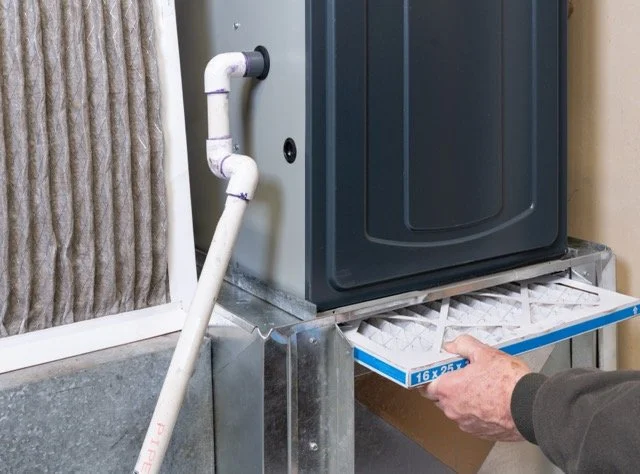
Ready to Upgrade Your AC System?
NEXT Heating & Cooling has been keeping Auburn Hills and Southeast Michigan homes comfortable for over 35 years. Our NATE-certified technicians provide honest diagnostics, fair pricing, and expert installation of smart thermostats and high-efficiency AC systems. No commission-based sales—just straight answers.
Schedule Your ServiceFrequently Asked Questions
Yes, smart thermostats work with most AC systems installed after 1990, including single-stage, two-stage, and variable-speed units. The main requirement is a C-wire (common wire) for continuous power. If your system lacks a C-wire, most smart thermostats include a power adapter or you can have a technician run a new wire. Older systems benefit from smart scheduling and geofencing, though they cannot take advantage of advanced staging features available on newer variable-speed equipment.
Smart thermostat installation in Auburn Hills typically costs $250-$450 total, including the device and labor. The thermostat itself runs $120-$280 depending on the model (Honeywell T9, Google Nest, or Ecobee Premium). Professional installation adds $150-$250 if your system has a C-wire. If we need to run a new wire or install a power adapter, add $75-$150. Most installations take 30-60 minutes. We often bundle installation with seasonal AC tune-ups for better value.
Yes, when properly configured with a functioning AC system. Energy Star estimates 15-23% savings on cooling costs. For an average Auburn Hills home with a $150-$200 summer electric bill, that is $180-$320 saved annually. The actual savings depend on your home's insulation, ductwork condition, AC efficiency, and how you use the smart features. Homes with leaky ductwork, undersized AC units, or poor insulation see smaller savings. The thermostat optimizes what you have—it cannot fix mechanical problems.
The Ecobee SmartThermostat Premium offers the best humidity control for Michigan homes. It monitors indoor humidity and can extend compressor runtime slightly to dehumidify without overcooling—critical during Michigan's humid summers. The Google Nest Learning Thermostat also handles humidity well, though it lacks the built-in air quality monitoring that Ecobee includes. Both work with variable-speed and two-stage systems to optimize dehumidification. Proper AC sizing and ductwork sealing matter more than thermostat choice—an oversized AC short-cycles and cannot dehumidify effectively regardless of controls.
DIY installation is possible if your system has a C-wire and you are comfortable with basic electrical work. Turn off power at the breaker, label the existing wires, connect them to the new thermostat following the manufacturer's diagram, and power it back on. Most smart thermostats include video guides. However, if your system lacks a C-wire, has complex zoning, or you are unsure about the wiring, hire a licensed HVAC technician. Incorrect wiring can damage your furnace control board ($300-$600 repair) or cause equipment problems. Professional installation costs $150-$250 and includes verification that the system communicates properly with the thermostat.
Smart thermostats require power to operate, so they do not function during outages. However, most retain their programmed settings and reconnect automatically when power returns. Your AC system will not run during an outage regardless of thermostat type—the compressor and blower both need electricity. If you have a backup generator, the thermostat will resume normal operation once the generator powers the HVAC system. Some models (like Ecobee) have battery backup for the display, but the AC still will not run without power to the outdoor unit and indoor blower.
Annual AC tune-ups remain essential even with a smart thermostat. Schedule service every spring before cooling season—typically April or early May in Southeast Michigan. A tune-up includes coil cleaning, refrigerant level check, electrical connection inspection, airflow measurement, and filter replacement. Smart thermostats help you catch problems early by tracking runtime and efficiency trends, but they do not eliminate the need for physical maintenance. Our Next Care Plan includes spring AC and fall furnace tune-ups for $60/year, plus priority scheduling and 10% repair discounts.