

Troy AC Repair: Why Your AC Is Not Cooling Evenly
You set the thermostat to 72 degrees. The living room feels comfortable. But walk upstairs to the bedrooms, and it's 78 degrees — hot, humid, and impossible to sleep in. Meanwhile, the basement is freezing.
This isn't normal. And it's not something you fix by constantly adjusting the thermostat or closing registers in cold rooms.
After three decades providing heating and cooling services in Metro Detroit, we've diagnosed this exact problem in hundreds of Troy homes. The causes are specific, the solutions are measurable, and ignoring the problem costs you money every month in wasted energy.
Here's what's actually happening when your air conditioner runs constantly but can't cool your home evenly — and what it takes to fix it.
Why Uneven Cooling Happens: The Building Science
Uneven cooling isn't a single problem. It's a symptom of one or more system failures. Here are the four most common causes we find during Troy AC repair calls:
Refrigerant Charge Issues
Your air conditioner doesn't "use up" refrigerant. It's a closed-loop system. If refrigerant levels are low, there's a leak somewhere — in the evaporator coil, condenser coil, line set, or service valves.
Low refrigerant reduces cooling capacity. The system runs longer to reach setpoint, but it never delivers enough BTUs to cool the entire house. Rooms farthest from the air handler — typically upstairs bedrooms in a two-story Troy home — stay warm because the system can't overcome heat gain.
Overcharged systems cause different problems: short cycling, high humidity, and ice formation on the evaporator coil. Both conditions prevent even cooling.
Proper refrigerant charge requires measuring superheat and subcooling against manufacturer specifications. This isn't something you eyeball. It requires manifold gauges, accurate outdoor temperature readings, and knowledge of the specific refrigerant type — R-410A in most systems installed after 2010, R-22 in older equipment.
Airflow Restrictions
Your AC system moves a specific volume of air — measured in cubic feet per minute (CFM) — across the evaporator coil. Carrier, Lennox, Trane, and Bryant systems typically require 400 CFM per ton of cooling capacity. A 3-ton system needs 1,200 CFM.
Anything that restricts airflow reduces cooling performance:
- Clogged air filters: A dirty 1-inch filter can cut airflow by 30-50%. We've pulled filters in Troy homes that haven't been changed in over a year — completely blocked with dust, pet hair, and pollen.
- Dirty evaporator coils: The indoor coil collects dust over time, especially if the filter isn't changed regularly. A coated coil can't transfer heat effectively.
- Undersized return ducts: Many older Troy homes have a single return register. The system starves for air, can't move enough CFM, and struggles to cool distant rooms.
- Closed or blocked registers: Homeowners close registers in unused rooms thinking they'll save energy. This increases static pressure, reduces total airflow, and makes the system work harder.
Reduced airflow also causes the evaporator coil to freeze. Ice blocks airflow completely. The system runs, but no cooling happens. We see this frequently in July and August when Troy homeowners run the AC constantly without changing filters.

Ductwork Design Problems
Ductwork is the delivery system. The air handler produces cold air, but if the ducts can't distribute it evenly, some rooms stay warm.
Common ductwork problems in Troy homes:
- Leaky duct joints: Basement and attic duct runs develop gaps at joints and seams. Conditioned air leaks into unconditioned spaces before reaching the rooms you're trying to cool. The Department of Energy estimates that 20-30% of air moving through duct systems is lost to leaks.
- Disconnected ducts: We've found completely disconnected flex ducts in attics — the register boot separated from the trunk line. The room gets zero airflow.
- Undersized branch ducts: Additions and finished basements often have undersized ducts feeding new rooms. A 6-inch round duct can't deliver enough CFM for a 200-square-foot bedroom.
- Poor trunk line design: Some duct systems use undersized main trunks that can't carry enough air to distant branches. This is common in ranch-style homes where all ducts run from a central furnace room.
Ductwork problems compound in summer. Attic temperatures in Michigan hit 130-140°F on sunny days. Ducts running through that space gain heat. Cold air traveling through a hot attic warms up before it reaches upstairs bedrooms. You're fighting heat gain in the duct itself.
System Sizing Mismatches
An oversized air conditioner short-cycles. It cools the area near the thermostat quickly, shuts off, and never runs long enough to distribute cold air to distant rooms. The house feels humid because short cycles don't remove moisture effectively.
An undersized system runs constantly but can't overcome heat gain on hot days. It might cool the house adequately in May and September, but fails in July and August when outdoor temperatures hit 90°F and indoor heat load peaks.
Proper sizing requires a Manual J load calculation — a room-by-room analysis that accounts for square footage, insulation levels, window area, orientation, occupancy, and local climate data. This is not the same as the "one ton per 500 square feet" rule some contractors use. That's a guess, and it's often wrong.
The Ductwork Problem in Older Troy Homes
Troy has a mix of housing stock — 1960s ranches, 1980s colonials, and newer construction. Each era has specific ductwork challenges.
1960s and 1970s Ranch Homes
These homes typically have ductwork in the basement or crawlspace. Common problems:
- Single return register: One central return, usually in a hallway. Bedrooms on opposite ends of the house don't get adequate airflow because there's no return path. Air can't circulate.
- Asbestos-wrapped ducts: Original duct insulation often contains asbestos. Sealing or modifying these ducts requires certified abatement. Many homeowners avoid the cost and live with inefficient ductwork.
- Undersized trunk lines: Original systems were smaller — 2 or 2.5 tons. Homeowners upgraded to 3 or 4-ton systems over the years, but the ductwork stayed the same. The larger system can't push enough air through the old ducts.
1980s and 1990s Two-Story Colonials
These homes have ductwork running through interior walls and attic spaces. Common issues:
- Attic duct runs: Flex ducts in unconditioned attics. Heat gain in summer, heat loss in winter. Poor insulation around the ducts makes the problem worse.
- Long duct runs to far bedrooms: The master bedroom is often at the opposite end of the house from the air handler. The duct run is 40-50 feet with multiple bends. Static pressure increases, airflow decreases.
- Inadequate return air: Upstairs bedrooms share a single return, usually in the hallway. Close the bedroom doors, and airflow stops. The room pressurizes, and the AC can't pull warm air out.
Finished Basements and Additions
Room additions and basement finishing projects often add cooling load without upgrading the duct system. A contractor taps into an existing trunk line, adds a register, and calls it done. The new space gets minimal airflow because the system wasn't designed for the additional load.
This is where a professional duct design matters. Adding rooms requires calculating the new load, verifying the existing system has capacity, and sizing branch ducts correctly. Skipping this step guarantees uneven cooling.
Air Conditioning Load Calculation Basics
Manual J load calculations determine how many BTUs of cooling your home needs. This isn't guesswork. It's engineering.
The calculation accounts for:
- Square footage: Total conditioned space, measured room by room.
- Insulation levels: Attic insulation (R-value), wall insulation, basement or crawlspace insulation. Michigan energy code requires R-49 to R-60 in attics for new construction. Older homes often have R-19 or less.
- Window area and orientation: South and west-facing windows gain the most heat. Low-E windows reduce gain. Single-pane windows in older homes increase load significantly.
- Air infiltration: How much outdoor air leaks into the house through gaps, cracks, and poorly sealed penetrations. Older homes leak more air.
- Internal heat gain: Occupants, lighting, appliances. A home office with multiple computers adds heat load.
- Local climate: Design temperatures for Troy, Michigan. We use 91°F as the summer design temperature — the outdoor temperature the system must handle on the hottest days.
A proper load calculation might show that your 2,200-square-foot colonial needs 32,000 BTUs of cooling — roughly a 2.5-ton system. But if the existing system is 4 tons, it's oversized by 60%. That system will short-cycle, fail to dehumidify, and create uneven temperatures.
Conversely, if the calculation shows you need 42,000 BTUs (3.5 tons) but you have a 2.5-ton system, it will run constantly on hot days and never cool the upstairs.
We run Manual J calculations before recommending any system replacement. It's part of our diagnostic process, and it's how we size equipment correctly. This is standard practice for NATE-certified HVAC technicians, but not all contractors do it.
Signs Your AC System Needs Professional Diagnosis
Some homeowners live with uneven cooling for years, thinking it's normal. It's not. Here are the signs that indicate a system problem requiring professional Troy AC repair:
Temperature Differentials Between Rooms
Measure the temperature in each room with a reliable thermometer. If the difference between the coolest and warmest rooms exceeds 3-4 degrees, you have a distribution problem.
Example: Thermostat reads 72°F. Living room is 71°F. Master bedroom is 77°F. That's a 6-degree difference. The system isn't distributing air evenly.
Constant Thermostat Adjustments
If you're constantly changing the thermostat setting to balance comfort between rooms, the system isn't working correctly. Lowering the setpoint to cool warm rooms just overcools cold rooms. You're treating the symptom, not the cause.
High Humidity Despite AC Running
Air conditioners remove moisture as they cool. If indoor humidity stays above 55-60% while the system runs, it's short-cycling or undersized. High humidity makes the air feel warmer than it is, and it promotes mold growth.
Michigan summers are humid. Outdoor dew points regularly hit 65-70°F in July and August. Your AC should keep indoor humidity between 40-50%. If it doesn't, something's wrong.
Short Cycling Patterns
The system turns on, runs for 5-7 minutes, shuts off, then repeats the cycle 15 minutes later. This is short cycling. It indicates an oversized system, a refrigerant problem, or a failing component like a pressure switch or control board.
Short cycling prevents even cooling because the system never runs long enough to circulate air through the entire house. It also wastes energy — most of the energy consumption happens during startup.
Rooms That Never Cool Down
If specific rooms stay warm no matter how long the system runs, those rooms have inadequate airflow. Possible causes: disconnected ducts, closed dampers, undersized branch ducts, or blocked registers.
This is common in finished attics, bonus rooms over garages, and home additions. These spaces were added after the original duct design, and the system can't serve them properly.
What Troy Homeowners Can Check First
Before calling for Troy AC repair, there are a few things you can check yourself. These won't solve ductwork or refrigerant problems, but they might identify simple issues.
Check and Replace Your Air Filter
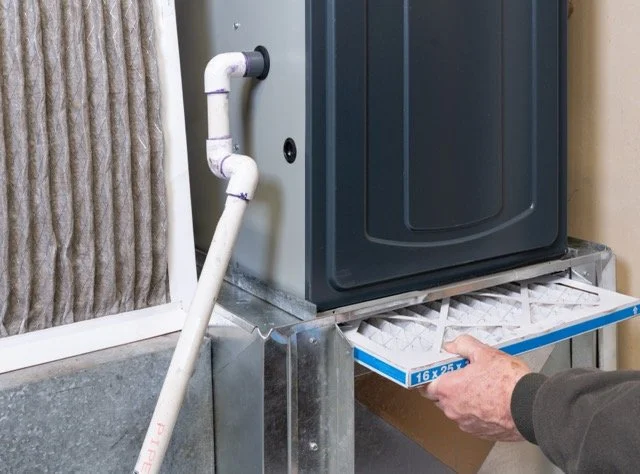
This is the most common cause of airflow problems. A clogged filter restricts airflow, reduces cooling capacity, and can freeze the evaporator coil.
Filter replacement schedule:
- 1-inch disposable filters: Replace monthly during cooling season (May through September).
- 4-inch media filters: Replace every 6-12 months depending on dust levels and whether you have pets.
- Washable filters: Clean monthly. Let them dry completely before reinstalling.
Use the filter size printed on the filter frame. Common sizes are 16x25x1, 20x25x1, and 16x20x1. Using the wrong size creates gaps that allow dust to bypass the filter.
Test Airflow at Each Register
Hold a tissue or piece of paper near each supply register. It should be pulled toward the register by airflow. Weak airflow or no airflow indicates a problem with that duct branch.
Check return registers the same way. Strong airflow at the return means the system is pulling air properly. Weak airflow suggests a blocked return or undersized return duct.
Verify Thermostat Placement
Thermostats should be mounted on interior walls, away from windows, exterior doors, heat sources, and direct sunlight. A thermostat near a sunny window will read higher than actual room temperature. The system shuts off early, leaving other rooms warm.
If your thermostat is poorly located, consider relocating it or installing a remote sensor. Many modern thermostats support remote sensors that average temperatures from multiple rooms.
Inspect Attic Insulation
If you have access to your attic, check insulation depth and coverage. Michigan homes need R-49 to R-60 attic insulation. That's roughly 16-20 inches of blown fiberglass or cellulose.
Look for:
- Gaps around recessed lights, chimneys, and attic hatches: These are thermal bypasses where heat enters the house.
- Compressed insulation: Insulation that's been compressed loses R-value.
- Insufficient depth: If you can see the ceiling joists, you don't have enough insulation.
Poor attic insulation increases cooling load. The AC works harder to overcome heat gain from the attic. Upstairs rooms stay warmer because the ceiling is radiating heat.
Document Temperature Differences
Use a digital thermometer to measure temperature in each room. Do this in the afternoon on a hot day when the system has been running for several hours. Write down the readings.
This data helps during diagnosis. When you call for service, you can tell the technician exactly which rooms are warm and by how much. That narrows down the possible causes.
When to Call NEXT Heating & Cooling for Troy AC Repair
Some problems require professional tools, training, and experience. Here's when to call us:
Refrigerant Leak Detection
Refrigerant leaks require electronic leak detectors, nitrogen pressure testing, and EPA-certified refrigerant handling. This isn't a DIY repair.
We use electronic leak detectors to pinpoint leaks in coils, line sets, and service valves. Small leaks in evaporator coils often require coil replacement. Leaks in line sets can sometimes be repaired with brazing, but if the line set is old or corroded, replacement is the better option.
After repairing the leak, we evacuate the system with a vacuum pump to remove air and moisture, then recharge with the correct refrigerant type and weight according to manufacturer specs.
Ductwork Pressure Testing
Duct leakage testing uses a calibrated fan to pressurize the duct system while measuring airflow. This quantifies how much air you're losing to leaks.
We use this test to identify leaky duct systems and verify repairs. After sealing ducts with mastic or metal-backed tape, we retest to confirm the leak rate dropped.
Duct sealing typically improves system efficiency by 15-25%. Rooms that were starved for air start getting proper airflow. Temperature differentials drop.
Load Calculation and System Sizing Review
If your system is oversized or undersized, a load calculation determines the correct size. We measure the house, assess insulation, count windows, and run the Manual J calculation.
This is essential before replacing equipment. Installing the wrong size system just perpetuates the problem. We size systems based on calculated load, not square footage rules of thumb.
Zoning System Options
Homes with persistent hot and cold spots sometimes benefit from zoning systems. A zoned system uses motorized dampers in the ductwork and multiple thermostats to control airflow to different areas independently.
Example: A two-story colonial with a single AC system. Upstairs and downstairs have separate thermostats and dampers. When the upstairs calls for cooling, the downstairs damper closes, directing all airflow upstairs. When the downstairs calls for cooling, the upstairs damper closes.
Zoning works well in homes with large temperature differences between floors or between additions and the main house. It requires a compatible air handler with variable-speed capability and proper duct design to handle the increased static pressure when dampers close.
We install zoning systems using Carrier, Lennox, and Honeywell zone control panels. This is a retrofit option that doesn't require replacing the entire HVAC system, though it works best with variable-speed equipment.
For homeowners committed to long-term comfort and efficiency, our $5/month HVAC maintenance plan includes two annual tune-ups that catch refrigerant leaks, airflow restrictions, and other problems before they cause uneven cooling.
Real Cost Context for Troy AC Repairs
Uneven cooling fixes range from simple and inexpensive to complex and costly. Here's what Troy homeowners actually pay for common repairs in 2026:
Duct Sealing: $800-$2,500
Professional duct sealing using mastic or Aeroseal technology. Price depends on accessibility and total duct length. Basement ducts are easier and cheaper to seal than attic ducts.
Aeroseal is a process that seals leaks from the inside using aerosolized sealant particles. It's effective for hard-to-reach leaks, but costs more than manual sealing.
Refrigerant Recharge: $300-$1,200
Includes leak detection, leak repair, evacuation, and recharge. Cost varies based on refrigerant type and leak location. R-410A costs less than R-22, which is being phased out and increasingly expensive.
Evaporator coil leaks often require coil replacement, which increases cost to $1,500-$2,500 including labor.
Zoning System Retrofit: $2,500-$5,000
Includes zone control panel, motorized dampers, additional thermostats, and installation labor. Two-zone systems cost less than three or four-zone systems.
This is a mid-range investment that solves persistent hot and cold spot problems without replacing the entire HVAC system.
Full Duct Replacement: $3,500-$8,000
Complete duct system replacement using properly sized metal or flex ductwork. This is necessary when existing ducts are undersized, deteriorated, or poorly designed.
Cost depends on house size, duct accessibility, and whether ducts run through conditioned or unconditioned spaces. Attic duct replacement costs more because of access difficulty and the need for proper insulation.
System Replacement with Proper Sizing: $5,000-$12,000
If the existing system is severely oversized or undersized, replacement with a correctly sized system may be the best long-term solution. This includes a Manual J load calculation, new air handler or furnace, new condenser, line set, thermostat, and labor.
Variable-speed systems cost more upfront but provide better humidity control, quieter operation, and more even temperatures. Brands like Carrier Infinity, Lennox Signature, and Trane XV series offer variable-speed compressors and air handlers that adjust output to match load precisely.
These aren't impulse purchases. We provide written estimates, explain options, and let you decide what makes sense for your budget and timeline. No pressure, no commissioned sales — just honest information.
Ready to Fix Your Uneven Cooling?
NEXT Heating & Cooling has been diagnosing and repairing AC systems in Troy and throughout Southeast Michigan for over 35 years. Our NATE-certified technicians use calibrated tools, run proper load calculations, and give you straight answers about what's wrong and what it costs to fix.
Schedule Your AC DiagnosisFrequently Asked Questions About Uneven Cooling
Heat rises, and attic heat radiates down through the ceiling. If your attic insulation is inadequate (less than R-49), heat gain overwhelms the cooling system. Other causes include undersized ductwork to upstairs rooms, leaky ducts in the attic losing cold air before it reaches bedrooms, or a single-zone system that can't balance temperature differences between floors. A zoning system or duct modifications usually solve this problem.
No. Closing registers increases static pressure in the duct system, reduces total airflow, and makes the system work harder. It doesn't redirect air to other rooms — it just restricts airflow throughout the system. Modern AC systems are designed to operate with all registers open. If you have unused rooms you don't want to cool, a zoning system is the correct solution, not closing vents.
Change 1-inch disposable filters monthly during cooling season (May-September). Change 4-inch media filters every 6-12 months. If you have pets, smoke indoors, or live on a dirt road, change filters more frequently. A clogged filter is the most common cause of reduced airflow and uneven cooling. Set a phone reminder so you don't forget.
There's no universal answer. Size depends on insulation levels, window area, home orientation, ceiling height, and other factors revealed by a Manual J load calculation. A 2,000-square-foot ranch with good insulation and few windows might need 2.5 tons. A 2,000-square-foot colonial with poor insulation and large south-facing windows might need 3.5 tons. The "one ton per 500 square feet" rule is inaccurate. Proper sizing requires calculation, not guessing.
Signs include dusty air coming from registers, high energy bills despite a newer AC system, rooms that never cool down, and visible gaps or disconnected ducts in the basement or attic. Professional duct leakage testing quantifies the problem using a calibrated fan. If leakage exceeds 10-15% of total airflow, sealing the ducts improves comfort and efficiency significantly.
If you have persistent temperature differences between floors and you've already addressed ductwork leaks, insulation, and system sizing, a zoning system is often the best solution. It allows independent temperature control for upstairs and downstairs, eliminates the constant thermostat adjustments, and reduces energy waste by not overcooling one floor to cool the other. The $2,500-$5,000 investment pays back in comfort and efficiency over 5-10 years.
Constant runtime with poor cooling indicates an undersized system, low refrigerant charge, severe duct leakage, or blocked airflow to specific rooms. The system is working at full capacity but can't overcome the heat load. This requires professional diagnosis to identify whether the problem is equipment capacity, refrigerant charge, or duct distribution. Trying to fix this by lowering the thermostat just wastes energy without solving the underlying problem.