

What a Professional AC Tune-Up Includes in Novi, MI
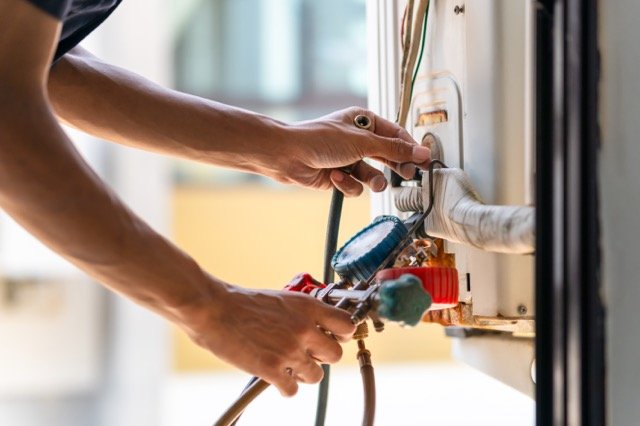
I've been doing AC tune-ups in Southeast Michigan for over 15 years, and I still hear the same question from homeowners in Novi, Troy, and Sterling Heights: "What exactly are you doing during a tune-up — and is it really worth the money?"
Fair question. The HVAC industry hasn't always been great about transparency. Some companies treat a "tune-up" like a quick visual inspection and a sales pitch for a new system. Others go through the motions without explaining what they're checking or why it matters.
Here's what a real, professional AC tune-up looks like when a NATE-certified technician shows up at your door. No fluff. No upselling. Just the actual work that keeps your air conditioner running efficiently through Michigan's humid summers — and prevents the kind of breakdowns that happen on the hottest weekend of July.
Why AC Tune-Ups Matter in Southeast Michigan
Michigan weather is hard on air conditioners. You're not running your AC year-round like they do in Arizona — you're asking it to go from sitting dormant for eight months to running full-tilt through 90-degree days with 70% humidity. That on-off cycle creates stress points that don't show up in milder climates.
Here's what happens when you skip annual maintenance:
- Compressor failures — The most expensive part of your AC system. Replacement costs run $1,200 to $3,500 depending on the unit. Most compressor failures start with refrigerant leaks or electrical issues that a tune-up would catch early.
- Refrigerant leaks — A slow leak drops your cooling capacity and forces the compressor to run longer, driving up your electric bill. By the time you notice warm air blowing, you've already wasted months of energy.
- Capacitor burnout — Michigan's humidity accelerates capacitor degradation. When the start capacitor fails, your compressor won't start. When the run capacitor fails, your fan motor stops. Both leave you without AC until a tech can get there.
- Dirty coils — Cottonwood seeds, pollen, and dirt coat your outdoor condenser coil every spring. A dirty coil can't release heat efficiently, so your system runs 15-20% longer to cool your house. That's real money on your DTE Energy bill.
The data backs this up: ACCA (Air Conditioning Contractors of America) research shows that preventive maintenance reduces the likelihood of major breakdowns by 95%. For context, the average emergency AC repair in Oakland County runs $400-$800. A compressor replacement? $1,500-$4,000 depending on your system.
A professional tune-up costs a fraction of that — and it's included twice a year if you're on the Next Care Plan, our $5/month preventive maintenance subscription.
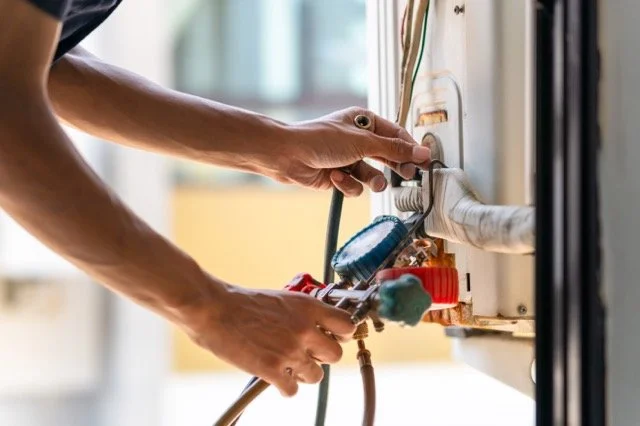
The Complete 22-Point AC Tune-Up Checklist
When we show up for a tune-up, we're not just kicking the tires. Here's the exact checklist our HVAC technicians follow — whether it's a Carrier, Lennox, Trane, Rheem, Bryant, or Goodman system.
Outdoor Condenser Unit (12 Points)
- Visual inspection of cabinet and coil — Check for physical damage, rust, bent fins, or signs of refrigerant leaks (oil residue around fittings).
- Condenser coil cleaning — Remove debris, spray with professional-grade coil cleaner, rinse thoroughly. A clean coil transfers heat efficiently; a dirty one doesn't.
- Fan motor inspection — Listen for bearing noise, check for wobble, measure amp draw against nameplate specs.
- Fan blade condition — Look for cracks, chips, or imbalance that could cause vibration.
- Contactor inspection — Check for pitting or arcing on the contacts. A failing contactor won't engage the compressor reliably.
- Capacitor testing — Measure microfarads with a multimeter. Capacitors degrade over time — especially in humid climates like ours. If it's reading below spec, we replace it before it fails.
- Compressor amp draw — Measure running amps and compare to manufacturer specs. High amp draw indicates a struggling compressor or refrigerant issue.
- Refrigerant pressures — Connect gauges to service ports, measure suction and discharge pressures, compare to the system's charge chart based on outdoor temperature.
- Superheat and subcooling calculations — This tells us if the refrigerant charge is correct. Too much refrigerant floods the compressor. Too little starves the evaporator coil.
- Electrical connections — Tighten terminals, check wire insulation, verify proper voltage at the disconnect.
- Disconnect switch operation — Make sure it's functioning and accessible for emergency shutoff.
- Unit leveling — Verify the pad is level. A tilted condenser can cause compressor oil migration and premature failure.
Indoor Air Handler / Evaporator Coil (10 Points)
- Evaporator coil inspection — Look for dirt buildup, ice formation, or signs of leaks. A dirty evaporator coil restricts airflow and reduces cooling capacity.
- Blower motor operation — Check for unusual noise, measure amp draw, verify proper speed settings.
- Blower wheel cleaning — Remove dust and debris. A dirty blower wheel reduces airflow and efficiency.
- Air filter inspection — Check condition, recommend replacement if needed. A clogged filter is the #1 cause of frozen evaporator coils.
- Drain pan and drain line — Clear any algae or debris, treat with algaecide tablets to prevent future clogs. A clogged drain line causes water damage to ceilings and walls.
- Condensate pump (if equipped) — Test operation, verify proper drainage.
- Ductwork inspection (accessible areas) — Look for disconnected ducts, air leaks, or insulation damage.
- Thermostat calibration — Verify temperature accuracy, check battery if applicable, test cooling cycle operation.
- Temperature split measurement — Measure supply and return air temperatures. Proper split is typically 15-20°F. Outside that range indicates airflow or refrigerant issues.
- System cycling test — Run a full cooling cycle, listen for abnormal sounds, verify proper startup and shutdown.
That's 22 inspection and maintenance points. It takes a trained technician 60-90 minutes to do it right — not the 15-minute "drive-by" some companies try to pass off as a tune-up.
Refrigerant Check and Electrical Testing
Two of the most critical parts of a tune-up are the refrigerant charge and electrical system — and they're also the most commonly skipped by fly-by-night companies.
Refrigerant: Why Pressure Alone Isn't Enough
Most AC systems in Novi built after 2010 use R-410A refrigerant (marketed as Puron by Carrier). Older systems use R-22 (Freon), which has been phased out due to environmental regulations — it's now expensive and hard to source.
Here's what we actually do during a refrigerant check:
- Attach manifold gauges to the service ports on the refrigerant lines.
- Measure suction pressure (low side) and discharge pressure (high side) while the system is running.
- Calculate superheat — the temperature difference between the refrigerant vapor leaving the evaporator coil and the saturation temperature at that pressure. Proper superheat for most systems is 8-12°F.
- Calculate subcooling — the temperature difference between the liquid refrigerant leaving the condenser and the saturation temperature. Proper subcooling is typically 10-15°F.
- Check for leaks using an electronic refrigerant detector. Common leak points: service port caps, flare fittings, evaporator coil (especially older ones), condenser coil (if it's been hit by a weed trimmer or damaged by hail).
If the charge is low, we don't just "top it off" and leave. Refrigerant doesn't evaporate — if it's low, there's a leak. We find it, repair it, vacuum the system to remove moisture and air, then recharge to manufacturer specs.
Michigan Homeowner Tip: If a company offers to "add a pound of Freon" without checking for leaks or measuring superheat and subcooling, they're not doing the job right. You'll be calling them back in a few months when the charge is low again — and paying for refrigerant every time.
Electrical Testing: Preventing Mid-Summer Failures
Air conditioners are electrical workhorses. Your compressor draws 15-30 amps depending on the size. The condenser fan motor adds another 2-5 amps. Over time, connections loosen, capacitors degrade, and contactors wear out.
Here's what we test:
- Voltage at the disconnect — Should be 220-240V for residential systems. Low voltage (brownouts during peak demand) damages compressors.
- Compressor amp draw — Compare running amps to the nameplate rating. High amps indicate mechanical problems or refrigerant issues.
- Capacitor microfarad rating — Capacitors store electrical energy to help start the compressor and run the fan motor. They're rated in microfarads (µF). We measure the actual rating and compare it to the label. If it's more than 5-10% out of spec, we replace it.
- Contactor condition — The contactor is a heavy-duty relay that switches power to the compressor and fan. Over time, the contacts pit and arc. A failing contactor causes intermittent operation or no cooling at all.
Capacitors and contactors are wear items — they don't last forever. Replacing them during a tune-up costs $150-$250. Waiting until they fail on a 95-degree Saturday? You're paying emergency rates and waiting in line behind everyone else whose AC just quit.
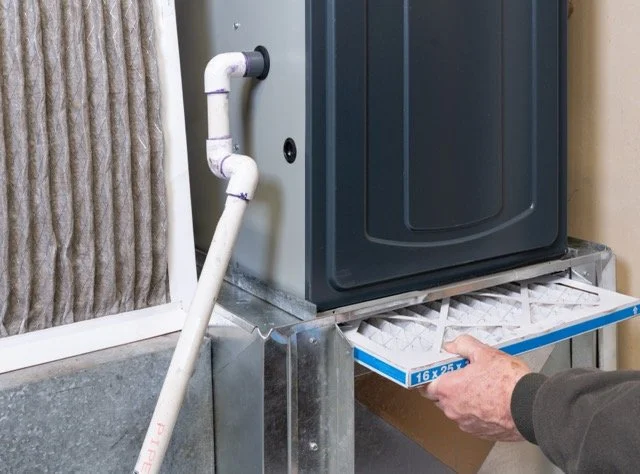
What We Clean During a Tune-Up
Cleaning isn't just about appearances — it's about heat transfer and airflow. Your air conditioner works by moving heat from inside your house to outside. If the coils are dirty or the blower wheel is caked with dust, the system can't do its job efficiently.
Condenser Coil Cleaning
The outdoor condenser coil is where your AC releases heat. It's made of thin aluminum fins wrapped around copper tubing. In Southeast Michigan, it gets coated with:
- Cottonwood seeds (every spring — they stick to everything)
- Pollen and grass clippings
- Dirt and dust kicked up by rain
- Leaves and debris if the unit is near trees
A dirty condenser coil acts like a blanket — it traps heat inside the system. The compressor has to work harder and run longer to cool your house. Your electric bill goes up, and the compressor wears out faster.
We clean it with a professional-grade coil cleaner (not a garden hose — that just pushes dirt deeper into the fins). We spray the cleaner, let it break down the grime, then rinse thoroughly from the inside out. If the fins are bent, we use a fin comb to straighten them and restore airflow.
Evaporator Coil Inspection and Cleaning
The indoor evaporator coil is harder to access — it's inside the air handler or furnace cabinet. But it's just as important. This is where your AC absorbs heat from the air inside your house.
If your air filter hasn't been changed regularly (or if you have pets), the evaporator coil collects dust and pet hair. A dirty evaporator coil restricts airflow, which causes:
- Reduced cooling capacity
- Longer run times
- Ice buildup on the coil (yes, your AC can freeze in the middle of summer)
- Higher humidity inside the house
We inspect the evaporator coil through the access panel. If it's dirty, we clean it with a coil brush and foaming cleaner. If it's severely clogged, we recommend a deep cleaning or (in extreme cases) coil replacement.
Blower Wheel and Motor
The blower wheel is the fan inside your air handler that moves air through the ductwork. It's a squirrel-cage design with dozens of small blades. Over time, those blades collect dust — especially if you're not changing your air filter every 1-3 months.
A dirty blower wheel reduces airflow by 20-30%. Your AC runs longer, your house stays warmer, and you're paying for electricity that isn't cooling anything.
We remove the blower assembly, clean the wheel with a brush and vacuum, and inspect the motor bearings for wear. If the motor is making noise or drawing high amps, we flag it for replacement before it fails.
Drain Line Maintenance
Your AC produces condensation — a lot of it. On a humid Michigan day, a 3-ton AC can produce 20-30 gallons of water. That water drips into a drain pan and flows out through a PVC drain line.
The problem? Algae and mold love dark, wet environments. Over time, the drain line clogs. When it clogs, water backs up into the drain pan, overflows, and damages your ceiling or walls.
We clear the drain line with a wet/dry vacuum or compressed air, then treat it with algaecide tablets to prevent future clogs. It takes five minutes and saves you thousands in water damage repairs.
When to Schedule Your AC Tune-Up in Novi
Timing matters. Here's when to schedule your AC tune-up in Southeast Michigan:
Best Time: April or Early May
Schedule your tune-up in spring — before the heat hits. You'll get:
- Better availability — We're not slammed with emergency calls yet, so you get your choice of appointment times.
- Time to fix problems — If we find an issue during the tune-up (a failing capacitor, a refrigerant leak, a worn contactor), you have time to get it fixed before you need the AC.
- Peace of mind — You know your system is ready when the first 90-degree day arrives.
Worst Time: June, July, or August
Waiting until summer is a gamble. If your AC is already struggling, you're competing with everyone else for service. Emergency repairs take priority. Non-emergency tune-ups get pushed back. And if we find a problem during the tune-up, you might be waiting days for parts while your house bakes.
The Next Care Plan Advantage
Our $5/month Next Care Plan includes two tune-ups per year — one in spring for your AC, one in fall for your furnace. You get:
- Priority scheduling (you're first in line)
- 10% discount on repairs
- No service call fees
- Automatic reminders when it's time for maintenance
For $60 a year, you're covered. Compare that to the cost of one emergency compressor replacement ($1,500-$4,000) or even a routine repair call ($400-$800), and the math is pretty clear.
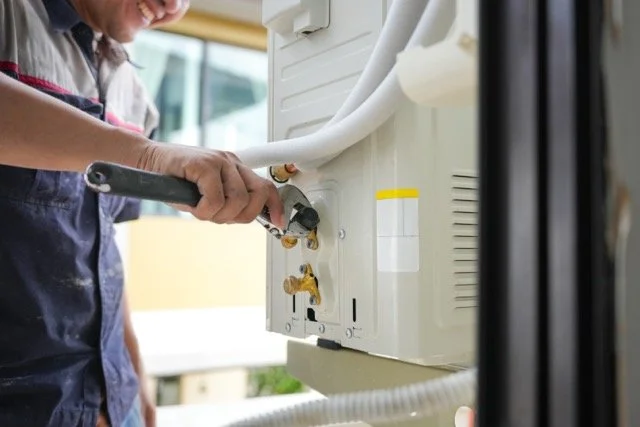
What a Tune-Up Costs vs. What It Prevents
Let's talk numbers. A professional AC tune-up in Southeast Michigan typically costs $120-$180 for a one-time service. If you're on a maintenance plan like Next Care, it's included in your subscription.
Here's what you're preventing:
- Compressor replacement: $1,500-$4,000 (often cheaper to replace the whole system)
- Evaporator coil replacement: $1,000-$2,500
- Condenser fan motor: $400-$800
- Blower motor: $500-$900
- Refrigerant leak repair and recharge: $400-$1,200 depending on leak location and refrigerant type
- Capacitor replacement (emergency): $200-$350
- Water damage from clogged drain line: $800-$5,000+ depending on severity
Then there's the energy cost. A dirty AC system runs 15-25% less efficiently. For a typical Novi home running AC from June through August, that's an extra $200-$400 on your electric bill over the summer.
A tune-up pays for itself in energy savings alone — and that's before you factor in avoided breakdowns.
Signs Your AC Needs More Than a Tune-Up
Sometimes we show up for a tune-up and find problems that can't be fixed with cleaning and adjustments. Here are the red flags that indicate your AC might need repair or replacement:
Age and Efficiency
If your AC is 15+ years old, it's living on borrowed time. Even with perfect maintenance, compressors and coils wear out. And older systems are far less efficient than modern units.
A 15-year-old AC might have a SEER rating of 10-12. New systems are 16-20 SEER (or higher). That efficiency difference adds up to hundreds of dollars per year in energy costs.
We're not going to push you into a new system if your old one is working fine. But if we're finding multiple failing components during a tune-up (compressor struggling, refrigerant leaks, blower motor noisy), it might make more financial sense to replace the system than to keep repairing it.
Refrigerant Leaks in R-22 Systems
If you have an older system that uses R-22 refrigerant and we find a leak, you're facing a tough decision. R-22 is no longer manufactured in the US (phased out in 2020). The only supply left is recycled refrigerant, and it's expensive — $100-$150 per pound.
Recharging a system with 8-10 pounds of R-22 can cost $800-$1,500. And if the leak isn't fixed, you'll be doing it again next year.
At that point, most homeowners choose to replace the system with a modern R-410A unit. You get better efficiency, lower operating costs, and a warranty on the new equipment.
Compressor Problems
If the compressor is running hot, drawing high amps, or making grinding noises, it's failing. Compressor replacement is expensive — often 50-70% of the cost of a new system. And if the compressor is out of warranty, you're paying full price for the part and labor.
We'll give you honest numbers: what it costs to replace the compressor vs. what it costs to replace the whole system. Then you decide. No pressure, no upselling — just the facts.
Ductwork Issues
Sometimes the AC is fine, but the ductwork is the problem. We see this a lot in older homes in Oakland County — 1960s ranches with original ductwork that's disconnected, crushed, or leaking air into the attic or crawlspace.
If we measure weak airflow at the registers or a poor temperature split, we'll recommend a ductwork inspection. Fixing leaky ducts can improve your cooling performance by 20-30% without touching the AC itself.
Ready to Schedule Your AC Tune-Up?
NEXT Heating & Cooling has been keeping Michigan homes comfortable for over 35 years. Our NATE-certified technicians show up on time, explain what they're doing, and give you honest recommendations — no pressure, no upselling. Based in Mount Clemens and serving all of Southeast Michigan.
Schedule Your ServiceFrequently Asked Questions
Once a year, ideally in April or early May before cooling season starts. Annual maintenance catches small problems before they become expensive breakdowns. If you're on the Next Care Plan, your spring tune-up is automatically scheduled — you don't have to remember.
A tune-up is preventive maintenance — we inspect, clean, and test your system when it's working fine. A repair call happens when something breaks and you have no cooling. Tune-ups prevent most repair calls. They also cost less because we're not working in emergency mode on a 95-degree weekend.
You can handle basic tasks: change your air filter monthly, keep the outdoor unit clear of debris, make sure the drain line is flowing. But refrigerant testing, electrical measurements, and coil cleaning require specialized tools and training. DIY refrigerant work is also illegal without an EPA 608 certification — it's a regulated substance.
A thorough tune-up takes 60-90 minutes. If we find issues that need repair (a failing capacitor, a dirty evaporator coil that needs deep cleaning), it might take longer. Companies that claim 15-20 minute tune-ups aren't doing the full checklist — they're doing a quick visual and moving on.
We explain what we found, why it matters, and what it costs to fix. You decide whether to repair it now or later. We don't use scare tactics or push unnecessary work. If it's something that can wait (a capacitor that's slightly out of spec but still working), we'll tell you. If it's urgent (a refrigerant leak, a failing compressor), we'll explain why.
Yes. Even new systems need annual maintenance to stay under warranty. Most manufacturers require proof of annual professional maintenance to honor warranty claims. The Next Care Plan costs $60/year and includes two tune-ups (spring AC, fall furnace) plus priority scheduling and repair discounts. A single tune-up without a plan costs $120-$180, so you're saving money from day one.
Yes. We're factory-authorized dealers for Carrier, Lennox, Trane, Rheem, Bryant, Goodman, Amana, York, and RUUD — but we service all brands. Our technicians are NATE-certified and trained on all major residential AC systems. If it cools your house, we can maintain it, diagnose it, and repair it.