

When to Replace Your Air Conditioner in Southeast Michigan
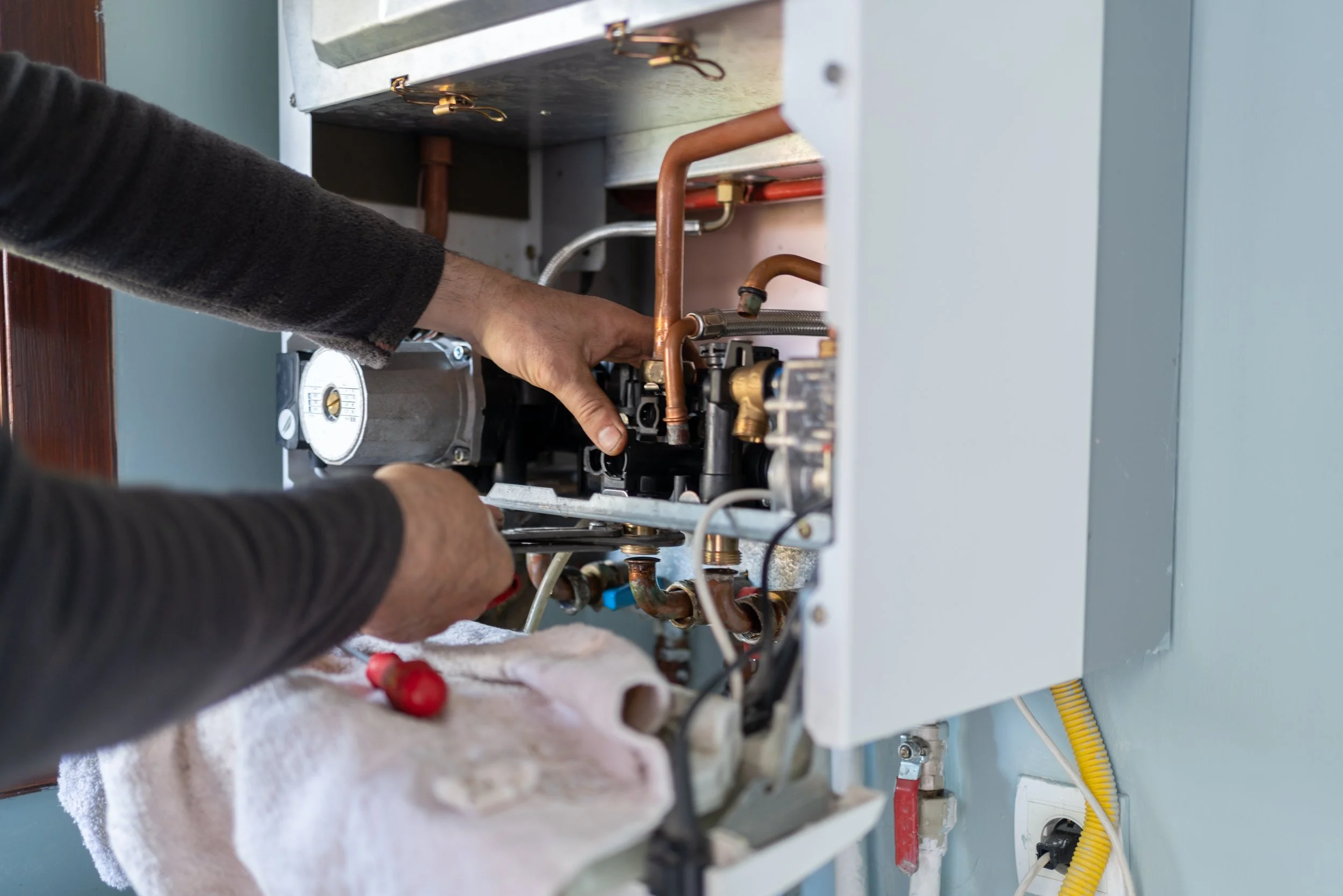
You're standing in your basement in Sterling Heights, staring at an air conditioner that's been running since the Obama administration. It still cools — mostly — but the electric bills keep climbing, and your HVAC tech just quoted you $1,800 for a compressor repair. The question every Michigan homeowner eventually asks: when do you stop fixing and start replacing?
After 35 years of heating and cooling services in Metro Detroit, we've helped thousands of homeowners in Macomb, Oakland, and St. Clair counties make this exact decision. The answer isn't just about age — it's about efficiency, refrigerant type, repair history, and whether your system can still handle Michigan's humid summers and the increasing number of 90-degree days we're seeing.
This guide breaks down the seven signs your air conditioner is ready for replacement, the real costs you'll face in Southeast Michigan, and the decision framework our NATE-certified technicians use when a homeowner asks us, "Should I fix it or replace it?"
How Long Air Conditioners Actually Last in Michigan
The U.S. Department of Energy says a well-maintained central air conditioner should last 15 to 20 years. That's the national average. In Southeast Michigan, we see different numbers — and there are specific reasons why.
Michigan's climate is harder on air conditioners than most people realize. The combination of high humidity from the Great Lakes, temperature swings between spring and fall, and the increasing frequency of heat waves creates conditions that accelerate wear on compressors, capacitors, and refrigerant coils. A system that might run 18 years in Arizona often taps out at 12 to 14 years here.
Here's what we typically see with major brands in Metro Detroit:
- Carrier and Trane: 14-18 years with regular maintenance. These brands use heavier-duty compressors and better coil coatings that handle Michigan humidity well.
- Lennox: 13-16 years. Solid mid-tier performance, though we've seen more capacitor failures in humid basements.
- Rheem and Ruud: 12-15 years. Good value, but compressor warranties matter — some models have known issues after year 10.
- Bryant (Carrier's sister brand): 14-17 years. Nearly identical to Carrier in durability.
- Goodman and Amana: 10-14 years. Budget-friendly upfront, but you'll likely replace sooner. Fine for rental properties or short-term ownership.
The single biggest factor that extends AC life in Michigan? Annual maintenance. Homeowners enrolled in our $5/month HVAC maintenance plan get two tune-ups per year — spring AC prep and fall furnace service. We see those systems consistently outlast neglected units by 3 to 5 years.
Michigan-Specific Wear Factors: Lake-effect humidity accelerates coil corrosion. Homes near Lake St. Clair or in coastal areas of Macomb County often see condenser coil failure 2-3 years earlier than inland homes. If you're in St. Clair Shores or Grosse Pointe Farms, annual coil cleaning isn't optional — it's survival.
7 Signs It's Time to Replace Your Air Conditioner
Age alone doesn't tell the whole story. We've replaced 10-year-old systems that were undersized from day one, and we've seen 18-year-old Carrier units still running strong. Here are the seven factors our technicians evaluate when determining whether replacement makes sense.
1. Your AC Is 12-15 Years Old (or Older)
Once a system crosses the 12-year mark, the math changes. Even if it's still cooling, you're operating a machine that's significantly less efficient than modern units, and you're one major component failure away from a $2,000+ repair on a system that's already near end-of-life.
Why 12-15 years matters: Compressors, the heart of your AC, are rated for roughly 60,000 operating hours. In Michigan, where we run AC from late May through early September (about 100-120 days per year), a system hits that threshold around year 12-14. After that, compressor failure becomes statistically likely.
If your AC was installed before 2012, it's also operating at a SEER (Seasonal Energy Efficiency Ratio) rating of 13 or lower. Modern systems start at SEER 14-16, with high-efficiency models reaching SEER 18-20. That efficiency gap costs you $200-400 per year in higher electric bills.
2. Repair Costs Are Adding Up (The $5,000 Rule)
Here's the decision framework we use: Multiply the age of your system by the cost of the proposed repair. If the result exceeds $5,000, replace it.
Example: Your 13-year-old AC needs a new compressor ($1,800 installed). 13 × $1,800 = $23,400. That's well over $5,000, which means replacement is the financially smarter move.
Why? Because you're investing $1,800 into a 13-year-old system that statistically has 2-3 years left. You'll likely face another major repair before you hit year 15, and you're still burning extra electricity every month due to low SEER ratings.
Common major repairs that trigger replacement decisions:
- Compressor replacement: $1,500-$2,800
- Condenser coil replacement: $1,200-$2,200
- Evaporator coil replacement: $1,000-$1,800
- Refrigerant leak repair + recharge (R-22 systems): $800-$2,000
If you're facing any of these repairs on a system over 10 years old, get a replacement quote before authorizing the work. Most homeowners are surprised to learn that a new, efficient system costs less than they expected — and the monthly energy savings often offset the financing payment.
3. Your System Uses R-22 Refrigerant (Freon)
This is the easiest replacement decision we make. If your air conditioner uses R-22 refrigerant, it's time to replace it. Period.
R-22 (commonly called Freon, though that's a brand name) was phased out under the EPA's Clean Air Act Section 608 due to ozone depletion. Production stopped in January 2020. What's left is recycled supply, and prices reflect scarcity: $100-150 per pound in 2026, up from $40-60 per pound in 2018.
A typical recharge for a leaking system requires 3-8 pounds of refrigerant. You're looking at $500-$1,200 just for the refrigerant, plus labor to locate and repair the leak. And here's the problem: refrigerant doesn't just evaporate. If you're low, you have a leak. Recharging without fixing the leak is throwing money away.
Modern systems use R-410A (Puron) or the newer R-454B refrigerant. These are more efficient, environmentally safer, and cost a fraction of R-22. If your outdoor condenser unit has a label showing R-22, start planning replacement now — before you're forced into an emergency decision during a July heat wave.
How to Check Your Refrigerant Type: Look at the nameplate on your outdoor condenser unit (the big box outside your house). It will list the refrigerant type. If you see "R-22" or "HCFC-22," your system is outdated. If you see "R-410A" or "Puron," you're using modern refrigerant.
4. Your Energy Bills Keep Climbing
If your summer electric bills have increased 20-30% over the past few years — and your usage habits haven't changed — your AC is losing efficiency. This happens gradually as components wear, refrigerant levels drop slightly due to micro-leaks, and airflow decreases from dirty coils or a failing blower motor.
Here's a real example from a client in Rochester Hills: Their 16-year-old Goodman AC was drawing 15% more amperage than its nameplate rating. The compressor was working harder to produce the same cooling, and their July electric bill had climbed from $180 (in 2020) to $265 (in 2025). After replacing with a SEER 16 Carrier system, their July 2026 bill dropped to $145 — a $120/month savings during peak cooling season.
Over a 4-month Michigan cooling season, that's $480/year in savings. A new AC system pays for itself in energy savings alone within 8-10 years, often less if you're replacing a very old, inefficient unit.
5. Uneven Cooling and Comfort Problems
Hot and cold spots throughout your house aren't always an AC problem — sometimes it's ductwork, insulation, or air sealing issues. But if your AC used to cool evenly and now struggles to maintain temperature in certain rooms, the system itself may be failing.
Common causes we see in Southeast Michigan homes:
- Undersized system: Many 1960s-1980s ranch homes in Macomb County have undersized AC units installed before proper load calculations became standard. If you've added insulation, replaced windows, or finished a basement, your cooling load changed — and your old AC can't keep up.
- Failing compressor: A compressor losing capacity will cool inconsistently. You'll notice the system running longer cycles but never quite hitting the thermostat setpoint on hot days.
- Refrigerant loss: Even a 10-15% refrigerant loss significantly reduces cooling capacity. The system runs constantly but can't remove humidity or reach target temperatures.
If you're experiencing uneven cooling, read our detailed guide on fixing hot and cold spots in your house — we cover ductwork issues, zoning solutions, and when the AC itself is the culprit.
6. Strange Noises or Visible Compressor Issues
Air conditioners should run quietly with a steady hum. If you're hearing new sounds, something is failing:
- Grinding or squealing: Blower motor bearings are failing. Replacement cost: $400-$800.
- Clicking or chattering: Electrical relay or contactor failure. Not expensive to fix ($150-$300), but often a sign of broader electrical issues in older systems.
- Hissing or bubbling: Refrigerant leak. Requires leak detection, repair, and recharge — easily $800-$1,500 on an R-22 system.
- Loud banging or clanking: Compressor failure or loose internal components. If it's the compressor, you're looking at replacement costs that exceed the value of the system.
We wrote a full breakdown of what different AC noises mean and how to fix them — it's worth reading if you're hearing something unusual.
Visual signs of compressor failure: If you see oil residue around the compressor or refrigerant lines, or if the compressor housing is hot to the touch even when the system isn't running, the compressor is likely failing. This is a replace-the-system scenario on any AC over 10 years old.

7. You've Made Major Home Improvements
This one surprises homeowners, but it's critical: if you've added square footage, finished a basement, or significantly upgraded insulation and windows, your AC may no longer be properly sized for your home.
HVAC systems are sized using Manual J load calculations, which account for square footage, insulation levels, window area, orientation, and local climate. When you change those variables, the load changes.
We see this frequently in Shelby Township and Clinton Township, where homeowners finish basements or add second-story additions. Their 15-year-old AC was correctly sized for the original 1,800-square-foot ranch, but now they've added 600 square feet of conditioned space. The system runs constantly, can't keep up on hot days, and wears out faster from overwork.
Conversely, if you've upgraded to high-performance windows and added attic insulation, your cooling load may have decreased — meaning your current AC is now oversized, leading to short-cycling, poor humidity control, and premature failure.
When we evaluate AC replacement, we always start with a fresh load calculation. It's the only way to know what size system your home actually needs today.
The Real Cost of AC Replacement in Southeast Michigan (2026)
Let's talk numbers. AC replacement costs vary widely based on system size, efficiency tier, installation complexity, and whether your ductwork or electrical service needs upgrades. Here's what homeowners in Metro Detroit are paying in 2026.
Equipment Tier Pricing (Installed)
Budget Tier (SEER 14-15): $4,500-$6,500
Brands: Goodman, Amana, York
Best for: Rental properties, homes you plan to sell within 5 years, tight budgets. These systems work fine but have shorter lifespans and higher operating costs.
Mid-Tier (SEER 16-17): $6,000-$9,000
Brands: Rheem, Ruud, Bryant, Lennox (base models)
Best for: Most homeowners. Good balance of upfront cost, efficiency, and longevity. This is the sweet spot for value in Southeast Michigan.
Premium Tier (SEER 18-20+): $8,500-$13,000
Brands: Carrier Infinity, Trane XV, Lennox Signature
Best for: Long-term homeowners prioritizing comfort and efficiency. Variable-speed compressors, two-stage cooling, superior humidity control. These systems pay for themselves in energy savings over 10-12 years.
Installation Variables That Affect Cost
The equipment price is only part of the equation. Here's what else factors into your total cost:
- Ductwork modifications: If your existing ducts are undersized, leaky, or poorly designed, expect $1,500-$4,000 in duct sealing, insulation, or replacement. Homes built before 1990 often have ductwork issues.
- Electrical service upgrade: Modern high-efficiency ACs require dedicated 220V circuits. If your electrical panel is outdated or full, you'll need a subpanel or service upgrade: $800-$2,500.
- Refrigerant line replacement: If you're upgrading from R-22 to R-410A, the refrigerant lines must be flushed or replaced. Add $600-$1,200.
- Thermostat upgrade: A programmable or smart thermostat (Ecobee, Honeywell, Carrier Cor) adds $200-$500 but improves efficiency and comfort significantly.
- Permits and inspections: Michigan mechanical permits run $75-$150. Required by code, and any licensed and insured HVAC contractor will pull them.
Total installed cost for a typical 3-ton AC system in a 1,800-square-foot Metro Detroit home: $7,000-$10,000 for a quality mid-tier system with standard installation. Add $1,500-$3,000 if you need ductwork or electrical upgrades.
Financing and Rebate Options
Most homeowners finance AC replacement. We offer 0% financing for 12-24 months through approved credit, or extended terms (60-84 months) for larger projects.
Current rebate and incentive programs in Michigan (as of March 2026):
- DTE Energy AC Rebate: $150-$300 for SEER 16+ systems (varies by efficiency tier)
- Consumers Energy Rebate: $200-$400 for qualifying high-efficiency units
- Federal Energy Tax Credit (25C): 30% of equipment and installation costs, up to $600 for AC-only systems, $2,000 for heat pump systems (check current IRS guidelines)
Rebates change annually, so verify current programs when you're ready to buy. We help homeowners navigate the paperwork — it's part of our service.
Repair vs. Replace: The Decision Framework
You've got a repair estimate in hand. Here's how to decide whether to fix or replace.
When Repair Makes Sense
Repair your current AC if:
- The system is under 8 years old
- The repair cost is under $800
- It's a minor component (capacitor, contactor, fan motor)
- The system uses R-410A refrigerant
- You've kept up with annual maintenance
- Your energy bills are stable
Example: A 6-year-old Carrier system needs a new capacitor ($250 installed). Repair it. Capacitors are wear items, and the system has 8-10 years of life left.
When Replacement Makes Sense
Replace your AC if:
- The system is 12+ years old
- The repair cost exceeds $1,200
- It uses R-22 refrigerant
- You're facing compressor or coil replacement
- Your energy bills have increased 20%+ over 3 years
- The Age × Repair Cost formula exceeds $5,000
- You've had multiple repairs in the past 2-3 years
Example: A 14-year-old Lennox system with an R-22 refrigerant leak needs leak repair, recharge, and a new contactor. Total estimate: $1,850. Age × Cost = 14 × $1,850 = $25,900. Replace it — you're one summer away from another failure, and you're burning extra electricity every month.
The Honest Conversation We Have: When a homeowner asks us, "What would you do if this were your house?" — we tell them the truth. If it's our parents' house and they're on a fixed income, we might recommend a budget-tier replacement to keep costs down. If it's a young family planning to stay 15+ years, we recommend a mid-tier variable-speed system that will save them money long-term. There's no commission pressure here — just honest advice based on your situation.
What to Expect During AC Replacement
AC replacement isn't a DIY project. It requires refrigerant handling certification (EPA 608), electrical knowledge, and proper load calculations. Here's what the process looks like when you work with NEXT Heating & Cooling.
Step 1: In-Home Assessment and Load Calculation
We start with a Manual J load calculation — the industry-standard method for sizing HVAC equipment. Our tech measures your home's square footage, insulation levels, window area, and orientation. We account for Michigan's climate zone (Zone 5A), local humidity, and your home's specific construction.
This takes 45-60 minutes. We're not just looking at your old AC's tonnage and matching it — we're determining what your home actually needs. Undersized systems can't keep up; oversized systems short-cycle and fail early. Proper sizing is critical.
Step 2: Equipment Recommendation and Quote
Based on the load calculation, we recommend 2-3 system options at different price points. We explain the efficiency differences, expected lifespan, and payback period for higher-tier systems. You get a written quote with equipment specs, installation scope, warranty details, and total cost.
No pressure. We don't do commissioned sales. Take the quote home, compare it to other contractors, and call us when you're ready.
Step 3: Installation Day
Most AC installations take 6-8 hours for a straightforward swap. If we're upgrading ductwork or electrical, plan for a full day or two-day project.
Our installation process:
- Remove old equipment: Outdoor condenser, indoor evaporator coil, and refrigerant lines. We properly recover and recycle all refrigerant (EPA requirement).
- Install new outdoor condenser: Leveled on a concrete pad or composite base. Electrical disconnect and whip installed to code.
- Install new evaporator coil: Mounted above your furnace or air handler. New refrigerant lines run and insulated.
- Vacuum and leak test: System is evacuated to remove moisture and air, then pressure-tested for leaks.
- Refrigerant charge: Charged to manufacturer specs using superheat/subcooling measurements (not just pressure gauges — that's a hack shortcut).
- Airflow verification: We measure CFM (cubic feet per minute) at the registers to ensure proper airflow. Ductwork dampers adjusted if needed.
- Thermostat programming: We set up your new thermostat and show you how to use it.
- Final walkthrough: We explain how to change filters, what sounds are normal, and when to call for service.
You'll receive all warranty paperwork, equipment manuals, and our direct service line. We also register your equipment warranty with the manufacturer — many homeowners forget this step and lose coverage.
Step 4: Post-Installation Follow-Up
We call you within 48 hours to make sure the system is running smoothly. If you have any questions or concerns, we come back — no charge. First-year service is covered under our installation warranty.
We also recommend enrolling in the Next Care Plan to protect your investment. For $5/month, you get two annual tune-ups (spring AC, fall furnace), priority scheduling, and 10% off any future repairs. It's the best way to maximize your new system's lifespan.
How to Extend Your Current AC's Life
If you're not ready to replace yet — maybe your system is 8-10 years old and still running well — here's how to squeeze every possible year out of it.
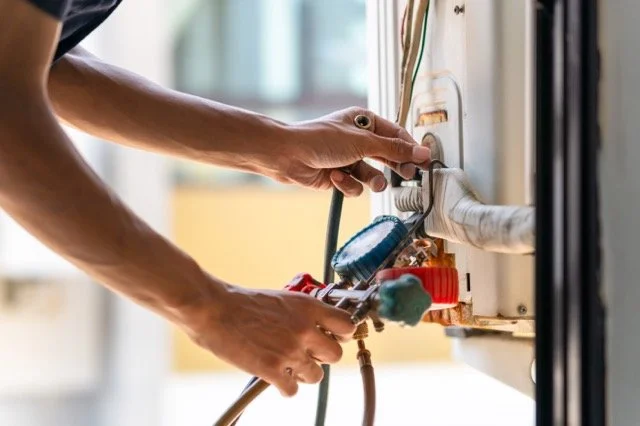
1. Change Your Filter Every 30-60 Days
This is the single most important maintenance task, and most homeowners ignore it. A clogged filter restricts airflow, forcing your blower motor to work harder and your evaporator coil to freeze. We see $800 blower motor replacements that could have been prevented with $2 filters.
Use a 1-inch pleated filter (MERV 8-11). Change it monthly during cooling season, every 60 days in shoulder seasons. If you have pets or live on a gravel road, change it monthly year-round.
2. Keep the Outdoor Condenser Clear
Your outdoor unit needs airflow. Clear leaves, grass clippings, and debris from around the condenser. Trim bushes and vegetation to maintain 18-24 inches of clearance on all sides. Hose off the condenser coils once per season to remove pollen and cottonwood.
In fall, cover the top of the condenser with a piece of plywood to prevent leaves from filling the fan housing — but never fully wrap the unit. It needs ventilation to prevent rust and moisture buildup.
3. Schedule Annual Professional Maintenance
A spring AC tune-up catches small problems before they become expensive failures. Our AC tune-up in Warren, MI guide details what we check during a service call:
- Refrigerant charge and pressure testing
- Electrical connections and voltage
- Capacitor and contactor condition
- Condenser and evaporator coil cleaning
- Blower motor amperage draw
- Thermostat calibration
- Condensate drain clearing
Annual maintenance extends AC life by 3-5 years on average. It also maintains your manufacturer's warranty — most require proof of annual service to honor warranty claims.
4. Install a Programmable or Smart Thermostat
Reducing runtime reduces wear. A programmable thermostat that raises the temperature when you're at work saves energy and extends compressor life. We recommend setting your AC to 78°F when home, 82-85°F when away.
Smart thermostats (Ecobee, Nest, Honeywell T9) learn your schedule and optimize runtime automatically. They also send maintenance reminders and alert you to system problems. Read our comparison of smart vs. programmable thermostats for Michigan homes to see which makes sense for your situation.
5. Address Ductwork Issues
Leaky, undersized, or poorly insulated ductwork forces your AC to work harder than necessary. If you have hot and cold spots, high energy bills, or excessive dust, your ducts may be the problem — not the AC itself.
Duct sealing and insulation costs $1,500-$3,000 but can reduce cooling costs by 20-30% and extend AC life by reducing runtime. It's often a better investment than replacing a functioning AC.
Ready to Get Started?
NEXT Heating & Cooling has been keeping Michigan homes comfortable for over 35 years. Get honest diagnostics and fair pricing from NATE-certified technicians who show up on time. We'll help you decide whether repair or replacement makes sense for your situation — no pressure, just straight answers.
Schedule Your ServiceFrequently Asked Questions
In Southeast Michigan, a well-maintained central air conditioner typically lasts 12-16 years. This is slightly shorter than the national average of 15-20 years due to our high humidity from the Great Lakes, temperature swings, and increasingly frequent heat waves. Premium brands like Carrier and Trane with regular annual maintenance can reach 16-18 years. Budget brands like Goodman typically last 10-14 years. The single biggest factor in longevity is annual professional maintenance — systems with regular tune-ups consistently outlast neglected units by 3-5 years.
The $5,000 rule is a simple decision framework: multiply the age of your air conditioner by the cost of the proposed repair. If the result exceeds $5,000, replacement is typically the smarter financial choice. For example, if your 13-year-old AC needs a $1,500 compressor repair, the calculation is 13 × $1,500 = $19,500, which exceeds $5,000 — meaning you should replace the system rather than repair it. This formula accounts for the likelihood of additional failures on aging equipment and the energy savings you'll gain from a modern, efficient system.
Yes. R-22 refrigerant (Freon) was phased out in January 2020 under EPA regulations due to ozone depletion. Only recycled R-22 remains available, and prices have skyrocketed to $100-150 per pound in 2026 (up from $40-60 in 2018). If your AC has a refrigerant leak and uses R-22, you're looking at $500-$1,200 just for refrigerant plus labor to repair the leak. Since refrigerant doesn't evaporate on its own, a low charge always indicates a leak. Recharging without fixing the leak wastes money, and R-22 will only become more expensive and scarce. Modern systems use R-410A or R-454B, which are more efficient, environmentally safer, and cost a fraction of R-22. If your system uses R-22, start planning replacement now before you're forced into an emergency decision during a heat wave.
In 2026, AC replacement costs in Southeast Michigan range from $4,500-$13,000 installed, depending on system size, efficiency tier, and installation complexity. Budget-tier systems (SEER 14-15) cost $4,500-$6,500. Mid-tier systems (SEER 16-17) — the best value for most homeowners — cost $6,000-$9,000. Premium systems (SEER 18-20+) with variable-speed compressors cost $8,500-$13,000. Additional costs include ductwork modifications ($1,500-$4,000 if needed), electrical upgrades ($800-$2,500), and refrigerant line replacement ($600-$1,200). For a typical 3-ton system in a 1,800-square-foot home with standard installation, expect $7,000-$10,000 total. Financing options and utility rebates ($150-$400) can reduce upfront costs.
Technically yes, but we strongly advise against it. Air conditioners are engineered as matched systems — the outdoor condenser and indoor evaporator coil are designed to work together at specific efficiency ratings. Mixing old and new components voids manufacturer warranties, reduces efficiency by 15-25%, and often leads to premature failure of the new equipment. Additionally, if your indoor coil uses R-22 refrigerant, you cannot mix it with a new R-410A condenser — the refrigerants are incompatible and require different operating pressures. The only time a condenser-only replacement makes sense is if your indoor coil is less than 5 years old and uses R-410A. Even then, you'll lose efficiency and warranty coverage. For maximum performance, reliability, and warranty protection, replace both components together.
For Southeast Michigan, SEER 16-17 is the sweet spot for most homeowners. It offers a good balance of upfront cost, energy savings, and payback period. SEER 14-15 systems are budget-friendly but have higher operating costs and shorter lifespans. SEER 18-20+ systems provide superior efficiency and comfort (better humidity control, quieter operation) but cost $2,000-$5,000 more upfront. The payback period for premium systems is 10-15 years through energy savings alone. If you plan to stay in your home long-term and prioritize comfort, SEER 18+ makes sense. If you're selling within 5-7 years or have budget constraints, SEER 16 is a solid choice. Michigan's cooling season is relatively short (100-120 days), so ultra-high efficiency systems don't pay back as quickly as they would in southern states with year-round cooling demands.
The only accurate way to determine proper AC sizing is through a Manual J load calculation performed by a qualified HVAC contractor. This calculation accounts for your home's square footage, insulation levels, window area, orientation, and local climate. Signs your AC is incorrectly sized include: short-cycling (running in frequent 5-10 minute bursts), inability to reach thermostat setpoint on hot days, excessive humidity indoors even when cooling, or dramatically uneven temperatures between rooms. Many older Michigan homes have undersized systems installed before proper load calculations became standard. If you've added square footage, finished a basement, or upgraded insulation and windows, your cooling load has changed and your old AC may no longer be appropriately sized. Never trust a contractor who sizes your new AC based solely on matching your old unit's tonnage — that's a shortcut that often leads to problems.