

Zoned AC for Two-Story Homes in Rochester Hills, MI
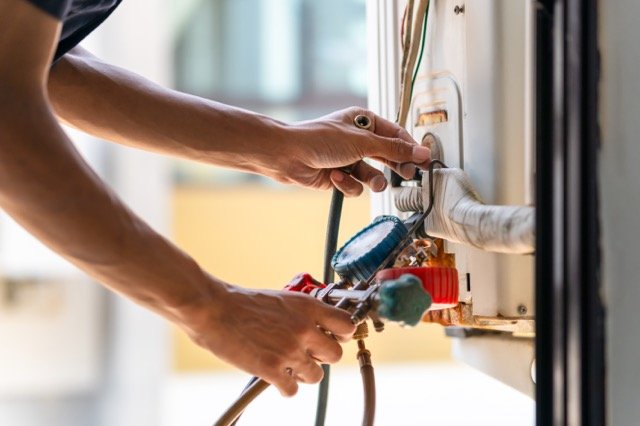
If you live in a two-story home in Rochester Hills, you know the drill. It's 82 degrees upstairs at bedtime in July, while the first floor feels like a walk-in cooler. Someone cranks the thermostat down to 68 to cool the bedrooms, and by morning, everyone downstairs is grabbing sweatshirts. The air conditioner runs constantly, the energy bill climbs, and nobody's comfortable.
This isn't a problem you can fix by closing vents or running ceiling fans harder. It's physics. Hot air rises, cold air sinks, and a single-zone cooling system can't compensate for the temperature stratification that happens naturally in multi-level homes. That's where zoned AC for two-story homes in Rochester Hills, MI changes the game.
We've been installing heating and cooling services in Metro Detroit for over 35 years, and zoned systems are one of the most effective upgrades we recommend for two-story homes. Not because they're trendy — because they actually solve the problem. Here's how they work, what they cost, and whether your Rochester Hills home needs one.
Why Two-Story Homes in Rochester Hills Need Zoned Cooling
The temperature difference between floors in a two-story home isn't a minor annoyance — it's a predictable outcome of basic thermodynamics. Warm air is less dense than cool air, so it rises. In a typical Rochester Hills two-story built between the 1960s and early 2000s, that means the second floor can easily run 8 to 12 degrees warmer than the first floor on a summer afternoon.
Add in Michigan's summer humidity — we regularly hit 70-80% relative humidity in July and August — and that upstairs bedroom becomes a sauna. The attic above acts like a heat sink, absorbing solar radiation all day and radiating it down through the ceiling. Even with proper insulation, that heat load is significant.
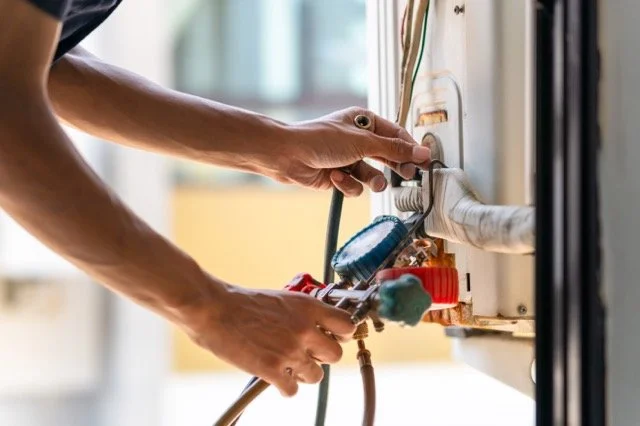
A traditional single-zone air conditioning system uses one thermostat — usually located on the first floor — to control the entire house. When that thermostat reads 72 degrees, the AC shuts off. But upstairs? Still 80 degrees. To cool the second floor to a comfortable sleeping temperature, you have to set the thermostat low enough that the first floor becomes uncomfortably cold. The system cycles on and off more frequently, wastes energy cooling spaces that don't need it, and never achieves balanced comfort.
Rochester Hills homes built in different eras face different challenges. Ranch-style homes from the 1960s often have undersized ductwork that struggles to push adequate airflow to distant rooms. Colonials from the 1980s and 1990s frequently have master suites over garages — creating an additional thermal boundary problem. Newer construction from the 2000s might have better insulation, but open floor plans and cathedral ceilings create massive volumes of air that a single thermostat can't manage effectively.
Michigan-Specific Challenge: Southeast Michigan summers combine high heat with high humidity. When your AC runs longer to cool an overheated second floor, it's also removing moisture from the air. But if you're overcooling the first floor to compensate, you can actually create a humidity imbalance — the downstairs gets too dry while the upstairs stays muggy. Zoned systems prevent this by matching cooling output to actual demand in each zone.
How Zoned HVAC Systems Actually Work
A zoned HVAC system divides your home into separate areas — typically upstairs and downstairs for a two-story home, though larger homes might have three or four zones. Each zone gets its own thermostat, and motorized dampers installed in the ductwork control airflow to each area independently.
Here's the mechanical breakdown:
Motorized Dampers
These are installed inside your existing ductwork at key branch points. When a zone calls for cooling, its damper opens. When that zone reaches the set temperature, the damper closes. The dampers are controlled by a central zone control panel that communicates with all the thermostats and manages system operation.
Most residential systems use round or rectangular dampers from manufacturers like Honeywell, Carrier, or Lennox. They're spring-return or motor-driven, depending on the application, and they're sized to match the duct diameter — typically 6 to 12 inches for branch runs in residential ductwork.
Zone Control Panel
This is the brain of the system. It receives temperature signals from each thermostat and opens or closes dampers accordingly. It also manages the blower fan speed on your furnace or air handler to maintain proper airflow even when some zones are closed.
This is critical: if all zones close simultaneously, you can create static pressure problems that damage your equipment. Quality zone control panels include bypass dampers or variable-speed blower controls to prevent this. We typically install systems with at least a 20% minimum airflow requirement to protect the compressor and evaporator coil.
Multiple Thermostats
Each zone gets its own thermostat. For a typical Rochester Hills two-story, that means one thermostat on the first floor (usually in a central hallway or living area) and one upstairs (often in the hallway near the bedrooms). These can be programmable or smart thermostats — brands like Honeywell, Ecobee, and Carrier all make zone-compatible models.
Compatible Equipment
Not every air conditioner or furnace works well with zoning. Single-stage equipment can struggle with the frequent cycling that zoning creates. We typically recommend two-stage or variable-speed systems for zoned applications.
Two-stage compressors can run at a lower capacity when only one zone is calling for cooling, which improves efficiency and reduces wear. Variable-speed systems — like Carrier Infinity or Lennox Signature series — are even better. They modulate output continuously, matching capacity to demand across all zones without the on/off cycling that shortens equipment life.
If you're installing zoning on an existing system, we'll evaluate whether your current equipment can handle it. Older single-stage units can work with zoning if the system is designed with proper bypass dampers and static pressure controls, but you won't get the full efficiency benefit.
Benefits Beyond Comfort: Energy Savings and Equipment Longevity
The obvious benefit of zoned AC is comfort — no more fighting over the thermostat, no more waking up sweating at 2 a.m. because you couldn't cool the bedroom without freezing the living room. But the financial benefits are just as significant.
Energy Savings
According to the U.S. Department of Energy, zoned HVAC systems can reduce cooling costs by 20 to 30% compared to single-zone systems in multi-level homes. That's because you're only cooling the spaces you're actually using, when you're using them.
In a typical Rochester Hills two-story home, bedrooms are empty during the day while everyone's at work or school. With zoning, you can set the upstairs zone to 78 degrees during the day and cool it down to 72 an hour before bedtime. The first floor stays comfortable for daily living, and you're not wasting energy cooling empty bedrooms all afternoon.
For a home with a $200/month summer cooling bill, that 25% savings translates to $50/month — $300 over a typical Michigan cooling season. Over a 10-year period, that's $3,000 in avoided costs, which often covers a significant portion of the zoning installation expense.
Extended Equipment Life
Air conditioners and furnaces wear out faster when they short-cycle — running in frequent, short bursts instead of longer, steady cycles. Single-zone systems in two-story homes do this constantly because the thermostat is satisfied before the whole house reaches temperature.
Zoning reduces runtime on the compressor and blower motor because the system isn't overcooling some areas to compensate for others. When paired with a two-stage or variable-speed system, you get even longer cycles at lower capacity, which is easier on the equipment.
We've seen properly maintained zoned systems last 18 to 20 years in Southeast Michigan — compared to 12 to 15 years for single-zone systems in similar homes. That's an extra 5+ years before you're looking at a replacement air conditioner.
Better Humidity Control
Air conditioners remove moisture from indoor air as they cool. But when a system runs in short bursts, it doesn't run long enough to dehumidify effectively. You get cold, clammy air instead of dry, comfortable air.
Zoned systems with two-stage or variable-speed equipment run longer at lower capacity, which improves dehumidification. This is especially important in Michigan, where summer humidity can make a 75-degree house feel like 80 if the moisture level is high. Better humidity control also reduces the risk of mold growth in basements and crawl spaces — a common problem in older Rochester Hills homes.
Maintenance Matters: Zoned systems still need regular tune-ups. Motorized dampers have moving parts that can fail, and dirty filters restrict airflow, which throws off the whole system. Our Next Care Plan includes seasonal inspections that catch damper issues, thermostat calibration problems, and airflow imbalances before they turn into expensive repairs.
What a Zoned AC Installation Looks Like in Rochester Hills
Installing a zoned system isn't a DIY project. It requires ductwork modifications, electrical work, and system programming that needs to be done right to avoid damaging your equipment. Here's what the process looks like when you work with a reliable HVAC contractor in Metro Detroit.
Step 1: Load Calculation and Zone Mapping
We start with a Manual J load calculation for your home — the industry-standard method for determining heating and cooling requirements based on square footage, insulation levels, window area, and orientation. This tells us how much cooling capacity each zone actually needs.
Then we map out the zones. For most two-story homes, it's straightforward: upstairs is one zone, downstairs is another. But larger homes might benefit from three zones — splitting the first floor into living areas and bedrooms, for example. Homes with finished basements, sunrooms, or home offices often need additional zones.
We also evaluate your existing ductwork. If your home was built with a single-zone system, the duct sizing might not support proper airflow to all zones when dampers are introduced. We'll identify any branch runs that need to be resized or any areas where airflow is already marginal.
Step 2: Ductwork Assessment and Damper Installation
Once we know the zone layout, we locate the best spots to install dampers. Typically, this is in the main trunk line where it branches to each floor, or at key junctions in the duct system.
In Rochester Hills homes with basements, ductwork is usually accessible from below, which makes installation straightforward. Homes with crawl spaces or slab foundations require more planning — we might need to access ducts from the attic or cut access panels in closets or mechanical rooms.
We install the dampers, run low-voltage control wiring back to the zone control panel, and test each damper to ensure it opens and closes fully without binding. If your ductwork has leaks or poor insulation — common in homes built before 2000 — we'll recommend sealing and insulating those sections to prevent energy loss.
Step 3: Thermostat Installation and System Programming
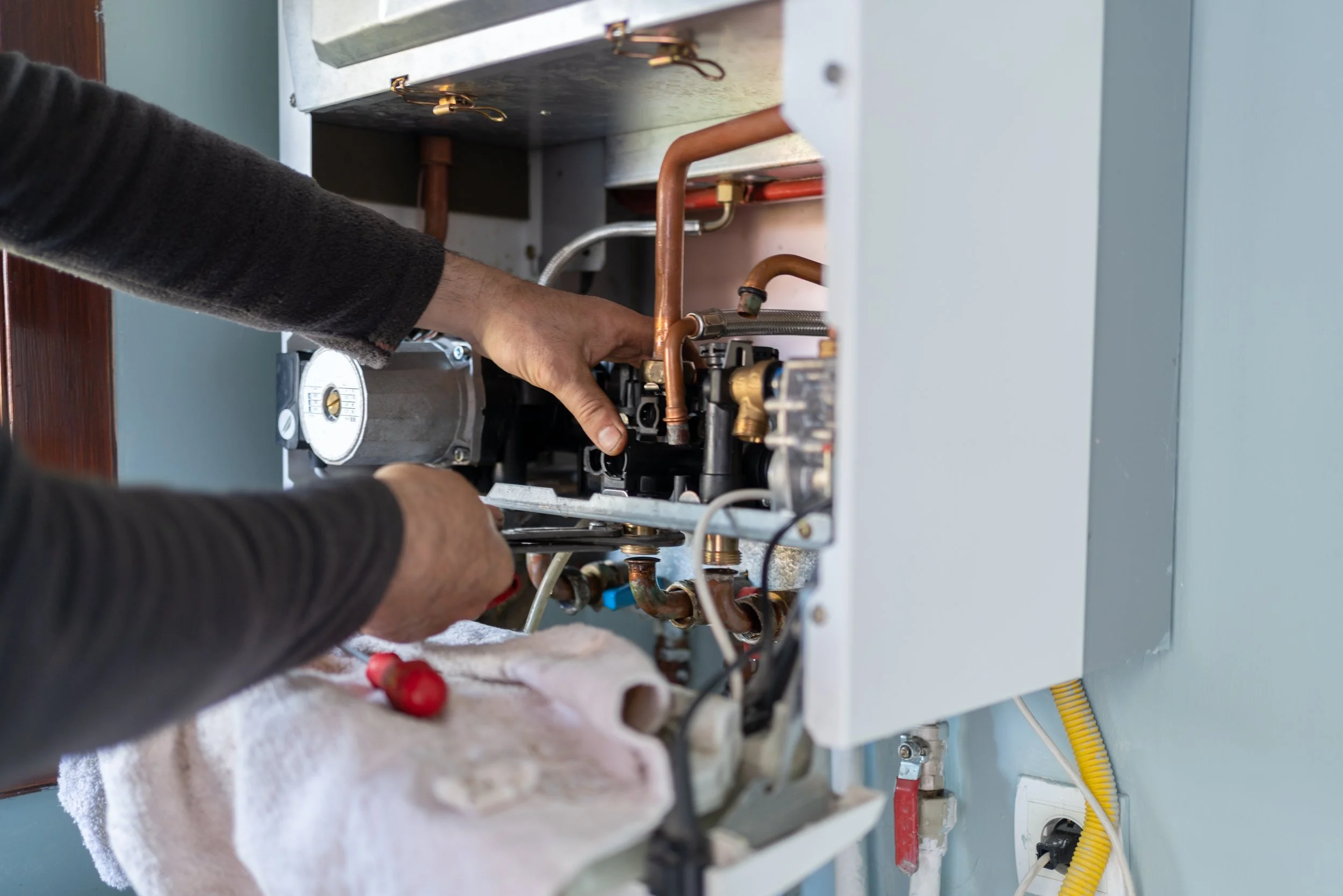
Each zone gets a new thermostat wired to the control panel. We position these in central locations away from direct sunlight, drafts, or heat sources that could give false readings. For upstairs zones, that's usually a hallway near the bedrooms. For downstairs, it's often a main living area or central hallway.
The zone control panel is programmed to manage damper operation, blower speed, and minimum airflow requirements. This is where experience matters — incorrect programming can cause short-cycling, static pressure problems, or compressor damage.
Step 4: System Testing and Balancing
After installation, we run the system through multiple cycles to verify operation. We measure airflow at each register, check static pressure in the ductwork, and confirm that all zones heat and cool properly without affecting each other.
We also test the bypass damper (if installed) to ensure it opens when all zones close, preventing pressure buildup. If your system uses a variable-speed blower, we program it to ramp down when fewer zones are active.
Finally, we walk you through thermostat operation and zone scheduling. Most homeowners find the system intuitive once they understand the basics, but we provide written instructions and contact info for follow-up questions.
Cost Reality: What Zoned AC Actually Costs in Southeast Michigan
Let's talk numbers. Zoned AC isn't cheap, but it's also not as expensive as replacing your entire HVAC system — and in many cases, it delivers better results.
Equipment Costs
For a typical two-zone system in a Rochester Hills two-story home, equipment costs break down like this:
- Motorized dampers: $150 to $300 each (you'll need at least two, possibly more depending on duct layout)
- Zone control panel: $300 to $600 depending on features and number of zones supported
- Thermostats: $100 to $250 each for programmable models; $200 to $350 for smart thermostats like Ecobee or Honeywell Wi-Fi models
- Bypass damper (if needed): $200 to $400
Total equipment cost for a two-zone system: $1,200 to $2,500 depending on components selected.
Installation Labor
Labor costs vary based on ductwork accessibility, home layout, and whether any duct modifications are needed. For a straightforward installation in a home with accessible basement ductwork, expect $1,500 to $3,000 in labor.
Homes with difficult duct access, crawl spaces, or significant duct modifications can run higher — $3,500 to $5,000 for labor in complex installations.
Total Installed Cost
For a typical Rochester Hills two-story home, a complete two-zone system installation runs $3,000 to $6,000. Three-zone systems or homes requiring significant ductwork modifications can reach $7,000 to $10,000.
If you're also upgrading to a two-stage or variable-speed air conditioner at the same time — which we often recommend for maximum efficiency — that's an additional $4,000 to $8,000 depending on equipment selected. But you're getting a complete system upgrade that solves the comfort problem permanently.
Return on Investment
At 25% energy savings on a $200/month summer cooling bill, you're saving $50/month or $300 per cooling season. A $4,500 zoning installation pays for itself in 15 years through energy savings alone — and that doesn't account for extended equipment life, improved comfort, or avoided repairs from short-cycling.
If you're planning to stay in your Rochester Hills home for 10+ years, zoning is a smart investment. If you're selling within 5 years, it's a valuable selling point — buyers recognize the comfort and efficiency benefits, especially in two-story homes where the temperature difference is obvious during showings.
Financing and Maintenance: We offer financing options for zoned system installations, and our $5/month HVAC maintenance plan includes seasonal tune-ups that keep dampers operating smoothly and catch issues before they become expensive problems.
Signs Your Rochester Hills Home Needs Zoned Cooling
Not every two-story home needs zoning. But if you're experiencing any of these issues, it's worth a conversation with a NATE-certified technician.
Temperature Differences Between Floors
If your upstairs bedrooms are consistently 8+ degrees warmer than the first floor during summer, zoning solves that. Use an inexpensive thermometer to measure actual temperatures in different rooms during peak afternoon heat. If you're seeing a 10-degree spread, your single-zone system can't fix that without wasting energy.
Constant Thermostat Adjustments
Do you adjust the thermostat three or four times a day trying to balance comfort between floors? That's a clear sign you need independent temperature control for each level.
High Summer Energy Bills
Compare your cooling costs to similar-sized single-story homes in your neighborhood. Two-story homes without zoning typically run 20-30% higher because they're overcooling the first floor to cool the second floor. If your July and August bills are consistently $250+ for a 2,000-square-foot home, zoning could cut that by $50 to $75 per month.
Rooms That Never Feel Comfortable
Master bedrooms over garages, bonus rooms above living spaces, or rooms on the west side of the house that get afternoon sun — these are classic problem areas in Rochester Hills homes. If closing vents, adding insulation, and running ceiling fans haven't helped, the issue is airflow and zone control, not equipment capacity.
Planning an HVAC Replacement
If your air conditioner or furnace is 12+ years old and you're planning a replacement anyway, adding zoning during that installation is cost-effective. You're already paying for labor to access the ductwork and install new equipment — adding dampers and zone controls at that time minimizes additional labor costs.

Ready to Get Started?
NEXT Heating & Cooling has been keeping Michigan homes comfortable for over 35 years. Get honest diagnostics and fair pricing from NATE-certified technicians who show up on time. We'll evaluate your home, explain your options, and give you a straightforward quote — no pressure, no upselling.
Schedule Your ServiceFrequently Asked Questions About Zoned AC in Rochester Hills
Yes, in most cases. Zoning can be retrofitted to existing HVAC systems as long as your equipment is in good condition and your ductwork is accessible. Single-stage systems can work with zoning if the installation includes proper bypass dampers and static pressure controls, but two-stage or variable-speed equipment delivers better efficiency and longer equipment life. We'll evaluate your current system and recommend whether retrofitting makes sense or if you'd be better off upgrading the equipment at the same time.
Most two-story homes in Rochester Hills work well with two zones — upstairs and downstairs. Larger homes (3,000+ square feet) or homes with finished basements, sunrooms, or home offices may benefit from three or four zones. We'll perform a load calculation and evaluate your floor plan to determine the optimal zone layout. More zones aren't always better — each additional zone adds cost and complexity, so we design systems that solve your specific comfort problems without over-engineering.
Most modern zone control panels are compatible with popular smart thermostats like Ecobee, Honeywell Wi-Fi, and Carrier Cor. Each zone gets its own thermostat, so you can control upstairs and downstairs independently from your phone. Some systems also integrate with home automation platforms like Google Home or Amazon Alexa. We'll verify compatibility with your preferred thermostat brand during the design phase.
Zoned systems don't require significantly more maintenance than single-zone systems, but the motorized dampers and zone control panel do have moving parts that should be inspected annually. Our Next Care Plan includes seasonal tune-ups where we test damper operation, check thermostat calibration, measure airflow at each zone, and verify that the control panel is managing static pressure correctly. Catching small issues early — like a damper that's sticking or a thermostat that's reading inaccurately — prevents bigger problems down the road.
Closing vents in unused rooms seems like a simple solution, but it actually creates problems. When you close vents, you increase static pressure in the ductwork, which forces the blower motor to work harder and can damage the heat exchanger or evaporator coil. It also doesn't solve the underlying problem — the thermostat is still in one location, and the system still can't deliver targeted cooling to specific areas. Zoning uses motorized dampers and a control panel that manages airflow and pressure safely, giving you the comfort benefits without the equipment damage.
For a typical two-zone installation in a Rochester Hills home with accessible basement ductwork, the installation takes one to two days. Day one involves installing dampers, running control wiring, and mounting the zone control panel and thermostats. Day two is system testing, programming, and airflow balancing. Homes with difficult duct access or significant modifications may take longer. We'll give you a clear timeline during the estimate so you know what to expect.
Yes, if your basement is finished and you're using it as living space. Basements in Southeast Michigan tend to stay cooler naturally due to ground contact, but they can still benefit from independent temperature control — especially in summer when humidity is high. Adding a basement zone lets you reduce cooling in that area while maintaining comfort upstairs, which saves energy and prevents the basement from becoming uncomfortably cold. If your basement has moisture issues, we'll also recommend proper ventilation and dehumidification as part of the solution.