

AC Frozen Coil How to Fix: Michigan HVAC Tech Explains
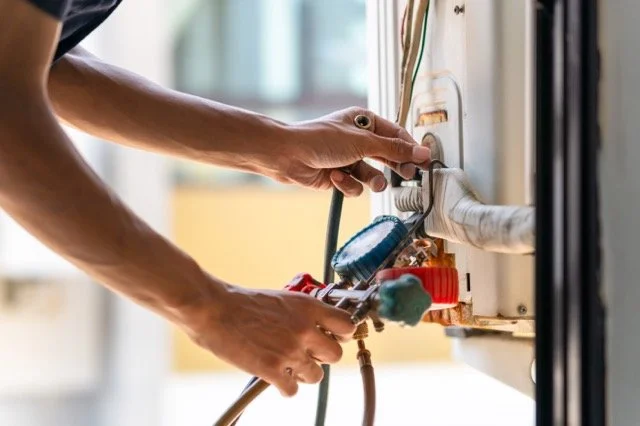
You walk past your air conditioner on a humid July afternoon in Sterling Heights, and something looks wrong. There's ice forming on the copper lines. Maybe frost covering the indoor coil. Your house isn't cooling, and you can hear the system running constantly.
A frozen AC coil isn't just inconvenient — it's a warning sign that something in your cooling system has failed. Left unchecked, it can damage your compressor and turn a $200 repair into a $3,000 replacement.
I've been fixing frozen coils across Macomb and Oakland counties for over two decades with NEXT Heating & Cooling. Most homeowners can handle the initial troubleshooting themselves. Some frozen coil problems need a licensed technician with refrigerant certification and diagnostic tools.
This guide walks you through both scenarios — what you can fix today, and when to call for professional AC repair services.
Why AC Coils Freeze: The Building Science
Your air conditioner doesn't create cold air. It moves heat from inside your home to outside using refrigerant — a chemical that changes between liquid and gas as it absorbs and releases thermal energy.
The evaporator coil sits inside your home (usually in the furnace cabinet or air handler). Refrigerant flows through this coil at low pressure, which drops its temperature to around 40°F. When warm indoor air passes over the cold coil, heat transfers from the air into the refrigerant. The air cools down. The refrigerant heats up and evaporates into a gas.
This process depends on constant airflow. Your blower motor needs to push enough warm air across the coil to keep its surface temperature above freezing. When airflow drops or refrigerant pressure falls, the coil's surface temperature can drop below 32°F. Moisture in the air freezes on contact. Ice builds up. Airflow drops further. More ice forms. The cycle accelerates.
Michigan's summer humidity makes this worse. We get dewpoints in the 60s and 70s during July and August. That moisture-heavy air hits a coil that's running too cold, and you get rapid ice accumulation — sometimes a half-inch thick coating in just a few hours.
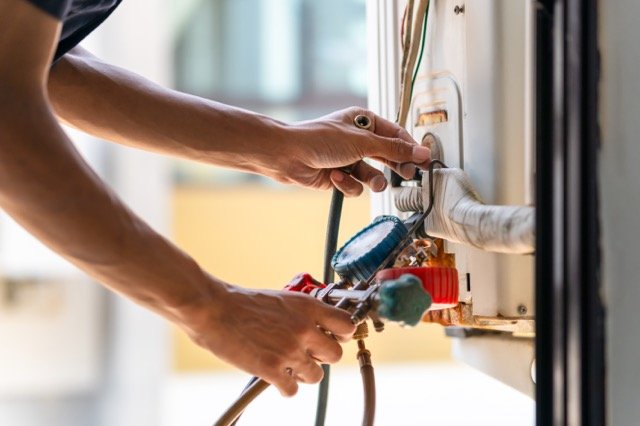
Six Common Causes of Frozen AC Coils
After 35 years in the HVAC trade across Southeast Michigan, we see the same six problems cause 95% of frozen coils. Here's what actually goes wrong:
1. Restricted Airflow from Dirty Filters
This is the number one cause. A clogged air filter blocks airflow across the evaporator coil. Less warm air means the coil runs colder. Surface temperature drops below freezing. Ice forms.
I've pulled filters from homes in Troy and Rochester Hills that were so packed with dust they looked like felt sheets. The homeowner hadn't changed them in six months. The system was starving for air.
Your AC needs to move 400 cubic feet per minute of air for every ton of cooling capacity. A 3-ton system needs 1,200 CFM. A dirty filter can cut that in half.
2. Low Refrigerant from Leaks
When refrigerant leaks out of your system, pressure drops. Lower pressure means lower temperature at the evaporator coil — often well below freezing even with normal airflow.
Refrigerant doesn't get "used up" like gasoline. If your system is low, you have a leak. Common leak points include the service valves, brazed joints on the copper lines, the evaporator coil itself (especially on systems over 12 years old), and the condenser coil outside.
R-410A systems run at higher pressures than the old R-22 systems, which means leaks often happen faster. We see this frequently on Carrier, Lennox, and Trane systems installed between 2010 and 2015 — the coils on some of those models developed formicary corrosion from volatile organic compounds in the air.
3. Blower Motor Problems
If your blower motor is failing or running at reduced speed, airflow drops. The coil freezes even with a clean filter.
Blower motors fail gradually. The bearings wear out. The capacitor weakens. You might notice reduced airflow from your registers weeks before the coil freezes. Some motors have multiple speed taps — if the control board or wiring fails, the motor might run on low speed when it should be on high.
This is especially common in older homes across Macomb County with original equipment from the 1990s and early 2000s. Those PSC (permanent split capacitor) motors weren't built to run 12 hours a day through Michigan's humid summers.
4. Dirty Evaporator Coils
Even with clean filters, dust and organic material can coat the evaporator coil fins over time. This insulates the coil and blocks heat transfer. The refrigerant can't absorb heat efficiently. Temperature drops. Ice forms.
We see this most often in homes with pets, homes near construction sites, and older homes with leaky ductwork pulling attic dust into the system. The coil looks gray or brown instead of copper-colored. You can't fix this yourself — it requires removing panels and using coil cleaner with proper rinsing.
5. Thermostat Issues
A failing thermostat can cause short-cycling or keep the compressor running when the blower shuts off. Either scenario can freeze the coil.
If your thermostat's temperature sensor is reading incorrectly, it might think your house is 78°F when it's actually 72°F. The system keeps running. The coil gets colder and colder. Ice builds up.
We also see problems with older programmable thermostats that lose their settings or develop wiring faults. The G (fan) wire might lose connection, causing the blower to stop while the compressor keeps running.
6. Running AC When It's Too Cold Outside
Most residential AC systems aren't designed to run when outdoor temperatures drop below 60°F. The refrigerant pressure gets too low. The indoor coil freezes.
This happens in Michigan during cool spring nights or after a cold front moves through in late August. Someone leaves the AC on overnight. Temperature drops to 55°F. By morning, the coil is frozen solid.
If you need cooling when it's cool outside, open windows instead. Or consider a heat pump system — they're designed to operate efficiently at lower outdoor temperatures.
How to Fix a Frozen AC Coil: Step-by-Step
Here's the safe process for thawing and troubleshooting a frozen coil. Follow these steps in order:
Step 1: Turn Off the AC and Switch to Fan-Only Mode
Go to your thermostat. Turn the system switch to OFF or switch the system mode to FAN ONLY. This stops the compressor (the outdoor unit) from running while keeping the indoor blower running.
The blower will circulate warm indoor air across the frozen coil, helping it thaw faster. Never run your AC with a frozen coil — the compressor can't pump refrigerant properly through ice-blocked coils, and you risk burning out the compressor motor.
Step 2: Allow the Coil to Thaw Completely
Let the ice melt naturally. This typically takes 2 to 4 hours depending on how much ice has accumulated. Expect water — lots of it. The condensate drain pan under your indoor unit will fill up. Place towels around the unit to catch overflow.
If water starts leaking through your ceiling or down walls, you have a clogged condensate drain. Turn off the blower and call a technician. Don't try to force the drain open with compressed air or drain cleaners — you can rupture the drain line inside your walls.
Step 3: Check and Replace the Air Filter
Once the coil is thawed, locate your air filter. It's usually in one of three places: the return air grille on your wall or ceiling, a slot in the furnace cabinet, or a dedicated filter rack in the return duct.
Pull the filter out and hold it up to a light. If you can't see light through it, it's clogged. If it's gray or brown, it's overdue for replacement. If it hasn't been changed in over 30 days during cooling season, replace it.
Use a standard pleated filter with a MERV rating between 8 and 11. Don't use the cheap fiberglass filters — they don't capture enough dust. Don't use MERV 13 or higher unless your system was specifically designed for it — the airflow restriction can cause the same freezing problem you're trying to fix.
Step 4: Inspect All Return Air Vents
Walk through your home and check every return air vent. Make sure they're all open and unblocked. Look for furniture pushed up against returns, curtains covering vents, or storage items blocking airflow.
Check your supply registers too. At least 80% of them should be open. Closing too many registers increases static pressure in your ductwork, which reduces airflow at the evaporator coil.
In older Michigan homes — especially 1960s ranches in Warren, St. Clair Shores, and Roseville — we often find undersized return ductwork. The builder installed one 20x20 return for a whole house. That's not enough. If you have only one return vent and it's smaller than 24x24, you probably need ductwork modifications. That's a job for a licensed HVAC contractor.
Step 5: Restart the System and Monitor
Once the coil is completely thawed and you've replaced the filter, turn the AC back on. Set your thermostat to COOL mode and lower the temperature setting a few degrees below current room temperature.
Monitor the system for 30 to 60 minutes. Check that cold air is flowing from your registers. Go back to the indoor unit and look at the copper lines. They should be cool to the touch with light condensation, but not frosted or iced.
If ice starts forming again within a few hours, shut the system down immediately and call a technician. You have a problem beyond dirty filters — likely low refrigerant, a failing blower motor, or dirty coils that need professional cleaning.
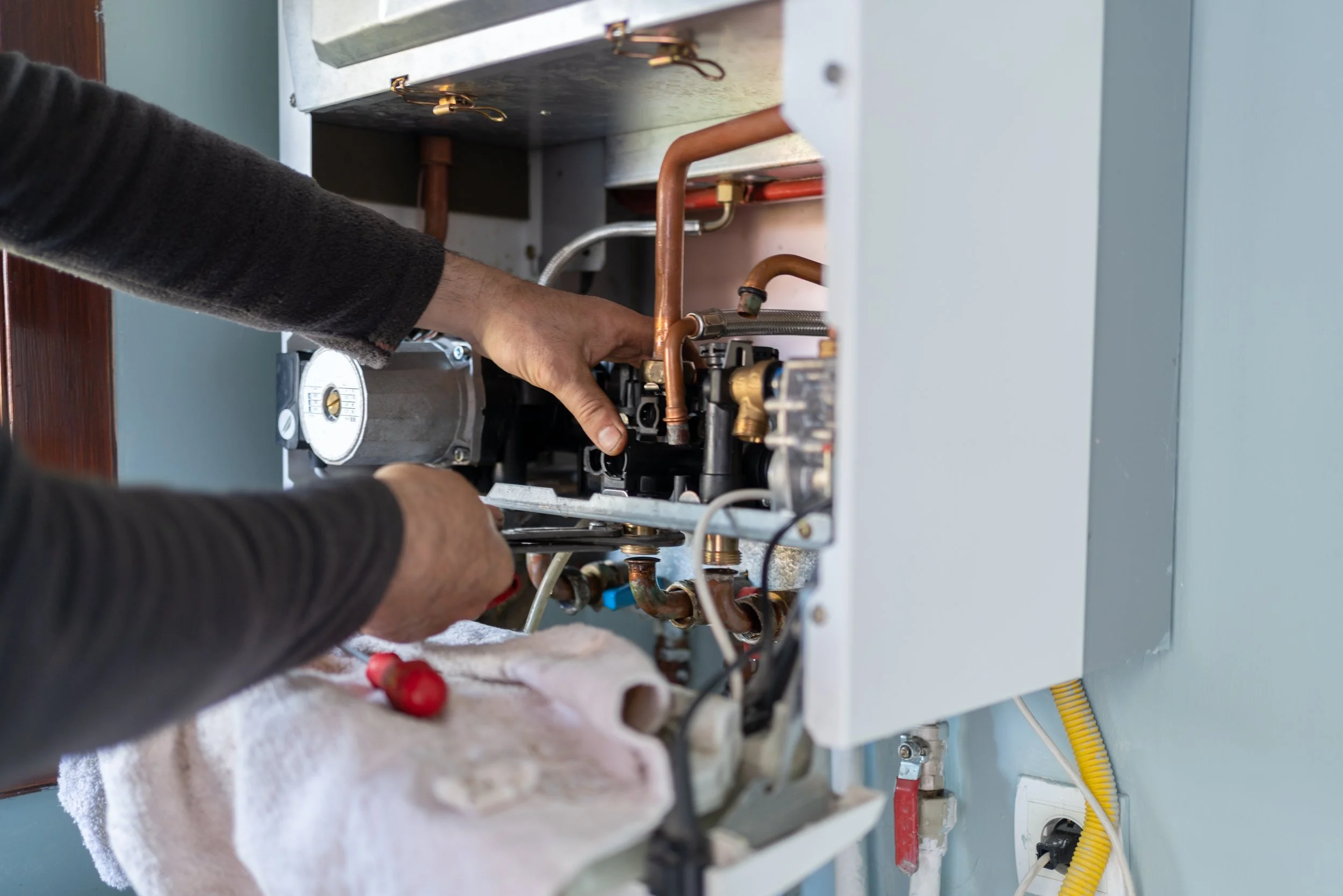
What NOT to Do With a Frozen AC Coil
I've seen homeowners make these mistakes more times than I can count. Don't do any of the following:
Never chip ice off the coil. Those thin aluminum fins bend easily. Once they're damaged, airflow is permanently restricted. You'll turn a simple fix into a $1,200 coil replacement.
Don't use heat guns or hair dryers. Rapid heating can crack the copper tubing or damage the expansion valve. Let the ice melt naturally with room-temperature air from the blower.
Don't ignore recurring freezing. If your coil freezes again after you've replaced the filter, you have a mechanical problem that requires diagnosis. Running the system repeatedly with frozen coils will damage the compressor.
Don't add refrigerant yourself. Handling refrigerant requires EPA 608 certification. Adding refrigerant without fixing the leak just kicks the problem down the road. Plus, if you overcharge the system, you can damage the compressor or cause the outdoor coil to freeze instead.
Don't keep running the AC hoping it will "work itself out." It won't. The compressor is working against ice blockage. The motor is overheating. You're adding hours of stress to a $1,500 component. Shut it down and fix the problem.
Signs You Need Professional AC Repair
Some frozen coil problems are beyond DIY troubleshooting. Call a technician if you notice any of these:
The coil refreezes within hours after thawing. This indicates low refrigerant, a failing blower motor, or severely dirty coils. All three require professional diagnosis and repair.
You hear hissing sounds near the indoor or outdoor unit. That's refrigerant leaking. Refrigerant leaks require leak detection equipment, brazing or soldering to repair, evacuation of the system, and proper recharging. This isn't a DIY job.
The blower motor isn't running or sounds unusual. Grinding, squealing, or humming without airflow means motor failure. Blower motor replacement requires electrical work and proper capacitor sizing.
There's water damage around the indoor unit. This might indicate a clogged condensate drain, a cracked drain pan, or improper unit leveling. Water damage can lead to mold growth in your ductwork — address it immediately.
Your energy bills have spiked. A system with low refrigerant or restricted airflow runs constantly trying to reach temperature. You'll see 30-50% higher electric bills during summer months.
The system is over 12 years old. Older systems are more prone to refrigerant leaks, blower motor failures, and coil corrosion. If your AC is freezing and it's more than a decade old, get a full system evaluation. You might be looking at $1,500 in repairs on a system that's worth $3,000.
Our NATE-certified technicians diagnose frozen coil problems across Metro Detroit every summer. We show up with diagnostic tools, refrigerant gauges, airflow meters, and thermal imaging cameras. We find the actual problem — not just the symptom.
Preventing Frozen AC Coils in Michigan Homes
Most frozen coils are preventable. Here's what works in Michigan's climate:
Change Your Filter Monthly During Cooling Season
From May through September, inspect your air filter every 30 days. If it looks dirty, replace it. Don't wait for the "3-month" rating printed on the package — that's for ideal conditions with no pets, no construction dust, and minimal system runtime.
Michigan summers are humid. Your AC runs more. More runtime means more air passing through the filter. More air means faster dust accumulation. Monthly changes prevent 80% of frozen coil problems.
Schedule Annual Spring AC Tune-Ups
Professional maintenance catches problems before they cause failures. A proper tune-up includes cleaning the evaporator coil, checking refrigerant charge, testing the blower motor and capacitor, inspecting electrical connections, and verifying proper airflow.
We run into homeowners in Shelby Township and Clinton Township who haven't had their AC serviced in 5+ years. The coils are coated in dust. The refrigerant is low. The capacitor is weak. Then they call us in July when the system freezes, and we're explaining that this didn't happen overnight — it's been building for years.
The NEXT Care Plan covers two annual visits — a fall furnace tune-up and a spring AC tune-up — for $5 a month. That's $60 a year for maintenance that prevents $1,500 repair bills. You also get priority scheduling, 10% off repairs, and no service call fees.
Keep Return Vents Clear
Don't block return air vents with furniture, storage, or decorations. Your AC needs unrestricted airflow to function properly. If you're rearranging furniture, check that you haven't blocked a return.
Don't Close Too Many Supply Registers
Closing registers in unused rooms seems like it would save energy. It doesn't. It increases static pressure in your ductwork, reduces airflow at the evaporator coil, and can cause freezing.
If you want zone control, install a properly designed zoning system with dampers and multiple thermostats. Don't just close registers.
Set Your Thermostat Appropriately
Don't set your thermostat below 68°F. Most residential AC systems aren't designed to maintain indoor temperatures that low, especially during humid Michigan summers. Setting it to 65°F won't cool your house faster — it just makes the system run longer and increases the risk of coil freezing.
Consider Upgrading Old Equipment
If your AC is over 15 years old, it's near the end of its service life. Older systems use R-22 refrigerant, which is no longer manufactured. If you develop a refrigerant leak, recharging the system costs $150+ per pound. A new system using R-410A or R-32 refrigerant will be more efficient and more reliable.
We install Carrier, Lennox, Trane, Rheem, Bryant, Goodman, Amana, and York systems across Southeast Michigan. Modern variable-speed systems with two-stage compressors run more efficiently and maintain better humidity control than the single-stage systems from the 2000s.
Cost Reality: DIY vs Professional AC Repair
Here's what frozen coil diagnosis and repair actually costs in Metro Detroit as of 2026:
Air filter replacement (DIY): $20-40 for a quality pleated filter. This fixes 60% of frozen coil problems.
Professional diagnostic service call: $89-150 depending on the company and time of day. This includes a technician coming to your home, diagnosing the problem, and providing a repair estimate. At NEXT Heating & Cooling, our diagnostic fee is waived if you proceed with the recommended repair.
Evaporator coil cleaning: $150-300. This involves removing access panels, applying coil cleaner, rinsing with low-pressure water, and reassembling the unit. Takes 1-2 hours.
Refrigerant leak detection and repair: $300-800 depending on leak location and accessibility. Simple service valve leaks are quick fixes. Leaks in the evaporator coil or inside the air handler require more labor. Add $150-200 for refrigerant recharge after the leak is repaired.
Blower motor replacement: $400-600 for the motor, capacitor, and labor. Variable-speed ECM motors cost more than standard PSC motors but run more efficiently.
Evaporator coil replacement: $1,200-2,000 including the coil, refrigerant, evacuation, and labor. If your coil has developed leaks from corrosion, replacement is often more cost-effective than repeated leak repairs.
Complete AC system replacement: $3,500-7,000 depending on system size, efficiency rating, and installation complexity. If your system is over 15 years old and needs major repairs, replacement might make more financial sense.
We give honest recommendations. If your 18-year-old AC needs a $1,500 coil replacement, we'll tell you that you're better off putting that money toward a new system that will last another 15 years. We don't upsell. We explain the options and let you decide. That's part of changing contractor culture.

Need Help With a Frozen AC Coil?
NEXT Heating & Cooling has been diagnosing and repairing AC problems across Southeast Michigan for over 35 years. Our NATE-certified technicians show up on time, explain the problem clearly, and give you honest options without pressure. Same-day service available.
Schedule AC RepairFrequently Asked Questions About Frozen AC Coils
A frozen AC coil typically takes 2 to 4 hours to thaw completely when you turn off the compressor and run the blower in fan-only mode. The exact time depends on how much ice has accumulated and your home's indoor temperature. Don't try to speed up the process with heat guns or hair dryers — let it thaw naturally with room-temperature air circulation. Place towels around the indoor unit to catch condensation water.
No. Never run your AC with a frozen coil. The ice blocks airflow and prevents proper refrigerant circulation, forcing the compressor to work against excessive pressure. This overheats the compressor motor and can cause permanent damage. A compressor replacement costs $1,500-3,000. Shut the system down immediately if you see ice forming, switch to fan-only mode to thaw the coil, and address the underlying problem before restarting.
If your AC coil keeps freezing even after filter replacement, you likely have low refrigerant from a leak, a failing blower motor, dirty evaporator coils, or blocked return air ducts. These problems require professional diagnosis. Low refrigerant is the most common cause of recurring frozen coils — refrigerant pressure drops below normal operating range, causing the coil surface temperature to fall below freezing even with adequate airflow. Call a licensed HVAC technician to diagnose and repair the problem.
Frozen AC coil repair costs in Metro Detroit range from $20 (DIY filter replacement) to $2,000 (evaporator coil replacement). Professional coil cleaning costs $150-300. Refrigerant leak repair and recharge costs $300-800. Blower motor replacement costs $400-600. The exact cost depends on the underlying cause. Simple airflow restrictions are cheap fixes. Refrigerant leaks and component failures cost more. A diagnostic service call ($89-150) identifies the problem and provides an accurate repair estimate.
Set your thermostat no lower than 68°F to prevent coil freezing. Most residential AC systems aren't designed to maintain indoor temperatures below this threshold, especially during humid Michigan summers. Setting your thermostat to 65°F or lower doesn't cool your house faster — it just makes the evaporator coil run colder, increasing the risk of ice formation. If your home isn't comfortable at 72-74°F, you might have insulation problems, air leaks, or an undersized AC system.
Yes. Regular maintenance prevents most frozen coil problems. Change your air filter monthly during cooling season. Schedule annual spring AC tune-ups to clean the evaporator coil, check refrigerant charge, test the blower motor, and verify proper airflow. Keep return air vents clear and don't close too many supply registers. The NEXT Care Plan provides two annual tune-ups (spring AC and fall furnace) for $5/month, catching problems before they cause system failures.
Typically no. Most homeowners insurance policies don't cover AC repairs from normal wear and tear or lack of maintenance. Frozen coils caused by dirty filters, low refrigerant, or aging components are considered maintenance issues. However, if the frozen coil caused secondary damage like water leaks that damaged your ceiling or walls, the water damage might be covered. Check your specific policy and contact your insurance agent. Preventive maintenance through programs like the NEXT Care Plan is more cost-effective than relying on insurance coverage.