

Central AC Prices Goodison MI: 2026 Cost Breakdown by Tier
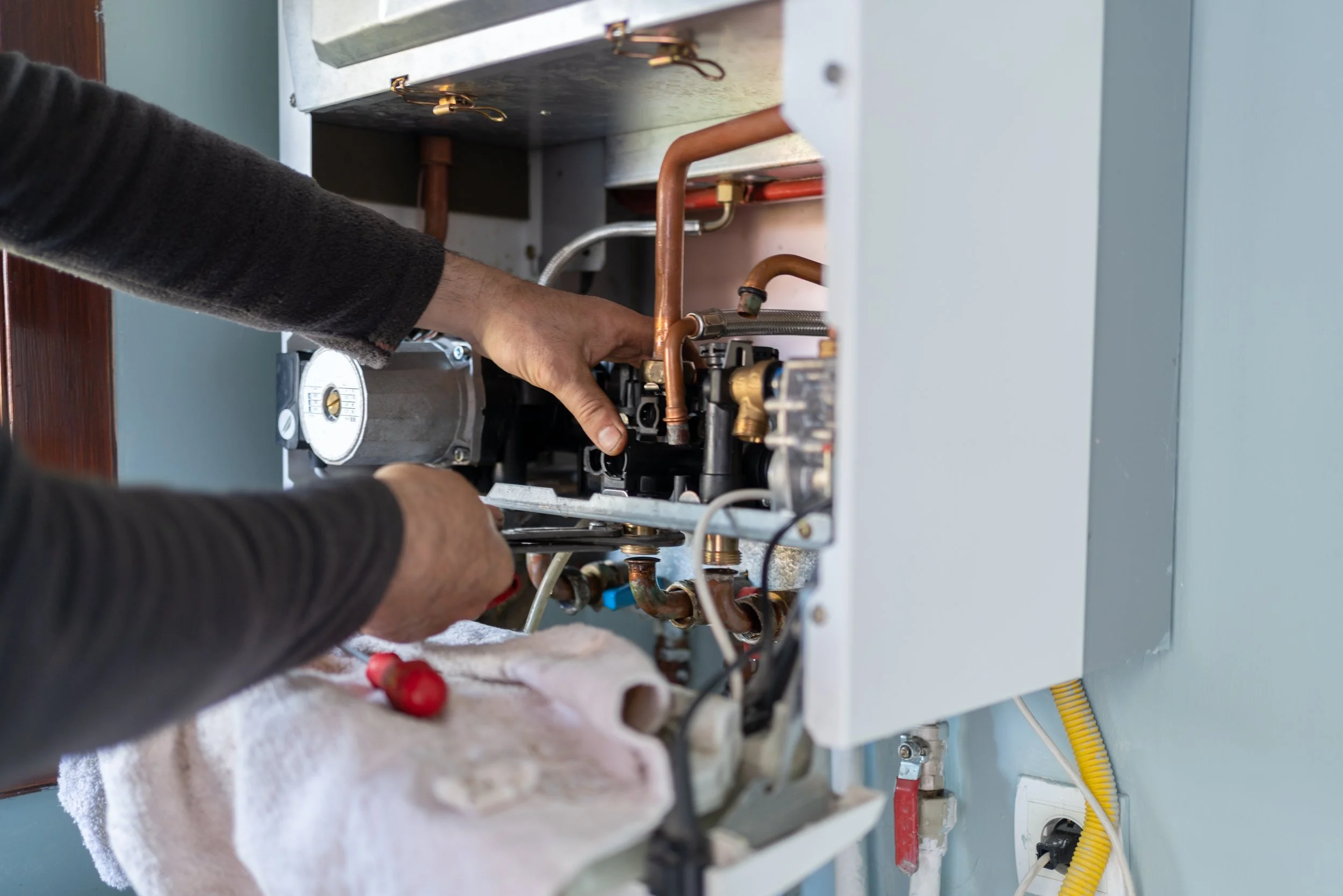
You're searching for central air conditioner prices in Goodison because you need real numbers — not vague ranges that could mean anything. After 35 years installing AC systems across Southeast Michigan, we know exactly what homeowners in Goodison pay in 2026, and we're going to break it down by tier so you can budget accurately.
Here's what matters: a complete central AC installation in Goodison runs between $4,200 and $14,000+ depending on three factors — the efficiency tier you choose, your home's size and ductwork condition, and installation complexity. Those aren't just random numbers. They reflect real equipment costs, labor rates under Michigan mechanical contractor licensing requirements, and the specific challenges we see in Goodison homes built everywhere from the 1960s to last year.
We'll walk through budget, mid-tier, and premium system costs with the brands we actually install — Carrier, Lennox, Trane, Rheem, Bryant, Goodman, Amana, and York. You'll see what's included in installation, what drives costs up or down, and when replacement makes more sense than another repair. No sales pitch. Just the pricing breakdown you came here for.
What Actually Affects Central AC Pricing in Goodison
Before we get into tier pricing, you need to understand why two Goodison homes of similar size can have installation costs $3,000 apart. It's not arbitrary. Four factors drive every quote we write.
Home Size and Cooling Load Calculation
We don't guess tonnage. Every proper installation starts with an ACCA Manual J load calculation that accounts for your home's square footage, insulation levels, window orientation, ceiling height, and how many people live there. A 1,600-square-foot ranch in Goodison might need a 2.5-ton system, while a poorly insulated 1,400-square-foot colonial with west-facing windows could require 3 tons.
Undersizing leaves you sweating through July. Oversizing wastes money upfront and creates humidity problems because the system short-cycles instead of running long enough to dehumidify. The calculation takes about 45 minutes and determines the baseline equipment size — which directly affects price.
Existing Ductwork Condition
If your ductwork is properly sized, sealed, and insulated, you're replacing equipment only. If it's undersized for the new system's airflow requirements, leaking at seams, or uninsulated in the attic, we're adding ductwork modification costs. Many Goodison homes built in the 1970s and 1980s have ductwork sized for older, less efficient systems that moved less air. Upgrading to a high-efficiency variable-speed system sometimes requires larger return ducts to handle increased airflow.
We also see ductwork in unconditioned spaces — attics and crawlspaces — that's lost insulation wrap or has disconnected joints. Fixing that before installing new equipment isn't upselling. It's preventing the new AC from working twice as hard to overcome duct losses. When we discuss ductwork sizing for new AC installations, we're addressing a real efficiency barrier.

SEER2 Rating and Efficiency Tier
As of 2023, the Department of Energy shifted from SEER to SEER2 ratings — a more realistic testing standard that better reflects real-world performance. Federal minimum for new central AC systems in the northern U.S. is 14 SEER2. Budget systems hit that minimum. Mid-tier systems run 16-17 SEER2. Premium systems reach 18-20+ SEER2 with variable-speed compressors and advanced humidity control.
Higher SEER2 costs more upfront but delivers lower operating costs. A 20 SEER2 system uses roughly 30% less electricity than a 14 SEER2 system under identical conditions. Whether that payback makes sense depends on how long you plan to stay in the house and your summer cooling bills. We'll break down the math by tier.
Installation Complexity
Straightforward replacement — matching tonnage, condenser sits in the same location, indoor coil fits the existing plenum, electrical service is adequate — takes one day with a two-person crew. That's the baseline labor cost.
Complexity adds cost: relocating the outdoor unit to meet updated setback codes, upgrading electrical service from 30-amp to 50-amp for a larger system, adding a new concrete pad, running a longer refrigerant line set, replacing the indoor coil and plenum because the old furnace won't accommodate the new coil dimensions. None of that is padding the bill. It's real work governed by Michigan mechanical codes and manufacturer installation specifications.
Budget Tier: $4,200-$6,500 Installed
Budget-tier systems meet federal efficiency minimums and deliver reliable cooling without premium features. You're looking at 14-15 SEER2 single-stage or basic two-stage units from Goodman, Amana, York, or entry-level Rheem and Bryant models. These are workhorse systems — proven compressor technology, standard warranties, straightforward installation.
What You Get in This Tier
A 2.5-ton 14 SEER2 Goodman GSX14 with a matching indoor coil runs around $2,800-$3,400 for equipment. Add installation labor (refrigerant line set, electrical disconnect, condensate drain, startup and commissioning), permits, and a basic parts warranty, and you're at $4,200-$5,200 for a straightforward replacement. If we're adding a new concrete pad, upgrading the disconnect, or modifying ductwork, that pushes toward $6,000-$6,500.
Goodman and Amana (same parent company, similar construction) dominate this tier because they offer solid build quality at lower price points. York and entry-level Rheem models sit slightly higher but include longer base warranties. All meet the same federal efficiency standards. The difference is warranty length and brand reputation, not cooling performance.
Who Should Consider Budget Tier
Budget tier makes sense if you're planning to sell within 5-7 years, need to replace a failed system immediately without financing, or simply don't run AC heavily enough to justify premium efficiency. A Goodison homeowner who keeps the thermostat at 76°F and only runs AC during heat waves won't see enough savings from an 18 SEER2 system to justify the $4,000 upcharge.
It also works for rental properties where the landlord pays for equipment but tenants pay utilities. You're meeting the obligation to provide working AC without overinvesting in efficiency the owner won't benefit from.
Real Cost Example: We installed a 3-ton Goodman GSX14 in a 1,750-square-foot Goodison ranch last June. Existing ductwork was in good shape, condenser location stayed the same, electrical service was adequate. Total cost: $5,100 including permits and startup. Homeowner financed through their credit union at 6.5% over 5 years — monthly payment of $99.
Mid-Tier: $6,500-$9,200 Installed
Mid-tier is where most Goodison homeowners land because it balances upfront cost with long-term efficiency and comfort features. You're looking at 16-17 SEER2 two-stage systems from Carrier, Bryant, Rheem, Trane, and Lennox. Two-stage compressors run at low speed most of the time — quieter operation, better humidity control, more even temperatures, and 20-25% lower operating costs than single-stage budget models.
What You Get in This Tier
A 3-ton Carrier Comfort 16 SEER2 two-stage system with a matching evaporator coil runs about $4,200-$5,000 for equipment. Installation brings the total to $6,800-$8,200 depending on site conditions. Bryant Evolution (Carrier's sister brand), Rheem Classic Plus, and Trane XR models sit in the same range with slight variations in warranty coverage and dealer support networks.
The two-stage compressor is the key upgrade. Instead of running full-blast until the thermostat is satisfied, it runs at 65-70% capacity most of the time, only ramping to full capacity during peak heat. That delivers longer run cycles, which means better dehumidification — critical during Michigan's humid summers. You'll notice fewer temperature swings and lower humidity levels compared to a single-stage system.
Mid-tier systems also include better warranties. Carrier and Bryant offer 10-year parts warranties standard (vs. 5-6 years for budget brands). Trane and Lennox include 10-year compressor warranties and optional extended labor coverage. That matters when you're planning to stay in the house long-term.
Who Should Consider Mid-Tier
Mid-tier makes sense if you're staying in the house 10+ years, run AC regularly through summer, or have comfort complaints with your current system (hot/cold spots, high humidity, noise). The efficiency payback happens faster than premium tier, usually within 7-10 years depending on usage patterns.
It's also the sweet spot for homes with existing two-stage furnaces. Pairing a two-stage AC with a two-stage furnace and a compatible thermostat creates a balanced system that communicates between components for optimized performance year-round.
Real Cost Example: We installed a 2.5-ton Bryant Evolution 16 SEER2 in a 1,600-square-foot Goodison colonial last August. Needed to relocate the condenser 8 feet to meet updated setback requirements and add a new pad. Modified return duct to handle increased airflow. Total cost: $8,400 including permits, ductwork, and 10-year parts warranty. Homeowner's summer electric bills dropped from $180/month to $135/month average — $540/year savings.
Premium Tier: $9,200-$14,000+ Installed
Premium tier is for homeowners who want the highest efficiency, quietest operation, and best humidity control available. You're looking at 18-20+ SEER2 variable-speed systems from Carrier Infinity, Lennox Signature, Trane XV, and top-tier Rheem Prestige models. These systems use inverter-driven variable-speed compressors that modulate output from 25% to 100% capacity in 1% increments, matching cooling load precisely.
What You Get in This Tier
A 3-ton Carrier Infinity 20 SEER2 variable-speed system with a variable-speed air handler runs $7,500-$9,000 for equipment. Installation brings the total to $10,500-$13,500 depending on complexity. Lennox XC25 (up to 26 SEER2) and Trane XV20i sit at the top of the range, sometimes exceeding $14,000 installed for larger homes requiring 4-5 ton systems.
Variable-speed technology delivers measurable benefits. The compressor runs at low speed 80-90% of the time, cycling on and off less frequently. That means longer run times (better dehumidification), quieter operation (outdoor sound levels as low as 56 decibels — quieter than normal conversation), and the most consistent temperatures of any system type. Some homeowners report indoor temperature variations of less than 0.5°F once the system reaches equilibrium.
Premium systems also include advanced controls. Carrier Infinity and Lennox iComfort thermostats provide humidity control independent of temperature, remote access via smartphone, and integration with whole-home air quality systems. You're not just buying an AC — you're buying a complete climate control platform.
Who Should Consider Premium Tier
Premium tier makes sense if you're building new or doing a complete HVAC overhaul, plan to stay in the house 15+ years, have high summer cooling loads (large windows, poor insulation, multi-story homes), or prioritize comfort and quiet operation over payback calculations. It's also the right choice if you're pairing with a variable-speed furnace or heat pump to create a fully communicating system.
The efficiency payback takes longer — often 12-15 years compared to mid-tier systems. But the comfort difference is immediate. Homeowners who upgrade from single-stage to variable-speed consistently report it's the best HVAC investment they've made, even when the math doesn't justify it purely on energy savings.
Real Cost Example: We installed a 4-ton Lennox XC20 variable-speed system in a 2,400-square-foot Goodison two-story last May. Included new variable-speed air handler, upgraded thermostat with humidity control, and ductwork balancing. Total cost: $13,200. Homeowner's summer electric bills dropped from $240/month to $165/month — $900/year savings. But the real benefit was eliminating the second-floor temperature difference that had plagued them for years.
What's Included in Installation Cost
When we quote a central AC installation, here's what the number actually covers. Understanding the breakdown helps you compare quotes from different contractors and spot lowball bids that leave out critical components.
Equipment Costs
The outdoor condensing unit and indoor evaporator coil make up 50-60% of the total project cost. A 3-ton budget-tier condenser runs $1,400-$1,800 wholesale. Mid-tier runs $2,200-$3,000. Premium tier runs $3,500-$5,000+. The indoor coil adds $600-$1,200 depending on efficiency and whether it's cased (has its own cabinet) or uncased (installs directly in the furnace plenum).
Refrigerant line sets (the copper tubing connecting indoor and outdoor units) cost $200-$500 depending on length and line size. Longer runs or systems requiring larger line sets for increased refrigerant flow push toward the higher end.
Labor and Installation
A straightforward replacement takes 6-8 hours with a two-person crew. At prevailing Michigan HVAC labor rates, that's $1,200-$1,800 in labor costs. Complex installations requiring ductwork modification, electrical upgrades, or unit relocation can push to 10-12 hours and $2,000-$2,500 in labor.
Labor includes removing the old system, installing the new condenser and coil, running and connecting refrigerant lines, installing electrical disconnect and wiring, connecting condensate drain, pressure-testing the system, evacuating air and moisture from refrigerant lines, charging the system to manufacturer specifications, and commissioning (verifying airflow, refrigerant charge, and system operation).
Permits and Inspections
Michigan mechanical code requires permits for HVAC equipment replacement. Permit fees in Goodison and surrounding Macomb County communities run $75-$150. The permit covers the inspection that verifies the installation meets code — proper electrical connections, refrigerant line installation, condensate drain routing, and equipment clearances.
Contractors who skip permits to save money are exposing you to liability. If the system fails and your homeowner's insurance investigates, an unpermitted installation can void coverage. It also creates problems when you sell the house — buyers' home inspectors flag unpermitted work, and you'll end up paying to bring it into compliance anyway.
Warranty Coverage
Equipment warranties vary by brand and tier. Budget systems typically include 5-6 year parts warranties. Mid-tier includes 10-year parts warranties. Premium systems include 10-year parts warranties with optional extended labor coverage (typically $300-$500 additional).
The parts warranty covers manufacturer defects — failed compressors, leaking coils, defective control boards. It doesn't cover labor to diagnose and repair, refrigerant to recharge the system, or damage caused by improper maintenance. That's where our Next Care Plan maintenance subscription comes in — $5/month gets you two annual tune-ups (spring AC, fall furnace) that catch small problems before they become expensive failures.
Additional Costs to Consider
Several scenarios add cost beyond baseline installation. Upgrading electrical service from 30-amp to 50-amp for a larger system runs $400-$800 depending on panel location and wire run length. Adding or replacing a concrete pad for the outdoor unit runs $200-$400. Relocating the condenser to meet setback codes or improve aesthetics adds $300-$600 in labor and materials.
Ductwork modification is the biggest variable. Minor adjustments (enlarging return duct opening, adding a return air grille) run $200-$500. Major ductwork replacement or redesign can add $2,000-$5,000 depending on scope. We always evaluate ductwork during the estimate and include necessary modifications in the quote so there are no surprises.
Signs Your AC Needs Replacement (Not Just Repair)
Not every AC problem requires replacement. We fix plenty of systems that have years of life left. But certain conditions make replacement the smarter financial decision, even when repair is technically possible.
Age and Efficiency Threshold
If your AC is 15+ years old and requires a repair costing more than $1,000, replacement usually makes more sense. Here's the math: a 15-year-old system likely operates at 10 SEER or lower (pre-2006 efficiency standards). A new 16 SEER2 system uses 35-40% less electricity. If your summer cooling costs are $150/month, that's $50-60/month savings, or $300-360/year. A $1,500 repair buys you maybe 2-3 more years. A $7,000 replacement gives you 15-20 years at lower operating costs.
The breakeven point shifts based on repair cost and system age. For systems 10-12 years old, we use the $5,000 rule: if remaining life expectancy (in years) times annual operating cost savings exceeds the replacement cost, replace. If not, repair. It's not perfect, but it prevents throwing money at a dying system.
Compressor Failure
The compressor is the heart of the AC system. When it fails, replacement cost (parts and labor) runs $1,800-$3,500 depending on system size and refrigerant type. If the system is under 5 years old and still under warranty, repair makes sense — you're only paying labor. If it's 10+ years old, you're paying full price to replace a major component in an aging system. That's when replacement wins.
Compressor failure also indicates other problems. The compressor usually fails because of dirty coils (restricted airflow causing overheating), low refrigerant from a leak (causing the compressor to overheat), or electrical issues. Replacing just the compressor without addressing the root cause often leads to another failure within 2-3 years.
Refrigerant Leaks and R-22 Phase-Out
If your system uses R-22 refrigerant (common in systems installed before 2010) and develops a leak, you're facing a difficult decision. R-22 production ended in 2020. Remaining supply is limited and expensive — $100-$150 per pound compared to $10-15 per pound for modern R-410A refrigerant. A 3-ton system holds 6-8 pounds of refrigerant. Recharging after a leak repair costs $600-$1,200 just for refrigerant.
You can repair the leak and recharge with R-22, repair the leak and retrofit to an R-22 substitute refrigerant (requires component changes, not always successful), or replace the system with modern R-410A equipment. For systems over 12 years old, replacement almost always makes more financial sense than chasing R-22 leaks.
Repeated Repairs and Reliability
If you're calling for service multiple times per season, the system is telling you it's done. We track service history for our maintenance plan customers. When a system requires three or more service calls in two years, we have the replacement conversation. You're spending $300-500 per service call, dealing with the inconvenience of breakdowns during heat waves, and risking a catastrophic failure that leaves you without cooling for days while we source parts.
Reliability matters. A new system comes with warranty coverage and predictable performance. An aging system becomes a gamble every summer. For homeowners who can't tolerate downtime (health conditions, young children, elderly family members), replacement provides peace of mind that repair can't match.
If you're seeing any of these warning signs, it's time to get an honest assessment. Our HVAC services in Metro Detroit include free estimates with load calculations and system evaluations — no pressure, just the information you need to make the right call.
Ready to Get Started?
NEXT Heating & Cooling has been keeping Michigan homes comfortable for over 35 years. Get honest diagnostics and fair pricing from NATE-certified technicians who show up on time. We'll calculate the right system size for your Goodison home, explain your options clearly, and give you a written quote with no surprises.
Schedule Your Free EstimateFrequently Asked Questions
Complete central AC installation in Goodison runs $4,200-$14,000+ depending on system size, efficiency tier, and installation complexity. Budget systems (14-15 SEER2) cost $4,200-$6,500. Mid-tier systems (16-17 SEER2) cost $6,500-$9,200. Premium variable-speed systems (18+ SEER2) cost $9,200-$14,000+. The price includes equipment, installation labor, permits, and warranty coverage. Ductwork modifications, electrical upgrades, or unit relocation add to the base cost.
System size depends on a proper load calculation, not just square footage. A typical 1,500-square-foot Goodison home needs 2-2.5 tons. A 2,000-square-foot home needs 2.5-3 tons. A 2,500-square-foot home needs 3-3.5 tons. But insulation levels, window size and orientation, ceiling height, and home construction all affect the calculation. We perform ACCA Manual J load calculations on every installation to ensure proper sizing — undersizing leaves you uncomfortable, oversizing wastes money and creates humidity problems.
It depends on your usage and how long you're staying in the house. A 16 SEER2 system uses about 15% less electricity than a 14 SEER2 system. An 18 SEER2 system uses about 30% less than 14 SEER2. If your summer cooling costs are $150/month, upgrading from 14 to 16 SEER2 saves roughly $20-25/month, or $120-150/year. The upfront cost difference is typically $1,500-2,500, giving a payback period of 10-15 years. Higher SEER2 also provides better humidity control and quieter operation, which many homeowners value beyond energy savings. For similar analysis on other HVAC decisions, see our comparison of heat pumps vs central air for Michigan homes.
A straightforward replacement takes 6-8 hours with a two-person crew — usually completed in one day. Complex installations requiring ductwork modification, electrical upgrades, or condenser relocation can take 10-12 hours, sometimes requiring a second day. We schedule installations to minimize disruption and always complete startup and commissioning the same day so you have working AC when we leave. Permit inspections happen within 2-3 business days after installation.
If your AC is under 10 years old and the repair costs less than $1,000, repair usually makes sense. If it's 15+ years old and needs a repair over $1,000, replacement is typically the better investment. The key factors are system age, repair cost, efficiency of the current system, and how much longer you plan to stay in the house. We provide honest recommendations based on the actual condition of your system, not commission-based sales targets. Our technicians explain both options with real cost projections so you can make an informed decision.
Yes, we work with several financing partners to offer flexible payment options for AC installation. Many homeowners also finance through their bank or credit union — typical terms are 5-7 years at 6-8% APR depending on credit. We provide detailed quotes upfront so you can compare financing options and choose what works best for your budget. We also recommend our $5/month maintenance plan to protect your investment with seasonal tune-ups that prevent expensive breakdowns.
We install Carrier, Lennox, Trane, Rheem, Bryant, Goodman, Amana, York, and RUUD systems. Brand choice depends on your budget, efficiency goals, and feature preferences. We're not locked into a single manufacturer, which means we recommend the system that actually fits your needs rather than pushing whatever pays the highest commission. All the brands we install are backed by manufacturer warranties and our own installation warranty. We explain the differences between brands during the estimate so you understand what you're paying for.