

Why Your AC Is Making Loud Noise: 9 Causes Diagnosed
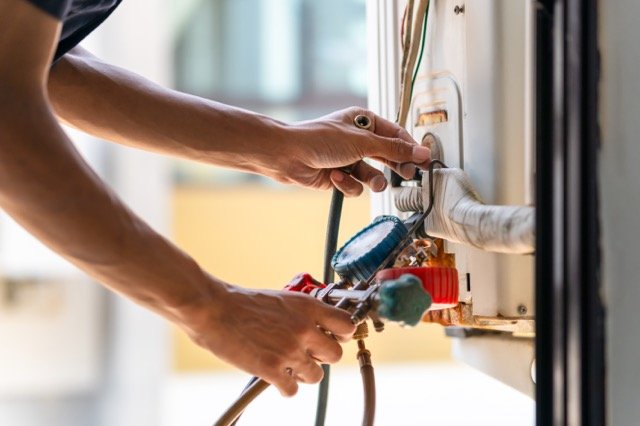
Your air conditioner shouldn't sound like a metal band warming up in your backyard. If you're hearing grinding, screeching, banging, or rattling from your AC unit, something mechanical is wrong—and ignoring it usually makes the problem more expensive.
After 35 years keeping Michigan homes comfortable through humid summers and temperature swings that stress HVAC systems harder than most climates, we've diagnosed thousands of noisy air conditioners. Most follow predictable patterns. Some need a $200 repair. Others signal a compressor that's about to cost you $2,500. The key is knowing which noise means what.
This guide walks through the 9 most common causes of loud AC noise we see across Macomb, Oakland, and St. Clair counties—what the sound actually tells you, what's failing mechanically, and when you need a licensed HVAC contractor versus a simple homeowner fix.
1. Compressor Failure (Loud Grinding or Screeching)
The compressor is the heart of your air conditioning system—it pressurizes refrigerant and pumps it through the cycle that removes heat from your home. When you hear loud grinding, screeching, or a metal-on-metal sound coming from the outdoor condenser unit, the compressor's internal components are likely failing.
Compressors contain pistons, valves, bearings, and a motor sealed inside a steel shell. When bearings wear out or internal components lose lubrication, metal parts grind against each other. This creates the distinctive screeching sound that homeowners in Sterling Heights and Troy call us about every June when temperatures hit the 90s.
Michigan's climate accelerates compressor wear in specific ways. Our summers combine high heat with high humidity—when your AC runs continuously for days during heat waves, the compressor operates under maximum load without rest periods. Add in voltage fluctuations from storm-stressed power grids, and compressor motors take a beating.
Cost Reality: Compressor replacement typically runs $1,800-$2,500 for the part and labor. If your AC unit is over 12 years old, most homeowners replace the entire system rather than invest in a new compressor for aging equipment. A complete system replacement with a high-efficiency unit costs $4,500-$7,500 depending on size and brand, but includes a full warranty and dramatically better efficiency.
If you hear grinding or screeching, shut the system off immediately. Continuing to run a failing compressor can cause additional damage—including burnout that contaminates refrigerant lines and requires complete system replacement. Our heating and cooling services in Metro Detroit include same-day diagnostic calls to assess whether repair or replacement makes financial sense for your specific situation.

2. Loose or Damaged Fan Blades (Rattling or Clicking)
Your AC system has two fans: the condenser fan in the outdoor unit (pulls air across the condenser coil) and the blower fan in the indoor air handler (pushes cooled air through your ductwork). When either fan develops loose or damaged blades, you'll hear rattling, clicking, or a rhythmic tapping sound that matches the fan's rotation speed.
Outdoor condenser fans take constant abuse from Michigan weather. Cottonwood seeds, leaves, ice from winter storms, and debris blown by wind get pulled into the unit. A single stick wedged between fan blades and the housing creates a loud rattling. Fan blades themselves can crack from age and UV exposure—plastic blades become brittle after 10-15 years of sun and temperature cycling.
The setscrew that secures the fan blade to the motor shaft can also loosen from vibration. When this happens, the blade wobbles as it spins, creating an off-balance clicking sound. Left unaddressed, the wobbling damages the motor shaft and bearings, turning a $150 fan blade replacement into a $600 motor replacement.
Indoor blower fans develop similar issues, though usually from accumulated dust rather than outdoor debris. If you hear rattling from your furnace or air handler when the AC runs, the blower wheel may have debris stuck to it or the wheel may have loosened on its shaft.
DIY Check: Turn off power to the AC at the breaker. Remove the top grille from the outdoor unit (usually held by screws). Inspect the fan blade for visible damage, cracks, or debris. Gently try to wiggle the blade—it should be firmly attached with no play. If you see damage or looseness, call for service. Don't run the unit until it's repaired.
Fan blade issues are among the simpler AC repairs, but they require proper diagnosis. Our technicians see homeowners who've run systems with damaged fans for weeks, creating secondary damage that multiplies repair costs. Similar to the issues we diagnose in our AC making loud noise troubleshooting guide, catching fan problems early prevents expensive cascading failures.
3. Refrigerant Leak (Hissing or Bubbling)
A hissing or bubbling sound—especially near the outdoor condenser unit or the indoor evaporator coil—usually indicates a refrigerant leak. Refrigerant moves through your AC system under high pressure. When there's a hole or crack in the copper refrigerant lines, the pressurized gas escapes with an audible hiss.
Most residential AC systems in Southeast Michigan use R-410A refrigerant (Puron). Older systems installed before 2010 often use R-22 (Freon), which is being phased out and now costs $150+ per pound due to EPA restrictions. A system that's low on refrigerant won't cool properly—you'll notice the AC running constantly without bringing indoor temperatures down.
Refrigerant leaks develop from several causes common in Michigan homes. Vibration from the compressor can crack brazed joints over time. Corrosion from road salt carried by wind affects outdoor units near streets. Formicary corrosion—caused by formic acid from household cleaners reacting with copper—eats microscopic holes in evaporator coils, particularly in systems with poor airflow.
Here's what homeowners need to know: simply adding refrigerant without finding and fixing the leak is a temporary band-aid that costs you money twice. EPA regulations require licensed technicians to locate and repair leaks before recharging systems. Any contractor who offers to "just top it off" without leak detection is breaking federal law and leaving you with a problem that will repeat in weeks or months.
Michigan Regulation Note: Only EPA 608-certified technicians can legally handle refrigerants. NEXT Heating & Cooling maintains all required certifications and follows proper recovery and disposal procedures. We use electronic leak detectors and nitrogen pressure testing to locate even small leaks before recharging systems.
Refrigerant leak repair costs vary dramatically based on location. A leak in an accessible outdoor line might cost $300-$500 to repair and recharge. A leak in the evaporator coil inside your air handler often costs $1,200-$1,800 because the coil requires replacement. For systems over 10 years old with R-22 refrigerant, replacement usually makes more financial sense than repair.
4. Failing Motor Bearings (Squealing or Grinding)
AC systems contain multiple motors—the compressor motor, condenser fan motor, and blower motor. Each uses bearings to reduce friction on the rotating shaft. When these bearings wear out, you hear squealing, grinding, or a high-pitched whining sound that changes pitch with motor speed.
Blower motor bearings fail more frequently than condenser fan motors because they run year-round (heating season and cooling season). A squealing sound from your furnace or air handler when the AC kicks on typically indicates blower motor bearing failure. The sound often starts as a brief squeal at startup, then progresses to constant squealing, and eventually grinding as the bearing completely fails.
Condenser fan motor bearings fail from different stresses. Michigan's temperature swings—from sub-zero winters to 95-degree summers—cause repeated expansion and contraction of motor components. Motors that sit unused all winter sometimes develop bearing corrosion that shows up as squealing when you first run the AC in May.
Some older motors have oil ports for bearing lubrication. Modern sealed motors don't require lubrication, but they also can't be serviced—when bearings fail, you replace the entire motor. Blower motor replacement typically costs $400-$700. Condenser fan motor replacement runs $300-$500.
Maintenance Prevention: The Next Care Plan includes seasonal inspections where we test motor amperage draw and listen for early bearing noise. Catching bearing failure early—when it's just starting to squeal—prevents the motor from seizing and potentially damaging other components. At $5/month, the plan pays for itself if it prevents just one emergency motor replacement.
Don't ignore motor squealing. A bearing that's making noise is already damaged and will fail completely—usually during the hottest week of summer when you can't afford downtime. The progression from first squeal to complete failure can take weeks or happen in days, depending on how worn the bearing is.

5. Loose Ductwork or Mounting Hardware (Banging or Popping)
Banging, popping, or booming sounds when your AC starts or stops usually come from ductwork expanding and contracting with temperature changes. This is especially common in homes with sheet metal ductwork and insufficient support straps—a problem we see constantly in 1960s-1980s ranch homes across Macomb County.
Here's the mechanical cause: When your AC starts, cold air suddenly floods through warm ductwork. The metal contracts rapidly, creating stress that releases as a loud pop or bang. The same thing happens in reverse when the system shuts off and warm air replaces cold. Properly installed ductwork includes expansion joints and support strapping that allows movement without noise.
Michigan's extreme temperature swings make this worse. Ductwork in attics experiences 140-degree temperature differences between summer and winter. Metal fatigue from decades of expansion and contraction causes support straps to fail and joints to separate. Once ductwork loses proper support, it flexes and bangs with every cycle.
Loose mounting hardware on the air handler or outdoor condenser unit creates similar banging sounds. The rubber isolation pads that dampen vibration deteriorate over 15-20 years. When they fail, the unit's vibration transfers directly to the mounting pad or concrete slab, creating a rhythmic banging or humming that resonates through your home's structure.
Basement Furnace Room Issue: Many Michigan homes have furnaces and air handlers in basement utility rooms with ductwork running through floor joists. When support strapping fails, ducts sag and bang against joists. We see this constantly in older homes in Royal Oak and Warren. Proper duct support requires strapping every 4-6 feet—many older installations used half that.
Ductwork noise rarely indicates emergency failure, but it signals problems that reduce efficiency and comfort. Loose ducts leak conditioned air, wasting energy and creating hot/cold spots. If you're experiencing uneven cooling along with banging noises, your ductwork needs professional assessment. Our ductwork sizing and installation guide covers the proper specifications for Michigan homes.
6. Dirty or Frozen Evaporator Coil (Buzzing or Humming)
A buzzing or humming sound from your indoor air handler, combined with reduced cooling performance, often indicates evaporator coil problems. The evaporator coil is where refrigerant absorbs heat from your home's air. When airflow across the coil is restricted, ice builds up on the coil fins, and the system struggles to function.
The buzzing sound comes from the refrigerant trying to flow through a frozen coil or from the compressor working harder to overcome restricted flow. You might also hear dripping water as ice melts when the system cycles off. If you open the air handler panel, you'll see ice coating the copper refrigerant lines and aluminum coil fins.
Restricted airflow causes most frozen coil issues. The primary culprit is a dirty air filter—when homeowners go months without changing filters, dust accumulates and blocks airflow. The coil gets too cold because not enough warm air is passing over it to absorb heat, so moisture in the air freezes on contact.
Other causes include closed or blocked supply vents (reducing total system airflow), dirty coil fins (dust buildup on the coil itself), or low refrigerant charge from a leak. All these conditions create the same symptom: insufficient airflow causes excessive coil temperature drop and ice formation.
DIY Fix for Frozen Coils: Turn off the AC at the thermostat but leave the fan on "continuous." This allows the ice to melt while the fan keeps air moving. Check and replace your air filter. Wait 24 hours, then try running the AC again. If ice returns within a few hours, you have a refrigerant leak or another mechanical problem that requires professional diagnosis.
Michigan's humid summers make frozen coil issues more common here than in drier climates. High humidity means more moisture in the air to freeze when coil temperatures drop too low. We see a spike in frozen coil calls every July when humidity stays above 70% for days at a time.
Chronic frozen coil problems damage the compressor over time. Ice buildup causes liquid refrigerant to return to the compressor instead of vaporized refrigerant, a condition called "slugging" that destroys compressor valves. This is why frozen coil issues require immediate attention—what starts as a buzzing noise and reduced cooling can end with a $2,500 compressor replacement.
7. Capacitor Failure (Clicking or Humming Without Starting)
If your outdoor AC unit makes a clicking or humming sound but the fan won't start, the capacitor has likely failed. Capacitors are cylindrical electrical components that provide the voltage boost needed to start motors and keep them running. AC systems typically have a start capacitor and a run capacitor—sometimes combined in a dual capacitor.
The clicking sound is the contactor trying to engage and send power to the compressor and fan motor, but without a functioning capacitor, the motors don't have enough juice to start. The humming is the motor attempting to turn but lacking sufficient starting torque. This is one of the most common AC failures we see during Michigan heat waves—capacitors fail more frequently in extreme heat.
Capacitors are rated in microfarads (µF) and have a specific voltage rating. Over time, the capacitor's ability to hold a charge degrades. Heat accelerates this degradation—a capacitor in a condenser unit sitting in direct sun on a 95-degree day operates under extreme stress. Most capacitors last 5-10 years, but we see failures in as little as 3 years on units with poor ventilation or excessive sun exposure.
A failing capacitor shows warning signs before complete failure. The AC might start but take longer to get going, or it might short-cycle (start and stop repeatedly). These symptoms indicate a weak capacitor that's losing its charge capacity. Testing requires a multimeter with capacitance measurement capability—not a DIY job for most homeowners.
Cost Reality: Capacitor replacement is one of the cheaper AC repairs—typically $150-$250 including the service call. The part itself costs $15-$40, but proper diagnosis and safe replacement requires disconnecting high-voltage power and testing the new capacitor under load. This is not a homeowner repair unless you have electrical training.
Capacitor failure is an emergency repair during summer heat. Your AC won't run at all without a functioning capacitor. We stock common capacitor sizes on our service trucks specifically because this failure is so common. If you're hearing clicking or humming from your outdoor unit, call for service immediately—especially if temperatures are forecast to stay in the 80s or 90s.
8. Contactor Issues (Chattering or Buzzing)
The contactor is an electrical relay that controls power flow to the compressor and condenser fan motor. When the thermostat calls for cooling, the contactor closes and sends 240 volts to the outdoor unit. A chattering or buzzing sound from the outdoor unit—distinct from the motor humming we discussed with capacitor failure—usually indicates contactor problems.
Contactors have two metal contacts that close to complete the electrical circuit. Over thousands of cycles, these contacts develop pitting and carbon buildup from electrical arcing. Damaged contacts don't close cleanly—they bounce or chatter, creating a rapid clicking or buzzing sound. This also causes intermittent power delivery, which stresses the compressor and can lead to motor damage.
Voltage issues accelerate contactor wear. Michigan's aging electrical grid experiences voltage sags during peak demand—those brownouts you notice when lights dim on hot afternoons. Low voltage causes contactors to chatter as they struggle to maintain a closed position. Homes with undersized electrical service or loose connections at the disconnect box also experience contactor problems.
A chattering contactor needs immediate replacement. The arcing damages not just the contactor but also the wiring connections. Severe arcing can weld the contacts in the closed position, causing the AC to run continuously without responding to the thermostat—a safety hazard and an energy-wasting emergency.
What Technicians Check: During service calls for chattering contactors, we test incoming voltage, inspect wire connections, check the contactor coil resistance, and measure the voltage drop across closed contacts. Sometimes the issue isn't the contactor itself but a weak transformer or corroded wire connection. Proper diagnosis prevents replacing a $50 part that wasn't actually the problem.
Contactor replacement costs $150-$300 including labor. The part is inexpensive ($20-$40), but the work requires shutting off power, testing electrical circuits, and verifying proper operation under load. We replace contactors as part of preventative maintenance when we see early signs of contact wear—catching it before failure prevents emergency service calls.
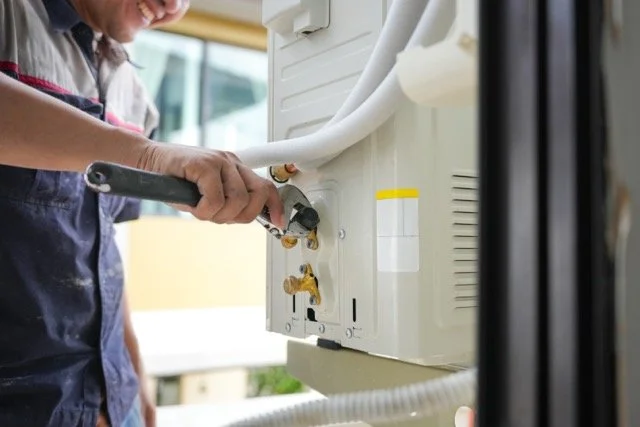
9. Outdoor Unit Debris (Rattling or Scraping)
A rattling or scraping sound from your outdoor condenser unit often has the simplest cause: debris inside the unit. Leaves, sticks, cottonwood seeds, acorns, and even small animals get pulled into the unit by the condenser fan. Once inside, debris gets caught between the fan blade and housing, creating a rattling or scraping sound with each rotation.
Michigan's seasonal changes create specific debris problems. Spring brings cottonwood seeds that clog condenser coils and get sucked into the fan housing. Fall drops leaves that accumulate around and inside units. Winter ice storms coat units in ice that can damage fan blades when the system starts in spring. We've pulled everything from tennis balls to bird nests out of condenser units in Sterling Heights and Clinton Township.
Debris causes more than just noise. Leaves and cottonwood accumulation on the condenser coil blocks airflow, reducing efficiency and causing the compressor to work harder. A coil that's 50% blocked can reduce system efficiency by 30%, increasing your electric bill and shortening compressor life. Sticks or other hard debris can crack fan blades, turning a simple cleaning into a parts replacement.
Outdoor units need clearance on all sides—at least 24 inches for proper airflow and service access. Shrubs, mulch, and lawn clippings encroaching on the unit create debris problems and restrict airflow. We see units in Bloomfield Hills and Rochester Hills landscaped into tight spaces with decorative shrubs that look great but choke the AC system.
DIY Maintenance: Turn off power to the AC at the disconnect box near the outdoor unit. Remove the top grille (usually 4-6 screws). Use a shop vacuum to remove loose debris from inside the unit. Spray the condenser coil fins from inside out using a garden hose (low pressure—high pressure bends fins). Trim vegetation back to maintain 24-inch clearance. This simple maintenance prevents many service calls.
If you hear rattling or scraping, don't ignore it. Debris caught in the fan can damage the motor shaft or break fan blades. What starts as a $0 fix (removing debris yourself) becomes a $300 repair if the fan blade cracks, or a $600 repair if the motor shaft gets damaged. Our pre-summer AC checklist includes detailed debris removal instructions for homeowners who want to handle basic maintenance themselves.
When to Call a Professional vs DIY Inspection
Some AC noise issues are safe for homeowners to inspect and potentially fix. Others require licensed technicians with specialized tools and training. Here's how to know the difference.
Safe for homeowner inspection:
- Debris removal from outdoor unit (with power off)
- Air filter replacement
- Visual inspection of fan blades for obvious damage
- Checking thermostat settings and batteries
- Ensuring all supply vents are open
- Verifying the outdoor disconnect hasn't tripped
Requires professional service:
- Any grinding or screeching from the compressor
- Hissing sounds (refrigerant leaks require EPA-certified technicians)
- Electrical issues (clicking, chattering, or humming without starting)
- Repeated frozen coil problems after filter replacement
- Motor bearing noise (squealing or grinding)
- Any issue requiring refrigerant handling, electrical testing, or component replacement
Here's what happens during a professional diagnostic call. Our NATE-certified technicians start with a detailed symptom description from you—when the noise happens, what it sounds like, and how long it's been occurring. We then test system operation, measure electrical values, check refrigerant pressures, and inspect all mechanical components.
We use specialized tools homeowners don't have: manifold gauges for refrigerant pressure testing, multimeters for electrical diagnosis, infrared thermometers for temperature differential measurement, and amperage clamps for motor current testing. These tools let us diagnose problems accurately rather than guessing based on symptoms alone.
Honest Diagnostic Approach: At NEXT Heating & Cooling, our technicians don't work on commission. They have no incentive to upsell unnecessary repairs or push you toward system replacement when repair makes sense. We show you the problem, explain your options with real costs, and let you decide. That's the old-school contractor culture we're bringing back to Metro Detroit HVAC service.
Service call timing matters. If your AC is making noise but still cooling, schedule service during normal business hours—you'll avoid emergency service premiums and get better scheduling options. If the system has stopped working entirely during a heat wave, that's when you need our 24-hour emergency HVAC service.
Cost for diagnostic service calls typically runs $89-$150 depending on the contractor and time of day. At NEXT, our standard service call fee is $89, which is waived if you proceed with recommended repairs. Next Care Plan members pay no service call fees—another reason the $5/month maintenance plan pays for itself quickly.
How the Next Care Plan Prevents These Problems
Most AC noise issues don't appear overnight—they develop gradually as components wear. Preventive maintenance catches these problems early when repairs are simple and inexpensive, rather than waiting for catastrophic failure during the hottest week of summer.
The Next Care Plan costs $5/month ($60/year) and includes two comprehensive service visits: a fall furnace tune-up before heating season and a spring AC tune-up before cooling season. Here's what we check during the spring AC visit that directly prevents the noise issues covered in this guide:
- Compressor operation: We measure amp draw, check starting characteristics, and listen for early grinding or unusual sounds that indicate bearing wear
- Fan blades and motors: We inspect both condenser fan and blower fan for cracks, looseness, and balance. We test motor amp draw and listen for bearing noise
- Refrigerant charge: We check pressures and temperatures to verify proper refrigerant levels and catch leaks before they cause cooling failure
- Electrical components: We test capacitor microfarad ratings, inspect contactor contacts for pitting, check wire connections for corrosion
- Coil cleaning: We clean the evaporator coil and condenser coil, removing debris that restricts airflow and causes efficiency loss
- Ductwork inspection: We check accessible ductwork for loose sections, failed strapping, and disconnected joints
- Condensate drain: We clear the drain line to prevent water backup and humidity problems
Members also receive priority scheduling (we get to you first during heat waves), 10% discount on all repairs, and no service call fees for diagnostic visits. If we find a problem during the tune-up, you're already there with a technician who can explain the issue and provide repair options.
Real Cost Prevention: A seized compressor costs $1,800-$2,500 to replace. A capacitor caught during preventive maintenance costs $150-$250. Motor bearings replaced when they first start squealing cost $400-$700. The same motor that seizes and damages the compressor costs $600 plus compressor damage. Catching problems early through the Next Care Plan saves thousands over the life of your system.
The plan also extends equipment life. AC systems that receive annual professional maintenance last 15-20 years on average. Systems that run without maintenance typically fail at 10-12 years. For a $7,000 AC replacement, that's an extra 5-8 years of service—$875-$1,400 per year in avoided replacement costs, all for a $60/year maintenance investment.
Michigan homeowners are practical about maintenance. You change your car's oil because you know it prevents engine damage. The same logic applies to your AC system—it's a $5,000-$7,000 piece of mechanical equipment that runs under extreme stress every summer. Spending $60/year on professional maintenance is the cheapest insurance policy you can buy.
Ready to Get Started?
NEXT Heating & Cooling has been keeping Michigan homes comfortable for over 35 years. Get honest diagnostics and fair pricing from NATE-certified technicians who show up on time. Whether you need emergency AC repair or want to prevent problems with the Next Care Plan, we're here to help.
Schedule Your ServiceFrequently Asked Questions
Yes, if you hear grinding, screeching, or metal-on-metal sounds from the outdoor unit. These noises indicate compressor or motor failure, and continuing to run the system causes additional damage. Turn off the AC at the thermostat and call for service. For rattling or clicking sounds, you can inspect for debris with the power off. For buzzing or humming without cooling, the system likely won't run anyway due to capacitor or electrical failure.
Common repairs range from $150-$250 for capacitor replacement, $300-$500 for fan motor replacement, $400-$700 for blower motor replacement, and $1,800-$2,500 for compressor replacement. Service call fees typically run $89-$150. The exact cost depends on the specific problem, parts availability, and whether the repair is done during normal hours or as an emergency call. Next Care Plan members save 10% on repairs and pay no service call fees.
You can safely remove debris from the outdoor unit, replace air filters, and inspect for obvious problems like loose panels or blocked vents. However, issues involving refrigerant, electrical components, motors, or compressors require professional service. Refrigerant work requires EPA certification. Electrical work involves 240-volt circuits that can cause serious injury. Motor and compressor repairs require specialized tools and diagnostic equipment. For more information on what size system you might need, see our guide on AC sizing for Michigan homes.
Brief startup noise is normal—the compressor and fan motors draw high current when starting, creating a momentary hum. Ductwork may also pop or bang from thermal expansion as cold air suddenly enters warm ducts. However, grinding, screeching, or prolonged humming without the unit starting indicates problems like failing capacitors, weak motors, or compressor issues that need professional diagnosis.
AC systems make some operational noise—the compressor hum, fan airflow, and occasional ductwork popping are normal. However, noise that wakes you up or sounds different from usual operation indicates problems. Nighttime noise often seems louder simply because ambient sound is lower. If the noise is new or getting worse, schedule a diagnostic service call to identify the cause before it becomes an emergency repair.
Annual professional maintenance before cooling season prevents most noise issues. The Next Care Plan includes spring AC tune-ups where technicians inspect all components that commonly cause noise—motors, fans, bearings, capacitors, contactors, and ductwork. Catching wear early prevents expensive failures. Between professional visits, homeowners should change filters monthly during cooling season and keep debris cleared from the outdoor unit.
Carrier, Lennox, and Trane are premium brands with excellent reliability in Michigan's climate. Bryant, Goodman, Amana, York, and RUUD offer solid mid-range options. Reliability depends more on proper installation and maintenance than brand alone. An undersized unit or improperly charged system will fail early regardless of brand. We work with all major manufacturers and recommend systems based on your home's specific needs, budget, and efficiency goals. For brand comparisons, see our Trane vs Carrier vs Lennox analysis.