

Emergency AC Repair Metro Detroit: What to Expect & Costs

It's 9 PM on a Thursday in July. The temperature outside hit 92°F today, and your house is sitting at 84°F and climbing. Your air conditioner is running, but no cold air is coming out of the vents. You've got kids trying to sleep upstairs where it's even hotter. You're Googling "emergency AC repair near me" and wondering what this is going to cost, how long you'll wait, and whether you even need to call someone tonight or if this can wait until morning.
We've been running 24-hour emergency HVAC service across Southeast Michigan for over 35 years. We know exactly what homeowners in Sterling Heights, Troy, and Royal Oak are dealing with when the AC quits during a heat wave. This guide walks you through what actually happens when you call for emergency AC repair — response times, diagnostic process, real costs for 2026, and how to decide if your situation truly requires after-hours service.
What Counts as an HVAC Emergency?
Not every AC problem requires emergency service. Here's the difference between a true emergency and an urgent repair that can wait until regular business hours.
True HVAC emergencies (call immediately):
- Complete AC failure during extreme heat — If outdoor temps are above 85°F, your house is climbing past 82°F, and you have vulnerable occupants (elderly parents, infants, anyone with respiratory or heart conditions), that's an emergency. Heat exhaustion is real.
- Burning smell or visible smoke — Any electrical burning odor or smoke coming from your indoor air handler or outdoor condenser unit. Turn off the system immediately at the breaker and call for emergency service. This indicates electrical failure that could become a fire hazard.
- Loud grinding, screeching, or banging noises — If your AC is making sounds like metal-on-metal grinding or a high-pitched screech, something mechanical has failed. Continuing to run the system can cause catastrophic damage to the compressor (a $2,000-$3,500 repair).
- Refrigerant leak with visible ice buildup — If you see ice forming on the refrigerant lines or evaporator coil and the system won't cool, you likely have a refrigerant leak. While not immediately dangerous, this requires professional service to prevent compressor damage.
- Water flooding from the indoor unit — If water is pouring out of your air handler and threatening ceilings, walls, or flooring, that's an emergency. The condensate drain is blocked, and continued operation will cause water damage.
Urgent but can wait until morning:
- AC not cooling efficiently, but house is staying below 78°F
- Outdoor temps cooling down overnight (below 70°F) so the house will naturally cool
- System cycling on and off frequently but still producing some cool air
- Minor water dripping (not flooding) from the condensate line
If you're unsure, call anyway. Our reliable HVAC contractor team can assess your situation over the phone and help you decide whether immediate service is necessary or if we can schedule you first thing in the morning.
How Fast Can a Tech Get to Your House?
When you call for emergency AC service in Metro Detroit, here's what to expect for response times.
Our standard emergency response window: We aim for a 2-4 hour response time for after-hours emergency calls in Macomb County, Oakland County, and St. Clair County. During peak summer heat waves (mid-July through mid-August), response times can stretch to 4-6 hours when multiple systems fail simultaneously across the service area.
Factors that affect response time:
- Geographic location — Calls in Mount Clemens, Sterling Heights, and Clinton Township typically get faster response than Lake Orion or Chesterfield simply due to drive time from our Mount Clemens base.
- Time of day — Calls that come in between 6 PM and midnight usually get faster response than 2 AM calls, because we have more techs on rotation during evening hours.
- Heat wave surges — When outdoor temps hit 90°F+ for multiple consecutive days, AC systems fail in clusters. A polar vortex in winter does the same thing to furnaces. We prioritize calls with vulnerable occupants (medical needs, infants, elderly).
- Severity of the issue — If you report smoke, burning smells, or flooding, you move to the front of the queue. Those are safety issues.
We staff NATE-certified HVAC technicians 24/7 during cooling season (May through September) and heating season (October through April). You're getting the same experienced techs who handle our daytime service calls — not a separate "emergency crew" with less training.
Next Care Plan members get priority scheduling — If you're enrolled in our $5/month HVAC maintenance plan, you move to the front of the emergency service queue. Members also pay no service call fees for emergency visits, which saves $89-$129 on the spot.
What Happens During an Emergency AC Call
Here's the step-by-step process when our tech arrives at your house for emergency AC repair.
1. Initial assessment (5-10 minutes) — The tech will ask when the problem started, what symptoms you noticed (strange noises, burning smells, ice buildup), and whether you've changed the air filter recently or noticed any other HVAC issues. This conversation helps narrow down the likely culprits before diagnostic work begins.
2. Visual inspection (10-15 minutes) — The tech inspects both the outdoor condenser unit and the indoor air handler. They're looking for obvious issues: tripped breakers, frozen evaporator coils, disconnected wiring, refrigerant line damage, blocked condensate drains, debris in the condenser, or damaged fan blades.
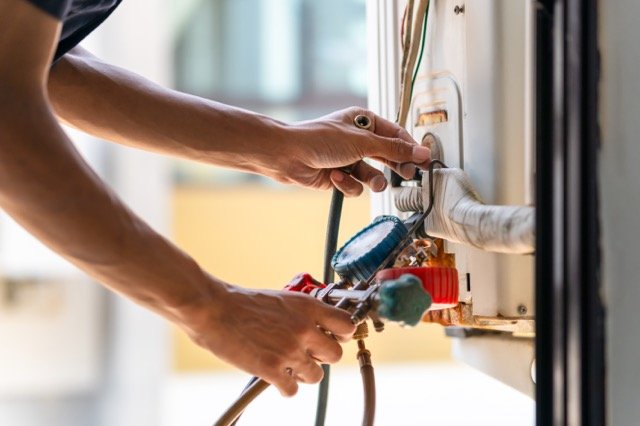
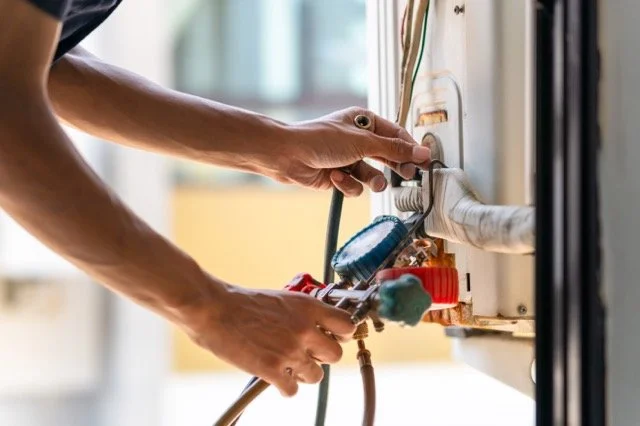
3. Diagnostic testing (15-30 minutes) — Using a multimeter, refrigerant gauges, and amp clamp, the tech tests:
- Voltage at the disconnect and compressor terminals
- Capacitor microfarad readings (capacitors fail frequently in Michigan's humid summers)
- Refrigerant pressures on both the high and low sides
- Amp draw on the compressor and blower motor
- Thermostat calibration and wiring
- Airflow at supply registers
This is where experience matters. A tech who has diagnosed hundreds of AC failures in Southeast Michigan homes can identify patterns quickly — like how Carrier compressors from 2015-2018 had higher-than-normal failure rates, or how Lennox evaporator coils in humid basements develop pinhole leaks after 10-12 years.
4. Diagnosis explanation (5-10 minutes) — The tech will explain what failed, why it failed, and what needs to happen to fix it. You'll get options — not a sales pitch. If your compressor is dead and the system is 15 years old, we'll tell you the repair cost versus replacement cost and let you decide. No pressure. That's the HVAC services Metro Detroit families count on approach we've built our reputation on.
5. Repair or temporary solution (30 minutes to 2 hours) — Many emergency AC repairs can be completed on the spot:
- Replacing a failed capacitor (30-45 minutes)
- Clearing a clogged condensate drain (20-30 minutes)
- Replacing a contactor or relay (30-45 minutes)
- Recharging refrigerant after a minor leak repair (1-2 hours)
- Replacing a blower motor (1.5-2 hours)
If the repair requires parts we don't carry on the truck (like a specific compressor model or evaporator coil), the tech will get your system into a safe state, provide a temporary cooling solution if possible, and schedule the full repair for the next day when parts arrive.
6. System testing and verification (10-15 minutes) — After the repair, the tech runs the system through a full cooling cycle, checks refrigerant pressures, verifies airflow, and measures supply air temperature. You should be getting air out of the vents at 55-60°F if the system is working correctly.
What Emergency AC Repair Actually Costs in Metro Detroit
Emergency service calls cost more than daytime appointments because you're paying for after-hours availability. Here's what to expect in 2026.
Emergency service call fee: $129-$179 — This covers the tech driving to your house, performing diagnostics, and explaining what's wrong. If you proceed with the repair, this fee is typically applied toward the total cost. Next Care Plan members pay $0 for this fee.
Common emergency AC repairs and costs:
- Capacitor replacement: $180-$320 (parts + labor). Capacitors fail frequently in hot weather. They store electrical charge to start the compressor and blower motor. When they go, the system won't start or will hum without running.
- Contactor replacement: $150-$280. The contactor is an electrical relay that controls power to the compressor. They wear out from repeated cycling and can weld shut or fail to close.
- Condensate drain clearing: $120-$220. Michigan's humid summers create a lot of condensate. When the drain line clogs with algae or debris, water backs up and triggers the float switch, shutting down the system.
- Blower motor replacement: $450-$850. Blower motors fail from bearing wear, electrical issues, or debris damage. If your system is running but no air is moving through the vents, this is likely the culprit.
- Refrigerant recharge (R-410A): $300-$600 for 2-4 pounds. If refrigerant is low, there's a leak somewhere. Adding refrigerant without fixing the leak is a temporary fix. Expect to pay $500-$1,200 for leak detection and repair plus refrigerant.
- Compressor replacement: $1,800-$3,500. The compressor is the heart of the AC system. If it fails, you're looking at a major repair. On systems older than 12 years, replacement often makes more financial sense than compressor repair.
- Evaporator coil replacement: $1,200-$2,400. Coil leaks are common in humid climates. Replacing the coil requires recovering refrigerant, cutting into refrigerant lines, brazing in the new coil, pressure testing, evacuating the system, and recharging. It's a 4-6 hour job.
After-hours labor rates are typically 1.5x daytime rates, which adds $75-$150 to most repairs. If you call at 10 PM and can wait until 8 AM the next morning, you'll save that premium — but you'll also sleep in a hot house.
Payment and financing: We accept all major credit cards, checks, and offer financing through approved credit for repairs over $500. You'll get a written estimate before any work begins. No surprises on the invoice.
Common Emergency AC Failures We See Every Summer
After 35 years of emergency service calls across Metro Detroit, we see the same failures repeat every cooling season. Here are the most common.
Compressor Failure from Locked Rotor
The compressor motor seizes up and won't turn. You'll hear a loud hum or buzz when the system tries to start, then the breaker trips. This happens when:
- Bearings wear out from age (most common after 12-15 years)
- Refrigerant flooding back into the compressor during off-cycles (caused by a bad reversing valve or TXV)
- Electrical issues cause the motor windings to overheat and fail
Compressor replacement on a 3-ton Carrier or Lennox system runs $2,200-$3,200 including labor. On systems older than 10 years, we usually recommend full system replacement because the remaining components are nearing end-of-life anyway.
Capacitor Failure During Heat Waves
Capacitors are the #1 emergency repair we perform in July and August. They're electrolytic components that degrade with heat and voltage stress. When outdoor temps stay above 85°F for days, capacitors fail in waves across Southeast Michigan.
Symptoms: The outdoor unit hums but won't start, or the blower runs but the compressor doesn't. A failed start capacitor prevents the compressor from starting. A failed run capacitor causes the compressor to draw high amps and overheat.
We carry dual-run capacitors for most Carrier, Lennox, Trane, Rheem, Bryant, Goodman, and York systems on every truck. Replacement takes 30-45 minutes and costs $180-$320.
Refrigerant Leaks in Evaporator Coils
Michigan's humidity accelerates corrosion on evaporator coils, especially in basement installations where condensate sits on the coil surface. Pinhole leaks develop over 10-15 years, slowly releasing R-410A refrigerant.
Symptoms: Ice buildup on the refrigerant lines or indoor coil, weak airflow, system running constantly but house not cooling below 75°F.
Leak detection costs $150-$300. Repairing a pinhole leak (if accessible) costs $300-$600. Replacing the entire evaporator coil runs $1,200-$2,400. Refrigerant recharge adds another $300-$600 depending on how much leaked out.
Clogged Condensate Drains
Every AC system in Michigan produces condensate — 5 to 20 gallons per day depending on system size and humidity levels. That water drains through a PVC pipe to a floor drain, sump pump, or outside.
Algae, mold, and debris build up in the drain line over time. When it clogs, water backs up into the drain pan. Most systems have a float switch that shuts down the AC when water level gets too high to prevent flooding.
Symptoms: System shuts off randomly, water pooling around the indoor unit, musty smell from the air handler.
We clear the drain with a wet/dry vac or compressed air, flush it with a vinegar solution, and install a drain pan treatment tablet to prevent future clogs. Cost: $120-$220. This is preventable with annual maintenance — which is why we include drain line service in our Next Care Plan spring tune-ups.
Blower Motor Bearing Failure
The blower motor in your air handler runs for thousands of hours every cooling season. Bearings wear out, especially on motors that are 10+ years old or have been running with dirty air filters (restricted airflow causes motors to work harder).
Symptoms: Squealing or grinding noise from the indoor unit, weak airflow, system shuts off after running for a few minutes (thermal overload protection).
Blower motor replacement costs $450-$850 depending on motor size and type (PSC vs. ECM variable-speed motors). ECM motors cost more but run quieter and use 30-40% less electricity.
How to Avoid Emergency AC Repairs
Most emergency AC failures are preventable with basic maintenance. Here's what actually matters.
Change your air filter every 30-60 days — A clogged filter is the single biggest cause of AC problems we see. Restricted airflow causes:
- Frozen evaporator coils (low airflow = low coil temperature = ice buildup)
- Blower motor overheating and failure
- Reduced cooling capacity (less air moving = less heat removed from the house)
- Higher energy bills (system runs longer to achieve setpoint)
Use MERV 8-11 filters for most homes. MERV 13+ filters improve air quality but require more frequent changes because they restrict airflow faster. If you have pets, change filters every 30 days. No pets, every 60 days is fine.
Schedule annual spring AC tune-ups — A professional tune-up catches problems before they become emergencies. Our techs check:
- Refrigerant pressures and charge level
- Capacitor microfarad readings (replace if below spec)
- Electrical connections and voltage
- Condensate drain flow
- Blower motor amp draw
- Evaporator and condenser coil cleanliness
- Thermostat calibration
Tune-ups cost $89-$129 as a standalone service, or they're included free with the Next Care Plan (two visits per year — spring AC tune-up and fall furnace tune-up — for $60/year total).
Keep the outdoor condenser unit clear — The condenser needs airflow to reject heat. If it's surrounded by bushes, tall grass, or debris, it can't breathe. Trim vegetation back 18-24 inches on all sides. Hose down the condenser coils once per season to remove cottonwood seeds, pollen, and dirt.
Don't ignore small problems — If your AC is making a new noise, not cooling as well as it used to, or cycling on and off frequently, call for service before it fails completely. A $200 repair today prevents a $1,500 emergency repair next month.
We've covered the same ground in our guide to HVAC maintenance in Clinton Township — the principles are the same whether you're in Clinton Township, Shelby Township, or Grosse Pointe Farms.
When to Call for Emergency Service vs. Waiting Until Morning
Here's a practical decision framework to help you determine if your AC problem requires immediate emergency service or can wait until regular business hours.
Call for emergency service if:
- Indoor temperature is above 82°F and climbing, with outdoor temps still in the 80s or 90s
- You have vulnerable occupants (infants, elderly, anyone with respiratory or cardiovascular conditions)
- You smell burning or see smoke coming from the AC unit
- The system is making loud grinding, screeching, or banging noises
- Water is flooding from the indoor unit and threatening property damage
- It's mid-afternoon and outdoor temps will stay hot through the evening (house will continue heating up)
You can probably wait until morning if:
- It's late evening and outdoor temps are dropping below 70°F (house will naturally cool overnight)
- Indoor temp is uncomfortable but below 80°F
- You can open windows and use fans to get through the night
- No vulnerable occupants in the home
- The system is running quietly but just not cooling efficiently
- You're willing to sleep in the basement or coolest room of the house for one night
If you call us at 10 PM and we determine your situation can safely wait until morning, we'll tell you — and schedule you for first appointment the next day at regular rates. We're not here to upsell emergency service when it's not necessary. That's not how we've stayed in business for 35+ years.
Need Emergency AC Repair in Metro Detroit?
NEXT Heating & Cooling provides 24/7 emergency HVAC service across Macomb, Oakland, and St. Clair counties. Our NATE-certified technicians carry the parts and tools to fix most AC problems on the spot. No commission-based sales. Just honest diagnostics and fair pricing.
Call for Emergency ServiceFrequently Asked Questions About Emergency AC Repair
Emergency service call fees range from $129-$179 for after-hours diagnostics in Metro Detroit. This covers the technician driving to your home, diagnosing the problem, and explaining what needs to be repaired. If you proceed with the repair, this fee is typically applied toward the total cost. Next Care Plan members pay $0 for service call fees.
Our standard emergency response time is 2-4 hours for most of Macomb County, Oakland County, and St. Clair County. During peak heat waves (mid-July through mid-August), response times can extend to 4-6 hours when multiple systems fail simultaneously. Next Care Plan members receive priority scheduling and move to the front of the queue.
The most common emergency AC repairs in Southeast Michigan are capacitor replacements ($180-$320), clogged condensate drain clearing ($120-$220), contactor replacements ($150-$280), and blower motor replacements ($450-$850). Capacitors fail frequently during heat waves when systems run continuously for days. Most of these repairs can be completed on the spot with parts we carry on every truck.
Call for emergency service if your indoor temperature is above 82°F and climbing, you have vulnerable occupants (infants, elderly, medical conditions), you smell burning or see smoke, or the system is making loud grinding noises. You can usually wait until morning if it's late evening with outdoor temps dropping below 70°F, your indoor temp is uncomfortable but below 80°F, and you can use fans or open windows to get through the night.
Yes, after-hours labor rates are typically 1.5x daytime rates, which adds $75-$150 to most repairs. This premium covers the cost of staffing NATE-certified technicians 24/7 during cooling season. The emergency service call fee ($129-$179) is higher than daytime diagnostic fees, but is applied toward your repair cost if you proceed with the work.
Yes, we complete about 70-80% of emergency AC repairs on the first visit. Our trucks carry capacitors, contactors, condensate drain cleaning equipment, thermostats, and common blower motors for Carrier, Lennox, Trane, Rheem, Bryant, and Goodman systems. Major repairs like compressor or evaporator coil replacement require ordering specific parts and scheduling a follow-up visit, but we'll get your system into a safe state and provide temporary cooling solutions when possible.
The three most effective prevention strategies are: (1) Change your air filter every 30-60 days to prevent frozen coils and blower motor failure, (2) Schedule annual spring AC tune-ups to catch problems before they become emergencies, and (3) Don't ignore small problems like new noises or reduced cooling performance. Our Next Care Plan provides two annual tune-ups (spring AC, fall furnace) for $60/year and includes priority emergency scheduling.