

Pre-Summer AC Checklist for Metro Detroit Homeowners
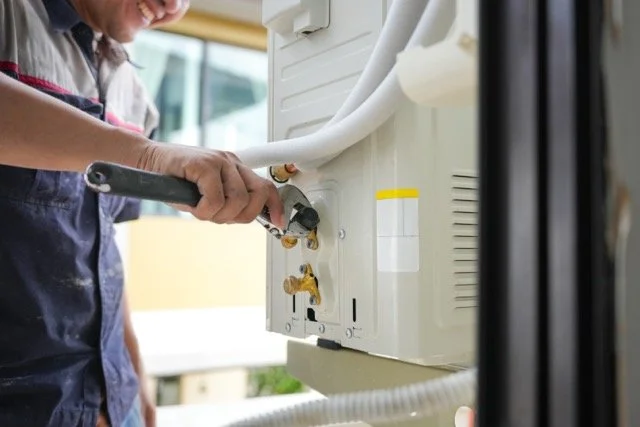
Every May, we get the same calls in Sterling Heights, Troy, and Grosse Pointe Farms. The first 85-degree weekend hits, homeowners flip their thermostat to "cool," and nothing happens. Or worse—the system runs constantly but can't drop the temperature below 78°F.
The problem? That air conditioner sat dormant for eight months through Michigan's brutal winter. Debris accumulated around the outdoor unit during fall storms. Mice nested in the blower compartment. The condensate drain line grew a science experiment. And now, when you need cooling the most, you're facing a $400 repair bill and a three-day wait for parts.
After 35 years of heating and cooling services in Metro Detroit, we've learned this: the difference between a comfortable June and an emergency service call comes down to what you do in April and May. This is the pre-summer AC checklist we walk through with every homeowner on our $5/month HVAC maintenance plan—and what you should tackle before the heat arrives.
Why Michigan Summers Are Hard on Air Conditioners
Southeast Michigan isn't Arizona. We don't get 110°F days, but what we do get is harder on air conditioning equipment in some ways: extreme humidity combined with temperature swings that confuse even well-maintained systems.
Here's what your AC faces in a typical Michigan summer:
Humidity from the Great Lakes. We're surrounded by massive bodies of water. When temperatures climb into the 80s and 90s, humidity regularly hits 70-90%. Your air conditioner has to work twice as hard—it's not just cooling air, it's wringing gallons of moisture out of it every day. That condensate has to drain somewhere, and if that drain line is clogged, you're looking at water damage in your basement or attic.
Temperature swings that stress components. A May morning in Rochester Hills might start at 42°F and hit 84°F by 3 p.m. Your system cycles on and off repeatedly as outdoor temperatures fluctuate. Every startup puts stress on the compressor, capacitor, and contactor. Systems that aren't properly maintained fail during these transition periods.
Pollen, cottonwood, and debris season. April through June is brutal for outdoor units. Cottonwood seeds blanket condenser coils like insulation. Oak pollen coats everything. Grass clippings from lawn mowers get sucked into the unit. A condenser coil that's 50% blocked can reduce cooling efficiency by 30% and cause the compressor to overheat.
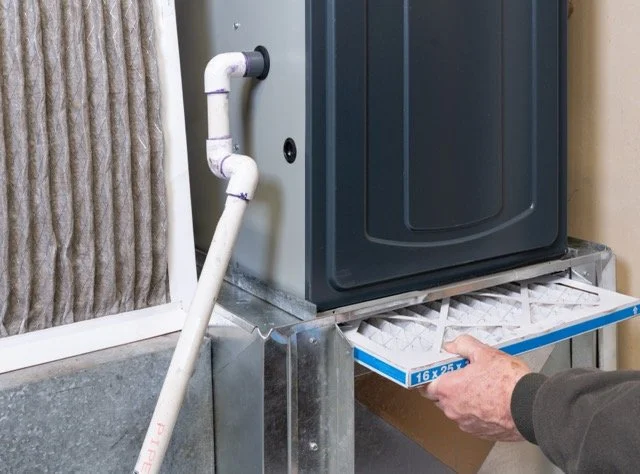
Storm damage from spring weather. Michigan spring storms bring hail, high winds, and flying debris. We've seen tree branches punched through condenser fan grilles, hail that flattened aluminum fins, and units knocked off-level by frost heave during the spring thaw. An unlevel unit doesn't drain properly and can cause compressor damage over time.
The equipment manufacturers—Carrier, Lennox, Trane, Rheem, Bryant—all design their systems to handle this. But they also all specify the same requirement: annual professional maintenance. Skip it, and you're rolling the dice on a $3,500 compressor replacement in July.
The Outdoor Unit Inspection (What to Check First)
Start outside. Your condenser unit—the big metal box sitting next to your house—is where most pre-summer problems show up. Here's what to look for:
Clear a Two-Foot Perimeter
The unit needs airflow from all sides. Remove:
- Dead leaves and debris that accumulated over winter
- Mulch or landscaping fabric that crept too close
- Plants, shrubs, or decorative grasses within 24 inches
- Stacked firewood, storage bins, or lawn equipment
- Any winter cover you put on (those should come off in April—running the unit with a cover on will destroy the compressor)
We see this constantly in Shelby Township and Clinton Township: homeowners landscape around the unit in spring, then wonder why their AC can't keep up in August. That boxwood hedge looks nice, but it's choking your condenser.
Inspect the Condenser Fins
Look at the metal fins on the sides of the unit. They should be straight and parallel, like the slats on a venetian blind. Bent fins restrict airflow. You can carefully straighten minor bends with a butter knife or a fin comb (available at hardware stores for $8), but if more than 20% of the fins are damaged, call a professional. Forcing airflow through mangled fins makes the compressor work harder and shortens its life.
Check the Concrete Pad
The unit should sit level on a concrete pad or composite base. Michigan's freeze-thaw cycles cause settling. If the unit tilted over winter, it won't drain condensate properly, and refrigerant oil can pool in the wrong part of the compressor. Use a level—if it's off by more than a quarter-inch, it needs shimming. This is a job for a tech, not a DIY fix.
Look for Physical Damage
Scan for:
- Dents in the cabinet from hail or falling branches
- Rust spots (especially on units 10+ years old)
- Refrigerant line insulation that's cracked or missing
- Electrical disconnect box damage (the gray box mounted near the unit)
If you see oil residue around refrigerant line connections or on the ground beneath the unit, you likely have a refrigerant leak. Don't run the system—call for service immediately. Running an AC low on refrigerant will destroy the compressor.
Indoor Components That Need Attention
Most homeowners focus on the outdoor unit and forget the indoor components. That's a mistake. The air handler, evaporator coil, and ductwork do just as much work—and need just as much attention.
Replace or Clean Your Air Filter
This is the single most important thing you can do. A clogged filter is the #1 cause of AC systems that won't cool properly.
Check your filter every 30 days during cooling season. If it's a disposable 1-inch filter, replace it when it looks dirty—usually every 1-3 months depending on how much you run the system, whether you have pets, and your indoor air quality. If you have a 4-inch or 5-inch media filter, it typically lasts 6-12 months, but check it anyway.
Use a MERV 8-11 rated filter for most homes. Higher MERV ratings (13+) restrict airflow unless your system was specifically designed for them. We've seen homeowners install MERV 16 filters thinking they're doing something good, then wonder why their evaporator coil froze solid. More filtration isn't always better—it has to match your system's blower capacity.
Clear the Condensate Drain Line
Your AC removes gallons of moisture from the air every day. That water drains through a PVC pipe—usually a 3/4-inch line running from the air handler to a floor drain, sump pump, or outside. Over winter, algae and mold grow in that line. By June, it's clogged, and water backs up into your basement or drips through your ceiling.
Here's the preventive fix: Pour a cup of white vinegar or a 50/50 bleach-water solution down the drain line opening (usually a PVC tee with a cap near the air handler). Let it sit for 30 minutes, then flush with a gallon of water. Do this in April, and again in July. It's a 5-minute job that prevents $2,000 in water damage.
Test Your Thermostat
Before the first hot day, test your thermostat:
- Switch it from "heat" to "cool"
- Set the temperature 5 degrees below the current room temp
- Set the fan to "auto" (not "on"—you want it to cycle with the compressor)
- Listen for the outdoor unit to start within 5 minutes
- Feel the air coming from your registers—it should be noticeably cooler within 10-15 minutes
If you have a programmable or smart thermostat, replace the batteries now (even if it's hardwired—most have backup batteries). A dead battery can cause the thermostat to lose its programming or fail to call for cooling.
Inspect Registers and Return Vents
Walk through your house and check every supply register (the vents that blow cold air) and return air grille (the larger vents that pull air back to the system). Make sure:
- Nothing is blocking them—furniture, rugs, curtains, storage boxes
- All registers are open (closing registers in unused rooms doesn't save energy—it creates pressure imbalances that reduce efficiency)
- Return air grilles aren't caked with dust (vacuum them if they are)
In older Michigan homes—especially 1960s and 1970s ranches in Warren and St. Clair Shores—we often find return air grilles that were painted over during renovations, or covered by paneling. Your system needs adequate return air to function. If you only have one or two return vents for a 1,500-square-foot house, that's a ductwork design problem, and it's costing you money every summer.
The Professional Tune-Up (What NATE Techs Check)
Everything above is homeowner-level maintenance. But there are critical components you can't safely or legally service yourself—and this is where professional maintenance pays for itself.
When a NATE-certified HVAC technician performs a pre-summer tune-up, here's what they're checking:
Refrigerant Charge
Your AC is a sealed system. It doesn't "use up" refrigerant like a car uses gas. If refrigerant is low, there's a leak. A proper refrigerant check involves measuring subcooling and superheat—temperature and pressure readings at specific points in the system—to verify the charge is within manufacturer specs.
Low refrigerant causes the evaporator coil to freeze, reduces cooling capacity, and eventually destroys the compressor. Overcharge (from a tech who just "topped it off" without finding the leak) causes high head pressure and can blow out seals. This isn't a guess—it requires gauges, thermometers, and training.
If you have an older system that uses R-22 refrigerant (being phased out since 2020), refrigerant is expensive—$150+ per pound in 2026. If your system needs more than 2-3 pounds, you're better off replacing the unit than continuing to patch leaks.
Electrical Connections and Voltage
Techs inspect and tighten all electrical connections at the disconnect box, contactor, capacitor, and compressor terminals. Loose connections cause arcing, which damages components and creates fire hazards. We also measure voltage and amperage draw to verify the compressor and fan motors are operating within spec.
Michigan's spring storms cause power surges and voltage sags. A compressor that's drawing higher-than-normal amperage is failing—it might still run, but it won't make it through July. Catching this in May means you can plan a replacement on your schedule instead of during a heat wave when every contractor is booked solid.
Capacitor and Contactor Inspection
The capacitor is a small cylindrical component that gives the compressor and fan motors the electrical boost they need to start. Capacitors wear out—it's not if, it's when. A weak capacitor causes hard starting, which stresses the compressor. A failed capacitor means the system won't start at all.
We test capacitance with a meter. If it's below 90% of rated capacity, we replace it. A capacitor costs $25-75. A compressor that failed because of a bad capacitor costs $2,500-4,000. This is why maintenance matters.
The contactor is the relay that switches power to the compressor. Contacts wear and pit over time. A contactor that's arcing or showing signs of burning gets replaced before it welds shut (which means the compressor runs continuously and your electric bill triples).
Blower Motor and Belt (If Applicable)
The indoor blower moves air across the evaporator coil and through your ductwork. Techs check:
- Motor bearings for noise or excessive play
- Blower wheel for dust buildup (a caked blower wheel reduces airflow by 30-40%)
- Drive belt condition and tension (on older belt-drive systems)
- Amperage draw to verify the motor isn't overworking
A failing blower motor often gives warning signs—humming, squealing, or intermittent operation. Catching it during a tune-up means you replace it for $400-600. Waiting until it fails during a heat wave means you're paying emergency service rates and suffering through 90°F indoor temps while waiting for parts.
Evaporator Coil Inspection
The evaporator coil sits inside your air handler, and it's where the actual cooling happens. Refrigerant flowing through the coil absorbs heat from the air passing over it. If the coil is dirty or the airflow is restricted, the system can't cool effectively.
Techs inspect the coil for:
- Dust and debris buildup
- Signs of corrosion or refrigerant leaks
- Ice formation (indicates airflow problems or low refrigerant)
A dirty evaporator coil requires professional cleaning—it's not a homeowner job. The coil is delicate, and the wrong cleaning method can damage the fins or push debris deeper into the coil. We've seen well-meaning homeowners spray coil cleaner that ate through the aluminum fins. Don't.
Signs Your AC Won't Make It Through Summer
Sometimes the pre-summer inspection reveals a hard truth: your system is on borrowed time. Here are the signs we look for that indicate replacement is smarter than repair:
Age (15+ Years)
The average lifespan of a central air conditioner in Michigan is 12-15 years with proper maintenance, 8-12 years without it. If your system is 15+ years old and needs a major repair (compressor, evaporator coil, condenser fan motor), the math usually favors replacement.
Older systems also have lower SEER ratings—typically 10-13 SEER. Modern systems are 14-20+ SEER, which means 20-40% lower operating costs. If you're spending $150-200 per month on cooling in July and August, a new high-efficiency system can cut that by $40-80 per month. Over a 15-year lifespan, that's $7,200-14,400 in savings.
R-22 Refrigerant
If your system uses R-22 (common in systems installed before 2010), you're facing a financial decision. R-22 production ended in 2020. Remaining supplies are expensive and dwindling. If you have a leak and need 5+ pounds of refrigerant, you're looking at $750-1,000 just for the refrigerant—plus labor to find and fix the leak.
At that point, you're better off replacing the system with one that uses R-410A or R-32 refrigerant. It's a bitter pill, but it's the reality of the phase-out.
Frequent Repairs
If you've called for AC repairs three or more times in the past two years, the system is telling you something. We use the "$5,000 rule" as a guideline: multiply the age of the system by the cost of the repair. If the result is more than $5,000, replace rather than repair.
Example: Your 14-year-old AC needs a $600 repair. 14 × $600 = $8,400. That's over $5,000, which suggests replacement is the smarter investment. You're not just fixing this problem—you're delaying the inevitable while throwing money at an aging system.

Rising Energy Bills
Compare your summer electric bills from the past 3-4 years (most utilities let you view this online). If your bills are climbing 10-15% per year despite similar usage patterns, your AC is losing efficiency. Worn compressor bearings, refrigerant leaks, dirty coils, and failing capacitors all cause the system to work harder and use more electricity.
A $30-40 per month increase doesn't sound like much, but over a cooling season (May through September), that's $150-200. Over five years, it's $750-1,000—money you're wasting that could go toward a new, efficient system.
Uneven Cooling or Comfort Issues
If some rooms are 75°F and others are 82°F, and adjusting the thermostat doesn't fix it, you likely have a capacity or ductwork problem. Older single-stage systems run at full blast or not at all—they can't modulate to match the load. Modern two-stage or variable-speed systems adjust output to maintain consistent temperatures throughout the house.
Sometimes the problem is ductwork—leaky ducts, undersized returns, or poor design—but if the ductwork was fine for 10 years and suddenly isn't, the system itself is likely the issue. We've written a full guide on fixing hot and cold spots in Michigan homes if this sounds familiar.
Cost Reality: Tune-Up vs. Repair vs. Replacement
Let's talk numbers. Michigan homeowners are practical—you want to know what things actually cost so you can make informed decisions.
Professional Tune-Up
A one-time AC tune-up from a reliable HVAC contractor in Metro Detroit typically runs $120-180. That includes:
- Refrigerant charge check
- Electrical connection inspection and tightening
- Capacitor and contactor testing
- Blower motor inspection
- Condensate drain cleaning
- Thermostat calibration
- Airflow measurement
Our Next Care Plan includes two annual visits (spring AC tune-up, fall furnace tune-up) for $60 per year—$5 per month. You also get priority scheduling, 10% off repairs, and no service call fees. Over the 12-15 year lifespan of an AC system, that's $720-900 in maintenance that can prevent $3,000-8,000 in premature failures.
Common Repair Costs
Here's what typical AC repairs cost in Southeast Michigan in 2026:
- Capacitor replacement: $150-250
- Contactor replacement: $150-275
- Condensate drain cleaning (if clogged): $100-200
- Blower motor replacement: $400-700
- Condenser fan motor replacement: $400-650
- Refrigerant leak repair + recharge: $500-1,500 (depending on leak location and refrigerant type)
- Evaporator coil replacement: $1,200-2,000
- Compressor replacement: $2,500-4,000
Notice the pattern? Small components are cheap to replace. Major components (coil, compressor) cost as much as 50-75% of a new system. That's why the age and condition of the system matter when deciding whether to repair.
Replacement Investment
A new central air conditioner installed in Metro Detroit ranges from $4,500 to $9,000+ depending on:
- System size (tonnage—most homes need 2-4 tons)
- Efficiency rating (14 SEER vs. 18 SEER vs. 20+ SEER)
- Brand (Carrier, Lennox, Trane tend to cost more than Bryant, Goodman, Rheem)
- System type (single-stage, two-stage, variable-speed)
- Installation complexity (ductwork modifications, electrical upgrades, accessibility)
We've written a detailed breakdown of AC installation costs in Troy, Michigan if you want the full picture. The short version: expect to invest $5,500-7,500 for a quality mid-efficiency system (16 SEER) professionally installed by a licensed contractor.
That sounds like a lot, but spread over a 15-year lifespan, it's $30-42 per month. Add in energy savings from a more efficient system, and you're often breaking even or coming out ahead compared to limping along with an old, inefficient unit.
When to Schedule Your Service (Timing Matters)
Here's a truth every HVAC contractor knows but most homeowners don't: the best time to schedule AC maintenance is when you're not thinking about it.
April and May are the sweet spot. Temperatures are mild, we're not slammed with emergency calls, and we have time to thoroughly inspect your system and order parts if needed. You get your choice of appointment times, and if we find a problem, you have weeks to decide how to handle it—not hours.
June is the rush. The first 90°F day hits, and our phones explode. Homeowners who skipped maintenance suddenly discover their AC doesn't work. We're running service calls from 7 a.m. to 9 p.m., and even with a full crew, there's a 2-3 day wait for non-emergency calls. If your system needs a part that's not on the truck, you're looking at another 3-7 days.
July and August are survival mode. We're triaging—elderly customers and families with young children get priority. Everyone else waits. If you call in July needing a tune-up, we'll fit you in when we can, but it might be September.
This isn't meant to scare you—it's just the reality of seasonal HVAC service. The contractors who tell you "we can get to you tomorrow" in the middle of a heat wave are either lying, understaffed, or cutting corners on quality. Good contractors are busy in summer because they do the work right.
Pro tip: If you're on a maintenance plan like our Next Care Plan, you get priority scheduling even during peak season. When a plan member calls in June with an AC that won't start, we bump them ahead of one-time service calls. It's one of the reasons the plan pays for itself—not just in cost savings, but in comfort and peace of mind.
Ready to Get Your AC Ready for Summer?
NEXT Heating & Cooling has been keeping Michigan homes comfortable for over 35 years. Our NATE-certified technicians provide honest diagnostics, fair pricing, and the kind of service you'd expect from a neighbor—because that's what we are. Schedule your pre-summer AC tune-up before the rush hits.
Schedule Your ServiceFrequently Asked Questions
Once per year, ideally in April or May before cooling season starts. Annual maintenance catches small problems before they become expensive failures, keeps your system running efficiently, and extends its lifespan. Most manufacturers require annual professional maintenance to keep warranties valid. If you have a maintenance plan, you're already covered—if not, schedule service every spring.
Short-term, probably nothing. Long-term, you're shortening the system's lifespan, reducing efficiency (which costs you $200-400 per year in wasted energy), and increasing the likelihood of a breakdown during the hottest week of summer. We've seen well-maintained systems last 18-20 years. Systems that never get maintenance typically fail at 8-12 years. The difference in replacement cost over that time is $4,000-8,000—far more than maintenance would have cost.
You can handle basic tasks: replacing air filters, clearing debris around the outdoor unit, cleaning the condensate drain line, and keeping vents unblocked. But refrigerant work, electrical testing, capacitor replacement, and component diagnostics require a licensed technician with specialized tools and training. Attempting refrigerant work without an EPA 608 certification is illegal. Attempting electrical work without proper knowledge is dangerous. The DIY stuff prevents problems; professional maintenance catches them early.
A one-time professional tune-up typically costs $120-180 in Southeast Michigan. Our Next Care Plan includes two annual visits (spring AC, fall furnace) for $60 per year—$5 per month—plus priority scheduling, 10% off repairs, and no service call fees. Over the 12-15 year life of an AC system, regular maintenance prevents $3,000-8,000 in premature failures and wasted energy. It's the best money you'll spend on home comfort.
Watch for: the system running constantly but not cooling below 75-78°F, warm air blowing from vents, strange noises (grinding, squealing, banging), frequent cycling on and off, rising electric bills despite similar usage, moisture or ice around the indoor unit, and the outdoor unit not starting when the thermostat calls for cooling. Any of these warrant a service call. Ignoring them turns a $200 repair into a $2,500 replacement.
It depends on age, efficiency, and repair history. If your system is 15+ years old, uses R-22 refrigerant, has needed multiple repairs in the past two years, or is significantly increasing your electric bills, replacement usually makes financial sense. Modern systems are 20-40% more efficient, use environmentally friendly refrigerant, and come with 10-year parts warranties. We walk through the math with every customer—sometimes repair is smarter, sometimes replacement is. It's never a one-size-fits-all answer.
April and May, before the summer rush. You get your choice of appointment times, techs aren't slammed with emergency calls, and if we find a problem, you have time to get parts and make decisions without suffering through a heat wave. By June, every HVAC contractor in Metro Detroit is booked solid. If you wait until the first 90°F day to call, you're looking at a 2-5 day wait—longer if parts are needed. Schedule early, stay comfortable.