

Fall Furnace Tune-Up Checklist Michigan | NEXT Heating
Every October, the calls start coming in. A homeowner in Sterling Heights turns on their furnace for the first time since April, and nothing happens. Or worse — it fires up, runs for two minutes, then shuts off. By the time they call us, overnight temps are dropping into the 30s and they're scrambling for space heaters.
Here's what 35 years of Michigan HVAC service has taught us: 95% of furnace breakdowns happen during the first cold snap, and most could have been prevented with a fall tune-up. Not because homeowners are careless — but because furnaces that sit idle for six months develop problems you can't see until a trained technician opens them up.
This isn't a sales pitch. This is the actual fall furnace tune-up checklist our NATE-certified technicians follow when they show up at your door in Macomb County, Oakland County, or St. Clair County. We'll walk through what we check, why it matters for Michigan winters specifically, and what you can do yourself before calling for professional furnace services.
What NATE-Certified Technicians Check During Fall Furnace Tune-Ups
When we arrive for a fall furnace tune-up, we're not just changing a filter and calling it done. Our technicians follow a 27-point inspection protocol that covers safety, efficiency, and reliability. Here's what actually happens during that service call.
Heat Exchanger Inspection (The Most Critical Safety Check)
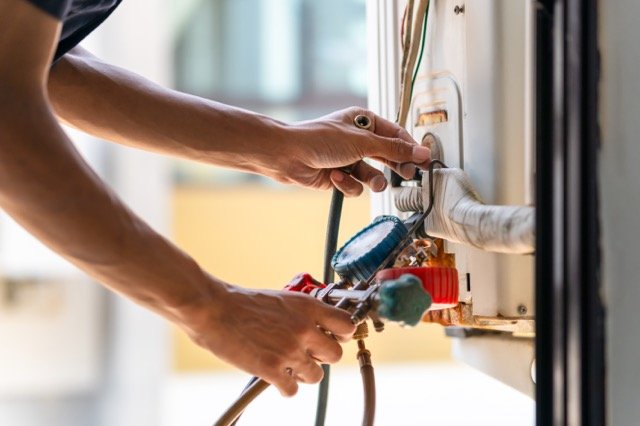
The heat exchanger is where combustion gases heat the air that circulates through your home. If it's cracked or corroded, carbon monoxide can leak into your living space. This is not theoretical — we've found cracked heat exchangers in furnaces as young as 8 years old, usually from oversizing or poor maintenance.
During inspection, we look for:
- Visible cracks or rust on the exchanger panels using a flashlight and inspection mirror
- Flame pattern abnormalities that indicate air leaking through cracks
- Soot buildup suggesting incomplete combustion
- Metal fatigue around weld seams and stress points
If we find a cracked heat exchanger, the furnace gets red-tagged. No exceptions. We've had homeowners push back on this — "it's been working fine" — but carbon monoxide poisoning doesn't give warnings. We follow Michigan mechanical codes and manufacturer safety protocols, period.
Burner Assembly and Flame Sensor Cleaning
Michigan's humid summers cause corrosion on burner components. By fall, many furnaces have flame sensors coated in oxidation buildup that prevents proper ignition sensing. The furnace tries to light, senses no flame (even though there is one), and shuts down for safety.
We remove the burner assembly, clean each burner port with a wire brush, and polish the flame sensor with fine-grit emery cloth. This single step prevents about 40% of the "furnace won't stay lit" calls we get in November.
Blower Motor and Capacitor Testing
The blower motor moves heated air through your ductwork. If it's struggling, you'll notice weak airflow, uneven heating, or higher utility bills. We test:
- Capacitor voltage (the component that starts the motor) — capacitors fail frequently after 5-7 years
- Motor amperage draw compared to nameplate specs
- Bearing condition by listening for grinding or squealing
- Blower wheel cleanliness — dust buildup reduces airflow by 30-40%
We've replaced more capacitors in September and October than any other months. They weaken over summer when the AC runs constantly, then fail when the furnace kicks on. A $200 capacitor replacement in September beats a $1,800 blower motor replacement in January when the motor burns out from overwork.
Gas Pressure and Manifold Testing
Natural gas furnaces require specific gas pressure at the manifold for proper combustion. Too low and you get incomplete burning (carbon monoxide risk, soot buildup). Too high and you overheat the exchanger.
We connect a manometer to the gas valve and verify pressure matches manufacturer specs — typically 3.5 inches water column for natural gas furnaces from Carrier, Lennox, Trane, Rheem, Bryant, Goodman, and York. If it's off, we adjust the gas valve or identify supply line issues before they cause problems mid-winter.
Electrical Connections and Safety Controls
Loose electrical connections cause arcing, which creates heat and eventually burns through wires. We check every wire connection in the furnace, tighten terminal screws, and test all safety controls:
- High-limit switch (shuts furnace down if it overheats)
- Rollout switches (detect flame escaping the combustion chamber)
- Pressure switches (verify proper venting before allowing ignition)
- Thermal fuses (one-time safety devices that prevent fires)
Every one of these components exists to keep your family safe. If any fail their test, we replace them before leaving.
Real-World Example: Last October, we serviced a 12-year-old Lennox furnace in Clinton Township. Everything looked fine visually, but the pressure switch tested marginal. We recommended replacement. The homeowner declined. Two weeks later, during the first overnight freeze, the switch failed and the furnace wouldn't start. Emergency service call cost $450 versus the $180 it would have been during the tune-up.
DIY Homeowner Checklist Before Calling for Service
You don't need to be an HVAC technician to handle basic fall furnace prep. Here's what you can — and should — do yourself before scheduling a professional tune-up.
Replace or Clean Your Furnace Filter
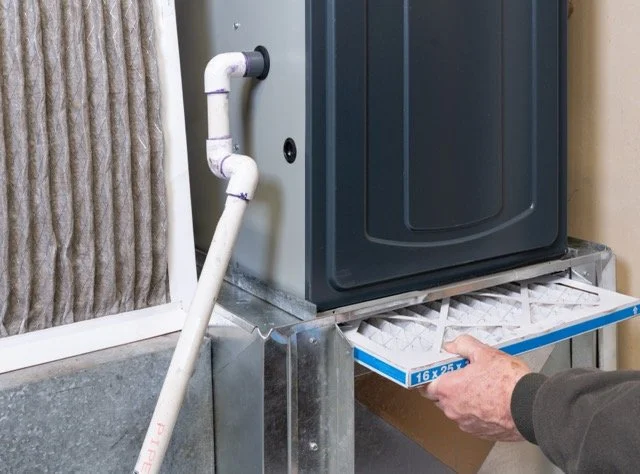
This is the single most important maintenance task you can do yourself. A clogged filter restricts airflow, which causes:
- Overheating and premature heat exchanger failure
- Blower motor strain and early failure
- Reduced heating capacity and comfort
- Higher energy bills (up to 15% increase)
Check your filter monthly during heating season. If it looks gray or you can't see light through it, replace it. Most Michigan homes need filter changes every 30-90 days depending on pets, occupancy, and air quality.
Filter location: Usually in the return air grille, at the furnace itself, or in a filter cabinet between the return duct and furnace. If you have a 1960s ranch in Royal Oak or Troy, check the basement ceiling near the furnace.
Test Your Thermostat
Before temperatures drop, verify your thermostat works properly:
- Replace batteries if it's battery-powered (do this every fall regardless)
- Switch from cooling to heating mode
- Set temperature 5 degrees above current room temperature
- Listen for the furnace to ignite within 30-60 seconds
- Verify warm air comes from registers within 2-3 minutes
If the furnace doesn't respond, check your circuit breaker and furnace power switch (usually located on or near the furnace, looks like a light switch). If both are on and the furnace still won't start, that's when you call us.
Clear All Supply and Return Vents
Walk through your house and check every register and return grille. Move furniture, pick up rugs, and remove storage items that block airflow. Blocked vents cause pressure imbalances in your ductwork, which leads to:
- Uneven heating (some rooms hot, others cold)
- Increased blower motor strain
- Ductwork leaks at seams from excessive pressure
- Whistling or rushing air sounds
This is especially common in finished basements in Shelby Township and Rochester Hills homes where homeowners cover floor registers with area rugs.
Inspect Visible Ductwork
If you have exposed ductwork in your basement or crawlspace, look for:
- Disconnected sections — we've found entire duct runs that fell apart, dumping heated air into crawlspaces
- Visible holes or gaps at seams and joints
- Heavy dust accumulation around leaks
- Crushed or damaged flexible duct
Small gaps can be sealed with metal foil tape (not cloth duct tape, which fails quickly). Larger issues need professional ductwork repair, which we include in our comprehensive HVAC services.
Check Your Pilot Light or Igniter (If Accessible)
If you have an older furnace with a standing pilot light (rare in systems built after 2000), verify the flame is blue with a small yellow tip. A yellow or orange flame indicates incomplete combustion and possible carbon monoxide production. Shut off the gas and call for service immediately.
Modern furnaces use electronic igniters. If you can see the igniter through the furnace observation window, look for cracks or damage. Igniters typically last 5-7 years and cost $150-$250 to replace — much cheaper than an emergency call on Thanksgiving weekend.
Michigan-Specific Fall Furnace Concerns
Michigan winters aren't like winters in Tennessee or Colorado. We deal with specific conditions that put unique stress on heating systems. Here's what we see year after year in Southeast Michigan.
Polar Vortex Preparation
When polar vortex events push temperatures to -10°F or lower, furnaces run nearly continuously. Systems that are marginal during normal winter weather fail completely when outdoor temps stay below zero for 48+ hours.
The biggest issue: undersized or aging furnaces can't keep up with heat loss. A furnace that's 15+ years old and losing efficiency might maintain 68°F when it's 20°F outside, but struggles to reach 65°F when temps hit -5°F. By the time you realize there's a problem, every HVAC company in Metro Detroit has a three-day wait list.
Fall tune-ups identify efficiency loss before extreme cold exposes it. We measure temperature rise (the difference between return air and supply air temperature) and compare it to manufacturer specs. If your furnace is running 10-15% below rated capacity, we tell you in September — not during a polar vortex in January.
Humidity Control for Michigan Basements
Michigan's humid summers leave basement furnace rooms damp. Condensation forms on cold metal surfaces, causing rust on burner assemblies, heat exchangers, and ductwork. By fall, many furnaces have surface corrosion that accelerates failure.
During tune-ups, we check for:
- Rust on the furnace cabinet and ductwork
- Water stains indicating past flooding or drainage issues
- Condensation on supply ducts (indicates insufficient insulation)
- Musty odors suggesting mold growth in ductwork
If humidity is an issue, we recommend whole-home dehumidifiers or improved basement ventilation as part of our indoor air quality services. Keeping humidity below 50% in your furnace room extends equipment life by years.
Ductwork Issues in Older Ranch Homes
If you live in a 1960s-1970s ranch in Warren, St. Clair Shores, or Lake Orion, your ductwork probably wasn't designed for modern high-efficiency furnaces. Original systems used oversized ducts for low-velocity airflow. Modern furnaces move air faster through smaller ducts, which exposes every leak and design flaw.
Common problems we find:
- Undersized return ducts causing negative pressure and backdrafting
- Uninsulated ducts in unconditioned spaces losing 25-40% of heat before it reaches living areas
- Disconnected or crushed flex duct in crawlspaces
- No dampers for balancing airflow between floors or zones
We don't upsell ductwork replacement unless it's genuinely needed. But if you're replacing a 20-year-old furnace and your ductwork is original to a 1968 house, we'll have an honest conversation about whether your new furnace can perform properly with that old distribution system.
Power Outage Considerations
Michigan ice storms knock out power regularly. Modern furnaces won't run without electricity, even if they're gas-fired. The blower motor, igniter, and control board all need power.
If you have a backup generator, make sure your furnace is on the transfer switch circuit. We've seen homeowners with generators who wired their refrigerator and sump pump but forgot the furnace — then spent three days in a 45°F house during a January ice storm.
If you don't have a generator, know where your furnace emergency shut-off is and how to restart the system after power returns. Many furnaces won't auto-restart after an outage and need manual reset at the thermostat.
Signs Your Furnace Needs Professional Service Now
Some problems can wait until your scheduled fall tune-up. Others need immediate attention. Here's how to tell the difference.
Yellow or Flickering Pilot Light (Immediate Service Required)
If you have a standing pilot furnace and the flame is yellow, orange, or flickering, shut off the gas immediately and call for service. This indicates incomplete combustion and possible carbon monoxide production. Don't wait. Don't try to adjust it yourself. Call a licensed technician.
Unusual Noises (Severity Depends on Sound)
Different noises indicate different problems:
- Banging at startup: Delayed ignition (gas builds up before igniting). Dangerous — call for service within 24 hours.
- Squealing or screeching: Blower motor bearings failing. Not immediately dangerous but will fail completely soon. Schedule service within a week.
- Rumbling after burners shut off: Possible cracked heat exchanger. Call for immediate inspection.
- Clicking or ticking: Usually normal thermal expansion. Monitor but not urgent unless accompanied by other symptoms.
We've diagnosed hundreds of furnace noises in Macomb County and Oakland County homes. Some are normal operation sounds that homeowners aren't used to hearing. Others indicate imminent failure. When in doubt, call for a diagnostic — it's cheaper than emergency repair.
Uneven Heating or Cold Spots
If some rooms are 72°F and others are 62°F, you have a distribution problem. Common causes:
- Blocked or closed registers
- Ductwork leaks in specific branches
- Insufficient insulation in exterior walls
- Improperly sized ductwork for room load
This isn't usually an emergency, but it wastes energy and reduces comfort. Schedule a service call to diagnose the root cause. Sometimes it's a simple fix like opening a damper or sealing a duct joint. Other times it requires ductwork modifications.
Rising Utility Bills
If your gas bill jumps 20-30% compared to last year (accounting for rate increases), your furnace efficiency has dropped. Possible causes:
- Dirty or clogged air filter restricting airflow
- Heat exchanger deterioration reducing heat transfer
- Ductwork leaks dumping heated air into unconditioned spaces
- Thermostat malfunction causing excessive cycling
A fall tune-up identifies efficiency loss and gives you options. Sometimes cleaning and adjustment restore performance. Other times, the math favors replacement — a 95% AFUE furnace uses 30-35% less gas than a 70% AFUE system from 1995.
Age Considerations (15+ Years)
Furnace lifespan in Michigan averages 15-20 years. After 15 years, failure rates increase sharply. Components that lasted a decade start failing within months of each other.
We're honest about this during tune-ups. If your furnace is 16 years old and needs a $600 repair, we'll tell you the statistical likelihood of another major failure within 12 months. Sometimes repair makes sense. Sometimes replacement is the smarter investment.
We don't work on commission, so we have no incentive to push replacement. But we also won't sell you a $1,200 repair on a 19-year-old furnace that's likely to need a new heat exchanger next winter. You deserve the full picture so you can make an informed decision.
What a Professional Fall Tune-Up Costs in Southeast Michigan
Let's talk about money. Homeowners want to know what they're paying for and whether it's worth it.
Service Call Pricing Reality
Standard fall furnace tune-up pricing in Metro Detroit ranges from $89 to $179 depending on the company and what's included. At NEXT Heating & Cooling, our tune-up includes the complete 27-point inspection we described earlier, plus filter replacement if needed.
Some companies advertise $49 tune-ups, then upsell additional services once they're in your home. We don't play that game. Our pricing is straightforward — you know what you're paying before we arrive.
Cost Comparison: Tune-Up vs. Emergency Repair
Here's the math that matters:
- Fall tune-up: $89-$179
- Emergency service call (nights/weekends): $150-$250 trip charge before any repair work
- Common emergency repairs:
- Igniter replacement: $250-$400
- Blower motor: $450-$800
- Gas valve: $400-$600
- Control board: $300-$600
- Heat exchanger: $1,200-$2,500 (often not worth repairing)
A $150 tune-up that catches a failing capacitor before it burns out the blower motor saves you $600-$800 in emergency repairs. That's not a sales pitch — it's mechanical reality.
What You're Actually Paying For
When you hire NEXT Heating & Cooling for a fall tune-up, you're paying for:
- NATE-certified technician expertise — our techs have 10-25 years of field experience
- Diagnostic equipment — manometers, multimeters, combustion analyzers, inspection cameras
- Liability insurance and licensing — we carry $2M general liability and Michigan mechanical contractor licenses
- Parts inventory on trucks — we fix minor issues during the tune-up rather than scheduling return visits
- Honest diagnostics — we show you what we find and explain your options without pressure
We're not the cheapest option in Southeast Michigan. We're also not the most expensive. We're the company that shows up on time, does thorough work, and tells you the truth about what your furnace needs.
How the Next Care Plan Protects Your Investment
We launched the Next Care Plan because most homeowners skip maintenance until something breaks. Then they're stuck paying emergency rates for repairs that could have been prevented.
What's Included for $5/Month
For $60/year ($5/month), you get:
- Two annual home visits — fall furnace tune-up and spring AC tune-up
- Priority scheduling — members get first available appointments during peak season
- 10% discount on all repairs — if we find something during the tune-up, you save on the fix
- No service call fees — if you need emergency service between tune-ups, we waive the trip charge
- Extended parts and labor warranties on any equipment we install
The math is simple: two individual tune-ups cost $300-$350. The Next Care Plan costs $60. You save $240-$290 per year, plus you get repair discounts and priority service.
Prevention Data That Matters
Over the past five years, we've tracked failure rates for Next Care Plan members versus non-members. The data is clear:
- 87% fewer emergency calls during winter for plan members
- Average repair costs 40% lower because we catch problems early
- Equipment lifespan extended 3-5 years on average through consistent maintenance
This isn't marketing spin. This is real data from our service management software tracking thousands of service calls across Macomb, Oakland, and St. Clair counties.
Real Cost Prevention Example: During a fall tune-up for a Next Care Plan member in Bloomfield Hills, we found a cracked heat exchanger in a 14-year-old Trane furnace. The homeowner had no symptoms yet — furnace was heating fine. But within weeks, carbon monoxide would have been leaking into their home. We replaced the furnace before it became a safety issue, and the homeowner got 10% off the installation plus extended warranty coverage. Total savings: $800-$1,000 compared to emergency replacement.
Who Should Join the Next Care Plan
The Next Care Plan makes the most sense for:
- Homeowners with furnaces or AC systems 5+ years old
- Families who can't afford unexpected $1,500 repair bills
- Anyone who forgets to schedule maintenance until it's too late
- Property managers with multiple rental units needing consistent service
It's not for everyone. If you have a brand-new furnace under manufacturer warranty and you're diligent about DIY maintenance, you might not need it yet. But for most Michigan homeowners, $5/month is the cheapest insurance policy you can buy.
Ready to Schedule Your Fall Furnace Tune-Up?
NEXT Heating & Cooling has been keeping Southeast Michigan homes comfortable for over 35 years. Our NATE-certified technicians show up on time, do thorough work, and give you honest answers about what your furnace needs — no pressure, no commission-based sales.
Serving Macomb County, Oakland County, and St. Clair County including Sterling Heights, Clinton Township, Shelby Township, Rochester Hills, Troy, Royal Oak, and surrounding communities.
Schedule Your ServiceFrequently Asked Questions About Fall Furnace Tune-Ups in Michigan
Schedule a professional furnace tune-up every fall before heating season starts — ideally in September or early October before HVAC companies get slammed with emergency calls. Michigan winters are hard on heating systems, so annual maintenance is essential for reliability and safety. If your furnace is 15+ years old or runs constantly during polar vortex events, consider mid-winter inspections as well.
A tune-up includes both inspection and maintenance work. During a tune-up, technicians inspect all components (heat exchanger, burners, blower motor, electrical connections, safety controls), then clean, adjust, and test everything to restore peak performance. A basic inspection just identifies problems without fixing them. At NEXT Heating & Cooling, our tune-ups include the complete 27-point inspection plus cleaning, adjustment, and filter replacement where needed.
Even new furnaces benefit from annual maintenance. Michigan's humid summers cause corrosion on burner components and flame sensors. Dust accumulates on blower wheels. Electrical connections loosen from thermal cycling. Most manufacturer warranties require annual professional maintenance — skip it and you might void coverage. For furnaces under 5 years old, tune-ups are usually quick and inexpensive, but they catch small issues before they become expensive repairs.
A thorough tune-up takes 60-90 minutes for a standard residential furnace. If we find issues requiring additional work (like replacing a capacitor or cleaning heavily soiled burners), it might take 2 hours. We don't rush through inspections — safety and thoroughness matter more than speed. When you schedule with NEXT Heating & Cooling, we give you an accurate time window and show up when promised.
We explain what we found, show you the problem (photos or in-person), and give you options with honest pricing. If it's a minor issue we can fix during the visit (like replacing a flame sensor or tightening electrical connections), we'll ask permission and handle it immediately. For major repairs, we provide written estimates and let you decide how to proceed. We never pressure homeowners or use scare tactics — you get the facts and make the choice that's right for your situation and budget.
Absolutely — older furnaces benefit most from regular maintenance. The Next Care Plan costs $60/year and includes fall furnace tune-up plus spring AC tune-up, priority scheduling, 10% repair discounts, and no service call fees. For a furnace that's 10-15 years old and approaching end-of-life, catching problems early through maintenance can extend its lifespan by 2-4 years. That's thousands of dollars in delayed replacement costs. Even if the furnace eventually needs replacement, plan members get discounts on new equipment installation.
Yes. Our NATE-certified technicians service all major furnace brands including Carrier, Lennox, Trane, Rheem, Bryant, Goodman, Amana, York, and RUUD. We're manufacturer-authorized for most brands, which means we have access to technical support, training, and OEM parts. Whether you have a 20-year-old Carrier in Sterling Heights or a brand-new Lennox in Rochester Hills, we have the expertise and parts inventory to service it properly.