

Furnace Blowing Cold Air? Here's What's Actually Wrong
It's 11 PM on a Tuesday in January. The wind chill outside your Sterling Heights home is -15°F. You walk past a vent and feel cold air blowing on your ankles. Your furnace is running — you can hear the blower — but there's no heat coming out. Just cold air pouring into your living room.
This is one of the most common emergency calls we get at NEXT Heating & Cooling during Michigan winters. A furnace that blows cold air isn't just uncomfortable — it can turn dangerous fast when outdoor temperatures drop below zero.
The good news? Not every cold air problem requires an expensive repair. Some causes are simple fixes you can handle yourself. Others need immediate professional attention, especially if carbon monoxide is involved.
After 35+ years keeping Southeast Michigan homes warm, our NATE-certified technicians have diagnosed thousands of "no heat" calls. This guide walks you through the seven most common causes we see, what you can check yourself, and when to call for help.
Why Your Furnace Blows Cold Air (The Quick Diagnostic)
Before we get into specific causes, it helps to understand how your furnace actually creates heat. The process happens in four stages:
- Ignition: When your thermostat calls for heat, the furnace ignitor glows red-hot (or the pilot light ignites the gas in older systems)
- Combustion: Gas flows to the burners and ignites, creating flames that heat the metal heat exchanger
- Heat transfer: The heat exchanger gets hot — usually 140-170°F — while combustion gases safely exit through the flue
- Air circulation: After a short delay, the blower motor kicks on and pushes air across the hot heat exchanger, sending warm air through your ducts
When you feel cold air blowing from your vents, it means the blower is running but something in that heating chain broke down. Either the burners aren't igniting, the heat exchanger isn't getting hot, or the blower is running when it shouldn't be.
That's the key distinction: cold air blowing is different from no air at all. If you hear the blower running but feel cold air, the problem is usually with ignition, combustion, or safety controls — not the blower itself.
Michigan-Specific Factor: Polar vortex events and sustained sub-zero temperatures stress furnaces harder than normal winter weather. Older furnaces with marginal components often fail during these extreme cold snaps because they're running longer cycles with less recovery time between heating calls.
The 7 Most Common Causes (And How to Identify Them)
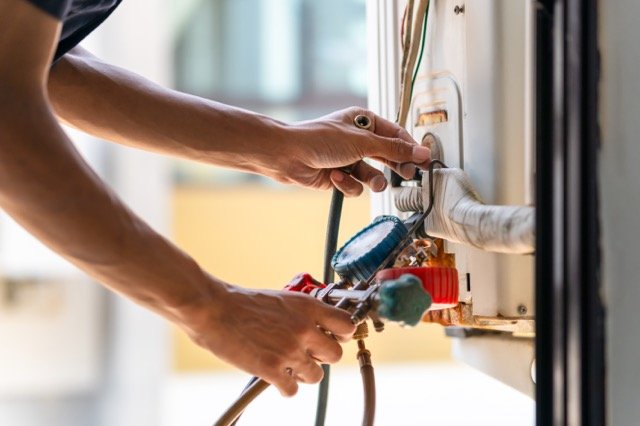
Here's what our technicians find when we diagnose cold air complaints in Macomb County, Oakland County, and St. Clair County homes:
1. Thermostat Set to "Fan On" Instead of "Auto"
This is the simplest cause — and the one homeowners feel most sheepish about. If your thermostat fan setting is on "ON," the blower runs continuously, even when the furnace isn't heating. You'll feel cold air whenever the burners aren't actively firing.
How to identify it: Check your thermostat. If the fan setting shows "ON" instead of "AUTO," that's your problem. Switch it to AUTO. The blower should only run during heating cycles.
Why it happens: Someone accidentally changed the setting, or you turned it to ON during summer for air circulation and forgot to switch it back.
2. Pilot Light or Ignition Failure
If the ignitor isn't working (or the pilot light is out on older furnaces), the burners never light. The furnace control board still tells the blower to run after the normal delay, so you get cold air circulation without any heat.
How to identify it: Look through the observation window on your furnace during a heating cycle. You should see blue flames. If there's no flame at all, or you see a weak yellow/orange flame, the ignition system failed.
Common causes: Dirty or cracked ignitor (most common in furnaces 10+ years old), dead pilot light, faulty gas valve, or electrical problem preventing the ignitor from heating up.
3. Flame Sensor Covered in Carbon Buildup
This is the #1 repair call we get every November. The flame sensor is a small metal rod positioned in the burner flames. It confirms the burners are actually lit before allowing gas to keep flowing. When it gets coated with carbon deposits, it can't detect the flame properly, so it shuts the gas valve after a few seconds.
How to identify it: The furnace tries to start, you hear the click of the gas valve, flames appear briefly (3-5 seconds), then everything shuts off. The blower might keep running, pushing cold air.
Why it happens: Normal combustion creates carbon deposits over time. Furnaces that don't get annual tune-ups develop heavy buildup. This is exactly what we clean during Next Care Plan maintenance visits in the fall.
4. Limit Switch Tripped Due to Overheating
The limit switch is a safety device that shuts down the burners if the heat exchanger gets too hot — usually caused by restricted airflow from a clogged filter or closed vents. When it trips, the burners shut off but the blower keeps running to cool down the heat exchanger. You feel cold air.
How to identify it: The furnace heats for a while, then blows cold air. After it cools down, it tries to heat again. This cycle repeats. Your furnace filter is probably filthy.
Why it happens: Dirty filters are the usual culprit. We also see this in homes where people close too many vents trying to "zone" their heating, or in older homes with undersized ductwork.
5. Gas Valve Issue or Gas Supply Interruption
If the gas valve isn't opening, or if there's an interruption in your gas supply, the burners can't light even if the ignitor is working perfectly. The blower runs on its normal schedule, but there's no heat.
How to identify it: Check other gas appliances in your home. If your gas stove or water heater also isn't working, you have a supply problem. If they work fine, the issue is your furnace's gas valve or the gas line to the furnace.
Common causes: Manual gas valve accidentally turned off, failed gas valve solenoid, kinked or damaged gas line, or utility company service interruption.
6. Cracked Heat Exchanger (Serious Safety Issue)
This is the diagnosis nobody wants to hear. A cracked heat exchanger allows combustion gases — including carbon monoxide — to mix with the air circulating through your home. Modern furnaces have safety sensors that detect this and shut down the burners immediately.
How to identify it: You might see visible cracks or rust holes if you inspect the heat exchanger (usually requires removing panels). More often, the furnace's safety system detects the problem and prevents the burners from staying lit. Some homeowners report a strange metallic smell or see rust flakes coming from vents.
Why it happens: Age, corrosion from condensation (especially in high-efficiency furnaces), or repeated overheating from poor maintenance. Heat exchangers typically last 15-20 years in Michigan, but chronic overheating can shorten that significantly.
Safety Warning: If you smell gas, see yellow or orange flames instead of blue, or your carbon monoxide detector goes off, shut down your furnace immediately, leave your home, and call your gas company's emergency line. Do not try to troubleshoot this yourself.
7. Ductwork Pulling in Cold Air From Unconditioned Spaces
This isn't a furnace problem — it's a duct problem. If your return ducts have gaps, holes, or disconnected sections running through your attic, crawlspace, or unheated basement, they'll pull in freezing outside air and mix it with the warm air from your furnace. The result feels like cold air blowing from your vents.
How to identify it: Some rooms feel colder than others. You might feel cold air from certain vents but not others. Your furnace runs constantly but never reaches the thermostat setting. Your energy bills are higher than they should be.
Why it happens: Old ductwork in 1960s-era Michigan ranches often has deteriorated connections. Poorly installed ductwork in newer homes can have gaps from day one. Rodents sometimes damage insulation or create holes in flexible ducts.
What You Can Check Before Calling a Technician

Before you call for service, there are five things you can safely check yourself. These take about 10 minutes and might save you a service call fee:
Step 1: Check Thermostat Settings and Battery
Verify your thermostat is set to HEAT mode (not OFF or COOL). Confirm the fan setting is on AUTO, not ON. Make sure the temperature setting is at least 5 degrees above the current room temperature.
If your thermostat display looks dim or blank, replace the batteries. Dead batteries can cause erratic behavior or prevent the furnace from receiving heating commands.
Step 2: Inspect Your Air Filter
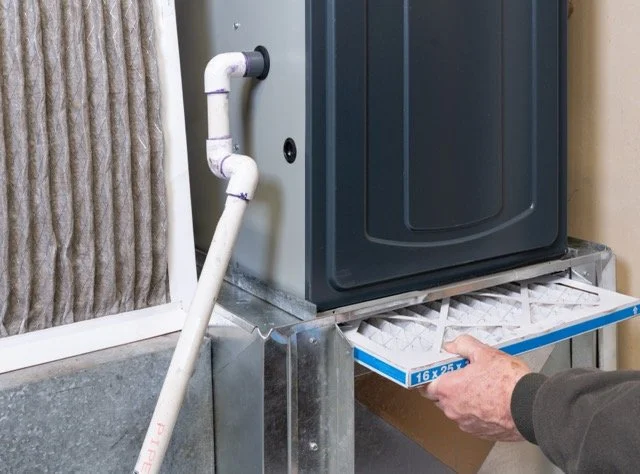
Locate your furnace filter (usually in a slot near the blower, or in a return air grill). Pull it out and hold it up to a light. If you can't see light through it, the filter is completely clogged and needs immediate replacement.
A clogged filter is the most common cause of limit switch trips and overheating shutdowns. We see this on probably 40% of our "no heat" calls in Warren and Clinton Township.
Quick filter guide: Standard 1-inch filters should be changed monthly during heating season. Thicker 4-inch pleated filters can last 3-6 months depending on usage and home conditions.
Step 3: Check Power and Circuit Breakers
Look for the furnace power switch on the wall near your furnace (it looks like a regular light switch, often with a red cover plate). Make sure it's in the ON position. Someone might have accidentally flipped it off.
Go to your electrical panel and check for any tripped breakers labeled for the furnace. If you find one, flip it fully OFF, then back ON. If it trips again immediately, you have an electrical problem that needs professional diagnosis.
Step 4: Verify Gas Supply
If you have a gas furnace, locate the gas valve on the gas line leading to your furnace. The handle should be parallel to the pipe (that's the ON position). If it's perpendicular (90 degrees), someone turned it off.
Important: If you smell gas (rotten egg odor), do not flip any switches or check anything else. Leave your home immediately and call your gas company's emergency line from outside.
Step 5: Observe the Ignition Process
If you're comfortable doing so, watch through your furnace's observation window during a heating cycle. You should see:
- The ignitor glow bright orange/red (or the pilot light burning steadily on older furnaces)
- Gas burners light up with steady blue flames
- Flames stay lit continuously during the heating cycle
- The blower starts running 30-90 seconds after the burners light
If you see yellow or orange flames instead of blue, or if flames flicker and go out, shut down your furnace and call for service. This indicates incomplete combustion, which can create carbon monoxide.
When Cold Air From Your Furnace Is a Safety Issue
Most cold air problems are inconvenient but not dangerous. Three situations require immediate professional attention:
Cracked Heat Exchangers and Carbon Monoxide Risk
A cracked heat exchanger is the most serious furnace failure because it allows combustion gases to enter your home's air supply. Carbon monoxide is colorless, odorless, and deadly.
Warning signs:
- Unusual metallic smell when the furnace runs
- Rust-colored dust or flakes coming from vents
- Visible cracks or holes in the heat exchanger (requires inspection)
- Carbon monoxide detector alarming
- Flu-like symptoms (headache, nausea, dizziness) that improve when you leave the house
Heat exchanger cracks are more common in furnaces 15+ years old, especially if they've been poorly maintained. Chronic overheating from dirty filters accelerates metal fatigue.
The repair reality: A cracked heat exchanger cannot be repaired — the entire heat exchanger assembly must be replaced. On most residential furnaces, that repair costs $1,200-$2,500 in parts and labor. For a furnace over 15 years old, replacement usually makes more financial sense than repair.
Gas Smells and Yellow/Orange Flames
Natural gas has a distinctive rotten egg smell (added for safety). If you smell it near your furnace, you have a gas leak. Leave immediately and call your gas company from outside your home.
Yellow or orange flames (instead of blue) indicate incomplete combustion. This produces carbon monoxide and means your burners need adjustment or cleaning. Shut down the furnace and call for service.
Why Michigan's Polar Vortex Events Stress Older Furnaces
When outdoor temperatures drop to -10°F or below — which happens multiple times each winter in Southeast Michigan — furnaces run longer and work harder. Older furnaces with marginal components often fail during these extreme cold events because:
- They're cycling on and off less frequently, giving components no rest periods
- Heat exchangers expand and contract more dramatically, stressing existing cracks
- Ignitors near the end of their lifespan fail from extended use
- Blower motors overheat from continuous operation
This is why we recommend fall furnace tune-ups before November. Catching a failing ignitor or dirty flame sensor in October prevents a midnight emergency call when it's -5°F outside.
What a Technician Actually Does During a Furnace Repair Call
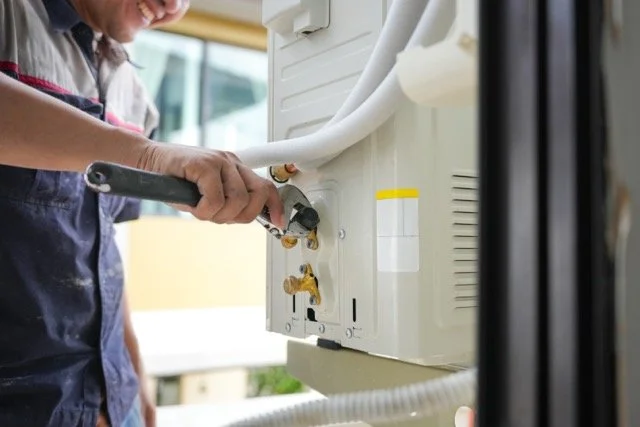
When you call NEXT Heating & Cooling for a "furnace blowing cold air" service request, here's what actually happens:
The Diagnostic Process (30-45 Minutes)
Our technician arrives with a full set of diagnostic tools: multimeter for electrical testing, manometer for gas pressure measurement, combustion analyzer for efficiency testing, and inspection camera for heat exchanger examination.
We start by asking when the problem started, what you've already checked, and whether you've noticed any unusual sounds or smells. Then we run the furnace through a complete heating cycle while monitoring:
- Thermostat signal and voltage
- Ignitor temperature and amperage draw
- Flame sensor microamp reading (should be 0.5-10 microamps depending on the furnace)
- Gas pressure at the manifold (should be 3.5 inches water column for natural gas)
- Flame color and pattern
- Heat exchanger temperature
- Blower amp draw and airflow
- Supply and return air temperatures
This systematic approach identifies the exact failure point — not just the symptom.
Common Repairs and What They Cost (2026 Southeast Michigan Pricing)
Based on our service data from Macomb County, Oakland County, and St. Clair County, here are the most common repairs for cold air complaints:
Flame sensor cleaning: $125-$175 (includes full system inspection). This is a 15-minute repair that solves the problem about 35% of the time.
Ignitor replacement: $200-$350 depending on furnace brand. Carrier, Lennox, and Trane ignitors are usually in stock on our trucks. Less common brands might require ordering, which adds a day.
Limit switch replacement: $150-$275. Usually same-day repair if the switch itself failed (not just tripped from a dirty filter).
Gas valve replacement: $350-$650 depending on valve type and furnace model. This is a more involved repair requiring gas line work and pressure testing.
Blower motor replacement: $450-$850 depending on motor type (PSC vs. ECM variable-speed). ECM motors cost more but are significantly more efficient.
Control board replacement: $350-$600. Modern furnaces have sophisticated circuit boards that control all furnace functions. When they fail, nothing works right.
Heat exchanger replacement: $1,200-$2,500 for parts and labor. This is a major repair that takes 4-6 hours. For furnaces over 12 years old, replacement is usually the smarter financial decision.
When Repair Doesn't Make Sense vs. Replacement
We use a simple formula: If the repair cost is more than 50% of a new furnace's cost, and your furnace is over 15 years old, replacement makes more financial sense.
Example: Your 17-year-old furnace needs a new heat exchanger ($2,000) and the blower motor is making noise ($700 to replace). That's $2,700 in repairs on a furnace that's already past its average lifespan. A new high-efficiency furnace costs $3,500-$5,500 installed and comes with a 10-year parts warranty and 95%+ AFUE efficiency (vs. 80% on your old unit).
The new furnace will save you $300-$500 per year in energy costs, meaning it pays for the cost difference in 4-5 years — while giving you reliable heat and eliminating repair calls.
Our technicians will walk you through both options with real numbers. We don't work on commission, so there's no pressure to buy a new system if repair makes sense.
Preventing Cold Air Problems (Maintenance Matters)
Most cold air failures are preventable with basic maintenance. Here's what actually makes a difference:
Why Fall Tune-Ups Catch These Issues Before Winter
A professional fall tune-up addresses the exact components that cause cold air failures:
- Flame sensor cleaning: Removes carbon buildup before it causes shutdowns
- Ignitor inspection: We measure amperage draw to predict ignitor failure before it happens
- Gas pressure testing: Ensures proper combustion and flame characteristics
- Heat exchanger inspection: Catches cracks early before they become safety hazards
- Blower motor lubrication: Extends motor life and prevents overheating
- Filter inspection: We check filter condition and airflow across the heat exchanger
- Safety control testing: Verifies limit switches and rollout switches function correctly
We perform these tune-ups every October and November before heating season starts. It's the same preventive approach that keeps your car from breaking down — address small issues before they become expensive failures.
What the Next Care Plan Includes
Our $5/month HVAC maintenance plan ($60/year) includes two annual home visits:
- Fall furnace tune-up (October-November) covering everything listed above
- Spring AC tune-up (April-May) to prepare your cooling system
Members also get priority scheduling, 10% off any repairs, and no service call fees. When you consider that a single emergency service call in January costs $125-$175 just to show up, the plan pays for itself immediately.
The Real Cost of Skipping Maintenance
We track service data across Southeast Michigan. Here's what we see in homes that skip annual maintenance:
- 3.5x higher likelihood of mid-winter emergency breakdowns
- Average repair costs of $450-$650 vs. $200-$300 for maintained systems
- Heat exchanger failures occurring 3-5 years earlier than properly maintained furnaces
- Energy waste costing $300-$600 per year from dirty components and poor combustion efficiency
A $150 annual tune-up prevents an average of $800-$1,200 in repairs and energy waste. The math is straightforward.
Furnace Age and Efficiency (When to Consider Replacement)
If your furnace is blowing cold air and it's over 15 years old, it's worth having a conversation about replacement — even if the current repair seems manageable.
How Old Furnaces Fail Differently
Furnaces manufactured before 2010 use different ignition technology than modern systems:
Standing pilot light systems (common in furnaces from the 1980s-1990s) waste gas keeping a pilot flame burning 24/7. The thermocouple that senses the pilot flame corrodes over time, causing frequent pilot outages. These systems are also less efficient (typically 65-78% AFUE) and lack modern safety features.
Electronic ignition systems (standard since the mid-1990s) use hot surface ignitors or intermittent pilot ignition. They're more efficient and reliable, but the ignitors have a finite lifespan — typically 5-7 years. Furnaces from the 2000-2010 era are now on their third or fourth ignitor replacement.
Modern condensing furnaces (95%+ AFUE) use sealed combustion, variable-speed blowers, and two-stage or modulating gas valves. They're significantly more efficient but have more complex controls that require proper maintenance.
Efficiency Loss in 15+ Year Old Furnaces
Even if your old furnace still heats, it's probably costing you more than you realize. Heat exchangers develop microscopic cracks and corrosion that reduce heat transfer efficiency. Blower motors slow down from worn bearings. Burners get dirty and create incomplete combustion.
A 20-year-old furnace rated at 80% AFUE when new is probably operating at 65-70% AFUE today. That means 30-35% of your natural gas is wasted — going straight up the flue instead of heating your home.
For a typical Sterling Heights home using 800 therms of gas per winter at $1.20/therm, that efficiency loss costs $288-$336 per year compared to a new 96% AFUE furnace.
New Furnace Costs in Metro Detroit (2026 Pricing)
Complete furnace replacement costs vary based on furnace size, efficiency rating, brand, and installation complexity. Here's what we typically see in Southeast Michigan:
80% AFUE single-stage furnace: $3,200-$4,500 installed. Basic reliable heat. Good choice for homes with simple ductwork and moderate heating needs. Brands: Goodman, Amana, Bryant base models.
95-96% AFUE two-stage furnace: $4,500-$6,500 installed. Better efficiency, quieter operation, more even heating. This is the sweet spot for most Michigan homes. Brands: Carrier, Lennox, Trane, Bryant, Rheem.
96-98% AFUE modulating furnace: $6,500-$8,500 installed. Premium efficiency and comfort with variable heat output. Best for larger homes or homeowners prioritizing efficiency and quiet operation. Brands: Carrier Infinity, Lennox Signature, Trane XV.
These prices include removal of the old furnace, new furnace installation, venting (if needed for high-efficiency models), electrical connections, gas line work, thermostat upgrade, and full system testing.
Carrier, Lennox, and Trane Options for Michigan Winters
We install all major brands, but these three consistently perform well in Michigan's harsh climate:
Carrier: The Infinity series offers excellent cold-weather performance and reliability. Their variable-speed ECM blowers handle Michigan's temperature swings well. We see fewer service calls on Carrier furnaces than most other brands.
Lennox: The Signature and Merit series provide strong efficiency ratings and good warranties. Lennox's SilentComfort technology makes them among the quietest furnaces we install. Parts availability in Southeast Michigan is excellent.
Trane: Known for durability and heavy-duty construction. The XV and XC series offer excellent efficiency. Trane furnaces tend to last longer than average — we regularly service 25+ year old Trane units still running strong.
All three brands offer 10-year parts warranties and have authorized service networks throughout Metro Detroit. We stock common parts for all three on our service trucks.
Need Your Furnace Diagnosed?
NEXT Heating & Cooling has been solving cold air problems for Michigan homeowners since 1991. Our NATE-certified technicians show up on time, diagnose the real problem, and give you honest options — repair or replace — with no pressure.
Same-day emergency service available throughout Macomb County, Oakland County, and St. Clair County.
Schedule Your Service Call