

Furnace Not Heating House? 6 Fixes Michigan Techs Use

It's 11 PM on a January night in Sterling Heights. The wind chill is -15°F. Your furnace is running, you hear it cycling on and off, but the air coming from the vents feels lukewarm at best. The thermostat says 72°F, but your living room is 58°F and dropping.
This is one of the most common emergency furnace calls we receive at NEXT Heating & Cooling. A furnace that runs but doesn't heat is frustrating because it feels like it should be working. The blower spins, the thermostat clicks, but your house stays cold.
After 35 years of furnace installation and repair across Southeast Michigan, we've diagnosed this exact problem thousands of times. The good news: six issues cause 90% of these no-heat calls, and some you can troubleshoot yourself before calling a technician.
Here's what NATE-certified techs check first when a furnace won't heat a house, why these problems happen in Michigan homes, and when you need professional help.
1. Thermostat Settings and Wiring Issues
The first thing our techs verify: is the thermostat actually calling for heat? You'd be surprised how often the fix is simpler than expected.
Start with the basics. Check that your thermostat is set to HEAT mode, not COOL or OFF. Verify the temperature setting is at least 5 degrees above the current room temperature. If you have a programmable or smart thermostat, confirm the schedule hasn't switched to a lower setpoint.
Dead batteries kill thermostats silently. If your display looks dim or blank, replace the batteries first. Most thermostats use AA or AAA batteries tucked behind the faceplate.
Wiring problems show up differently. If your thermostat powers on but the furnace never responds, you might have a loose wire at the thermostat base or furnace control board. The R (power) and W (heat call) wires are the most critical. A loose connection means the furnace never receives the signal to fire up.
Michigan-specific issue: Homes built in the 1960s and 1970s across Macomb and Oakland counties often have original thermostats with mercury switches. These fail over time, especially if the thermostat isn't level on the wall. If your thermostat is more than 15 years old, replacement is often cheaper than troubleshooting intermittent failures.
Modern smart thermostats (Nest, Ecobee, Honeywell Home) sometimes lose Wi-Fi connection or require software updates. Restart the thermostat by pulling it off the base plate for 30 seconds, then reattaching it. This forces a reboot and often restores communication with the furnace.
2. Dirty or Clogged Air Filter
A clogged air filter is the most common cause of a furnace that runs but produces little to no heat. It's also the easiest fix.
Here's what happens: your furnace pulls air through the return duct, across the heat exchanger, and pushes it through the supply ducts into your home. The air filter sits between the return duct and the blower, catching dust, pet hair, pollen, and debris before they reach the furnace internals.
When the filter clogs, airflow drops. The furnace heat exchanger gets hotter than designed because less air is moving across it to absorb the heat. The high-limit safety switch detects the overheating and shuts off the burners to prevent cracked heat exchangers or fires. The blower keeps running, but it's circulating unheated air.
You'll notice short cycling: the furnace fires up for 30-60 seconds, shuts off, waits a few minutes, then tries again. Each cycle produces a small puff of warm air, but never enough to heat the house.
Check your filter location. Most furnaces have the filter in a slot near the blower compartment, either horizontal or vertical. Pull it out and hold it up to a light. If you can't see light through the filter media, it's too dirty.
Replace it with a new filter of the same size. Standard 1-inch pleated filters should be changed every 30-60 days during heating season in Michigan. Homes with pets, construction dust, or residents with allergies need monthly changes. Our Next Care Plan includes filter replacement during seasonal tune-ups, plus we leave you with extra filters so you can swap them between visits.
Thicker 4-inch or 5-inch media filters (often used with Carrier, Lennox, or Trane systems) last 6-12 months but still need checking. Don't assume they're fine just because they're rated for a year.
3. Pilot Light or Ignition System Failure
If your furnace won't ignite the burners, it can't produce heat. Older furnaces use standing pilot lights. Newer systems use electronic ignition (hot surface igniter or spark igniter).
For furnaces with standing pilots (common in systems built before 2000), check if the pilot flame is lit. You'll usually see a small blue flame through a viewing window near the burner assembly. If it's out, the gas valve won't open to feed the main burners.
Pilot lights go out for several reasons: drafts from leaky basement windows, thermocouple failure, or gas supply interruptions. You can attempt to relight it following the instructions on the furnace label, but if it won't stay lit after three tries, call a technician. A failing thermocouple or gas valve needs professional diagnosis.
Electronic ignition systems are standard on furnaces made after 2005. These use a hot surface igniter (a glowing ceramic element) or a spark igniter to light the gas burners when the thermostat calls for heat.
Hot surface igniters crack over time. They're fragile, about the size of a pencil, and glow bright orange when working. If you hear the furnace click and try to start, but the burners never light, the igniter might be cracked. You won't see the glow, and the gas valve won't open without flame confirmation.
Igniter replacement is straightforward for a licensed tech but requires shutting off gas and electrical power. Expect to pay $150-$300 for parts and labor in Metro Detroit. Igniters for Carrier, Goodman, and Rheem furnaces are readily available and usually installed within an hour.
Safety note: If you smell gas (rotten egg odor) and the furnace won't light, shut off the gas valve at the furnace, leave the house, and call your gas utility or a licensed HVAC contractor immediately. Do not attempt to relight anything yourself.
4. Flame Sensor Covered in Soot
The flame sensor is a small metal rod positioned in the path of the burner flames. Its job: confirm that gas is actually burning before allowing the gas valve to stay open. If the sensor doesn't detect flame, the furnace shuts off the gas within seconds to prevent raw gas from filling your home.
Over time, the flame sensor develops a coating of carbon soot or oxidation. This insulates the sensor from the flame's electrical conductivity, so even though flames are present, the sensor can't detect them. The furnace lights the burners, runs for 3-5 seconds, then shuts off. It repeats this cycle endlessly, never staying on long enough to heat the house.
Flame sensor cleaning is a common repair during our fall furnace tune-ups. We remove the sensor, clean it with fine steel wool or an emery cloth until the metal shines, and reinstall it. The furnace usually fires right up afterward.
If you're comfortable working around your furnace, you can attempt this yourself. Shut off power to the furnace at the breaker. The flame sensor is typically held in place by a single screw. Remove it, gently clean the rod (don't bend it), and reinstall. Restore power and test.
If cleaning doesn't fix the problem, the sensor might be faulty and need replacement. Sensors cost $20-$50 for the part, plus labor if you hire a tech.
5. Blower Motor or Capacitor Failure
Your furnace can light the burners and generate heat, but if the blower motor doesn't push air through the ducts, that heat stays trapped in the furnace cabinet. You'll hear the burners fire, smell warm air near the furnace, but feel nothing at the vents.
Blower motor failure shows up as complete silence from the blower compartment when the furnace should be running. No hum, no air movement, nothing. The motor might have seized bearings, burnt windings, or a failed internal overload switch.
More often, the problem is the blower motor capacitor. The capacitor stores electrical charge and provides the startup boost the motor needs to spin. When capacitors fail (they have a limited lifespan of 10-20 years), the motor hums but won't start, or it starts slowly and struggles to reach full speed.
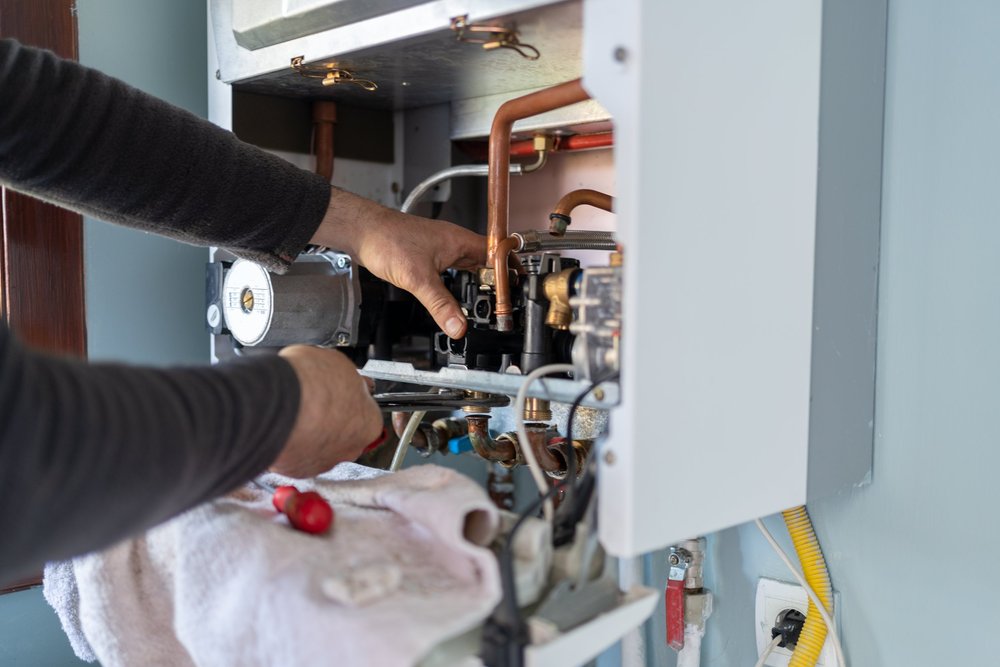
Capacitor replacement is a quick fix: $100-$200 including the service call in Southeast Michigan. Blower motor replacement costs more, typically $400-$800 depending on the motor type and furnace brand. Variable-speed blower motors (used in high-efficiency Carrier, Lennox, and Trane furnaces) cost more than single-speed motors but offer better comfort and efficiency.
If your furnace is more than 15 years old and needs a blower motor, discuss replacement costs with your technician. Sometimes the motor replacement cost approaches 40-50% of a new furnace, making replacement the smarter long-term investment.
6. Ductwork Leaks or Blockages
Your furnace might be producing plenty of heat, but if the ductwork leaks, that heated air escapes into your attic, crawl space, or basement before reaching the living areas.
Duct leaks are common in Michigan homes built before 1990. Contractors used sheet metal ducts with minimal sealing, or flex duct that deteriorates over decades. Joints separate, seams split, and rodents sometimes chew holes in flex duct insulation.
The U.S. Department of Energy estimates that 20-30% of heated air is lost through duct leaks in typical homes. That means your furnace works harder, runs longer, and still struggles to maintain temperature. You'll notice hot and cold spots: bedrooms stay cold while the hallway near the furnace feels warm.
Duct inspection requires accessing the ductwork, which often means crawling into basements or attics. Look for visible gaps at joints, disconnected sections, or crushed flex duct. Feel for air blowing out of seams while the furnace runs.
Professional duct sealing uses mastic (a thick paste) or metal-backed tape (not cloth duct tape, which fails quickly) to seal leaks. Aeroseal is a newer technology that seals leaks from the inside using aerosolized sealant particles. It's effective but costs more: $1,500-$3,000 for a typical home.
Blockages are less common but still happen. Furniture or storage boxes blocking return vents restrict airflow. Closed or blocked supply registers in unused rooms force the furnace to work harder. Dampers in the ductwork (installed to balance airflow) sometimes get stuck closed.
Walk through your home and verify all vents are open and unobstructed. Remove any furniture, curtains, or rugs covering registers.
When to Call a Professional
Some troubleshooting is safe for homeowners. Checking the thermostat, replacing the air filter, and verifying vents are open won't void warranties or create safety hazards.
But furnace repair involves natural gas, high-voltage electricity, and pressurized combustion systems. Mistakes can cause gas leaks, carbon monoxide exposure, electrical shocks, or fires.
Call a licensed HVAC contractor immediately if you:
- Smell gas (rotten egg odor) near the furnace or anywhere in the house
- Hear hissing or whistling sounds from the gas line or furnace cabinet
- See yellow or orange flames instead of blue (indicates incomplete combustion and possible carbon monoxide production)
- Experience headaches, dizziness, or nausea when the furnace runs (carbon monoxide symptoms)
- Notice soot buildup around the furnace or on nearby walls
- Hear loud banging, screeching, or grinding noises from the furnace
- See water pooling around the furnace base (condensate drain clog or heat exchanger crack)
Michigan mechanical code requires that anyone working on gas-fired appliances hold a valid mechanical contractor license. NEXT Heating & Cooling operates under Premier Builder Inc.'s Michigan Mechanical Contractor License, and all our technicians are NATE-certified. NATE (North American Technician Excellence) is the only industry-recognized certification for HVAC technicians, testing real-world diagnostic and repair skills.
When you call NEXT Heating & Cooling, you get a technician who arrives on time, diagnoses the problem accurately, and explains your options clearly. No upselling. No commission-based sales pressure. Just honest diagnostics and fair pricing.
We offer 24/7 emergency service because furnace failures don't wait for business hours. When it's -10°F outside and your heat goes out at 2 AM, you need help now. Our emergency response covers Sterling Heights, Warren, Troy, Mount Clemens, and all of Macomb, Oakland, and St. Clair counties.
Cost Reality: Repair vs. Replace
Homeowners in Metro Detroit always ask: should I repair this furnace or replace it?
Here's the honest answer from 35 years of furnace service: it depends on the furnace age, repair cost, and efficiency.
Typical furnace repair costs in Southeast Michigan:
- Thermostat replacement: $150-$400 depending on model
- Air filter: $15-$60 (you can do this yourself)
- Igniter replacement: $150-$300
- Flame sensor cleaning: $100-$150 (included in tune-ups)
- Blower motor capacitor: $100-$200
- Blower motor replacement: $400-$800
- Gas valve replacement: $300-$600
- Heat exchanger replacement: $1,200-$2,500 (rarely worth it)
If your furnace is less than 10 years old and the repair costs less than $500, repair makes sense. The furnace likely has years of life remaining, and modern parts are reliable.
If your furnace is 15-20 years old, calculate the cost-to-value ratio. A $1,500 repair on a 17-year-old furnace means you're investing heavily in equipment that's near the end of its expected lifespan (most furnaces last 15-25 years in Michigan).
A cracked heat exchanger almost always means replacement. Heat exchanger replacement costs nearly as much as a new furnace, and the rest of the components (blower, gas valve, controls) are just as old and likely to fail soon.
Furnace replacement costs in Metro Detroit range from $3,500 to $8,000 depending on efficiency, brand, and installation complexity. A basic 80% AFUE (Annual Fuel Utilization Efficiency) single-stage Goodman or Rheem furnace costs less than a 96% AFUE two-stage Carrier or Lennox furnace with variable-speed blower.
Higher-efficiency furnaces (95%+ AFUE) save money on gas bills, especially in Michigan's long heating season. A 96% AFUE furnace converts 96 cents of every dollar of natural gas into heat, compared to 80 cents for an 80% AFUE furnace. Over 15-20 years, that difference adds up to thousands in energy savings.
We walk through the numbers with every homeowner. No pressure, no sales tactics. If repair makes sense, we repair. If replacement saves you money long-term, we explain why and give you options at different price points.
Our 35+ years serving Southeast Michigan were built on that approach: honest advice, fair pricing, and work that lasts.
Ready to Get Started?
NEXT Heating & Cooling has been keeping Michigan homes comfortable for over 35 years. Get honest diagnostics and fair pricing from NATE-certified technicians who show up on time.
Schedule Your ServiceFrequently Asked Questions
The most common causes are a clogged air filter restricting airflow, a failed igniter preventing the burners from lighting, or a dirty flame sensor shutting off the gas valve after ignition. Check your air filter first. If it's clean and the furnace still blows cold air, call a technician to inspect the ignition system and flame sensor.
Standard 1-inch pleated filters should be changed every 30-60 days during heating season (October through April). Homes with pets, allergies, or ongoing construction need monthly changes. Thicker 4-inch or 5-inch media filters last 6-12 months but should be inspected every 3 months. Dirty filters are the leading cause of furnace short-cycling and no-heat calls in Southeast Michigan.
Short-cycling means the furnace fires up, runs for 30-90 seconds, shuts off, waits a few minutes, then repeats. This usually indicates restricted airflow from a clogged filter, a dirty flame sensor, or an oversized furnace for the home. The high-limit safety switch detects overheating and shuts off the burners to protect the heat exchanger. Replace the filter first. If short-cycling continues, call a technician to inspect the flame sensor and airflow system.
Most furnace repairs in Southeast Michigan range from $100 to $800 depending on the part and labor. Simple fixes like capacitor replacement or flame sensor cleaning cost $100-$200. Igniter replacement runs $150-$300. Blower motor replacement costs $400-$800. Gas valve or control board replacement can reach $600-$1,200. Heat exchanger replacement ($1,200-$2,500) is rarely cost-effective on furnaces older than 15 years.
Consider replacement if your furnace is 15+ years old and needs a repair costing more than $1,000, has a cracked heat exchanger, or requires multiple repairs in the same season. Also consider replacement if your current furnace is 80% AFUE or lower and you want to reduce energy bills. A 96% AFUE furnace saves 15-20% on gas costs compared to an 80% AFUE model, which adds up over Michigan's long heating season. We provide honest cost comparisons so you can make the best decision for your budget.
The Next Care Plan is a $5/month preventative maintenance subscription that includes two annual home visits: a fall furnace tune-up and a spring AC tune-up. During the furnace tune-up, we clean the flame sensor, inspect the igniter and heat exchanger, test the blower motor and capacitor, check gas pressure, verify airflow, and replace your filter. Regular maintenance catches small issues before they become expensive repairs or middle-of-the-night breakdowns. Members also get priority scheduling, 10% off repairs, and no service call fees.
No. If you smell gas (a rotten egg odor), shut off the furnace immediately, do not use any electrical switches or open flames, leave the house, and call your gas utility or 911 from outside. Natural gas leaks are serious safety hazards that can cause explosions or carbon monoxide poisoning. Once the gas company confirms it's safe, call a licensed HVAC contractor to inspect the furnace, gas valve, and connections before using it again.