

HVAC Maintenance Plan Benefits Michigan Homeowners Need
We've been servicing HVAC systems in Southeast Michigan for over 35 years, and the question we hear most often is this: "Is a maintenance plan actually worth it, or is it just another subscription I don't need?"
Here's the honest answer from the furnace room: A properly structured HVAC maintenance plan isn't a profit center for contractors—it's a cost-prevention strategy for homeowners. And in Michigan, where your furnace runs six months a year and your AC battles 90-degree humidity every summer, the math is pretty straightforward.
Let's break down the real HVAC maintenance plan benefits, the actual costs you avoid, and what to look for when comparing plans in Metro Detroit.
What an HVAC Maintenance Plan Actually Includes
Not all maintenance plans are created equal. Some are glorified filter-change services with a monthly fee attached. Others are comprehensive seasonal inspections that actually extend equipment life.
Here's what a legitimate HVAC maintenance plan in Metro Detroit should include:
Fall Furnace Tune-Up (Before Heating Season)
This happens in September or October, before Michigan's first freeze. A NATE-certified technician should:
- Inspect the heat exchanger for cracks or corrosion—this is where carbon monoxide leaks start
- Test gas pressure and burner flame to ensure proper combustion (critical for 90%+ AFUE furnaces)
- Check electrical connections at the blower motor, control board, and ignitor
- Test the thermostat calibration and verify proper staging (important for two-stage and modulating furnaces)
- Inspect the condensate drain (high-efficiency furnaces produce water—clogs cause shutdowns)
- Verify proper airflow through the ductwork and check for leaks
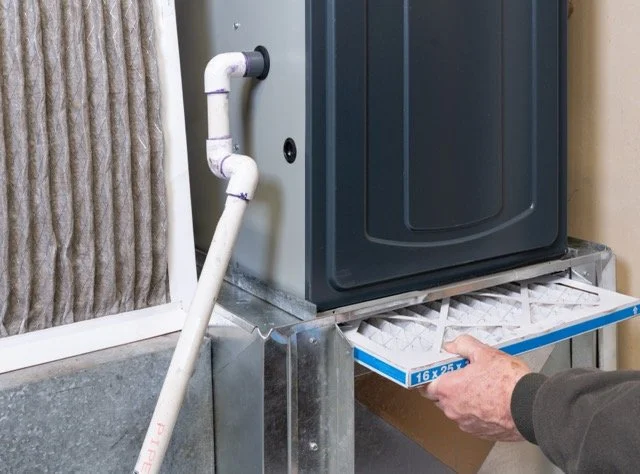
- Replace or clean the air filter (a $15 filter prevents a $1,500 blower motor replacement)
We catch cracked heat exchangers, failing igniters, and corroded flame sensors during these visits. Those are all issues that would leave you without heat on a 10-degree January night if they weren't addressed early.
Spring AC Tune-Up (Before Cooling Season)
This happens in April or May, before the humidity hits. The technician should:
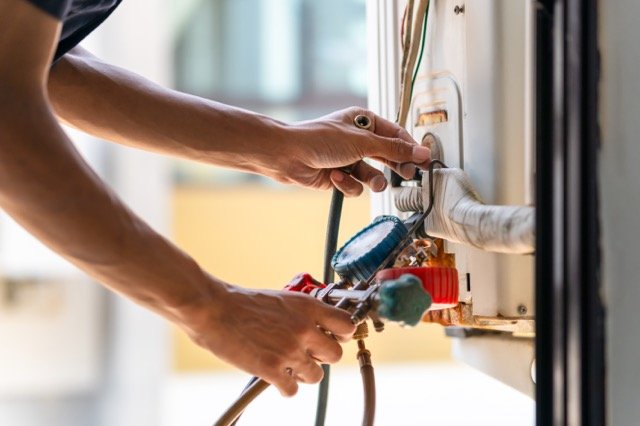
- Check refrigerant levels and test for leaks (low refrigerant destroys compressors)
- Clean the condenser coils (cottonwood seeds and dirt reduce efficiency by 20-30%)
- Inspect electrical connections at the compressor and capacitor (capacitor failures are the #1 summer AC call)
- Test the contactor and capacitor with a multimeter—these fail gradually, then suddenly
- Verify proper airflow across the evaporator coil (frozen coils mean airflow problems)
- Check the condensate drain line (clogs cause water damage in Michigan basements)
- Test system performance under load—measure temperature split and amp draw
The most common issue we find during spring tune-ups? Capacitors testing weak but not yet failed. Replacing a $30 capacitor in May prevents a $400 emergency service call in July when your AC quits during a heat wave.
Additional Services Included in Quality Plans
Beyond the two seasonal visits, a good maintenance plan should include:
- Priority scheduling when you need service (no waiting three days in winter)
- Discounted repair rates (typically 10-15% off parts and labor)
- No service call fees for plan members
- Detailed inspection reports with photos of any issues found
At NEXT Heating & Cooling, our $5/month NEXT Care Plan includes all of this—two home visits per year, priority scheduling, 10% repair discounts, and no service call fees. That's $60 per year for protection that routinely saves homeowners thousands.
The Real Cost Savings (Michigan-Specific Numbers)
Let's talk about the actual financial benefit of HVAC maintenance plan benefits, using real numbers from Southeast Michigan homes.
Average Repair Costs You Avoid
Here's what common HVAC repairs cost in Metro Detroit when they're not caught during maintenance:
- Furnace heat exchanger replacement: $1,500–$4,000 (often more cost-effective to replace the entire furnace)
- AC compressor replacement: $1,200–$3,500 depending on system size and refrigerant type
- Blower motor replacement: $450–$800 including labor
- Ignitor replacement (emergency): $200–$350 (the part costs $30, but emergency service adds $150+)
- Capacitor replacement (emergency): $250–$400 (the part costs $20–$40, but summer emergency calls are expensive)
- Evaporator coil replacement: $1,000–$2,500 (often caused by neglected filter changes)
During routine maintenance visits, we identify these issues before they cause system failure. A weak capacitor gets replaced for $150 during a scheduled visit instead of $350 during an emergency call. A dirty evaporator coil gets cleaned for no additional charge instead of requiring a $1,500 replacement after it freezes and cracks.
Real Example from Macomb County: Last November, we caught a cracked heat exchanger during a routine fall tune-up on a 12-year-old Carrier furnace in Clinton Township. The homeowner paid $3,200 for a new furnace installation instead of facing a $400 emergency service call in January when the furnace would have failed—plus the cost of a hotel room while we sourced and installed a replacement during peak season. The maintenance visit saved them at least a week of disruption and potentially dangerous carbon monoxide exposure.
Energy Waste from Unmaintained Systems
Here's what most contractors won't tell you: An unmaintained HVAC system loses 5-15% efficiency per year. That efficiency loss shows up directly on your utility bill.
For a typical 1,800-square-foot home in Sterling Heights with a 95% AFUE furnace and 16 SEER air conditioner, here's the annual energy waste from skipping maintenance:
- Dirty furnace burners and heat exchanger: 10-15% efficiency loss = $120–$180/year in wasted gas
- Dirty AC condenser coils: 20-30% efficiency loss = $150–$250/year in wasted electricity
- Clogged air filters: Reduced airflow causes 5-10% efficiency loss across both systems = $60–$100/year
Add it up: $330–$530 per year in wasted energy costs for an unmaintained system. Over five years, that's $1,650–$2,650 thrown away—enough to buy a new high-efficiency furnace.
A $60/year maintenance plan pays for itself in energy savings alone, before you even factor in avoided repair costs.
Equipment Lifespan Extension
Industry data from the Air Conditioning Contractors of America (ACCA) shows that properly maintained HVAC systems last 3-5 years longer than neglected systems. In Michigan, where equipment works hard year-round, that matters.
Here's the replacement cost you defer with regular maintenance:
- Gas furnace replacement: $3,500–$7,000 installed (depending on efficiency and brand)
- Central AC replacement: $3,800–$8,500 installed (depending on SEER rating and tonnage)
- Heat pump replacement: $5,500–$12,000 installed (for cold-climate models like Carrier Greenspeed or Lennox XP25)
If maintenance extends your furnace life from 15 years to 18 years, you've deferred a $5,000 replacement cost by three years. That's $1,667 per year in avoided depreciation—a 2,778% return on a $60 annual maintenance investment.
How Maintenance Prevents Winter Breakdowns
Michigan winters are brutal on furnaces. When the polar vortex hits and outdoor temps drop to -10°F, your furnace runs 18-20 hours per day trying to keep up. That's when neglected systems fail.
Here are the most common winter furnace failures we see in Troy, Rochester Hills, and Shelby Township—and how maintenance catches them early:
Cracked Heat Exchangers
Heat exchangers crack due to thermal stress—repeated heating and cooling cycles cause metal fatigue. In Michigan, a furnace cycles 8-12 times per day during winter. Over 10-15 years, that's 20,000-30,000 cycles.
A cracked heat exchanger allows combustion gases (including carbon monoxide) to mix with the air circulating through your home. This is a safety hazard that requires immediate furnace shutdown.
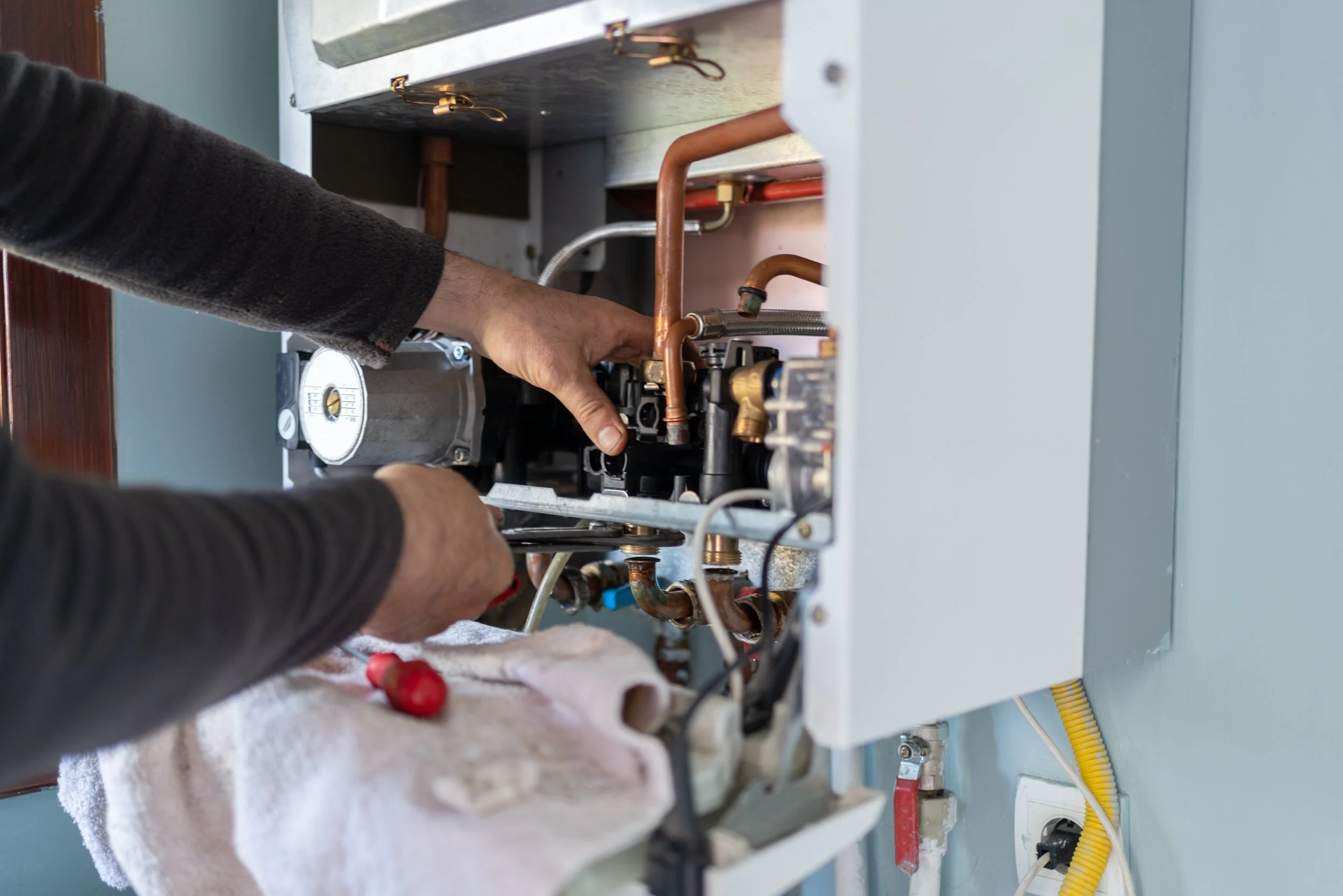
During a fall tune-up, we visually inspect the heat exchanger with a borescope camera and test for cracks using combustion analysis. If we find early-stage cracking, you have time to plan a furnace replacement instead of facing an emergency shutdown in January.
Ignitor Failures
Modern furnaces use hot surface igniters—ceramic elements that glow red-hot to ignite the gas burners. These igniters are fragile and degrade over time. Average lifespan is 5-7 years.
During maintenance, we test ignitor resistance with a multimeter. If it's reading high (indicating wear), we replace it proactively for $150 during a scheduled visit instead of $300+ during an emergency call when your furnace won't start.
Flame Sensor Corrosion
The flame sensor is a metal rod that sits in the burner flame and confirms ignition. If it gets coated with carbon buildup or corrosion, it can't detect the flame—so the furnace shuts down after 3-5 seconds as a safety measure.
We clean the flame sensor during every fall tune-up. It takes 60 seconds and prevents the #1 reason homeowners call us in November saying "my furnace turns on then shuts right off."
Blower Motor Failures
Blower motors fail due to bearing wear, capacitor failure, or overheating from restricted airflow (usually caused by dirty filters). In Michigan, where furnaces run constantly in winter, a failing blower motor will quit when you need it most.
During maintenance, we test blower motor amp draw and listen for bearing noise. If the motor is drawing high amps or making grinding sounds, we recommend replacement before it fails completely.
Real Example from Oakland County: During a fall tune-up in Bloomfield Hills, we found a blower motor drawing 8.2 amps—well above the 6.5 amp rating on the nameplate. The bearings were wearing out. We replaced the motor for $650 during a scheduled visit. Two weeks later, the homeowner's neighbor (who had skipped maintenance) had their blower motor seize up during a cold snap. Emergency replacement cost them $1,100 plus two days without heat while we sourced the part.
Energy Efficiency Benefits You'll Actually Notice
HVAC maintenance plan benefits aren't just about avoiding breakdowns—they're about preserving the efficiency ratings you paid for when you bought the equipment.
How Efficiency Degrades Without Maintenance
When you buy a 96% AFUE furnace or 18 SEER air conditioner, those ratings assume clean components and proper airflow. Here's what happens when you skip maintenance:
Furnaces: Dirty burners create incomplete combustion, which wastes fuel and produces carbon monoxide. Dirty heat exchangers can't transfer heat efficiently, so more heat goes up the flue instead of into your home. A neglected 96% AFUE furnace can drop to 80-85% efficiency within 2-3 years.
Air Conditioners: Dirty condenser coils reduce heat rejection, forcing the compressor to work harder and run longer. Dirty evaporator coils reduce airflow and heat absorption. Low refrigerant (from slow leaks) reduces cooling capacity. A neglected 16 SEER AC can drop to 12-13 SEER within 2-3 years.
That efficiency loss shows up on your utility bill every month. For a typical Southeast Michigan home, we're talking about $25-$40 per month in wasted energy during heating season and $30-$50 per month during cooling season.
What Maintenance Restores
During seasonal tune-ups, we restore your system to factory-rated efficiency by:
- Cleaning burners and heat exchangers to restore complete combustion
- Cleaning condenser and evaporator coils to restore heat transfer efficiency
- Checking refrigerant charge and topping off if needed (slow leaks are common in Michigan due to ground shifting and vibration)
- Replacing air filters to restore proper airflow
- Calibrating thermostats to prevent short-cycling and temperature overshoot
Homeowners typically notice lower utility bills within the first month after a tune-up. The savings compound over time—a well-maintained system costs 15-25% less to operate than a neglected system.
Real Utility Bill Impact
Let's use real numbers from a 2,000-square-foot home in Warren with a 96% AFUE Lennox furnace and 16 SEER Carrier AC:
Winter (November–March): With regular maintenance, average monthly gas bill is $180-$220. Without maintenance, it climbs to $220-$280. That's $40-$60/month wasted, or $200-$300 per heating season.
Summer (June–August): With regular maintenance, average monthly electric bill is $140-$180 (including AC). Without maintenance, it climbs to $180-$240. That's $40-$60/month wasted, or $120-$180 per cooling season.
Total annual waste: $320-$480. A $60/year maintenance plan saves you 5-8 times its cost in energy bills alone.
If you're seeing higher utility bills and your system is more than three years old without maintenance, that's a clear sign you're wasting money. Our heating and cooling services in Metro Detroit include efficiency testing and restoration as part of every tune-up.
Priority Service and Peace of Mind
One of the most underrated HVAC maintenance plan benefits is priority scheduling when something does go wrong. In Michigan, timing matters.
What Priority Scheduling Actually Means
When your furnace quits on a Saturday night in January and it's 15 degrees outside, you don't want to wait until Tuesday for service. Maintenance plan members get bumped to the front of the queue.
At NEXT Heating & Cooling, our Next Care Plan members get same-day or next-day service even during peak demand periods. Non-members might wait 2-4 days during a cold snap when we're flooded with emergency calls.
That priority access is worth hundreds of dollars in avoided hotel costs, frozen pipe repairs, and general misery when your heat goes out in Michigan winter.
Repair Discounts Add Up
Most quality maintenance plans include 10-15% discounts on repair parts and labor. That doesn't sound like much until you need a $1,500 repair—then it's $150-$225 back in your pocket.
Over the life of your HVAC system, you'll likely need 3-5 repairs beyond routine maintenance. Those discounts easily pay for a decade of maintenance plan fees.
No Service Call Fees
When you call for service, most HVAC contractors charge a $75-$150 diagnostic fee just to send a technician to your home. That fee is separate from any repair costs.
Maintenance plan members typically get that fee waived. If you need service twice in a year, you've already saved $150-$300—more than the annual cost of the plan.
Peace of Mind During Michigan Weather Extremes
Southeast Michigan sees temperature swings from -10°F in winter to 95°F with 80% humidity in summer. Your HVAC system is the only thing standing between your family and dangerous temperature extremes.
Knowing your system was inspected by a NATE-certified technician before heating and cooling season starts gives you confidence that it won't fail when you need it most. That peace of mind is hard to quantify, but every homeowner who's been through a winter furnace failure knows exactly what it's worth.

What to Look for in a Maintenance Plan
Not all HVAC maintenance plans deliver the same value. Here's what to look for when comparing options in Southeast Michigan:
Pricing Transparency
Beware of plans that don't clearly list what's included. Some contractors advertise "$99/year maintenance" but then charge extra for refrigerant, filter replacements, or diagnostic fees.
A quality plan should have all-inclusive pricing. Our Next Care Plan is $5/month ($60/year) with no hidden fees—that includes both seasonal visits, all inspection services, filter replacement recommendations, and priority scheduling.
What's Actually Included
Make sure the plan covers both heating and cooling systems. Some plans only include one seasonal visit per year, which means either your furnace or your AC isn't getting maintained.
You need two visits per year in Michigan—fall furnace inspection and spring AC inspection. Anything less leaves half your system neglected.
Contractor Credentials
Maintenance is only valuable if it's performed by qualified technicians. Look for:
- Michigan Mechanical Contractor License (required by state law for HVAC work)
- NATE certification (North American Technician Excellence—the industry's leading certification)
- Manufacturer authorization for the brands they service (Carrier, Lennox, Trane, Rheem, etc.)
- Proper insurance (liability and workers' comp)
At NEXT Heating & Cooling, all our technicians are NATE-certified, we hold a Michigan Mechanical Contractor License, and we're authorized dealers for all major HVAC brands. We've been doing this for 35+ years under Premier Builder Inc.—we're not a fly-by-night operation.
Emergency Service Terms
Understand what "priority service" actually means. Ask:
- What's the response time for emergency calls? (Same-day? Next-day? 48 hours?)
- Are there additional fees for after-hours or weekend service?
- Are service call fees waived for plan members?
- What repair discounts apply? (10%? 15%? Only on parts, or labor too?)
Get these terms in writing before you sign up. A plan that sounds great on the phone but has hidden fees in the fine print isn't worth it.
Transferability and Cancellation
If you sell your home, can you transfer the maintenance plan to the new owner? Some plans allow this, which can be a selling point when listing your home.
Also check the cancellation terms. Quality contractors don't lock you into multi-year contracts with early termination fees. Our Next Care Plan is month-to-month—you can cancel anytime if you're not satisfied.
Signs Your System Needs Maintenance Now
Even if you're not ready to commit to an annual maintenance plan, here are the warning signs that your HVAC system needs professional attention right now:
Rising Utility Bills
If your gas or electric bills have increased 15-20% compared to the same month last year—and you haven't changed your thermostat settings—your system is losing efficiency. Dirty coils, low refrigerant, or failing components force the system to work harder and run longer.
A maintenance visit can identify the cause and restore efficiency before you waste hundreds of dollars on energy costs.
Uneven Heating or Cooling
If some rooms are too hot while others are too cold, you likely have airflow problems. Common causes include:
- Clogged air filters restricting airflow
- Ductwork leaks losing conditioned air
- Blower motor running at reduced speed
- Damper issues in zoned systems
These issues won't fix themselves—they get worse over time. We address airflow problems during every maintenance visit, and we also offer dedicated ductwork inspection and sealing services for homes with persistent hot/cold spots.
Strange Noises
HVAC systems should run quietly. If you're hearing:
- Grinding or squealing: Blower motor bearings failing
- Banging or clanking: Loose components or ductwork issues
- Clicking or rattling: Electrical relay problems or loose panels
- Hissing: Refrigerant leak (AC) or gas leak (furnace—call immediately)
Strange noises are early warning signs of component failure. Catching them during maintenance prevents expensive emergency repairs. If you're hearing unusual sounds, don't wait—schedule HVAC service with a licensed contractor immediately.
Frequent Cycling
If your furnace or AC turns on and off every 5-10 minutes instead of running in longer cycles, that's called short-cycling. It's caused by:
- Oversized equipment (common in Michigan homes)
- Dirty air filters restricting airflow
- Failing thermostat or limit switch
- Refrigerant problems (AC)
- Flame sensor issues (furnace)
Short-cycling destroys equipment. Every start-up cycle creates wear on electrical components, and systems aren't designed to cycle more than 3-5 times per hour. If you've noticed your system cycling frequently, it needs immediate attention. We've written a detailed guide on why furnaces short-cycle and how to fix it.
System Age
If your furnace or AC is more than 10 years old and has never had professional maintenance, it's overdue. Systems that old have accumulated years of dirt, wear, and minor issues that compound into major problems.
Even if the system is still running, it's likely operating at 60-70% of its original efficiency. A maintenance visit can restore some of that lost performance and identify components that need replacement before they fail.
Visible Dust or Poor Air Quality
If you're seeing dust accumulation on furniture within days of cleaning, or if family members are experiencing more allergies or respiratory issues, your HVAC system might be circulating contaminated air.
During maintenance, we inspect ductwork for leaks that pull in attic dust or basement air, check air filters for proper fit, and recommend indoor air quality solutions like HEPA filtration or UV lights if needed.
Ready to Protect Your HVAC Investment?
NEXT Heating & Cooling has been keeping Southeast Michigan homes comfortable for over 35 years. Our $5/month NEXT Care Plan includes two seasonal tune-ups, priority scheduling, repair discounts, and no service call fees. Get honest diagnostics from NATE-certified technicians who show up on time.
Schedule Your Maintenance VisitFrequently Asked Questions
Yes, especially in Michigan. A $60/year maintenance plan typically saves homeowners $320-$530 annually in energy costs alone, plus prevents $1,500-$4,000 in emergency repairs. The plan pays for itself 5-8 times over in avoided costs and extends equipment life by 3-5 years. For Southeast Michigan homes where HVAC systems run year-round, maintenance is the single best investment you can make in home comfort.
Twice per year—once in fall before heating season (September/October) and once in spring before cooling season (April/May). Michigan's extreme temperature swings put heavy demand on both heating and cooling systems, so both need seasonal inspection. Skipping either visit leaves half your system neglected and increases the risk of mid-season breakdowns when you need the equipment most.
A complete furnace tune-up includes heat exchanger inspection for cracks, gas pressure and burner flame testing, electrical connection checks, thermostat calibration, condensate drain inspection, airflow verification, and filter replacement. The technician also tests for carbon monoxide, checks the ignitor and flame sensor, and measures system performance under load. The goal is to catch small issues before they cause winter breakdowns and ensure safe, efficient operation throughout heating season.
You can handle basic tasks like changing air filters monthly and keeping outdoor units clear of debris, but professional maintenance requires specialized tools and training. Testing gas pressure, checking refrigerant charge, inspecting heat exchangers for cracks, and measuring electrical performance all require equipment and expertise that homeowners don't have. DIY maintenance also voids most equipment warranties. The risks (carbon monoxide exposure, refrigerant leaks, electrical hazards) far outweigh the $60/year cost of professional service.
The NEXT Care Plan costs $5/month ($60/year) and includes two seasonal home visits (fall furnace tune-up and spring AC tune-up), priority scheduling for emergency service, 10% discount on all repair parts and labor, no service call fees, and detailed inspection reports. All services are performed by NATE-certified technicians with 35+ years of experience serving Southeast Michigan. There are no hidden fees or extra charges—everything is included in the monthly rate.
In Metro Detroit, one-time furnace tune-ups typically cost $120-$180, and AC tune-ups cost $100-$150. If you pay for both services separately each year, you're spending $220-$330 annually—nearly 4-6 times the cost of a maintenance plan. Plus, without a plan, you don't get priority scheduling, repair discounts, or waived service call fees. The math strongly favors joining a maintenance plan if you plan to stay in your home more than one year.
Yes. Industry data shows that properly maintained HVAC systems last 3-5 years longer than neglected systems. In Michigan, where equipment works hard year-round, that extension is even more significant. A well-maintained furnace can last 18-20 years instead of 12-15, and a well-maintained AC can last 16-18 years instead of 12-14. When you're talking about $5,000-$8,000 replacement costs, deferring that expense by even three years represents massive savings—far more than the cumulative cost of maintenance over the system's lifetime.