

How to Choose a Metro Detroit HVAC Contractor You Can Trust
Your furnace quits at 11 PM on the coldest night of the year. The temperature in your house drops to 55 degrees. You grab your phone and start searching for a Metro Detroit's reliable HVAC contractor who can help — right now.
This is when most homeowners make expensive mistakes. They call the first company with a flashy website. They skip the questions they should ask. They hire someone who shows up fast but doesn't show up right.
I've been working on HVAC systems in Southeast Michigan for over three decades. I've seen what happens when homeowners hire the wrong contractor — oversized furnaces that short-cycle and waste energy, AC units installed without proper load calculations, ductwork that leaks conditioned air into your attic, and "repairs" that only delay the real problem.
This article is the conversation I wish I could have with every homeowner before they hire someone to work on their heating or cooling system. It covers the licenses and certifications that actually matter in Michigan, the questions you need to ask before signing anything, the red flags that signal a problem contractor, and what fair pricing looks like in Macomb, Oakland, and St. Clair counties.
Whether you're replacing a furnace in Sterling Heights, installing central air in Troy, or fixing a broken heat pump in Rochester Hills, this guide will help you separate the contractors who know what they're doing from the ones who are just good at marketing.
What Licenses and Certifications Actually Matter in Michigan
Let's start with the legal requirements, because this is where a lot of homeowners get confused — or worse, assume everyone operating in Michigan is properly licensed.
In Michigan, anyone who installs, repairs, or modifies HVAC systems must hold a Michigan Mechanical Contractor License issued by the Department of Licensing and Regulatory Affairs (LARA). This isn't optional. It's state law. The license proves the contractor has met minimum insurance requirements, passed technical exams, and is legally authorized to pull permits for HVAC work.
You can verify a contractor's license status directly through LARA's website. If a company can't provide a license number, or tells you "we're working on getting it," walk away. Unlicensed contractors can't pull permits, which means your installation won't pass inspection — and your homeowner's insurance may refuse to cover damage caused by unpermitted work.
NATE Certification: The Gold Standard for Technician Competence
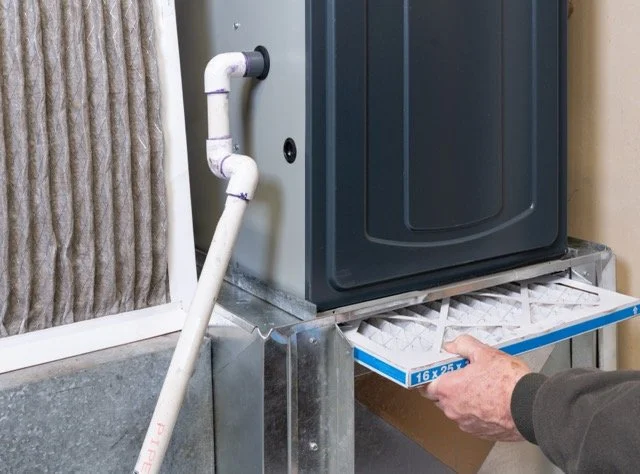
Beyond the state license, the most important credential to look for is NATE certification (North American Technician Excellence). NATE is a third-party testing organization that certifies HVAC technicians based on their knowledge of heating, cooling, and system diagnostics.
Here's why it matters: A Michigan Mechanical Contractor License tells you the company can legally operate. NATE certification tells you the individual technician who shows up at your house actually knows how to diagnose a furnace that's short-cycling, troubleshoot a heat pump in defrost mode, or identify why your AC compressor keeps tripping the breaker.
NATE exams are rigorous. They cover refrigeration theory, airflow calculations, electrical diagnostics, and system performance. A NATE-certified technician has proven they understand the science behind HVAC, not just the sales pitch. At NEXT Heating & Cooling, every technician on our team is NATE-certified — because we believe you deserve someone who can explain what's wrong and why, not just hand you a quote for a new system.
EPA Section 608 Certification: Required for Refrigerant Work
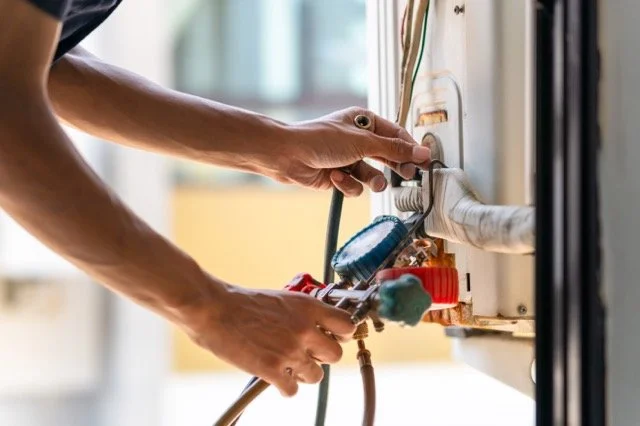
If a contractor is working on your air conditioner or heat pump, they must hold an EPA Section 608 certification. This federal certification is required for anyone who handles refrigerants — the chemicals that make your AC cold and your heat pump run efficiently.
Refrigerants are regulated by the EPA because they can harm the environment if released improperly. A Section 608-certified technician knows how to recover, recycle, and recharge refrigerant without venting it into the atmosphere. If someone is adding refrigerant to your AC without this certification, they're breaking federal law — and they probably don't know what they're doing.
Manufacturer Authorizations and Training
The best HVAC contractors maintain direct partnerships with major equipment manufacturers like Carrier, Lennox, Trane, Rheem, Bryant, Goodman, Amana, York, and RUUD. These partnerships require ongoing training and certification on each manufacturer's product line.
Why does this matter? Because a contractor who is factory-trained on Carrier furnaces knows the specific quirks of that model's control board, the proper startup sequence, and the warranty requirements. A contractor who just installs "whatever we can get cheap" doesn't have that depth of knowledge — and when something goes wrong, they're guessing.
When you're evaluating contractors for furnace and AC installation services, ask which manufacturers they're authorized to install. If they can't name specific brands or show proof of manufacturer training, that's a warning sign.
The Questions You Should Ask Before Hiring
Once you've confirmed a contractor has the right licenses and certifications, it's time to dig deeper. Here are the specific questions that separate the pros from the pretenders.
1. "Will you perform a Manual J load calculation before recommending equipment?"
This is the single most important question you can ask when replacing a furnace or air conditioner. A Manual J load calculation is an industry-standard method for determining the exact heating and cooling capacity your home needs, based on square footage, insulation levels, window types, ceiling height, ductwork design, and local climate data.
Without a load calculation, contractors guess. And when they guess, they almost always oversize the equipment — because a bigger furnace sounds better to a homeowner who doesn't know any better. But an oversized furnace short-cycles (turns on and off rapidly), which reduces efficiency, increases wear on components, and makes your house uncomfortable.
A proper load calculation takes 30-60 minutes and requires measuring your home. If a contractor gives you a quote over the phone based only on square footage, they're not doing their job. At NEXT Heating & Cooling, we perform a full Manual J calculation on every furnace and AC installation — because sizing matters more than brand names.
2. "Can you provide a detailed written estimate with equipment model numbers and efficiency ratings?"
A legitimate contractor will give you a written estimate that includes:
- Exact equipment model numbers (not just "a Carrier furnace" — the actual model like Carrier 59TP6)
- AFUE rating for furnaces (Annual Fuel Utilization Efficiency — the percentage of fuel converted to heat)
- SEER2 or SEER rating for air conditioners (Seasonal Energy Efficiency Ratio — higher is more efficient)
- Labor costs broken out separately from equipment costs
- Warranty details for both parts and labor
- Permit costs (if applicable)
If a contractor refuses to put the estimate in writing, or gives you a vague proposal that just says "furnace replacement: $8,500," don't hire them. You need documentation you can compare across multiple bids.
3. "What warranties come with this installation, and who handles warranty claims?"
HVAC equipment comes with manufacturer warranties — typically 10 years on the heat exchanger for furnaces, and 10 years on the compressor for AC units. But those warranties only cover the parts, not the labor to install them. And if the equipment fails because of improper installation, the manufacturer can void the warranty entirely.
Ask the contractor:
- What labor warranty do you provide? (A good contractor offers at least 1-2 years on labor.)
- Who do I call if something goes wrong? (You want a local company that will still be around in five years.)
- Are there any conditions that void the warranty? (Some manufacturers require annual maintenance to keep the warranty valid.)
If a contractor can't clearly explain the warranty structure, they probably don't understand it themselves.

4. "How do you handle ductwork inspection and modification?"
Your furnace and AC are only as good as the ductwork that distributes the air. If your ducts are undersized, leaking, or poorly designed, even the most efficient furnace will struggle to keep your house comfortable.
A thorough contractor will inspect your existing ductwork before quoting a new system. They should check for:
- Leaks at seams and joints (common in older homes with duct tape that's dried out)
- Proper sizing (ducts that are too small restrict airflow and reduce efficiency)
- Insulation in unconditioned spaces (ducts in attics or crawl spaces should be insulated)
- Return air pathways (many Michigan homes have inadequate return air, which starves the furnace)
If a contractor doesn't mention ductwork at all during the estimate, they're cutting corners. Ductwork issues are one of the most common reasons new HVAC systems underperform in Southeast Michigan homes — especially in older ranches built in the 1960s and 70s.
5. "What's your process for emergency service calls?"
Furnaces don't break on schedule. They quit during polar vortex events when it's -10°F outside and every HVAC company in Metro Detroit is slammed with calls.
Ask the contractor:
- Do you offer 24/7 emergency service?
- What's your average response time for emergency calls in winter?
- Do you charge extra for after-hours or weekend service?
- Do you keep common parts in stock, or will I wait days for a replacement control board?
A contractor with a strong local presence will have the inventory and staffing to respond quickly. A contractor who outsources emergency calls to a third-party dispatch service won't.
Red Flags That Signal a Problem Contractor
Now let's talk about the warning signs that should make you walk away — no matter how good the sales pitch sounds.
Commission-Based Sales Pressure
If the person quoting your furnace replacement is paid on commission, their incentive is to sell you the most expensive system possible — not the system that's right for your home.
Watch out for contractors who:
- Push you toward the highest-efficiency model without explaining why you need it
- Use fear tactics ("This furnace could fail any day and leave you freezing")
- Offer a "discount if you sign today" to create artificial urgency
- Refuse to give you time to think or compare quotes
At NEXT Heating & Cooling, our technicians are not paid on commission. We diagnose the problem, explain your options, and let you decide. If your furnace can be repaired for $400 instead of replaced for $8,000, we'll tell you — even if it means less revenue for us. That's part of changing contractor culture in Southeast Michigan.
No Written Estimates or Vague Proposals
A contractor who won't put their quote in writing is a contractor who plans to change the price later. Verbal estimates are worthless when the job is done and the invoice is higher than you expected.
If a contractor says "I'll give you a ballpark figure now and we'll finalize the details later," find someone else. Professional contractors provide detailed, itemized written estimates before any work begins.
Recommending Oversized Equipment Without Load Calculations
This is one of the most common mistakes in the HVAC industry — and it costs Michigan homeowners thousands of dollars in wasted energy every year.
An oversized furnace heats your house too quickly, then shuts off before the blower has time to distribute the heat evenly. This creates hot and cold spots, increases wear on the igniter and gas valve, and reduces overall efficiency. The furnace cycles on and off so frequently that it never reaches steady-state operation — which is when it runs most efficiently.
If a contractor recommends a 100,000 BTU furnace for a 1,500-square-foot ranch without performing a load calculation, they're guessing. And their guess is probably wrong. Proper furnace sizing depends on insulation levels, window quality, ductwork design, and a dozen other factors that can't be estimated from square footage alone.
Door-to-Door Sales Tactics
Legitimate HVAC contractors don't go door-to-door selling furnace replacements. If someone knocks on your door in Sterling Heights or Shelby Township offering a "free furnace inspection" or a "limited-time discount on HVAC upgrades," it's almost always a high-pressure sales operation designed to upsell you on equipment you don't need.
These companies often use scare tactics — they'll "find" a cracked heat exchanger (whether it's actually cracked or not) and tell you it's leaking carbon monoxide into your home. Then they'll pressure you to sign a contract for a new furnace on the spot, often at inflated prices.
If you didn't call them, don't let them in. Find a local HVAC contractor you can trust through referrals, online reviews, and BBB verification — not through someone who showed up uninvited.
Refusing to Pull Permits
In most Michigan municipalities, replacing a furnace or installing central air conditioning requires a building permit. The permit ensures the work is inspected by a city or county building official to verify it meets mechanical code requirements.
Some contractors offer to skip the permit to "save you money." This is a huge red flag. Unpermitted work can:
- Void your homeowner's insurance if the furnace causes a fire or carbon monoxide leak
- Create problems when you sell your house (buyers' home inspectors will ask for permit records)
- Result in fines from your local building department if they discover the unpermitted work
A professional contractor pulls permits for every job that requires one — and includes the permit cost in the written estimate. If a contractor suggests skipping the permit, find someone else.
What Fair Pricing Actually Looks Like in Southeast Michigan
One of the most common questions I hear from homeowners: "Am I getting ripped off?" Let's talk about what HVAC services actually cost in Metro Detroit, so you can evaluate quotes with real data.
Furnace Replacement Costs
In Southeast Michigan, a complete furnace replacement typically costs between $3,500 and $8,000, depending on the equipment efficiency, home size, and complexity of the installation. Here's how that breaks down:
- Basic 80% AFUE single-stage furnace: $3,500-$5,000 installed (suitable for smaller homes with simple ductwork)
- Mid-efficiency 95% AFUE two-stage furnace: $5,000-$6,500 installed (most common choice for Michigan homes)
- High-efficiency 96%+ AFUE modulating furnace: $6,500-$8,000+ installed (best for larger homes or homeowners prioritizing energy savings)
Those prices include the furnace, installation labor, permits, basic ductwork modifications, and startup. They do not include major ductwork overhauls, humidifier installation, or air filtration upgrades — those are separate line items.
If you're getting quotes that are significantly lower than $3,500, the contractor is either cutting corners (skipping permits, using unlicensed labor, installing refurbished equipment) or planning to upsell you once they're in your house. If you're getting quotes above $10,000 for a standard furnace replacement, you're probably paying for unnecessary upgrades or inflated labor rates.
Air Conditioning Installation Costs
Central air conditioning installation in Metro Detroit ranges from $4,000 to $8,500, depending on system size and efficiency:
- 14 SEER single-stage AC (2-3 ton): $4,000-$5,500 installed
- 16 SEER two-stage AC (2-3 ton): $5,500-$7,000 installed
- 18+ SEER variable-speed AC (2-3 ton): $7,000-$8,500+ installed
These prices assume you already have ductwork in place. If you're adding central air to a home that only has heating ducts (common in older Michigan homes), add $2,000-$4,000 for return air modifications and additional supply runs.
For more detailed pricing information on what Michigan homeowners are paying for new installations, check out our guide on furnace replacement costs in Troy.
Service Call and Repair Costs
Most HVAC contractors in Southeast Michigan charge a service call fee (also called a diagnostic fee or trip charge) to send a technician to your house. This typically ranges from $89 to $150, depending on the company and time of day.
The service call fee covers the technician's time to diagnose the problem and provide a repair quote. If you approve the repair, most contractors will apply the service call fee toward the total repair cost. If you decline the repair, you still pay the service call fee.
Common repair costs in Metro Detroit:
- Thermostat replacement: $150-$300
- Igniter replacement (furnace): $200-$350
- Flame sensor cleaning/replacement: $150-$250
- Blower motor replacement: $500-$900
- Gas valve replacement: $400-$700
- Control board replacement: $400-$800
- AC capacitor replacement: $150-$300
- AC contactor replacement: $150-$300
- Refrigerant recharge (per pound): $100-$150
If a contractor quotes you $1,200 to replace a flame sensor (a $50 part that takes 20 minutes to install), get a second opinion. If they quote you $200 for a blower motor replacement (a $400 part that takes 90 minutes to install), they're either using refurbished parts or planning to cut corners.
Cost-Saving Tip: Many expensive repairs can be prevented with regular maintenance. A $5/month HVAC maintenance plan that includes annual furnace and AC tune-ups can catch small problems before they turn into $1,500 emergency repairs.
Why Local Experience Matters for Michigan HVAC
HVAC isn't one-size-fits-all. What works in Arizona doesn't work in Michigan. What works in new construction doesn't work in a 1960s ranch with original ductwork. Local experience matters — and here's why.
Understanding Michigan Building Codes and Permit Requirements
Michigan has specific mechanical code requirements that govern furnace venting, gas line sizing, combustion air supply, and condensate drainage. These codes exist to keep your home safe — and they vary by municipality.
A contractor who works exclusively in Macomb, Oakland, and St. Clair counties knows the local building inspectors, understands the permit process, and has relationships with local suppliers who can deliver parts quickly when you need them. A contractor who's based two hours away doesn't have that local knowledge — and you'll pay the price in delays and code violations.
Experience with Regional Home Construction
Southeast Michigan is full of homes built in the 1950s, 60s, and 70s — ranches with basements, limited attic access, and ductwork that was never designed for central air conditioning. These homes have specific challenges:
- Undersized return air: Many older homes have a single return grille, which starves the furnace of airflow and reduces efficiency.
- Ductwork in unconditioned spaces: Ducts running through unheated crawl spaces or uninsulated attics lose massive amounts of heat in winter.
- Low basement ceilings: Limited clearance makes furnace replacement tricky — you need a contractor who knows how to work in tight spaces.
- Knob-and-tube wiring: Some older homes still have outdated electrical systems that need upgrading before a high-efficiency furnace can be installed safely.
A contractor with deep experience in Metro Detroit knows these homes inside and out. They've replaced furnaces in thousands of Michigan basements. They know which brands hold up best in our climate. They know how to modify ductwork without tearing apart your ceiling. That experience is worth paying for.
Familiarity with Michigan Weather Extremes
Michigan winters are brutal. We see polar vortex events that push temperatures below zero for days at a time. We see ice storms that knock out power and force furnaces to restart repeatedly. We see lake-effect cold that makes wind chill a real factor in heat loss calculations.
A contractor who understands Michigan weather knows:
- Why furnace sizing needs to account for design temperatures of -5°F to 0°F (not the mild winters we see in other parts of the country)
- Why backup heat sources matter in rural areas where power outages are common
- Why proper insulation and air sealing are just as important as the furnace itself
- Why heat pumps need auxiliary heat in Michigan (unlike warmer climates where they can operate year-round without backup)
If a contractor is recommending equipment based on national averages instead of Michigan-specific conditions, they don't understand the climate you're heating and cooling in.
Emergency Response Capability
When your furnace quits at 2 AM in January and the temperature in your house is dropping fast, you need a contractor who can respond — not a call center that routes your emergency to whoever is available three counties away.
Local contractors with established operations in Metro Detroit have:
- Technicians who live in the area and can respond quickly
- Inventory of common parts (igniters, flame sensors, control boards) in stock
- Relationships with local suppliers for same-day part delivery
- Experience prioritizing true emergencies (no heat in winter) over routine service calls
At NEXT Heating & Cooling, we've been serving Southeast Michigan for over 35 years. We know the area. We know the homes. And when you call us at 2 AM because your furnace quit, you're talking to someone who understands what "no heat in Michigan in January" actually means.
The Value of Preventive Maintenance Plans
Here's the truth most HVAC contractors won't tell you: the majority of emergency furnace and AC failures are preventable. A $300 repair in November beats a $3,000 furnace replacement in January — but only if you catch the problem before it becomes a crisis.
That's where preventive maintenance plans come in. A good maintenance plan includes:
- Annual furnace tune-up in fall: Clean burners, test igniter, check gas pressure, inspect heat exchanger, verify proper combustion, test safety controls
- Annual AC tune-up in spring: Clean condenser coils, check refrigerant charge, test capacitor and contactor, verify proper airflow, inspect electrical connections
- Priority scheduling: When you need emergency service, maintenance plan members get moved to the front of the line
- Discounts on repairs: Most plans include 10-15% off parts and labor for any repairs needed
The Next Care Plan costs $5/month ($60/year) and includes two home visits — one in fall for your furnace, one in spring for your AC. For the cost of a single service call, you get year-round protection and peace of mind.
Here's what preventive maintenance actually prevents:
- Furnace failures: Heat exchanger cracks ($1,500-$4,000 repair or full replacement), igniter failures ($200-$350), blower motor failures ($500-$900)
- AC failures: Compressor failures ($1,200-$3,500), refrigerant leaks ($500-$1,500), capacitor failures ($150-$300)
- Energy waste: A dirty furnace or AC can waste $300-$600/year in excess energy costs
If you're planning to stay in your home for more than a few years, a maintenance plan pays for itself — often within the first year.
Ready to Get Started?
NEXT Heating & Cooling has been keeping Michigan homes comfortable for over 35 years. Get honest diagnostics and fair pricing from NATE-certified technicians who show up on time. We serve homeowners throughout Macomb, Oakland, and St. Clair counties — from Detroit to Lake Orion, Sterling Heights to Grosse Pointe Farms.
Schedule Your ServiceFrequently Asked Questions
Visit the Michigan Department of Licensing and Regulatory Affairs (LARA) website and search their public database using the contractor's business name or license number. The database will show the license status (active, expired, or suspended), issue date, and any disciplinary actions. Every legitimate HVAC contractor in Michigan should be able to provide their license number immediately when asked.
SEER2 is the updated efficiency rating standard that went into effect in 2023. It uses a more realistic testing procedure that better reflects real-world operating conditions. SEER2 ratings are typically 4-5% lower than the old SEER ratings for the same equipment. When comparing AC units, make sure you're comparing SEER2 to SEER2, not mixing old and new ratings. As of 2023, the minimum SEER2 rating for new AC units in Michigan is 13.4.
Yes. Get at least three written estimates from licensed contractors. This allows you to compare equipment models, efficiency ratings, warranty terms, and pricing. But don't just choose the lowest bid — evaluate the contractor's credentials, experience, and reputation. A $1,000 cheaper quote from an unlicensed contractor who skips permits and cuts corners will cost you far more in the long run. Focus on value, not just price.
A straightforward furnace replacement in a Michigan home typically takes 6-10 hours for a two-person crew. This includes removing the old furnace, installing the new unit, connecting gas and electrical lines, modifying ductwork if needed, testing the system, and performing a final inspection. More complex installations (upgrading from 80% to 95% efficiency, major ductwork modifications, or difficult basement access) can take 1-2 days. Your contractor should give you a clear timeline before starting work.
Single-stage furnaces run at full capacity every time they turn on — 100% or nothing. Two-stage furnaces have a low setting (typically 65-70% capacity) and a high setting (100%), which allows them to run longer cycles at lower output on milder days. Modulating furnaces can adjust output in 1% increments from about 40% to 100%, providing the most precise temperature control. The benefits: better comfort (fewer temperature swings), lower energy bills (less cycling waste), quieter operation, and longer equipment life. In Michigan's variable winter weather, two-stage and modulating furnaces perform significantly better than single-stage units.
Not necessarily, but there are advantages to replacing both together. Modern furnaces and AC units are designed to work as matched systems — the indoor blower, evaporator coil, and outdoor condenser are engineered to work together for optimal efficiency. If you replace only the furnace or only the AC, you may not get the full efficiency rating of the new equipment. That said, if your furnace is 18 years old and failing but your AC is only 8 years old and working fine, it's perfectly reasonable to replace just the furnace. A good contractor will evaluate both systems and give you honest recommendations based on their age and condition.
Your furnace should be serviced every fall before heating season begins, and your AC should be serviced every spring before cooling season starts. This twice-yearly schedule catches problems before they cause breakdowns, keeps your equipment running efficiently, and extends the life of your system. Many manufacturers require annual maintenance to keep warranties valid. If you have a heat pump (which runs year-round), it should be serviced twice a year as well. The Next Care Plan includes both seasonal tune-ups for one low monthly price.