

Furnace Not Turning On? 7 Causes & Fixes for Michigan Homes
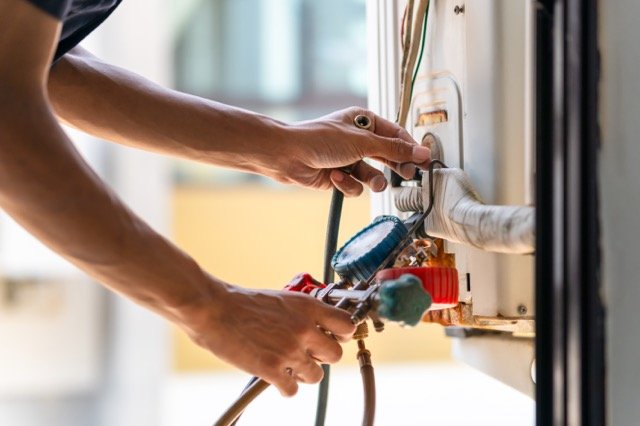
It's 6:00 AM on a Tuesday in January. The temperature outside your Sterling Heights home dropped to 8°F overnight. You wake up shivering, check the thermostat, and realize the house is 58 degrees. You turn the thermostat up to 72. Nothing happens. The furnace won't turn on.
This scenario plays out in thousands of Southeast Michigan homes every winter. Sometimes it's a simple fix you can handle yourself in five minutes. Other times, it's a safety control doing exactly what it's supposed to do — protecting your home from a dangerous malfunction.
I've been diagnosing furnaces that won't start for over 15 years as a licensed HVAC contractor in Metro Detroit. In this guide, I'll walk you through the seven most common reasons furnaces fail to turn on, what you can check yourself, and when you need to call a professional. We'll cover everything from dead thermostat batteries to failed ignitors — the same diagnostic process our NATE-certified technicians use when we respond to emergency service calls across Macomb, Oakland, and St. Clair counties.
1. Check Your Thermostat First
Before you panic about a major furnace problem, start with the simplest explanation: your thermostat. This is the first thing our technicians check on every "furnace won't start" service call, and it solves the problem about 20% of the time.
Dead Batteries
If you have a battery-powered thermostat (most programmable and many smart thermostats use batteries as backup power), dead batteries are the single most common reason for a furnace that won't turn on. The thermostat display might be blank, dim, or showing a low battery icon.
Replace the batteries with fresh ones — most use AA or AAA alkaline batteries. After replacing them, wait 30 seconds for the thermostat to reboot, then try calling for heat again. This simple fix has saved countless homeowners in Troy and Rochester Hills from unnecessary emergency service calls.
Wrong Mode or Temperature Setting
Check that your thermostat is set to HEAT mode, not COOL or OFF. This sounds obvious, but it happens more often than you'd think — especially in spring and fall when temperatures fluctuate.
Also verify the temperature setting is at least 5 degrees above the current room temperature. If your house is 68°F and the thermostat is set to 70°F, some systems won't trigger until the temperature drops further.
Thermostat Wiring Issues
If your thermostat has power but the furnace still won't respond, there could be a wiring problem. Loose wires at the thermostat terminals or at the furnace control board can prevent the signal from reaching the furnace.
If you're comfortable removing your thermostat cover, check that all wire connections are tight. Common wire designations include:
- R (red): 24-volt power
- W (white): Heat call
- G (green): Fan
- Y (yellow): Cooling (not relevant for heating)
- C (blue or black): Common wire (provides continuous power)
If wires are loose, corroded, or damaged, that's a job for a professional. Don't attempt electrical repairs unless you're qualified — 24-volt thermostat wiring is generally safe, but the furnace side involves 120-volt circuits.
2. Circuit Breaker and Power Supply
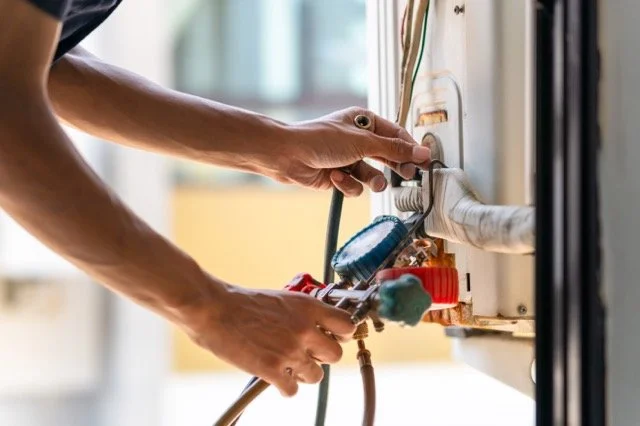
Your furnace needs electricity to run — even gas furnaces use electricity for the blower motor, ignition system, and control board. A tripped circuit breaker or disconnected power switch is another common culprit.
Check the Circuit Breaker Panel
Go to your home's main electrical panel and locate the breaker labeled "Furnace" or "HVAC." If it's in the OFF position or sitting in the middle (tripped), flip it all the way OFF, then back to ON. A breaker that trips repeatedly indicates an electrical problem that requires professional diagnosis.
In older Michigan homes — especially 1960s ranches common throughout Macomb County — the furnace might share a circuit with other appliances. If the breaker is undersized or the circuit is overloaded, it can trip during furnace startup when electrical demand peaks.
Furnace Emergency Shutoff Switch
Most furnaces have an emergency shutoff switch located on or near the unit. It often looks like a standard light switch with a red cover plate. This switch is required by Michigan mechanical code and allows you to quickly cut power in an emergency.
Check that this switch is in the ON position. It's easy to accidentally flip it off when changing a filter or moving items in the furnace room. In basement installations, we've seen homeowners mistake it for a light switch.
Furnace Door Safety Interlock
Modern furnaces have a safety interlock switch that prevents the furnace from running if the access door isn't fully closed. This protects you from touching live electrical components or hot surfaces.
Make sure the furnace door is completely closed and latched. If the door is bent, the latch is broken, or the safety switch is damaged, the furnace won't start even with power.
3. Dirty Air Filter Blocking Airflow
A clogged air filter is one of the most preventable causes of furnace failure, yet it's also one of the most common problems we see. When airflow is restricted, the furnace overheats and safety controls shut it down.
How a Dirty Filter Triggers Shutdowns
Your furnace's heat exchanger — the metal chamber where combustion occurs — needs constant airflow to stay cool enough to operate safely. When the air filter is clogged with dust, pet hair, and debris, airflow drops. The heat exchanger temperature rises. When it reaches a dangerous level, the high-limit switch opens and shuts down the furnace.
The furnace might start briefly, run for a few minutes, then shut off. Or it might not start at all if the limit switch is already open from a previous overheat event.
Michigan-Specific Filter Challenges
Southeast Michigan homes face unique air quality challenges. We deal with:
- High dust levels: Construction dust, road salt residue tracked indoors, and agricultural dust from surrounding rural areas
- Pet dander: Many Michigan families have dogs and cats, and pet hair accumulates quickly in filters
- Seasonal pollen: Spring and fall pollen counts stress filters
- Humidity fluctuations: Basement moisture can cause filter media to deteriorate faster
We recommend checking your filter monthly and replacing it every 1-3 months depending on conditions. Homes with pets, kids, or residents with allergies should replace filters more frequently.
How to Check Your Filter
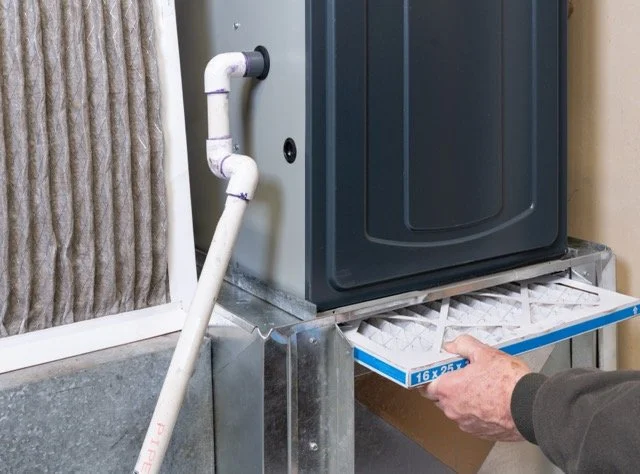
Locate your filter — it's usually in the return air duct near the furnace, or in a wall/ceiling return grille. Pull it out and hold it up to a light. If you can't see light passing through, it's too dirty. Replace it with a new filter of the same size and MERV rating.
Don't skip filter changes to save money. A $15-20 filter replacement is far cheaper than a $400 blower motor repair or a $1,200 heat exchanger crack caused by chronic overheating.
Pro Tip: Our Next Care Plan includes filter checks during seasonal tune-ups, plus we'll help you determine the right replacement schedule for your home's specific conditions. At $5/month, it's the easiest way to prevent filter-related breakdowns.
4. Pilot Light or Ignition System Failure
If your furnace has power and the thermostat is calling for heat, but you hear no ignition attempt, the problem is likely in the ignition system. This is where things get more technical — and where most homeowners need professional help.
Standing Pilot vs. Electronic Ignition
Older furnaces (pre-1990s) typically have a standing pilot light — a small flame that burns continuously and ignites the main burners when the thermostat calls for heat. If the pilot light goes out, the furnace won't start.
Modern furnaces use electronic ignition systems — either a hot surface ignitor (HSI) or an intermittent pilot. These systems are more efficient because they don't waste gas keeping a pilot burning 24/7, but they have components that can fail.
Hot Surface Ignitor Failure
The hot surface ignitor is a ceramic or silicon nitride element that glows red-hot (around 2,500°F) to ignite the gas. It's one of the most common failure points in furnaces 10-15 years old.
Signs of ignitor failure:
- You hear the furnace start sequence (draft inducer motor runs), but no ignition occurs
- The ignitor glows orange or dim red instead of bright orange-white
- The ignitor is cracked or broken (visible with flashlight inspection)
- The furnace tries to ignite 3-4 times, then goes into lockout mode
Ignitors are fragile and can crack from thermal stress, especially in Michigan where furnaces cycle frequently during cold snaps. Replacement typically costs $150-300 including labor — a relatively affordable repair that our technicians can complete in about 30 minutes.
Flame Sensor Covered in Carbon Buildup
Even if the ignitor works and the burners light, the furnace will shut down immediately if the flame sensor doesn't detect a flame. The flame sensor is a safety device — a metal rod positioned in the flame path that conducts a small electrical current when heated by the flame.
Over time, carbon deposits and oxidation coat the sensor, insulating it from the flame. The control board doesn't detect the flame signal, assumes the burners didn't ignite, and shuts off the gas valve for safety.
Cleaning the flame sensor is a maintenance task included in professional tune-ups. It requires removing the sensor, polishing it with fine steel wool or emery cloth, and reinstalling it properly. This is part of what we check during our furnace maintenance services across Metro Detroit.
Gas Valve Problems
If the ignitor glows but no gas flows to the burners, the gas valve may be stuck closed or the gas supply may be interrupted. Check that the gas valve on the supply line to the furnace is in the ON position (handle parallel to the pipe).
If the valve is open but gas isn't flowing, the valve itself may have failed. Gas valve replacement is a job for licensed technicians — it involves working with natural gas or propane, which requires proper training and tools to do safely.

5. Limit Switch or Safety Controls
Modern furnaces have multiple safety controls designed to prevent fires, carbon monoxide leaks, and equipment damage. When one of these controls detects an unsafe condition, it shuts down the furnace. This is a feature, not a bug — but it means your furnace won't run until the underlying problem is fixed.
High-Limit Switch
The high-limit switch (also called the fan limit control) monitors the temperature inside the furnace cabinet. If the temperature exceeds a safe threshold — typically 180-200°F — the switch opens and shuts down the burners.
What causes high-limit trips:
- Dirty air filter: Restricted airflow (covered above)
- Blocked return vents: Furniture, curtains, or storage items blocking return grilles
- Closed supply registers: Too many registers closed reduces airflow
- Blower motor problems: Weak or failing blower can't move enough air
- Ductwork issues: Collapsed ducts, disconnected sections, or undersized ducts
If the high-limit switch trips repeatedly, don't just reset it. The furnace is overheating for a reason, and continuing to run it risks cracking the heat exchanger — a repair that often costs more than replacing the entire furnace.
Rollout Switch
The rollout switch is a safety device mounted near the burner compartment. It detects if flames are "rolling out" of the combustion chamber instead of staying contained — a dangerous condition that indicates improper combustion or a blocked vent.
Rollout switch trips are serious. They indicate:
- Cracked heat exchanger
- Blocked or restricted venting
- Improper burner adjustment
- Insufficient combustion air
If your furnace has a tripped rollout switch, do not reset it and attempt to run the furnace. Call a licensed HVAC contractor immediately. Flame rollout can produce carbon monoxide and poses a fire hazard.
Pressure Switch
High-efficiency furnaces (90%+ AFUE models with PVC vent pipes) use an induced-draft blower to pull combustion gases through the heat exchanger and out the vent. A pressure switch verifies that the draft is strong enough before allowing the burners to ignite.
If the pressure switch doesn't close, the furnace won't start. Common causes:
- Blocked vent pipes: Ice buildup in winter, bird nests, or debris
- Condensate drain clog: Water backs up and blocks airflow
- Weak inducer motor: Not pulling sufficient vacuum
- Cracked or disconnected pressure tubing: The small rubber tube connecting the switch to the draft assembly
Michigan winters create unique pressure switch challenges. When temperatures drop below zero, condensation in the PVC vent pipes can freeze, blocking exhaust flow. We see this frequently in Shelby Township and Clinton Township homes during polar vortex events.
6. Blower Motor or Capacitor Problems
If your furnace ignites and the burners stay lit, but you feel no warm air coming from the vents, the problem is likely the blower motor or its capacitor.
Blower Motor Failure
The blower motor is the electric motor that spins the fan wheel to circulate warm air through your ductwork. These motors typically last 15-20 years, but they can fail prematurely due to:
- Lack of lubrication (older belt-drive motors)
- Bearing wear
- Electrical winding failure
- Overheating from restricted airflow
Signs of blower motor problems:
- Humming or buzzing sound but no airflow
- Squealing or grinding noises
- Intermittent operation (works sometimes, not others)
- Burning smell from the furnace cabinet
Blower motor replacement typically costs $400-800 depending on the motor type and furnace model. Direct-drive ECM (electronically commutated motor) blowers are more expensive than older PSC (permanent split capacitor) motors, but they're also more efficient and reliable.
Capacitor Failure
The blower motor capacitor is a small cylindrical component that provides the electrical boost needed to start the motor. Capacitors fail frequently — they're wear items with a typical lifespan of 10-15 years.
A failed capacitor will cause the blower motor to hum but not spin. Capacitor replacement is a quick, inexpensive repair — usually $100-250 including labor. It's far cheaper than replacing the motor, which is why proper diagnosis is important.
Blower Wheel Obstruction
Sometimes the blower motor is fine, but the fan wheel is jammed or caked with debris. We've found everything from insulation to children's toys lodged in blower wheels.
If you hear a rattling or scraping noise when the blower tries to start, an obstruction is likely. Turn off the furnace immediately — running a jammed blower can burn out the motor.
7. When to Call a Licensed HVAC Contractor
Some furnace problems are DIY-friendly: replacing batteries, changing filters, flipping breakers. But most issues require professional diagnosis and repair. Here's when to call a licensed contractor instead of attempting repairs yourself.
Safety Concerns
Call immediately if you:
- Smell gas: Natural gas has a distinctive sulfur/rotten egg odor. If you smell gas, leave the house, call your gas utility from outside, and then call an HVAC contractor. Don't attempt to locate the leak yourself.
- Suspect carbon monoxide: Symptoms include headaches, dizziness, nausea, or flu-like symptoms that improve when you leave the house. Get everyone outside and call 911. Carbon monoxide is odorless and deadly.
- See flames or smoke: Shut off the furnace at the breaker and call for emergency service.
- Hear loud banging or popping: Could indicate delayed ignition (gas buildup before ignition) or a cracked heat exchanger.
Diagnostic Equipment Required
Professional HVAC diagnosis requires tools and training that most homeowners don't have:
- Multimeter: To test electrical components, voltage, and continuity
- Combustion analyzer: To measure oxygen, CO, and CO₂ levels in exhaust gases
- Manometer: To measure gas pressure and draft pressure
- Amp clamp: To check motor current draw
- Infrared thermometer: To measure surface temperatures
Our NATE-certified technicians carry these tools on every service call. We can diagnose ignition problems, gas pressure issues, airflow restrictions, and electrical faults quickly and accurately — often in a single visit.
Licensed Work Requirements
Michigan law requires a mechanical contractor license for:
- Working on gas lines or gas valves
- Replacing heat exchangers
- Modifying venting systems
- Installing or replacing furnaces
- Any work involving refrigerant (heat pumps)
NEXT Heating & Cooling holds a Michigan Mechanical Contractor License and carries full insurance. When you hire a licensed contractor, you're protected if something goes wrong. Unlicensed work voids equipment warranties and can create liability issues if a problem causes property damage or injury.
When Repair Isn't Worth It
Sometimes the most honest advice is that repair doesn't make financial sense. If your furnace is 18-20 years old and needs a $1,200 repair, you're likely better off replacing it with a new, efficient model that will last another 15-20 years.
We follow a simple guideline: if the repair cost exceeds 50% of replacement cost and the furnace is past 75% of its expected lifespan, replacement is usually the smarter investment. We'll walk you through the numbers and let you decide — no pressure, no commission-based upselling. That's part of our commitment to changing contractor culture in Southeast Michigan.
What Furnace Repairs Actually Cost in Metro Detroit
Let's talk numbers. Michigan homeowners are practical people who want to know what they're getting into before they call for service. Here's what common furnace repairs cost in Southeast Michigan as of 2026.
Service Call and Diagnostic Fee
Most HVAC contractors charge a service call fee to come to your home and diagnose the problem. In Metro Detroit, expect to pay $89-149 for a standard service call. Emergency service (nights, weekends, holidays) typically costs $150-250.
Some companies waive the service call fee if you proceed with the repair. We include diagnostics in our standard service pricing — you pay for the repair, not for us to tell you what's wrong.
Common Repair Costs
Here are typical repair costs for the issues covered in this guide:
- Thermostat replacement: $150-350 (basic programmable to smart thermostat)
- Air filter replacement: $15-40 (DIY) or included in service call
- Hot surface ignitor: $150-300
- Flame sensor cleaning: $100-200 (often included in tune-up)
- Gas valve replacement: $300-600
- Limit switch replacement: $100-250
- Pressure switch replacement: $150-300
- Blower motor capacitor: $100-250
- Blower motor replacement: $400-800
- Inducer motor replacement: $400-700
- Control board replacement: $300-600
These prices include parts and labor for a standard residential furnace. Prices can vary based on furnace brand, model, and accessibility. A furnace in a tight crawlspace takes longer to service than one in an open basement, which affects labor costs.
Emergency Service Premiums
When your furnace quits at 9 PM on a Friday night and it's 12°F outside, you need help now. Emergency service costs more because it requires technicians to be available 24/7.
Expect emergency rates to be 1.5-2x standard pricing. A repair that costs $250 during business hours might cost $375-500 as an emergency call. Is it worth it? When you have kids, elderly family members, or pets in a freezing house, absolutely.
NEXT Heating & Cooling offers 24/7 emergency service across Macomb, Oakland, and St. Clair counties. Call us at any hour and we'll get a technician to your home as quickly as possible.
The Value of Preventive Maintenance
Most furnace failures are preventable with regular maintenance. A professional tune-up costs $100-200, but it typically prevents $500-2,000 in repairs by catching problems early.
Our Next Care Plan costs just $5/month ($60/year) and includes two annual visits — a fall furnace tune-up and a spring AC tune-up. We check all the components covered in this guide: ignitor, flame sensor, limit switches, blower motor, capacitor, electrical connections, gas pressure, and more.
Care Plan members also receive:
- Priority scheduling (we'll get to you first during busy seasons)
- 10% discount on repairs
- No service call fees
The plan pays for itself if you need even one repair during the year. And it dramatically reduces the risk of a furnace failure on the coldest night of the year.
Ready to Get Your Furnace Running?
NEXT Heating & Cooling has kept Michigan homes warm for over 35 years. Our NATE-certified technicians provide honest diagnostics, fair pricing, and same-day service across Southeast Michigan. Whether you need emergency repair or routine maintenance, we'll treat your home like our own.
Schedule Your ServiceFrequently Asked Questions
When temperatures drop below zero, several cold-weather issues can prevent furnace startup. PVC vent pipes on high-efficiency furnaces can develop ice blockages, preventing proper exhaust flow and triggering pressure switch shutoffs. The condensate drain line can freeze, backing up water and blocking airflow. Extreme cold also stresses older components — ignitors, capacitors, and blower motors that were marginally functional may fail completely when demand peaks. If your furnace struggles specifically during polar vortex events, it may be undersized for your home or need a cold-weather service inspection.
Most modern furnaces don't have a dedicated reset button. To reset a furnace, turn off power at the furnace switch or circuit breaker, wait 30 seconds, then turn power back on. This clears the control board memory and allows the furnace to attempt a fresh start sequence. Some furnaces have a reset button on the blower motor or control board, but accessing it requires removing panels. If your furnace repeatedly shuts down and requires resetting, don't keep cycling it — call a technician to diagnose the underlying problem. Repeated resets can damage components or create safety hazards.
You can safely handle basic troubleshooting: checking thermostat batteries, verifying power switches and breakers, replacing air filters, and ensuring the furnace door is closed. Beyond that, furnace repair requires specialized tools, technical knowledge, and in many cases a Michigan mechanical contractor license. Working on gas lines, electrical components, or safety controls without proper training creates serious risks — gas leaks, carbon monoxide exposure, electrical shock, and fire hazards. Even if you're handy with other home repairs, furnaces involve combustion and high-voltage electricity that demand professional expertise. Save the DIY energy for projects that won't put your family at risk.
Common furnace repairs in Metro Detroit range from $100-800 depending on the component. Simple fixes like flame sensor cleaning or limit switch replacement cost $100-250. Mid-range repairs like ignitor or capacitor replacement run $150-350. Major component replacements — blower motors, gas valves, inducer motors — cost $400-800. Service call fees add $89-149 for standard calls, $150-250 for emergency service. The total repair cost depends on the specific problem, parts availability, and labor time. A reputable contractor will diagnose the issue first and provide a clear estimate before proceeding with repairs. At NEXT Heating & Cooling, we never start work without your approval of the cost.
Gas furnaces in Michigan typically last 15-20 years with proper maintenance. Our climate is hard on heating equipment — long, cold winters mean furnaces run 5-7 months per year, accumulating more operating hours than furnaces in milder climates. High-efficiency furnaces (90%+ AFUE) may have slightly shorter lifespans than standard-efficiency models because they have more complex components (inducer motors, electronic controls, condensate systems). Factors that extend furnace life include annual professional maintenance, timely filter changes, proper sizing for the home, and quality installation. Furnaces that are neglected, oversized, or poorly installed often fail before 15 years.
The decision depends on the furnace age, repair cost, and overall condition. If your furnace is under 10 years old and the repair costs less than $500, repair is usually the smart choice. If the furnace is 15+ years old and needs a repair costing more than $800-1,000, replacement often makes more financial sense — you're investing significant money in equipment that's nearing the end of its lifespan anyway. A good rule of thumb: if repair cost exceeds 50% of replacement cost and the furnace is past 75% of expected lifespan, replace it. We'll walk you through the math honestly. Sometimes repair buys you a few more years to plan for replacement. Other times, replacement is the only sensible option.
Preventive maintenance is the single best way to avoid furnace failures. Schedule annual professional tune-ups every fall before heating season — a technician will clean the flame sensor, test the ignitor, check electrical connections, measure gas pressure, inspect the heat exchanger, lubricate moving parts, and verify all safety controls. Between professional visits, change your air filter every 1-3 months, keep the area around the furnace clear, and don't close more than 20% of supply registers. Pay attention to warning signs like unusual noises, short cycling, or rising energy bills — these often indicate problems developing before complete failure. The NEXT Care Plan makes prevention easy: two annual visits, priority scheduling, and repair discounts for $5/month.