

MERV 16 vs. HEPA Filters: What's Best for Michigan Allergies?
You've probably heard both terms thrown around — MERV 16 and HEPA filters — especially if you've been researching ways to reduce allergies in your Michigan home. Both promise cleaner air. Both claim to trap the microscopic particles that make you miserable during ragweed season or when your basement gets damp in spring.
But here's what most homeowners don't realize: your furnace probably can't handle a true HEPA filter. And that's not a design flaw — it's physics.
After 35 years of heating and cooling services in Metro Detroit, we've had this conversation hundreds of times with homeowners in Sterling Heights, Troy, and Warren who want better air quality but don't want to damage their HVAC system in the process. Here's what you actually need to know about MERV 16 versus HEPA filters — and which one makes sense for your home.
Understanding MERV 16 Filters
MERV stands for Minimum Efficiency Reporting Value — a rating scale from 1 to 16 developed by the American Society of Heating, Refrigerating and Air-Conditioning Engineers (ASHRAE). The higher the number, the smaller the particles the filter can trap.
A MERV 16 filter captures at least 95% of particles between 0.3 and 1.0 microns. That includes most pollen, mold spores, dust mite debris, pet dander, and even some bacteria. For context, a human hair is about 70 microns wide — we're talking about particles 200 times smaller than that.
Here's what makes MERV 16 practical for residential HVAC systems: it's designed to work within the airflow constraints of your existing furnace and ductwork. Most modern furnaces from Carrier, Lennox, Trane, or Rheem can handle MERV 13 to MERV 16 filters without significant static pressure issues — as long as the filter is changed regularly.
Static Pressure Matters: Every filter creates resistance to airflow. Too much resistance forces your blower motor to work harder, which reduces efficiency, shortens equipment life, and can even cause the heat exchanger to overheat. MERV 16 is about as high as you can go in most residential systems before you start running into trouble.
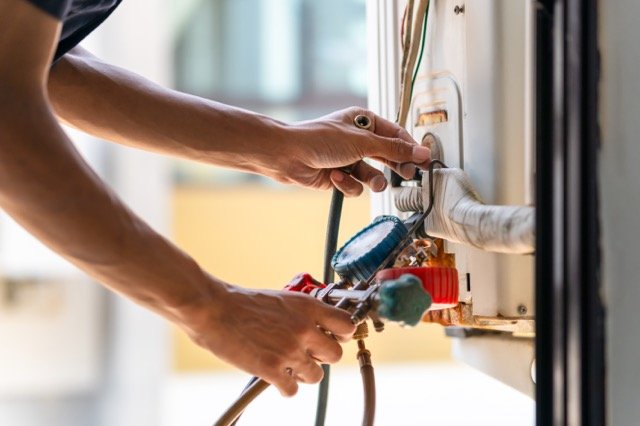
We install MERV 13 and MERV 16 filters regularly in homes across Macomb and Oakland counties. They work well in systems that are properly sized and maintained. But if your furnace is undersized, your ductwork is restrictive, or you haven't had a tune-up in years, even a MERV 13 can cause problems. That's why our NATE-certified HVAC technicians always check static pressure readings before recommending a specific filter rating.
Understanding HEPA Filters
HEPA stands for High-Efficiency Particulate Air. To qualify as true HEPA, a filter must capture 99.97% of particles at 0.3 microns. That's significantly more efficient than even MERV 16.
HEPA filters are what you'll find in hospital operating rooms, clean rooms, and commercial air purifiers. They're exceptional at removing allergens, bacteria, viruses, and fine particulate matter. If you've ever used a standalone air purifier in your bedroom, it probably has a HEPA filter inside.
So why don't we just put HEPA filters in every furnace?
Because most residential HVAC systems can't move enough air through them.
HEPA filters are extremely dense. That density is what makes them effective — but it also creates massive static pressure. A typical furnace blower motor isn't designed to push air through that kind of resistance. If you force a true HEPA filter into a standard furnace filter slot, one of three things will happen:
- The blower motor will strain and eventually fail
- Airflow will drop so low that your home won't heat or cool properly
- The system will draw air from gaps and cracks in the ductwork instead of through the filter (defeating the whole purpose)
There are whole-home HEPA systems available — but they're not drop-in replacements. They require a dedicated bypass loop with their own blower motor, installed parallel to your main HVAC system. These systems work, but they're expensive (typically $2,000 to $4,000 installed) and they're overkill for most Michigan homes unless someone in the household has severe asthma or immune system issues.
For most homeowners dealing with seasonal allergies or general indoor air quality concerns, a high-quality MERV 13 to MERV 16 filter combined with regular HVAC maintenance is the more practical solution. If you're comparing options, our guide on HEPA vs. MERV filters for home air quality breaks down the technical differences in more detail.
Michigan Allergens: What You're Actually Fighting
Before you decide on a filter, it helps to know what you're filtering. Michigan has a unique mix of allergens that change with the seasons — and with our weather patterns, those seasons can be unpredictable.
Ragweed (August Through October)
Ragweed is the big one. It peaks in late summer and early fall, and a single plant can release a billion pollen grains in a season. Ragweed pollen is about 20 microns in size — well within the range of what MERV 13 and MERV 16 filters can capture.
Mold Spores (Spring and Fall, Plus Basements Year-Round)
Michigan's humidity creates ideal conditions for mold growth, especially in basements and crawl spaces. Mold spores range from 3 to 100 microns, but the most common indoor molds (like Cladosporium and Aspergillus) are on the smaller end of that range. MERV 16 filters are highly effective here.
Dust Mites
Dust mites themselves are too large to become airborne, but their fecal matter and body fragments break down into particles between 5 and 20 microns. These are potent allergens, and they're everywhere in homes — especially in carpets, bedding, and upholstered furniture. A good filter helps, but you also need to control humidity (dust mites thrive above 50% relative humidity).
Pet Dander
Pet dander particles are typically 2.5 to 10 microns. They're sticky and lightweight, so they stay airborne longer than you'd expect. If you have dogs or cats, upgrading to MERV 13 or higher makes a noticeable difference — especially during winter when your home is sealed up tight.
The bottom line: MERV 16 filters capture the vast majority of common Michigan allergens. HEPA filtration is more thorough, but for most households, the improvement over MERV 16 doesn't justify the cost and complexity.
Which Filter Works Better for Your HVAC System?
The honest answer depends on your specific HVAC system — not just the marketing claims on the filter box.
Blower Motor Capacity
Variable-speed and ECM (electronically commutated motor) blowers handle higher-efficiency filters better than single-speed motors. If your furnace is less than 10 years old and has a two-stage or modulating burner, it probably has a more capable blower. Older single-stage furnaces with PSC motors are more limited.
Ductwork Design
Undersized or restrictive ductwork compounds the problem. If your ducts were designed for a lower-efficiency filter (common in homes built before 2000), upgrading to MERV 16 without addressing the ductwork can create issues. We see this frequently in older ranch homes in Royal Oak and Grosse Pointe Farms — the original ductwork was sized for MERV 8, and the system struggles with anything higher.
Filter Size and Surface Area
A 1-inch MERV 16 filter creates more resistance than a 4-inch or 5-inch MERV 16 media filter with the same rating. If your system has space for a thicker filter cabinet, that's the better option — more surface area means less resistance per square inch.
When we perform fall furnace tune-ups for our Next Care Plan members, we measure static pressure with a manometer. That tells us exactly how much resistance the system is fighting. If it's running high, we'll recommend either a lower MERV rating or a larger filter cabinet — not because we're trying to upsell, but because pushing a system beyond its design limits shortens its life.
Practical Recommendation: For most Michigan homes with modern HVAC systems, MERV 13 is the sweet spot. It captures the majority of allergens without stressing the blower motor. MERV 16 is worth considering if someone in your household has significant allergies or respiratory issues — but only if your system can handle it.
When Standalone HEPA Makes Sense
If you need HEPA-level filtration, a standalone air purifier in the bedroom or main living area is often more effective than trying to force your HVAC system to do something it wasn't designed for. These units have their own fans and can run independently. They're also portable, so you can move them to wherever you spend the most time.
For whole-home solutions, we install dedicated HEPA bypass systems from brands like Carrier and Lennox. These work alongside your existing furnace and don't compromise airflow. They're the right choice for homes with severe allergy or asthma concerns — but they're not necessary for most families.
Cost Reality: MERV 16 vs. HEPA
Let's talk numbers, because this decision isn't just about performance — it's about what makes sense for your budget.
Filter Replacement Costs
MERV 13 filters: $15 to $30 per filter, replaced every 3 months. Annual cost: $60 to $120.
MERV 16 filters: $25 to $50 per filter, replaced every 3 months (more often if you have pets). Annual cost: $100 to $200.
Standalone HEPA air purifiers: $200 to $800 for the unit, plus $50 to $150 per year for replacement HEPA filters and pre-filters.
Whole-home HEPA systems: $2,000 to $4,000 installed, plus $100 to $200 per year for filter replacements.
Energy Consumption
Higher-efficiency filters create more resistance, which means your blower motor works harder and uses more electricity. The difference between MERV 8 and MERV 16 can add $50 to $100 per year to your electric bill — not a dealbreaker, but worth factoring in.
Whole-home HEPA systems have their own blower motors, which adds another layer of energy consumption. Standalone units vary widely, but most use 50 to 100 watts when running continuously.
Installation and System Compatibility
Upgrading to MERV 16 is usually as simple as buying the right filter and swapping it in. Whole-home HEPA systems require professional installation, ductwork modifications, and sometimes electrical work. That's where the $2,000+ price tag comes from.
If you're already planning a furnace replacement in Troy or another Southeast Michigan community, that's the time to discuss whole-home air quality upgrades. You can integrate a HEPA system, UV lights, or a whole-home dehumidifier as part of the installation.
When to Upgrade Your Filtration
Not every home needs MERV 16 or HEPA filtration. But if you're experiencing any of these signs, it's worth considering an upgrade:
- Persistent allergy symptoms indoors — sneezing, congestion, itchy eyes — even when pollen counts are low outside
- Dust accumulation on furniture within a day or two of cleaning
- Musty odors or visible mold growth in your basement or around vents
- Respiratory issues worsening in winter when your home is sealed up and the furnace is running constantly
- Pets — especially if you have multiple cats or dogs
- Someone in the household with asthma, COPD, or immune system concerns
If you're not sure where to start, our $5/month HVAC maintenance plan includes seasonal tune-ups where we assess your current filtration setup and make recommendations based on your system's capacity and your household's needs. We're not trying to sell you the most expensive filter — we're trying to find what actually works for your home.
What About UV Lights and Other Add-Ons?
UV lights installed in your ductwork can kill mold spores and bacteria, but they don't capture particles — that's still the filter's job. They're a good complement to high-efficiency filtration, especially if you've had recurring mold issues.
Whole-home dehumidifiers are another option worth considering in Michigan. Keeping indoor humidity between 30% and 50% reduces dust mites, mold growth, and that clammy feeling you get in summer. If you're running a dehumidifier in your basement already, a whole-home unit integrated with your HVAC system is more efficient and less maintenance.
Ready to Improve Your Indoor Air Quality?
NEXT Heating & Cooling has been helping Michigan families breathe easier for over 35 years. Our NATE-certified technicians will assess your system, recommend the right filtration level, and make sure your HVAC can handle it without compromising performance.
Schedule Your ServiceFrequently Asked Questions
Not directly. True HEPA filters create too much static pressure for most residential furnace blower motors. If you try to force one into a standard filter slot, you risk damaging the motor, reducing airflow, and causing your system to pull air from gaps in the ductwork instead of through the filter. Whole-home HEPA systems exist, but they require a dedicated bypass loop with their own blower motor — typically a $2,000 to $4,000 installation.
MERV 16 captures slightly smaller particles than MERV 13 — specifically in the 0.3 to 1.0 micron range. For most Michigan allergens (pollen, mold spores, pet dander), MERV 13 is highly effective. MERV 16 is worth considering if someone in your home has severe allergies or respiratory issues, but only if your HVAC system can handle the increased static pressure. We typically recommend MERV 13 as the practical sweet spot for most homes.
Every 2 to 3 months under normal conditions. If you have pets, live on a gravel road, or run your furnace or AC constantly, you may need to change it more often — sometimes monthly. A clogged high-efficiency filter creates excessive static pressure, which forces your blower motor to work harder and can reduce system efficiency. Check it monthly and replace it when it looks dirty or airflow seems reduced.
Not directly. In fact, higher-efficiency filters can slightly increase energy consumption because they create more resistance to airflow, forcing the blower motor to work harder. However, a clean filter — regardless of MERV rating — keeps your system running efficiently. A clogged filter is one of the most common causes of reduced efficiency and higher energy bills. The real savings come from regular filter changes and seasonal maintenance, not from the filter rating itself.
You can, but washable filters are typically less effective at capturing small particles. Most washable filters are equivalent to MERV 4 to MERV 8 — fine for protecting your equipment from large debris, but not great for allergies or indoor air quality. They also require regular cleaning (monthly), and if you don't let them dry completely before reinstalling, you risk mold growth. For most Michigan homes dealing with allergies, disposable MERV 13 or MERV 16 filters are the better choice.
For most homes, no. MERV 16 filters capture the vast majority of allergens and airborne particles. Whole-home HEPA systems or UV light installations make sense if someone in your household has severe asthma, immune system issues, or recurring respiratory infections — but they're overkill for general allergy relief. A more cost-effective approach is to use MERV 13 or MERV 16 filters, control indoor humidity, and run a standalone HEPA air purifier in the bedroom if needed.
MERV 16 filters capture at least 95% of particles between 0.3 and 1.0 microns. True HEPA filters capture 99.97% of particles at 0.3 microns — a significantly higher standard. For context, most common allergens (pollen, mold spores, pet dander) are well within the range that MERV 16 handles effectively. HEPA is more thorough, but for residential HVAC applications, the practical difference in allergy relief is smaller than the marketing suggests — especially when you factor in the cost and system compatibility issues.