

SEER Ratings Explained: How to Choose an Energy-Efficient AC
You're shopping for a new air conditioner in Sterling Heights, and every contractor mentions SEER ratings like they're the only number that matters. One quote says "16 SEER," another says "18 SEER," and a third pushes you toward a 20 SEER system that costs $3,000 more. But nobody's actually explaining what those numbers mean or whether the extra efficiency will save you enough money to justify the upfront cost.
After 35 years installing heating and cooling services in Metro Detroit, we've had this conversation thousands of times. SEER ratings matter — they directly affect your electric bill every summer — but the "best" rating isn't always the highest number. It depends on your home, your budget, how long you plan to stay, and how Michigan's climate actually uses your AC.
Here's what SEER actually measures, how different ratings affect your energy costs in Southeast Michigan, and which efficiency level makes the most financial sense for your situation.
What SEER Actually Measures (And Why It Matters)
SEER stands for Seasonal Energy Efficiency Ratio. It's a measurement of how much cooling output your air conditioner produces per unit of electricity it consumes over an entire cooling season. The calculation is straightforward: total BTUs of cooling divided by total watt-hours of electricity used.
Think of it like miles per gallon in a car. A 16 SEER air conditioner delivers 16 BTUs of cooling for every watt-hour of electricity. A 20 SEER system delivers 20 BTUs per watt-hour. Higher numbers mean more cooling per dollar spent on electricity.
The Department of Energy tests air conditioners in laboratory conditions at temperatures ranging from 65°F to 104°F, cycling the system on and off to simulate real-world usage patterns. The resulting SEER rating represents the maximum efficiency the system can achieve under ideal conditions — not necessarily what you'll see in your home.
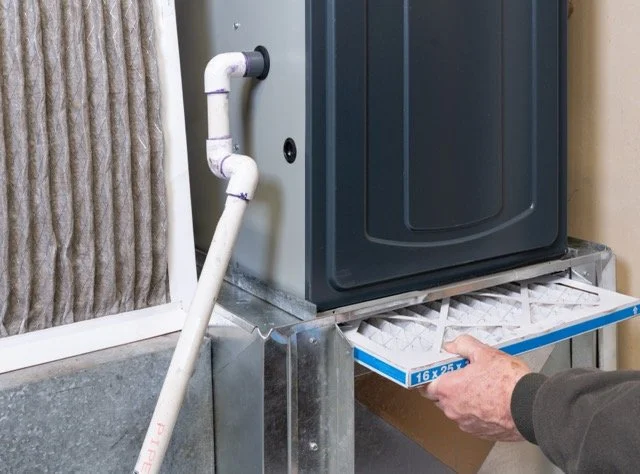
Here's what affects real-world efficiency in Michigan homes:
- Ductwork condition: Leaky ducts in your attic or crawlspace waste 20-30% of your cooling before it reaches the rooms. Even a 20 SEER system performs like a 14 SEER unit if half your cold air escapes through gaps in the ductwork.
- Proper sizing: An oversized AC short-cycles — it cools the house quickly, shuts off, then restarts minutes later. This constant cycling kills efficiency and humidity control. We see this constantly in Troy and Rochester Hills where contractors install 4-ton units in homes that need 3 tons.
- Installation quality: Refrigerant charge must be exact. Airflow across the evaporator coil must match manufacturer specs. Condensate drainage must work properly. Sloppy installation can drop a 16 SEER system down to 12 SEER performance.
- Maintenance: Dirty filters, clogged coils, and low refrigerant all reduce efficiency. A system that starts at 16 SEER can drop to 13 SEER after three years of neglect.
This is why our NATE-certified HVAC technicians perform Manual J load calculations before recommending equipment. We're not guessing at tonnage based on square footage — we're calculating the actual cooling load based on insulation, windows, orientation, and occupancy. The right-sized system at 15 SEER will outperform an oversized 18 SEER unit every time.
SEER Rating Tiers: What Each Level Gets You
Air conditioners sold in Michigan must meet minimum federal efficiency standards. As of January 2023, that minimum is 14 SEER in the northern U.S. (we'll cover the SEER2 change in a moment). Here's what you get at each tier and what it costs:
13-14 SEER: Minimum Efficiency (Budget Systems)
These are basic single-stage air conditioners. The compressor runs at 100% capacity whenever it's on — there's no variable speed or modulation. Brands like Goodman, Amana, and York offer reliable 14 SEER units in the $3,500-$5,500 range installed.
Best for: Rental properties, homes you're selling soon, or situations where upfront cost is the primary concern. These systems work fine — they're just not optimized for efficiency or comfort.
15-16 SEER: Mid-Tier Efficiency (Sweet Spot for Most Homeowners)
This is where you start seeing two-stage compressors and better components. Carrier, Lennox, Trane, and Bryant all offer excellent 16 SEER systems in the $5,500-$7,500 range installed. The compressor runs at low speed most of the time, ramping up to high speed only on the hottest days.
Two-stage operation improves humidity control — critical in Michigan summers where it's not just the heat, it's the humidity. The system runs longer cycles at lower capacity, which removes more moisture from the air. You'll notice the difference immediately compared to a single-stage unit.
Best for: Most homeowners in Southeast Michigan who plan to stay in their homes 5+ years. The efficiency gains pay back the extra cost within 7-10 years, and you get better comfort in the meantime.
17-20 SEER: High Efficiency (Premium Systems)
Variable-speed compressors and advanced controls. These systems modulate capacity from 40% to 100%, adjusting output to match the exact cooling demand. Lennox, Carrier Infinity series, and Trane XV series fall in this range. Installed cost: $7,500-$11,000.
The variable-speed compressor runs almost continuously at very low capacity, making tiny adjustments to maintain precise temperature. This eliminates the temperature swings you get with single-stage systems. Humidity control is excellent — indoor relative humidity stays around 45-50% even on muggy August days.
Best for: Homeowners prioritizing comfort and long-term efficiency, especially in well-insulated newer homes or renovated older homes with updated ductwork. The payback period stretches to 12-15 years, so this is about comfort as much as savings.
21+ SEER: Premium/Ultra-High Efficiency
Top-tier variable-speed systems with advanced features like communicating controls, multi-stage air handlers, and enhanced dehumidification modes. Installed cost: $10,000-$15,000+.
Honest assessment: These systems are over-spec'd for most Michigan homes. Our cooling season is relatively short — roughly May through September — and we don't see the sustained heat that southern states experience. The efficiency gains over an 18 SEER system are real but small, and the payback period extends beyond the typical 15-20 year equipment lifespan.
Best for: High-performance homes with exceptional insulation and air sealing, homeowners with specific comfort requirements (allergies, respiratory issues), or situations where utility rebates significantly offset the upfront cost.
Real Talk: We install plenty of 16 SEER systems in $400,000 homes in Bloomfield Hills, and those homeowners are perfectly comfortable. The jump from 14 to 16 SEER is meaningful. The jump from 18 to 22 SEER is marginal for Michigan's climate. Don't let anyone pressure you into equipment you don't need.
How SEER Ratings Affect Your Electric Bill in Michigan
Let's run actual numbers for a typical 2,000 square foot home in Macomb County with a 3-ton (36,000 BTU) air conditioner. We'll use DTE Energy's average residential rate of $0.18 per kWh and assume 1,000 hours of cooling operation per year (reasonable for Southeast Michigan).
14 SEER system:
- Annual cooling load: 36,000 BTU/hr × 1,000 hours = 36,000,000 BTUs
- Electricity consumption: 36,000,000 BTU ÷ 14 SEER = 2,571 kWh
- Annual cost: 2,571 kWh × $0.18 = $463
16 SEER system:
- Electricity consumption: 36,000,000 BTU ÷ 16 SEER = 2,250 kWh
- Annual cost: 2,250 kWh × $0.18 = $405
- Annual savings vs. 14 SEER: $58
18 SEER system:
- Electricity consumption: 36,000,000 BTU ÷ 18 SEER = 2,000 kWh
- Annual cost: 2,000 kWh × $0.18 = $360
- Annual savings vs. 14 SEER: $103
20 SEER system:
- Electricity consumption: 36,000,000 BTU ÷ 20 SEER = 1,800 kWh
- Annual cost: 1,800 kWh × $0.18 = $324
- Annual savings vs. 14 SEER: $139
Now let's factor in the upfront cost difference. If a 14 SEER system costs $5,000 installed and a 16 SEER costs $6,200, that's a $1,200 premium. At $58/year savings, the payback period is 20.7 years — longer than the equipment lifespan.
But here's what that calculation misses: the 16 SEER system is almost certainly a two-stage unit with better humidity control and more even temperatures. You're paying for comfort as much as efficiency. And if you're replacing a 25-year-old 10 SEER system, the 16 SEER unit saves you $185/year — payback drops to 6.5 years.
The jump from 16 to 20 SEER costs another $3,000-$4,000. At $81/year additional savings (20 SEER vs. 16 SEER), you're looking at a 37-49 year payback. That math doesn't work unless electricity rates spike or you're planning to stay in the house for decades.
One factor that changes the equation: Michigan's cooling season is short, but it's humid. High-efficiency systems with better dehumidification can prevent mold growth, reduce allergens, and protect your home. That's a health and home-preservation benefit that doesn't show up in the energy calculation but matters to families with asthma or allergies.
SEER2 vs. SEER: The 2023 Rating Change
As of January 1, 2023, the Department of Energy updated the testing standard from SEER to SEER2. This isn't a marketing gimmick — it's a more accurate testing methodology that better reflects real-world conditions.
The main change: SEER2 testing accounts for static pressure in the ductwork. The old SEER test assumed perfect conditions with minimal airflow resistance. SEER2 simulates actual duct systems with realistic pressure drops. The result: SEER2 ratings are roughly 4-5% lower than equivalent SEER ratings.
Here's the conversion:
- 14 SEER ≈ 13.4 SEER2
- 16 SEER ≈ 15.2 SEER2
- 18 SEER ≈ 17.1 SEER2
- 20 SEER ≈ 19.0 SEER2
When you're comparing quotes in 2026, make sure everyone's using the same rating system. A contractor quoting "16 SEER2" is offering equivalent efficiency to what used to be called "17 SEER." If one quote says "16 SEER" and another says "15 SEER2," they're talking about roughly the same equipment.
The new minimum efficiency for air conditioners in northern states (including Michigan) is 13.4 SEER2 for split systems and 13.8 SEER2 for package units. You can't legally install anything below that threshold as of 2023.
Our advice: ignore the rating system label and focus on the actual efficiency number and equipment features. A quality 15 SEER2 two-stage Carrier or Lennox system will outperform a cheap 16 SEER2 single-stage unit in real-world comfort and longevity.
Choosing the Right SEER Rating for Your Michigan Home
The "right" SEER rating depends on factors beyond just efficiency. Here's how to think through the decision based on your specific situation:
If Your Home Was Built Before 1980
Older homes in Royal Oak, Grosse Pointe, and Warren typically have minimal insulation, single-pane windows, and leaky ductwork. Installing a 20 SEER air conditioner in a poorly insulated 1960s ranch is like putting racing tires on a pickup truck — the system can't deliver its rated efficiency because the building envelope wastes too much energy.
Better strategy: Install a quality 15-16 SEER system and invest the savings in air sealing and insulation upgrades. Seal the ductwork, add attic insulation to R-49, and address major air leaks around windows and doors. You'll see bigger comfort and efficiency gains than jumping to 18 SEER with no building improvements.
We've seen this play out hundreds of times: a homeowner spends $10,000 on a high-efficiency AC, then wonders why their bills barely changed. The problem wasn't the equipment — it was the 30% of cooled air escaping through duct leaks in the attic.
If You're Selling Within 5 Years
Install a reliable 14-15 SEER system from a reputable brand. You won't recoup the premium for high-efficiency equipment in the sale price, but you will benefit from having a newer AC during the home inspection. A functioning 3-year-old 14 SEER Trane is more valuable to a buyer than a broken 12-year-old 16 SEER system.
Focus on reliability and warranty coverage. Brands like Rheem, Bryant, and Goodman offer solid mid-efficiency systems with 10-year parts warranties. That's what buyers want to see — recent installation date and warranty transferability.
If You're Staying Long-Term (10+ Years)
This is where higher SEER ratings make financial sense. A 16-18 SEER system will pay back its premium over a decade of ownership, and you'll enjoy better comfort the entire time. Two-stage or variable-speed compressors eliminate the hot-and-cold cycles that single-stage units create.
If your ductwork is in good condition and your home is reasonably well-insulated, consider 17-18 SEER equipment. Pair it with a programmable or smart thermostat to maximize efficiency. And sign up for our $5/month HVAC maintenance plan — regular tune-ups keep the system running at peak efficiency and catch small problems before they become expensive failures.
If Your Budget Is Tight
A properly installed 14-15 SEER system from a quality brand will serve you well for 15-20 years. Don't finance a 20 SEER system at 12% interest because a salesperson scared you about energy costs. The interest charges will eat any efficiency savings.
Better approach: Install the best system you can afford without financing, then reduce your cooling costs through low-cost improvements: seal air leaks, use ceiling fans, close blinds during peak sun hours, and set your thermostat to 76°F instead of 72°F. Those changes cost almost nothing and can cut your cooling bill by 15-20%.
What We Actually Install: About 60% of our residential installations in Macomb and Oakland counties are 15-16 SEER systems. Another 30% are 17-18 SEER for homeowners prioritizing comfort and long-term efficiency. The remaining 10% are either budget 14 SEER systems or premium 19+ SEER installations for high-performance homes. The middle tier is popular for good reason — it's the best balance of cost, efficiency, and comfort for Michigan's climate.
Other Efficiency Factors Beyond SEER
SEER gets all the attention, but it's not the only efficiency metric that matters. Here are the other factors that affect real-world performance:
EER (Energy Efficiency Ratio)
While SEER measures seasonal efficiency across varying temperatures, EER measures efficiency at a single test condition: 95°F outdoor temperature, 80°F indoor temperature, 50% humidity. It's a snapshot of peak-load performance.
EER matters in Michigan because we do get stretches of 90°F+ weather in July and August. A system might have a high SEER rating but mediocre EER, meaning it's efficient in mild conditions but struggles on the hottest days when you need it most.
Look for systems with EER ratings above 12. Most 16 SEER systems have EER around 12.5-13. Higher-efficiency units (18+ SEER) often have EER ratings of 13-14 or higher.
Variable-Speed vs. Single-Stage Compressors
This is more important than the SEER number. A variable-speed compressor can modulate capacity from 40% to 100%, adjusting output to match the cooling load. Single-stage compressors are either off or running at 100% — there's no in-between.
Variable-speed systems run longer cycles at lower capacity. This improves humidity control (critical in Michigan summers), reduces temperature swings, and operates more quietly. You'll use less energy overall because the system isn't constantly cycling on and off.
Two-stage compressors split the difference — they operate at either 65% or 100% capacity. Not as refined as variable-speed, but significantly better than single-stage. Most 16 SEER systems use two-stage compressors.
Proper Sizing and Load Calculations
An oversized air conditioner will never achieve its rated SEER, regardless of how efficient the equipment is. Short-cycling kills efficiency and comfort. The compressor runs for 5-7 minutes, cools the house below the thermostat setpoint, shuts off, then restarts 10 minutes later when the temperature drifts back up.
This is why Metro Detroit's reliable HVAC contractor performs Manual J load calculations on every installation. We measure your home's actual cooling load based on:
- Square footage and ceiling height
- Insulation levels in walls, attic, and basement
- Window area, orientation, and glazing type
- Air infiltration rate (how leaky the house is)
- Internal heat gains (occupancy, appliances, lighting)
- Ductwork location and condition
The calculation tells us exactly how many BTUs of cooling you need. Then we select equipment that matches that load — not the biggest unit that fits in your budget.
We see this constantly in Clinton Township and Shelby Township: a 2,000 square foot home with decent insulation needs a 2.5-ton AC, but the previous contractor installed a 4-ton unit "just to be safe." The homeowner complains about hot-and-cold spots, high humidity, and expensive electric bills. The problem isn't the SEER rating — it's the wrong-sized equipment.
Ductwork Design and Sealing
Your ductwork is part of the system efficiency equation. Leaky ducts in an unconditioned attic or crawlspace waste 20-30% of your cooling. Even a 20 SEER air conditioner can't overcome that loss.
When we replace an AC, we inspect the ductwork and recommend sealing or repairs where needed. Mastic sealant on all joints and seams, proper insulation on ducts running through hot spaces, and correctly sized return air pathways. These improvements often deliver bigger comfort gains than upgrading from 16 to 18 SEER.
If your home has flex duct that's been in the attic since the 1980s, it's probably crushed, disconnected, or deteriorated. Replacing damaged ductwork as part of an AC upgrade makes sense — you're maximizing the efficiency of your new equipment.
When Higher SEER Makes Sense (And When It Doesn't)
After three decades of HVAC work in Southeast Michigan, here's our honest assessment of when to invest in higher-efficiency equipment and when to save your money:
Higher SEER Makes Sense When:
- Your home is well-insulated and air-sealed: If you've got R-49 attic insulation, low-E windows, and minimal air leakage, a high-efficiency system can actually deliver close to its rated performance. The building envelope supports the equipment.
- You're staying in the home 10+ years: The payback period for premium equipment is long. You need time to recoup the investment through lower utility bills.
- You prioritize comfort over cost: Variable-speed systems with 18+ SEER ratings provide superior humidity control and temperature stability. If you're willing to pay for that comfort, it's a legitimate choice.
- Utility rebates offset the cost: DTE Energy and Consumers Energy occasionally offer rebates for high-efficiency equipment. If a $500-$1,000 rebate is available, it shortens the payback period significantly.
- You have specific health needs: Better dehumidification helps with asthma, allergies, and mold prevention. If someone in your household has respiratory issues, the improved air quality from a variable-speed system might justify the cost.
Higher SEER Doesn't Make Sense When:
- Your home has poor insulation or leaky ductwork: Fix the building envelope first. A 20 SEER AC in a poorly insulated 1970s ranch will underperform and never pay back its premium.
- You're selling within 5 years: You won't recoup the cost in the sale price. Buyers care that the AC works and is relatively new — they don't pay extra for high SEER ratings.
- You'd have to finance the upgrade: If you're paying 10-12% interest on a loan to afford an 18 SEER system instead of a 15 SEER, the interest charges will exceed any energy savings. Buy what you can afford with cash.
- Your cooling load is minimal: If you only run the AC 400-500 hours per year because you keep windows open most of the summer, the efficiency difference is negligible. A $4,000 premium for 20 SEER won't pay back in your lifetime.
- The contractor can't explain the benefits: If a salesperson is pushing high-efficiency equipment but can't perform a load calculation or explain how your home's characteristics affect performance, walk away. You're being upsold, not properly served.
The Real Efficiency Question: Installation Quality
Here's what 35 years in this business has taught us: a properly installed 15 SEER system will outperform a poorly installed 18 SEER system every single time. Installation quality matters more than the efficiency rating on the label.
Proper installation means:
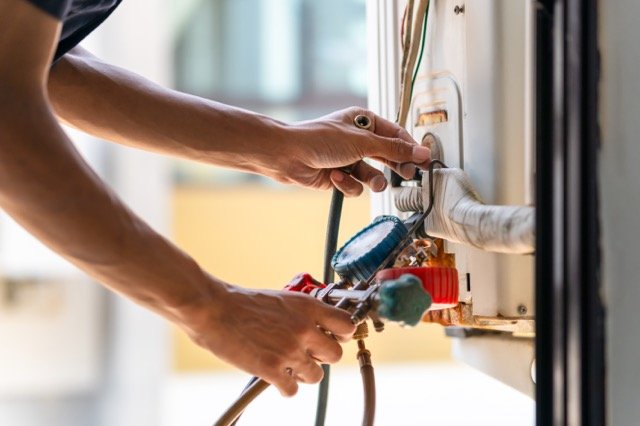
- Accurate refrigerant charge verified with superheat/subcool measurements
- Correct airflow across the evaporator coil (typically 400 CFM per ton)
- Level outdoor unit with proper clearances for airflow
- Sealed and insulated refrigerant lines
- Properly sloped condensate drain with trap and cleanout
- Electrical connections sized correctly with proper disconnect and surge protection
- Thermostat calibrated and programmed for optimal operation
We've diagnosed hundreds of "underperforming" high-efficiency systems where the problem was installation errors, not equipment failure. Low refrigerant charge from improper evacuation procedures. Kinked refrigerant lines reducing capacity. Undersized return air ducts starving the system of airflow. These mistakes kill efficiency regardless of SEER rating.
This is why we emphasize NATE certification and ongoing training for our technicians. The difference between a 16 SEER system installed correctly and one installed carelessly is 2-3 SEER points of real-world performance. You're better off with a mid-tier system installed by competent technicians than premium equipment installed by the low bidder.
Ready to Choose the Right AC for Your Home?
NEXT Heating & Cooling has been keeping Michigan homes comfortable for over 35 years. Our NATE-certified technicians will perform a proper load calculation, explain your options honestly, and install your system correctly the first time. No pressure, no upselling — just straight answers and quality work.
Schedule Your Free EstimateFrequently Asked Questions About SEER Ratings
For most Michigan homeowners, 15-16 SEER offers the best balance of efficiency, comfort, and cost. These systems typically include two-stage compressors for better humidity control and temperature stability. The minimum legal rating is 13.4 SEER2 (equivalent to about 14 SEER in the old rating system), but we rarely recommend installing minimum-efficiency equipment unless budget is the only consideration.
Higher ratings (17-20 SEER) make sense for well-insulated homes where you plan to stay long-term and prioritize comfort. Lower ratings (14-15 SEER) work fine for rental properties or homes you're selling within a few years.
For a typical 2,000 square foot Michigan home with a 3-ton AC running 1,000 hours per year, upgrading from 14 SEER to 16 SEER saves about $58 annually at current DTE Energy rates. Jumping to 18 SEER saves about $103 per year compared to 14 SEER. A 20 SEER system saves roughly $139 annually over 14 SEER.
These are averages — your actual savings depend on your home's insulation, ductwork condition, thermostat settings, and how many hours you run the AC each summer. Homes with poor insulation or leaky ducts won't see the full efficiency benefit regardless of SEER rating.
Rarely, in Michigan's climate. A 20 SEER system typically costs $3,000-$4,000 more than a comparable 16 SEER unit. At $80-$100 per year in energy savings, the payback period is 30-40 years — longer than the equipment lifespan. You're buying comfort features (variable-speed operation, superior humidity control) more than cost savings.
20 SEER makes sense if you have a high-performance home with excellent insulation and air sealing, if utility rebates offset much of the cost, or if you have specific health needs that benefit from better dehumidification. For most homeowners, 15-17 SEER is the smarter investment.
SEER2 is the updated testing standard that became mandatory in January 2023. It accounts for static pressure in ductwork, making it a more realistic measure of real-world efficiency. SEER2 ratings are about 4-5% lower than equivalent SEER ratings — so a 16 SEER system under the old test is approximately 15.2 SEER2 under the new standard.
When comparing quotes, make sure all contractors are using the same rating system. A "16 SEER2" system is roughly equivalent to what used to be called "17 SEER" in efficiency.
Not necessarily — compressor type matters more than SEER rating. Variable-speed and two-stage compressors provide better dehumidification because they run longer cycles at lower capacity, giving the evaporator coil more time to remove moisture from the air. A 16 SEER two-stage system will control humidity better than an 18 SEER single-stage unit.
That said, most high-SEER systems (17+) use variable-speed compressors, so they typically do offer superior humidity control. Michigan summers are humid — this feature makes a noticeable comfort difference even if the energy savings are modest.
Technically yes, but you won't get the rated efficiency. Air conditioners are tested and rated as matched systems — the outdoor condensing unit paired with a specific indoor air handler or furnace coil. Mismatched components can reduce efficiency by 2-4 SEER points and may void the manufacturer's warranty.
If your air handler is over 15 years old, it makes sense to replace both components. The labor cost to install just the outdoor unit isn't much less than installing both, and you'll get better performance and warranty coverage with a matched system. We can evaluate your existing equipment and give you honest guidance on what needs replacement.
Lifespan depends more on installation quality, maintenance, and usage patterns than SEER rating. A properly installed and maintained 14 SEER system can last 18-20 years. A neglected 20 SEER system might fail in 10-12 years. Brand quality and component design matter more than efficiency rating.
That said, variable-speed compressors in high-efficiency systems experience less mechanical stress because they don't cycle on and off as frequently. This can extend compressor life if everything else is equal. Regular maintenance through a program like our Next Care Plan is the single biggest factor in equipment longevity regardless of SEER rating.