

Top 5 Reasons Your AC Is Blowing Warm Air | NEXT Heating

It's a humid July afternoon in Sterling Heights, and you walk into your house expecting relief. Instead, you're hit with lukewarm air pouring from the vents. The thermostat says 72°F. The outdoor unit is running. But the air coming out feels closer to 80°F.
If your AC is blowing warm air, you're not alone. We get dozens of calls like this every summer across Macomb, Oakland, and St. Clair counties. The good news? Most causes are fixable — and some you can troubleshoot yourself before calling for heating and cooling services in Metro Detroit.
Here's what we see most often after 35+ years servicing air conditioners in Southeast Michigan — and what each problem actually means for your wallet.
1. Low Refrigerant From a Leak
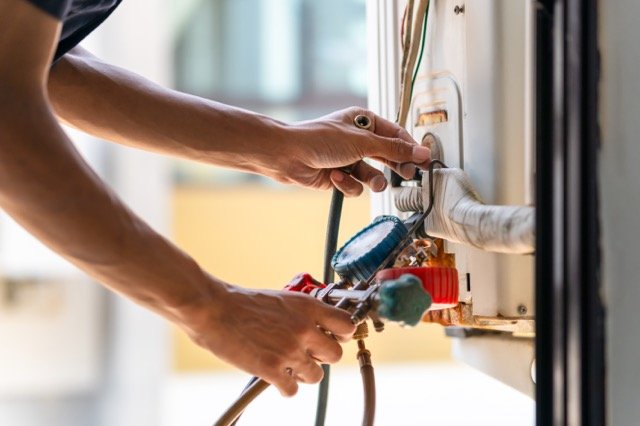
This is the most common technical reason we find when diagnosing an AC blowing warm air. Your air conditioner doesn't "use up" refrigerant like gas in a car — it's a closed-loop system. If refrigerant is low, there's a leak somewhere.
How refrigerant works: Refrigerant absorbs heat from inside your home at the evaporator coil (the cold coil inside your furnace or air handler), then releases that heat outside at the condenser coil. When refrigerant levels drop below the manufacturer's spec — typically measured in pounds or ounces depending on system size — the system can't absorb enough heat. The result? Warm air from your vents.
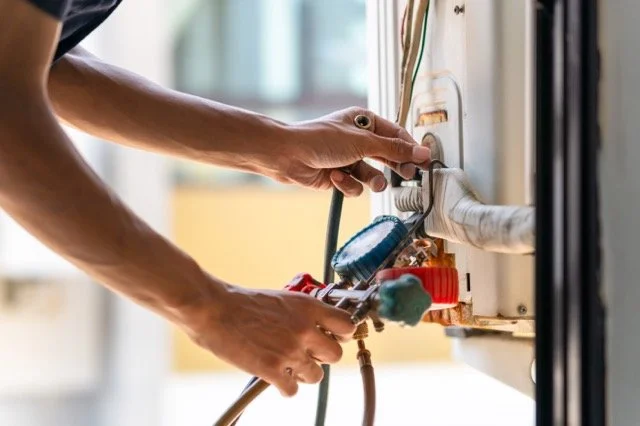
Signs of low refrigerant:
- Warm air from vents even though the system runs continuously
- Ice buildup on the refrigerant lines or evaporator coil
- Hissing or bubbling sounds near the indoor or outdoor unit
- Higher-than-normal electric bills (the compressor works harder)
Common leak locations: In Michigan homes, we most often find leaks at the evaporator coil (especially on systems 10+ years old where coil corrosion develops), at brazed joints on the refrigerant lines, or at the service valves on the outdoor condenser unit. Vibration from the compressor, freeze-thaw cycles, and road salt carried in through garage doors can all accelerate corrosion.
Important: Never let a technician just "top off" your refrigerant without finding and fixing the leak. That's a temporary band-aid — and in many cases, it's illegal under EPA 608 regulations. A licensed HVAC contractor must locate the leak, repair it, evacuate the system, and recharge it to the manufacturer's specifications.
Most refrigerant leaks require a trained technician with leak detection equipment (electronic sniffers, UV dye, or nitrogen pressure testing). This isn't a DIY repair. If you suspect low refrigerant, contact a reliable HVAC contractor in Metro Detroit who can diagnose and repair the leak properly.
2. Frozen Evaporator Coil
If you open your furnace cabinet and see ice coating the evaporator coil (the A-frame-shaped coil sitting on top of your furnace blower), your AC is frozen — and it can't cool your home.
Why coils freeze: The evaporator coil needs constant airflow to stay above freezing. When airflow is restricted, the coil temperature drops below 32°F, and condensation on the coil freezes into ice. Once ice forms, it blocks even more airflow — creating a vicious cycle.
Common causes of frozen coils:
- Dirty air filter (the #1 cause we see) — blocks airflow across the coil
- Closed or blocked supply vents — reduces return airflow
- Low refrigerant — causes the coil to get too cold
- Blower motor failure — no air movement across the coil
- Dirty evaporator coil — dust and debris act as insulation
We wrote an entire guide on this issue: Frozen AC Unit: What to Do (Michigan Homeowner Guide). The short version: turn off your AC, let the ice melt completely (this can take 8-24 hours), check your air filter, and if the problem returns, call a technician.
What NOT to do: Don't chip away the ice with a screwdriver or pour hot water on the coil. You'll damage the fragile aluminum fins or flood your furnace cabinet. Let it thaw naturally with the system off and the blower fan set to ON (not AUTO) to circulate air.
3. Dirty or Clogged Air Filter
This is the easiest fix on the list — and the one homeowners overlook most often. A clogged air filter restricts airflow across the evaporator coil, which can cause warm air, frozen coils, and even compressor failure over time.
How often to change your filter: Most 1-inch pleated filters should be changed every 30-60 days during cooling season — especially if you have pets, run the fan continuously, or live near a busy road. In Southeast Michigan, pollen season (April-June) and high humidity months (July-August) put extra strain on filters.
Filter location: Check your return air grille (usually on a wall or ceiling) or inside the furnace cabinet. If you're not sure where it is, look for the large metal duct that feeds into your furnace — the filter slot is usually right there.
What to look for: Hold the filter up to a light. If you can't see light through it, it's clogged. If it's gray or brown with dust, pet hair, or debris, replace it. A clean filter should look white or light blue (depending on the material).
Replacing your air filter costs $15-30 and takes 60 seconds. It's the single most important thing you can do to prevent AC problems — and it's covered in our $5/month HVAC maintenance plan, which includes seasonal tune-ups to catch these issues before they become expensive repairs.
4. Faulty Compressor or Reversing Valve
The compressor is the heart of your AC system. It pressurizes refrigerant and pumps it through the system. If the compressor fails or runs but doesn't build pressure, your AC will blow warm air — even though everything else appears to work.
Signs of compressor failure:
- Outdoor unit hums or buzzes but doesn't start
- Compressor runs but the outdoor fan doesn't spin (or vice versa)
- Clicking or rattling sounds from the outdoor unit
- Circuit breaker trips repeatedly when the AC tries to start
Compressor failure is more common on systems 12+ years old, especially if they've never had maintenance. Dirty condenser coils, low refrigerant, and electrical issues all shorten compressor life. Brands like Carrier, Lennox, Trane, and Rheem typically rate compressor lifespan at 15-20 years under normal conditions — but Michigan's temperature swings and high humidity can accelerate wear.
Heat pump-specific issue: reversing valve failure. If you have a heat pump (which heats and cools your home), a stuck or failed reversing valve can cause the system to blow warm air in cooling mode. The reversing valve is what switches the refrigerant flow direction between heating and cooling. When it fails, the system might default to heating mode even when you've set the thermostat to COOL.
Compressor replacement typically costs $1,500-$3,000 depending on system size and refrigerant type. In many cases, if the compressor fails on a system that's 12+ years old, replacing the entire outdoor unit (or the whole system) makes more financial sense. We cover this decision in detail here: When to Replace Your Air Conditioner in Southeast Michigan.
5. Thermostat Issues or Wiring Problems
Sometimes the problem isn't the AC at all — it's the thermostat or the wiring between the thermostat and the equipment.
Common thermostat problems that cause warm air:
- Thermostat set to HEAT instead of COOL — sounds obvious, but we've seen it dozens of times, especially on programmable or smart thermostats with confusing menus
- Fan set to ON instead of AUTO — the blower runs continuously, even when the compressor isn't cooling, so you feel warm air between cooling cycles
- Thermostat location — if it's mounted near a window, heat source, or in direct sunlight, it reads the wrong temperature and doesn't call for cooling when it should
- Dead batteries — battery-powered thermostats lose calibration or stop sending signals to the equipment when batteries die
- Loose or corroded wiring — the low-voltage wires that connect your thermostat to the furnace/air handler can come loose, corrode, or short out
Quick thermostat troubleshooting:
- Verify the thermostat is set to COOL mode
- Set the temperature at least 3-5 degrees below the current room temperature
- Change the batteries if it's battery-powered
- Check the circuit breaker for the furnace/air handler (should be ON)
If your thermostat display is blank, unresponsive, or shows error codes, the issue might be a blown transformer, tripped breaker, or failed control board in the furnace. We wrote about this here: Thermostat Not Reaching Set Temperature? Here's Why.
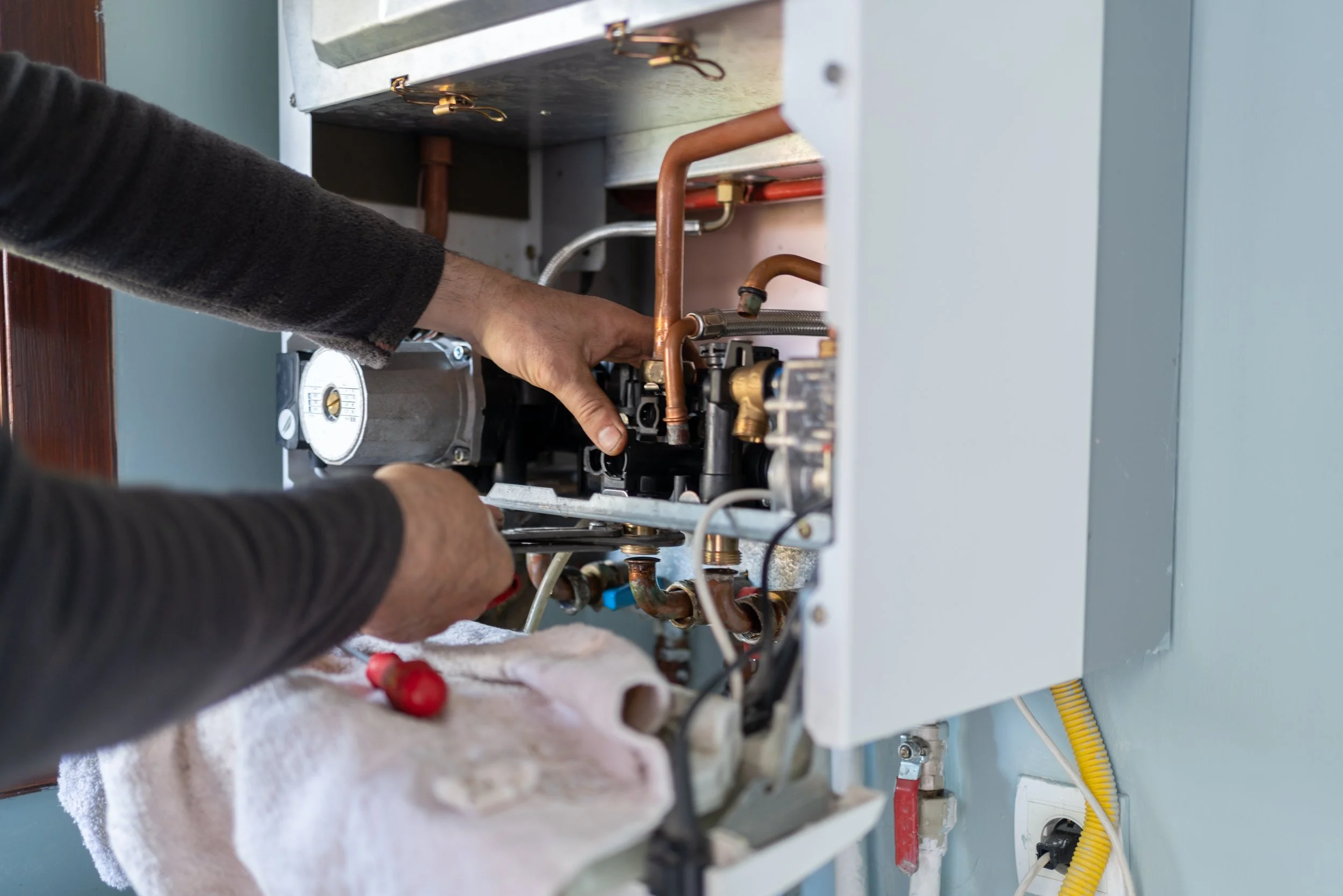
Thermostat wiring issues require a technician with a multimeter to test voltage and continuity. Don't attempt to rewire a thermostat yourself unless you're comfortable working with low-voltage electrical systems — a miswired thermostat can damage your furnace control board (a $300-600 repair).
When to Call a Technician vs. DIY
You can troubleshoot these yourself:
- Check and replace the air filter
- Verify thermostat settings (mode, temperature, fan setting)
- Replace thermostat batteries
- Check circuit breakers for the furnace and outdoor unit
- Clear debris (leaves, grass clippings) from around the outdoor condenser
- Let a frozen coil thaw naturally (turn off AC, leave blower fan on)
Call a licensed HVAC technician for:
- Refrigerant leaks or low refrigerant (requires EPA 608 certification)
- Frozen coils that return after thawing
- Compressor failure or outdoor unit not running
- Electrical issues, blown fuses, or tripped breakers that won't reset
- Strange sounds (grinding, squealing, hissing, banging)
- Ice on refrigerant lines or outdoor unit
- System that's 10+ years old and blowing warm air (may need replacement)
If you're in Macomb, Oakland, or St. Clair County and need same-day service, NEXT Heating & Cooling offers 24/7 emergency HVAC service. Our NATE-certified technicians diagnose the problem honestly — no upselling, no commission-based sales, just the repair you actually need.
Cost Reality for Common Repairs in Metro Detroit
Here's what these repairs typically cost in Southeast Michigan as of 2026. Prices vary based on system size, refrigerant type, and accessibility.
Air filter replacement: $15-30 (DIY) or included in a service call
Refrigerant leak repair + recharge: $400-$1,200 depending on leak location and refrigerant type. Small leaks at a service valve might cost $400-600. Evaporator coil leaks often require coil replacement ($800-1,500). Systems using R-22 refrigerant (phased out in 2020) cost significantly more due to limited supply — sometimes $150+ per pound.
Frozen coil repair: If it's just a dirty filter, $0-30. If it's a failed blower motor, $400-800. If it's low refrigerant causing the freeze, see above.
Compressor replacement: $1,500-$3,000 for the compressor alone. But if your system is 12+ years old, replacing the entire outdoor unit or both indoor and outdoor units often makes more sense financially and gets you a warranty and better efficiency.
Thermostat replacement: $150-400 installed for a programmable thermostat. Smart thermostats (Ecobee, Honeywell WiFi) run $250-500 installed.
Full AC replacement: $3,500-$7,500 depending on system size (tonnage), SEER rating, and whether ductwork needs modification. We break down real numbers here: When to Replace Your Air Conditioner in Southeast Michigan.
Prevent expensive repairs: Most of the issues on this list — low refrigerant, frozen coils, compressor failure — can be caught early with annual maintenance. Our Next Care Plan costs $5/month and includes two seasonal tune-ups (spring AC check, fall furnace check), priority scheduling, and 10% off repairs. We've seen it save homeowners thousands in avoided emergency repairs.
AC Blowing Warm Air? We'll Diagnose It Honestly.
NEXT Heating & Cooling has been keeping Southeast Michigan homes comfortable for over 35 years. Our NATE-certified technicians show up on time, explain the problem clearly, and give you options — no pressure, no upselling. Same-day service available in Macomb, Oakland, and St. Clair counties.
Schedule Your ServiceFrequently Asked Questions
If the outdoor unit is running but you're getting warm air, the most common causes are low refrigerant (from a leak), a frozen evaporator coil, or a failed compressor that's running but not building pressure. Less common: a stuck reversing valve on a heat pump. Check your air filter first — if it's clogged, replace it and see if the problem resolves. If not, call a technician to test refrigerant levels and inspect the indoor coil.
Not for long. Running an AC with low refrigerant or a frozen coil can damage the compressor — a $1,500-$3,000 repair. If you see ice on the indoor coil or refrigerant lines, turn the system off immediately and let it thaw. If the outdoor unit is running but not cooling, turn it off and call a technician. Running a broken AC almost always makes the repair more expensive.
Signs of low refrigerant include warm air from vents, ice on the indoor coil or refrigerant lines, hissing or bubbling sounds near the indoor or outdoor unit, and higher electric bills. You can't check refrigerant levels yourself — it requires gauges and EPA certification. If you suspect low refrigerant, call a licensed HVAC contractor to test pressures and locate the leak.
Intermittent warm air usually means the system is freezing up, then thawing, then freezing again. Common causes: dirty air filter, low refrigerant, or a failing blower motor. Another possibility: the compressor is short-cycling (turning on and off rapidly) due to electrical issues or a bad capacitor. Check your filter first. If it's clean and the problem continues, call a technician to diagnose the root cause.
It depends on the cause. A new air filter costs $15-30. A refrigerant leak repair and recharge runs $400-$1,200. A failed compressor costs $1,500-$3,000 to replace (but often makes more sense to replace the whole outdoor unit if the system is 12+ years old). A diagnostic service call typically costs $89-150, which is usually credited toward the repair if you proceed.
Not always — but it depends on the age of your system and the cost of the repair. If your AC is less than 10 years old and the repair is under $1,000, fixing it usually makes sense. If it's 12+ years old and needs a compressor replacement or major refrigerant leak repair, replacement is often the smarter long-term investment. A new high-efficiency system (16+ SEER) will also lower your electric bills. We walk through this decision in detail here: When to Replace Your Air Conditioner in Southeast Michigan.
Annual maintenance is the best prevention. A spring AC tune-up catches small problems (dirty coils, low refrigerant, failing capacitors) before they become expensive failures. Change your air filter every 30-60 days during cooling season. Keep the outdoor unit clear of debris, leaves, and grass clippings. Don't close off more than 20% of your vents (it restricts airflow and can freeze the coil). Our Next Care Plan includes two seasonal tune-ups per year for $5/month — it's the most cost-effective way to avoid emergency repairs.