

Why Your Energy Bill Spikes Every Summer (& How a New AC Fixes It)
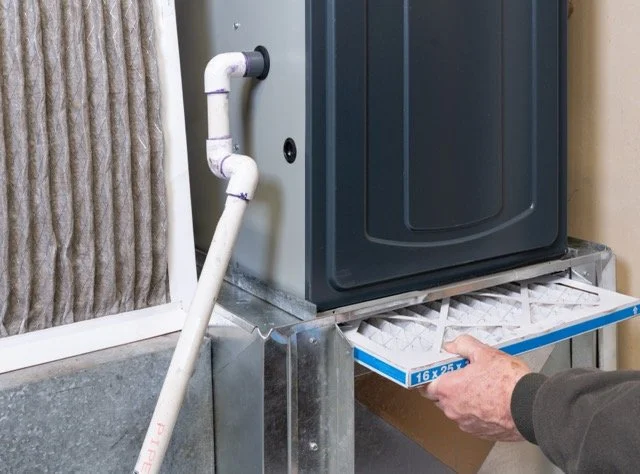
You open your July electric bill in Sterling Heights and do a double-take. $280. Last month it was $140. Your air conditioner has been running nonstop through the heat wave, but the house still feels sticky by 3 PM. The system is only twelve years old — shouldn't it be fine?
Here's what's actually happening: your AC is working harder than it should, using more electricity than necessary, and still not keeping up. And every degree it struggles to maintain is costing you money.
I've been servicing heating and cooling systems in Metro Detroit for over three decades, and summer energy bill spikes are one of the most common complaints we hear. The good news? A new, properly sized, high-efficiency AC system can cut your cooling costs by 30-50% while actually improving comfort. Let me show you exactly why your bill spikes and what a modern AC does differently.
Why Summer Energy Bills Spike in Southeast Michigan
Michigan summers are tougher on air conditioners than most homeowners realize. We deal with a specific combination of factors that force cooling systems to work overtime:
High humidity from the Great Lakes. When you're this close to Lake St. Clair and Lake Erie, summer humidity regularly hits 70-80%. Your AC has to remove moisture from the air before it can cool effectively. An old system with a single-stage compressor runs at full blast, overcools the air quickly, then shuts off before it's had time to dehumidify properly. You end up with a cold, clammy house that still feels uncomfortable.
Heat waves that push systems past their design limits. We get stretches in July and August where temperatures stay above 90°F for days. If your AC was sized for typical Michigan summers (75-85°F), it's now running 18-20 hours a day trying to keep up. That's when you see electric bills double.
Older homes with compromised insulation. Many homes in Royal Oak, Troy, and Warren were built in the 1960s and 70s with minimal attic insulation and no air sealing. Heat pours in through the roof deck all day. Your AC fights a losing battle against radiant heat transfer, and your meter spins faster.
Ductwork that leaks conditioned air. In homes with basement or crawlspace ductwork, we routinely find 20-30% of cooled air leaking into unconditioned spaces before it ever reaches your living room. You're paying to cool your basement walls.
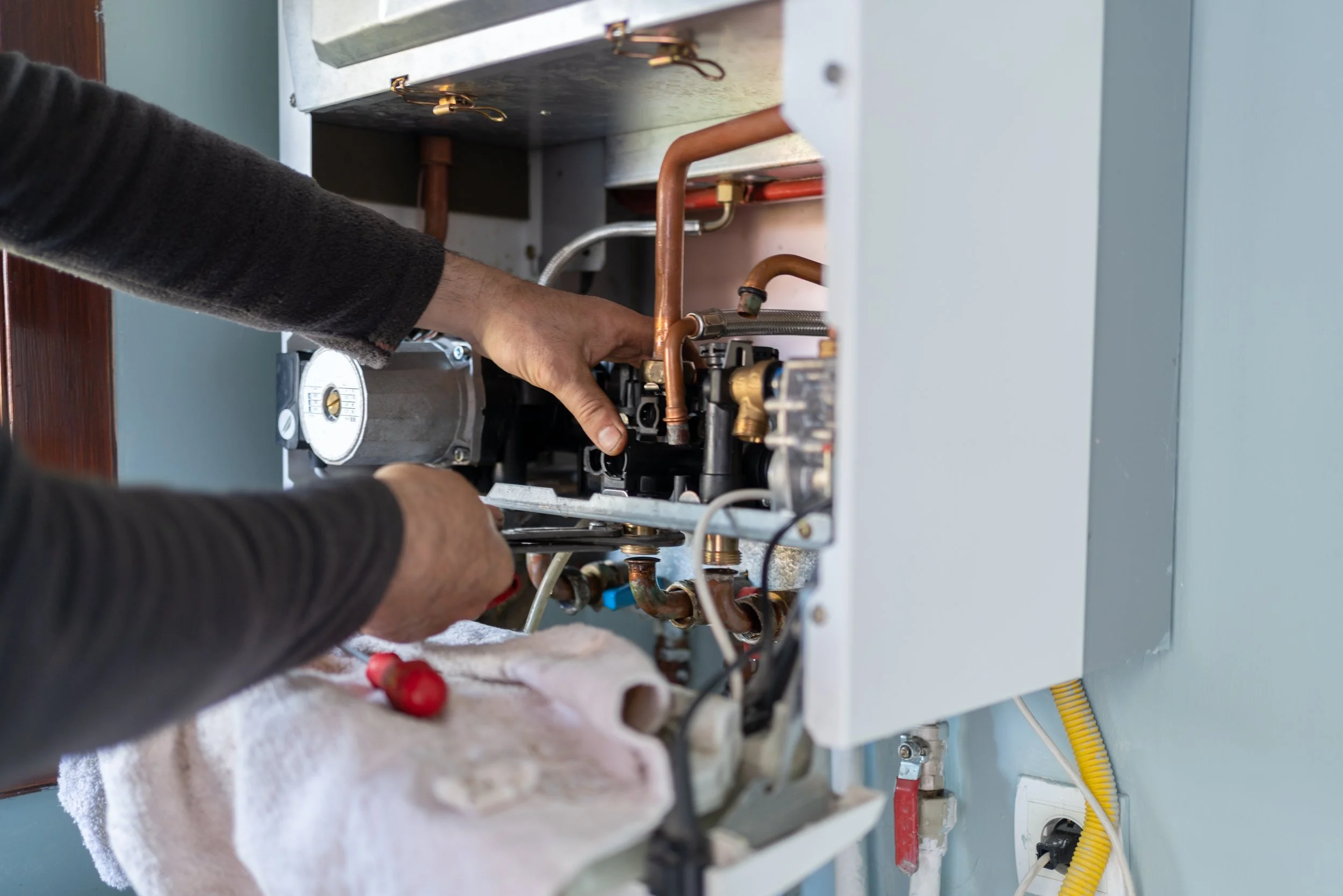
How Your Old AC System Wastes Money
Let's talk about what happens inside an air conditioner that's 10-15 years old. The inefficiency isn't just about age — it's about how the technology has fundamentally changed.
Low SEER Ratings on Older Equipment
SEER stands for Seasonal Energy Efficiency Ratio. It's a measure of how much cooling you get per watt of electricity consumed. In 2006, the minimum SEER for new AC units was 10. In 2015, it jumped to 13. Today, the minimum is 14 SEER, and high-efficiency models reach 20+ SEER.
If your system was installed in 2012, it's probably running at 13 SEER — or lower if the coils are dirty or refrigerant is low. A new 16 SEER system uses 23% less electricity to deliver the same cooling. On a $250 summer electric bill, that's $62.50 back in your pocket every month.
Single-Stage Compressors Running at Full Blast
Older AC systems have one speed: 100%. The compressor kicks on, runs at maximum capacity until the thermostat is satisfied, then shuts off. This creates several problems:
- High startup current draw. Every time the compressor cycles on, it pulls a surge of electricity. On a 90-degree day, that's happening 8-12 times per hour.
- Temperature swings. The house gets cold fast, then warms up before the next cycle. You're never actually comfortable — you're oscillating between too cold and too warm.
- Poor dehumidification. The system shuts off before it's run long enough to pull moisture out of the air. You get cold, clammy air instead of dry, comfortable air.
Modern variable-speed and two-stage systems run longer at lower capacity, using less power while maintaining consistent temperature and humidity. They're quieter, more efficient, and more comfortable.
Refrigerant Leaks and Dirty Coils
Here's what I see on service calls in Clinton Township and Shelby Township every June: outdoor coils caked with cottonwood seeds, grass clippings, and dirt. Indoor coils coated with dust because the homeowner hasn't changed the filter in eight months. Refrigerant levels sitting at 70% of the factory charge because there's a slow leak at a brazed joint.
Dirty coils reduce efficiency by 20-30%. Low refrigerant forces the compressor to run longer to achieve the same cooling — sometimes 40-50% longer. You're burning electricity to overcome mechanical problems that shouldn't exist.
This is exactly why we built the Next Care Plan — $5 a month gets you two tune-ups per year (spring AC check, fall furnace check) where we catch these issues before they cost you hundreds in wasted electricity.
Real Example from a Macomb County Home: We serviced a 2010 Goodman AC in Chesterfield last July. Homeowner complained about $320 electric bills. We found the outdoor coil 60% blocked, refrigerant down to 6 pounds (should be 8.5), and a return air filter that looked like it came from a coal mine. After cleaning the coils, recharging the refrigerant, and replacing the filter, her August bill dropped to $210. That's $110 in savings from basic maintenance — not even a new system.
What SEER Rating Actually Means for Your Wallet
SEER ratings confuse people because they're presented as abstract numbers. Let me make it concrete with real Michigan cooling costs.
Assume you have a 3-ton (36,000 BTU) air conditioner cooling a 1,800 square-foot home in Rochester Hills. In a typical Michigan summer, you'll run that system about 1,000 hours between June and September. Here's what different SEER ratings cost you in electricity:
| SEER Rating | Annual kWh Used | Cost at $0.16/kWh | Savings vs 10 SEER |
|---|---|---|---|
| 10 SEER (old system) | 3,600 kWh | $576 | — |
| 13 SEER (2012-era) | 2,769 kWh | $443 | $133/year |
| 16 SEER (current standard) | 2,250 kWh | $360 | $216/year |
| 18 SEER (high-efficiency) | 2,000 kWh | $320 | $256/year |
| 20 SEER (premium) | 1,800 kWh | $288 | $288/year |
Those savings compound over the 15-20 year lifespan of the equipment. A 16 SEER system saves you $3,240 over 15 years compared to a 10 SEER clunker. An 18 SEER system saves $3,840. And that's just the electricity — it doesn't account for fewer repair calls, better humidity control, or the comfort of consistent temperatures.
Current federal minimums require 14 SEER in northern states (including Michigan). But when we install AC systems for Metro Detroit families, we typically recommend 16 SEER as the sweet spot for cost and efficiency. The upcharge from 14 to 16 SEER is usually $800-1,200, and you recoup that in energy savings within 4-6 years.
How a New High-Efficiency AC Cuts Cooling Costs
Modern air conditioners aren't just "more efficient" in some vague way. They use specific technologies that fundamentally change how cooling works. Here's what you're actually getting when you upgrade:
Variable-Speed Compressor Technology
Instead of running at 100% or 0%, a variable-speed compressor modulates between 40% and 100% capacity based on real-time cooling demand. On a mild 78-degree day, it might run continuously at 50% capacity — using half the electricity of an old single-stage unit while maintaining perfect temperature and humidity.
Brands like Carrier Infinity, Lennox Signature, and Trane XV series use inverter-driven compressors that adjust speed in 1% increments. You get precision comfort with minimal energy waste.
Two-Stage Systems for Budget-Conscious Homeowners
If variable-speed is outside your budget, two-stage systems offer a middle ground. They run at 65-70% capacity most of the time (low stage), only ramping up to 100% (high stage) when needed. This cuts electricity use by 20-30% compared to single-stage while costing $1,500-2,000 less than full variable-speed.
We install a lot of Bryant Evolution, Rheem Prestige, and Goodman GMVC96 two-stage systems in Macomb County for homeowners who want efficiency without breaking the bank.
Smart Thermostat Integration
Pair a high-efficiency AC with a smart thermostat (Ecobee, Honeywell T10, Carrier Cor), and you unlock features like:
- Occupancy-based scheduling. The system learns when you're home and adjusts automatically.
- Humidity control. You can set a target humidity level (we recommend 45-50% in Michigan summers), and the system will prioritize dehumidification over raw cooling.
- Remote monitoring. Get alerts if the system is running inefficiently or needs service.
Smart thermostats typically add another 8-12% in energy savings on top of the SEER rating improvement.
Proper Sizing Through Manual J Load Calculations
This is where a reliable HVAC contractor in Metro Detroit separates themselves from the "free estimate in 15 minutes" crowd.
Manual J is the industry-standard method for calculating exactly how much cooling capacity your home needs. It accounts for:
- Square footage and ceiling height
- Window area, orientation, and glass type
- Insulation levels in walls, attic, and basement
- Air infiltration rates
- Number of occupants and heat-generating appliances
- Ductwork size and layout
An oversized AC costs more to buy, cycles on and off rapidly (wasting energy), and never runs long enough to dehumidify. An undersized AC runs constantly and still can't keep up on hot days.
We perform a full Manual J on every installation. It takes an extra hour, but it's the difference between a system that works and one that just exists in your yard.

Signs Your AC Is Costing You Money
How do you know if your current system is the problem? Here are the red flags we look for on service calls:
1. Electric bills over $200 in summer months. For a typical 1,500-2,000 square-foot home in Southeast Michigan, summer electric bills should run $140-180 with a modern, efficient AC. If you're consistently hitting $220-280, your system is burning excess electricity.
2. The system runs constantly but the house stays warm. On a 90-degree day, a properly sized AC should cycle on and off, running maybe 60-70% of the time. If it's running 18-20 hours straight and the thermostat never reaches setpoint, you've got an undersized or failing system.
3. Uneven cooling throughout the house. Master bedroom is 78°F while the living room is 72°F? That's a sign of ductwork issues, improper airflow balancing, or a system that's short-cycling before it can distribute air evenly.
4. The system is 12+ years old. Average lifespan for an AC in Michigan is 12-15 years. After that, you're on borrowed time. Compressors wear out, coils corrode, refrigerant leaks develop. Even if it's still running, it's probably 30-40% less efficient than when it was new.
5. Repair costs are adding up. If you've spent $800+ on repairs in the last two years, you're throwing money at a dying system. That's $800 that could have gone toward a new, efficient unit that won't need repairs for 8-10 years.
6. The house feels humid even when cool. If you're setting the thermostat to 68°F just to feel comfortable because the air is so sticky, your AC isn't dehumidifying properly. Modern systems with variable-speed or two-stage operation solve this completely.
We wrote a detailed guide on why your AC runs but doesn't cool that covers diagnostic steps you can take before calling for service.
What a New AC Actually Costs in Southeast Michigan (2026)
Let's talk real numbers. No "starting at $2,999" nonsense — here's what homeowners in Macomb, Oakland, and St. Clair counties are actually paying for quality AC installations in 2026.
Price Ranges by System Type and Size
14 SEER Single-Stage System (budget option):
- 2-ton (1,000-1,400 sq ft): $4,200-5,400
- 3-ton (1,400-1,800 sq ft): $4,800-6,200
- 4-ton (1,800-2,400 sq ft): $5,600-7,200
16 SEER Two-Stage System (recommended):
- 2-ton: $5,400-6,800
- 3-ton: $6,200-7,800
- 4-ton: $7,200-9,000
18+ SEER Variable-Speed System (premium):
- 2-ton: $6,800-8,600
- 3-ton: $7,800-9,800
- 4-ton: $9,200-11,500
These prices include removal and disposal of the old system, installation of the new condenser and evaporator coil, refrigerant line set, condensate drain, electrical disconnect, thermostat upgrade (if needed), startup, and testing. We also include a 10-year parts warranty and 1-year labor warranty on all installations.
What Affects Installation Cost
Several factors push the price up or down:
Existing ductwork condition. If your ducts are properly sized and sealed, we're good to go. If they're undersized, leaking, or collapsed in sections, ductwork modifications add $1,200-3,500 depending on scope.
Electrical service capacity. Older homes sometimes need a dedicated 220V circuit for the new condenser. Electrical upgrades run $400-900.
Accessibility. Condenser going on the ground next to the house? Standard pricing. Condenser going on a rooftop or in a tight side yard with no gate access? Add $300-600 for crane rental or extra labor.
Refrigerant line length. Standard installs assume 25-30 feet of line set. If the condenser is 60 feet from the air handler (common in larger homes), you'll pay $15-20 per additional foot for refrigerant lines.
Rebates and Financing Options
DTE Energy offers rebates up to $500 for ENERGY STAR certified AC systems (16 SEER or higher). Consumers Energy has similar programs. We handle the paperwork for you.
We also offer financing through GreenSky and Wells Fargo with terms up to 60 months. Current rates (as of March 2026) are around 6.99% APR for qualified buyers, with promotional 0% APR for 12-18 months on systems over $5,000.
ROI Timeline Based on Energy Savings
Let's say you're replacing a 10 SEER system with a 16 SEER system. Total cost: $6,500. Annual energy savings: $216 (from the table earlier). Simple payback: 30 years. Not great, right?
But here's what that calculation misses:
- Avoided repair costs. Your old system was going to need $1,500-2,500 in repairs over the next 3-5 years. New system warranty covers parts for 10 years.
- Increased home value. A new HVAC system adds $3,000-5,000 to resale value and makes your home easier to sell.
- Comfort improvements. Better humidity control, quieter operation, consistent temperatures. There's real quality-of-life value here.
- Utility rate increases. Electricity rates in Michigan have climbed 3-4% annually for the last decade. Your savings grow every year.
When you factor in all of that, the real payback is closer to 8-12 years — well within the 15-20 year lifespan of the equipment.
When to Replace vs Repair Your AC
This is the question we get on 80% of service calls in June and July. The AC stops working, and the homeowner wants to know: fix it or replace it?
Here's the decision framework we use:
The $5,000 Rule
Multiply the cost of the repair by the age of the system. If the result is over $5,000, replace it.
Example: Your 14-year-old AC needs a new compressor. Repair cost: $1,800. Calculation: $1,800 × 14 = $25,200. Way over $5,000 — replace the system.
Counter-example: Your 6-year-old AC has a failed capacitor. Repair cost: $280. Calculation: $280 × 6 = $1,680. Under $5,000 — repair it.
This rule accounts for both the immediate cost and the likelihood of future failures as the system ages.
Age and Efficiency Considerations
If your AC is 10+ years old and running at 13 SEER or lower, replacement almost always makes more sense than major repairs. You're not just fixing the current problem — you're resetting the clock on reliability and cutting your operating costs by 25-40%.
If your AC is 5-8 years old and relatively efficient (14-16 SEER), repairs are usually the smart move unless you're looking at a compressor or coil replacement (both $1,500+).
Refrigerant Type: R-22 vs R-410A
This is a big one. If your system uses R-22 refrigerant (common in systems installed before 2010), you've got a problem. R-22 was phased out in 2020 due to environmental regulations. You can still buy recycled R-22, but it costs $80-120 per pound vs $15-25 per pound for R-410A.
If your R-22 system has a refrigerant leak, you're looking at $600-1,200 just to recharge it — and the leak will probably come back. At that point, replacement is the only financially sensible option.
All new systems use R-410A (or the newer R-32 in some brands), which is widely available and affordable.
Ductwork Condition Impact
If you're replacing the AC, we always inspect the ductwork. Leaky, undersized, or poorly designed ducts can cut system efficiency by 30-40%. You don't want to install a brand-new 18 SEER system and then lose half the cooled air to duct leaks.
Duct sealing (using mastic, not tape) costs $800-1,500 and typically pays for itself in 3-5 years through energy savings. Duct replacement runs $3,000-6,000 depending on home size and layout, but it's sometimes necessary in older homes with collapsed flex duct or asbestos-wrapped metal duct.
We cover this in detail in our post on duct cleaning and ductwork issues in Macomb County.
Ready to Cut Your Cooling Costs?
NEXT Heating & Cooling has been keeping Michigan homes comfortable for over 35 years. Our NATE-certified technicians will perform a complete load calculation, show you exactly what size system your home needs, and give you honest pricing with no pressure. We're family-owned, BBB A+ rated, and backed by manufacturer warranties from Carrier, Lennox, Trane, and more.
Schedule Your Free EstimateFrequently Asked Questions
For a typical Southeast Michigan home replacing a 10 SEER system with a 16 SEER system, expect to save $180-250 per summer cooling season. If you're upgrading from a very old system (8-9 SEER), savings can reach $300-400 annually. The exact savings depend on your home size, insulation, thermostat settings, and how many cooling degree days we get each summer. Variable-speed systems save even more because they run more efficiently at partial load.
We typically recommend 16 SEER as the sweet spot for most Metro Detroit homeowners. It offers significant efficiency gains over the 14 SEER minimum without the premium cost of 18-20 SEER systems. The upcharge from 14 to 16 SEER is usually $800-1,200, and you'll recoup that in energy savings within 4-6 years. If you plan to stay in the home 10+ years and want maximum efficiency and comfort, 18 SEER variable-speed systems are worth considering.
With proper maintenance (annual tune-ups, clean filters, clear outdoor coil), a quality AC system should last 15-20 years in Southeast Michigan. Systems that are neglected — dirty coils, clogged filters, low refrigerant — often fail at 10-12 years. This is why we created the Next Care Plan — $5/month gets you two annual tune-ups that catch small issues before they become expensive failures. Proper maintenance can add 5-7 years to equipment lifespan.
Variable-speed systems cost $2,000-3,500 more than single-stage, but they deliver measurable benefits: 25-40% lower operating costs, better humidity control (critical in humid Michigan summers), quieter operation, and more consistent temperatures. If you're sensitive to temperature swings, have humidity issues, or plan to stay in your home 10+ years, variable-speed is worth it. For budget-conscious homeowners, a two-stage system offers a middle ground — better efficiency than single-stage at $1,500-2,000 less than variable-speed.
Yes, but with conditions. The outdoor condenser and indoor evaporator coil (which sits on top of your furnace) are designed as a matched system. If your furnace is relatively new (less than 10 years) and the blower motor is compatible with the new AC, we can replace just the outdoor unit and evaporator coil. However, if your furnace is 15+ years old, it makes sense to replace both at once — you save on labor costs by doing both jobs simultaneously, and you get matched efficiency ratings. We'll assess your furnace during the estimate and give you honest guidance.
There's no single "best" brand — it depends on your budget and priorities. Carrier and Trane are premium brands with excellent reliability and 10-year warranties. Lennox makes some of the most efficient systems available (up to 26 SEER). Bryant and Rheem offer great mid-range value with solid warranties. Goodman and Amana are budget-friendly options that still meet efficiency standards. We install all of these brands and will recommend the one that fits your home and budget. What matters more than brand is proper sizing, quality installation, and regular maintenance.
Simple payback from energy savings alone is typically 10-15 years for a mid-efficiency system (16 SEER). However, when you factor in avoided repair costs on your old system ($1,500-3,000 over 5 years), increased home resale value ($3,000-5,000), and improved comfort (better humidity control, quieter operation, consistent temperatures), the real payback is 6-10 years. If electricity rates continue climbing 3-4% annually as they have been, your savings accelerate over time. And if your old system uses R-22 refrigerant, replacement is almost always cheaper than continued repairs with expensive refrigerant.