

Why Your Furnace Short Cycles and How to Fix It | Michigan
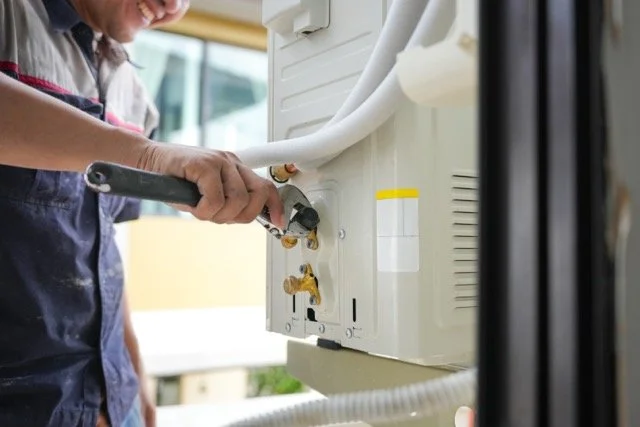
You're sitting in your living room in Sterling Heights, and you notice your furnace firing up, running for maybe a minute or two, then shutting off. A few minutes later, it does it again. And again. That clicking sound of the igniter, the whoosh of the burners, then silence — over and over.
That's called short cycling, and it's one of the most common furnace problems we diagnose during Michigan winters. It's not just annoying — it's costing you money on every heating bill, wearing out expensive components years before they should fail, and leaving cold spots throughout your house.
After 35 years of heating and cooling services in Metro Detroit, we've seen every variation of this problem. Some fixes are simple — a $20 filter swap you can do yourself. Others require a trained eye and diagnostic tools. Here's what's actually happening, why it matters, and what it costs to fix.
What Short Cycling Actually Means
A properly functioning furnace should run for somewhere between 10 and 20 minutes per heating cycle, depending on outdoor temperature and how well your home is insulated. The furnace heats your home to the thermostat setpoint, then shuts off. When the temperature drops a degree or two below setpoint, the furnace fires up again.
Short cycling means the furnace is turning on and off in cycles that last less than 3 to 5 minutes — sometimes as short as 30 seconds. The burners ignite, the blower kicks on, then everything shuts down before the house reaches temperature.
Here's what you'll notice:
- The furnace runs for a minute or two, then shuts off
- You hear the igniter clicking frequently throughout the day
- The blower motor starts and stops repeatedly
- Your house never quite reaches the temperature you set on the thermostat
- Some rooms feel colder than others
- Your heating bills are higher than they should be
Modern furnaces — whether you have a Carrier, Lennox, Trane, or Bryant — are designed to run in longer, more efficient cycles. Short cycling defeats that design and creates problems that compound over time.
The 8 Most Common Causes of Furnace Short Cycling
We've diagnosed thousands of short cycling furnaces across Macomb and Oakland counties. These are the causes we see most often, listed roughly in order from most common to least common.
1. Dirty or Clogged Air Filter
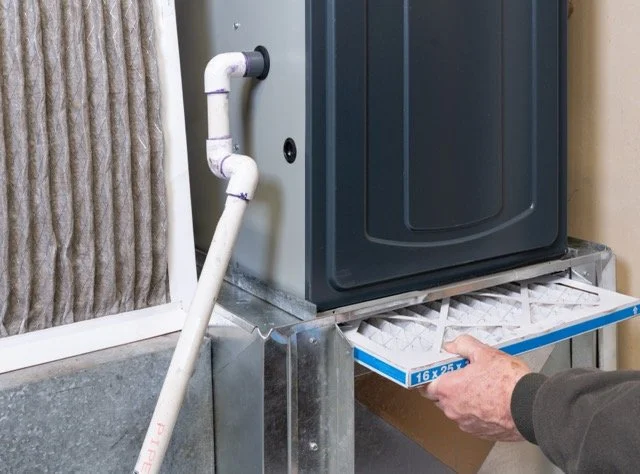
This is the number one cause, and it's the easiest to fix. A clogged filter restricts airflow across the heat exchanger. The furnace overheats, the limit switch trips, and the burners shut off to prevent damage. The blower continues running to cool things down, then the whole cycle starts over.
In Michigan homes with older ductwork — common in 1960s and 1970s ranches throughout Warren, Troy, and Clinton Township — a dirty filter causes problems faster because the duct system is already marginal on airflow.
The fix: Replace the filter. Check it monthly during heating season. If you have pets or live on a dirt road, check it more often. A standard 1-inch pleated filter costs $8 to $20 and takes two minutes to swap.
2. Oversized Furnace
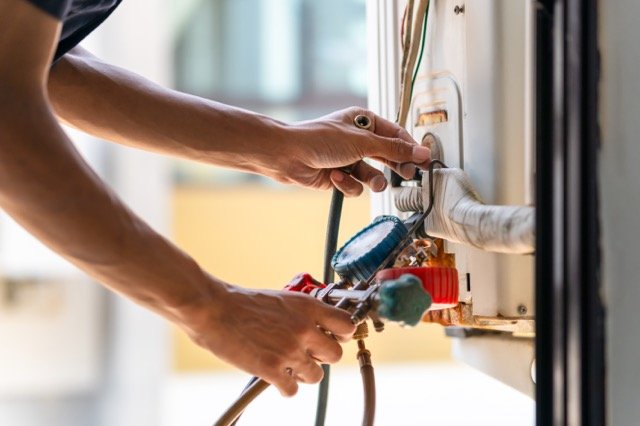
This is a bigger problem than most homeowners realize. An oversized furnace heats the space too quickly, reaches the thermostat setpoint before the blower has a chance to distribute heat evenly, then shuts off. The result: short cycles, hot and cold spots, and wasted energy.
Furnaces get oversized in a few ways:
- The original installer didn't do a proper load calculation (required by code, but often skipped)
- Someone replaced the furnace with "the same size as the old one" without accounting for efficiency improvements (new windows, added insulation, air sealing)
- A salesperson talked the homeowner into "one size up just to be safe"
We see this constantly in older homes that have been upgraded with new windows and insulation but still have the original 100,000 BTU furnace from 1985. The house now needs maybe 60,000 BTU, but the furnace is still sized for the drafty, uninsulated version of the house.
The fix: If the furnace is relatively new and otherwise working well, a two-stage or modulating thermostat can sometimes help. But if the furnace is nearing the end of its lifespan anyway, the real solution is replacing it with a properly sized unit based on an actual Manual J load calculation. We cover this in detail in our guide on what to expect during a new furnace installation.
3. Thermostat Problems
Thermostats fail in ways that cause short cycling. Common issues include:
- Poor location: The thermostat is mounted near a heat source (sunlight, a lamp, the furnace room door) or in a cold spot (exterior wall, drafty hallway). It reads the wrong temperature and cycles the furnace incorrectly.
- Loose wiring: A loose wire causes intermittent connection, making the furnace think it's reached temperature when it hasn't.
- Calibration drift: Older mechanical thermostats go out of calibration. The thermostat thinks it's 72°F when the room is actually 68°F.
- Failing anticipator: In older thermostats, the heat anticipator (a small adjustable dial inside the cover) can be set wrong or fail entirely.
The fix: Check the thermostat batteries first (if applicable). Verify it's level on the wall. If it's old or in a bad location, upgrade to a modern programmable or smart thermostat and mount it on an interior wall away from heat sources and drafts. Thermostat replacement typically runs $150 to $400 installed, depending on the model.
4. Flame Sensor Issues
The flame sensor is a small metal rod that sits in the burner flame. Its job is to verify that gas is actually burning — a critical safety feature. Over time, the sensor gets coated with carbon buildup or corrosion. When it can't detect the flame properly, it shuts off the gas valve, and the furnace cycles off.
This is especially common in furnaces that are 10+ years old or that haven't had regular maintenance. We see it frequently in homes throughout Royal Oak and Grosse Pointe where the furnace runs constantly through polar vortex events and accumulates buildup faster.
The fix: A technician removes the flame sensor, cleans it with fine steel wool or a specialized cleaner, and reinstalls it. This is part of a standard tune-up. If the sensor is corroded beyond cleaning, replacement costs $150 to $250 including labor. This is one reason our $5/month HVAC maintenance plan includes annual flame sensor inspection and cleaning — catching this early prevents short cycling before it starts.
5. Cracked Heat Exchanger
This is the serious one. The heat exchanger is the metal chamber where combustion happens. Hot exhaust gases pass through it, heating the air that blows into your house. Over years of heating and cooling cycles, the metal can crack.
A cracked heat exchanger causes short cycling because the furnace limit switch detects abnormal temperature patterns and shuts the system down as a safety precaution. But more importantly, a cracked heat exchanger can leak carbon monoxide into your home.
Signs of a cracked heat exchanger:
- Short cycling that started suddenly
- Visible soot or corrosion around the burners
- The furnace flame is yellow or orange instead of blue
- You smell a chemical or metallic odor near the furnace
- Your carbon monoxide detector goes off
The fix: A cracked heat exchanger cannot be repaired — it requires furnace replacement. In a 15+ year old furnace, replacement is almost always the right call. Heat exchanger replacement alone costs $1,500 to $2,500, and at that point you're putting major money into old equipment. We walk through the economics in our post on what furnace replacement actually costs in Southeast Michigan.
Safety Note: If you suspect a cracked heat exchanger — especially if your carbon monoxide detector has gone off — shut down the furnace immediately and call for service. This is not a "wait and see" situation. We offer 24/7 emergency service throughout Macomb and Oakland counties for exactly these scenarios.
6. Blocked or Restricted Venting
High-efficiency furnaces (90% AFUE and above) use PVC vent pipes that terminate outside, usually on a sidewall. These vents can get blocked by:
- Snow and ice buildup during Michigan winters
- Bird nests or insect nests in the spring and summer
- Leaves and debris in the fall
- Improper vent cap installation
When the vent is blocked, exhaust gases can't escape properly. The furnace pressure switch detects the problem and shuts down the burners. The furnace tries to restart, fails again, and you get short cycling.
We see this every winter in Shelby Township and Lake Orion, where homes back up to wooded areas and snow drifts against the house. A vent that's fine in October gets buried by January.
The fix: Inspect your vent termination outside. Clear away snow, ice, or debris. Make sure the vent cap is intact and properly installed. If the vent is damaged or corroded, a technician can replace it. Vent cleaning or minor repairs typically cost $100 to $300.
7. Ductwork Leaks or Restrictions
Leaky or undersized ductwork causes airflow problems that lead to short cycling. The furnace can't move enough air across the heat exchanger, temperatures rise too quickly, and the limit switch shuts everything down.
Common ductwork issues in Southeast Michigan homes:
- Disconnected ducts in the basement or crawlspace (we find this in 1 out of 3 older homes)
- Crushed or kinked flex duct
- Undersized return air ducts (the furnace can't pull in enough air)
- Closed or blocked registers in too many rooms
The fix: A technician inspects the ductwork, seals leaks with mastic (not duct tape — that stuff fails), and verifies adequate airflow. In some cases, ductwork needs to be resized or rerouted. Minor duct sealing costs $300 to $800. Major duct replacement runs $2,500 to $6,000 depending on the scope.
8. Furnace Control Board Failure
The control board is the brain of the furnace. It manages ignition, flame sensing, blower operation, and safety shutoffs. When the control board starts to fail, you get erratic behavior — including short cycling.
Control boards fail due to:
- Age and heat exposure (they're mounted inside a hot furnace cabinet)
- Power surges or electrical issues
- Moisture intrusion (common in basement furnace rooms with high humidity)
Diagnosing a control board failure requires a technician with a multimeter and experience reading furnace wiring diagrams. It's not a DIY job.
The fix: Control board replacement costs $400 to $900 depending on the furnace brand and model. Carrier, Lennox, and Trane boards tend to be on the higher end. Goodman and Rheem are usually less expensive. If your furnace is 15+ years old and needs a control board, it's worth having a conversation about replacement instead of repair.
What Short Cycling Costs You (Energy, Wear, Comfort)
Short cycling isn't just an annoyance — it has real costs that add up fast.
Energy Waste
Furnaces are least efficient during startup. The burners ignite, the heat exchanger heats up, and only then does useful heat start flowing into your house. If the furnace shuts off after 90 seconds, you've burned gas to heat the heat exchanger, but very little of that heat made it into your living space.
A furnace that short cycles can waste 15% to 25% of the fuel it burns. On a typical Southeast Michigan heating bill of $150 to $250 per month in January and February, that's $25 to $60 per month down the drain.
Accelerated Wear
Every time your furnace starts up, components wear. The igniter glows red-hot. The gas valve opens and closes. The blower motor spins up from a dead stop. The flame sensor heats and cools. The inducer motor cycles on and off.
A furnace that runs 4 to 6 cycles per hour (normal) might accumulate 1,500 to 2,500 cycles during a heating season. A furnace that short cycles might see 10,000+ cycles in the same period.
Components that should last 15 to 20 years start failing in 8 to 10. Igniters crack. Blower motors burn out. Inductors fail. Gas valves stick. You end up with a string of $300 to $800 repair bills instead of one furnace that just works.
Comfort Loss
Short cycling means your house never quite reaches the temperature you set. The furnace shuts off before heat distributes evenly. You get hot spots near the furnace and cold spots in distant rooms.
In a two-story home in Rochester Hills or Bloomfield Hills, this often means the upstairs bedrooms are 5 to 8 degrees colder than the main floor. You turn up the thermostat to compensate, which makes the main floor too hot and wastes even more energy.
DIY Checks Before Calling a Tech
Some causes of short cycling are easy to check yourself. Here's what to do before you schedule a service call.
Check and Replace the Air Filter
Turn off your furnace at the switch (usually on the side of the unit or nearby on the wall). Locate the filter slot — it's usually between the return air duct and the blower cabinet. Slide out the filter and hold it up to a light. If you can't see light through it, replace it.
Buy a filter that matches the size printed on the frame (common sizes: 16x20x1, 16x25x1, 20x20x1). Use a MERV 8 to MERV 11 pleated filter — better filtration than fiberglass, but not so restrictive that it chokes airflow. Avoid MERV 13+ filters unless your system was specifically designed for them.
Verify Thermostat Settings and Battery
Check that your thermostat is set to HEAT mode (not AUTO or OFF). Verify the temperature setpoint is at least 3 to 5 degrees above the current room temperature. If your thermostat uses batteries, replace them even if it's still working — weak batteries cause erratic behavior.
Make sure the thermostat is level on the wall. If it's tilted, the internal mercury switch (in older models) won't work correctly.
Inspect the Outdoor Vent Termination
Go outside and find your furnace exhaust vent. It's usually a white or gray PVC pipe coming out of the side of your house, often near the furnace location in the basement. Clear away any snow, ice, leaves, or debris blocking the opening. Make sure the vent cap is intact and not damaged or missing.
If you have a high snowfall winter — common in St. Clair County and northern Macomb County — check this monthly.
Check All Registers and Returns
Walk through your house and make sure all supply registers (the vents that blow warm air) are open and not blocked by furniture, curtains, or rugs. Check that return air vents are not obstructed. A common mistake: homeowners close registers in unused rooms thinking it saves energy. It doesn't — it just reduces airflow and causes the furnace to overheat.
When to Call a Professional
Some short cycling causes require a trained technician with diagnostic tools and experience. Call a pro if:
- You've checked the filter, thermostat, and vents, and the furnace still short cycles
- You smell gas, notice a yellow or flickering flame, or your carbon monoxide detector goes off (shut down the furnace and call immediately)
- The furnace is making unusual noises — banging, rattling, screeching
- You see rust, corrosion, or soot around the burners or heat exchanger
- The furnace is more than 15 years old and short cycling just started
- You've had multiple repairs in the past year
At NEXT Heating & Cooling, our NATE-certified HVAC technicians show up with diagnostic tools, not a sales pitch. We'll tell you what's wrong, what it costs to fix, and whether repair or replacement makes sense for your situation. No commission-based upselling — just honest diagnostics and options.
What a Service Call Looks Like
When you schedule a service call for furnace short cycling, here's what happens:
Step 1: Intake and Observation
The technician asks about symptoms — how long the cycles last, when the problem started, any recent changes to the system. They observe the furnace through a few cycles to see the behavior firsthand.
Step 2: Visual Inspection
They check the obvious stuff first: filter condition, thermostat settings, vent termination, visible ductwork, and any signs of corrosion or damage.
Step 3: Diagnostic Testing
Using a multimeter and furnace-specific tools, they test:
- Flame sensor current (should read 2 to 6 microamps when clean and working)
- Limit switch operation (opens at 160°F to 200°F depending on model)
- Gas valve voltage and operation
- Blower motor amperage (verifies it's not overworking)
- Thermostat wiring and voltage
- Control board outputs and error codes
Step 4: Airflow Measurement
They measure temperature rise across the heat exchanger (should be 40°F to 70°F depending on furnace model). Too high = restricted airflow. Too low = oversized furnace or ductwork issues.
Step 5: Diagnosis and Options
The technician explains what they found, what's causing the short cycling, and gives you options with costs. If it's a simple fix like a dirty flame sensor, they can often do it on the spot. If it's a bigger issue like a cracked heat exchanger or oversized furnace, they'll give you a written estimate for repair or replacement.
Typical Repair Costs in Southeast Michigan (2026)
- Flame sensor cleaning: $100 to $150 (often included in a tune-up)
- Flame sensor replacement: $150 to $250
- Thermostat replacement: $150 to $400
- Limit switch replacement: $150 to $300
- Inducer motor replacement: $400 to $700
- Control board replacement: $400 to $900
- Gas valve replacement: $350 to $600
- Blower motor replacement: $450 to $800
- Heat exchanger replacement: $1,500 to $2,500 (rarely makes sense — usually means replacement)
These are typical ranges for our service area. Your actual cost depends on the furnace brand, model, and parts availability.
Furnace Short Cycling? We'll Diagnose It Right
NEXT Heating & Cooling has been keeping Michigan homes comfortable for over 35 years. Our NATE-certified technicians show up on time, diagnose the real problem, and give you honest options — no pressure, no commission-based sales. Serving Macomb, Oakland, and St. Clair counties.
Schedule Your Service CallFrequently Asked Questions
Yes — it's the most common cause we see. A clogged filter restricts airflow across the heat exchanger. The furnace overheats, the high limit switch trips as a safety measure, and the burners shut off. The blower keeps running to cool things down, then the cycle starts over. This happens dozens of times per day. Replace your filter every 1 to 3 months during heating season, more often if you have pets or live in a dusty area.
It depends on the cause. A dirty filter costs $8 to $20 and you can replace it yourself. Flame sensor cleaning runs $100 to $150. Thermostat replacement is $150 to $400. Control board replacement costs $400 to $900. If the heat exchanger is cracked, you're looking at furnace replacement ($3,500 to $7,000 depending on size and efficiency). A diagnostic service call typically costs $100 to $150, which usually gets applied to the repair if you proceed.
It can be, depending on the cause. If short cycling is caused by a dirty filter or thermostat issue, it's not immediately dangerous — just inefficient and hard on equipment. But if it's caused by a cracked heat exchanger, that's a carbon monoxide risk and requires immediate attention. If you smell gas, see a yellow or orange flame, notice soot around the burners, or your CO detector goes off, shut down the furnace and call for emergency service. We offer 24/7 service throughout Metro Detroit for exactly these situations.
Maybe — if the thermostat is the actual problem. Common thermostat issues include poor location (near a heat source or cold draft), loose wiring, dead batteries, or calibration drift in older mechanical models. A technician can test the thermostat to verify it's sending correct signals. If the thermostat checks out fine, the problem is elsewhere — filter, flame sensor, oversized furnace, ductwork, or control board. Replacing a working thermostat won't fix those issues.
A properly sized and functioning furnace should cycle 3 to 6 times per hour on average, with each cycle lasting 10 to 20 minutes. On extremely cold days (like during a Michigan polar vortex), the furnace might run almost continuously. On milder days, it might cycle 2 to 4 times per hour. If your furnace is cycling 10+ times per hour with short 1- to 2-minute run times, that's short cycling and needs attention.
Absolutely — and it's more common than most homeowners realize. An oversized furnace heats the space too quickly, reaches the thermostat setpoint before heat distributes evenly, then shuts off. This creates short cycles, hot and cold spots, and wasted energy. Furnaces get oversized when installers skip the load calculation, copy the size of the old furnace without accounting for home improvements (new windows, insulation), or talk homeowners into "going one size up just to be safe." The solution is replacing the furnace with a properly sized unit based on a Manual J load calculation.
The NEXT Care Plan ($5/month) includes two annual tune-ups — one in fall before heating season and one in spring before cooling season. During these visits, we clean and inspect components that commonly cause short cycling: flame sensor, air filter, burners, blower, and vent termination. We catch problems early before they turn into short cycling or expensive failures. Plan members also get 10% off all repairs, priority scheduling, and no service call fees. Many short cycling issues are prevented entirely with regular maintenance, which is why the plan pays for itself after the first avoided repair.