

York Furnace Repair: Common Problems & Fixes (2026)
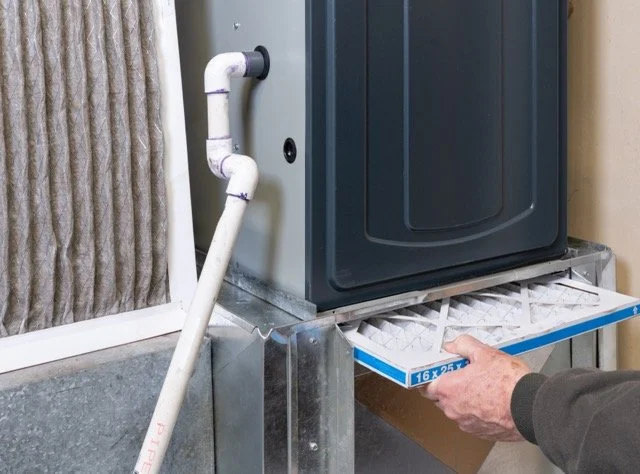
Your York furnace has kept your Sterling Heights home warm through five Michigan winters. Then one January morning, you wake up to cold air blowing from the vents and a furnace that clicks but won't fire. The LED on the control board blinks a pattern you don't recognize.
York furnaces, manufactured by Johnson Controls, have earned a solid reputation in Southeast Michigan for reliability and efficiency. We see them in homes across Macomb County, Oakland County, and St. Clair County. They're built well. But after 10 to 15 years of Michigan winters, polar vortex events, and cycling on and off hundreds of times each season, even York units develop predictable problems.
This guide walks through the seven most common York furnace failures we diagnose and repair, what causes them, how much repairs cost, and when replacement makes more financial sense than another service call. You'll learn to read those blinking diagnostic codes, understand what's failing inside your furnace cabinet, and make informed decisions when a technician gives you options.
Why York Furnaces Are Popular in Michigan
York has been manufacturing HVAC equipment since 1874. Johnson Controls acquired the brand in 2005, and the residential furnace line continues under the York name. You'll find York furnaces in thousands of Michigan homes because they offer solid mid-tier performance at a price point below Carrier or Lennox but above builder-grade units from Goodman or Rheem.
Most York gas furnaces installed in Southeast Michigan between 2010 and 2025 fall into one of three efficiency tiers. Single-stage models run at 80% AFUE (Annual Fuel Utilization Efficiency), meaning 80 cents of every natural gas dollar goes toward heating your home. Two-stage models hit 95% to 96% AFUE with a condensing heat exchanger that captures extra heat from exhaust gases. Modulating furnaces, the top-tier York units, adjust output in 1% increments and reach 97% to 98% AFUE.
The Affinity series (York's premium residential line) and the LX series (mid-range) dominate our heating and cooling services in Metro Detroit. These are the units we repair most often, not because they fail more than other brands, but because so many Michigan homeowners have them.
Michigan-Specific Consideration: York furnaces installed before 2015 often lack the advanced pressure switch logic and flame rollout protection found in newer models. If your furnace is 10+ years old and you're experiencing frequent lockouts, the control board may not be compatible with modern smart thermostats or zoned HVAC systems.
The 7 Most Common York Furnace Problems
After 35 years servicing HVAC systems across Southeast Michigan, we've logged thousands of York furnace service calls. Seven failure modes account for roughly 80% of the no-heat calls we receive between November and March.
1. Ignition System Failures (Hot Surface Ignitor Cracks)
York furnaces manufactured after 2010 use hot surface ignitors (HSI) instead of standing pilot lights. The ignitor is a silicon carbide or silicon nitride element that glows orange-hot (1,800°F to 2,500°F) to light the gas burners. Over time, thermal cycling causes the ceramic element to crack.
You'll hear the inducer motor spin up, the ignitor will glow for 15 to 30 seconds, then the furnace shuts down without lighting. The control board tries three times, then locks out. This is the single most common York furnace repair we perform in Warren, Troy, and Sterling Heights.
Hot surface ignitors cost $40 to $80 for the part. Labor runs $150 to $250 depending on accessibility. Total repair: $200 to $350. Ignitors typically last 5 to 7 years in Michigan because of how often furnaces cycle during cold snaps.
2. Pressure Switch Stuck Open or Closed
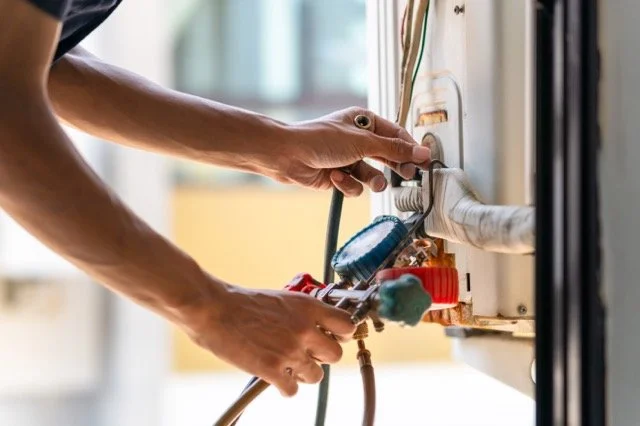
The pressure switch (also called an air proving switch) confirms the inducer motor is pulling enough draft through the heat exchanger before allowing the ignition sequence to start. It's a safety device that prevents carbon monoxide from spilling into your home if the vent is blocked or the heat exchanger is cracked.
York furnaces use either a single pressure switch or a dual-switch setup depending on the model and efficiency rating. When the switch fails, the furnace won't start. The inducer motor runs, but nothing else happens. The LED on the control board blinks a code indicating "pressure switch did not close" or "pressure switch did not open."
Common causes: condensate drain line clogged with ice (Michigan basements get cold), cracked or disconnected pressure switch hose, failed switch diaphragm, or a weak inducer motor not pulling enough vacuum. We replace the switch if it's mechanically failed. If the hose is cracked or the drain is frozen, we fix that instead.
Pressure switch replacement: $150 to $300 including labor. If the inducer motor is weak and causing the pressure switch to fail intermittently, you're looking at a bigger repair (see below).
3. Blower Motor or Capacitor Failure
The blower motor circulates warm air through your ductwork. York furnaces use either a PSC (permanent split capacitor) motor or an ECM (electronically commutated motor) depending on the model year and efficiency tier. ECM motors are variable-speed and more efficient but also more expensive to replace.
When the blower motor fails, the burners light and the heat exchanger gets hot, but no air moves through the vents. The furnace may shut down on a high-limit switch (a safety that trips when the heat exchanger overheats). You might smell a burning odor from dust on the heat exchanger or, in worst cases, from a seized motor bearing.
PSC motor failures often start with a bad capacitor. The capacitor provides the voltage spike needed to start the motor. When it weakens, the motor hums but won't spin. Replacing the capacitor costs $100 to $200. If the motor itself is burned out, expect $400 to $800 for a PSC motor or $600 to $1,200 for an ECM motor, installed.
Blower motor problems are more common in furnaces that run continuously for air circulation or filtration, which is popular in homes with whole-house air purifiers or UV lights installed in the return duct.
4. Cracked Heat Exchanger
This is the failure every homeowner dreads. The heat exchanger is the metal chamber where combustion happens. Air from your home blows across the outside of the heat exchanger to pick up heat, while combustion gases stay inside and vent outdoors. When the heat exchanger cracks, combustion gases (including carbon monoxide) can leak into the air stream.
York furnaces, like all brands, develop heat exchanger cracks after 15 to 20 years of thermal cycling. Repeated heating and cooling causes metal fatigue. Undersized ductwork (common in older Michigan homes) makes the problem worse because restricted airflow causes the heat exchanger to run hotter than designed.
Signs of a cracked heat exchanger: sooting around the burners, visible cracks during a visual inspection with the burners removed, a flickering burner flame when the blower starts, or a positive carbon monoxide reading in the supply air. If your carbon monoxide detector goes off and your furnace is running, shut it down immediately and call for service.
Heat exchanger replacement costs $1,200 to $2,500 depending on the furnace model and whether the part is still available. Most HVAC contractors, including NEXT Heating & Cooling, recommend furnace replacement instead of heat exchanger replacement if the unit is over 15 years old. The labor to replace a heat exchanger is extensive, and other components (blower motor, inducer motor, control board) are likely near end-of-life too.
Safety Note: A cracked heat exchanger is not always an immediate emergency, but it's a serious safety concern. Modern furnaces have rollout switches and flame sensors that shut the unit down if combustion gases escape. Older York furnaces (pre-2005) may lack these protections. If a technician tells you the heat exchanger is cracked, get a second opinion if you want, but don't keep running the furnace.
5. Flame Sensor Fouled with Carbon Buildup
The flame sensor is a thin metal rod positioned in the burner flame. It conducts a small electrical current when heated by the flame, proving to the control board that ignition was successful. If the sensor can't detect the flame, the control board shuts off the gas valve within 3 to 5 seconds.
Carbon and sulfur deposits from combustion coat the flame sensor over time, insulating it from the flame. The burners light, then shut off after a few seconds. The furnace tries again. Same result. After three attempts, it locks out.
This is one of the easiest York furnace repairs. We remove the flame sensor, clean it with fine-grit sandpaper or a wire brush, and reinstall it. Service call cost: $100 to $175. The part itself rarely needs replacement unless it's physically damaged.
Flame sensor fouling happens faster in homes with poor combustion air supply (tight basements with no fresh air intake) or if the gas pressure is set incorrectly. If your flame sensor needs cleaning every year, the underlying combustion problem should be addressed. Our Next Care Plan includes annual furnace tune-ups where we clean the flame sensor as part of routine maintenance.
6. Inducer Motor Bearing Failure
The inducer motor (draft inducer fan) pulls combustion air through the burners and exhausts it through the vent pipe. It runs for 30 to 60 seconds before ignition to purge any residual gas and establish proper draft. York furnaces use a centrifugal blower-style inducer with a sealed bearing.
When the bearing wears out, you'll hear a loud squealing, grinding, or rattling noise when the furnace starts. The motor may still run but not pull enough vacuum to close the pressure switch, preventing ignition. In severe cases, the motor seizes completely.
Inducer motor replacement costs $350 to $600 including labor. The motor is usually accessible without removing the entire burner assembly, but it's still a 1 to 2 hour job. Inducer motors typically last 10 to 15 years. If your York furnace is 12+ years old and the inducer motor is failing, consider whether other components (blower motor, control board, heat exchanger) are worth the investment or if furnace replacement makes more sense.
7. Control Board Failure or Thermostat Communication Errors
The integrated furnace control (IFC) board is the brain of your York furnace. It sequences the ignition process, monitors safety switches, and communicates with the thermostat. Control boards fail from power surges, voltage spikes during summer thunderstorms (common in Michigan), or simply age-related component degradation.
Symptoms of a bad control board: the furnace won't respond to thermostat calls, the LED blinks erratic codes that don't match the troubleshooting chart, or the furnace runs through the ignition sequence but never lights. Sometimes the board fails partially, causing intermittent problems that are hard to diagnose.
York control boards cost $200 to $400 for the part. Labor adds another $150 to $250. Total repair: $350 to $650. Before replacing the board, a good technician will verify the thermostat wiring is correct, check for voltage irregularities, and confirm the transformer is outputting the correct 24V AC. We've seen cases where a homeowner upgraded to a smart thermostat and wired it incorrectly, causing the control board to behave erratically.
If you recently installed a Nest, Ecobee, or Honeywell smart thermostat and your York furnace started acting up, the thermostat may be drawing too much power or the common wire (C-wire) may not be connected. Our guide to smart thermostat setup for Michigan homes covers the wiring details.
York Furnace Error Codes Decoded
York furnaces use an LED on the control board to flash diagnostic codes when something goes wrong. The pattern of flashes corresponds to a specific fault condition. You'll need to count the flashes and compare them to the chart inside the furnace cabinet door or in the installation manual.
Common York furnace error codes and what they mean:
- 1 flash: System lockout. The furnace attempted ignition three times and failed. Wait 3 hours for the lockout to reset, or power-cycle the furnace by turning off the disconnect switch for 30 seconds.
- 2 flashes: Pressure switch stuck closed. The switch is telling the control board there's airflow when there shouldn't be. Usually caused by a shorted wire or a failed switch.
- 3 flashes: Pressure switch stuck open. The inducer motor is running but the switch isn't closing. Check for a blocked vent, disconnected pressure switch hose, or weak inducer motor.
- 4 flashes: Open high-limit switch. The heat exchanger overheated and the safety limit tripped. Caused by restricted airflow (dirty filter, blocked return duct, failed blower motor) or a bad limit switch.
- 5 flashes: Flame sense error. The control board isn't detecting flame even though the burners are lit, or it's detecting flame when the gas valve is closed. Usually a fouled flame sensor or a grounding issue.
- 6 flashes: 24V AC power issue. Low voltage from the transformer, a blown fuse on the control board, or a short in the thermostat wiring.
- 7 flashes: Stuck gas valve relay. The control board detected the gas valve relay stuck in the closed position, which is a safety hazard. The board will lock out. Requires control board replacement.
- 8 flashes: Ignitor circuit fault. The control board isn't detecting current flow through the hot surface ignitor. Either the ignitor is cracked or the wiring is disconnected.
If you see a code that isn't listed here, check the label inside your furnace cabinet. York has used different code sets over the years, and some models have manufacturer-specific codes.
Before calling for service, try these steps: check your furnace filter (a clogged filter causes 40% of no-heat calls), make sure the thermostat is set to "heat" and the temperature is set above the current room temperature, and verify the furnace disconnect switch is on (we've driven to service calls where the switch was accidentally turned off).
Repair vs. Replace: The 50% Rule for York Furnaces
When a technician quotes you $800 to replace an inducer motor or $1,500 to replace a heat exchanger, the natural question is: should I repair this furnace or replace it?
The HVAC industry uses a guideline called the 50% rule. If the cost of the repair exceeds 50% of the cost of a new furnace, and the furnace is past the halfway point of its expected lifespan, replacement usually makes more financial sense than repair.
Here's how the math works for a York furnace in Southeast Michigan:
- A new 95% AFUE two-stage York furnace installed costs $3,500 to $5,000 depending on the model and ductwork modifications.
- 50% of that cost is $1,750 to $2,500.
- Expected lifespan of a York furnace: 15 to 20 years with proper maintenance.
- Halfway point: 7.5 to 10 years.
If your York furnace is 12 years old and needs a $1,200 heat exchanger replacement, the 50% rule says replace the furnace. You're past the halfway point in lifespan, and the repair cost is close to 50% of a new unit. Plus, the blower motor, inducer motor, and control board are all the same age as the heat exchanger. More failures are likely within the next 3 to 5 years.
If your furnace is 6 years old and needs a $400 blower motor, repair it. You're not yet at the halfway point, and the repair cost is well under 50% of replacement cost.
Other factors to consider beyond the 50% rule:
- Efficiency gains: If your current York furnace is 80% AFUE and you replace it with a 96% AFUE model, you'll save 16% on heating costs. In a typical Michigan home that spends $1,200 per year on natural gas, that's $192 per year in savings. Over 15 years, that's $2,880 in avoided fuel costs.
- Rebates and incentives: High-efficiency furnaces (95% AFUE or higher) may qualify for utility rebates from DTE Energy or Consumers Energy. Check current programs before making a decision.
- Comfort improvements: Newer York furnaces with modulating or two-stage burners provide more consistent temperatures and quieter operation than old single-stage units. If your current furnace short-cycles or creates hot and cold spots in your home, upgrading solves those problems.
- Warranty coverage: York furnaces come with a 10-year parts warranty (registration required). If your furnace is under warranty, you only pay for labor, which changes the repair-vs-replace math significantly.
We walk through the 50% rule calculation with every homeowner when presenting repair options. Our goal isn't to sell you a new furnace if a $300 repair will give you another 5 years of reliable heat. But we also won't recommend pouring $2,000 into a 15-year-old furnace that's likely to fail again next winter. For a detailed breakdown of what a new furnace costs in Metro Detroit, including installation and ductwork modifications, see our guide on full HVAC system replacement costs.
What York Furnace Repair Actually Costs in Southeast Michigan
Repair costs vary based on the part being replaced, labor time, and whether it's an emergency call (nights, weekends, holidays) or a scheduled service appointment. Here's what we charge for common York furnace repairs in Macomb, Oakland, and St. Clair counties as of 2026:
- Diagnostic service call: $95 to $150. This covers the trip charge and the technician's time to diagnose the problem. If you proceed with the repair, the diagnostic fee is usually applied to the total cost.
- Hot surface ignitor replacement: $200 to $350.
- Flame sensor cleaning: $100 to $175 (often included in a tune-up).
- Pressure switch replacement: $150 to $300.
- Blower motor capacitor: $100 to $200.
- Blower motor (PSC): $400 to $800.
- Blower motor (ECM variable-speed): $600 to $1,200.
- Inducer motor: $350 to $600.
- Gas valve: $300 to $500.
- Control board: $350 to $650.
- Limit switch: $150 to $250.
- Rollout switch: $150 to $250.
- Heat exchanger: $1,200 to $2,500 (rarely recommended; usually better to replace the furnace).
Emergency service calls (after hours, weekends, holidays) typically add $100 to $200 to the base cost. If your furnace quits at 9 PM on a Saturday during a polar vortex, you'll pay more than if you schedule a Tuesday morning appointment. That's the reality of 24/7 emergency HVAC service.
Labor rates in Southeast Michigan run $100 to $150 per hour for licensed, insured HVAC contractors. Unlicensed handymen or "guy with a truck" operations charge less but carry significant risk. Michigan requires a mechanical contractor license for HVAC work. If something goes wrong (gas leak, carbon monoxide exposure, electrical fire), you want a licensed contractor with liability insurance and workers' comp coverage. NEXT Heating & Cooling has been licensed and insured in Michigan for over 35 years.
Ways to reduce York furnace repair costs:
- Join a maintenance plan: Our $5/month HVAC maintenance plan includes two annual tune-ups, priority scheduling, and 10% off repair costs. If you need a $400 blower motor, you save $40. Over time, the savings add up.
- Schedule service during business hours: Avoid weekend and after-hours calls unless it's truly an emergency. If the furnace quits on Friday evening and the forecast shows 40°F lows, you can wait until Monday. If it's 5°F outside and you have young kids or elderly family members in the house, call for emergency service.
- Keep up with filter changes: A $20 filter changed every 3 months prevents a $400 blower motor replacement. Dirty filters are the leading cause of blower motor and limit switch failures.
- Address problems early: That squealing noise from the inducer motor? It's a warning sign. If you call when you first hear it, we can replace the motor on your schedule. If you wait until it seizes and the furnace won't start on the coldest night of the year, you're paying emergency rates.
How to Extend Your York Furnace Lifespan
A well-maintained York furnace lasts 18 to 20 years in Michigan. A neglected one fails at 10 to 12 years. The difference is routine maintenance and addressing small problems before they cascade into major failures.
Here's the maintenance schedule we recommend for York furnaces in Southeast Michigan:
Every 1 to 3 Months (During Heating Season)
- Check and replace the furnace filter. Use a MERV 8 to MERV 11 pleated filter for most homes. Higher MERV ratings (13+) restrict airflow unless your ductwork and blower motor are designed for it.
- Listen for unusual noises: squealing (blower or inducer motor bearings), rumbling (burners need cleaning), or banging (ductwork expansion, but sometimes a sign of a cracked heat exchanger).
- Check the area around the furnace for water pooling (condensate drain clogged) or rust stains (heat exchanger leak).
Every Fall (Before Heating Season)
- Schedule a professional furnace tune-up. A qualified technician will inspect the heat exchanger, test the ignition system, clean the burners and flame sensor, check gas pressure, measure airflow, and verify all safety switches are working. This catches problems before they cause a no-heat failure in January.
- Test your carbon monoxide detectors. Replace batteries and confirm they're working. CO detectors expire after 5 to 7 years and must be replaced even if they appear functional.
- Clear combustion air intake and exhaust vents. High-efficiency York furnaces use PVC vent pipes that terminate outdoors. Make sure they're not blocked by leaves, snow, or ice. A blocked vent causes pressure switch errors and, in extreme cases, carbon monoxide spillage.
Every 3 to 5 Years
- Have your ductwork inspected for leaks, disconnected sections, or inadequate insulation. Leaky ducts waste 20% to 30% of your heating energy and cause the furnace to run longer, shortening its lifespan. If you're experiencing uneven heating or higher-than-expected gas bills, duct sealing and cleaning may be needed.
- Consider a whole-house humidifier if you don't already have one. Michigan winter air is dry, and low humidity makes your home feel colder than it actually is. You'll run the furnace less if the air is properly humidified, reducing wear on the heat exchanger and blower motor.
What happens during a professional York furnace tune-up? Here's what our NATE-certified technicians do during a fall furnace maintenance visit:
- Inspect the heat exchanger for cracks, rust, or soot buildup using a flashlight and mirror. We remove the burner assembly to get a clear view.
- Test the hot surface ignitor for cracks and measure current draw to verify it's heating properly.
- Clean the flame sensor with fine-grit sandpaper to remove carbon deposits.
- Vacuum the burners and inspect the orifices for blockages or corrosion.
- Check gas pressure at the manifold with a manometer. Incorrect gas pressure causes incomplete combustion, sooting, and premature heat exchanger failure.
- Test the pressure switch by simulating blocked vent conditions and confirming the furnace locks out as designed.
- Measure temperature rise across the heat exchanger. York furnaces should have a 40°F to 70°F temperature rise depending on the model and airflow. Too high indicates restricted airflow; too low indicates overfiring or a gas pressure problem.
- Inspect the inducer motor for bearing noise and check the blower wheel for dust buildup.
- Lubricate the blower motor bearings if the motor has oil ports (most modern motors are sealed and don't require lubrication).
- Test the limit switch and rollout switch for proper operation.
- Check the condensate drain line for clogs and verify the trap is filled with water (high-efficiency furnaces only).
- Measure supply and return air temperatures and calculate airflow based on temperature rise.
- Inspect the thermostat for proper operation and verify wiring connections are tight.
A thorough tune-up takes 60 to 90 minutes. If a technician shows up, changes your filter, and leaves in 20 minutes, you didn't get a real tune-up. Our Next Care Plan includes two comprehensive tune-ups per year (fall for the furnace, spring for the AC) for $5 per month. That's $60 per year for maintenance that prevents $1,500+ repair bills.
Ready to Get Started?
NEXT Heating & Cooling has been keeping Michigan homes comfortable for over 35 years. Get honest diagnostics and fair pricing from NATE-certified technicians who show up on time. No upselling. No commission-based sales. Just straight answers and quality work.
Schedule Your ServiceFrequently Asked Questions About York Furnace Repair
York furnaces typically last 15 to 20 years in Michigan with proper maintenance. Units that receive annual tune-ups, regular filter changes, and timely repairs when small problems arise tend to reach the 18 to 20 year mark. Neglected furnaces often fail between 10 and 12 years. Harsh Michigan winters with frequent cycling and polar vortex events put more stress on furnace components than milder climates, which is why maintenance matters even more here.
Yes. York furnaces offer solid mid-tier performance at a reasonable price point. They're built by Johnson Controls, a company with over 140 years in the HVAC industry. We install and service hundreds of York furnaces across Southeast Michigan and find them reliable when properly maintained. They're not quite as robust as Carrier or Lennox premium models, but they outperform builder-grade units. For most Michigan homeowners, a York furnace delivers good value: efficient heating, reasonable repair costs, and parts availability.
This is almost always a flame sensor problem. The burners light, the flame sensor should detect the flame and send a signal to the control board, but if the sensor is coated with carbon deposits, it can't conduct current properly. The control board thinks there's no flame (even though there is) and shuts off the gas valve for safety. The furnace tries three times, then locks out. Cleaning the flame sensor with fine-grit sandpaper usually fixes it. If cleaning doesn't work, check for a grounding issue in the sensor circuit or a failing control board.
A new York furnace installed in Southeast Michigan costs $3,500 to $5,500 depending on the model, efficiency rating, and whether ductwork modifications are needed. An 80% AFUE single-stage unit runs $3,500 to $4,200. A 95% to 96% AFUE two-stage or modulating furnace costs $4,200 to $5,500. If your ductwork needs repairs, sealing, or resizing to match the new furnace's airflow requirements, add $500 to $2,000. We provide detailed quotes that break down equipment, labor, permits, and any ductwork modifications so you know exactly what you're paying for.
Some basic maintenance tasks are safe for homeowners: changing the filter, clearing snow from the vent pipes, resetting the furnace by power-cycling the disconnect switch. But anything involving gas lines, electrical components, or the combustion system should be handled by a licensed HVAC technician. Michigan requires a mechanical contractor license for furnace repair. Working on gas appliances without proper training and tools is dangerous and can result in carbon monoxide leaks, gas explosions, or voided warranties. If you're comfortable with basic DIY work, you can clean the flame sensor, but beyond that, call a professional.
A tune-up is preventive maintenance performed on a working furnace to keep it running efficiently and catch problems before they cause a breakdown. It includes cleaning, inspection, testing safety switches, measuring airflow, and adjusting gas pressure. A repair is fixing a specific problem that's causing the furnace to malfunction or not heat properly. Tune-ups are scheduled in advance (ideally every fall before heating season). Repairs are usually emergency or urgent calls when something breaks. Our maintenance plan includes both: two annual tune-ups plus discounted repair costs if something does go wrong.
Yes. We service all residential York furnace models including the Affinity series, LX series, TM9 series, and older Diamond 80 and Stellar Plus models. Our technicians are NATE-certified and trained on York equipment diagnostics and repair. We stock common York parts on our service trucks (ignitors, flame sensors, pressure switches, capacitors) so we can often complete repairs the same day. For larger components like blower motors or control boards, we can usually get parts within 24 hours. If your York furnace is under warranty, we handle the warranty claim paperwork and coordinate with the manufacturer.