

Your Essential Heat Pump Maintenance Checklist for Michigan

Heat pumps are workhorses in Michigan. They cool your home through humid August afternoons and heat it through January cold snaps — sometimes dropping into single digits or below zero. That dual-season demand means your heat pump needs consistent maintenance to stay efficient and reliable.
Unlike a traditional furnace or air conditioner that runs one season, a heat pump operates year-round. It reverses refrigerant flow to switch between heating and cooling modes, which puts extra wear on components like the reversing valve, defrost controls, and outdoor coil. Neglect maintenance, and you'll pay for it — either in higher energy bills, uncomfortable rooms, or a $1,500+ repair bill when the compressor fails in February.
We've been maintaining heat pumps across Southeast Michigan for over 35 years through heating and cooling services in Metro Detroit. This checklist covers what you can do yourself monthly, what to watch for seasonally, and what our NATE-certified HVAC technicians check during professional maintenance visits. It's the same maintenance protocol we follow for heat pumps in Troy, Sterling Heights, Rochester Hills, and throughout Macomb and Oakland counties.
Why Heat Pumps Need Different Maintenance in Michigan
A heat pump isn't just an air conditioner that can run backwards — though that's essentially how it works. The reversing valve switches the refrigerant flow direction, allowing the outdoor unit to absorb heat from outside air (even when it's 20°F) and transfer it indoors. In summer, it reverses to move heat from inside your house to the outdoors.
This year-round operation creates maintenance needs that single-function systems don't face:
Defrost cycles stress the system. When outdoor temperatures drop below 40°F and humidity is present, frost builds up on the outdoor coil. The heat pump periodically reverses into cooling mode to melt that frost — switching the reversing valve, running the compressor under load, and cycling the defrost control board. A defrost cycle that doesn't complete properly leaves ice on the coil, blocking airflow and forcing the system to work harder.
Cold weather operation is harder on compressors. Extracting heat from 15°F air requires higher compression ratios than pulling heat from 75°F air. That means higher discharge pressures, hotter compressor temperatures, and more mechanical stress. A heat pump compressor running in Michigan winter conditions works significantly harder than one in Tennessee.
Outdoor coils face more contamination. Because the outdoor unit runs year-round, it accumulates dirt, pollen, cottonwood seeds, grass clippings, and road salt spray in a way that a furnace never does. A dirty coil reduces heat transfer efficiency — in winter, that means the heat pump can't extract enough heat from outdoor air, forcing it to rely on expensive backup heat strips.
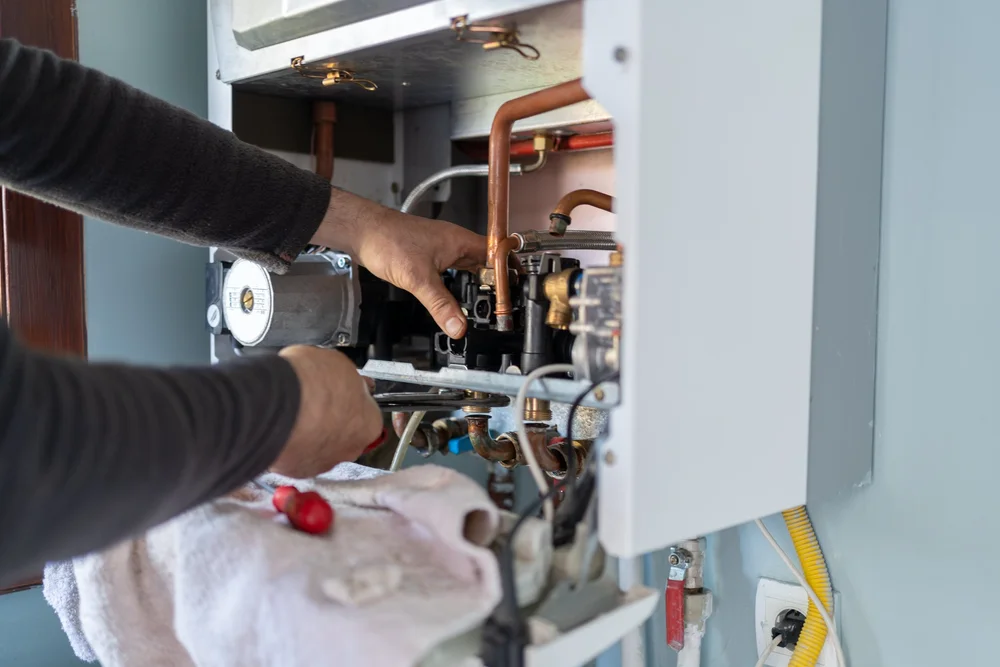
We see the consequences of skipped maintenance constantly in Southeast Michigan. A homeowner in Clinton Township called us in January because their heat pump was running constantly but the house stayed at 62°F. The outdoor coil was so caked with dirt and cottonwood fluff that airflow was nearly blocked. The system couldn't pull enough heat from outside air, so it defaulted to backup electric heat strips — running their electric bill up $400 that month. A $60 coil cleaning in October would have prevented the whole situation.
Monthly Maintenance Tasks You Can Do Yourself
You don't need HVAC training to handle basic heat pump upkeep. These monthly tasks take 10 minutes and prevent most service calls:
Check and Replace Air Filters
This is the single most important thing you can do. A clogged filter restricts airflow across the indoor coil, which reduces heat transfer efficiency and forces the blower motor to work harder. In heating mode, restricted airflow can cause the heat pump to overheat and shut down on the high-pressure safety switch.
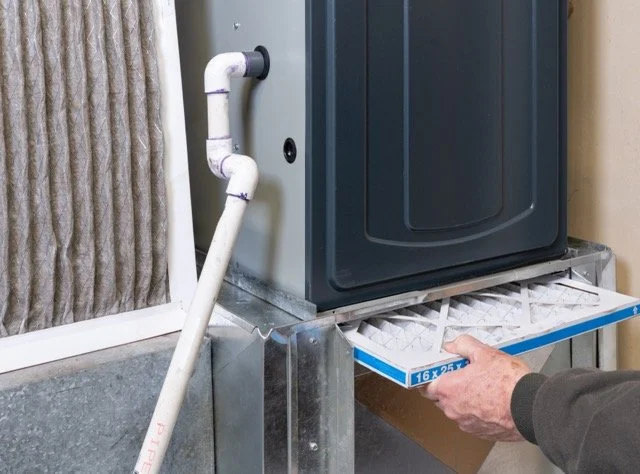
Check your filter every 30 days. If it looks gray or dirty, replace it. Don't wait for the "3-month" timeline printed on the box — Michigan humidity, pet hair, and seasonal pollen load filters faster than manufacturers assume. We recommend MERV 8 to MERV 11 filters for most residential heat pumps. Higher MERV ratings (13+) restrict airflow too much unless your system was specifically designed for them.
If you're running a $5/month HVAC maintenance plan, we include filter reminders and can supply filters during our seasonal visits. It's one less thing to remember.
Clear the Outdoor Unit of Debris
Walk outside and look at your heat pump. Is there anything within two feet of the unit? Leaves, grass clippings, mulch, snow drifts, firewood, storage bins, landscaping rocks — all of it blocks airflow and reduces efficiency.
Keep at least 24 inches of clearance on all sides of the outdoor unit. In winter, clear snow away from the unit after storms. Don't let snow pile up against the sides or block the top discharge fan. A snow-blocked unit can't exhaust air properly, which causes the compressor to overheat and shut down.
Also check for ice buildup around the base of the unit. If you see a solid ice block forming under the unit, that's a drainage problem — the defrost cycle is melting frost, but the water isn't draining away. That needs professional attention before it damages the unit.
Inspect the Outdoor Coil for Dirt
Look at the metal fins on the sides of the outdoor unit. They should look relatively clean — you should be able to see through the fins to the inside of the cabinet. If the fins are clogged with dirt, cottonwood seeds, or grass clippings, the coil can't transfer heat efficiently.
You can gently spray the coil clean with a garden hose — spray from the inside out to push debris out of the fins, not deeper into them. Don't use a pressure washer; the high pressure will bend the delicate aluminum fins. If the coil is heavily clogged, call a professional. We use specialized coil cleaning solutions and low-pressure rinses that won't damage the fins.
Listen for Unusual Sounds
You know what your heat pump normally sounds like. If you hear something new — grinding, squealing, hissing, or rattling — that's a warning sign. Grinding usually means a failing compressor or outdoor fan motor bearing. Hissing can indicate a refrigerant leak. Rattling might be a loose panel or a failing fan blade.
Don't ignore new sounds. We've seen homeowners wait weeks to call about a "little grinding noise," only to have the compressor seize completely — turning a $300 fan motor replacement into a $2,800 compressor replacement.
Seasonal Maintenance: Spring and Fall Priorities
Twice a year — once before cooling season, once before heating season — you should do a deeper inspection. This is also when professional maintenance visits make the most sense.
Spring Maintenance (Before Cooling Season)
In April or early May, before you need air conditioning, do the following:
- Test cooling mode operation. Set your thermostat to cooling mode and drop the temperature setpoint below current room temperature. The heat pump should start within a few minutes, and you should feel cold air from the vents within 5-10 minutes. If it doesn't start, or if it runs but doesn't produce cold air, you likely have a refrigerant leak or a failed reversing valve.
- Check the condensate drain line. In cooling mode, the indoor coil produces condensation that drains through a PVC pipe. Make sure that drain line isn't clogged. A clogged drain will cause water to back up into the drain pan, potentially overflowing into your home. You can flush the drain line with a mixture of water and white vinegar to prevent algae buildup.
- Inspect the outdoor disconnect box. The electrical disconnect near the outdoor unit should be intact, with no corrosion or loose wires. If you see rust or damaged wires, call a professional — that's a safety hazard.
- Clean the outdoor coil thoroughly. Spring is the best time for a deep coil cleaning. Pollen, cottonwood seeds, and winter grime have accumulated over the past months. A clean coil at the start of cooling season ensures maximum efficiency all summer.
This is also a good time to schedule a professional tune-up. Our spring maintenance visits include refrigerant level checks, electrical connection inspections, capacitor testing, and reversing valve operation verification — things you can't do without gauges and meters. If you're on the Next Care Plan, your spring visit is already included.
Fall Maintenance (Before Heating Season)
In September or early October, before you need heat, do the following:
- Test heating mode operation. Set your thermostat to heating mode and raise the temperature setpoint above current room temperature. The heat pump should start, and you should feel warm air from the vents within 5-10 minutes. If the air feels only slightly warm or if you hear the system struggling, the heat pump may not be producing enough heat — possibly due to low refrigerant or a failing compressor.
- Test the defrost cycle. This is harder to do yourself, but you can observe the outdoor unit on a cold, humid morning (below 40°F). If you see frost building up on the outdoor coil, watch to see if the unit periodically reverses into defrost mode — you'll hear the reversing valve click, and you may see steam rising from the outdoor unit as the frost melts. If frost builds up heavily and never melts, the defrost control isn't working, and that needs professional repair.
- Check the backup heat source. Most heat pumps have backup electric heat strips or an auxiliary heating source for extremely cold days. Test this by setting your thermostat to "emergency heat" mode for a few minutes. You should feel noticeably warmer air from the vents — electric heat strips produce air around 95-100°F, compared to 85-95°F from the heat pump alone. If emergency heat doesn't work, you'll be without backup heat when temperatures drop below the heat pump's effective range (usually around 10-15°F for standard units).
- Inspect the outdoor unit base for ice. If you see ice buildup from the previous winter that never fully melted, you have a drainage issue. That ice will refreeze and expand during the upcoming winter, potentially damaging the unit base or refrigerant lines.
Fall is the most critical time for professional maintenance. Our fall visits focus on heating-mode performance, defrost cycle operation, and electrical connections that can fail under winter load. We also check refrigerant charge — low refrigerant in winter means the heat pump can't extract enough heat from outdoor air, forcing expensive backup heat to run constantly. If you're comparing maintenance costs, this is where the central air conditioner cost Michigan discussion overlaps with heat pump economics — the upfront cost of a heat pump is higher, but proper maintenance keeps operating costs lower than separate heating and cooling systems.
Professional Maintenance: What NATE-Certified Techs Check
Some maintenance tasks require specialized tools, gauges, and training. This is what our NATE-certified HVAC technicians check during a professional heat pump maintenance visit:
Refrigerant Charge and Pressure Testing
Heat pumps are precisely charged with refrigerant at the factory. Too little refrigerant, and the system can't transfer enough heat — you'll notice weak heating or cooling, and the compressor will run constantly. Too much refrigerant, and the compressor can overheat and fail.
We use manifold gauges to measure suction and discharge pressures, compare them to manufacturer specifications for current outdoor temperature, and calculate superheat and subcooling values. If refrigerant is low, we find the leak, repair it, and recharge the system to the correct level. Just adding refrigerant without fixing the leak is a temporary patch — the refrigerant will leak out again, and you'll be back to square one.
Low refrigerant is one of the most common issues we find during maintenance visits in Sterling Heights and Troy. It's often caused by vibration-induced cracks in the refrigerant lines or corrosion on the outdoor coil from road salt spray.
Electrical Connections and Component Testing
Heat pumps have multiple electrical components that can fail: contactors, capacitors, relays, defrost control boards, and reversing valve solenoids. We test each component with a multimeter to verify proper voltage, amperage, and resistance.
Capacitors are especially prone to failure. The start capacitor gives the compressor and fan motors the initial jolt of electricity they need to start. The run capacitor keeps them running efficiently. A weak capacitor causes hard starting, which stresses the compressor and shortens its life. We replace capacitors proactively if they test below manufacturer specs — it's a $40 part that prevents a $2,500 compressor failure.
We also inspect all electrical connections for corrosion, loose wires, or burnt terminals. A loose connection creates electrical resistance, which generates heat and can cause a fire. We've responded to emergency service calls where a loose wire overheated and melted the contactor housing — a fire hazard that could have been caught during routine maintenance.
Reversing Valve Operation
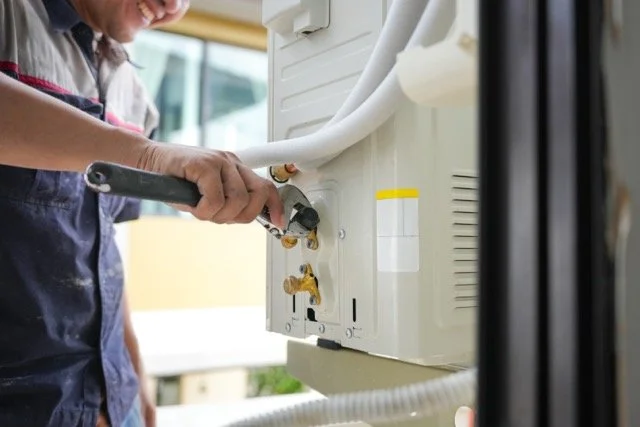
The reversing valve is what allows a heat pump to switch between heating and cooling modes. It's a mechanical valve inside the outdoor unit that redirects refrigerant flow. Over time, the valve can stick or fail to fully reverse, leaving the system stuck in one mode or producing weak heating/cooling.
We test the reversing valve by switching the thermostat between heating and cooling modes and listening for the valve to click. We also measure temperature differences across the valve to verify complete reversal. A failing reversing valve usually needs replacement — it's not a DIY repair.
Defrost Control and Sensor Testing
The defrost control board monitors outdoor temperature and coil temperature to determine when frost is building up and when to initiate a defrost cycle. If the control board fails or if the temperature sensors are faulty, the system won't defrost properly.
We test the defrost sensors with a thermometer and multimeter to verify accurate temperature readings. We also inspect the defrost control board for burnt components or corrosion. A malfunctioning defrost system is a common cause of ice-covered outdoor units in Michigan winters — something we see often in emergency furnace repair Metro Detroit calls, though the same principles apply to heat pumps.
Blower Motor and Indoor Coil Inspection
Inside the air handler, we inspect the blower motor, blower wheel, and indoor coil. The blower wheel can accumulate dust and dirt, which reduces airflow and makes the motor work harder. A dirty indoor coil (the evaporator coil in cooling mode, the condenser coil in heating mode) reduces heat transfer efficiency.
We clean the blower wheel and indoor coil if needed, check the blower motor bearings for wear, and verify proper airflow across the coil. Restricted airflow is one of the leading causes of compressor failure — the system can't move enough heat, so the compressor overheats trying to compensate.
Ductwork and Airflow Verification
Even a perfectly maintained heat pump can't perform well if the ductwork is leaking or undersized. We inspect accessible ductwork for leaks, disconnected sections, or crushed ducts. We also measure airflow at the registers to verify proper CFM (cubic feet per minute) delivery.
Leaky ductwork is especially common in older Michigan homes with ductwork running through unconditioned attics or crawl spaces. We've seen homes lose 30-40% of their heated or cooled air to duct leaks — that's like leaving a window open all winter. Sealing ducts is one of the most cost-effective energy upgrades you can make.
Signs Your Heat Pump Needs Immediate Service
Some issues can wait until your next scheduled maintenance visit. Others need immediate attention. Call a reliable HVAC contractor in Metro Detroit if you notice any of these warning signs:
Heat Pump Runs Constantly But House Won't Reach Setpoint
If your heat pump runs non-stop but the house stays 5-10°F below your thermostat setting, the system isn't producing enough heat. Common causes include low refrigerant, a failing compressor, a stuck reversing valve, or a dirty outdoor coil blocking airflow. This is especially common in extreme cold — if outdoor temperatures drop below your heat pump's effective range, it will struggle to keep up. But if it's 25°F outside and your heat pump can't maintain 68°F indoors, something is wrong.
Ice Buildup on the Outdoor Unit That Doesn't Melt
A thin layer of frost on the outdoor coil is normal in winter. The heat pump should periodically defrost that frost. But if you see heavy ice buildup — thick ice coating the entire coil, ice blocking the fan, or ice forming on the refrigerant lines — the defrost cycle isn't working. Continuing to run the system in this condition will damage the compressor and outdoor fan motor.
This is one of the most common emergency service calls we get in January and February across Macomb County. A homeowner will call saying their heat pump is "frozen solid" and not producing heat. The defrost control board or temperature sensor has failed, and the system needs immediate repair.
Unusual Sounds: Grinding, Squealing, or Hissing
Grinding or metal-on-metal sounds usually indicate a failing compressor or a failing outdoor fan motor bearing. Squealing can be a worn fan belt (on older systems) or a failing blower motor bearing. Hissing often means a refrigerant leak.
Don't wait on these sounds. A failing compressor that's allowed to run will eventually seize completely, often causing internal damage that contaminates the entire refrigerant system. What could have been a $300 fan motor replacement becomes a $3,500 compressor replacement plus a full system flush.
Backup Heat Strips Running Constantly
If you notice your electric bill suddenly spike by $200-300 in a single month, check your thermostat. If it's showing "AUX HEAT" or "EMERGENCY HEAT" constantly, your backup electric heat strips are running non-stop. That means the heat pump isn't producing enough heat, and the system is defaulting to the expensive backup heat.
Electric heat strips cost about 3-4 times more to operate than the heat pump itself. They're designed to supplement the heat pump on extremely cold days, not to run as the primary heat source. If they're running constantly, the heat pump has a problem — usually low refrigerant, a failing compressor, or a stuck reversing valve.
Water Leaking Inside the House
If you see water pooling around the indoor air handler or dripping from the ceiling near the unit, you have a condensate drain clog or a drain pan overflow. In cooling mode, the indoor coil produces condensation that should drain away through a PVC pipe. If that pipe is clogged, water backs up and overflows.
This needs immediate attention to prevent water damage to your home. We've seen clogged drains cause thousands of dollars in ceiling and drywall damage. It's usually a simple fix — clearing the drain line takes about 20 minutes — but it needs to be done promptly.
Cost Reality: Maintenance vs. Major Repairs
Homeowners often ask if maintenance is really worth the cost. Here's the math based on what we see in Southeast Michigan:
Professional maintenance visit: $120-180 per visit if you pay per visit. Our Next Care Plan costs $5/month ($60/year) and includes two visits per year — one in spring, one in fall. That's $30 per visit, plus you get priority scheduling, 10% off repairs, and no service call fees.
Common heat pump repairs we see from skipped maintenance:
- Compressor replacement: $2,000-3,500 including labor. This is the most expensive repair, and it's often caused by low refrigerant (from a leak that wasn't caught early), dirty coils (from skipped cleaning), or failed capacitors (from skipped electrical testing).
- Reversing valve replacement: $800-1,500. Usually fails from age and repeated cycling, but can be caught early during maintenance if it's starting to stick.
- Defrost control board replacement: $300-600. Fails from age and moisture exposure. Catching it early prevents the ice buildup that damages compressors and fan motors.
- Fan motor replacement (outdoor): $400-800. Often fails from running with a dirty coil, which restricts airflow and makes the motor work harder.
- Coil cleaning (heavy buildup): $200-400 if the coil is so clogged it requires chemical cleaning and multiple rinses. A $60 cleaning during routine maintenance prevents this.
Energy waste from poor maintenance: A heat pump running with a dirty coil, low refrigerant, or failing capacitors can lose 20-30% efficiency. On a typical Michigan home spending $1,200/year on heating and cooling, that's $240-360 per year in wasted energy. Over five years, that's $1,200-1,800 — enough to pay for a new heat pump compressor.

We had a customer in Rochester Hills who skipped maintenance for four years to "save money." When we finally came out for a service call, the outdoor coil was 80% blocked with cottonwood fluff, the refrigerant was 25% low, and one of the capacitors was bulging and ready to fail. The system was running at about 60% efficiency, and the compressor was overheating on every cycle. We cleaned the coil, fixed the refrigerant leak, recharged the system, and replaced the capacitor — total cost $950. If they'd been on a maintenance plan, we would have caught all of that early for about $120 total over those four years. They spent $950 to fix problems that cost $120 to prevent, plus they'd wasted hundreds of dollars in higher energy bills.
The ROI on heat pump maintenance is clear: $60-120/year in maintenance prevents $500-3,500 in repairs and saves $200-400/year in energy waste. It's not even a close call.
Ready to Get Started?
NEXT Heating & Cooling has been keeping Michigan homes comfortable for over 35 years. Get honest diagnostics and fair pricing from NATE-certified technicians who show up on time. Our Next Care Plan includes two seasonal maintenance visits per year, priority scheduling, and 10% off all repairs — all for $5/month.
Schedule Your ServiceFrequently Asked Questions
Twice per year — once in spring before cooling season, and once in fall before heating season. Heat pumps work year-round, so they need more frequent maintenance than a furnace or air conditioner that only runs one season. Spring maintenance focuses on cooling mode performance, refrigerant levels, and condensate drainage. Fall maintenance focuses on heating mode performance, defrost cycle operation, and backup heat testing. If you're on a maintenance plan like our Next Care Plan, both visits are included.
You can do light cleaning yourself with a garden hose — spray from the inside out to push debris out of the fins. But avoid pressure washers; the high pressure will bend the aluminum fins and reduce airflow. For heavy buildup (cottonwood seeds, road salt, thick dirt), hire a professional. We use specialized coil cleaning solutions and low-pressure rinses that won't damage the fins. We also straighten bent fins with a fin comb tool. A professional coil cleaning costs $60-120 and is worth it once a year.
A thin layer of frost on the outdoor coil is normal in winter — the heat pump periodically runs a defrost cycle to melt it. But if you see heavy ice buildup that doesn't melt, the defrost cycle isn't working. Common causes include a failed defrost control board, a faulty temperature sensor, or low refrigerant. Continuing to run the system with ice buildup will damage the compressor and fan motor. Turn the system off and call for service. This is one of the most common emergency calls we get in January and February across Macomb and Oakland counties.
With proper maintenance, 15-20 years. Without maintenance, 10-12 years. Michigan's climate is hard on heat pumps — cold winters stress the compressor, and humid summers promote coil corrosion. Regular maintenance extends lifespan by keeping refrigerant levels correct, coils clean, and electrical components in good condition. We've seen well-maintained Carrier and Lennox heat pumps in Troy and Sterling Heights last 18-20 years. We've also seen neglected units fail at 8-10 years from compressor failure or refrigerant leaks.
AUX (auxiliary) heat is backup electric heat strips that automatically turn on when the heat pump can't keep up — usually on very cold days below 25-30°F. This is normal operation. Emergency heat is a manual thermostat setting that turns off the heat pump completely and runs only the backup heat strips. You should only use emergency heat if the heat pump is broken and you're waiting for repair. Emergency heat costs 3-4 times more to operate than the heat pump, so don't leave it on longer than necessary.
No. Heat pumps are designed to operate in winter weather, and covering the unit restricts airflow, which can cause the system to overheat and shut down. It can also trap moisture inside, promoting rust and corrosion. The only exception is if you have a severe ice storm and ice is accumulating on the unit — you can temporarily cover the top to prevent ice buildup, but remove the cover once the storm passes. Never cover the sides of the unit, and never leave a cover on while the system is running.
Yes, especially in Michigan where heat pumps work year-round. Our Next Care Plan costs $5/month ($60/year) and includes two seasonal maintenance visits (spring and fall), priority scheduling, 10% off all repairs, and no service call fees. If you paid per visit, two maintenance visits would cost $240-360/year. The plan saves you $180-300/year, plus it prevents costly repairs by catching problems early. We've seen maintenance plans prevent $2,000+ compressor failures by catching low refrigerant or failing capacitors before they damage the compressor.