

AC Installation Cost in Mount Clemens, MI: 2026 Pricing
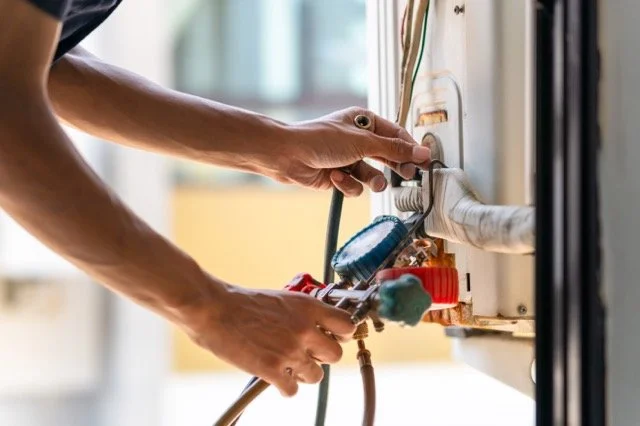
If you're a Mount Clemens homeowner researching AC installation costs, you've probably found everything from vague "$3,000 and up" estimates to wildly inflated numbers that make you question whether you're buying a cooling system or a luxury car. Here's the truth: a complete central air conditioning installation in Mount Clemens in 2026 typically runs between $4,500 and $13,000, depending on the equipment tier, your home's size, and whether your existing ductwork and electrical system can handle a modern AC unit.
At NEXT Heating & Cooling, we've been installing air conditioning systems across Macomb County for over 35 years. We know what Mount Clemens homes need — from the 1950s ranches near Crocker Boulevard to the newer builds in Macomb Township — and we know what they actually cost. This guide breaks down 2026 AC installation pricing the way a technician would explain it to a neighbor: honest, specific, and without the sales pitch.
What Actually Determines AC Installation Cost in Mount Clemens
AC installation pricing isn't arbitrary. Five main factors control what you'll pay, and understanding them helps you spot honest contractors from the ones padding estimates.
Home Size and Cooling Load Calculations
A proper AC installation starts with a Manual J load calculation — an engineering method that determines exactly how much cooling capacity your home needs based on square footage, insulation levels, window orientation, and ceiling height. In Mount Clemens, we see everything from 1,200-square-foot bungalows near Lake St. Clair that need 2-ton systems to 2,800-square-foot colonials in Clinton Township requiring 4-ton units.
Here's the reality: most Mount Clemens homes between 1,400 and 2,000 square feet need a 2.5- to 3-ton AC system. A contractor who quotes you without measuring your home or asking about insulation is guessing — and you'll either end up with an oversized system that short-cycles or an undersized one that runs constantly without keeping up.
Equipment Tier: Single-Stage vs. Two-Stage vs. Variable-Speed
Air conditioners come in three performance tiers, and the price gap between them is significant:
- Single-stage systems run at full blast whenever they're on — 100% capacity or off. They're the budget option, typically 14-16 SEER2 efficiency. Brands like Goodman, York, and entry-level Rheem fall here.
- Two-stage systems can run at high capacity (100%) on hot days or low capacity (65-70%) on milder days, improving comfort and efficiency. Most Carrier, Lennox, and Trane mid-tier models are two-stage, rated 16-18 SEER2.
- Variable-speed (inverter) systems modulate from 40% to 100% capacity in tiny increments, delivering the most precise temperature control and the highest efficiency — often 18-22 SEER2. Lennox, Carrier Infinity, and Trane XV series are the premium examples.
The equipment tier you choose is the single biggest cost variable. A basic 3-ton Goodman single-stage condenser and air handler might cost $3,200 wholesale, while a 3-ton Carrier Infinity variable-speed system runs closer to $6,800 before installation labor.
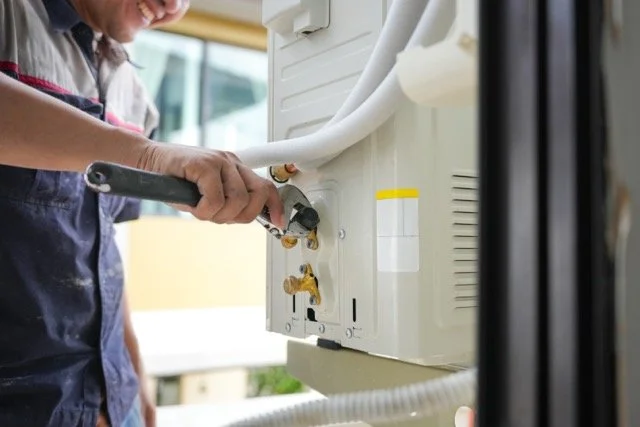
SEER2 Ratings and Efficiency Requirements
As of January 2023, federal efficiency standards require new air conditioners in the northern U.S. (including Michigan) to meet a minimum 13.4 SEER2 rating. Most contractors now install 14-16 SEER2 as the baseline. Higher SEER2 ratings mean better efficiency and lower operating costs, but they also increase upfront equipment prices.
For Mount Clemens homeowners, the sweet spot is usually 16-18 SEER2. You'll recoup the extra cost through energy savings over 8-12 years, and the improved humidity control makes a noticeable difference during those sticky July weeks when Lake St. Clair humidity settles over Macomb County.
Ductwork Condition in Older Michigan Homes
If you're replacing an AC system in a home built before 1990, there's a decent chance your ductwork needs attention. We routinely find undersized return ducts, disconnected flex duct in attics, and basement ductwork with gaps you could fit your hand through. Leaky ducts waste 20-30% of your cooling capacity — air you paid to cool leaking into your attic or crawlspace instead of your living room.
A full duct replacement can add $2,500-$5,000 to your project, but even partial repairs or sealing (using mastic, not duct tape) might add $800-$1,500. Any reliable HVAC contractor in Metro Detroit will inspect your ducts before quoting and tell you what needs fixing.
Electrical Upgrades for Modern AC Systems
Modern air conditioners draw significant power — a 3-ton unit typically needs a dedicated 30-40 amp circuit. If your home still has a 100-amp electrical panel (common in pre-1980 Mount Clemens homes), you might need a panel upgrade to safely run a new AC system, especially if you're also running an electric range, dryer, and water heater.
Electrical work isn't part of HVAC pricing, but it's a cost you need to budget for. A panel upgrade runs $1,500-$3,000 depending on your home's wiring. Your HVAC contractor should flag this during the estimate so you're not surprised later.
2026 AC Installation Price Ranges for Mount Clemens Homes
Here's what you'll actually pay for a complete AC installation in Mount Clemens in 2026, broken down by equipment tier. These prices include the outdoor condenser, indoor air handler or evaporator coil, refrigerant line set, condensate drain, thermostat (if needed), labor, startup, and one year of parts warranty.
Budget Tier: Single-Stage Systems ($4,500-$6,500)
Single-stage systems from Goodman, York, Amana, or entry-level Rheem. Typically 14-16 SEER2. Best for homeowners on a tight budget who need reliable cooling without premium features. Installation includes a basic programmable thermostat.
Example system: Goodman GSX14 3-ton condenser with ARUF air handler — $4,800 installed for a 1,600-square-foot ranch with good existing ductwork.
Mid-Tier: Two-Stage Systems ($6,500-$9,000)
Two-stage systems from Carrier, Lennox, Trane, Bryant, or Rheem. Typically 16-18 SEER2. Better humidity control, quieter operation, and improved efficiency compared to single-stage. Most Mount Clemens homeowners choose this tier — it's the best balance of cost and performance.
Example system: Carrier Comfort 16 SEER2 two-stage 3-ton system with matching variable-speed air handler — $7,400 installed for a 1,800-square-foot colonial.
This is the tier we install most often through our heating and cooling services in Metro Detroit. It delivers noticeable comfort improvements without breaking into luxury pricing.
Premium Tier: Variable-Speed Systems ($9,000-$13,000)
Variable-speed (inverter-driven) systems from Carrier Infinity, Lennox Signature, Trane XV, or Rheem Prestige. Typically 18-22 SEER2. These systems modulate capacity continuously, providing the most precise temperature and humidity control. They're also the quietest — you'll barely hear them running.
Example system: Lennox XC20 variable-speed 3-ton system with S40 air handler and iComfort S30 smart thermostat — $10,800 installed for a 2,000-square-foot home.
Premium systems make sense if you're staying in your home long-term, have family members sensitive to temperature swings, or want the lowest possible operating costs. The efficiency gains are real — we've seen summer electric bills drop 25-35% compared to old single-stage systems.
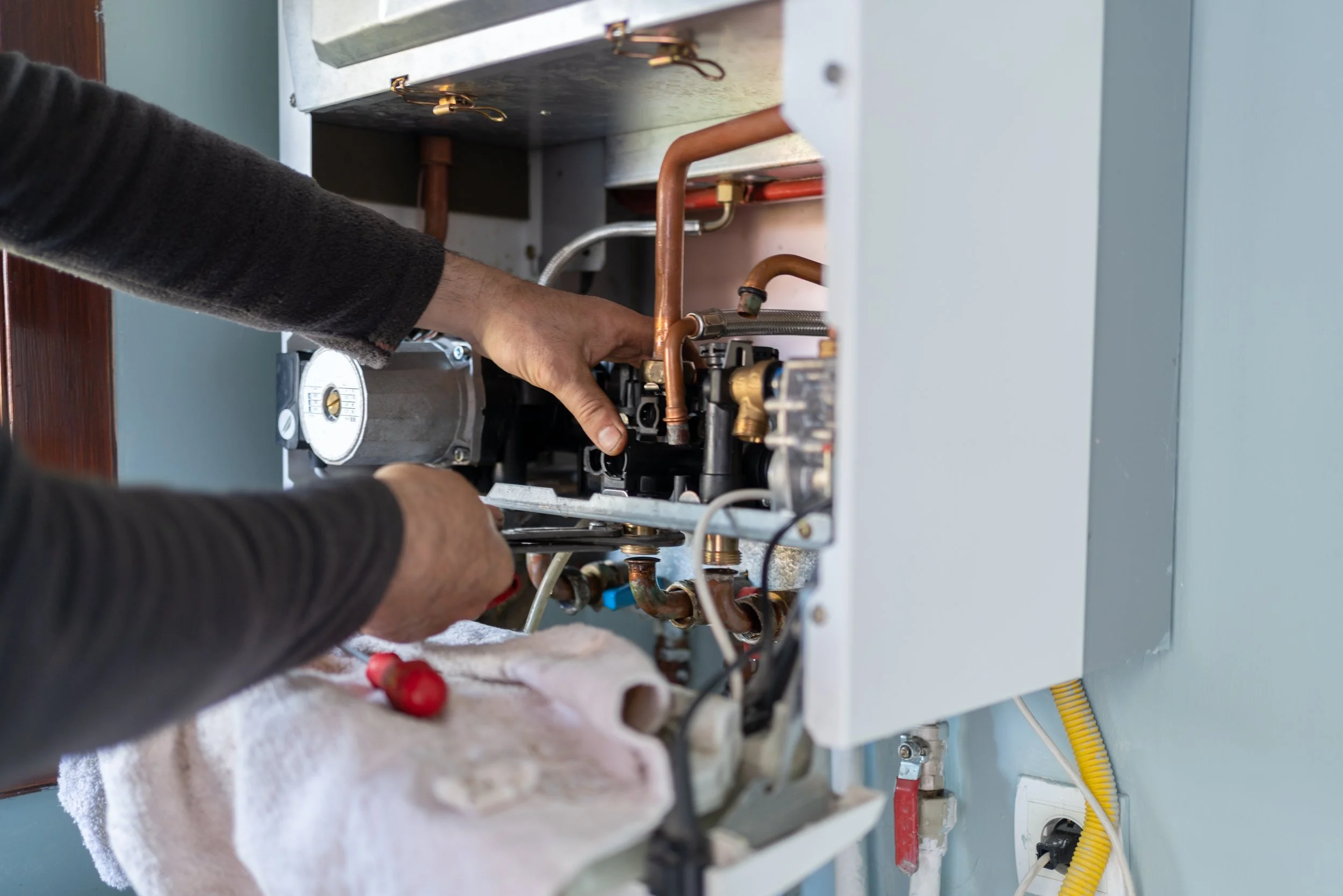
Hidden Costs Most Mount Clemens Homeowners Don't Expect
Even with a detailed estimate, certain costs catch homeowners off guard. Here's what to ask about before signing a contract.
Ductwork Repairs or Modifications
If your existing ductwork is undersized, leaking, or poorly designed, it needs fixing. A new high-efficiency AC can't perform properly if 30% of the cooled air leaks into your attic. Duct sealing with mastic costs $800-$1,500. Full duct replacement runs $2,500-$5,000 depending on your home's layout. If you're dealing with uneven cooling or hot and cold spots in your house, your ductwork is probably part of the problem.
Electrical Panel Upgrades
As mentioned earlier, older homes with 100-amp panels might need an upgrade to 200 amps. This isn't part of HVAC pricing — you'll need a licensed electrician. Budget $1,500-$3,000. Your HVAC contractor should identify this during the estimate.
Permit Fees in Macomb County
AC installations in Mount Clemens require a mechanical permit, typically $75-$150 depending on the municipality. Reputable contractors pull permits and include the cost in their estimate. If a contractor offers to skip the permit to "save you money," walk away — unpermitted work voids manufacturer warranties and creates headaches if you sell your home.
Refrigerant Line Set Replacement
If your old AC used R-22 refrigerant (common in systems installed before 2010), you can't reuse the old refrigerant lines. New systems use R-410A or R-32, which require clean line sets. Replacing refrigerant lines adds $400-$800 depending on the distance between your indoor and outdoor units.
Thermostat Upgrades
Basic programmable thermostats are usually included in installation pricing, but if you want a smart thermostat like a Nest, Ecobee, or Honeywell T10 Pro, expect to add $150-$350. Variable-speed systems often require proprietary communicating thermostats (like Carrier Infinity or Lennox iComfort), which are pricier but necessary for the system to function properly. If you're weighing your options, our guide on smart thermostats vs. programmable thermostats for Michigan homes breaks down what makes sense for different situations.
How Michigan's Climate Affects Your AC Investment
Mount Clemens sits in Southeast Michigan's humid continental climate zone. Summers are warm and humid, but our cooling season is short — realistically mid-May through mid-September. That's 16-18 weeks of AC use, compared to 24-26 weeks in southern states. This affects which systems make financial sense.
Humidity Control Matters More Than You Think
Lake St. Clair and Lake Erie create humidity levels that make 82°F feel like 90°F. Single-stage air conditioners struggle with humidity because they cool so aggressively that they reach your thermostat setpoint quickly and shut off — before they've had time to pull moisture out of the air. You end up with a 72°F house that feels clammy.
Two-stage and variable-speed systems run longer at lower capacities, giving them more time to dehumidify. If you've ever walked into a friend's house and thought "it feels cooler in here even though the thermostat says the same temperature as mine," it's probably because their AC is better at managing humidity.
Why Proper Sizing Matters for Michigan's Short Cooling Season
Because our cooling season is short, some homeowners think oversizing an AC is smart — "it'll cool faster on those really hot days." That's backwards. An oversized AC short-cycles: it blasts cold air, satisfies the thermostat in 5-8 minutes, shuts off, then repeats. This wastes energy, wears out components faster, and leaves humidity high.
A properly sized system runs longer cycles (15-20 minutes), pulls out humidity, and maintains even temperatures. Manual J load calculations prevent oversizing. Any contractor who sizes your AC based solely on square footage ("you need one ton per 500 square feet") is using a rule of thumb that hasn't been accurate since the 1970s.
Financing Options for AC Installation in 2026
Most Mount Clemens homeowners don't have $7,000-$10,000 sitting in a checking account waiting for their AC to die. Here's how to make the investment manageable.
Manufacturer Rebates and Promotions
Carrier, Lennox, Trane, and Rheem frequently offer spring and fall rebates — typically $200-$500 off qualifying systems. These change seasonally, so ask your contractor what's available when you're getting quotes. The best rebates usually run March-May (before the summer rush) and September-November.
Utility Company Incentives
DTE Energy occasionally offers rebates for high-efficiency HVAC upgrades, though these programs come and go. Check their website or ask your contractor to verify current offerings. Typical rebates are $50-$150 for systems above 16 SEER2.
Payment Plans and Financing
Most HVAC contractors partner with financing companies offering 12-60 month payment plans. Interest rates vary based on credit score, but promotional periods with 0% APR for 12-18 months are common. Read the terms carefully — deferred interest plans charge you retroactive interest if you don't pay off the balance before the promotional period ends.
For homeowners considering AC financing options, our detailed guide covers what to watch for and how to compare offers.
The Next Care Plan as Cost Prevention
The best financing strategy is avoiding emergency replacements altogether. Our Next Care Plan costs $5/month ($60/year) and includes two annual tune-ups — one for your furnace in fall, one for your AC in spring. Regular maintenance extends equipment life by 3-5 years and catches small problems before they become $1,500 compressor replacements.
Members also get priority scheduling, 10% off repairs, and no service call fees. If your AC is older than 8-10 years, preventive maintenance is the cheapest insurance you can buy.
Real-world example: A Sterling Heights homeowner with a 12-year-old Carrier system called us in June when their AC stopped cooling. The compressor had failed — a $2,800 repair on a system already past its expected lifespan. If they'd been on the Next Care Plan, we would have caught the failing capacitor during the spring tune-up and replaced it for $180, avoiding the compressor failure entirely.
Signs Your AC Needs Replacement (Not Just Repair)
Not every AC problem requires a full replacement. But certain situations make replacement the smarter financial move. Here's when to replace instead of repair.
Age Over 12-15 Years
Air conditioners last 12-15 years in Michigan with proper maintenance. After that, efficiency drops, refrigerant leaks become common, and compressors fail. If your system is 13+ years old and needs a repair over $800, replacement usually makes more sense. You're not just fixing this problem — you're buying a few more years before the next breakdown.
Frequent Breakdowns
If you've called for AC repairs three times in the last two years, your system is telling you something. Multiple repairs indicate worn-out components across the board. At some point, you're just throwing money at a dying system. For homeowners in this situation, our post on AC repair vs. replacement after power surge damage walks through the decision-making process.
Rising Energy Bills
If your summer electric bills have climbed 20-30% over the last few years and nothing else in your home has changed, your AC is losing efficiency. Dirty coils, refrigerant leaks, and worn compressors all force your system to work harder and use more electricity. A new 16-18 SEER2 system can cut cooling costs by 30-40% compared to a 12-year-old 10 SEER unit.
R-22 Refrigerant Systems
If your AC uses R-22 refrigerant (also called Freon), it was manufactured before 2010. R-22 production ended in 2020, and remaining supplies are expensive — $150-$200 per pound. If your R-22 system develops a refrigerant leak, recharging it might cost $800-$1,500. At that point, you're better off replacing the entire system with a modern R-410A or R-32 unit.
When you're facing the emergency AC repair decision, age and refrigerant type are the two biggest factors to consider.
Get Honest AC Installation Pricing for Your Mount Clemens Home
NEXT Heating & Cooling has been serving Macomb County for over 35 years. Our NATE-certified technicians provide honest diagnostics, fair pricing, and no-pressure recommendations. We'll measure your home, inspect your ductwork, and give you a detailed estimate with options that fit your budget.
Schedule Your Free EstimateFrequently Asked Questions
Most residential AC installations take 6-10 hours for a two-person crew. If you're replacing an existing system with similar ductwork and no electrical upgrades, expect a full day. If we're modifying ductwork, upgrading electrical, or installing a more complex variable-speed system, it might take 1.5-2 days. We always complete the work in one visit unless we uncover unexpected issues (like structural problems with your duct supports or electrical panel issues that require a separate electrician).
Yes. AC installations in Mount Clemens and throughout Macomb County require a mechanical permit. The permit ensures the work meets Michigan Mechanical Code requirements and protects your manufacturer warranty. Permit fees are typically $75-$150 depending on your municipality. Reputable contractors pull permits and include the cost in their estimate. If a contractor offers to skip the permit, that's a red flag — unpermitted work voids warranties and creates problems if you sell your home.
For most Mount Clemens homeowners, 16-18 SEER2 is the sweet spot. It's efficient enough to deliver noticeable energy savings compared to older systems, but not so expensive that you'll never recoup the cost. If you're planning to stay in your home 10+ years and want the best comfort and lowest operating costs, 18-20 SEER2 variable-speed systems are worth considering. Below 16 SEER2, you're sacrificing too much efficiency for minimal upfront savings. Above 20 SEER2, the cost premium rarely pays off in Michigan's short cooling season.
No — that's one of the most common HVAC myths, and it actually makes comfort worse. An oversized AC cools your home so quickly that it shuts off before it has time to remove humidity. You end up with a cold, clammy house that never feels comfortable. Oversized systems also short-cycle (run in 5-8 minute bursts), which wastes energy and wears out components faster. Proper sizing based on a Manual J load calculation is the only way to ensure your AC runs efficiently and keeps your home comfortable.
We install and service all major brands, but our most common recommendations are Carrier, Lennox, Trane, Rheem, and Goodman. For budget-conscious homeowners, Goodman and Rheem offer solid reliability at lower prices. For mid-tier performance, Carrier and Trane two-stage systems deliver excellent comfort and efficiency. For premium comfort and the longest warranties, Lennox and Carrier Infinity variable-speed systems are hard to beat. The "best" brand depends on your budget, comfort priorities, and how long you plan to stay in your home. We'll walk you through the options during your estimate — no pressure, just honest recommendations.
Spring (March-May) and fall (September-November) are the best times for AC installation pricing. Manufacturers often run rebate promotions during these off-peak periods, and contractors have more scheduling flexibility, so you're not waiting three weeks for an installation slot. Summer (June-August) is peak season — demand is high, schedules are tight, and you're more likely to pay full price. If your AC is 10+ years old, don't wait until it dies in July. Schedule your replacement in spring, take advantage of rebates, and avoid the summer rush.
Most manufacturers offer a 10-year parts warranty on residential AC systems when installed by a licensed contractor and registered within 60-90 days of installation. Some premium systems (like Lennox Signature or Carrier Infinity) come with extended warranties up to 12 years. Labor warranties vary by contractor — at NEXT Heating & Cooling, we provide a 1-year labor warranty on all installations. Extended labor warranties (5-10 years) are sometimes available for an additional cost. Always ask what's covered and what's not. Warranty fine print matters — some warranties are prorated, some exclude certain components, and nearly all require proof of annual maintenance.