

AC Power Surge Damage: Storm-Season Repair vs Replace
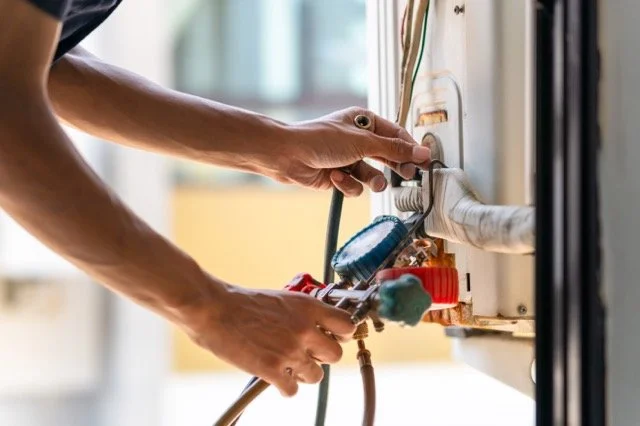
The power flickers during a thunderstorm rolling through Sterling Heights. Maybe it goes out completely for a few seconds, then comes back on. You think nothing of it — until you notice your air conditioner isn't running anymore, or it's making a sound it never made before.
Power surges from Michigan's summer storms destroy more air conditioning systems than most homeowners realize. We see it every storm season across Macomb County: lightning strikes a transformer down the street, the grid voltage spikes for a fraction of a second, and suddenly a $6,000 Carrier compressor is fried.
The question we hear most after storm damage: should I repair this, or is it time to replace the whole system? The answer depends on what got damaged, how old your unit is, and whether you were already on borrowed time. Our heating and cooling services in Metro Detroit include emergency diagnostics after storm events, and we'll walk you through exactly what we look for.
How Power Surges Damage Air Conditioners
Air conditioners are particularly vulnerable to power surges because they contain sensitive electronic control boards, capacitors, and compressor windings that operate within tight voltage tolerances. When voltage spikes — even briefly — it can exceed what these components are designed to handle.
Here's what happens inside your AC unit during a surge:
Compressor damage: The compressor is the heart of your AC system and the most expensive component. It contains motor windings that can burn out when hit with excess voltage. A burned compressor winding creates a short circuit, and the compressor becomes a paperweight. On systems like Lennox, Trane, or Rheem models, compressor replacement often costs $1,800 to $3,500 in parts and labor — sometimes more than half the cost of a new outdoor unit.
Control board failures: Modern air conditioners use circuit boards to manage compressor staging, fan speeds, defrost cycles, and communication with your thermostat. These boards contain microprocessors and integrated circuits that fry instantly when voltage exceeds their ratings. A control board replacement typically runs $400 to $900 depending on the model.

Capacitor burnout: Start capacitors and run capacitors provide the electrical boost needed to start and run your compressor and fan motors. Surges can blow capacitors, causing the compressor to hum but not start, or preventing the outdoor fan from spinning. Capacitors are inexpensive to replace ($150 to $300), but if they fail catastrophically, they can damage the compressor contactor or even the compressor itself.
Contactor welding: The contactor is an electrical relay that switches power to the compressor. A surge can weld the contacts together, meaning your AC won't turn off even when the thermostat calls for it to stop. Or it can burn the contacts so badly that they won't close, preventing the compressor from running at all.
We've seen all of these failures in Clinton Township, Warren, and throughout Macomb County after severe storm events. Sometimes one component fails. Sometimes multiple components fail simultaneously, which is when the repair-versus-replace math gets complicated.
Signs Your AC Took a Hit From a Power Surge
Power surge damage doesn't always announce itself immediately. Sometimes the failure is instant — your AC simply won't turn on after the storm. Other times, damage is progressive: a weakened component limps along for days or weeks before it finally gives up.
Here are the signs we look for when diagnosing potential surge damage:
Immediate symptoms (within hours of the storm):
- Air conditioner won't turn on at all — no outdoor unit noise, no fan, nothing
- Outdoor fan runs but compressor doesn't start (you hear a hum or buzzing)
- Unit runs for a few seconds then shuts off on thermal overload
- Burning smell from the outdoor unit
- Tripped circuit breaker that won't reset or trips immediately when reset
- Thermostat display is blank or showing error codes
Delayed symptoms (days to weeks after the storm):
- AC runs but doesn't cool as effectively as before
- Compressor cycles on and off more frequently than normal
- Unusual noises — grinding, rattling, or high-pitched squealing
- Inconsistent cooling — works fine one day, struggles the next
- Higher electric bills without increased usage
If you're experiencing any of these issues after a storm, don't wait. What starts as minor damage can cascade into complete system failure. Similar to what we discuss in our guide on why your AC trips the breaker, electrical problems rarely fix themselves — they only get worse.
Diagnostic Reality: When we arrive for a post-storm service call, we use a multimeter to check voltage at the disconnect, test capacitor microfarads, measure compressor winding resistance, and check for shorts to ground. We're looking for evidence of electrical failure, not just guessing. A NATE-certified technician from our team can usually diagnose surge damage within 30 minutes.
Repair vs Replace: The Real Cost Analysis
This is where the conversation gets real. You've got a damaged air conditioner. Do you fix what's broken, or do you replace the whole system?
The answer depends on three factors: what failed, how old your system is, and what your system's efficiency rating is.
When Repair Makes Sense
Repair is usually the right call if:
- Your system is less than 7 years old: You're still within the reasonable service life of modern equipment. If only one component failed (a control board or capacitor), repair costs will be a fraction of replacement costs.
- Only minor components failed: A $600 control board replacement or $250 capacitor swap is manageable. You're back in business for less than 10% of a new system's cost.
- The compressor is still good: If the compressor survived and only ancillary components failed, repair is almost always the smart financial move.
- You're planning to sell the house soon: If you're listing the house in the next year or two, a repair gets you through. A new system won't significantly increase your sale price, but a non-functional AC will kill deals.
We've repaired hundreds of surge-damaged systems across Troy, Rochester Hills, and Shelby Township where this math made perfect sense.
When Replacement Makes More Sense
Replacement becomes the smarter choice when:
- The compressor failed and your system is over 10 years old: Compressor replacement on an aging system is like putting a new engine in a car with 200,000 miles. You're spending $2,500+ on a unit that's already past its prime, with other components likely to fail soon.
- Multiple components failed: If the surge took out the compressor, control board, and contactor, you're looking at $3,500+ in repairs on equipment that may have other weakened components. At that point, you're approaching 60-70% of replacement cost.
- Your system is low efficiency (under 14 SEER): Older units waste energy. If you're facing a $2,000+ repair on a 10 SEER system from 2010, replacing it with a 16 SEER or 18 SEER Carrier or Lennox model will cut your cooling costs by 25-40% and pay for itself over time.
- You've had multiple repairs in recent years: If this is the third or fourth expensive repair, you're throwing good money after bad. Time to move on.
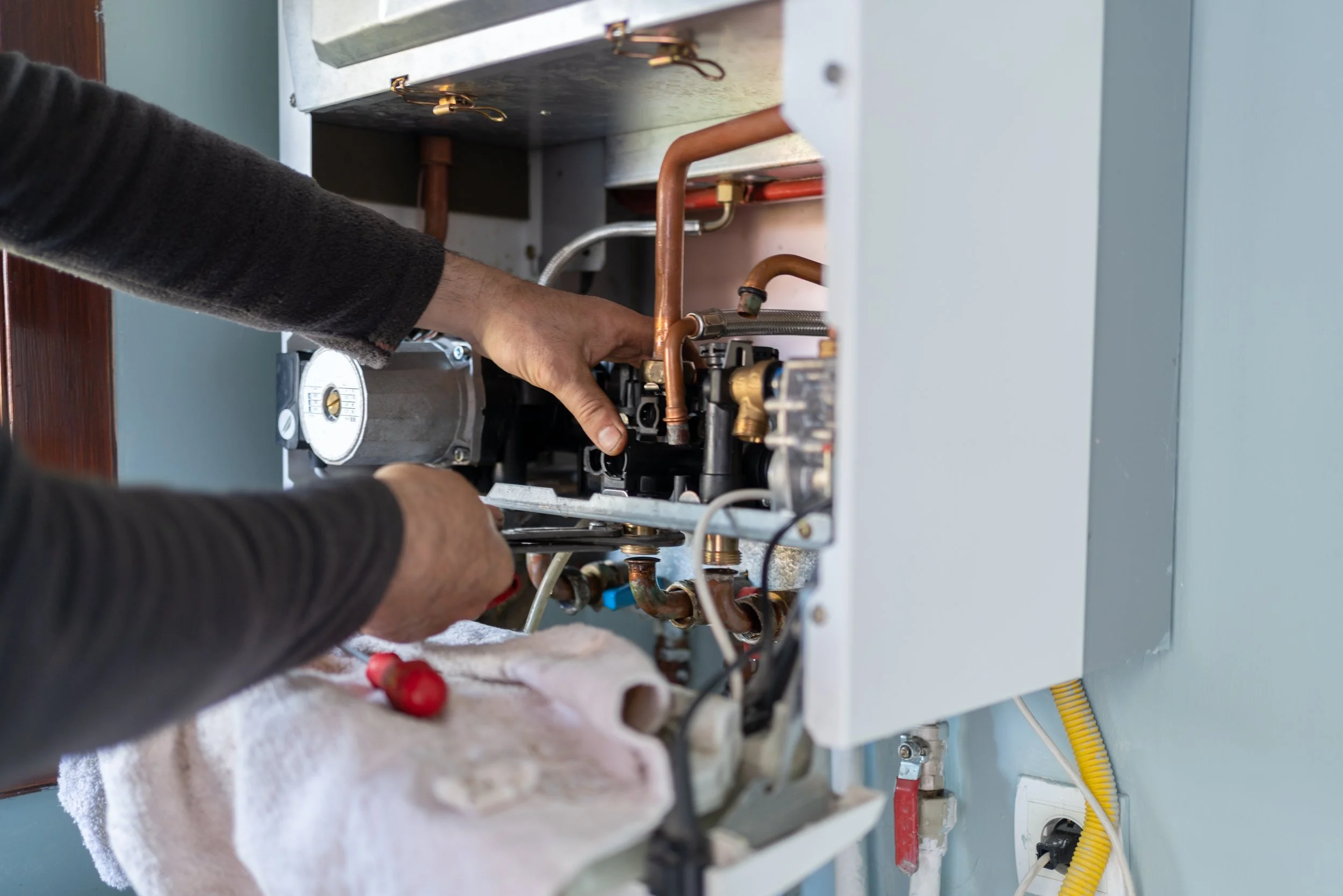
We use what's called the 50% rule, which we detail in our article on AC repair vs replace decision-making. If the repair cost exceeds 50% of replacement cost and your system is past its midpoint lifespan, replacement is usually the better long-term investment.
Real Numbers From Macomb County
Here's what we're seeing in 2026 for storm-damaged systems:
- Control board replacement: $400-$900 installed
- Capacitor replacement: $150-$300 installed
- Contactor replacement: $200-$350 installed
- Compressor replacement: $1,800-$3,500 installed (varies by tonnage and brand)
- Complete outdoor unit replacement: $2,800-$5,500 depending on size and efficiency
- Full system replacement (indoor and outdoor): $4,500-$9,000 depending on size, efficiency, and complexity
These are real-world numbers from our service calls across Southeast Michigan. Your exact costs depend on your system size, refrigerant type (R-410A vs newer R-32), and whether any ductwork or electrical modifications are needed.
What Protection Actually Works
The best surge damage is the surge damage that never happens. Here's what actually protects your air conditioner — and what's mostly marketing.
Whole-Home Surge Protection
A whole-home surge protector installs at your main electrical panel and protects every 240-volt appliance in your house — AC, furnace, electric range, dryer, everything. It's a Type 1 or Type 2 surge protective device (SPD) that diverts excess voltage to ground before it reaches your equipment.
Cost: $400-$800 installed by a licensed electrician. This is the single best investment you can make if you live in an area with frequent storms or unreliable power. We recommend them to every homeowner in Macomb County.
HVAC-Specific Surge Protection
Some manufacturers (Carrier, Lennox, Trane) offer HVAC-specific surge modules that install at the outdoor disconnect or inside the air handler. These provide a second layer of protection specifically for your heating and cooling equipment.
Cost: $150-$350 installed. We often add these during new installations or when replacing failed equipment.
What Doesn't Work
Plug-in surge protectors for your thermostat? Mostly useless. The surge comes through the 240-volt power lines feeding your outdoor unit, not through the low-voltage thermostat wiring. Don't waste your money.
Prevention Through Maintenance: Regular maintenance doesn't prevent surge damage, but it does ensure your system is operating at peak efficiency when a surge hits. Weak capacitors, dirty contactors, and corroded connections make surge damage more likely. Our $5/month HVAC maintenance plan includes spring and fall inspections that catch these issues before they become expensive problems.
Insurance and Warranty Coverage
Homeowners insurance typically covers sudden and accidental damage from power surges caused by lightning strikes or utility company issues. But coverage varies significantly by policy, and the claims process can be frustrating.
What Homeowners Insurance Usually Covers
Most policies cover:
- Direct lightning strikes to your home or AC unit
- Power surges from lightning strikes to nearby transformers or power lines
- Utility company power surges during grid restoration after outages
What they often don't cover:
- Gradual deterioration or wear-and-tear failures
- Damage from power surges caused by your own electrical issues
- Equipment over a certain age (some policies exclude systems over 15 years old)
Your deductible applies. If your deductible is $1,000 and your repair is $1,200, you're only getting $200 from insurance. Often not worth filing a claim.
Manufacturer Warranties
Here's the hard truth: manufacturer warranties almost never cover power surge damage. Warranties cover defects in materials and workmanship, not damage from external electrical events.
Standard manufacturer coverage:
- Parts: 5-10 years depending on brand and component
- Compressor: Often 10 years on residential equipment
- Labor: Typically 1 year, sometimes extended through dealer promotions
But all of this is void if the failure was caused by a power surge. The warranty claim will be denied.
Documentation Matters
If you're filing an insurance claim, document everything:
- Date and time of the storm
- Photos of your AC unit (especially any visible damage)
- Service report from your HVAC contractor diagnosing surge damage
- Repair estimate or replacement quote
- Records of power outages in your area (DTE Energy or Consumers Energy outage maps)
We provide detailed diagnostic reports for insurance claims as part of our service. When you call a reliable HVAC contractor in Metro Detroit like NEXT Heating & Cooling, we document findings in a way that supports your claim process.
When to Call a Licensed HVAC Tech
Don't wait to see if the problem fixes itself. It won't. And delaying diagnosis can turn a $300 capacitor replacement into a $2,500 compressor failure if the system continues trying to run with damaged components.
Call immediately if:
- Your AC won't turn on after a storm or power outage
- You smell burning or see smoke from the outdoor unit
- The circuit breaker keeps tripping
- You hear unusual noises (grinding, buzzing, squealing)
- The system runs but produces no cool air
During Michigan's summer storm season, we run emergency service calls across Macomb, Oakland, and St. Clair counties. We've seen what happens when homeowners wait — a $400 repair becomes a $4,000 replacement because secondary damage occurred.
Our NATE-certified technicians carry the diagnostic tools and component inventory to handle most surge damage repairs on the first visit. We're not here to upsell you on a new system if a repair makes sense. We're here to give you the honest assessment and let you make the decision. That's the old-school contractor culture we're bringing back to Southeast Michigan.

If you're facing this decision right now — repair or replace after storm damage — we can help you run the numbers and make the choice that's right for your situation and your budget. No pressure. No commission-based sales. Just honest diagnostics and fair pricing.
Storm Damage? We'll Diagnose It Fast.
NEXT Heating & Cooling provides emergency AC diagnostics across Macomb County and Southeast Michigan. NATE-certified technicians, honest assessments, and same-day service available. We'll tell you exactly what failed and what your options are.
Schedule Emergency ServiceFrequently Asked Questions
Yes. As long as your AC is connected to power (the disconnect switch is on and the circuit breaker is on), a surge can damage internal components even if the system wasn't actively running. The surge travels through the electrical lines and can fry control boards, capacitors, and compressor windings regardless of whether the unit was in use at the time.
A licensed HVAC technician can diagnose this by testing components with a multimeter. Surge damage typically shows up as burned control board traces, blown capacitors with bulging tops, or compressor windings that show resistance to ground (indicating insulation breakdown). Normal wear failures look different — gradual capacitor degradation, dirty contactors, or mechanical compressor issues. The timing matters too: if your AC failed within hours or days of a storm, surge damage is likely.
Most homeowners insurance policies cover sudden damage from power surges caused by lightning or utility issues, but your deductible applies. If your repair costs $1,500 and your deductible is $1,000, you'll only receive $500. Insurance typically won't cover gradual failures or systems over a certain age. Review your specific policy and document everything — date of storm, diagnostic report from your HVAC contractor, and repair estimates.
Probably. A compressor replacement on a 12-year-old system typically costs $2,000-$3,500. At that age, you're past the midpoint of the system's expected 15-18 year lifespan, and other components (fan motors, coils, control boards) are also aging. Spending that much on an old system rarely makes financial sense. A new high-efficiency system will cost $4,500-$7,000 but comes with warranty coverage, better efficiency, and another 15+ years of service life. We typically recommend replacement when repair costs exceed 50% of replacement cost on systems over 10 years old.
Yes, when properly installed. A whole-home surge protector at your main electrical panel diverts excess voltage to ground before it reaches your air conditioner and other 240-volt appliances. They're rated to handle surges up to a certain joule level — typically 40,000 to 80,000 joules for quality units. They won't stop a direct lightning strike to your house, but they'll protect against the far more common scenario: surges from lightning hitting nearby transformers or power lines. Cost is $400-$800 installed, which is cheap insurance compared to a $3,000 compressor replacement.
You can try resetting it once, but if it trips again immediately, stop. A breaker that won't stay reset indicates a short circuit or ground fault — often from surge-damaged components. Repeatedly resetting a tripped breaker can cause additional damage and creates a fire hazard. If the breaker trips more than once, turn it off and call a licensed HVAC technician. We see this pattern frequently after storms, and it usually indicates compressor winding failure or a shorted control board.
It depends on what failed. Simple repairs like capacitor or contactor replacement take 30-60 minutes. Control board replacement takes 1-2 hours. Compressor replacement is a full-day job — 6-8 hours including refrigerant recovery, compressor swap, vacuum, and recharge. Parts availability matters too. We stock common capacitors and contactors on our trucks, but control boards and compressors may need to be ordered, which can add 1-3 days during peak storm season when demand is high across Southeast Michigan.