

AC Repair Service in Beverly Hills, MI: What to Expect
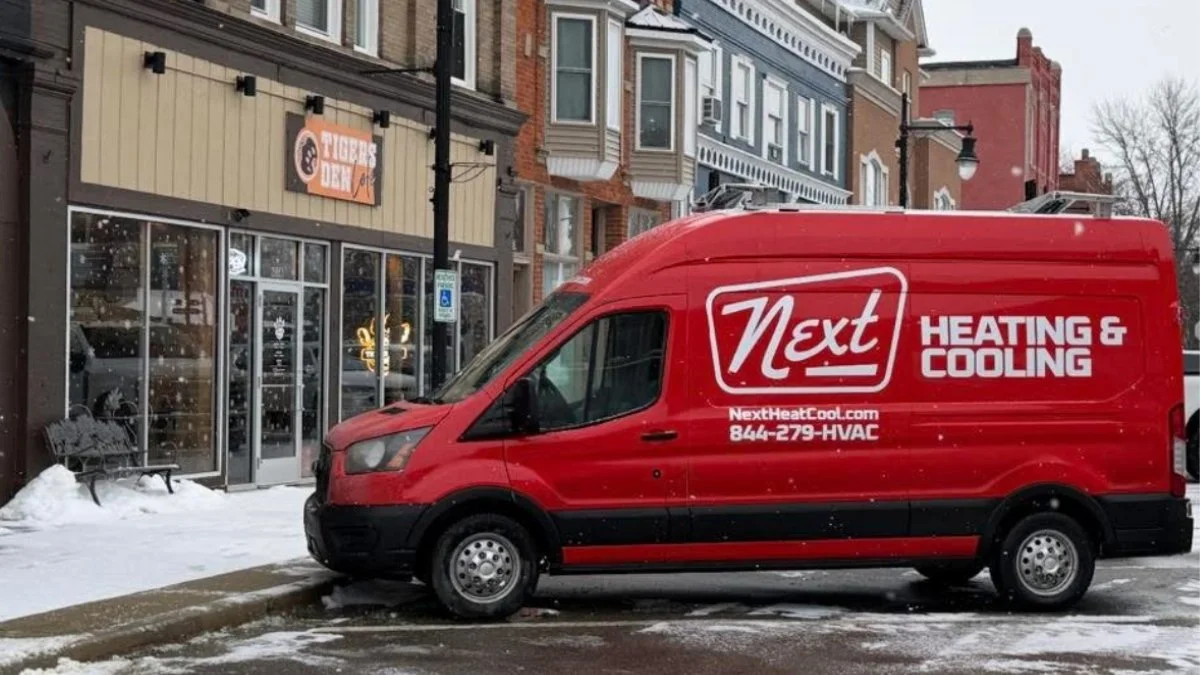
Your air conditioner quit working on the hottest day of the year. You call an HVAC company, and now you're wondering: What actually happens when the technician shows up? How long will this take? What's it going to cost? And how do you know if you're getting honest answers or being sold equipment you don't need?
If you're a Beverly Hills homeowner dealing with AC problems, you're not alone. We've been running heating and cooling services in Metro Detroit for over 35 years, and we see the same questions every summer. This guide walks you through exactly what to expect during an AC repair service call — from the moment the truck pulls up to the final invoice.
No sales pitch. No technical jargon you need a mechanical engineering degree to understand. Just the straight story from techs who've diagnosed thousands of AC problems in Southeast Michigan homes.
What Happens During an AC Repair Service Call
When a NATE-certified HVAC technician arrives at your Beverly Hills home, the first 20-30 minutes are dedicated to diagnostics. This isn't guesswork — it's a systematic process that identifies the exact problem before any repair work begins.
Here's what actually happens:
Initial System Assessment
The technician starts by asking you specific questions: When did the problem start? What symptoms are you noticing? Any unusual sounds, smells, or error codes on your thermostat? This context helps narrow down potential causes before touching any equipment.
Next comes a visual inspection of both the outdoor condenser unit and indoor air handler or furnace. We're looking for obvious issues: tripped breakers, blown fuses, disconnected wiring, frozen coils, refrigerant leaks, or signs of physical damage from storms or landscaping equipment.

Electrical and Mechanical Testing
Once the visual inspection is complete, the real diagnostic work begins. A good technician will use a multimeter to test electrical components — capacitors, contactors, compressor windings, and fan motors. These tests reveal whether components are operating within manufacturer specifications or starting to fail.
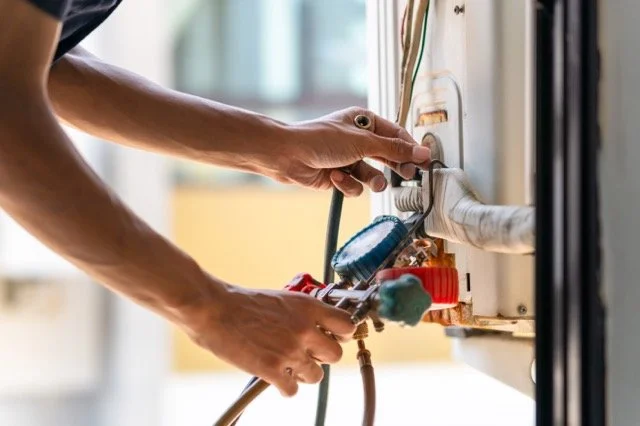
For refrigerant-related issues, we check system pressures using manifold gauges. Low pressure indicates a leak or undercharge. High pressure points to airflow restrictions, a dirty condenser coil, or an overcharged system. The pressure readings tell us exactly what's wrong with the refrigerant circuit.
Temperature measurements are critical too. We measure the temperature difference between the air entering and leaving your indoor coil (called the "delta T"). A properly functioning AC system should show a 15-20°F temperature drop. Anything less indicates a problem with airflow, refrigerant charge, or the coil itself.
Ductwork and Airflow Evaluation
Many AC problems aren't actually AC problems — they're ductwork problems. In older Beverly Hills homes, especially those built in the 1960s and 70s, we frequently find undersized or poorly designed duct systems that restrict airflow and reduce cooling capacity by 20-30%.
A thorough diagnostic includes checking supply and return vents for proper airflow, inspecting accessible ductwork for disconnections or damage, and verifying that your air filter isn't clogged. These issues cause many of the same symptoms as major equipment failures but cost far less to fix.
What to expect: A complete diagnostic typically takes 30-45 minutes. If a technician shows up, glances at your equipment, and immediately tells you it needs to be replaced without performing any tests, that's a red flag. Honest diagnostics require actual measurements and testing.
Common AC Problems We See in Beverly Hills Homes
After three decades of AC repair work in Oakland County, certain problems show up more often than others. Here's what we see most frequently in Beverly Hills and surrounding communities like Bloomfield Hills and Royal Oak.
Refrigerant Leaks
Refrigerant leaks are the most common serious AC problem we diagnose. Small leaks develop over time in copper refrigerant lines, coil joints, or service valves. You'll notice reduced cooling capacity, longer run times, and higher electric bills as the system struggles to maintain temperature with insufficient refrigerant.
Here's what matters: Simply adding refrigerant without finding and repairing the leak is a temporary fix that wastes money. The refrigerant will leak out again within weeks or months. A proper repair involves locating the leak (using electronic leak detectors or UV dye), repairing or replacing the damaged component, evacuating the system, and recharging it to manufacturer specifications.
Older systems using R-22 refrigerant (also called Freon) face an additional challenge. R-22 production ended in 2020 due to environmental regulations, and remaining supplies are expensive — often $150-$200 per pound. If your R-22 system develops a major leak, replacement usually makes more financial sense than repair. We covered this issue in detail in our post about AC refrigerant leak signs in Bloomfield Hills.
Failed Capacitors and Contactors
Capacitors are small cylindrical components that provide the electrical boost needed to start your compressor and fan motors. They're the most common electrical failure in AC systems, especially in Michigan where temperature swings from -10°F in winter to 95°F in summer stress these components.
A failed capacitor prevents your compressor or outdoor fan from starting. You'll hear a humming sound as the motor tries to start but can't. This is an urgent situation — a motor that hums without starting will overheat and fail within hours, turning a $200 capacitor replacement into a $1,500 compressor replacement.
Contactors are electromagnetic switches that control power to your compressor and fan. When they fail (usually due to pitted contacts from thousands of on-off cycles), your outdoor unit won't run at all. Contactor replacement is straightforward and inexpensive, typically $150-$300 including labor. If you're experiencing similar issues, our article on AC contactor replacement symptoms and costs provides more detail.
Compressor Failures
The compressor is the heart of your AC system — it pumps refrigerant through the system and creates the pressure differential that enables heat transfer. Compressor failure is the most expensive single-component repair, typically costing $1,200-$3,500 depending on system size and refrigerant type.
Compressors fail for several reasons: electrical problems (bad capacitor, contactor, or voltage issues), mechanical wear after 15-20 years of operation, or damage from running without proper refrigerant charge. When a compressor fails on a system that's more than 10-12 years old, replacement of the entire outdoor unit usually makes more sense than compressor replacement alone.
Frozen Evaporator Coils
Ice buildup on your indoor coil is a symptom, not a cause. The underlying problem is usually restricted airflow (dirty filter, closed vents, blocked return, or dirty coil) or low refrigerant charge from a leak. Both conditions cause the coil temperature to drop below freezing, and moisture in the air freezes on the coil surface.
A frozen coil blocks airflow completely, and the ice can damage the coil fins when it expands. The repair process involves thawing the coil (which takes several hours), identifying and fixing the underlying cause, and verifying proper operation. Running your AC with a frozen coil can damage the compressor, so shut the system off and call for service immediately if you notice ice.
Ductwork Issues in Older Homes
Beverly Hills has many beautiful homes built in the 1950s through 1970s, and their original ductwork often wasn't designed for modern high-efficiency AC systems. Common problems include undersized ducts that restrict airflow, disconnected or crushed flex ducts in attics and crawl spaces, and return air systems that pull in hot attic air through gaps and leaks.
These issues cause uneven cooling, hot and cold spots, and reduced system efficiency. A 3-ton AC system with 30% duct leakage effectively becomes a 2-ton system — it can't keep up on hot days no matter how well the equipment itself is functioning. Our guide to fixing hot and cold spots in your house addresses these ductwork challenges.
What AC Repair Actually Costs in Southeast Michigan
Let's talk numbers. AC repair costs vary widely depending on the specific problem, equipment brand, and whether parts are readily available or need to be ordered. Here's what we actually charge for common repairs in the Beverly Hills area.
Minor Repairs ($150-$400)
These are straightforward repairs that typically take 1-2 hours and use common parts:
- Capacitor replacement: $200-$350. Includes testing, new capacitor, and verification of proper operation.
- Contactor replacement: $180-$320. Similar timeframe and process as capacitor replacement.
- Thermostat replacement: $150-$400 depending on whether you choose a basic programmable model or a smart thermostat like Nest or Ecobee.
- Condensate drain clearing: $150-$250. Includes clearing the clog, cleaning the drain pan, and adding drain treatment tablets.
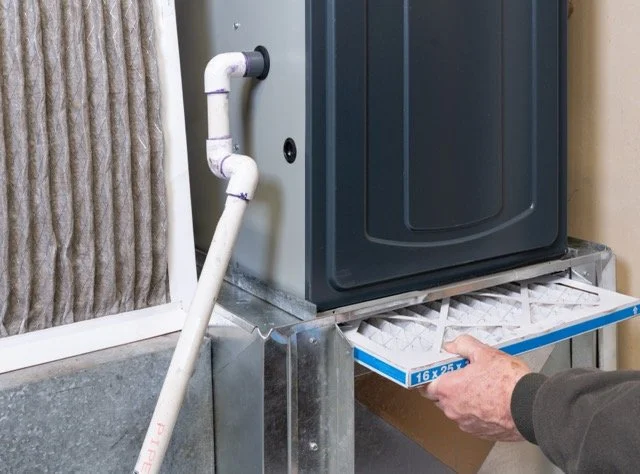
- Air filter replacement and coil cleaning: $150-$300 for a thorough cleaning that restores airflow.
Mid-Range Repairs ($400-$1,200)
These repairs involve more labor, specialized tools, or refrigerant work:
- Fan motor replacement: $450-$850 for outdoor condenser fan motors, $550-$950 for indoor blower motors. Includes motor, labor, and testing.
- Small refrigerant leak repair and recharge: $500-$900. Includes leak detection, repair, evacuation, and refrigerant recharge. Cost varies significantly based on refrigerant type (R-410A is cheaper than R-22).
- Reversing valve replacement (heat pumps): $600-$1,100. This component switches between heating and cooling modes.
- Control board replacement: $450-$900. Modern AC systems use electronic control boards that can fail due to power surges or age.
Major Repairs ($1,200-$3,500)
These are significant repairs that approach the cost of system replacement:
- Compressor replacement: $1,500-$3,500 depending on system size, refrigerant type, and whether the unit is still under warranty (you'd pay labor only).
- Evaporator coil replacement: $1,200-$2,800. Includes coil, refrigerant evacuation and recharge, and several hours of labor.
- Condenser coil replacement: $1,400-$2,600. Often makes more sense to replace the entire outdoor unit at this price point.
- Multiple component failures: When several components fail simultaneously (common in systems 12+ years old), repair costs can exceed $2,500-$4,000.
The replacement question: When repair costs exceed 50% of replacement cost, and your system is more than 10 years old, replacement usually makes better financial sense. A new high-efficiency system will use 30-40% less electricity than a 15-year-old system, and you'll avoid repeated repair calls as other aging components fail. For current pricing, see our breakdown of the best central air conditioners for Michigan homes.
Emergency Service and After-Hours Pricing
Most HVAC companies, including NEXT Heating & Cooling, charge premium rates for emergency service outside normal business hours. Expect to pay an additional $75-$150 for evening, weekend, or holiday service calls. This covers the cost of keeping technicians on-call and compensates them for working outside regular hours.
Is emergency service worth it? That depends on the situation. If it's 95°F outside and you have elderly family members or young children in the house, yes — call for emergency service. If it's 75°F and you can open windows and use fans overnight, waiting until morning saves you the emergency fee.
How to Know If You're Getting Honest Diagnostics
Here's the uncomfortable truth: not all HVAC contractors operate with the same values. Some companies pay technicians on commission, which creates incentives to upsell unnecessary equipment or exaggerate problems. Others send salespeople instead of actual technicians, and their job is to sell you a new system regardless of whether your current one can be repaired.
After 35 years in this business, we've seen every trick in the book. Here's how to protect yourself and recognize honest diagnostics.
Red Flags to Watch For
Immediate replacement recommendations without testing: If a technician shows up, looks at your equipment for five minutes, and immediately recommends replacement without performing any diagnostic tests, that's a red flag. Proper diagnosis requires measurements, not assumptions.
Scare tactics about safety: Claims that your system is "dangerous" or poses an "immediate safety risk" without showing you the specific problem or providing documentation. Yes, cracked heat exchangers and gas leaks are real safety issues — but a legitimate technician will show you the crack or use a combustible gas detector to demonstrate the leak.
Pressure to decide immediately: "This price is only good if you sign today" or "We can only offer this discount right now" are classic high-pressure sales tactics. A reputable contractor will give you a written quote that's valid for at least 30 days so you can compare options and make an informed decision.
Refusing to provide written estimates: Every repair recommendation should come with a written estimate that specifies the problem, the proposed solution, the parts needed, and the total cost including labor. Verbal estimates aren't worth the air they're spoken into.
Dramatically different quotes from multiple contractors: If you get three quotes and one is 2-3 times higher than the others, that's suspicious. Get a fourth opinion. Similarly, if one quote is dramatically lower, make sure that contractor is properly licensed and insured — you don't want to discover after the fact that they cut corners.
Questions to Ask Your Technician
A confident, knowledgeable technician will welcome your questions. Here's what to ask:
- "Can you show me the problem?" — A good tech will show you the failed component, explain what it does, and demonstrate why it's not working.
- "What caused this failure?" — Understanding the root cause helps you prevent future problems and evaluate whether the diagnosis makes sense.
- "What are my options?" — There's usually more than one way to solve a problem. A repair-focused contractor will present multiple options with different price points.
- "How long will this repair last?" — Honest answer: it depends on the age and condition of your system, but a technician should be able to give you a reasonable expectation.
- "Is this repair covered by warranty?" — Many manufacturers offer 5-10 year parts warranties. If your system is relatively new, the part might be free (you'd pay labor only).
- "What happens if this doesn't fix the problem?" — Reputable contractors stand behind their work. We offer warranties on both parts and labor.
What Transparent Pricing Looks Like
At NEXT Heating & Cooling, we provide flat-rate pricing before we start work. You know exactly what the repair will cost before we touch your equipment. The final invoice matches the estimate — no surprise charges, no "additional problems we discovered" that mysteriously appear after we've already started.
Our technicians are paid hourly, not on commission. They have no financial incentive to recommend unnecessary repairs or replacement. Their job is to diagnose the problem accurately and present you with honest options. That's part of what we mean by "changing contractor culture."
If you're evaluating contractors, our guide on how to choose a Metro Detroit HVAC contractor you can trust walks through the credentials, certifications, and business practices that separate legitimate professionals from fly-by-night operators.
Timeline: How Long Does AC Repair Take?
One of the most common questions we get: "How long will I be without AC?" The answer depends on the specific problem and whether we need to order parts.
Same-Day Repairs
Most AC repairs can be completed the same day if we have the necessary parts on our trucks. Our service vehicles stock the most common components — capacitors, contactors, fan motors, thermostats, and refrigerant. If your problem involves one of these components, we can typically diagnose and repair it within 2-3 hours of arrival.
Simple repairs like capacitor or contactor replacement take 30-60 minutes once we've completed diagnostics. More involved repairs like fan motor replacement might take 2-3 hours including testing and verification.
Repairs Requiring Parts Orders
Some components aren't practical to stock on trucks due to cost, size, or the variety of models: compressors, coils, control boards for specific models, and proprietary components for certain brands. When we need to order parts, the timeline depends on availability:
- Common parts from major brands (Carrier, Lennox, Trane): Usually available within 1-2 business days from local distributors.
- Less common parts or older equipment: 3-7 business days, sometimes longer if the part needs to ship from a regional warehouse.
- Discontinued or obsolete parts: Can take 2-4 weeks if we need to source them from specialty suppliers, or they may not be available at all (which forces a replacement decision).
We'll always give you an honest timeline when we order parts. If it's going to take a week and it's 90°F outside, we'll discuss temporary cooling options or expedited shipping if available.
Seasonal Considerations
Here's something most homeowners don't think about: AC repair timelines vary dramatically by season. In May and early June, before the summer heat really kicks in, we can usually schedule service within 1-2 days and parts arrive quickly because distributor inventory is high.
In July and August, when every AC contractor in Southeast Michigan is slammed with service calls, wait times stretch to 3-5 days for non-emergency service, and parts can take longer because distributors are dealing with high demand and occasional shortages of popular components.
This is exactly why we recommend spring AC tune-ups through our Next Care Plan. Catching small problems in May — before they turn into complete failures in July — means you avoid the summer rush entirely and keep your system running when you need it most.
Emergency Service Response Times
We offer 24/7 emergency HVAC service for situations that can't wait until morning. During business hours, we typically arrive within 2-4 hours of your call. For after-hours emergencies, response time is usually 3-6 hours depending on technician availability and your location within our service area.
Emergency service gets you faster response, but it doesn't change the repair timeline itself. If we need to order parts, you're still looking at the same wait time — emergency service just gets a technician to your door faster for diagnosis.
Signs You Need AC Repair (Not Just Maintenance)
How do you know when your AC needs professional repair versus just routine maintenance? Here are the symptoms that indicate a real problem requiring immediate attention.
System Not Cooling
This is the most obvious sign. Your AC is running, but the house isn't getting cooler. Possible causes include refrigerant leaks, failed compressor, frozen evaporator coil, or severe airflow restrictions. Don't wait on this one — running a malfunctioning AC system can cause additional damage to other components.
Weak Airflow from Vents
If air is barely coming out of your supply vents, you have an airflow problem. Common causes: clogged air filter (check this first — it's free), failed blower motor, damaged ductwork, or a blocked return air path. Weak airflow reduces cooling capacity and forces your system to run longer, increasing wear and energy costs.
Strange Noises
Every AC makes some noise, but certain sounds indicate specific problems:
- Grinding or squealing from the outdoor unit: Fan motor bearings are failing. Needs immediate attention before the motor seizes.
- Clicking or buzzing when the system tries to start: Usually a contactor or capacitor issue. The system is trying to start but can't.
- Banging or clanking: Something is loose inside the unit — possibly a broken fan blade or loose component. Shut the system off and call for service.
- Hissing or bubbling: Refrigerant leak. Needs professional repair immediately.
We covered this topic in depth in our post about why your air conditioning unit is so loud.
High Indoor Humidity
Your AC should remove humidity as it cools. If your home feels muggy even when the AC is running, something's wrong. Possible causes: refrigerant undercharge, oversized AC system (short-cycles without running long enough to dehumidify), or ductwork pulling in humid outdoor air through leaks.
High humidity makes your home feel warmer than it actually is, encourages mold growth, and damages wood floors and furniture. This isn't just a comfort issue — it's a building science problem that needs to be addressed.
Frequent Cycling or Short-Cycling
Your AC should run in relatively long cycles — typically 15-20 minutes at a time during hot weather. If it's cycling on and off every 5-10 minutes, that's short-cycling, and it indicates a problem: oversized equipment, refrigerant issues, dirty coils, or a failing compressor.
Short-cycling wastes energy, increases wear on components, and prevents proper dehumidification. The same issue affects furnaces in winter — we addressed the causes and solutions in our guide to furnace short-cycling and Michigan fixes.
Water Leaks Around Indoor Unit
Your AC produces condensation as it removes humidity from the air. This water should drain away through a condensate drain line. If you see water pooling around your indoor unit, the drain is clogged or the drain pan is cracked. Left unaddressed, this can cause water damage to ceilings, walls, and flooring.
Electrical Issues
Tripped breakers, blown fuses, or burning smells indicate electrical problems. Shut the system off immediately and call for service. Electrical issues can damage expensive components and pose fire risks. Never reset a breaker more than once — if it trips again, there's a real problem that needs professional diagnosis.
Rising Energy Bills
If your electric bills are climbing without a corresponding increase in usage or rate changes, your AC is losing efficiency. This can be caused by refrigerant leaks, dirty coils, failing motors, or ductwork problems. A system that's working twice as hard to produce the same cooling is telling you something's wrong.
Ready to Get Started?
NEXT Heating & Cooling has been keeping Michigan homes comfortable for over 35 years. Get honest diagnostics and fair pricing from NATE-certified technicians who show up on time. We serve Beverly Hills, Bloomfield Hills, Royal Oak, and throughout Oakland County.
Schedule Your AC RepairFrequently Asked Questions
AC repair costs in Beverly Hills typically range from $150-$400 for minor repairs (capacitors, contactors, thermostat), $400-$1,200 for mid-range repairs (fan motors, small refrigerant leaks), and $1,200-$3,500 for major repairs (compressor, coils). The exact cost depends on the specific problem, equipment brand, and whether parts need to be ordered. We provide flat-rate pricing before starting work, so you know exactly what the repair will cost.
Homeowners can handle basic maintenance tasks like changing air filters, cleaning around the outdoor unit, and clearing condensate drains. However, actual AC repairs require specialized tools, refrigerant handling certification (EPA 608 license), and technical knowledge. Working with refrigerant without certification is illegal, and electrical work on AC systems can be dangerous. More importantly, DIY repairs often cause additional damage that costs more to fix than the original problem. For anything beyond basic maintenance, call a licensed HVAC contractor.
Simple repairs like capacitor or contactor replacement typically take 30-60 minutes after diagnostics. More involved repairs like fan motor replacement take 2-3 hours. If we need to order parts, add 1-7 business days depending on availability. During peak summer season (July-August), both service scheduling and parts delivery can take longer due to high demand. We stock common parts on our trucks for same-day repairs whenever possible.
The general rule: if repair costs exceed 50% of replacement cost and your system is more than 10 years old, replacement usually makes better financial sense. Consider these factors: system age (most AC units last 12-15 years in Michigan), repair history (repeated repairs add up), energy efficiency (new systems use 30-40% less electricity), and refrigerant type (R-22 systems face expensive refrigerant costs). We'll give you honest recommendations based on your specific situation, not commission-based sales pressure.
Yes, NEXT Heating & Cooling offers 24/7 emergency HVAC service throughout Oakland County including Beverly Hills. We typically arrive within 2-4 hours during business hours and 3-6 hours for after-hours emergencies. Emergency service includes an additional fee ($75-$150) to cover on-call technician costs. We recommend emergency service when temperatures are extreme and you have vulnerable family members, but non-emergency scheduling is fine if conditions are mild and you can wait until morning.
We service all major AC brands including Carrier, Lennox, Trane, Rheem, Bryant, Goodman, Amana, York, and RUUD. Our NATE-certified technicians have experience with both current models and older systems. We maintain manufacturer partnerships that give us access to technical support, training, and parts availability. Even if we didn't install your system, we can diagnose and repair it. The only exception is very old or obsolete brands where parts are no longer available — in those cases, we'll be honest about your replacement options.
Most AC manufacturers offer 5-10 year parts warranties on major components like compressors and coils. Labor is typically not covered unless you purchased an extended warranty. If your system is relatively new and fails, the part may be free, but you'll pay for the technician's time to diagnose and install it. Warranty coverage requires proof of regular maintenance in many cases — manufacturers can void warranties if you haven't maintained the system properly. This is one reason our $5/month Next Care Plan is valuable — it documents regular maintenance and protects your warranty coverage.