

Burning Smell From Your AC? Shut It Off & Do This Next
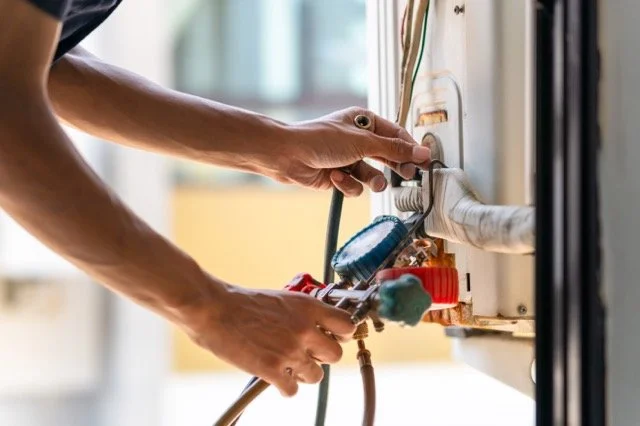
You walk into your living room in Sterling Heights on a humid June afternoon, flip on the AC, and within minutes you smell something burning. Not quite smoke, but unmistakably wrong. Your first instinct is correct: turn the system off immediately.
A burning smell from your air conditioning vents is never normal, and ignoring it can turn a $200 repair into a $4,000 replacement — or worse, a fire hazard. Over 35 years servicing HVAC systems across Macomb, Oakland, and St. Clair counties, we have seen every variation of this problem. Some are harmless and resolve in minutes. Others require immediate professional intervention.
This guide explains the six most common causes of burning smells from AC vents, what to do the moment you detect one, when you can safely restart your system, and when you need to call a licensed HVAC contractor in Metro Detroit for emergency service.
Why AC Units Produce Burning Smells
Air conditioning systems contain electrical components, motors, bearings, capacitors, and in some configurations, supplemental electric heat strips. Any of these can produce a burning odor when they malfunction, overheat, or accumulate debris.
The smell itself is not the problem — it is a symptom. The actual issue could be mechanical (a failing motor bearing), electrical (a capacitor about to fail), or environmental (dust burning off after months of inactivity). Understanding which category your smell falls into determines whether you are dealing with a minor annoyance or a legitimate safety hazard.
In Southeast Michigan, we see a spike in these calls every May and June when homeowners fire up their AC for the first time after a long winter. Dust accumulates on components during the heating season, and that first startup can produce a brief burning smell that dissipates within 10-15 minutes. That is normal. What is not normal is a smell that persists, intensifies, or smells distinctly electrical or chemical.
6 Common Causes of Burning Smell From AC Vents
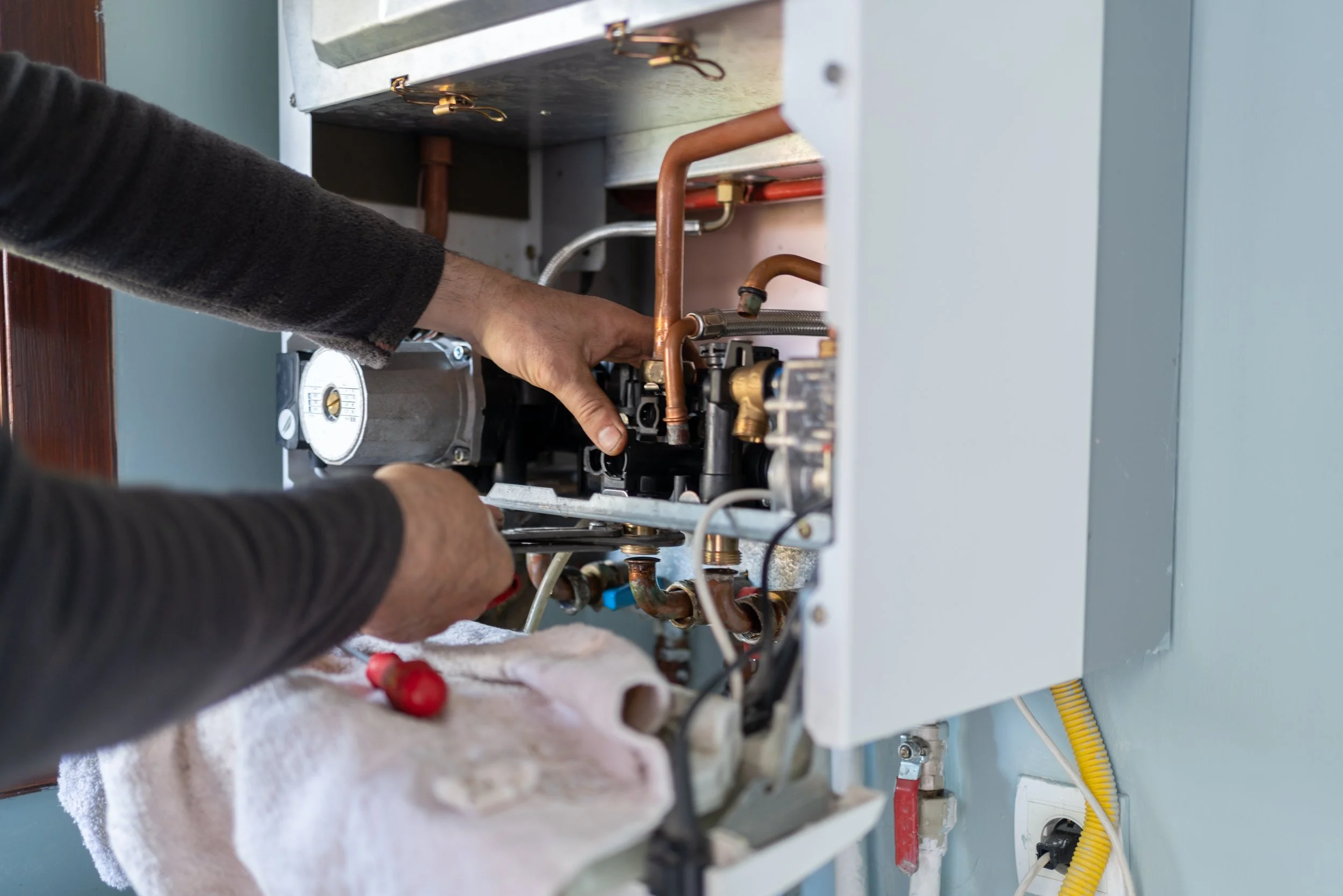
1. Dust Accumulation on Heating Elements or Blower Motor
This is the most common cause and usually the least concerning. If your AC has been off for months, dust settles on the blower motor, heat strips (if your system has them), and other internal components. When you turn the system on, that dust burns off.
What it smells like: Dusty, slightly musty, similar to burning paper or cardboard.
How long it lasts: 10-20 minutes, then dissipates completely.
What to do: Let it run. Open windows for ventilation. If the smell does not clear within 20 minutes, shut the system off and call a technician.
2. Electrical Component Failure (Wiring, Connections, or Circuit Board)
Electrical failures produce a sharp, acrid smell — distinctly different from dust. This happens when wiring insulation melts, a circuit board overheats, or a connection arcs. Electrical issues can escalate quickly and pose a fire risk.
What it smells like: Burning plastic, sharp and chemical, sometimes with visible smoke.
How long it lasts: Persistent and often worsens.
What to do: Turn off the system immediately at the thermostat and breaker panel. Do not attempt to restart. Call for emergency HVAC service in Macomb County.
3. Blower Motor Bearing Failure
Blower motors have bearings that allow the fan to spin smoothly. When these bearings wear out, friction increases, generating heat. Eventually, the motor overheats and produces a burning smell.
What it smells like: Hot metal, sometimes oily or greasy.
Other symptoms: Squealing or grinding noise before the smell appears. Reduced airflow from vents.
What to do: Shut off the system. A failing blower motor needs replacement, not a temporary fix. Continuing to run it will cause complete motor failure and potentially damage other components.
4. Capacitor Failure
Capacitors store and release electrical energy to start the compressor and blower motor. When a capacitor fails, it can bulge, leak, or even explode, producing a burning smell and sometimes a loud pop.
What it smells like: Electrical, sometimes fishy or chemical.
Other symptoms: AC will not start, or it starts then shuts off immediately. Humming sound from the outdoor unit.
What to do: Turn off the system. Capacitors are inexpensive to replace ($150-$300 installed), but a failed capacitor can damage the compressor if the system keeps trying to start. We covered this extensively in our guide on why your AC trips the breaker.
5. Clogged Air Filter Causing System Overheating
A severely clogged air filter restricts airflow, forcing the blower motor to work harder and run hotter. Over time, this can cause the motor to overheat and produce a burning smell. It can also cause the evaporator coil to freeze, leading to water damage when it thaws.
What it smells like: Hot dust, sometimes with a metallic edge.
Other symptoms: Weak airflow from vents. Ice buildup on refrigerant lines. Higher-than-normal energy bills.
What to do: Turn off the system. Replace the air filter immediately. If the smell persists after replacing the filter and restarting, the motor may have already sustained damage. For more on this, see our post on why your AC is leaking water inside.
6. Refrigerant Leak (Chemical Smell)
Refrigerant itself does not burn, but a refrigerant leak can produce a sweet, chemical smell that homeowners sometimes describe as burning. Refrigerant leaks are serious — they reduce cooling capacity, damage the compressor, and in some cases pose health risks.
What it smells like: Sweet, chemical, sometimes described as ether-like or chloroform-like.
Other symptoms: AC runs but does not cool effectively. Ice on refrigerant lines. Hissing sound near the indoor or outdoor unit.
What to do: Turn off the system. Ventilate the area. Call a licensed technician immediately. Refrigerant leaks require EPA-certified handling and cannot be DIY-repaired.
What to Do Immediately When You Smell Burning
The moment you detect a burning smell from your AC vents, follow this protocol:
- Turn off the AC at the thermostat. Switch it to "Off," not just a higher temperature setting. You want to stop the system completely.
- Go to your circuit breaker panel and turn off the AC breaker. This cuts power to both the indoor air handler and the outdoor condenser unit. Label your breakers if you have not already — it saves critical time in emergencies.
- Check the air filter. Remove it and inspect it. If it is clogged with dust and debris, replace it immediately. A clean filter is the simplest fix for overheating issues.
- Look for visible damage. Open the access panel on your indoor air handler (if you are comfortable doing so) and look for scorch marks, melted components, or unusual discoloration. Do not touch anything — just observe.
- Assess the smell type. Is it dusty and dissipating, or sharp and persistent? This helps you decide whether to wait or call for service immediately.
- Ventilate the area. Open windows and use fans to clear the air. If the smell is strong or you feel lightheaded, leave the house and call 911.
Do not attempt to restart the system until you have identified the cause or consulted with a professional. Restarting a system with an electrical fault can cause a fire. Restarting a system with a failing motor can destroy the motor completely.
When You Can Restart vs. When to Call a Tech

You can attempt a restart if:
- The smell was dusty and brief (less than 15 minutes)
- It occurred during the first startup of the season
- You replaced a visibly clogged air filter
- There are no other symptoms (no strange noises, no tripped breakers, no visible damage)
- The smell has completely dissipated after turning the system off for 30 minutes
If you restart and the smell returns immediately, shut it off and call a technician. Do not cycle the system on and off repeatedly — this can cause additional damage.
You need to call a licensed HVAC technician immediately if:
- The smell is electrical, chemical, or fishy
- You see smoke or visible scorch marks
- The smell persists for more than 20 minutes
- The AC trips the breaker when you try to restart it
- You hear grinding, squealing, or buzzing noises
- The system will not start at all
- You detect a refrigerant leak (sweet, chemical smell)
At NEXT Heating & Cooling, we offer 24-hour emergency HVAC service across Southeast Michigan. Our NATE-certified technicians carry diagnostic tools and common replacement parts on every truck, so most repairs can be completed the same day.
How Michigan Humidity and Seasonal Startup Affect AC Issues
Michigan's climate creates unique conditions that contribute to AC problems. Our winters are long and cold, meaning AC systems sit dormant for 6-8 months. During that time, dust accumulates, seals dry out, and components settle.
When you fire up the system in May or June, you are asking cold components to go from zero to full operation in seconds. That thermal shock can reveal weaknesses — a capacitor that was marginal in October may fail completely in May. A blower motor bearing that was slightly worn may seize up after months of inactivity.
Michigan's summer humidity also stresses AC systems. High humidity means your AC runs longer cycles to dehumidify the air, which generates more heat in the blower motor and compressor. If your system is already marginal — undersized for your home, low on refrigerant, or running with a clogged filter — the added stress can push it over the edge.
This is why we recommend preparing your AC for summer with a spring tune-up before the heat arrives. Catching a failing capacitor or worn motor bearing in April is far cheaper than dealing with a complete system failure in July.
Cost Reality: Repair vs. Replacement Decision Points
When you call a technician for a burning smell, the diagnosis will lead to one of three outcomes:
1. Minor repair ($150-$400): Replacing a capacitor, cleaning components, replacing a contactor, or fixing a loose wire. These are straightforward fixes that restore full function.
2. Major repair ($800-$2,500): Replacing a blower motor, repairing a refrigerant leak, replacing a control board, or fixing electrical wiring. These are significant repairs, but still less expensive than replacement.
3. System replacement ($4,000-$8,000): If the compressor has failed, the heat exchanger is cracked, or multiple major components need replacement, you are often better off replacing the entire system.
The decision point is the 50% rule: if the repair cost exceeds 50% of the replacement cost and your system is more than 12 years old, replacement is usually the smarter financial move. We covered this in detail in our post on AC repair vs. replace.
For example, if a blower motor replacement costs $1,800 and a new AC system costs $5,000, that is 36% — repair makes sense if the system is less than 10 years old. But if the compressor fails and the repair costs $2,800 on a 15-year-old system, replacement is the better long-term investment.
At NEXT Heating & Cooling, we give you both options with transparent pricing. No pressure, no commission-based upselling. Just the facts you need to make an informed decision. That is the old-school contractor culture we are bringing back to Metro Detroit.
Prevention Through Maintenance
Most burning smell issues are preventable with routine maintenance. A well-maintained AC system rarely produces odors because potential problems are caught and corrected before they escalate.
Our Next Care Plan costs $5 per month ($60 per year) and includes two annual service visits — a fall furnace tune-up and a spring AC tune-up. During the spring AC visit, our technicians:
- Inspect and test the capacitor
- Lubricate blower motor bearings
- Check all electrical connections for signs of arcing or corrosion
- Clean the evaporator coil and condensate drain
- Test refrigerant levels and pressures
- Replace the air filter (or remind you to do so monthly)
- Verify proper airflow and temperature drop across the coil
These inspections catch 95% of issues before they cause a breakdown. A capacitor that is starting to bulge gets replaced for $200 in April, preventing a $4,000 compressor failure in July. A blower motor bearing that is starting to squeal gets serviced before it seizes up and leaves you without AC during a heatwave.
Preventative maintenance is not sexy, but it is the single most effective way to avoid emergency service calls, extend equipment life, and keep your energy bills predictable. We have been preaching this for 35 years, and the data backs it up.
Signs You Need Emergency HVAC Service
Some AC problems can wait until Monday morning. Others require immediate attention. Call for emergency service if you experience any of these:
- Visible smoke or flames from vents, the indoor unit, or the outdoor condenser
- Electrical burning smell that does not dissipate after turning the system off
- Tripped breaker that trips again immediately when you reset it
- Loud popping or buzzing sounds accompanied by a burning smell
- Refrigerant leak (sweet chemical smell, ice on lines, hissing sound)
- Complete system failure during extreme heat (especially if you have elderly family members, young children, or pets)
NEXT Heating & Cooling offers 24/7 emergency service across Macomb, Oakland, and St. Clair counties. Our reliable HVAC contractor team responds to emergency calls within 2-4 hours, even on weekends and holidays. We do not charge extra for evenings or weekends — just honest, flat-rate pricing based on the work required.
Smelling Something Wrong? We'll Diagnose It Fast.
NEXT Heating & Cooling has been keeping Michigan homes safe and comfortable for over 35 years. Our NATE-certified technicians provide honest diagnostics, transparent pricing, and same-day repairs when possible. No upselling. No pressure. Just straight answers.
Schedule Your Service CallFrequently Asked Questions
It depends on the cause. A brief dusty smell during the first startup of the season is normal and harmless. An electrical burning smell, chemical odor, or persistent smell that does not dissipate indicates a problem that could become dangerous if ignored. Electrical failures can cause fires. Refrigerant leaks can pose health risks. When in doubt, turn the system off and call a licensed technician.
If the smell is clearly dusty (not electrical or chemical) and it is the first time you have run the AC this season, let it run for 15-20 minutes with windows open for ventilation. The smell should dissipate completely within that time. If it persists beyond 20 minutes, or if it gets stronger instead of weaker, turn the system off and call for service.
Yes. A severely clogged air filter restricts airflow, forcing the blower motor to work harder and run hotter. Over time, this can cause the motor to overheat and produce a burning smell. It can also cause the evaporator coil to freeze, leading to water damage. Replace your air filter every 1-3 months depending on usage, pets, and indoor air quality.
An electrical burning smell is sharp, acrid, and chemical — distinctly different from dust. It smells like burning plastic, melted insulation, or hot wiring. You may also see visible smoke or notice scorch marks on components. This is a serious issue that requires immediate attention. Turn off the system at the thermostat and breaker panel, and call a licensed HVAC technician.
It depends on the cause. Replacing a clogged air filter costs $20-$40. Replacing a failed capacitor costs $150-$300. Replacing a blower motor costs $800-$1,800. Repairing electrical wiring or replacing a control board can cost $400-$1,200. Complete system replacement ranges from $4,000-$8,000. A diagnostic service call typically costs $100-$150, which is often waived if you proceed with the repair.
Call for emergency service if the smell is electrical or chemical, if you see smoke or scorch marks, if the smell persists after turning the system off, or if the AC trips the breaker. A brief dusty smell during the first seasonal startup is not an emergency, but it should be monitored. If you are unsure, it is always safer to call and describe the symptoms to a technician who can advise whether immediate service is needed.
Schedule annual preventative maintenance before cooling season starts. Replace air filters every 1-3 months. Keep the area around your indoor air handler and outdoor condenser clean and unobstructed. Listen for unusual noises (squealing, grinding, buzzing) and address them promptly before they escalate. Consider enrolling in a maintenance plan like the Next Care Plan, which includes two annual tune-ups and catches problems before they cause breakdowns.