

Why Your AC Trips the Breaker: Causes for Macomb Township Homes
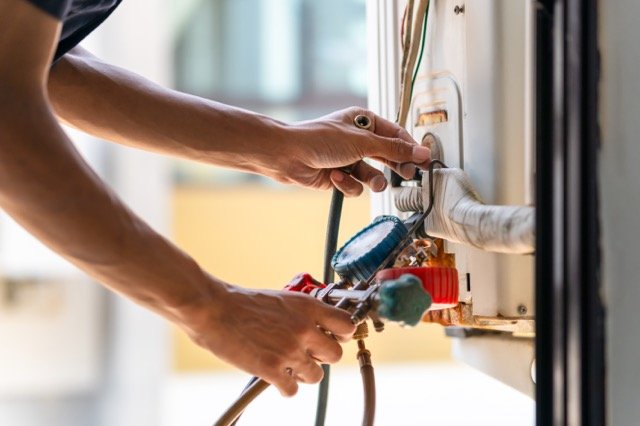
You flip on the AC during the first hot afternoon in Macomb Township, and within minutes—or maybe hours—the breaker trips. The house gets warm, you reset the breaker, and the cycle repeats. If this sounds familiar, you're dealing with one of the most common AC electrical problems we see across Southeast Michigan.
A circuit breaker that trips repeatedly isn't just an inconvenience—it's a safety mechanism telling you something is wrong. The breaker is designed to cut power when the electrical load exceeds safe limits, preventing wire damage and potential fire hazards. When your air conditioner causes this to happen, it means the system is either drawing too much current, there's a fault in the electrical circuit, or the breaker itself is undersized or failing.
After 35+ years serving Macomb County homes through our heating and cooling services in Metro Detroit, we've diagnosed hundreds of breaker trip scenarios. Most have straightforward causes—some you can check yourself, others that require professional electrical testing. This guide walks through exactly what to look for, what's safe to troubleshoot on your own, and when to call a NATE-certified technician before you damage the compressor or create an electrical hazard.
Safety First: If your AC breaker trips more than twice in a row, stop resetting it and call a licensed HVAC contractor. Repeated trips indicate a serious electrical fault that can damage your air conditioner or create fire risk.
How Your AC Electrical System Works
Before we dig into what goes wrong, it helps to understand how your air conditioner uses electricity—and why it draws so much more power than most other appliances in your home.
A typical central air conditioner in a Macomb Township home consists of two main units: the indoor air handler (connected to your furnace or mounted separately) and the outdoor condenser unit. The outdoor unit houses the compressor—the heart of the system—along with the condenser fan motor and electrical controls.
When you set the thermostat to cooling mode, here's what happens electrically:
- The thermostat sends a 24-volt signal to the air handler, which starts the indoor blower motor
- The outdoor contactor closes, sending full voltage (usually 240 volts for central AC) to the compressor and condenser fan
- The compressor motor starts, drawing a surge of current that's 3-5 times higher than its normal running amperage for the first second or two
- Once running, the system settles into steady-state operation, typically drawing 15-30 amps depending on the size and efficiency of your AC unit
Most residential AC systems in Southeast Michigan run on a dedicated 240-volt circuit with a 30-amp or 40-amp breaker. The breaker is sized to handle the normal running current plus the brief startup surge without tripping. When the breaker trips, it means the current draw exceeded the breaker's rating for long enough to trigger the thermal or magnetic trip mechanism.
Here's the critical part: the breaker is your safety device. It's designed to trip before the wire insulation melts, before connections overheat, and before electrical faults cause fires. When it trips, something in the system is drawing more current than it should—and that "something" is what we need to diagnose.
Seven Common Causes of AC Breaker Trips
After decades of diagnosing AC electrical problems across Macomb, Oakland, and St. Clair counties, we've narrowed down the breaker trip culprits to seven main categories. Here's what we look for first when we get the service call:
1. Dirty Air Filter Restricting Airflow
This is the most common cause—and the easiest to fix. When your air filter gets clogged with dust, pet hair, and debris, it restricts airflow through the system. The indoor blower motor has to work harder to pull air through the blocked filter, drawing more current than normal. Eventually, the motor overheats and the breaker trips to protect the circuit.
We see this constantly in Michigan homes during peak cooling season, especially in homes with pets or older HVAC systems that haven't been maintained. If you haven't changed your filter in more than 60 days, start here. A $5 filter replacement might solve your $200 service call.
2. Failing Compressor Drawing Excess Current
The compressor is the most power-hungry component in your AC system—and when it starts to fail mechanically, it draws significantly more current trying to do its job. Internal bearing wear, refrigerant contamination, or a seized piston can all cause the compressor motor to struggle, pulling 150-200% of its rated amperage until the breaker trips.
Compressor failure is more common in AC units over 12-15 years old, especially systems that haven't received regular maintenance. If your outdoor unit makes a grinding, buzzing, or humming sound before the breaker trips, the compressor is likely the culprit. This is a major repair—often $1,200-$2,500 depending on the unit—and many homeowners opt for full system replacement instead, particularly if the AC is already past its expected lifespan.
3. Refrigerant Leak Causing Compressor Strain
When your AC loses refrigerant due to a leak (common in older systems with corroded line sets or failed coil joints), the compressor has to work harder to maintain cooling. Low refrigerant causes the compressor to run hotter and draw more current, eventually tripping the breaker.
You might notice ice buildup on the refrigerant lines or the outdoor unit before the breaker trips. The system might cool poorly for days or weeks before the electrical problem appears. Refrigerant leaks require professional repair—we need to locate the leak, repair it, vacuum the system, and recharge with the correct refrigerant type and amount. With the R-410A refrigerant phase-out affecting older systems, this repair decision often triggers the replacement conversation.
4. Bad Capacitor or Contactor
The start capacitor gives your compressor the electrical "kick" it needs to start up. The run capacitor keeps it running efficiently. When a capacitor fails—which happens frequently in Michigan due to voltage fluctuations and temperature extremes—the compressor struggles to start or run, drawing excess current that trips the breaker.
Similarly, a failing contactor (the relay that sends power to the compressor) can cause arcing, overheating, and excessive current draw. Capacitor and contactor replacement is straightforward and relatively inexpensive ($150-$350 depending on the part and labor), making this one of the better-case scenarios when diagnosing breaker trips. Our technicians carry common capacitor sizes on the truck and can often complete the repair same-day.
5. Loose or Corroded Electrical Connections
Over time, electrical connections at the outdoor disconnect, the contactor terminals, and the compressor itself can loosen due to vibration or corrode due to moisture exposure. Loose connections create resistance, which generates heat and can cause arcing. The increased resistance also causes the system to draw more current, eventually tripping the breaker.
This is particularly common in older AC installations where the outdoor disconnect box wasn't sealed properly, allowing moisture intrusion. Michigan's humidity and temperature swings accelerate corrosion on electrical terminals. A thorough electrical inspection—included in our professional AC tune-up—catches these issues before they cause breaker trips or component damage.
6. Undersized Breaker for the AC Unit
Sometimes the problem isn't the AC—it's the breaker itself. If your home's electrical panel has a 20-amp or 25-amp breaker on the AC circuit when the unit requires a 30-amp or 40-amp breaker, it'll trip during normal operation, especially during the high-current startup phase.
We see this in older Michigan homes where homeowners upgraded to a larger, more efficient AC unit but didn't upgrade the circuit breaker to match. We also see it in homes where previous owners or unlicensed contractors installed AC systems without pulling proper permits or following electrical code. The fix requires an electrician to verify the wire gauge can handle the increased amperage, then install the correctly-sized breaker.
7. Shared Circuit Overload
In some older homes—particularly 1960s and 1970s ranches common in Macomb Township—the AC circuit isn't truly dedicated. It might share the circuit with outdoor outlets, garage circuits, or other loads. When you run the AC and plug in a power tool, shop vacuum, or other high-draw appliance on the same circuit, the combined load trips the breaker.
This violates modern electrical code, which requires AC systems to have dedicated circuits. The solution is running a new dedicated circuit from the panel to the outdoor disconnect—a job for a licensed electrician. This typically costs $400-$800 depending on the distance and complexity of the wire run.
Michigan-Specific Factors That Stress Your AC
Living in Southeast Michigan adds specific challenges that increase the likelihood of AC electrical problems. Here's what we see that makes Macomb County different from, say, Arizona or Florida:
Older Homes with 100-Amp Electrical Panels
Many homes in Sterling Heights, Clinton Township, and Macomb were built in the 1950s-1970s with 100-amp electrical service. These panels are often maxed out with modern electrical loads—central AC, electric dryers, microwaves, computers, and more. When the AC compressor starts and draws its surge current, there's not much capacity left, and breakers trip more easily.
If your home still has a 100-amp panel and you're experiencing frequent breaker trips (not just AC, but other circuits too), you might need a service upgrade to 200 amps. This is a significant investment ($2,000-$4,000 typically), but it solves the root problem and supports modern electrical demands.
Lake-Effect Humidity and Corrosion
Proximity to Lake St. Clair and the Great Lakes means higher humidity levels during summer months. This humidity accelerates corrosion on electrical terminals, contactors, and disconnect boxes—especially on older AC units where seals have degraded. Corroded connections create resistance and heat, leading to breaker trips and component failures.
Regular maintenance that includes electrical connection inspection and cleaning helps prevent this. Our Next Care Plan includes this as part of the spring AC tune-up, catching corrosion before it causes failures.
Summer Storms and Power Surges
Michigan thunderstorms bring voltage spikes and power fluctuations that stress AC electrical components. A nearby lightning strike can damage capacitors, contactors, and circuit boards without completely destroying them—but the weakened components fail weeks or months later, often presenting as breaker trips.
We recommend surge protection for your AC system, especially if you've invested in a high-efficiency unit with electronic controls. A whole-home surge protector at the panel ($300-$500 installed) plus a secondary surge protector at the outdoor disconnect ($150-$250) provides layered protection against voltage spikes.
Safe DIY Troubleshooting Steps
Before you call for service, there are a few safe checks you can perform yourself. These won't fix major electrical faults, but they'll rule out the simple stuff—and potentially save you a service call fee.
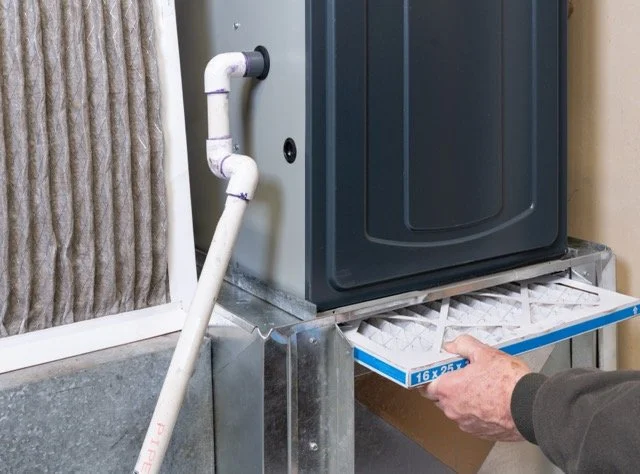
Step 1: Check and Replace the Air Filter
Turn off your thermostat, locate the air filter (usually at the return air grille or in a slot at the furnace/air handler), and inspect it. If it's gray, clogged, or hasn't been changed in over 60 days, replace it with a new filter of the same size. Wait 30 minutes after installation, then try running the AC again.
If the breaker doesn't trip and the system runs normally, you've solved the problem. Set a reminder to check your filter monthly and replace it every 30-90 days depending on your home's conditions. This simple maintenance prevents the majority of AC cooling problems we see in Southeast Michigan.
Step 2: Reset the Breaker Once—But Only Once
Go to your electrical panel, turn off the thermostat first (important—don't reset the breaker with the AC trying to run), then reset the tripped breaker by moving it fully to the OFF position and back to ON. Wait 5 minutes, then turn the AC back on at the thermostat.
If the breaker trips again immediately or within a few minutes, stop. Do not keep resetting it. Repeated trips mean there's a fault that needs professional diagnosis. Continuing to reset the breaker can damage the compressor or create an electrical fire hazard.
Step 3: Listen for Unusual Sounds
Before the breaker trips, go outside and listen to your AC's outdoor unit. Normal sounds include a steady hum from the compressor and a whoosh from the fan. Abnormal sounds that indicate problems:
- Grinding or metal-on-metal scraping: Compressor bearing failure
- Buzzing or humming without the fan spinning: Bad capacitor or seized fan motor
- Clicking or chattering: Failing contactor or relay
- Loud banging on startup: Compressor hard-start issue
These sounds tell the technician what to focus on during diagnosis. If you hear any of them, note the pattern and mention it when you call for service.
Step 4: Check for Ice Buildup
Look at the refrigerant lines running from your outdoor unit into the house. If you see ice or frost on the copper lines, or ice on the outdoor unit itself, you have an airflow or refrigerant problem. This causes the compressor to overwork and eventually trip the breaker. Turn off the system and call for professional diagnosis—continuing to run it will damage the compressor.
For more context on what causes ice buildup and how to address it, see our guide on frozen AC coils.
What NOT to Do: Don't remove the outdoor unit's cover panels to inspect internal components. Don't touch electrical connections. Don't spray water on the unit to "clean" it while it's running. These actions create shock and injury hazards. If your troubleshooting doesn't solve the problem, it's time to call a licensed technician.
When to Call a Professional HVAC Technician
Some AC electrical problems require diagnostic tools and expertise that go beyond homeowner-level troubleshooting. Here's when to stop and call a reliable HVAC contractor in Metro Detroit:
The Breaker Trips Immediately on Startup
If the breaker trips the instant the compressor tries to start—or within the first few seconds—you have a short circuit, a seized compressor, or a failed start component. This requires electrical testing with a multimeter to measure resistance, continuity, and current draw. A NATE-certified technician can isolate the fault and determine whether it's repairable or if you need component or system replacement.
The Compressor Makes Abnormal Sounds
Grinding, buzzing, or banging sounds from the compressor indicate internal mechanical failure. These problems don't fix themselves—they get worse until the compressor seizes completely or suffers catastrophic failure. A technician needs to test compressor windings, measure current draw under load, and assess whether repair or replacement makes financial sense.
Compressor replacement typically costs $1,500-$3,000 including labor and refrigerant. If your AC is over 12 years old, most homeowners choose full system replacement instead, investing in a more efficient unit that'll last another 15-20 years. We'll walk through the cost analysis honestly—no pressure, just the numbers you need to make an informed decision.
You See Signs of Electrical Burning or Melting
If you smell burning plastic, see melted wire insulation, or notice scorch marks on the disconnect box or contactor, you have a serious electrical fault that requires immediate attention. Turn off the breaker and call for emergency HVAC service. Don't attempt to run the system until a technician inspects and repairs the electrical components.
The System Runs But Cools Poorly Before Tripping
If your AC runs for 30 minutes to several hours, cools inadequately, then trips the breaker, you likely have a refrigerant leak or a failing compressor that's overheating. Both problems require refrigerant system diagnosis with pressure gauges and temperature measurements. The technician will need to test for leaks, measure subcooling and superheat, and determine whether the refrigerant charge is correct.
You've Already Replaced the Filter and the Problem Persists
Once you've ruled out the simple stuff—dirty filter, one-time breaker reset—and the problem continues, professional diagnosis is the only path forward. Guessing at parts replacement (capacitors, contactors, etc.) without proper testing wastes money and often doesn't solve the root problem.
Our diagnostic process includes:
- Measuring actual current draw with a clamp meter during startup and running
- Testing capacitor microfarad ratings to verify they're within spec
- Inspecting all electrical connections for tightness and corrosion
- Testing compressor winding resistance and checking for shorts to ground
- Verifying correct breaker size and wire gauge for the AC unit
- Checking refrigerant pressures and temperatures to rule out system problems
This systematic approach identifies the actual problem—not just symptoms—so we fix it right the first time. Our NATE-certified technicians have seen thousands of AC electrical issues across Southeast Michigan, and we bring that pattern-recognition experience to every service call.
Prevention Through Regular Maintenance
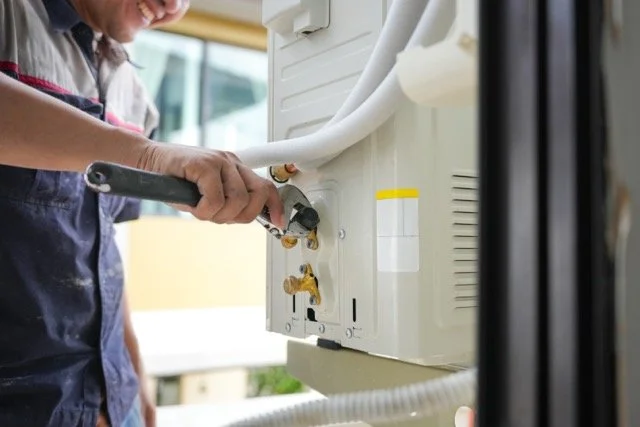
The best way to avoid AC breaker trips—and the expensive repairs they often signal—is consistent preventive maintenance. Most electrical failures don't happen suddenly; they develop over months or years as components wear, connections loosen, and systems accumulate stress from Michigan's climate extremes.
A professional spring AC tune-up catches these problems early, when they're cheap and easy to fix. Here's what our technicians check during the electrical portion of a maintenance visit:
- Tighten all electrical connections at the disconnect, contactor, capacitor, and compressor terminals
- Test capacitor microfarad ratings and replace any that have drifted out of spec (even if they haven't failed completely yet)
- Inspect contactor contacts for pitting, burning, or wear and replace if necessary
- Measure voltage and current draw to establish baseline performance and identify developing problems
- Clean corrosion from terminals and apply protective coating to slow future corrosion
- Verify proper breaker size and check for signs of breaker wear or overheating
- Inspect wiring insulation for cracking, brittleness, or rodent damage
This electrical inspection is part of our comprehensive maintenance service, along with refrigerant checks, coil cleaning, and airflow testing. The Next Care Plan makes this automatic—you get two visits per year (spring AC tune-up, fall furnace tune-up) for $5/month, with priority scheduling and 10% off any repairs we find.
The cost prevention math is straightforward: a $60/year maintenance plan versus $1,500-$4,000 for compressor replacement, $1,200-$3,500 for AC system replacement, or $300-$600/year in wasted energy from a poorly-maintained system. Preventive maintenance isn't an expense—it's insurance against expensive failures.
Beyond professional maintenance, homeowners should:
- Check and replace air filters every 30-90 days depending on conditions
- Keep the outdoor unit clear of leaves, grass clippings, and debris
- Trim vegetation back at least 2 feet from the outdoor unit for proper airflow
- Listen for unusual sounds and address them promptly before they become failures
- Schedule maintenance in April or May, before the summer cooling rush
These simple habits extend equipment life, improve efficiency, and catch problems early when they're minor inconveniences rather than emergency breakdowns during the first 90-degree day in June.
AC Breaker Tripping in Macomb Township? We'll Diagnose It Right the First Time
NEXT Heating & Cooling has been keeping Southeast Michigan homes comfortable for over 35 years. Our NATE-certified technicians bring systematic diagnostic skills and honest recommendations—no upselling, no guesswork. We'll identify exactly why your breaker trips and give you clear options for repair or replacement.
Schedule Your Diagnostic ServiceServing Macomb Township, Sterling Heights, Clinton Township, Shelby Township, and all of Macomb County. Same-day emergency service available.
Frequently Asked Questions
Hot days force your AC to run longer and work harder, which stresses components and increases current draw. A compressor that's marginal—not quite failed, but wearing out—might run fine on mild days but trip the breaker when outdoor temperatures hit 85-90°F and the system runs continuously. Similarly, a weak capacitor might provide enough boost on cooler days but fail to support the compressor during peak demand. This pattern often indicates a component that's near end-of-life and needs replacement before complete failure.
No—this is dangerous and violates electrical code. Breakers are sized to match the wire gauge, not the other way around. If you install a 40-amp breaker on 12-gauge wire rated for 20 amps, the wire will overheat and potentially cause a fire before the breaker trips. The breaker exists to protect the wire, not just the equipment. If your AC needs a larger breaker, you need a licensed electrician to verify the wire gauge can handle the increased amperage or run new wire. Never simply install a bigger breaker without professional evaluation.
Cost depends entirely on the cause. Simple fixes like capacitor replacement run $150-$350. Contactor replacement is similar. If you need a new compressor, expect $1,500-$3,000. If the compressor has failed and your system is over 12 years old, full system replacement ($3,500-$7,000 depending on size and efficiency) often makes more financial sense than major repairs on aging equipment. We always provide diagnostic findings and cost options before proceeding with repairs—you'll know exactly what you're paying for and why.
No. Reset the breaker once to see if it was a one-time event. If it trips again, stop. Repeatedly resetting a breaker that's tripping due to overcurrent or a short circuit can damage your compressor (a $2,000+ repair), overheat wiring, or create fire hazards. The breaker is doing its job—protecting your home from electrical faults. If you need cooling while waiting for service, use fans or window units on separate circuits. Don't compromise safety for temporary comfort.
Yes, for several reasons. Modern AC systems use more efficient compressor motors that draw less current for the same cooling capacity. They include better start components (soft-start kits on many models) that reduce the startup surge current. New installations include fresh electrical connections, properly-sized breakers, and surge protection. If your current system is 15+ years old and experiencing electrical problems, replacement eliminates the worn components, corroded connections, and aging parts that cause breaker trips. You also gain 30-40% better efficiency, reducing operating costs by $300-$600/year in a typical Michigan home.
Yes. When the outdoor condenser coil gets clogged with cottonwood seeds, grass clippings, or dirt, airflow drops and the compressor can't reject heat efficiently. The system's head pressure rises, forcing the compressor to work harder and draw more current. Over time, this can trip the breaker—especially on hot days when the system is already stressed. Regular coil cleaning (part of our spring maintenance service) prevents this problem and improves efficiency by 10-15%. If you notice reduced airflow through the outdoor unit or see debris buildup on the coil fins, schedule a cleaning before it causes component damage.
A thorough electrical diagnostic typically takes 45-90 minutes, depending on what we find. We measure current draw, test capacitors and contactors, inspect all connections, check refrigerant pressures, and verify proper system operation. If we identify a simple fix like a bad capacitor, we often carry the part on the truck and complete the repair same-day. For more complex issues requiring parts ordering or system replacement decisions, we'll provide detailed findings and recommendations so you can make an informed choice without pressure. Our diagnostic fee applies toward any repair work we perform.