

CO Detector Is Going Off? What It Means & What to Do Now

Your CO detector is going off. You hear the alarm, and your first question is whether this is real or just another low-battery chirp.
Here's what you need to know right now: if your carbon monoxide detector is sounding a continuous alarm pattern, not the single chirp of a dying battery, you need to get everyone out of the house immediately. Call 911 from outside. Do not try to find the source yourself.
Carbon monoxide is colorless, odorless, and deadly. In Michigan homes, the most common source is your furnace, especially during our brutal winter months when heating systems run continuously and ice or snow can block exhaust vents. We've responded to CO emergencies across Macomb County, Oakland County, and St. Clair County for over 35 years, and the pattern is consistent: older furnaces with cracked heat exchangers, blocked flue pipes, or backdrafting issues are almost always the culprit.
This guide covers what your CO detector is actually telling you, why Michigan furnaces are particularly vulnerable, and what happens during an emergency HVAC inspection after a CO event. If you need immediate help, NEXT Heating & Cooling offers 24/7 emergency service with NATE-certified technicians who can perform combustion safety testing and get your home safe again.
What Your CO Detector Is Actually Telling You
Carbon monoxide detectors follow UL 2034 standards, which means they're calibrated to alarm at specific CO concentration levels over time. Understanding these thresholds helps you assess the urgency.
A continuous alarm (four beeps, pause, four beeps) means the detector has identified dangerous CO levels. The UL standard requires alarms to sound within these timeframes:
- 70 parts per million (ppm): alarm within 60 to 240 minutes
- 150 ppm: alarm within 10 to 50 minutes
- 400 ppm: alarm within 4 to 15 minutes
For context, the EPA considers 9 ppm safe for continuous exposure over eight hours. Anything above that starts causing physiological effects. At 70 ppm, you're looking at headaches and fatigue within a few hours. At 150 ppm, you'll experience disorientation, nausea, and potentially loss of consciousness. At 400 ppm, you're in life-threatening territory within minutes.
A single chirp every 30 to 60 seconds typically means the battery is low or the detector has reached its end-of-life (most CO detectors expire after 5 to 7 years). Check the manufacture date on the back of the unit. If it's older than seven years, replace it regardless of whether it's chirping.
False alarms do happen, but they're less common than homeowners think. High humidity, chemical fumes from cleaning products, or malfunctioning detectors can trigger alarms. However, you should never assume it's false. The only way to know for certain is to evacuate, call emergency services, and have them test CO levels with professional equipment.
Michigan building code (based on the International Residential Code) requires CO detectors on every level of the home and within 10 feet of each bedroom. If one detector is alarming but others aren't, that tells you the CO source is likely closer to the sounding unit. In most Michigan homes, that points directly to the furnace room in the basement.
Why Furnaces Are the #1 Source of CO in Michigan Homes
Furnaces produce carbon monoxide as a byproduct of combustion. In a properly functioning system, that CO vents safely outside through the flue pipe. When something goes wrong with the heat exchanger, venting system, or combustion process, CO leaks into your living space instead.
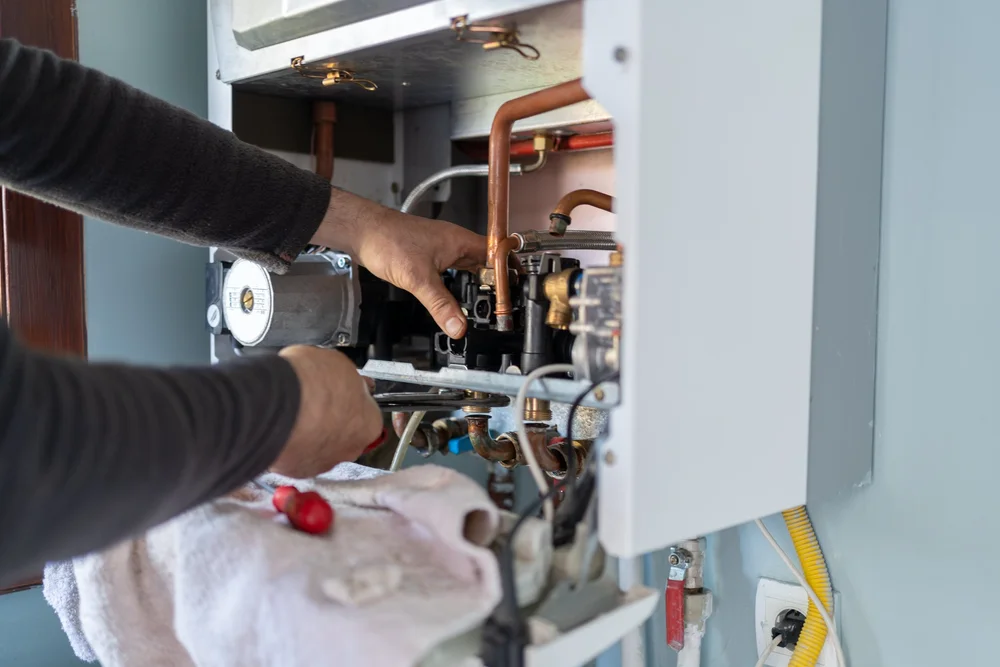
The heat exchanger is the metal chamber where combustion happens. Hot gases from burning natural gas or propane flow through it, warming the air that circulates through your ductwork. Over time, especially in furnaces older than 15 years, metal fatigue causes cracks. Those cracks allow CO to escape into the air handler and get distributed throughout your home.
We see this constantly in Southeast Michigan homes built in the 1960s through 1980s. The original Carrier, Lennox, or Bryant furnaces installed during construction are still running, often 30 to 40 years old, with heat exchangers that have been through countless heating cycles. Homeowners don't realize how much thermal stress those exchangers endure during a Michigan winter when the furnace runs 12 to 16 hours per day during polar vortex events.
Michigan-Specific Risk: Ice dams and heavy snow can block furnace exhaust vents on the exterior of your home. When the flue pipe is blocked, combustion gases can't escape, and the furnace backdrafts CO into the house. This is especially common in homes with sidewall venting (90%+ efficiency furnaces) where snow piles up against the foundation.
Backdrafting is another major issue in older Michigan homes with natural draft furnaces (80% AFUE models with metal chimneys). These systems rely on buoyancy to push exhaust gases up and out. When your home is too airtight (common after window replacements or adding insulation) or when exhaust fans in the kitchen or bathroom create negative pressure, the furnace can't draft properly. Combustion gases spill back into the basement instead of venting outside.
Other CO sources include:
- Gas water heaters with similar venting issues
- Gas fireplaces or space heaters
- Attached garages where cars are running (even briefly)
- Generators run too close to the house during power outages
But in our experience responding to CO calls across Troy, Warren, and Clinton Township, the furnace is the source more than 80% of the time. That's why any CO alarm should trigger an immediate furnace inspection before you use your heating system again. If you've recently experienced a furnace that won't start after a power outage, the issue could be related to safety lockouts designed to prevent CO leaks.
Immediate Steps When Your CO Alarm Sounds
When your CO detector sounds a continuous alarm, follow this protocol exactly:
1. Evacuate immediately. Get every person and pet out of the house. Do not stop to investigate, gather belongings, or turn off appliances. Carbon monoxide poisoning happens fast, and symptoms (headache, dizziness, confusion) impair your ability to make decisions. Just get out.
2. Call 911 from outside. Once you're at a safe distance (across the street or at a neighbor's house), call 911 or your local fire department. Tell them your CO detector is alarming. They will dispatch emergency responders with CO detection equipment.
3. Do not re-enter until cleared. Fire department personnel will use professional CO meters to test levels throughout your home. These meters are far more sensitive and accurate than residential detectors. They'll identify the concentration and help pinpoint the source. Do not go back inside until they've confirmed it's safe.
4. Ventilate once cleared. If the fire department clears you to return and CO levels have dropped, open windows and doors to ventilate. Turn off your furnace at the thermostat and at the emergency shutoff switch (usually a red switch near the furnace or at the top of the basement stairs).
5. Schedule immediate HVAC inspection. Do not turn your furnace back on until a licensed HVAC contractor performs combustion safety testing. This is not optional. Even if CO levels have dropped and the fire department says you can stay, the source is still there. Our heating and cooling services in Metro Detroit include emergency CO response with same-day availability.
What NOT to do:
- Do not assume it's a false alarm and ignore it
- Do not try to find the CO source yourself
- Do not open windows first and then stay inside
- Do not reset the detector and go back to sleep
- Do not run your furnace "just for a few minutes" to stay warm
If anyone in the home is experiencing symptoms (headache, nausea, dizziness, confusion, chest pain), tell the 911 operator immediately. They may dispatch EMS along with the fire department. CO poisoning requires medical evaluation, even if symptoms seem mild.
How HVAC Techs Find the CO Source
After a CO event, a licensed HVAC contractor will perform a comprehensive combustion safety inspection. This goes far beyond a standard furnace tune-up. Here's what we do during these inspections across Southeast Michigan.
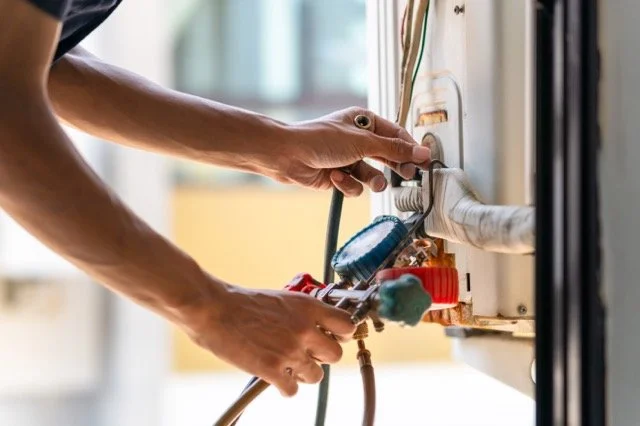
Combustion analysis testing is the foundation. We use digital analyzers (Bacharach or UEi are the industry standards) that measure CO levels in the flue gas as it exits the furnace. We insert a probe into the vent pipe and take readings while the furnace runs through a full heating cycle.
Normal CO levels in flue gas range from 0 to 100 ppm for natural gas furnaces. Anything above that indicates incomplete combustion, which means the burners aren't adjusted correctly, there's insufficient combustion air, or the heat exchanger is compromised. If we're seeing elevated CO in the flue, we know there's a problem even if it hasn't leaked into the living space yet.
We also measure ambient CO levels in the furnace room and near the return air grilles. If we detect CO in the air around the furnace (anything above 9 ppm), that's direct evidence of a leak. The next step is finding where it's coming from.
Heat exchanger inspection is the most critical part. We visually inspect the exchanger using mirrors and borescopes to look for cracks, rust-through, or separation at the seams. On older furnaces, we'll often see hairline cracks that are invisible until the metal heats up and expands. That's why we run the furnace during the inspection rather than examining it cold.
Some cracks are obvious. Others require more advanced testing. We might use a tracer gas or smoke test, where we introduce a visible smoke into the combustion chamber and watch for it to escape into the blower compartment. If smoke crosses over, CO is crossing over too.
Flue draft testing measures whether the venting system is pulling combustion gases out properly. We use a manometer to measure draft pressure in the flue pipe. Negative pressure (suction) is what you want. If we're seeing neutral or positive pressure, the flue is blocked, undersized, or the furnace is backdrafting.
In Michigan homes with metal chimneys serving both the furnace and water heater, we check for common venting. If the water heater vents into the same chimney and it's oversized for the furnace's output (common when you replace an old 100,000 BTU furnace with a modern 60,000 BTU model), the chimney is too large and cold to draft properly. Combustion gases condense, corrode the liner, and eventually spill back into the basement.
Burner and flame inspection tells us about combustion quality. A properly adjusted gas burner produces a steady blue flame with minimal yellow tipping. If we see lazy yellow flames, flame rollout, or the burners cycling on and off repeatedly, that's incomplete combustion. Incomplete combustion produces CO.
We also check the furnace's intake air supply. Furnaces need air for combustion. If the furnace room is too tight (common in finished basements) or if return air grilles are pulling air from the same space where the furnace vents, you can create a negative pressure situation that starves the burners and causes backdrafting.
After identifying the source, we'll provide a written report with CO readings, photos of any damage, and a recommendation. If the heat exchanger is cracked, the furnace is done. Heat exchangers on residential furnaces aren't economically repairable. You're looking at replacement. If the issue is venting, burner adjustment, or blocked flues, those are usually fixable same-day.
This level of diagnostic work is exactly what our NATE-certified HVAC technicians are trained to perform. We don't guess. We test, measure, and show you exactly what's wrong.
Preventing CO Emergencies: What Michigan Homeowners Need
Most CO emergencies are preventable with routine maintenance and proper detector placement. Here's what actually works in Michigan homes.
Annual furnace inspections are non-negotiable. A qualified technician should inspect your furnace every fall before heating season. That inspection should include combustion analysis, heat exchanger examination, and venting checks, not just a filter change and thermostat test.
Our Next Care Plan includes two annual visits (fall furnace tune-up and spring AC tune-up) for $5 per month. During the furnace visit, we perform full combustion safety testing on every system. We've caught cracked heat exchangers, blocked flues, and dangerous CO levels dozens of times during routine maintenance visits, long before they became emergencies.
If your furnace is older than 15 years, those inspections become even more critical. Heat exchangers don't last forever. The typical lifespan for a residential gas furnace in Michigan is 15 to 20 years, depending on maintenance and runtime. After that, the risk of heat exchanger failure increases every year. If you're wondering about furnace replacement costs in Troy, Michigan, we've written a detailed breakdown of what you should expect to pay in 2026.
CO detector placement matters more than most homeowners realize. Michigan code requires detectors on every level of the home and within 10 feet of bedroom doors. Install them according to manufacturer instructions, which usually means on the wall about five feet above the floor (CO mixes with air and doesn't necessarily sink or rise).
Don't install CO detectors directly next to fuel-burning appliances. You'll get nuisance alarms from normal startup emissions. And don't install them in bathrooms, kitchens, or garages where humidity and fumes can cause false alarms.
Replace CO detectors every 5 to 7 years. The sensors degrade over time and become less accurate. Check the manufacture date on the back of the unit and mark your calendar.
Winter-Specific Tip: After heavy snowfall, check your furnace exhaust vents on the exterior of your home. Clear any snow or ice blocking the PVC pipes (usually white pipes coming out of the foundation). A blocked exhaust vent will cause the furnace to shut down on a safety lockout, or worse, backdraft CO into the house.
Signs your furnace needs immediate service:
- Yellow or orange flames instead of blue at the burners
- Soot buildup around the furnace or on the vent pipe
- Rust or corrosion on the vent pipe or heat exchanger
- Condensation or water pooling around the furnace base
- Frequent pilot light outages (on older furnaces with standing pilots)
- The furnace cycles on and off rapidly without heating the house
- Strange smells (burning, chemical, or sulfur odors)
If you notice any of these, don't wait for your annual inspection. Call for service immediately. These are all potential indicators of combustion problems that can lead to CO production. Similar to when your thermostat says call for service, these warning signs shouldn't be ignored.
Keep combustion air pathways clear. Don't store boxes, holiday decorations, or laundry around the furnace. The furnace needs air to breathe. Blocking airflow creates incomplete combustion and CO production.
Cost Reality: Furnace Repairs vs. Replacement After CO Events
When a CO event traces back to your furnace, you're facing a decision: repair or replace. Here's the financial reality based on what we see across Macomb, Oakland, and St. Clair counties.
Heat exchanger replacement is almost never worth it. The part itself costs $800 to $1,500 depending on the furnace model. Labor adds another $1,000 to $2,000 because replacing a heat exchanger means disassembling most of the furnace. You're looking at $2,000 to $3,500 total for a repair on a furnace that's likely 15+ years old and may have other components near failure.
At that price point, replacement makes more sense. A new high-efficiency furnace (95% to 98% AFUE) from Carrier, Lennox, Trane, or Rheem costs $3,500 to $6,500 installed, depending on size and features. You get a new heat exchanger with a 20-year warranty, a new blower motor, new controls, and a system that's 15% to 25% more efficient than your old one. The energy savings alone often pay for the difference within a few years.
If the CO issue is caused by venting problems rather than heat exchanger failure, repairs are more reasonable. Re-lining a chimney costs $1,500 to $3,000. Installing a new PVC vent system for a high-efficiency furnace runs $800 to $1,500. Adjusting burners, cleaning flame sensors, or replacing a draft inducer motor costs $200 to $600.
But here's the hard truth: if your furnace is old enough to have a cracked heat exchanger, it's old enough to have other problems waiting to happen. The blower motor, gas valve, and control board have all been running just as long. Repairing one major component on a 20-year-old furnace doesn't extend its life by another 20 years. You're buying time, maybe two to five years if you're lucky.
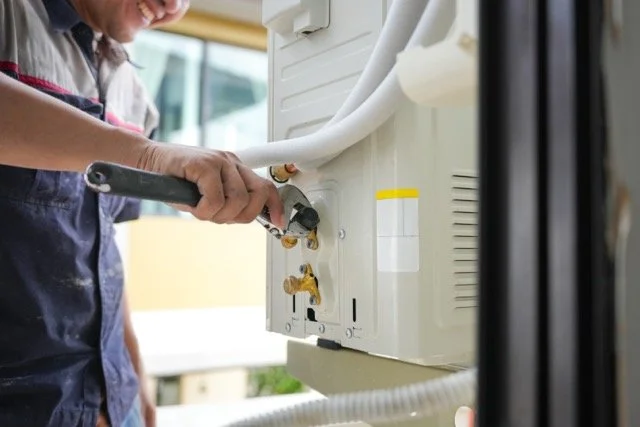
Financing is available for furnace replacements, and most manufacturers (Carrier, Lennox, Bryant) offer rebates and promotional financing during heating season. We also work with homeowners to identify utility rebates and federal tax credits for high-efficiency equipment. The Inflation Reduction Act offers up to $2,000 in tax credits for qualifying furnaces and heat pumps installed through 2032.
Emergency replacements are more expensive than planned replacements because you don't have time to shop around or wait for off-season pricing. If your furnace fails in January during a polar vortex, you're paying whatever it takes to get heat back. That's why we recommend replacing furnaces proactively once they hit 15 to 18 years old, ideally in the fall before heating season starts.
If you're in that situation now, dealing with a CO event and facing replacement, our team can usually install a new furnace within 24 to 48 hours. We keep common sizes in stock (60,000 to 100,000 BTU) from Carrier, Lennox, and Goodman. We'll perform a proper load calculation to make sure the new furnace is sized correctly for your home, not just match the old one's tonnage.
For homeowners in Sterling Heights, Warren, or Shelby Township dealing with aging furnaces, understanding the benefits of an HVAC maintenance plan can help you avoid emergency replacements and extend equipment life.
Need Emergency HVAC Service After a CO Event?
NEXT Heating & Cooling offers 24/7 emergency service with NATE-certified technicians across Southeast Michigan. We'll perform combustion safety testing, identify the CO source, and get your home safe again. No pressure, no upselling. Just honest diagnostics and fair pricing.
Schedule Emergency ServiceFrequently Asked Questions
No. If your CO detector has alarmed, you need to evacuate, call 911, and have the home tested by emergency responders. Do not use your furnace again until a licensed HVAC contractor performs combustion safety testing and identifies the source. Even if the alarm stops, the CO source is still there. Resetting the detector without addressing the problem puts everyone in the home at risk.
A comprehensive combustion safety inspection typically costs $150 to $300 in Southeast Michigan. This includes combustion analysis testing, heat exchanger inspection, flue draft testing, and a written report with CO readings. If you're a Next Care Plan member, there's no service call fee, and the inspection is included. Emergency service calls outside business hours may have additional trip charges ($75 to $150), but safety testing is the same process regardless of when we arrive.
The EPA considers 9 parts per million (ppm) safe for continuous exposure over eight hours. Anything above that level for extended periods can cause health effects. CO detectors are required to alarm at 70 ppm within 60 to 240 minutes, at 150 ppm within 10 to 50 minutes, and at 400 ppm within 4 to 15 minutes. These thresholds are based on UL 2034 standards. If you're detecting any CO in your home during normal operation, that indicates a problem that needs immediate attention.
Technically yes, but economically it rarely makes sense. Heat exchanger replacement costs $2,000 to $3,500 in parts and labor. If your furnace is old enough to have a cracked heat exchanger (typically 15+ years), the rest of the components are equally aged. You'd be spending 60% to 80% of the cost of a new furnace to repair an old one, without gaining any efficiency improvement or warranty coverage on the other parts. In 35 years of HVAC work in Michigan, we've almost never recommended heat exchanger replacement. Full furnace replacement is the safer, more cost-effective choice.
Replace CO detectors every 5 to 7 years, regardless of whether they're still functioning. The sensors degrade over time and become less accurate. Check the manufacture date printed on the back of the detector and mark your calendar for replacement. If your detector is chirping (single beep every 30 to 60 seconds), check whether it's a low battery or an end-of-life warning. Many newer detectors have a specific end-of-life alarm pattern that's different from the low battery chirp.
Evacuate immediately and call 911, just as you would during normal conditions. Power outages don't change CO safety protocols. If you're running a generator, make sure it's at least 20 feet from the house and never in the garage, basement, or near windows. Generators are a major source of CO poisoning during outages. If your furnace won't restart after power is restored and your CO detector alarmed during the outage, do not attempt to restart it yourself. Call for professional service to test for CO and inspect the system before using it again.
It depends on your policy and the specific circumstances. Most homeowners insurance policies don't cover mechanical failure or normal wear and tear, which is what causes heat exchanger cracks. However, if the CO event caused property damage (medical bills, temporary housing, damaged belongings), that might be covered under your policy's liability or personal property provisions. If the CO leak was caused by something sudden and accidental (like a car hitting your home and damaging the flue pipe), that's more likely to be covered. Check with your insurance agent and get documentation from your HVAC contractor showing the cause of the CO leak.