

Dual-Fuel HVAC Systems Explained for West Bloomfield Homeowners

If you've been researching heating systems for your West Bloomfield home, you've probably run into the term "dual-fuel HVAC system." It sounds complicated, but the concept is straightforward: you get a heat pump for mild weather and a gas furnace for the coldest days. The system automatically switches between them based on outdoor temperature and energy costs.
Michigan's climate makes dual-fuel systems particularly appealing. We see 70-degree October days followed by January nights at -5°F. A dual-fuel setup lets you use the most efficient heating source for each condition, potentially cutting your annual heating costs by 30-40% compared to running a gas furnace alone.
Over 35 years servicing homes across Southeast Michigan, we've installed hundreds of dual-fuel systems. We've also seen homeowners waste money on poorly sized equipment or systems that never actually switch over properly. This guide explains how dual-fuel works, what it costs in West Bloomfield, and whether it makes sense for your home.
How Dual-Fuel HVAC Systems Actually Work
A dual-fuel system combines two heating technologies in one integrated package: an electric heat pump and a gas furnace. Both connect to your existing ductwork, but only one runs at a time.
Here's the mechanical sequence: The heat pump handles heating duties whenever outdoor temperatures stay above the "balance point" — typically 30-35°F for most Michigan installations. Heat pumps move heat from outdoor air into your home using a refrigeration cycle. When it's 40°F outside, a modern heat pump can deliver heat at 300% efficiency (for every unit of electricity consumed, you get three units of heat).
As outdoor temperatures drop, heat pump efficiency declines. At some point — the balance point — it becomes cheaper to heat your home with the gas furnace. The system's control board monitors outdoor temperature via a sensor and switches to gas automatically. You don't touch the thermostat. You don't flip any switches. The changeover happens seamlessly.
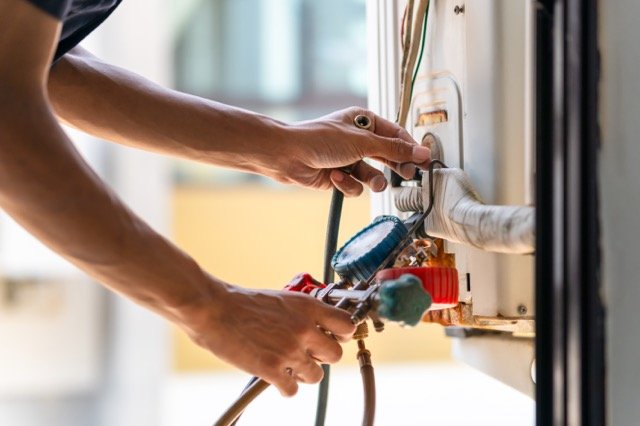
The balance point isn't arbitrary. It's calculated based on your local electricity and natural gas rates. In West Bloomfield, with current DTE Energy rates, the balance point typically falls between 30-35°F. Below that temperature, natural gas becomes the more economical fuel source.
Important: Dual-fuel is not the same as a "hybrid" system marketed by some manufacturers. True dual-fuel systems use a gas furnace as backup. Some "hybrid" systems use electric resistance heat strips instead, which are far less efficient and more expensive to operate during Michigan winters.
The thermostat and control system are critical. Older thermostats can't manage dual-fuel operation properly. You need a compatible smart thermostat or a manufacturer-specific control board that can read outdoor temperature, calculate operating costs in real time, and make switching decisions automatically. When we install heating and cooling services in Metro Detroit, we always verify control compatibility before finalizing equipment selection.
Why Dual-Fuel Makes Sense in Michigan
Michigan's heating season runs roughly 180-200 days per year. But those days aren't all equally cold. According to NOAA data for Southeast Michigan, outdoor temperatures stay above 32°F for about 60% of the heating season. That's where dual-fuel systems shine.
During October, November, March, and April — the "shoulder months" — daytime highs often reach 40-55°F. Nighttime lows might drop to 30-35°F. A heat pump operates at peak efficiency in this range, delivering 250-350% efficiency. Your gas furnace, by comparison, operates at 95-98% efficiency (even the best condensing models). The heat pump uses less energy and costs less to run.
When January arrives and outdoor temps drop to 10°F or below, the heat pump's efficiency falls to around 150-180%. At that point, the gas furnace becomes more cost-effective. The system switches over, and you get reliable heat without the electric bill spike that comes from running a heat pump in extreme cold.
We see this play out in real utility bills. A 2,000-square-foot home in West Bloomfield with a properly sized dual-fuel system typically sees heating costs of $180-220 per month during peak winter (December-February) and $60-90 per month during shoulder months. The same home with a 96% AFUE gas furnace alone would run $220-280 in winter and $90-130 in shoulder months.
Michigan's grid also benefits from dual-fuel adoption. During polar vortex events, when everyone cranks up electric heat, grid demand spikes and electricity prices can surge. Dual-fuel systems automatically shift to gas during these events, reducing grid strain and keeping your costs predictable. This is one reason why understanding heat pump performance in Michigan winters matters so much for system selection.
Real Cost Analysis for West Bloomfield Homes
Let's talk numbers. Dual-fuel systems cost more upfront than a standard gas furnace or a heat pump alone. But the operating cost savings can pay back that premium in 4-7 years, depending on your home's size and insulation quality.
Equipment and Installation Costs (2026 Pricing)
| System Type | Equipment Cost | Installation Cost | Total |
|---|---|---|---|
| Gas Furnace Only (96% AFUE) | $2,800-$4,200 | $1,500-$2,500 | $4,300-$6,700 |
| Heat Pump Only (16 SEER) | $3,500-$5,500 | $2,000-$3,500 | $5,500-$9,000 |
| Dual-Fuel System (Heat Pump + Furnace) | $5,500-$8,500 | $3,000-$4,500 | $8,500-$13,000 |
These ranges reflect mid-tier to premium equipment from manufacturers like Carrier, Lennox, and Trane. Budget brands (Goodman, Amana) run 15-20% less. Premium variable-speed systems with advanced controls run 20-30% more.
Installation costs vary based on existing ductwork condition, electrical service capacity (heat pumps require 240V circuits), and whether you need a new thermostat or control system. Homes built before 1990 often need ductwork modifications to handle the different airflow characteristics of heat pumps.
Annual Operating Cost Comparison
For a typical 2,000-square-foot West Bloomfield home with average insulation:
- Gas furnace only: $1,450-$1,750/year (based on current DTE natural gas rates)
- Heat pump only: $1,650-$2,100/year (heat pumps struggle in extreme cold, driving up electric bills)
- Dual-fuel system: $950-$1,250/year (heat pump handles 60% of the season, furnace covers the coldest 40%)
The dual-fuel system saves $500-800 annually compared to gas-only and $700-850 compared to heat pump-only. At those savings rates, the $4,000-6,000 premium over a gas furnace pays back in 5-7 years. After that, you're pocketing $500-800 every year.
These numbers assume you're replacing both heating and cooling. If you already have a working AC unit and only need heating, the math changes. In that case, a high-efficiency gas furnace might make more sense unless your AC is also near end-of-life. If you're weighing AC repair vs replacement decisions, it's worth considering a dual-fuel package deal.
Best Dual-Fuel Systems for Michigan Climate
Not all dual-fuel systems perform equally in Michigan winters. You need a heat pump rated for cold-climate operation and a furnace with modulating or two-stage gas valves for smooth transitions.
Carrier Infinity Series
Carrier's Infinity heat pumps use Greenspeed intelligence to maintain heating capacity down to -5°F. The Infinity 96 gas furnace pairs well, offering 96% AFUE efficiency and variable-speed blower operation. The Infinity control system manages switchover seamlessly and integrates with the Carrier Cor thermostat for remote monitoring.
We install a lot of Carrier Infinity systems in Oakland County. They're reliable, parts are readily available, and the warranty coverage is solid. Expect to pay $10,000-$13,000 installed for a complete Infinity dual-fuel package in a 2,000-square-foot home.
Lennox Signature Collection
Lennox's SLP99V furnace is one of the most efficient gas furnaces on the market at 99% AFUE. Pair it with the XP25 heat pump (23 SEER, operates down to -5°F), and you get a dual-fuel system that delivers exceptional comfort and efficiency. The iComfort S30 thermostat handles all the control logic and provides detailed energy usage reports.
Lennox systems cost slightly more than Carrier — figure $11,000-$14,000 installed — but the efficiency gains can justify the premium if you heat a larger home or have higher-than-average utility rates.
Trane XV Series
Trane builds tough equipment. The XV20i heat pump maintains capacity down to 0°F and uses variable-speed compressor technology for precise temperature control. The XV95 furnace offers 97% AFUE efficiency and two-stage heating. Trane's reputation for durability makes these systems popular with homeowners who plan to stay in their homes long-term.
Pricing runs $10,500-$13,500 installed. Trane warranties are among the best in the industry, and the equipment holds up well in Michigan's freeze-thaw cycles.
What to Look for in Equipment Specs
When evaluating dual-fuel systems, focus on these specs:
- Heat pump HSPF rating: Look for 9.0 or higher. HSPF (Heating Seasonal Performance Factor) measures heating efficiency over a full season. Higher is better.
- Low-temperature capacity retention: The heat pump should maintain at least 70% of its rated capacity at 5°F. Many cheaper models drop to 50% or less.
- Furnace AFUE rating: 95% minimum. Don't pair a premium heat pump with an 80% AFUE furnace — you're wasting the dual-fuel advantage.
- Variable-speed blower: Essential for smooth transitions between heat pump and furnace modes. Single-speed blowers create comfort issues during switchover.
- Smart control compatibility: The system needs a thermostat or control board that can read outdoor temperature and calculate real-time fuel costs. Generic thermostats can't do this.
If you're comparing systems and need help making sense of the spec sheets, a reliable HVAC contractor in Metro Detroit can walk you through the options and explain how each system would perform in your specific home.
Installation Considerations and Requirements
Dual-fuel systems require more planning than a simple furnace swap. Here's what needs to happen for a proper installation:
Load Calculation
Every dual-fuel installation should start with a Manual J load calculation. This determines the exact heating and cooling capacity your home needs based on square footage, insulation levels, window types, air leakage, and local climate data. Oversized equipment short-cycles and wastes energy. Undersized equipment can't keep up during extreme weather.
We see a lot of homes in West Bloomfield with oversized furnaces — 100,000 BTU units in homes that only need 60,000-70,000 BTU. When you add a heat pump to an already oversized furnace, the system never operates efficiently. The load calculation fixes this. Similar sizing issues come up when homeowners deal with furnace short-cycling problems caused by improper equipment selection.
Electrical Service
Heat pumps draw significant amperage. A typical 3-ton heat pump needs a dedicated 30-40 amp, 240-volt circuit. If your home has an older 100-amp electrical panel, you might need a service upgrade. Homes built after 2000 usually have 200-amp service and can handle the load without modifications.
The outdoor heat pump unit also needs proper clearance — at least 12 inches on all sides for airflow, and positioned away from dryer vents, gas meters, and areas where snow drifts accumulate. We've seen units installed too close to foundation plantings or HVAC vents, which restricts airflow and kills efficiency.
Ductwork Compatibility
Heat pumps move more air at lower temperatures than furnaces. If your existing ductwork was designed for a furnace alone, it might be undersized for dual-fuel operation. This shows up as weak airflow, uneven temperatures, and noise.
A proper duct assessment checks for:
- Adequate return air capacity (often the biggest problem in older homes)
- Proper supply register sizing and placement
- Duct leakage (common in basement installations with exposed ductwork)
- Insulation levels in unconditioned spaces (attics, crawlspaces)
Duct modifications add $800-$2,500 to installation costs, depending on the scope of work. But skipping this step guarantees poor system performance and comfort complaints.

Thermostat and Controls
Generic programmable thermostats can't manage dual-fuel systems. You need either a manufacturer-specific smart thermostat (like Carrier Cor, Lennox iComfort, or Trane ComfortLink) or an advanced third-party thermostat with dual-fuel logic (Ecobee and Honeywell both offer models with this capability).
The thermostat or control board needs to:
- Monitor outdoor temperature via a wired sensor
- Calculate the balance point based on fuel costs
- Switch between heat pump and furnace automatically
- Prevent simultaneous operation (which wastes energy)
- Provide status feedback so you know which system is running
We typically recommend manufacturer-matched thermostats for dual-fuel installations. They're designed to work with the specific equipment and eliminate compatibility issues. Third-party thermostats work, but setup is more complex and tech support can be hit-or-miss.
When to Call a Professional
Dual-fuel systems aren't DIY projects. The refrigerant handling, gas line connections, electrical work, and control programming all require licensed technicians and specialized tools. But beyond installation, there are specific situations where you should call for service:
System Not Switching Over
If outdoor temps drop below 30°F and your heat pump keeps running (you'll hear the outdoor unit operating), something's wrong with the control logic or outdoor temperature sensor. The system should switch to gas automatically. Continuing to run the heat pump in extreme cold wastes electricity and can damage the compressor.
Uneven Heating or Cold Spots
Dual-fuel systems should deliver consistent comfort regardless of which heating source is active. If you notice temperature swings or cold spots when the system switches modes, the ductwork might be undersized or the blower speed settings need adjustment.
High Electric Bills Despite Dual-Fuel Operation
If your electric bills stay high even during mild weather when the heat pump should be handling most of the load, the system might not be switching properly, or the heat pump might be low on refrigerant (which kills efficiency). A service call can diagnose the issue before you waste a full heating season on high bills.
Choosing the Right Contractor
Not all HVAC contractors have experience with dual-fuel systems. When you're getting quotes, ask:
- Do they perform Manual J load calculations, or do they just eyeball equipment sizing?
- What brands do they install, and why? (A contractor who only pushes one brand might not have your best interests in mind.)
- Will they assess your ductwork and electrical service before quoting?
- What kind of warranty and service support do they offer after installation?
- Are their technicians NATE-certified?
At NEXT Heating & Cooling, our NATE-certified HVAC technicians have been installing dual-fuel systems across Southeast Michigan for over 35 years. We don't work on commission, so we're not incentivized to upsell you on equipment you don't need. We do load calculations on every installation, assess ductwork and electrical capacity, and explain your options clearly. If you're considering a dual-fuel system or need help deciding whether it makes sense for your home, we'll give you an honest assessment. For guidance on selecting the right contractor, our post on choosing a furnace installation contractor covers the key questions to ask.
Maintenance Requirements
Dual-fuel systems need regular maintenance on both the heat pump and the furnace. That means two annual tune-ups: one in the fall before heating season (furnace focus) and one in the spring before cooling season (heat pump/AC focus).
The fall tune-up should include:
- Gas furnace burner inspection and cleaning
- Heat exchanger inspection for cracks
- Blower motor lubrication and belt inspection
- Flame sensor cleaning
- Thermostat calibration and control logic testing
The spring tune-up should include:
- Refrigerant charge verification
- Condenser coil cleaning
- Electrical connection inspection
- Compressor amp draw testing
- Outdoor fan motor inspection
Our $5/month HVAC maintenance plan covers both tune-ups, priority scheduling, and 10% off any repairs. For dual-fuel systems, regular maintenance isn't optional — it's the only way to ensure the system switches properly and both heating sources operate at peak efficiency.
Ready to Explore Dual-Fuel for Your West Bloomfield Home?
NEXT Heating & Cooling has been keeping Michigan homes comfortable for over 35 years. Our NATE-certified technicians will assess your home, explain your options, and provide honest recommendations — no pressure, no upselling. Get a free estimate and find out if dual-fuel makes sense for your home.
Schedule Your Free EstimateFrequently Asked Questions About Dual-Fuel HVAC Systems
The heat pump component typically lasts 15-20 years with proper maintenance. The gas furnace can last 20-25 years. Because both systems share the heating load rather than one system running constantly, wear and tear is distributed, which can actually extend the lifespan of both components compared to single-system setups.
Yes, if your furnace is less than 10 years old and in good condition. The heat pump replaces your existing AC unit and connects to the same ductwork. You'll need a compatible thermostat or control system to manage the dual-fuel operation, and your furnace needs to be compatible with the heat pump's airflow requirements. A proper assessment by a licensed technician will determine if your existing furnace is a good candidate.
The balance point varies based on local utility rates and equipment efficiency, but in Southeast Michigan it typically falls between 30-35°F. The system's control board calculates the most economical heating source based on real-time outdoor temperature and switches automatically. You can usually adjust this balance point through your thermostat settings if your utility rates change significantly.
For most West Bloomfield homeowners, yes. The $4,000-6,000 premium over a gas furnace alone typically pays back in 5-7 years through lower utility bills. After payback, you save $500-800 annually. The longer you stay in your home, the more you save. If you're planning to move within 3-4 years, the economics are less favorable. But if you're staying 10+ years, dual-fuel makes strong financial sense.
As of 2026, high-efficiency heat pumps qualify for federal tax credits under the Inflation Reduction Act — up to $2,000 for equipment that meets efficiency standards (typically 16 SEER2 or higher). Some Michigan utilities also offer rebates for heat pump installations. DTE Energy and Consumers Energy both run seasonal rebate programs. These incentives can reduce the upfront cost premium significantly, improving the payback timeline.
Dual-fuel systems need two annual tune-ups: one in fall for the furnace (burner cleaning, heat exchanger inspection, blower service) and one in spring for the heat pump (refrigerant check, coil cleaning, compressor testing). You're maintaining two systems, so maintenance costs are slightly higher than a single-system setup. However, regular maintenance is critical for ensuring proper switchover operation and maximizing efficiency.
Absolutely. When outdoor temperatures drop below the balance point (typically 30-35°F), the system automatically switches to the gas furnace, which provides reliable heat even during polar vortex events at -10°F or colder. The furnace component is sized to handle 100% of your home's heating load, so you never lose comfort even in the worst Michigan weather.