

AC Permit Requirements in Macomb County for 2026
You're ready to replace your aging AC system. You've gotten a few quotes. One contractor comes in significantly cheaper than the others. When you ask about permits, they wave it off: "Don't worry about that — we'll save you the hassle and the fees."
That's the moment you should walk away.
In Macomb County, Michigan, AC permits aren't optional red tape. They're a legal requirement designed to protect your home, your family, and your investment. Whether you're installing a new central air conditioning system in Sterling Heights or replacing a failed compressor in Clinton Township, understanding permit requirements can save you from code violations, insurance headaches, and safety risks down the road.
Here's what every Michigan homeowner needs to know about AC permit requirements in Macomb County for 2026.
What Is an HVAC Permit and Why Does Macomb County Require One?
An HVAC permit is official authorization from Macomb County Building Department allowing a licensed contractor to install, replace, or significantly modify heating and cooling equipment in your home. It's not a money grab — it's a safety checkpoint.
When your contractor pulls a permit, they're declaring that the work will meet Michigan Mechanical Code standards. That includes proper refrigerant handling, correct electrical connections, adequate condensate drainage, appropriate clearances around equipment, and accurate load calculations to ensure your new AC is actually sized correctly for your home.
The permit process triggers an inspection. A county inspector verifies that your new AC system was installed according to code — checking refrigerant line connections, electrical wiring, thermostat placement, ductwork modifications, and outdoor unit positioning. If something's wrong, they catch it before it becomes a fire hazard, a refrigerant leak, or a premature equipment failure.
Macomb County requires permits because Michigan homes face extreme temperature swings — from polar vortex events that push furnaces to their limits to humid summer stretches where AC systems run nearly nonstop. Improperly installed equipment doesn't just break down faster. It can create carbon monoxide risks, electrical fires, refrigerant leaks, and structural damage from condensate flooding.
When Do You Need a Permit for AC Work in Macomb County?
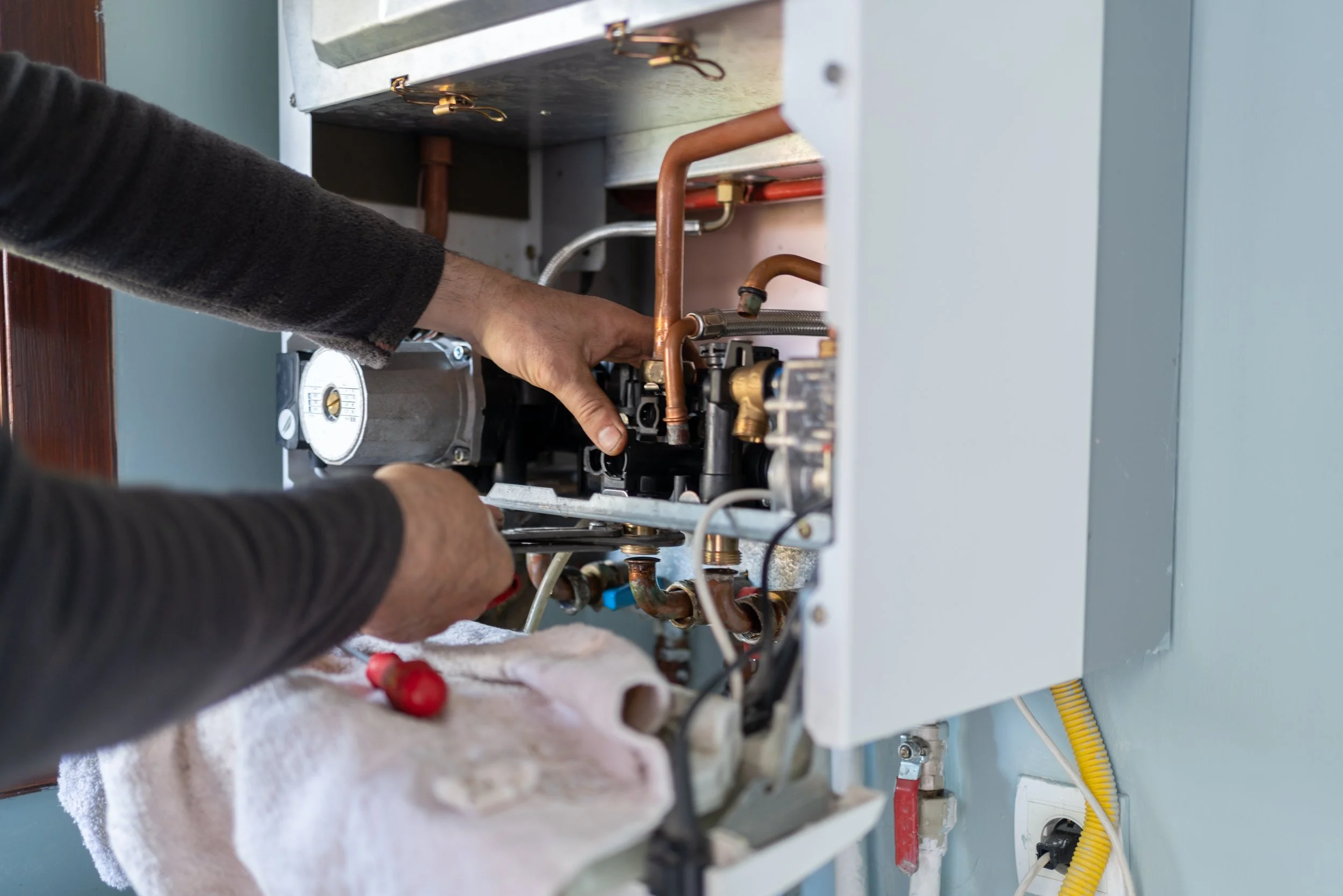
Not every AC service call requires a permit. Replacing a capacitor, cleaning coils, or topping off refrigerant during a routine tune-up doesn't trigger the permit requirement. But once you cross into installation or major modification territory, you need county approval.
Work That Always Requires a Permit
- New AC installations: Installing a central air system in a home that never had one requires a full permit and inspection. This includes outdoor condenser placement, refrigerant line installation, electrical hookup, and ductwork modifications.
- Full system replacements: Swapping out your old AC unit for a new one — even if you're using the same location and existing electrical — requires a permit. The county wants to verify proper sizing, refrigerant handling, and code-compliant connections.
- Refrigerant line modifications: Running new refrigerant lines, extending existing lines, or relocating the outdoor unit requires a permit because it involves pressurized refrigerant systems that must meet EPA and state regulations.
- Electrical work over 30 amps: Most modern AC systems draw significant power. If your new system requires a dedicated 240-volt circuit or panel upgrades, that electrical work requires both an HVAC permit and an electrical permit.
- Ductwork alterations: Adding new supply or return ducts, modifying trunk lines, or installing a zoning system requires a permit. Ductwork affects airflow balance, which directly impacts system efficiency and lifespan.
Work That Typically Does NOT Require a Permit
- Routine maintenance (filter changes, coil cleaning, condensate drain clearing)
- Thermostat replacements (unless running new low-voltage wiring)
- Capacitor or contactor replacements
- Refrigerant recharges on existing systems
- Blower motor replacements
If you're unsure whether your project requires a permit, ask your contractor directly. Any licensed HVAC contractor in Metro Detroit should know the local permit requirements cold. If they dodge the question or tell you permits are "optional," that's a red flag.
Michigan-Specific Consideration: Macomb County has stricter enforcement than some neighboring jurisdictions. Oakland County and St. Clair County have similar requirements, but Macomb inspectors are known for thorough reviews — especially on refrigerant handling and outdoor unit clearances. Don't assume what worked in another county will fly here.
How to Get an AC Permit in Macomb County (Step-by-Step)
The good news: you don't have to navigate the permit process yourself. Your contractor handles it. But understanding the steps helps you verify they're doing it right.
Step 1: Hire a Licensed Michigan HVAC Contractor
Only contractors with a valid Michigan Mechanical Contractor License can pull permits in Macomb County. This isn't a handyman job. The state requires proof of insurance, bonding, and technical competency before issuing that license. At NEXT Heating & Cooling, our technicians hold NATE certifications and operate under Premier Builder Inc.'s Michigan Mechanical Contractor License — credentials we've maintained for over 35 years.
Step 2: Contractor Submits Permit Application
Your contractor submits the permit application to Macomb County Building Department. This includes equipment specifications (make, model, SEER rating, BTU capacity), installation location, load calculations proving the system is properly sized, and electrical details. For a typical residential AC replacement, this takes 15-30 minutes of paperwork.
Step 3: Pay Permit Fees
Permit fees in Macomb County typically range from $75 to $200 depending on system size and scope of work. Your contractor usually includes this in the project quote. If they're quoting you separately for "permit fees," that's normal — just make sure it's itemized so you know exactly what you're paying.
Step 4: Installation Completed
Once the permit is approved (usually within 1-3 business days), your contractor completes the installation. This is where proper training matters. A rushed install to avoid inspection scrutiny is how you end up with AC systems that don't cool properly or fail prematurely.
Step 5: Schedule Inspection
After installation, your contractor schedules a final inspection with Macomb County. The inspector checks refrigerant line connections, electrical hookups, condensate drainage, outdoor unit clearances, thermostat wiring, and ductwork modifications. They're also verifying that the system matches the permit application — no bait-and-switch with cheaper equipment.
Step 6: Receive Final Approval
If everything passes, you receive a certificate of completion. This becomes part of your home's permanent record. When you sell the house, that permit history shows future buyers the AC system was installed correctly and legally. It's a selling point, not a liability.
What Happens If You Skip the Permit?
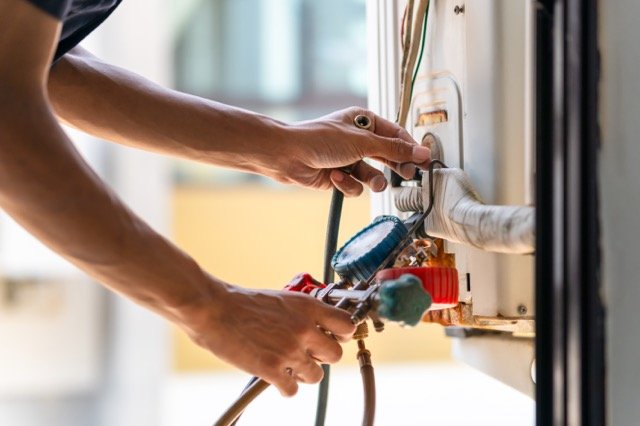
Some contractors offer to skip permits to save time and money. It sounds tempting until you understand the consequences.
Code Violations and Fines
Macomb County actively enforces permit requirements. If a building inspector or code enforcement officer discovers unpermitted HVAC work during a routine inspection, home sale, or neighbor complaint, you're facing fines that start at $500 and escalate quickly. The county can also require you to remove the equipment, pull a retroactive permit, and redo the installation to code — at your expense, even if you paid a contractor to do it the first time.
Insurance Claim Denials
If your unpermitted AC system causes a fire, water damage from a condensate leak, or refrigerant-related health issues, your homeowner's insurance can deny the claim. Insurance companies routinely investigate major claims, and unpermitted work is grounds for denial. You're left covering tens of thousands in damage out of pocket.
Resale Complications
When you sell your home, the buyer's inspector will ask about permits for major systems. If your AC was installed without a permit, you have three bad options: disclose it and watch the buyer demand a price reduction, lie about it and risk legal action for non-disclosure, or pay to retroactively permit it (which often means tearing into walls to verify code compliance). None of those options are cheap.
Safety Risks
Permits exist because improper AC installations create real dangers. Refrigerant leaks can cause respiratory issues. Faulty electrical connections start house fires. Undersized systems cycle constantly, wearing out compressors in half the expected lifespan. Oversized systems short-cycle and never dehumidify properly, turning your home into a humid, uncomfortable mess during Michigan's sticky summer months. The inspection process catches these problems before they become disasters.
Warranty Voidance
Most major AC manufacturers — Carrier, Lennox, Trane, Rheem, Bryant — require proof of permitted installation to honor warranty claims. If your compressor fails in year three and you can't produce a permit, you're buying a new compressor out of pocket. That's a $1,200 to $3,500 expense you thought was covered.
If you're concerned about proper AC sizing for your Michigan home, a permitted installation with load calculations gives you documentation that the system was engineered correctly from day one.
How NEXT Heating & Cooling Handles Permits for You
At NEXT Heating & Cooling, permit management is built into every AC installation. You don't lift a finger.
When we quote your project, the permit fee is included — no surprises, no hidden costs. Our team submits the application, coordinates with Macomb County Building Department, schedules the inspection, and ensures the inspector has everything they need. We've been doing this for 35 years under Premier Builder Inc., so we know exactly what Macomb County inspectors expect.
We also handle the inspection itself. Our technicians stay on-site during the inspector's visit, answer technical questions, and address any concerns immediately. If something needs adjustment, we fix it on the spot. You get your certificate of completion without the hassle.
This is part of our "changing contractor culture" philosophy. Old-school contractors treated permits as an inconvenience. We treat them as proof we did the job right. When you hire a Metro Detroit HVAC contractor who values transparency, permits aren't a burden — they're a badge of quality.
Preventative Maintenance Tip: Once your AC is installed and permitted, protect that investment with regular tune-ups. Our $5/month HVAC maintenance plan includes spring AC inspections that catch small issues before they become expensive repairs — and keeps your warranty valid.
Cost Reality: What Permits Actually Cost in Macomb County
Let's talk numbers. Permit fees in Macomb County for residential AC work typically break down like this:
- Standard AC replacement (same location, similar capacity): $75-$125
- New AC installation (first-time install): $125-$200
- Ductwork modifications (new trunk lines, zoning systems): $100-$175
- Electrical permit (if panel upgrade required): $50-$100 additional
These fees are set by Macomb County and are non-negotiable. If a contractor quotes you significantly less, they're either eating the cost (unlikely) or planning to skip the permit (illegal).
In the context of a full AC replacement, which typically runs $4,500 to $8,500 in Southeast Michigan depending on system size and efficiency, the permit fee represents 1-3% of the total project cost. That's a small price for legal protection, insurance coverage, and resale value.
Some homeowners balk at permit costs because they don't see immediate value. But compare that $150 permit fee to the potential costs of skipping it:
- Code violation fine: $500-$2,000
- Insurance claim denial: $10,000-$50,000+ in unrecovered damages
- Resale price reduction: $2,000-$5,000 when buyers discover unpermitted work
- Voided manufacturer warranty: $1,200-$3,500 for out-of-warranty compressor replacement
The math isn't complicated. Permits are cheap insurance.
For homeowners concerned about overall project costs, we wrote a detailed breakdown of what furnace replacement actually costs in Michigan — the same principles apply to AC installations.

Signs Your AC Contractor Is Cutting Corners on Permits
Not every contractor follows the rules. Here's how to spot the ones who don't.
Red Flag #1: They Offer a Significantly Lower Price If You "Skip the Permit"
If a contractor suggests you can save money by avoiding the permit, walk away. They're either unlicensed (and can't legally pull permits) or they're willing to break the law to undercut legitimate competitors. Neither scenario ends well for you.
Red Flag #2: They Can't Produce a Michigan Mechanical Contractor License
Ask to see their license. It should be a current Michigan Mechanical Contractor License issued by the state. A business license or general contractor license doesn't count. If they dodge the question or claim they're "working under someone else's license," that's a problem. Unlicensed contractors can't pull permits, can't legally work on HVAC systems, and leave you with zero recourse if something goes wrong.
Red Flag #3: They Rush the Timeline
Permits take 1-3 business days to process. Inspections need to be scheduled in advance. If a contractor promises to start tomorrow and finish the next day, they're probably skipping the permit. Legitimate contractors build permit processing time into the project schedule.
Red Flag #4: They Won't Provide a Written Quote That Includes Permit Fees
Every professional HVAC quote should itemize costs: equipment, labor, materials, permits, and any applicable fees. If permits aren't mentioned, ask why. If they claim permits "aren't necessary for this job," verify that independently with Macomb County Building Department before signing anything.
Red Flag #5: They Discourage You from Being Home During the Inspection
Legitimate contractors want you present during inspections. It's your home, your investment, and your right to understand what's being verified. If a contractor tells you to "let them handle it" and discourages your presence, they may be hiding shoddy work or hoping the inspector won't show up.
Questions to Ask Before Hiring
Protect yourself by asking these questions upfront:
- "Can I see your Michigan Mechanical Contractor License?"
- "Is the permit fee included in this quote, or is it separate?"
- "When will you pull the permit, and can I see a copy?"
- "Who schedules the inspection, and will I be notified in advance?"
- "What happens if the system doesn't pass inspection?"
A trustworthy contractor answers these questions clearly and confidently. A shady one changes the subject or gets defensive.
If you're dealing with a thermostat that's not reaching the set temperature or other AC performance issues, a permitted installation history gives you documentation to back up warranty claims and service requests.
Ready to Get Started?
NEXT Heating & Cooling has been keeping Michigan homes comfortable for over 35 years. We handle permits, inspections, and every detail so you don't have to. Get honest diagnostics and fair pricing from NATE-certified technicians who show up on time and do the job right.
Schedule Your ServiceFrequently Asked Questions
Yes. Even if you're replacing an existing AC unit with the same capacity in the same location, Macomb County requires a permit. The permit process ensures the new equipment meets current Michigan Mechanical Code standards, refrigerant lines are properly connected, electrical hookups are safe, and the system is installed according to manufacturer specifications. This protects your warranty and ensures code compliance.
Permit processing typically takes 1-3 business days once your contractor submits the application. Inspection scheduling depends on county availability, but most inspections happen within 3-7 days after installation is complete. Total timeline from permit application to final approval is usually 1-2 weeks, though this can vary during peak summer months when permit volume is higher.
If your system doesn't pass inspection, the inspector notes specific deficiencies that need correction — such as improper refrigerant line sizing, inadequate outdoor unit clearances, or incorrect electrical connections. Your contractor must fix these issues and schedule a re-inspection. Reputable contractors like NEXT Heating & Cooling get it right the first time, but if adjustments are needed, we handle them immediately at no additional cost to you.
No. Macomb County requires that HVAC permits be pulled by licensed Michigan Mechanical Contractors. Homeowners cannot legally pull permits for HVAC work, even if they plan to do the installation themselves. This is because HVAC work involves refrigerant handling (regulated by the EPA), electrical connections, and building code compliance that requires professional certification. Attempting DIY AC installation without proper licensing violates state and county regulations.
Generally, yes — all Michigan counties follow the Michigan Mechanical Code, which requires permits for AC installations and major modifications. However, specific fees, processing times, and inspection procedures vary by county. Oakland County and St. Clair County have similar requirements to Macomb County, but enforcement rigor and inspector expectations can differ. Always verify local requirements with your contractor, who should be familiar with the specific jurisdiction where your home is located.
No. Routine maintenance like spring AC tune-ups, filter changes, coil cleaning, refrigerant top-offs, and minor repairs (capacitor or contactor replacements) do not require permits. Permits are only required when you're installing new equipment, replacing major components, modifying refrigerant lines, or altering ductwork. Regular maintenance actually helps you avoid premature system failures that would require permitted replacement work.
Yes, significantly. When you sell your home, the buyer's inspector will ask about permits for major systems. Unpermitted AC work creates three problems: buyers will demand a price reduction to cover the risk, you may be required to retroactively permit the work (which can be expensive and invasive), or the buyer may walk away entirely. Permitted installations with inspection certificates actually increase resale value because they prove the system was installed correctly and legally.